
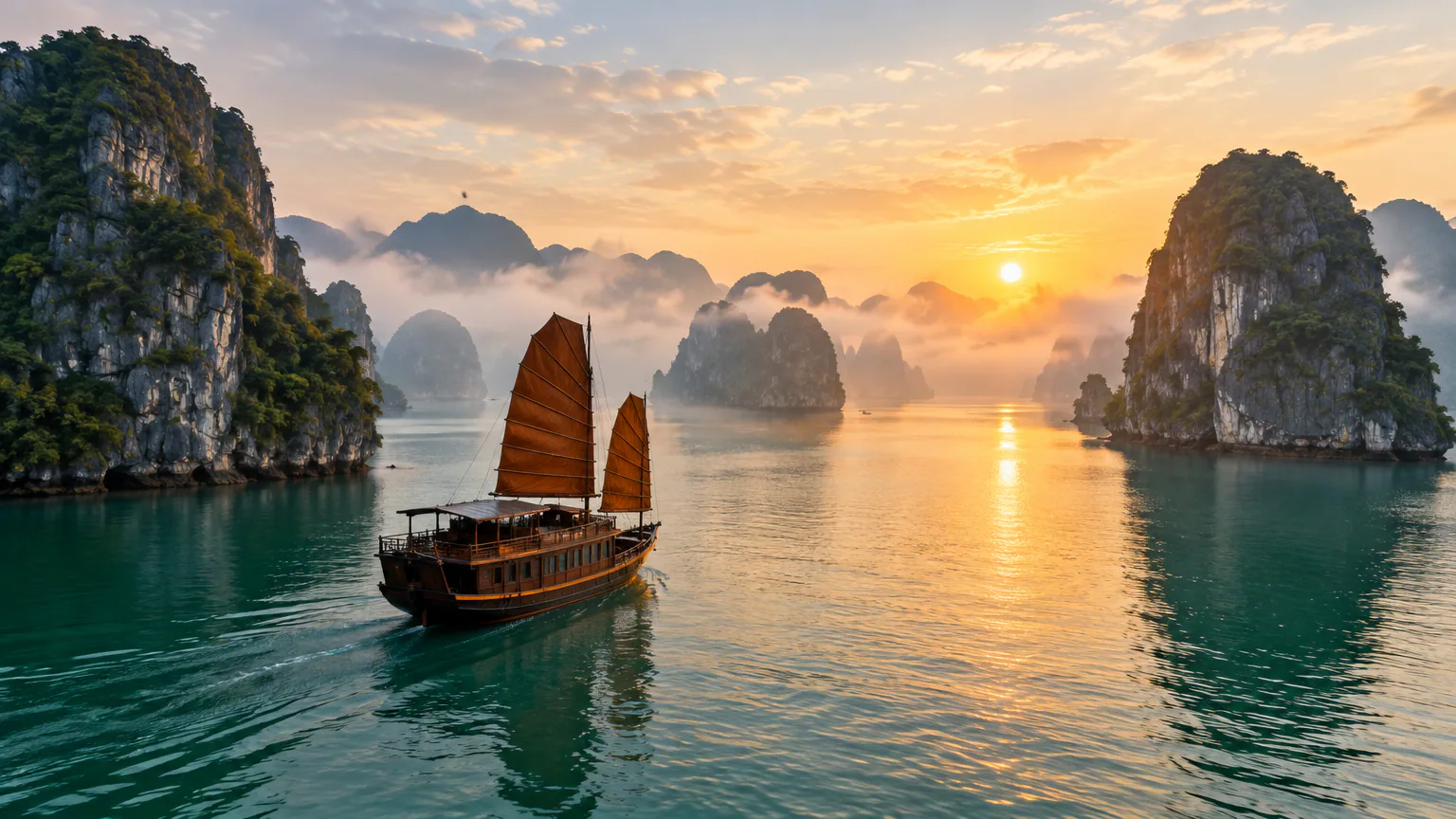
What Most Changes a Vietnam Trip for Indian Travellers
The e-visa, regional weather and cash handling shape a Vietnam trip more than anything else. Indian passport holders must secure an approved e-visa before departure, plan around north-south weather differences, and carry Vietnamese dong for markets and small vendors where cards are not accepted.
Vietnam rewards preparation more than improvisation. The e-visa is mandatory for Indian ordinary passport holders and must be applied for on the official portal before travel. Weather varies sharply between Hanoi, Hoi An and Ho Chi Minh City, so a single packing list rarely fits a multi-region itinerary. Cash remains essential outside hotels and malls. Domestic flights connect Hanoi, Da Nang and Ho Chi Minh City efficiently, while trains suit scenic but slower north-south journeys.
At a glance
Vietnam, in brief
Vietnam uses the Vietnamese dong, Vietnamese is the main language, and type A, C and F plugs are standard. Indian travellers need an approved e-visa before arrival, a local SIM or eSIM for data, and awareness that Vietnam is 1.5 hours ahead of India.
Vietnam.
Planned around you.
- Currency
- Vietnamese dong (VND)Cash is widely used; cards accepted at hotels and larger restaurants.
- Language
- VietnameseEnglish is limited outside tourist centres; translation apps help.
- Plug type
- Type A, C and F220V supply; Indian travellers may need a universal adapter.
- SIM or eSIM
- Local SIM or eSIM availableBuy at airports or reputable shops; register with passport.
- Time difference
- 1.5 hours ahead of IndiaVietnam is UTC+7; India is UTC+5:30.
- Emergency numbers
- 113 police, 114 fire, 115 ambulanceSave these before arrival.
Before You Go to Vietnam
Indian travellers should apply for the Vietnam e-visa at least 5–7 working days before departure, book international flights and the first two nights, arrange forex and insurance, and download offline maps. The most common mistake is applying with a name or passport number that does not match the passport exactly.
Passport with at least 6 months validity
Ensure blank pages and no damage.
Where to get it: Your passport officeCommon mistake: Travelling with a passport expiring within 6 months.
Vietnam e-visa approval
Apply on the official portal; allow 5–7 working days.
Where to get it: evisa.gov.vnCommon mistake: Using unofficial agents that charge more and may not deliver.
International flight tickets
Direct Delhi–Hanoi and Mumbai–Hanoi services operate; connections from other cities.
Where to get it: Airline websites or travel agentCommon mistake: Booking tight connections without buffer.
Travel insurance
Cover medical expenses, trip cancellation and baggage.
Where to get it: Insurance providerCommon mistake: Assuming basic cover is enough for Vietnam.
Forex and cards
Carry some USD to exchange for VND; inform bank of travel.
Where to get it: Bank or authorised forex dealerCommon mistake: Relying only on cards outside cities.
Offline maps and translation app
Download Google Maps offline and a Vietnamese translation app.
Where to get it: App storeCommon mistake: Assuming English is widely spoken.
Copies of documents
Keep digital and printed copies of passport, visa and tickets.
Where to get it: SelfCommon mistake: Storing everything only on phone.
The e-visa is available for single or multiple entry for up to 90 days through Vietnam's National Electronic Visa portal. Use the exact passport name and number, select the correct entry checkpoint, and upload a compliant portrait and passport scan. The fee is paid online in USD and is non-refundable if refused. Book flights early for direct Delhi–Hanoi or Mumbai–Hanoi services, and keep a printed copy of all confirmations.
Money and Payments in Vietnam
Vietnam runs on cash for everyday purchases, though cards work at hotels and larger restaurants. Indian travellers should carry Vietnamese dong for markets, taxis and small vendors, use ATMs from major banks, and buy a local SIM or eSIM for data. UPI is not widely accepted in Vietnam.
- Carry cash for small purchases
Markets, street food stalls and some taxis accept only cash. Keep small denominations.
Money - Use bank ATMs
ATMs from Vietcombank, BIDV and Techcombank are common. Withdraw larger amounts to reduce fees.
Money - Cards at hotels and restaurants
Visa and Mastercard are widely accepted in tourist areas. Inform your Indian bank before travel.
Money - UPI is not accepted
Do not expect to pay with UPI in Vietnam. Carry cash or cards.
Money - Buy a local SIM or eSIM
Viettel, Mobifone and Vinaphone offer tourist data plans. Register with passport.
Connectivity - Avoid roaming charges
Indian roaming packs can be expensive. A local SIM is cheaper for data and calls.
Connectivity
Withdraw dong from ATMs displaying major bank logos; fees vary. Credit and debit cards are accepted at mid-range and upscale establishments. For connectivity, local SIM cards from Viettel, Mobifone or Vinaphone are available at airports and city shops; eSIMs can be purchased online before travel. Roaming with Indian operators is expensive, so a local data plan is usually better.
Cultural Tips for Vietnam
Dress modestly at temples and pagodas, remove shoes before entering homes and some shops, and avoid touching people on the head. Tipping is not mandatory but appreciated in tourist areas. A respectful approach to local customs goes a long way in Vietnam.
- Dress for religious sites
Cover shoulders and knees at temples and pagodas. Remove shoes where indicated.
Etiquette - Tipping
Not mandatory, but 5–10% is appreciated in tourist restaurants and for guides.
Etiquette - Bargaining
Common in markets. Stay polite and walk away if the price does not suit.
Etiquette - Photography
Ask before photographing people, especially in ethnic minority villages.
Etiquette - Basic Vietnamese
Learn 'xin chao' (hello) and 'cam on' (thank you). Locals appreciate the effort.
Culture
When visiting religious sites, cover shoulders and knees; some temples provide sarongs. Ask before taking photos of people, especially in ethnic minority areas. Bargaining is common in markets but keep it friendly. Tipping is not expected but 5–10% is appreciated in restaurants and for guides. Learn a few Vietnamese phrases such as 'xin chao' (hello) and 'cam on' (thank you).
Food Tips for Indian Travellers in Vietnam
Vietnamese food offers plenty for Indian palates, from pho and banh mi to fresh spring rolls. Vegetarian options exist but require clear communication, as fish sauce and meat broth are common. Indian restaurants are available in Hanoi, Ho Chi Minh City and Da Nang for those craving familiar flavours.
- Nationwide
Pho
Vietnam's signature noodle soup, usually beef or chicken. Ask for 'pho chay' for vegetarian.
Best forBreakfast or lunch
Add herbs, lime and chilli to taste.
- Nationwide
Banh mi
Baguette filled with meat, pate, pickles and herbs. Vegetarian versions with tofu exist.
Best forQuick meal
Popular street food; choose busy stalls.
- Nationwide
Fresh spring rolls
Rice paper rolls with shrimp, pork or vegetables. Served with dipping sauce.
Best forSnack
Ask for vegetarian sauce if avoiding fish sauce.
- Hoi An
Cao lau
Hoi An specialty noodle dish with pork and greens. Unique to the town.
Best forLunch
Try it at a local restaurant in the old town.
- Hanoi, Ho Chi Minh City, Da Nang
Indian restaurants
Several Indian restaurants operate in major cities for those wanting familiar food.
Best forDinner
Check reviews for recent feedback.
Try pho (noodle soup), banh mi (baguette sandwich), fresh spring rolls and cao lau in Hoi An. For vegetarian food, look for 'do chay' signs and specify no fish sauce or meat. Indian restaurants are present in major cities. Street food is generally safe if busy and freshly cooked; drink bottled water.
Safety in Vietnam for Indian Tourists
Vietnam is generally safe for Indian tourists, but common scams include taxi overcharging and motorbike bag snatching. Health risks include heat exhaustion, mosquito-borne illnesses and stomach upsets. Prevention means using reputable taxis, keeping bags secure, drinking bottled water and carrying basic medicines.
- Taxi overcharging
How to avoid itUse Mai Linh or Vinasun taxis, or Grab. Agree on meter or fare before starting.
- Bag snatching by motorbikes
How to avoid itKeep bags on the side away from the road and hold them securely.
- Heat exhaustion
How to avoid itStay hydrated, avoid midday sun and take breaks in air-conditioned places.
- Mosquito-borne diseases
How to avoid itUse repellent, wear long sleeves in rural areas and sleep under nets if provided.
- Stomach upsets
How to avoid itDrink bottled water, eat freshly cooked food and carry oral rehydration salts.
- Storms and flooding
How to avoid itCheck forecasts during May–September and follow local advice.
Use metered taxis from Mai Linh or Vinasun, or ride-hailing apps like Grab. Keep bags in front of you in crowded areas. Drink bottled water and eat freshly cooked food. Apply mosquito repellent in rural areas. Carry oral rehydration salts and basic medicines. Check weather forecasts during storm season.
Packing by Season for Vietnam
Packing for Vietnam depends on the regions and season. The north has cooler winters, the south is hot year-round, and central Vietnam can be wet from September to December. Layered clothing, rain gear and comfortable shoes suit most itineraries.
Light layers for north
December–February can be cool in Hanoi and Ha Long Bay. Pack a jacket.
Where to get it: Weather forecastCommon mistake: Assuming all of Vietnam is hot year-round.
Rain gear for central Vietnam
September–December can bring heavy rain in Hoi An and Hue. Carry a compact raincoat.
Where to get it: Weather forecastCommon mistake: Not checking regional forecasts.
Sun protection
Hat, sunscreen and sunglasses for southern and coastal areas.
Where to get it: SelfCommon mistake: Underestimating tropical sun.
Modest clothing for temples
Cover shoulders and knees. Some temples provide sarongs.
Where to get it: SelfCommon mistake: Wearing shorts and sleeveless tops to religious sites.
Comfortable walking shoes
Cobblestones in Hoi An and uneven streets elsewhere.
Where to get it: SelfCommon mistake: Bringing only flip-flops.
Insect repellent
Useful in rural areas and during wet season.
Where to get it: PharmacyCommon mistake: Forgetting repellent for day trips.
Universal adapter
Vietnam uses type A, C and F plugs.
Where to get it: Electronics shopCommon mistake: Assuming Indian plugs fit.
For northern winters (December–February), pack a light jacket and warm layers. For southern heat, light cotton clothes and sunscreen. For central Vietnam's wet season, a raincoat and waterproof bag cover. Always include modest clothing for temples, insect repellent and a universal adapter.
Holiday ideas to start from
Reviewed itineraries for this destination — personalise with a specialist, never an instant booking.
Vietnam Classic Three Regions Premium 8 Nights: 2026 Tour Package
From₹1,05,600per adult, twin sharing, land only
From idea to itinerary, with a real person.
- Share your plan
Dates, departure city, travellers and the moments you’d love. It only takes a minute.
- Shape it with a specialist
A real person refines the route, stays and pace with you. Change anything.
- Review your quote
A clear, personalised quote with confirmed inclusions. No payment to enquire.
From our travel specialists
What our team sees when planning these trips, beyond what the guidebooks say.
Confirmed 11 Oct 2026
The reports suggest that families and couples should allow unhurried time and plan around crowds: airport queues, busy attractions and rushed transfers can undermine the experience. Travellers also highlight the importance of respectful conduct in public places and of choosing experiences such as an overnight cruise or a slower Hoi An stay rather than maximising the number of stops.
The recurring mistake is packing too many regions into a short trip and relying on day trips where an overnight stay is better. Travellers particularly recommend an overnight Ha Long Bay cruise rather than a rushed day visit, and warn against taking an unverified taxi from Hanoi airport after reports of overcharging.
Travellers commonly add Ninh Binh when they realise it has been omitted, or extend the route with extra time in Hoi An, Da Nang or Ho Chi Minh City. Some also shift from a Ha Long Bay day trip to an overnight cruise to avoid the most rushed experience.
The sources do not provide enough consistent first-hand evidence that one specific popular attraction disappoints many Indian travellers. They do indicate a preference for quieter or fuller experiences, such as an overnight Ha Long Bay cruise instead of the crowded day-trip format and Ninh Binh instead of skipping it.
Before you go
Straight answers to help you plan — then personalise the trip with a specialist.
8 answered belowAsk a specialist anything about this trip — there’s no obligation.
Ask a specialistDo Indians need a visa for Vietnam?
Yes. Indian passport holders generally need a Vietnam e-visa before travel. Apply on the official portal, allow at least 5–7 working days, and carry the approved PDF. The fee is paid online in USD and is non-refundable if refused.
How much does a Vietnam tour package cost from India?
A typical 6-night land-only package costs approximately INR 35,000–85,000 per person on twin sharing, excluding international airfare. This is an indicative planning range, not a Tripstor offer. Costs vary by hotels, season and inclusions.
What is the best time to visit Vietnam?
March–April and October–November are broadly favourable, but the best month depends on the regions included. The north has cooler winters, the south is hot year-round, and central Vietnam can be wet from September to December.
How many days are enough for Vietnam?
Seven days covers a focused north or south itinerary; 10–14 days is better for Hanoi, central Vietnam and Ho Chi Minh City. Domestic flights help cover long distances efficiently.
Which places should Indians visit in Vietnam?
Popular combinations include Hanoi, Ha Long Bay, Ninh Binh, Hoi An, Da Nang and Ho Chi Minh City. Each offers different scenery and experiences, from limestone bays to heritage towns.
Is Vietnam cheaper than Thailand?
Vietnam is often cheaper for food, local transport and mid-range touring, while resort islands and premium cruises can narrow or reverse the difference. Compare specific itineraries rather than broad country labels.
Are there direct flights from India to Vietnam?
Yes. Direct services operate on selected India–Hanoi and India–Ho Chi Minh City routes, with schedules changing seasonally. Delhi–Hanoi and Mumbai–Hanoi are common direct options.
Is Vietnam suitable for a honeymoon?
Yes. Hoi An, Ha Long Bay, Da Nang and luxury coastal resorts support a strong honeymoon itinerary. Couples can combine heritage towns, bay cruises and beach time.