
Indonesia Beyond Bali Travel Guide for Indians (2026)
Indonesia beyond Bali is one of Southeast Asia's most rewarding journeys for Indian travellers. The archipelago stretches across more than 17,000 islands, offering ancient Hindu-Buddhist temples in Java, Komodo dragons in Flores, volcanic trekking in East Java, and world-class diving in Raja Ampat — all within a single country. This guide covers everything Indian travellers need to plan a trip in 2026: how to reach Indonesia's lesser-explored islands from India, approximate costs, visa requirements, the best time to visit, where to stay, what to eat, and practical tips for a smooth journey. The dry season from May to September offers the most reliable weather across most of the archipelago.
- No booking feeRequesting a quote is free with no obligation.
- Expert-planned itineraryRoutes and stays shaped around your dates and pace.
- Reply within 24 hoursA travel expert gets back to you with ideas.
- Refine before you decideAdjust the plan until it feels right for you.
Why Indonesia Beyond Bali Appeals to Indian Travellers
Indian travellers are increasingly choosing Indonesia beyond Bali for its combination of cultural depth, natural diversity, and strong value for money. The Hindu-Buddhist heritage of Java — visible at Borobudur and Prambanan — resonates with Indian visitors in a way few other international destinations can match. These UNESCO World Heritage Sites share architectural and spiritual roots with India's own temple traditions, making them feel both exotic and familiar.
Beyond culture, the geography is extraordinary. Active volcanoes like Mount Bromo and Mount Rinjani offer high-altitude trekking. The coral reefs of Raja Ampat and Wakatobi rank among the world's most biodiverse marine environments. Komodo National Park is the only place on earth where Komodo dragons live in the wild. Lombok's beaches and the car-free Gili Islands provide a quieter alternative to Bali's crowds.
Connecting flights from Mumbai, Delhi, Chennai, and Bengaluru to Jakarta or Surabaya are well-established, and domestic Indonesian airlines operate extensive networks onward to Lombok, Flores, Sumatra, and Sulawesi. Accommodation and dining costs are generally lower than comparable destinations in Europe or Australia, making extended stays feasible for mid-range budgets.
Top 10 Places to Visit in Indonesia Beyond Bali
Indonesia's scale means no single trip can cover everything. The ten destinations below represent the most distinct and rewarding experiences across the archipelago, from cultural heartlands to remote natural wonders.
1. Yogyakarta, Java — Cultural Capital and Temple Country
Yogyakarta is the cultural and artistic centre of Java. It is home to Borobudur, the world's largest Buddhist temple and a UNESCO World Heritage Site, and Prambanan, a 9th-century Hindu temple complex also on the UNESCO list. Both sites are within easy reach of the city and are best visited at dawn for atmospheric lighting and smaller crowds.
The city itself offers the Kraton (Sultan's Palace), the vibrant Malioboro Street market, and a thriving batik and silverwork craft scene. Yogyakarta is well connected by air from Jakarta and by overnight train from Surabaya, making it a practical first stop on a Java itinerary.
2. Komodo National Park, Flores — Komodo Dragons and Pink Beaches
Komodo National Park, a UNESCO World Heritage Site, is the only place in the world where Komodo dragons — the largest living lizards — can be seen in their natural habitat. The park covers Komodo and Rinca islands, both accessible by boat from Labuan Bajo on the western tip of Flores.
Beyond the dragons, the park offers Pink Beach (Pantai Merah), one of only a handful of pink-sand beaches in the world, and exceptional diving and snorkelling around Batu Bolong and Manta Point. Labuan Bajo has a growing range of accommodation and is served by direct domestic flights from Bali and Jakarta.
3. Lombok and the Gili Islands — Beaches, Volcano, and Car-Free Islands
Lombok sits immediately east of Bali and offers a quieter, less commercialised experience. Tanjung Aan and Mawun are among the finest beaches in Indonesia. Mount Rinjani, an active stratovolcano rising to 3,726 metres, is one of the most popular multi-day treks in Southeast Asia.
The three Gili Islands — Trawangan, Meno, and Air — lie off Lombok's northwest coast. All three are car-free and motorbike-free, making them unusually peaceful. Gili Trawangan has the most nightlife and dining options; Gili Meno is the quietest; Gili Air sits between the two in character. Fast boats connect the Gilis to Lombok and Bali.
4. Raja Ampat, West Papua — World-Class Diving and Marine Biodiversity
Raja Ampat is consistently rated among the world's top diving destinations. Its coral reefs support more marine species than anywhere else on earth, including manta rays, whale sharks, pygmy seahorses, and hundreds of reef fish species. The dramatic karst limestone islands and crystal-clear water make it visually spectacular even for non-divers.
Raja Ampat is remote. Reaching it requires a flight to Sorong in West Papua, followed by a ferry or speedboat to Waisai. The journey is long but the reward is access to some of the least disturbed marine ecosystems on the planet. The best diving season runs from October to April.
5. Mount Bromo, East Java — Sunrise Over an Active Volcano
Mount Bromo is an active volcano within the Bromo Tengger Semeru National Park in East Java. It stands at 2,329 metres above sea level and is famous for its pre-dawn jeep tours to a viewpoint overlooking the caldera, where the smoking crater rises from a vast sea of volcanic sand. The sunrise views, often accompanied by a low cloud layer, are among the most photographed in Indonesia.
The nearest gateway city is Malang or Surabaya, both served by domestic flights from Jakarta and Bali. Jeep tours to the viewpoint depart around 3:00 am to reach the summit before sunrise.
6. Lake Toba, Sumatra — World's Largest Volcanic Lake
Lake Toba is the world's largest volcanic lake, formed by a supervolcanic eruption approximately 74,000 years ago. It sits at 900 metres above sea level in North Sumatra and measures roughly 100 kilometres long by 30 kilometres wide. Samosir Island, located within the lake, is the cultural heartland of the Batak people and offers traditional architecture, weaving, and music.
The nearest airport is Silangit (DTB), which receives domestic flights from Medan and Jakarta. The lake's cool highland climate makes it a pleasant contrast to Indonesia's coastal heat.
7. Bandung, West Java — Volcanoes, Tea Plantations, and City Culture
Bandung is West Java's largest city, set at around 768 metres above sea level in a volcanic basin. Its cooler climate, relative to Jakarta, makes it a popular weekend destination. The surrounding highlands contain active volcanic craters (including Kawah Putih, a turquoise sulphuric crater lake), tea plantations, and hot springs.
Bandung is also known for its factory outlet shopping, colonial Dutch architecture, and a lively food scene. It is connected to Jakarta by a high-speed rail service and by frequent domestic flights.
8. Tana Toraja, Sulawesi — Ancient Funeral Traditions and Tongkonan Houses
Tana Toraja is a highland region in South Sulawesi renowned for its elaborate funeral ceremonies, cliff-side burial sites, and traditional tongkonan houses with distinctive upward-curving boat-shaped roofs. Funerals here are multi-day communal events involving buffalo sacrifice and are considered among the most significant cultural ceremonies in Indonesia.
The nearest airport is Makassar (UPG) in South Sulawesi, from where Tana Toraja is reached by a roughly eight-hour road journey or a shorter flight to Toraja Airport (TRT). The region is best visited between July and September when funeral ceremonies are most frequent.
9. Wakatobi, Southeastern Sulawesi — UNESCO Biosphere Reserve Diving
Wakatobi is a marine national park and UNESCO Biosphere Reserve in Southeastern Sulawesi, comprising four main islands: Wangi-Wangi, Kaledupa, Tomia, and Binongko. Its coral reefs are among the most intact in Indonesia, with exceptional visibility and a high density of reef fish, turtles, and macro marine life.
Wakatobi is served by a small airport on Wangi-Wangi (WNI) with connections to Makassar. It is a specialist diving destination with limited but high-quality accommodation, making it best suited to divers and snorkellers seeking an uncrowded, pristine environment.
10. Pulau Weh, Sumatra — Affordable Diving at the Tip of Indonesia
Pulau Weh is a small volcanic island off the northern tip of Sumatra, near the city of Banda Aceh. It is known for clear water, healthy coral reefs, and affordable diving — a contrast to the more expensive dive destinations further east. Iboih Beach and Gapang Beach are the main diving and snorkelling hubs.
Banda Aceh is served by domestic flights from Medan and Jakarta. A ferry from Banda Aceh's Ulee Lheue port reaches Pulau Weh's Balohan port in approximately 45 minutes by fast boat.
Best Time to Visit Indonesia Beyond Bali from India
Indonesia's climate varies by island and region, but the dry season from May to September is generally the best time to visit most destinations beyond Bali. This period brings sunny skies, low rainfall, and calm seas — ideal for island hopping, trekking, and diving. June, July, and August are peak season, with higher demand for flights and accommodation.
The wet season from November to March brings heavy rainfall across much of the archipelago, which can disrupt outdoor activities and boat travel. However, some destinations — notably Raja Ampat — have their best diving conditions during the wet season months of October to April, when plankton blooms attract manta rays and whale sharks.
Indian school holiday periods in May and October align reasonably well with Indonesia's dry season shoulder months, making those months practical for family travel.
| Month | Weather | Crowd Level | Price Level | Verdict |
|---|---|---|---|---|
| January | Wet — heavy rainfall across most islands | Low | Low–Moderate | Avoid for most destinations; Raja Ampat diving good |
| February | Wet — heavy rainfall | Low | Low–Moderate | Avoid for most destinations |
| March | Transitional — rainfall decreasing | Low–Moderate | Moderate | Acceptable for Java cultural sites |
| April | Transitional — increasingly pleasant | Moderate | Moderate | Good for Java and Sumatra |
| May | Dry season begins — sunny | Moderate | Moderate | Excellent; good value before peak |
| June | Dry — sunny and clear | High | High | Excellent; peak season begins |
| July | Dry — sunny and clear | High | High | Excellent; busiest month |
| August | Dry — sunny and clear | High | High | Excellent; peak season |
| September | Dry — pleasant, easing crowds | Moderate–High | Moderate–High | Excellent; good end-of-peak value |
| October | Transitional — rain increasing | Moderate | Moderate | Good for some regions; Raja Ampat season starts |
| November | Wet — rainfall increasing | Low | Low–Moderate | Avoid for most outdoor activities |
| December | Wet — heavy rainfall; festive period | Moderate | Moderate–High | Avoid weather-sensitive activities; prices rise over Christmas |
Indonesia Beyond Bali Trip Cost from India (2026 Estimates)
The table below shows approximate per-person costs for a 7-day trip from India to Indonesia beyond Bali in 2026, assuming double occupancy and round-trip flights from a major Indian city (Mumbai, Delhi, Chennai, or Bengaluru) to a primary Indonesian gateway (Jakarta CGK or Surabaya SUB), followed by a domestic connection to the final destination. These are indicative ranges only; actual costs will vary by travel dates, booking lead time, and specific destinations chosen.
Budget travellers staying in guesthouses and eating at local warungs can travel comfortably for less. Luxury travellers choosing remote resorts in Raja Ampat or Komodo should budget significantly more, as remote island accommodation commands a premium.
| Travel Style | Flights (INR) | Accommodation (INR) | Food & Activities (INR) | Estimated Total (INR) |
|---|---|---|---|---|
| Budget | 30,000–45,000 | 10,000–15,000 | 10,000–15,000 | 50,000–75,000 |
| Mid-range | 45,000–60,000 | 20,000–35,000 | 20,000–30,000 | 85,000–125,000 |
| Luxury | 60,000–90,000+ | 40,000–80,000+ | 35,000–60,000+ | 135,000–230,000+ |
How to Reach Indonesia Beyond Bali from India
Reaching Indonesia's islands beyond Bali from India is a two-stage journey: an international flight from India to a major Indonesian gateway, followed by a domestic connection to your chosen island destination. There are no direct international flights from India to most Indonesian islands beyond Bali; Jakarta (CGK) and Surabaya (SUB) are the primary entry points.
The overall journey time from India to a final destination like Labuan Bajo (Flores) or Lombok typically ranges from 10 to 16 hours including layovers and domestic connections, depending on the routing chosen.
International Flight Routes from India to Indonesia
Major Indian departure cities — Mumbai (BOM), Delhi (DEL), Chennai (MAA), and Bengaluru (BLR) — offer connecting flights to Jakarta Soekarno-Hatta International Airport (CGK) or Surabaya Juanda International Airport (SUB). Common connecting hubs include Singapore (SIN), Kuala Lumpur (KUL), and Bangkok (BKK).
Airlines operating these routes include Garuda Indonesia, Batik Air, Singapore Airlines, Malaysia Airlines, Thai Airways, and IndiGo (on select India–Singapore sectors). Total journey time from India to Jakarta, including a single layover, is typically 8 to 12 hours.
From Jakarta or Surabaya, domestic airlines including Garuda Indonesia, Lion Air, Citilink, and Batik Air operate frequent services to Lombok International Airport (LOP), Labuan Bajo (LBJ) in Flores, Medan (KNO or MES) for Sumatra, Makassar (UPG) for Sulawesi, and Sorong (SOQ) for Raja Ampat.
Step-by-Step: Planning Your Journey from India
Step 1 — Book Your International Flight
Book a connecting flight from your nearest major Indian city to Jakarta (CGK) or Surabaya (SUB). Compare routings via Singapore, Kuala Lumpur, and Bangkok for the best combination of price and journey time. Booking 8 to 12 weeks in advance typically yields better fares for peak-season travel (June–August).
Step 2 — Book Your Domestic Connection Within Indonesia
From your Indonesian gateway, book a domestic flight to your island destination. Key domestic routes include: Jakarta to Labuan Bajo (LBJ) for Komodo National Park; Jakarta or Surabaya to Lombok (LOP) for Lombok and the Gili Islands; Jakarta to Medan (KNO) for Lake Toba and Pulau Weh; Jakarta to Makassar (UPG) for Tana Toraja and Wakatobi; Jakarta to Sorong (SOQ) for Raja Ampat.
Allow a minimum of 3 to 4 hours between your international arrival and domestic departure at Jakarta or Surabaya to clear immigration, collect baggage, and transfer between terminals.
Step 3 — Arrange Local and Inter-Island Transport
Within each destination, transport options vary. In cities like Yogyakarta and Bandung, ride-hailing apps Grab and Gojek are reliable and affordable. In Labuan Bajo, taxis and pre-booked transfers serve the town and airport. For Komodo National Park, day trips and liveaboard boats depart from Labuan Bajo harbour.
Between Lombok and the Gili Islands, fast boats operate multiple times daily from Bangsal Harbour (north Lombok) and from Teluk Nare. Ferries connect Lombok to Sumbawa and onward to Flores for travellers preferring an overland-and-sea route. For remote destinations like Raja Ampat, speedboats from Sorong to Waisai are the standard transfer.
Visa and Entry Requirements for Indian Citizens
Indian citizens travelling to Indonesia for tourism can apply for a Visa on Arrival (VOA) or an electronic Visa on Arrival (e-VOA). The B1 visa-on-arrival category is designated for tourism and allows a single entry with an initial stay of up to 30 days from the date of arrival. This stay may be extended once for a further 30 days through the applicable immigration process.
The e-VOA is intended for tourism, government visits, business meetings, purchasing goods, or transit. Work and study require a different visa category. Travellers arriving at a port not covered by the VOA facility may need to arrange an alternative visa in advance — always verify your specific port of entry is covered before travel.
Requirements include: an original passport valid for at least six months beyond the intended stay; a return or onward ticket; and submission of an arrival card within three days before arriving in Indonesia. Ensure your passport has sufficient blank pages for entry and exit stamps.
Always verify the latest requirements on the official Indonesian immigration website (imigrasi.go.id) or the official e-Visa portal (evisa.imigrasi.go.id) before travel in 2026, as regulations and fees can change.
Where to Stay in Indonesia Beyond Bali
Accommodation across Indonesia beyond Bali spans a wide range, from simple guesthouses (losmen) and backpacker hostels to boutique hotels and luxury beachfront resorts. The indicative nightly rates below are approximate and subject to change; always confirm current pricing directly with the property or through a booking platform.
Yogyakarta — Where to Stay
Staying near Malioboro Street gives easy access to markets, batik shops, and the Kraton. For a quieter atmosphere, the Prawirotaman neighbourhood offers boutique hotels and art galleries.
- Budget — Greenhost Boutique Hotel Prawirotaman (indicative rate: INR 2,500–4,000 per night, room only). Eco-friendly design with an artistic ambiance in the Prawirotaman arts district.
- Mid-range — The Phoenix Hotel Yogyakarta – MGallery Collection (indicative rate: INR 6,000–9,000 per night, with breakfast). A restored colonial-era hotel with heritage character.
- Luxury — Hyatt Regency Yogyakarta (indicative rate: INR 9,000–15,000 per night, with breakfast). Extensive grounds, a golf course, and views of Mount Merapi.
Lombok and Gili Islands — Where to Stay
On Lombok, Kuta (south coast) and Senggigi (west coast) are the main beach areas. On the Gili Islands, choose Gili Trawangan for a social atmosphere, Gili Meno for seclusion, or Gili Air for a balance of both.
- Budget — Gili Trawangan: Gili Amor Boutique Resort (indicative rate: INR 3,000–5,000 per night, with breakfast). Comfortable rooms close to the main strip.
- Mid-range — Lombok: Novotel Lombok Resort & Villas, Mandalika Beach (indicative rate: INR 7,000–12,000 per night, with breakfast). Family-friendly resort with pool and beach access.
- Luxury — Gili Meno: MAHAMAYA Gili Meno (indicative rate: INR 12,000–20,000 per night, with breakfast). Eco-friendly beachfront villas on the quietest of the three Gilis.
Flores (Labuan Bajo) — Where to Stay
Labuan Bajo is the base for Komodo National Park visits. The town has grown rapidly as a tourist hub, with options from basic guesthouses to upscale beachfront resorts.
- Budget — La Boheme Bajo (indicative rate: INR 1,500–3,000 per night, room only). A popular hostel with harbour views and a social atmosphere.
- Mid-range — Ayana Komodo Resort, Waecicu Beach (indicative rate: INR 15,000–25,000 per night, with breakfast). Beachfront resort with strong facilities and Komodo trip access.
- Luxury — Plataran Komodo Beach Resort (indicative rate: INR 20,000–35,000 per night, with breakfast). Private beach villas in a secluded setting near the national park.
Local Food and Cuisine in Indonesia Beyond Bali
Indonesian cuisine is one of the most diverse in Southeast Asia, shaped by centuries of trade, migration, and regional tradition. Each island has its own specialities: West Sumatra is the home of Rendang; Java is known for Gudeg (jackfruit stew) and Soto (broth soups); Sulawesi has its own distinct seafood traditions. Indian travellers will recognise the influence of shared spice routes in the use of turmeric, coriander, cumin, and chilli.
Vegetarian food is widely available, particularly in tourist areas and larger cities. Tofu (tahu) and tempeh (fermented soybean cake) are staple protein sources across the archipelago and appear in most local menus.
Must-Try Indonesian Dishes
- Nasi Goreng — Indonesia's national fried rice dish, typically served with a fried egg, vegetables, and a choice of protein. Easily ordered without meat.
- Mie Goreng — The noodle equivalent of Nasi Goreng; equally popular and widely available across all islands.
- Sate (Satay) — Skewered grilled meat (chicken, beef, or lamb) served with peanut sauce. Tofu and tempeh satay are common vegetarian alternatives.
- Gado-Gado — A salad of blanched vegetables, hard-boiled egg, potato, fried tofu, and tempeh with peanut sauce dressing. One of the best naturally vegetarian Indonesian dishes.
- Rendang — A slow-cooked, richly spiced meat dish originating from West Sumatra. Traditionally beef-based; some restaurants offer jackfruit or mushroom versions for vegetarians.
- Soto Ayam — A clear, turmeric-spiced chicken broth with rice or noodles, herbs, and lime. A comforting and widely available dish across Java and Sumatra.
Vegetarian Food and Dietary Tips for Indian Travellers
Vegetarian food is readily available in tourist areas, larger cities, and at local warungs (small eateries). When ordering, use the phrases 'tidak pakai daging' (no meat) and 'tidak pakai ayam' (no chicken). For strict vegetarians, note that shrimp paste (terasi) is a common background ingredient in Indonesian cooking — it is worth asking specifically whether a dish contains it.
Restaurants in Yogyakarta, Lombok, and Labuan Bajo are generally accustomed to vegetarian requests. Local warungs serving Nasi Campur (mixed rice with a selection of side dishes) allow you to choose your own components, making them a practical option for controlling ingredients.
Restaurant Examples by Destination
Yogyakarta: Bale Raos (traditional Javanese royal cuisine in the Kraton grounds); ViaVia Jogja (international and local dishes with clearly marked vegetarian options).
Lombok: Warung Paradiso, Gili Trawangan (Indonesian home cooking); El Bazar Cafe & Restaurant, Gili Trawangan (Mediterranean menu with vegetarian choices).
Labuan Bajo: La Cucina (Italian-Indonesian fusion with vegetarian pasta options); MadeInItaly (wood-fired pizza and pasta).
Practical Travel Tips for Indian Visitors
The following tips cover the most common practical questions Indian travellers have when planning a trip to Indonesia beyond Bali.
Currency and Payments
The local currency is the Indonesian Rupiah (IDR). Major credit and debit cards are accepted at hotels, larger restaurants, and tourist operators in main destinations. Cash is essential for local markets, warungs, small guesthouses, and any travel in remote areas. ATMs are widely available in cities and tourist hubs but can be scarce on smaller islands — withdraw sufficient cash before heading to remote destinations like the Gili Islands or Wakatobi.
Carry a mix of larger and smaller denomination notes. Tipping is not mandatory but is appreciated at restaurants and for guides.
SIM Card and Mobile Connectivity
Purchasing a local SIM card on arrival at the airport is strongly recommended. Telkomsel and XL Axiata offer the widest coverage across the archipelago, including in more remote areas. Data packages are affordable and provide reliable 4G connectivity in cities and tourist destinations.
eSIMs are an increasingly practical option for Indian travellers who prefer not to swap physical SIMs. Several international eSIM providers offer Indonesia data plans. Mobile connectivity is essential for navigation (Google Maps works well in most Indonesian cities and tourist areas), ride-hailing apps (Grab and Gojek), and communication.
Safety Considerations
Indonesia is generally safe for tourists. Exercise standard precautions with personal belongings in crowded areas such as markets and bus terminals. Use reputable operators for adventure activities including volcano trekking, diving, and boat trips — check that guides are licensed and equipment is well maintained.
Indonesia sits on the Pacific Ring of Fire and experiences earthquakes and occasional volcanic activity. Monitor local advisories from the Indonesian National Board for Disaster Management (BNPB) and your country's travel advisory service. Comprehensive travel insurance covering medical evacuation is strongly recommended, particularly for remote island travel.
Local Etiquette and Cultural Norms
Indonesia is a predominantly Muslim country, though it is religiously diverse — Java and Bali have significant Hindu and Christian communities, and Tana Toraja is largely Christian. Dress modestly when visiting mosques, temples, and rural communities: cover shoulders and knees. Remove shoes before entering any place of worship or a local home.
Use your right hand for giving, receiving, and eating — the left hand is considered unclean in Indonesian culture. Avoid pointing with a single finger; use your whole hand or thumb instead. A few basic Indonesian phrases — 'Selamat pagi' (good morning), 'Terima kasih' (thank you), 'Permisi' (excuse me) — are warmly received and demonstrate respect.
Indonesia Beyond Bali vs. Thailand: Which Is Right for You?
Both Indonesia and Thailand are popular Southeast Asian choices for Indian travellers, but they offer meaningfully different experiences. The comparison below helps clarify which destination better suits different travel priorities.
Thailand — particularly its southern islands of Phuket, Krabi, and Koh Samui — offers well-developed tourist infrastructure, a wide range of accommodation at every price point, reliable transport links, and a vibrant nightlife and dining scene. It is a strong choice for travellers who prioritise convenience, beach relaxation, and a broad range of organised tours.
Indonesia beyond Bali offers greater diversity of experience within a single country: ancient Hindu-Buddhist temples in Java, active volcanoes, the world's only wild Komodo dragons, some of the planet's most biodiverse coral reefs, and deeply distinct indigenous cultures in Sulawesi and Sumatra. Infrastructure in remote Indonesian islands is less developed than Thailand's tourist corridors, which means more planning is required — but the reward is access to landscapes and cultures that feel genuinely undiscovered.
For Indian travellers with a cultural affinity for Hindu heritage, an interest in wildlife, or a desire for adventure beyond established tourist trails, Indonesia beyond Bali presents a compelling and distinctive alternative to Thailand.
- Cultural heritage
- Indonesia: Borobudur, Prambanan, Tana Toraja, Batak culture. Thailand: Temples of Chiang Mai and Ayutthaya, strong Buddhist tradition.
- Wildlife
- Indonesia: Komodo dragons (unique to Indonesia), orangutans (Sumatra/Borneo), manta rays. Thailand: Elephants, gibbons, marine life.
- Diving and snorkelling
- Indonesia: Raja Ampat and Wakatobi rank among the world's best. Thailand: Similan Islands and Koh Tao are excellent but more crowded.
- Tourist infrastructure
- Thailand: Highly developed, easy to navigate independently. Indonesia beyond Bali: Variable — excellent in Java and Lombok, limited in remote islands.
- Crowds
- Thailand: Popular destinations can be very busy in peak season. Indonesia beyond Bali: Most destinations outside Bali are significantly less crowded.
- Best for
- Indonesia beyond Bali: Adventure, cultural immersion, diving, unique wildlife. Thailand: Beach holidays, convenience, nightlife, first-time Southeast Asia visitors.
Good questions. Clearer plans.
How many days do I need for a trip to Indonesia beyond Bali?
A minimum of 7 to 10 days is recommended for a meaningful trip to Indonesia beyond Bali. This allows time to explore one or two distinct island destinations — for example, Java (Yogyakarta and Mount Bromo) combined with Lombok, or Flores and Komodo National Park — without feeling rushed. Factor in travel days between islands, as domestic flights and boat transfers add time to each leg.
What is the approximate cost of a 7-day trip to Indonesia beyond Bali from India in 2026?
A mid-range 7-day trip from India to Indonesia beyond Bali costs approximately INR 85,000 to 125,000 per person, assuming double occupancy and round-trip flights from a major Indian city to Jakarta or Surabaya with a domestic connection. This estimate covers flights, comfortable accommodation, local transport, and a range of activities and meals. Budget travellers can manage INR 50,000–75,000; luxury travel starts from around INR 135,000 per person.
What is the best time to visit Indonesia beyond Bali from India?
The best time to visit most of Indonesia beyond Bali is during the dry season from May to September, when rainfall is minimal and skies are clear — ideal for outdoor activities, trekking, and island hopping. June, July, and August are peak season with higher prices and demand. May and September offer excellent weather with slightly lower crowds. Note that Raja Ampat's best diving season runs from October to April, when manta rays and whale sharks are most active.
Are there direct flights from India to Indonesia beyond Bali?
Direct flights from India to most Indonesian islands beyond Bali are not available. The standard route involves a connecting flight from a major Indian city (Mumbai, Delhi, Chennai, or Bengaluru) to Jakarta (CGK) or Surabaya (SUB), typically via Singapore, Kuala Lumpur, or Bangkok. From Jakarta or Surabaya, domestic airlines operate flights to Lombok, Labuan Bajo (Flores), Medan (Sumatra), Makassar (Sulawesi), and Sorong (Raja Ampat). Total journey time is typically 10 to 16 hours including connections.
What are the visa requirements for Indian citizens visiting Indonesia?
Indian citizens can obtain a Visa on Arrival (VOA) or an electronic Visa on Arrival (e-VOA) for tourism in Indonesia. The B1 visa-on-arrival category allows a single entry and an initial stay of up to 30 days, extendable once for a further 30 days. You will need a passport valid for at least six months beyond your intended stay, a return or onward ticket, and you must submit an arrival card within three days before arriving in Indonesia. Always verify the latest requirements on the official Indonesian immigration website (imigrasi.go.id) before travel, as regulations and fees can change.
How do I travel between islands in Indonesia?
The most efficient way to travel between distant Indonesian islands is by domestic flight. Airlines including Garuda Indonesia, Lion Air, Citilink, and Batik Air operate extensive networks connecting Java, Lombok, Flores, Sumatra, Sulawesi, and West Papua. For shorter distances — such as between Lombok and the Gili Islands, or between islands within Komodo National Park — fast boats and ferries are the standard option and offer scenic journeys. Liveaboard boats are popular for multi-day diving trips around Komodo and Raja Ampat.
Is vegetarian food easily available in Indonesia beyond Bali?
Yes, vegetarian food is widely available, particularly in tourist areas and larger cities. Tofu (tahu) and tempeh are staple protein sources across Indonesia and appear on most menus. Dishes like Gado-Gado, Nasi Goreng, and Mie Goreng can be ordered without meat. When ordering, use the phrases 'tidak pakai daging' (no meat) and 'tidak pakai ayam' (no chicken). Strict vegetarians should note that shrimp paste (terasi) is a common background ingredient — ask specifically if a dish contains it.
Is Indonesia beyond Bali suitable for families with children?
Yes, several destinations in Indonesia beyond Bali are well suited to family travel. Lombok's beaches and the Gili Islands are family-friendly, with calm water and car-free environments. Yogyakarta's temples and cultural sites are educational and accessible. Komodo National Park is suitable for older children and teenagers who can manage boat trips and guided walks. Very remote destinations like Raja Ampat or Wakatobi require more planning and may be less practical with young children due to limited medical facilities and long travel times.
What kind of accommodation is available in Indonesia beyond Bali?
Accommodation ranges from budget guesthouses (losmen) and backpacker hostels to mid-range hotels and luxury beachfront resorts. In Yogyakarta, boutique heritage hotels and eco-friendly guesthouses are popular. Lombok and the Gili Islands offer everything from simple bungalows to upscale villas. Labuan Bajo (Flores) has grown rapidly as a tourist hub with a range of options. Remote destinations like Raja Ampat and Wakatobi have fewer properties, but those available are typically high-quality dive resorts.
What unique cultural experiences can I find in Indonesia beyond Bali?
Indonesia beyond Bali offers some of Southeast Asia's most distinctive cultural experiences. In Java, Borobudur (the world's largest Buddhist temple) and Prambanan (a 9th-century Hindu complex) are both UNESCO World Heritage Sites with deep resonance for Indian visitors. In Sulawesi, Tana Toraja is known for its elaborate multi-day funeral ceremonies and cliff-side burial sites. In Sumatra, Samosir Island on Lake Toba is the heartland of Batak culture, with traditional architecture, weaving, and music. Yogyakarta's Kraton (Sultan's Palace) and its living batik and wayang puppet traditions offer further depth.
Keep exploring
A little inspiration for your journey
Practical reads for this destination — timing, places, costs and tips before you plan.
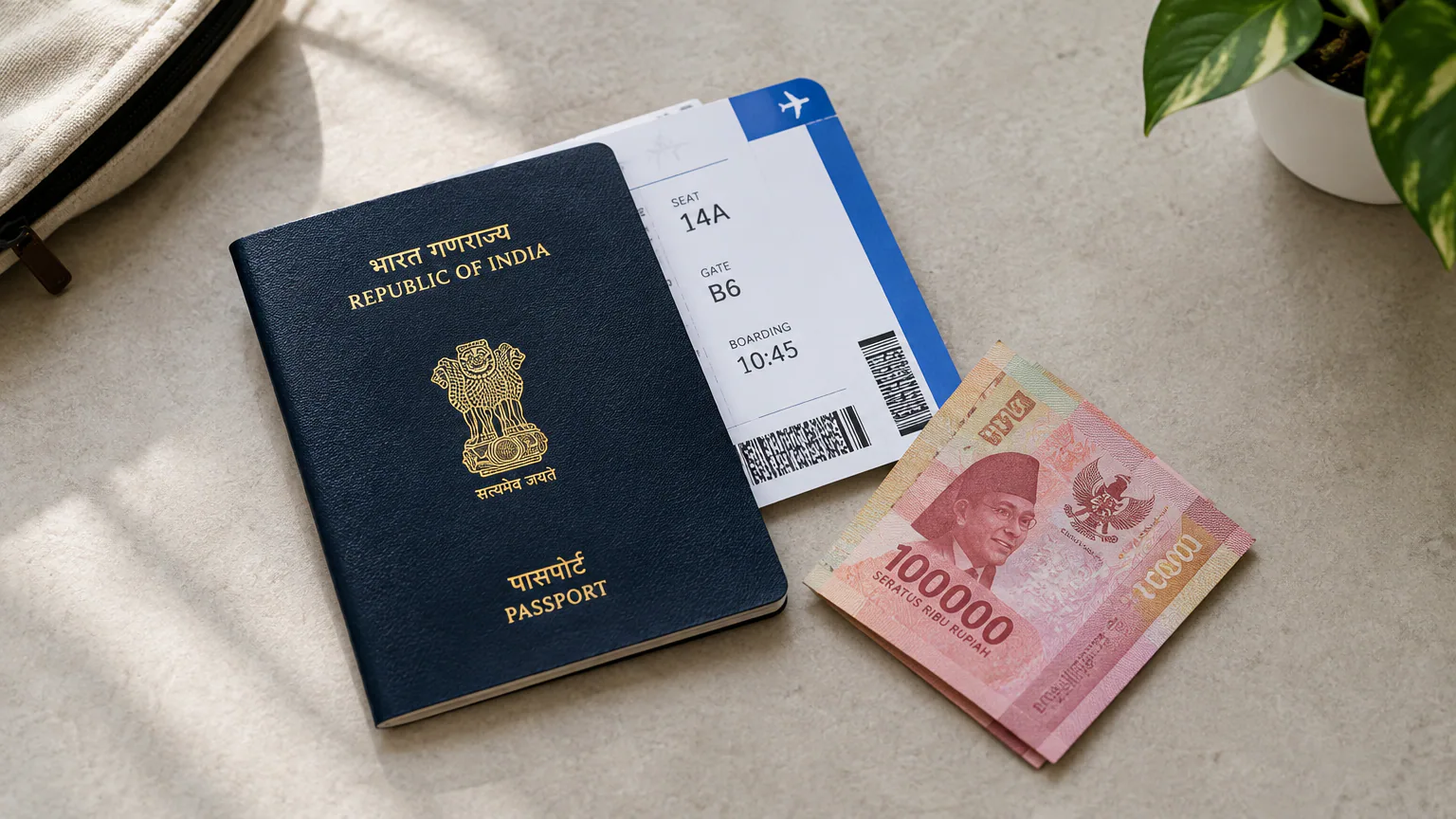 Travel journalIndonesia Visa for Indians in 2026: Complete e-VOA Guide
Indian citizens require a visa to enter Indonesia. For tourism in 2026, the electronic Visa on Arrival (e-VOA) is the standard option: a single-entry permit allowing a 30-day stay, applied…
Read the guide- Travel journalIndonesia Beyond Bali Travel Guide for Indians: Discovering the Archipelago's Hidden Gems
Indonesia is an archipelago of over 17,000 islands, and the experiences it offers extend far beyond Bali's well-known shores. For Indian travellers, the islands of Java, Lombok, Flores, Sulawesi, Sumatra,…
Read the guide
A little inspiration.
A holiday made yours.
Share your dates and departure city — a travel expert replies with ideas within 24 hours.
Plan my holidayLet’s make it personal.
Tell us about your dates, departure city and the moments you’d love to include.
What happens next?
Discuss your preferences, review a tailored proposal and refine the details before you decide.