
Guides for this destination
Practical reads before you plan — timing, places, costs, visas and tips.
- Travel journalBest Time to Visit Australia
The best time to visit Australia is April to May or September to October, when temperatures across southern cities sit between 12°C and 25°C and crowds are moderate. May to…
Read the guide 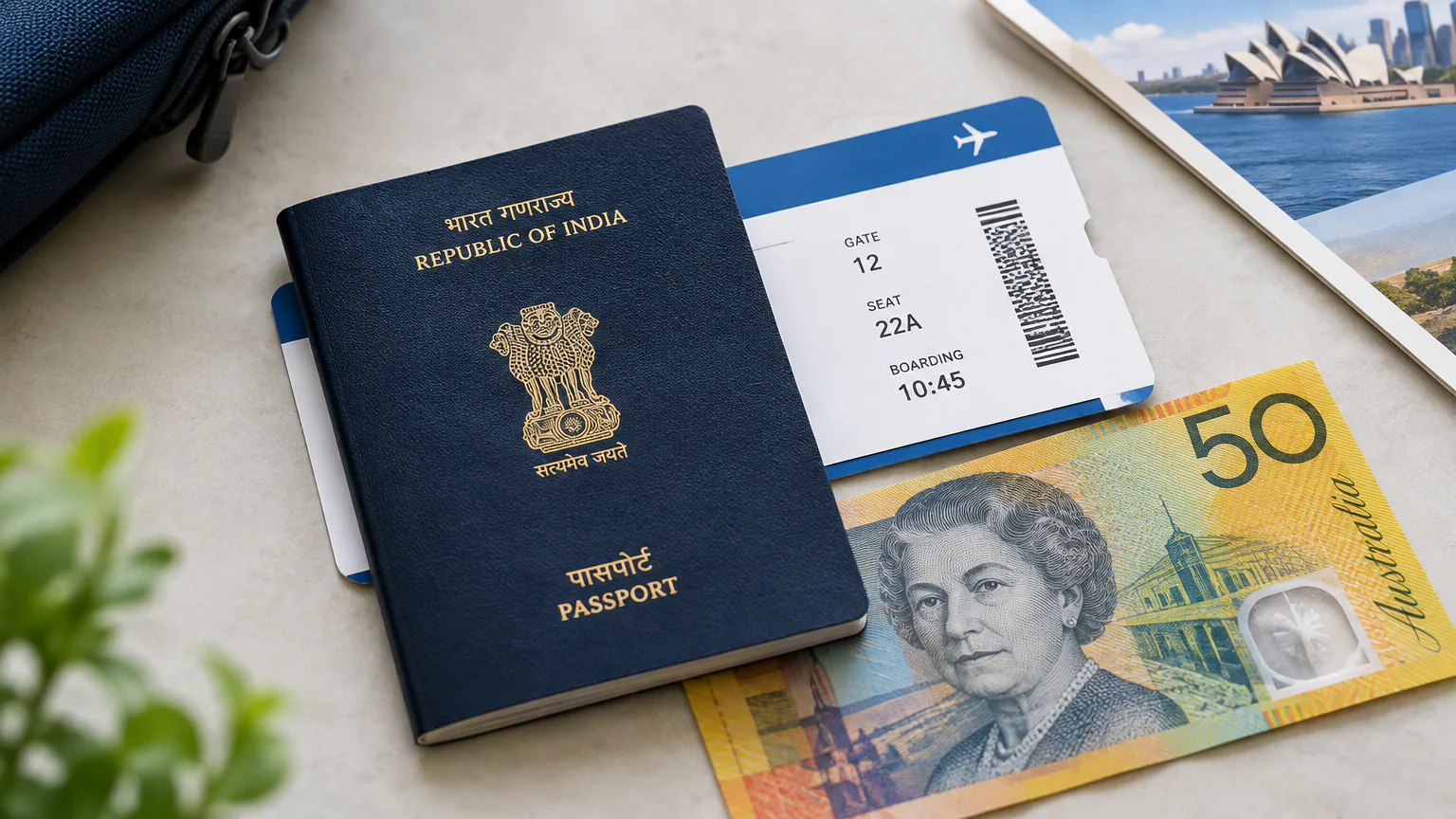 Travel journalAustralia Visa for Indians 2026: Complete Guide to the Visitor Visa (Subclass 600)
Indian citizens require a visa before travelling to Australia. The Visitor visa (subclass 600) Tourist stream is the standard pathway for tourism, visiting family and friends, or taking a short…
Read the guide- Travel journalHow to Reach Australia from India
How to reach Australia from India: fly one-stop from Delhi, Mumbai, Bengaluru, Chennai, Kolkata, Hyderabad, Ahmedabad or Pune via Singapore, Kuala Lumpur, Doha or Dubai, with typical total flight times…
Read the guide
What Is the Australia Travel Guide for Indian Travellers
Australia is an island continent and country in Oceania, with English as its language and the Australian dollar as currency. Sydney Harbour and the Great Barrier Reef anchor most first trips. April to May and September to October suit southeastern cities, while May to October suits the reef and the drier northern tropics.
Australia spans UTC+8 to UTC+11, with seasonal daylight saving in several states, so a single trip can cross three time zones. The country's highest point, Mount Kosciuszko, reaches 2,228 m, which matters little to most itineraries but explains why alpine areas near Melbourne and Canberra see snow in winter.
Three experiences define a first Australia trip: snorkelling or diving the Great Barrier Reef from Cairns, walking the Sydney Harbour foreshore between the Opera House and the Rocks, and watching sunset over Uluru in the Northern Territory. Indian travellers typically fall into four groups: honeymooners combining Sydney and the Whitsundays, families with children visiting theme parks and wildlife parks, adventure travellers heading to Cairns and Uluru, and students or visiting families adding a holiday to a university city stay.
For visiting Australia from India, the key planning facts are straightforward: a visitor visa is required before travel, flights from Delhi or Mumbai connect directly to Sydney and Melbourne, and the AUD trades at approximately ₹60, making on-ground costs relatively predictable for Indian travellers budgeting in rupees.
At a glance
Australia at a Glance
Australia sits in Oceania, uses the Australian dollar at roughly ₹60 per AUD, and speaks English. Sydney Kingsford Smith Airport (SYD) is the main international gateway. Indians need a visitor visa before travel. April to May and September to October are the most comfortable windows for a combined city-and-reef itinerary.
Australia Travel Guides.
Planned around you.
- Region
- OceaniaIsland continent and country
- Currency
- Australian dollar (AUD)Approximately ₹60 per AUD; rates fluctuate
- Language
- English
- Time zone
- UTC+8 to UTC+11Seasonal daylight saving applies in several states
- Main gateway airport
- Sydney Kingsford Smith Airport (SYD)Primary international access point for most itineraries
- Best season
- April–May and September–OctoberMay–October for the Great Barrier Reef; northern Australia drier May–October
Why Indians Choose Australia for Their Holiday
Indians choose Australia for three concrete reasons: direct flights from Delhi and Mumbai make the journey manageable, the Great Barrier Reef near Cairns offers reef diving that few destinations match, and cities like Sydney and Melbourne combine Indian-friendly food scenes with clean public transport. The AUD at roughly ₹60 also makes on-ground costs predictable.
- Direct flights from Delhi and Mumbai
Qantas and Air India operate on India–Australia routes, with Singapore Airlines and other Southeast Asian carriers offering one-stop options via Singapore, Kuala Lumpur or Bangkok. Book 8–12 weeks ahead for the April–May and September–October peak windows to secure better fares.
Flights - Great Barrier Reef from Cairns
Cairns is the standard gateway for reef day trips, and May to October is the recommended window for calmer seas and clearer water. Reef trips typically run as full-day boat departures from the Cairns marina to outer reef pontoons.
Experiences - Indian food access in Sydney and Melbourne
Harris Park in Parramatta and Sydney's Chinatown area have dense Indian restaurant clusters, and Melbourne's CBD has similar options near Flinders Street. Useful for families and elders who prefer familiar meals on longer trips.
Food - Predictable on-ground costs in AUD
With the AUD trading at approximately ₹60, Indian travellers can budget in rupees with reasonable accuracy. Cards are accepted almost everywhere in Australian cities, reducing the need to carry large amounts of cash.
Money
The first draw is access. Direct services from Delhi and Mumbai to Sydney and Melbourne cut the journey to a single overnight flight, and Qantas, Air India and Singapore Airlines all serve the route with one or no stops depending on the city pair.
The second is the reef. Cairns is the standard base for Great Barrier Reef day trips, and the May-to-October window lines up with the drier northern tropics. Families often pair this with the Whitsundays for a slower island stay.
The third is familiarity. Sydney's Harris Park in Parramatta and Chinatown area have strong Indian restaurant clusters, Melbourne's CBD has similar options near Flinders Street, and Indian grocery stores are common in both cities. That matters on a 10-day trip with children or elders.
According to Tourism Research Australia's 2025 India market profile, India is among the key growth markets for Australian inbound tourism, with Indian visitors spending significantly on accommodation, food and experiences across New South Wales and Queensland.
Top 10 Places to Visit in Australia
The ten places below cover the standard first-trip circuit: Sydney and its harbour, Melbourne and the Great Ocean Road, Cairns and the Great Barrier Reef, Uluru in the Northern Territory, and the Whitsundays. Each entry names the area, explains why it matters and gives one practical tip for Indian travellers planning their australia holiday.
- Sydney, New South Wales
Sydney Opera House and Sydney Harbour
The Opera House sits on Bennelong Point and is the single most recognised Australian landmark. The harbour foreshore walk between the Opera House and the Rocks passes Circular Quay ferry terminals and takes around 30 minutes at a relaxed pace.
Best forFirst-time visitors, photography, families
Book Opera House guided tours in advance; the harbour walk is free and best in the morning before tour groups arrive.
- Sydney, New South Wales
Sydney Harbour Bridge
The steel arch bridge connects the CBD to the North Shore and carries road, rail and pedestrian traffic. The pedestrian walkway on the eastern side gives harbour views without a paid climb.
Best forWalkers, views, budget travellers
Walk the pedestrian path from Milsons Point to the Rocks for free harbour views; the paid BridgeClimb is a separate optional experience.
- Sydney, New South Wales
Bondi Beach
Bondi is Sydney's best-known beach and the start of the Bondi to Coogee coastal walk, a cliffside path with ocean views. The beach is patrolled and popular with swimmers and surfers.
Best forBeach days, coastal walks, photography
Take the train to Bondi Junction then a bus to the beach; the coastal walk is best in the morning before the afternoon heat.
- Victoria, from Torquay to Warrnambool
Great Ocean Road
The Great Ocean Road is a coastal drive west of Melbourne passing the Twelve Apostles limestone stacks. The full route is a long drive usually done as a day trip or a two-day itinerary.
Best forRoad trips, scenery, couples
A single-day trip from Melbourne means many hours in a vehicle; an overnight stop in Apollo Bay or Port Campbell is more comfortable.
- Melbourne, Victoria
Melbourne CBD and Federation Square
Melbourne's grid CBD centres on Federation Square, Flinders Street Station and the Yarra River promenade. The free City Circle tram loops the CBD and connects major sights.
Best forCity breaks, food, culture
Use the free City Circle tram to orient yourself on day one; laneway coffee culture is concentrated around Degraves Street.
- Off Cairns, Queensland
Great Barrier Reef
The Great Barrier Reef is the world's largest coral reef system and the main reason many Indians visit Cairns. Day boats run from the Cairns marina to outer reef pontoons for snorkelling and diving.
Best forSnorkelling, diving, marine wildlife
May to October is the recommended window for calmer seas; seasickness tablets are worth carrying for the outer reef crossings.
- Cairns, Queensland
Cairns Esplanade
The Cairns Esplanade includes a free saltwater lagoon, a boardwalk and departure points for reef and rainforest tours. It is the practical base for most Cairns itineraries.
Best forFamilies, budget stays, tour pickups
The lagoon is free and patrolled; use it instead of the beach, which has crocodile and stinger warnings in warmer months.
- Northern Territory
Uluru-Kata Tjuta National Park
Uluru is a sandstone monolith in the Northern Territory and a UNESCO World Heritage site. The base walk and the park also includes Kata Tjuta's domed rock formations.
Best forLandscapes, cultural sites, photographers
Fly into Ayers Rock (Connellan) Airport; sunrise and sunset viewing areas are the standard photo stops and require a park pass.
- Queensland
Whitsunday Islands
The Whitsundays are a 74-island group inside the Great Barrier Reef Marine Park, with Whitehaven Beach as the best-known stop. Access is via Airlie Beach or Hamilton Island.
Best forIsland stays, sailing, honeymoons
Day sails to Whitehaven Beach fill up in the May-to-October dry season; book ahead if your dates are fixed.
- New South Wales, west of Sydney
Blue Mountains
The Blue Mountains are a UNESCO-listed eucalypt forest region reachable by train from Sydney Central. Echo Point at Katoomba overlooks the Three Sisters rock formation.
Best forDay trips, hiking, cooler weather
A train from Sydney Central to Katoomba is cheaper than a coach tour and gives you flexibility on the day.
Treat this as a menu, not a checklist. A 10-day trip realistically covers three of these well; a 14-day trip can stretch to four if you accept one internal flight day. Internal flights between Sydney, Cairns and Uluru are the standard connectors on a multi-region itinerary.
Best Time to Visit Australia from India
April to May and September to October give the most comfortable conditions across Sydney, Melbourne and Cairns, making them the two strongest windows in this australia travel guide. May to October is the recommended window for the Great Barrier Reef and for northern Australia, which is drier in those months. December to February is hot in the south and wet in the tropical north.
January
Shoulder seasonAustralian summer; hot in Sydney and Melbourne, wet season in Cairns and the tropical north
School holidays push up prices; tropical north is in wet season
February
Shoulder seasonHot in the south, still wet in the tropical north
Better value than January but reef conditions remain variable
March
Good time to goCooling in the south, wet season tapering in the north
Shoulder month with improving reef conditions late in the month
April
Best time to goMild and comfortable across southeastern cities; northern tropics drying out
One of the two strongest windows for a multi-city trip
May
Best time to goCool and dry in the south; dry season begins in Cairns and the north
Reef conditions improve; good month for Sydney, Melbourne and Cairns
June
Good time to goAustralian winter; cool in the south, dry and mild in the tropical north
Strong for Cairns and Uluru; southern cities need warm layers
July
Good time to goCool in the south, dry in the north; snow in alpine areas
School holidays raise prices; reef and outback conditions are good
August
Good time to goCool and dry across most regions; dry season continues in the north
Reliable reef and outback weather; southern cities remain cool
September
Best time to goWarming in the south, dry in the north; comfortable across most regions
Second of the two strongest windows for a combined itinerary
October
Best time to goWarm in the south, dry season ending in the north
Good balance of weather and pricing before the summer peak
November
Good time to goWarming in the south, wet season returning to the tropical north
Southern cities still comfortable; reef conditions start to decline
December
Shoulder seasonAustralian summer; hot in the south, wet in the tropical north
Peak holiday pricing; tropical north is in wet season
- BestApr, May, Sep, Oct
- GoodMar, Jun, Jul, Aug, Nov
- FairJan, Feb, Dec
Australia's seasons run opposite to India's, which is the single most common planning mistake for first-time visitors. December to February is Australian summer, not winter. July is Australian winter and brings snow to alpine areas near Melbourne and Canberra, while Cairns and the tropical north remain dry and warm.
For Indian school-holiday travellers, the May and October windows align well with Indian school breaks and avoid the December–January peak pricing that comes with Australian school holidays. The month table below maps every month to weather, crowd level, price band and a verdict for Indian travellers planning a multi-city itinerary.
Australia Trip Cost from India (2026)
A 2026 Australia trip from India spans a wide cost range depending on travel style, cities covered and whether you include internal flights to Cairns or Uluru. Indicative budgets below are labelled by tier and assume twin sharing with return economy flights from Delhi or Mumbai; confirm current fares and hotel rates at the time of booking.
Budget
Students, solo travellers and first-time visitors on a tight budget
- 3-star or hostel-style stays in Sydney and Melbourne
- Public transport and the free City Circle tram in Melbourne
- One reef day trip from Cairns
- Limited internal flights; more road and rail transfers
Mid-range
Families, couples and honeymooners wanting a comfortable multi-city trip
- 4-star hotels in Sydney, Melbourne and Cairns
- Reef day trip and a Great Ocean Road day tour
- Internal flights between Sydney, Cairns and Uluru
- Some private transfers at arrival and departure
Luxury
Honeymooners, milestone trips and travellers wanting premium stays
- 5-star harbour-view or beachfront stays in Sydney and the Whitsundays
- Private reef charters and guided Uluru tours
- Business-class internal flights where available
- Private airport transfers throughout
The tiers below assume return economy flights from Delhi or Mumbai, twin sharing for hotels, and a mix of internal flights and road transfers. Peak-season travel in December, January and July pushes costs toward the upper end of each band. Confirm current fares and hotel rates at the time of booking; the AUD-to-INR rate also moves.
Flight and land split: on a mid-range trip, return flights from India typically take the larger share of the total, with hotels, internal flights and tours making up the rest. Internal flights between Sydney, Cairns and Uluru add meaningfully to the land portion. For a detailed breakdown of what an australia holiday guide itinerary costs by city, use the cost table in the visa and planning section below.
How to Reach Australia from India
Direct flights connect Delhi and Mumbai with Sydney and Melbourne, with Qantas and Air India among the carriers on the route. One-stop options via Singapore, Kuala Lumpur or Bangkok are common and often cheaper. Sydney Kingsford Smith Airport (SYD) is the main international gateway for most itineraries when visiting Australia from India.
Delhi (DEL)
Non-stop to Sydney or Melbourne where operated
Qantas and Air India operate on India–Australia routes; check current schedules as they change seasonally
Mumbai (BOM)
Non-stop to Sydney or Melbourne where operated
Non-stop services reduce total journey time compared with one-stop routings
Delhi or Mumbai
Singapore, Kuala Lumpur or Bangkok
Singapore Airlines and other Southeast Asian carriers offer one-stop options, often at lower fares
Sydney (SYD)
Domestic network
Sydney Kingsford Smith Airport (SYD) is the main international gateway; domestic connections to Cairns, Melbourne and Uluru depart from the same airport
Melbourne
Great Ocean Road
The Great Ocean Road runs from Torquay to Warrnambool; a single-day trip means many hours in a vehicle; an overnight stop is more comfortable
Sydney Central
Blue Mountains line
Cheaper and more flexible than a coach tour for a Blue Mountains day trip to Katoomba
Travelling from your city?
Tell us where you start. A specialist can plan connections around your stay.
Plan my journeyAustralia has no rail or road connection to India, so flights are the only practical option. Internal travel between Sydney, Melbourne, Cairns and Uluru is by domestic flight, with the Great Ocean Road and Blue Mountains reachable by road or train from Melbourne and Sydney respectively.
For the Blue Mountains, the train from Sydney Central to Katoomba is cheaper and more flexible than a coach tour. For the Great Ocean Road, the coastal route from Torquay to Warrnambool is best done as an overnight trip rather than a single day drive from Melbourne.
Where to Stay in Australia
Sydney's CBD and Circular Quay suit first-time visitors, Melbourne's CBD works for food and culture, and Cairns Esplanade is the practical base for reef trips. Pick your base by what you plan to do, not by star rating alone. Indicative nightly rates vary by season and city.
Budget
Students, solo travellers and short city stays
- Hostels and 3-star hotels in Sydney CBD and Melbourne CBD
- Cairns Esplanade budget motels within walking distance of reef tour pickups
- Public transport access is the main selection criterion at this tier
Mid-range
Families and couples wanting comfort without premium pricing
- 4-star hotels near Sydney's Circular Quay and Darling Harbour
- Melbourne CBD hotels near Flinders Street Station
- Cairns Esplanade 4-star stays with lagoon access
Luxury
Honeymooners and milestone trips
- Harbour-view rooms in Sydney near the Opera House
- Beachfront and island resorts in the Whitsundays
- Premium Uluru-view lodges in the Northern Territory
A Sydney CBD hotel near Circular Quay saves daily transport time and puts you within walking distance of the Opera House foreshore walk. A Cairns Esplanade stay puts you within walking distance of reef tour pickups and the free saltwater lagoon. For Uluru, accommodation options are limited to the resort area near the park entrance, so book well ahead for the May-to-October dry season.
Rates move with season and demand. The December–January and July school-holiday periods push rates toward the upper end of each band across all cities. Confirm current nightly rates at the time of booking.
Local Food and Cuisine in Australia
Australian food culture mixes British roots, Asian migration and a strong coffee scene. Five dishes worth trying are barramundi, meat pies, fish and chips, lamingtons and modern Australian brunch plates. Vegetarian and Jain travellers will find Indian restaurants in Sydney's Harris Park and Melbourne's CBD, plus dedicated vegetarian cafés in both cities.
- Northern Australia and city restaurants
Barramundi
Barramundi is a native Australian fish served grilled, pan-fried or in fish and chips. Widely available in Cairns and Darwin restaurants and in most city seafood menus.
Best forSeafood, pescatarians
Ask for it grilled rather than battered if you want a lighter meal; a good option for pescatarian travellers.
- Nationwide, bakeries and takeaway shops
Meat pie
The meat pie is a standard Australian bakery item, usually beef in gravy inside a shortcrust shell. A cheap, quick lunch option on road trips and in city food courts.
Best forBudget meals, road trips
Vegetarian versions exist at most bakeries; ask before assuming the filling is meat-free.
- Coastal towns and city suburbs
Fish and chips
Fish and chips is a standard Australian takeaway meal, especially in coastal towns like Bondi and Cairns. Portions are large and usually shareable.
Best forBeach days, families
Look for shops with high turnover for fresher fish; ask for salt and vinegar on the side if you prefer less seasoning.
- Bakeries and cafés nationwide
Lamington
A lamington is a sponge cake square coated in chocolate and rolled in desiccated coconut, widely sold in Australian bakeries and cafés. A low-cost way to try a classic Australian sweet.
Best forDesserts, coffee breaks
Available in most supermarket bakeries as well as cafés; pairs well with the strong Australian coffee culture.
- Melbourne CBD and Sydney suburbs
Modern Australian brunch
Modern Australian brunch plates combine eggs, avocado, sourdough and seasonal produce. Melbourne in particular has a strong café culture around Degraves Street and the CBD laneways.
Best forVegetarians, coffee, couples
Vegetarian brunch options are standard in Melbourne and Sydney cafés; ask for egg-free versions if needed.
Australian cities are easier for Indian dietary needs than most long-haul destinations because of the size of the Indian diaspora. Harris Park in Parramatta and Sydney's Chinatown area have dense Indian restaurant clusters; Melbourne's CBD has similar options near Flinders Street. Outside the cities, especially in Cairns and Uluru, vegetarian choices narrow, so plan meals around hotel restaurants or self-catering.
For Jain travellers, it is worth calling ahead to restaurants in Cairns and the Northern Territory, where menu flexibility is more limited than in Sydney or Melbourne. Most 4-star and 5-star hotels in Sydney and Melbourne can accommodate dietary requests with advance notice.
Australia Travel Tips for Indians
Indians need an Australian visitor visa before travel, applied for through the Department of Home Affairs; approval is not guaranteed. Carry AUD or a card that works internationally, buy an Australian eSIM or local SIM on arrival, and note that Australia enforces strict biosecurity rules on food and plant items at customs. These australia travel tips apply to all itinerary types.
- Apply for the Australian visitor visa early
Indians require a visitor visa before travel, applied for through the Department of Home Affairs. Approval is not guaranteed, so apply well ahead and avoid non-refundable bookings until the visa is granted.
Visa - Carry AUD and a card that works internationally
Cards are accepted almost everywhere in Australian cities, but carry some AUD cash for markets and small towns. Notify your Indian bank of international usage before departure to avoid transaction blocks.
Money - Buy an Australian eSIM or local SIM
An eSIM bought before departure or a local SIM from a major carrier at the airport both work. City coverage is strong; outback coverage is patchier, so download offline maps for Uluru and Great Ocean Road drives.
Connectivity - Declare food and plant items at customs
Australia enforces strict biosecurity rules. Declare any food, plant material or wooden items on your incoming passenger card; undeclared items attract penalties.
Customs - Follow beach safety signage
Swim between the red and yellow flags at patrolled beaches. In tropical north Queensland, heed stinger and crocodile warnings in warmer months; the Cairns Esplanade lagoon is a patrolled alternative to the beach.
Safety - Plan around Australian seasons, not Indian ones
December to February is Australian summer, not winter. April to May and September to October are the most comfortable windows for a multi-city trip; May to October suits the reef and northern Australia.
Planning
The visa is the first gate. Apply well before your travel date, keep your documents consistent, and do not book non-refundable flights until the visa is granted. On arrival, declare any food, plant material or wooden items at customs; undeclared items attract penalties.
For money, cards are accepted almost everywhere, but carry some AUD cash for markets and small towns. Notify your Indian bank of international usage before departure to avoid transaction blocks. For connectivity, an Australian eSIM bought before departure or a local SIM from a major carrier at the airport both work; coverage in cities is strong and patchier in the outback, so download offline maps for Uluru and Great Ocean Road drives.
Safety is generally straightforward in cities, but standard precautions apply: secure your bags in crowded areas, avoid unlit streets at night, and follow beach safety signage. On beaches, swim between the red and yellow flags at patrolled beaches. In tropical north Queensland, heed stinger and crocodile warnings in warmer months; the Cairns Esplanade lagoon is a patrolled alternative to the beach.
Australia vs New Zealand and Southeast Asia: An Honest Comparison
Australia suits travellers who want reef diving, big cities and outback landscapes in one trip, with direct flights from India. New Zealand offers similar scenery in a smaller, more compact package but needs a separate visa and has fewer direct India connections. Southeast Asia is cheaper and closer but lacks the reef and outback scale that makes an australia holiday guide itinerary distinctive.
Australia
Best forReef diving, big-city breaks and outback landscapes in one trip
StrengthsDirect flights from Delhi and Mumbai; Great Barrier Reef; strong Indian food access in Sydney and Melbourne; AUD at roughly ₹60 makes costs predictable
Trade-offsHigher cost than Southeast Asia; long flight times; visitor visa required before travel; internal distances mean at least one domestic flight on most itineraries
New Zealand
Best forCompact scenic road trips and adventure activities
StrengthsCompact geography; strong scenery; good for self-drive itineraries
Trade-offsSeparate visa required; fewer direct India connections; no reef system comparable to the Great Barrier Reef
Southeast Asia (Thailand, Malaysia, Singapore)
Best forShort-haul, lower-cost holidays with easy visa access
StrengthsShorter flights; lower daily costs; many visa-free or visa-on-arrival options for Indians
Trade-offsNo reef or outback equivalent; smaller city scale; less suited to a 10-night multi-region trip
The comparison below is about fit, not ranking. Australia's advantage is the combination of a major reef system, two large cities with strong Indian food access, and direct flights from Delhi and Mumbai. Its disadvantage is cost and distance: a 10-night trip is the realistic minimum to cover Sydney, Cairns and one more region without rushing.
For Indian travellers deciding between destinations, the key question is whether the Great Barrier Reef and the Sydney–Melbourne city circuit justify the higher cost and longer flight compared with Southeast Asia. For honeymooners and milestone trips, the answer is usually yes; for short-break travellers, Southeast Asia or New Zealand may be a better fit.
Holiday ideas to start from
Reviewed itineraries for this destination — personalise with a specialist, never an instant booking.
Gold Coast Family Holiday: 6 Nights Australia Package for Indian Families
From₹1,50,000per adult, twin sharing, land only; standard duration bucket; within destination research bandGold Coast Family Holiday Premium 6 Nights: Australia 6N7D Tour Package 2026
From₹2,31,100per adult, twin sharing, land only; premium duration bucket; within destination research bandSydney and Melbourne Premium 7 Nights: 2026 Australia Tour Package Guide
From₹2,61,900per adult, twin sharing, land only; premium interpolated duration; within destination research band
From idea to itinerary, with a real person.
- 01Share your plan
Dates, departure city, travellers and the moments you’d love. It only takes a minute.
- 02Shape it with a specialist
A real person refines the route, stays and pace with you. Change anything.
- 03Review your quote
A clear, personalised quote with confirmed inclusions. No payment to enquire.
From our travel specialists
What our team sees when planning these trips, beyond what the guidebooks say.
Confirmed 11 Oct 2026
- Itinerary
Reports show travellers adding or prioritising local experiences such as a Manly ferry, Bondi–Coogee coastal walk, whale-watching, the Great Ocean Road, or a Great Barrier Reef cruise. Families particularly add Gold Coast theme parks, while travellers often adjust plans to include a slower day or a nearby day trip rather than another rushed city transfer.
- Practical
Money and food costs are the clearest recurring surprises: travellers warn against budgeting as if Australia were Southeast Asia and against eating out for every meal. Public-transport access, parking costs and strict driving enforcement also affect the budget and daily plans.
- Places
Sydney’s CBD or harbour area is the strongest first base for most visitors because major sights, ferries, beaches and city walks are accessible from there; travellers commonly allow three to four full days. For a broader first trip, Sydney plus Melbourne provides a practical contrast between harbour/coast scenery and laneways, museums, sport and food culture.
- Families & couples
Families learn that different age groups need deliberately paced days: Gold Coast theme parks suit children and teenagers, while Sydney wildlife attractions and Melbourne museums work better for mixed generations. Traveller reports also show that well-timed domestic flights and avoiding too many hotel changes matter as much as the attractions themselves, especially for families travelling with grandparents or young children.
Before you go
Straight answers to help you plan — then personalise the trip with a specialist.
8 answered belowAsk a specialist anything about this trip — there’s no obligation.
Ask a specialist01Do Indian citizens need a visa to visit Australia?
Yes, Indian citizens need an Australian visitor visa before travel, applied for through the Department of Home Affairs. Apply well ahead of your travel date, keep your documents consistent, and avoid non-refundable bookings until the visa is granted. Approval is not guaranteed and depends on your individual application.
02What is the best time to visit Australia from India?
April to May and September to October give the most comfortable conditions across Sydney, Melbourne and Cairns. May to October is the recommended window for the Great Barrier Reef and northern Australia, which is drier in those months. December to February is hot in the south and wet in the tropical north.
03How much does a 10-day Australia trip cost from India?
Costs vary widely by travel style, cities covered and whether internal flights to Cairns or Uluru are included. Budget, mid-range and luxury tiers each carry different price points; confirm current return fares from Delhi or Mumbai and hotel rates at the time of booking, as these move with season and demand.
04Are there direct flights from India to Australia?
Yes, direct flights connect Delhi and Mumbai with Sydney and Melbourne, with Qantas and Air India among the carriers. One-stop options via Singapore, Kuala Lumpur or Bangkok are common and often cheaper. Check current schedules as services change seasonally.
05Which Australian cities should first-time Indian visitors cover?
Most first trips cover Sydney for the harbour and Opera House, Cairns for the Great Barrier Reef, and either Melbourne for the Great Ocean Road or Uluru for the outback. A 10-night trip realistically covers three of these well; a 14-night trip can stretch to four if you accept one internal flight day.
06Is Australia good for vegetarian Indian travellers?
Yes, especially in Sydney and Melbourne. Harris Park in Parramatta and Sydney's Chinatown area have dense Indian restaurant clusters, and Melbourne's CBD has similar options near Flinders Street. Outside the cities, particularly in Cairns and Uluru, vegetarian choices narrow, so plan meals around hotel restaurants or self-catering.
07What currency should I carry in Australia?
The Australian dollar (AUD) is the local currency, at roughly ₹60 per AUD, though exchange rates fluctuate. Cards are accepted almost everywhere in cities, but carry some AUD cash for markets and small towns. Notify your Indian bank of international usage before departure to avoid transaction blocks.
08How many days are enough for an Australia holiday from India?
Plan 7 to 14 days. A 7-night trip suits one city plus Cairns or Uluru; a 10-night trip covers Sydney, Cairns and one more region comfortably; a 14-night trip allows four regions if you accept one internal flight day. Shorter trips are possible but involve significant travel time for the distance from India.