
Azerbaijan Travel Guide for Indians: Best Time to Visit, Top Places & Essential Tips
Azerbaijan sits at the crossroads of Eastern Europe and Western Asia, offering Indian travellers a rare combination of UNESCO-listed ancient cities, contemporary architecture, Caspian Sea coastline, and mountain landscapes — all within a relatively short flight from India. The capital, Baku, anchors most itineraries with its walled medieval core alongside futuristic landmarks. For sightseeing and cultural travel, spring (April–May) and autumn (September–October) offer the most comfortable conditions. Summer suits Caspian beach plans, and winter opens mountain destinations when snow conditions allow. This guide covers everything Indian travellers need to plan an Azerbaijan trip in 2026: when to go, what to see, how to get there, visa steps, where to stay, what to eat, and how to budget realistically.
- No booking feeRequesting a quote is free with no obligation.
- Expert-planned itineraryRoutes and stays shaped around your dates and pace.
- Reply within 24 hoursA travel expert gets back to you with ideas.
- Refine before you decideAdjust the plan until it feels right for you.
What Is Azerbaijan? A Quick Destination Overview
Azerbaijan is a transcontinental nation at the intersection of Eastern Europe and Western Asia, with its capital Baku on the western shore of the Caspian Sea. The country spans diverse geography — from the Caspian coastline and semi-arid lowlands to the forested Greater Caucasus Mountains in the north and west.
Its cultural identity reflects centuries of Persian, Ottoman, Russian, and Soviet influence, producing a distinctive blend visible in its architecture, cuisine, language, and traditions. Azerbaijan brands itself the 'Land of Fire', a reference to its ancient Zoroastrian heritage and the natural gas seeps that once fuelled eternal flames across the Absheron Peninsula.
Key UNESCO World Heritage Sites include the Walled City of Baku (with the Palace of the Shirvanshahs and the Maiden Tower), the Gobustan Rock Art Cultural Landscape, and the Historic Centre of Sheki with the Palace of Shaki Khans. The Heydar Aliyev Center, designed by Zaha Hadid, represents the country's contemporary architectural ambition. This combination of ancient heritage and modern infrastructure makes Azerbaijan a compelling destination for Indian travellers seeking something beyond mainstream European circuits.
Why Azerbaijan Appeals to Indian Travellers
Azerbaijan has grown steadily as a destination for Indian travellers, driven by several practical and experiential factors.
Flight connectivity is improving, with airlines including Azerbaijan Airlines (AZAL) and IndiGo among carriers offering direct or one-stop options from major Indian cities. Travel time on direct routes is typically around 4–5 hours, making it viable for shorter holidays.
The e-visa process is fully online via evisa.gov.az, removing the need for embassy visits. Local costs for food, public transport, and many accommodation categories are generally lower than comparable Western European destinations, allowing a comfortable experience across a range of budgets.
Culturally, the warmth of Azerbaijani hospitality resonates with Indian visitors, and the cuisine — built around rice, meat, herbs, and slow-cooked stews — shares structural similarities with South Asian cooking traditions. The Caspian beaches, the ancient fire temples, and the Silk Road heritage of cities like Sheki add layers of interest that go well beyond a standard city break.
- Short flight time: approximately 4–5 hours direct from major Indian cities
- Fully online e-visa process through evisa.gov.az
- Generally affordable local costs compared to Western Europe
- Three UNESCO World Heritage Sites within easy reach of Baku
- Caspian Sea beaches accessible from the capital
- Strong cultural hospitality traditions familiar to Indian visitors
Best Time to Visit Azerbaijan from India
The right time to visit Azerbaijan depends on which regions you plan to explore and what activities you prioritise. The country's climate varies considerably: the Caspian coast is generally milder and drier, while mountain areas experience cooler conditions and winter snowfall.
Spring (April–May) and autumn (September–October) are the most broadly recommended periods for Indian travellers. Temperatures are moderate, landscapes are at their most photogenic, and conditions suit walking around historic sites, day trips to Gobustan, and intercity travel to Sheki.
Summer (June–August) is the warmest season and the most suitable for Caspian beach activities, but Baku and inland lowlands can be hot. Plan outdoor sightseeing for early mornings or evenings during this period.
Winter (November–March) is cold across most of the country and potentially snowy in the mountains. It suits travellers specifically seeking winter sports or a quieter, lower-cost city visit, but check road and mountain conditions before booking.
| Month | Conditions | Crowd Level | Price Trend | Best For |
|---|---|---|---|---|
| January | Cold; snow possible in mountains | Low | Low | Budget city breaks; mountain snow activities |
| February | Cold; late winter | Low | Low | Quiet travel; budget-conscious visitors |
| March | Cool; spring begins; Novruz festival | Moderate | Moderate | Cultural events; early spring sightseeing |
| April | Mild and pleasant; landscapes bloom | Moderate | Moderate | Sightseeing; outdoor day trips |
| May | Warm and comfortable; ideal conditions | Moderate–High | Moderate–High | All-round travel; cultural and nature itineraries |
| June | Warm to hot; beach season opens | High | High | Caspian beaches; early summer travel |
| July | Hot; peak beach season | High | High | Beach holidays; coastal activities |
| August | Hot; late beach season | High | High | Beaches; evening city exploration |
| September | Warm and pleasant; autumn begins | Moderate–High | Moderate–High | Sightseeing; cultural tours; nature |
| October | Mild; crisp autumn weather | Moderate | Moderate | City and cultural travel; Sheki visits |
| November | Cooler; pre-winter | Low–Moderate | Low–Moderate | Fewer crowds; budget travel |
| December | Cold; winter begins; festive atmosphere | Low | Low | Festive city visits; mountain preparation |
- Spring (Apr–May)
- Best overall for sightseeing, cultural sites and day trips. Mild temperatures, blooming landscapes, moderate crowds.
- Summer (Jun–Aug)
- Best for Caspian beaches. Hot in Baku and lowlands; plan outdoor activities for cooler parts of the day.
- Autumn (Sep–Oct)
- Excellent for city and cultural travel. Comfortable temperatures, fewer crowds than summer, good light for photography.
- Winter (Nov–Mar)
- Cold; suitable for mountain destinations when snow conditions allow. Lower prices and fewer tourists in Baku.
Top Places to Visit in Azerbaijan
Azerbaijan's attractions range from UNESCO-listed medieval cities and prehistoric rock art to contemporary architectural landmarks and natural phenomena. The following ten sites represent the country's most significant and visitor-relevant destinations, covering Baku and key regions beyond the capital.
1. Walled City of Baku (Icherisheher)
The Walled City of Baku, locally known as Icherisheher, is the historic core of the capital and a UNESCO World Heritage Site. Its narrow lanes, medieval stone buildings, caravanserais, and mosques form a living urban quarter that has been continuously inhabited for centuries. The two principal monuments — the Palace of the Shirvanshahs and the Maiden Tower — are both within the walls and are central to any Baku itinerary.
The Walled City is compact enough to explore on foot in a half-day, though its layers of history reward slower exploration. It is the logical starting point for any visit to Baku.
2. Palace of the Shirvanshahs
Located within the Walled City, the Palace of the Shirvanshahs is a 15th-century complex that served as the seat of the Shirvanshah dynasty. The ensemble includes the main palace building, the Divankhana (a ceremonial pavilion), royal tombs, the Shah's mosque, and a bath-house. The architecture exemplifies medieval Islamic craftsmanship and is a core component of the UNESCO World Heritage designation.
The palace provides important context for understanding Azerbaijan's pre-Russian history and the region's role as a centre of trade and governance.
3. Maiden Tower (Giz Galasi)
The Maiden Tower is a cylindrical stone structure standing on the Caspian-facing edge of the Walled City. Dating to the 12th century, its original function remains debated — theories include a Zoroastrian fire temple, a defensive watchtower, and an astronomical observatory. It is one of the most recognisable symbols of Baku and part of the UNESCO World Heritage Site.
The tower's interior houses a museum with exhibits on its history and the various legends associated with it. Views from the upper levels extend across the Old City and the Caspian waterfront.
4. Heydar Aliyev Center
The Heydar Aliyev Center is a major contemporary cultural landmark designed by architect Zaha Hadid and completed in 2012. Its fluid, wave-like form — achieved without a single straight line — houses a museum, concert hall, and exhibition spaces. The building has become an internationally recognised symbol of modern Baku and is frequently cited as one of the most significant works of 21st-century architecture.
It is located in the Baku White City district, a short taxi or metro ride from the Old City. The exterior is as much the attraction as the interior, and the surrounding plaza is a popular gathering space.
5. Gobustan Rock Art Cultural Landscape
Located approximately 60 kilometres south of Baku, the Gobustan Rock Art Cultural Landscape is a UNESCO World Heritage Site containing thousands of petroglyphs (rock engravings) dating from roughly 5,000 to 40,000 years ago. The carvings depict hunting scenes, rituals, animals, boats, and human figures, offering a rare visual record of prehistoric life in the South Caucasus.
The site also features mud volcanoes — a geological phenomenon for which Azerbaijan is notable — and a well-presented on-site museum. Gobustan is typically visited as a day trip from Baku and pairs well with a stop at the nearby mud volcano field.
6. Flame Towers
The Flame Towers are three skyscrapers that dominate the Baku skyline from a hilltop above the Old City. Their facades are covered with LED screens that display animated fire, the Azerbaijani flag, and other imagery — most spectacular after dark. The towers reference Azerbaijan's identity as the 'Land of Fire' and its historical association with Zoroastrian fire worship.
The towers are visible from much of central Baku and are best photographed from the waterfront boulevard or from the Old City walls. They contain a hotel, residential apartments, and offices.
7. Sheki Historic Centre and Palace of Shaki Khans
Sheki, a city in the foothills of the Greater Caucasus approximately 350 kilometres northwest of Baku, is a UNESCO World Heritage Site recognised for its well-preserved Silk Road-era architecture and urban fabric. The centrepiece is the Palace of Shaki Khans, an 18th-century summer residence renowned for its intricate shebeke (stained-glass lattice windows) and detailed frescoes — constructed, according to tradition, without a single nail.
Sheki is typically reached by train or bus from Baku and requires at least one overnight stay to appreciate properly. The city is also known for its local halva (paxlava) and traditional crafts.
8. Ateshgah of Baku (Fire Temple)
The Ateshgah of Baku is a castle-like religious complex in Surakhany, on the Absheron Peninsula east of Baku. It served as a pilgrimage and philosophical centre for Zoroastrian, Hindu, and Sikh travellers and merchants, particularly between the 17th and 19th centuries. A central altar with a natural eternal flame — fuelled by underground gas — is surrounded by cells that once housed pilgrims and ascetics.
The site is a tangible reminder of the historical diversity of religious practice in Azerbaijan and of the country's position on ancient trade routes connecting South Asia with the Caucasus and beyond. It is easily reached from Baku by taxi or organised tour.
9. Yanar Dag (Burning Mountain)
Yanar Dag, meaning 'burning mountain', is a natural hillside fire on the Absheron Peninsula, approximately 25 kilometres north of Baku. Natural gas seeping through the earth has kept the hillside continuously ablaze for centuries. The phenomenon is most dramatic after dark, when the flames are clearly visible against the night sky.
Yanar Dag is often combined with a visit to Ateshgah as part of a half-day Absheron Peninsula excursion from Baku. Both sites together illustrate why Azerbaijan earned its 'Land of Fire' designation.
10. Goygol National Park
Goygol National Park in western Azerbaijan is centred on Lake Goygol, a pristine mountain lake formed by a 12th-century earthquake that dammed a river valley. The park encompasses dense forests, alpine meadows, and diverse wildlife. It is one of Azerbaijan's most scenic natural destinations and suits travellers seeking landscapes and hiking away from urban centres.
Access to certain areas of the park may be restricted; check current entry requirements and road conditions before visiting, particularly outside the summer season. The nearest town is Ganja, Azerbaijan's second-largest city, which adds a further cultural stop to a western Azerbaijan itinerary.
How to Reach Azerbaijan from India
All practical routes from India to Azerbaijan involve air travel. Heydar Aliyev International Airport (IATA: GYD) in Baku is the country's main international gateway and the arrival point for virtually all India-origin itineraries.
Direct flights from India to Baku are available on select routes, with a typical flight time of approximately 4–5 hours. Connecting flights via hubs such as Dubai, Doha, Istanbul, or Moscow are more widely available and can extend total travel time to 7–12 hours depending on the layover. Airlines that have operated India–Baku routes include Azerbaijan Airlines (AZAL), IndiGo, Qatar Airways, Emirates, and Turkish Airlines. Check current schedules and availability, as routes and frequencies change.
Heydar Aliyev International Airport is approximately 20 kilometres east of central Baku. From the airport, the Aeroexpress bus service connects directly to Baku Railway Station at the 28 May transport hub in approximately 30 minutes. According to airport guidance, the Aeroexpress operates every 20 minutes during the daytime and every 45 minutes overnight; verify current schedules and fares before travel as these can change. A Baku Card is used for the Aeroexpress, city buses, and the metro. Official airport taxi services and app-based ride-hailing services — Uber, Bolt, and Yango — are also available from the airport.
Step-by-Step Journey Planning for Indian Travellers
Follow these steps in sequence to avoid common planning errors and ensure all requirements are met before departure.
- Step 1 — Visa: Apply for an e-visa through evisa.gov.az. Standard processing takes approximately three working days; an urgent option is available within three hours. Confirm your passport has at least six months validity beyond your intended travel dates. Verify current eligibility and fee requirements on the official portal before applying.
- Step 2 — Flights: Compare fares and schedules from your nearest major Indian city to Heydar Aliyev International Airport (GYD). Book in advance for better availability, especially during April–May and September–October peak seasons.
- Step 3 — Airport transfer: Decide between the Aeroexpress (economical, approximately 30 minutes to 28 May station), an official airport taxi, or a ride-hailing app. If using the Aeroexpress, obtain or top up a Baku Card.
- Step 4 — Accommodation: Book accommodation in Baku first, then plan any intercity stays in Sheki, Gabala, or Ganja based on your itinerary.
- Step 5 — Intercity travel: Research current train and bus schedules for routes beyond Baku. Trains connect Baku with Ganja; buses and shared taxis serve Sheki and Gabala. Book or confirm schedules close to your travel date.
- Step 6 — Local transport in Baku: Purchase a Baku Card for metro, city buses, and the Aeroexpress. Ride-hailing apps (Uber, Bolt, Yango) work reliably in the capital for point-to-point journeys.
- Step 7 — Currency: Obtain Azerbaijani Manat (AZN) on arrival. ATMs are widely available in Baku. Cards are accepted at most urban hotels, restaurants, and shops; carry cash for markets and smaller establishments outside the capital.
Azerbaijan Visa Requirements for Indian Citizens
Indian citizens require an e-visa to enter Azerbaijan. The Azerbaijani Embassy in New Delhi directs all applicants to the official portal at evisa.gov.az. Applications are completed entirely online — no embassy visit is required.
According to official embassy guidance, a standard e-visa may be obtained within three working days. An urgent e-visa option is available with processing within three hours, subject to the official system's rules and eligibility. A single electronic visa permits a stay of up to 30 days.
Before applying, confirm your individual eligibility, current passport validity requirements (your passport should be valid for at least six months beyond your intended stay), permitted entries, and the current visa fee on the official portal. Visa policies can change; always verify requirements close to your travel date and do not make non-refundable bookings before confirming your visa eligibility.
- Apply only through evisa.gov.az — the official Azerbaijani e-visa portal
- Standard processing: approximately three working days
- Urgent processing: within three hours (subject to eligibility)
- Permitted stay: up to 30 days on a single e-visa (confirm on official portal)
- Passport validity: at least six months beyond intended travel dates
- Visa fee: check current amount on evisa.gov.az before applying
Where to Stay in Azerbaijan
Baku offers the widest range of accommodation, from budget guesthouses in the Old City to internationally branded luxury hotels. Most first-time visitors base themselves in Baku and make day trips or short overnight excursions to other regions. For a Sheki visit, at least one night in the city is recommended. The indicative nightly rate ranges below are general planning estimates for 2026 and will vary by season, booking platform, and room type. Verify current prices when booking.
Baku: Which Area to Stay In
The area around the Walled City (Icherisheher) and Baku Boulevard suits travellers who want to walk to the main historic sites. Fountain Square and the surrounding city centre offer the densest concentration of restaurants, cafés, and shops. The Heydar Aliyev Center district and the White City area are more modern and better suited to travellers prioritising contemporary hotels and quieter surroundings.
Budget Accommodation in Baku
Budget options in Baku include guesthouses and hostels, particularly around the Old City and near metro stations. These provide clean, basic facilities and are well-positioned for sightseeing on foot. Indicative nightly rates for a double room are approximately INR 2,000–4,000, often room-only or with a simple breakfast. Verify current rates when booking.
- Old City Inn: within the Walled City, historical setting at an accessible price point
- Sahil Hostel and Hotel: near Sahil Metro Station, offering both dormitory and private rooms
- Baku Home Hostel: city-centre location with a social atmosphere
Mid-Range Accommodation in Baku
Mid-range hotels offer a balance of comfort, location, and amenities — typically including breakfast and reliable Wi-Fi — at a reasonable price. Many are within walking distance of the Old City or the boulevard. Indicative nightly rates for a double room are approximately INR 5,000–9,000, usually including breakfast. Verify current rates when booking.
- Shah Palace Hotel: within the Old City, combining historic character with modern comfort
- Central Park Hotel Baku: comfortable rooms, good service, close to major sights
- Winter Park Hotel Baku: modern hotel with a central location and solid amenities
Luxury Accommodation in Baku
Baku's luxury hotel market includes several internationally recognised brands in prime locations. These properties offer premium services, fine dining, and in some cases panoramic views of the Caspian Sea or the Old City. Indicative nightly rates for a double room are approximately INR 10,000–25,000 or above, often including extensive breakfast and premium services. Verify current rates when booking.
- Four Seasons Hotel Baku: overlooks the Caspian Sea and the Old City
- Fairmont Baku, Flame Towers: located within the iconic Flame Towers with panoramic city views
- JW Marriott Absheron Baku: five-star property in the city centre with elegant design and full facilities
Azerbaijan Trip Cost from India: Budget Planning Guide (2026)
The figures below are indicative per-person estimates for a 5-day, 4-night trip assuming double occupancy and return flights from a major Indian city. These are general planning ranges, not Tripstor package prices or guarantees. Actual costs depend on booking timing, seasonality, airline, accommodation choice, and personal spending. Visa fees are not included in these estimates. Always obtain current quotes for flights and hotels before finalising your budget.
Flight costs are the most variable component and should be priced first. Land costs cover accommodation, local transport, meals, activities, and a contingency buffer. For trips extending to 7–10 days or including Sheki and mountain regions, add intercity transport and additional accommodation nights to your estimate.
| Budget Category | Trip Duration | Approx. Flight Cost (INR) | Approx. Land Cost (INR) | Approx. Total (INR) |
|---|---|---|---|---|
| Budget | 5 days / 4 nights | 30,000–45,000 | 20,000–30,000 | 50,000–75,000 |
| Mid-range | 5 days / 4 nights | 40,000–60,000 | 35,000–50,000 | 75,000–1,10,000 |
| Luxury | 5 days / 4 nights | 60,000–90,000+ | 60,000–1,00,000+ | 1,20,000–1,90,000+ |
Azerbaijani Food: What to Eat and Where
Azerbaijani cuisine draws on Persian, Turkish, and Central Asian culinary traditions, producing dishes that are aromatic, ingredient-driven, and often slow-cooked. Rice, lamb, fresh herbs, dried fruits, and dough-based preparations are central to the cooking. For Indian travellers, the flavour profiles — saffron rice, herb-stuffed pastries, slow-cooked meat stews — will feel both familiar and distinct.
Meat features prominently in traditional Azerbaijani cooking, but vegetarian options exist, particularly in Baku. Dishes like qutab with greens or pumpkin, various salads, vegetable stews, and lentil soups are available at most restaurants. When ordering, use the phrase 'etsiz' (without meat) or 'toyuqsuz' (without chicken) to communicate dietary preferences clearly.
Must-Try Azerbaijani Dishes
These dishes represent the core of Azerbaijani culinary identity and are widely available across the country, with regional variations in preparation and ingredients.
- Plov: Saffron-scented rice cooked with lamb or chicken, dried fruits, and nuts. Each region has its own preparation style; the Azerbaijani version differs from Iranian and Central Asian plovs.
- Dolma: Minced meat and rice wrapped in grape leaves, cabbage, or stuffed into tomatoes, peppers, or aubergines. A staple at family tables and restaurants alike.
- Kebab: Lamb, beef, or chicken marinated and grilled over charcoal, served with lavash flatbread and fresh vegetables. Lula kebab (minced meat on a skewer) is a local favourite.
- Qutab: Thin crescent-shaped flatbreads filled with minced meat, greens (spinach, sorrel), pumpkin, or cheese, then pan-fried. Often served with yogurt or sumac. The greens and pumpkin versions are vegetarian.
- Piti: A hearty soup slow-cooked in individual clay pots with lamb, chickpeas, potatoes, and chestnuts. Traditional to the Sheki region but found across the country.
- Dushbara: Small lamb-filled dumplings served in a clear broth, similar in concept to Indian momos or wontons but distinctly Azerbaijani in seasoning.
Where to Eat in Baku
Baku has a wide range of restaurants serving traditional Azerbaijani food alongside international options. The following establishments are known for authentic local cuisine and are frequently recommended to visitors.
- Firuze Restaurant: near Fountain Square, known for authentic Azerbaijani dishes and a lively atmosphere
- Old Garden Restaurant: within the Old City, offering traditional food in a historic setting
- Art Garden: combines traditional cuisine with an artistic ambiance, often featuring live music
Getting Around Azerbaijan
Within Baku, the metro, city buses, and ride-hailing apps (Uber, Bolt, Yango) provide efficient coverage. A Baku Card is used for the metro, city buses, and the Aeroexpress airport service — purchase or top up at metro stations. The metro is clean, reliable, and the fastest way to cross the city during peak hours.
For intercity travel, trains connect Baku with Ganja (for Goygol National Park access). Buses and shared taxis (marshrutkas) serve Sheki, Gabala, Lankaran, and other regional destinations. Journey times vary: Baku to Sheki by bus takes approximately 5–6 hours. Check current schedules and book or confirm seats in advance for longer routes.
For day trips to Gobustan, Ateshgah, and Yanar Dag, organised tours from Baku are the most convenient option, though independent travel by taxi or ride-hailing is possible. Renting a car is an option for experienced drivers comfortable with local road conditions, but is not essential for most itineraries.
Practical Travel Tips for Indian Visitors
These practical notes address the most common questions and preparation gaps for Indian travellers visiting Azerbaijan.
Currency and Payments
The local currency is the Azerbaijani Manat (AZN). Indian Rupees are not accepted in Azerbaijan. Exchange currency at official exchange offices or banks in Baku; airport exchange rates are typically less favourable. ATMs are widely available in urban areas. Credit and debit cards are accepted at most hotels, restaurants, and shops in Baku and larger cities, but carry some cash for markets, smaller eateries, and destinations outside the capital.
SIM Card and Internet Access
Local SIM cards from providers including Azercell, Bakcell, and Nar Mobile are available at Heydar Aliyev International Airport and in Baku city. These offer affordable data packages suitable for navigation and communication. Ensure your phone is unlocked before travel. International eSIM options from third-party providers may also be available for those who prefer not to use a physical SIM.
Safety and Travel Insurance
Azerbaijan is generally considered safe for tourists. Standard travel precautions apply: keep valuables secure in crowded areas, use reputable transport services, and stay informed about local conditions. Travel insurance covering medical emergencies, trip cancellation, and baggage loss is strongly recommended. Check your government's current travel advisory for Azerbaijan before departure.
Local Etiquette and Cultural Norms
Azerbaijanis are known for their hospitality and will often go out of their way to assist visitors. Dress modestly when visiting mosques, the Ateshgah fire temple, and other religious sites — cover shoulders and knees, and women may be asked to cover their hair. Greet people with a handshake; a slight nod is also acceptable. Tipping is appreciated in restaurants (typically 10%) and for guides and drivers. Learning a few basic phrases — 'Salam' (Hello), 'Sag ol' (Thank you), 'Bağışlayın' (Excuse me) — is well received and enhances interactions with locals.
What to Pack for Azerbaijan
Packing requirements vary significantly by season and destination within Azerbaijan.
- Spring and autumn: light layers, a mid-weight jacket for evenings, comfortable walking shoes
- Summer: light breathable clothing, sun protection (hat, sunscreen), comfortable sandals for the city
- Winter: warm coat, hat, gloves, and thermal layers — essential for mountain regions and cold Baku evenings
- All seasons: modest clothing for religious sites (cover shoulders and knees); a small day bag for excursions
- Practical items: universal power adapter (Azerbaijan uses Type C/F sockets, 220V), portable charger, and a reusable water bottle
Azerbaijan vs Georgia: Which Should Indian Travellers Choose?
Both Azerbaijan and Georgia are popular Caucasus destinations for Indian travellers, and many visitors combine them in a single trip. Understanding the differences helps in deciding where to focus time and budget.
Azerbaijan centres on Baku as a modern, cosmopolitan capital where futuristic architecture (Flame Towers, Heydar Aliyev Center) stands alongside a UNESCO-listed medieval city. The country's identity is shaped by its Caspian coastline, fire-worship heritage, and Silk Road history. Cuisine leans towards saffron rice, slow-cooked meat dishes, and herb-filled pastries with Persian and Turkish influences. The overall feel is urban and contemporary, with well-developed tourist infrastructure in Baku.
Georgia offers a different character: dramatic mountain landscapes (the Greater Caucasus, Kazbegi), ancient cave cities (Vardzia, Uplistsikhe), a charming old town in Tbilisi, and a strong wine culture rooted in 8,000 years of viticulture. Georgian food — khachapuri (cheese bread), khinkali (meat dumplings), and abundant fresh produce — has a devoted following. The country feels more rustic and nature-oriented outside Tbilisi.
Both countries offer online e-visa facilities for Indian citizens and are generally affordable. The choice often comes down to preference: urban culture, Caspian beaches, and fire heritage point to Azerbaijan; mountain landscapes, ancient monasteries, and wine tourism point to Georgia. A combined itinerary of 10–14 days covering both capitals and key regions is a popular option for Indian travellers with sufficient time.
- Capital city character
- Baku (Azerbaijan): modern and cosmopolitan with a UNESCO Old City. Tbilisi (Georgia): historic old town with diverse architecture and a bohemian atmosphere.
- Landscape highlights
- Azerbaijan: Caspian coast, Absheron Peninsula, Greater Caucasus foothills. Georgia: dramatic mountain scenery, ancient cave cities, wine valleys.
- UNESCO sites near capital
- Azerbaijan: Walled City of Baku, Gobustan (day trip). Georgia: multiple historic towns and monasteries within a few hours of Tbilisi.
- Cuisine profile
- Azerbaijan: saffron rice, kebabs, herb pastries, Persian and Turkish influences. Georgia: cheese bread, meat dumplings, fresh produce, ancient wine traditions.
- Best for
- Azerbaijan: urban culture, fire heritage, Caspian beaches, Silk Road history. Georgia: mountain trekking, wine tourism, ancient monasteries, rural landscapes.
Suggested Itinerary Frameworks for Indian Travellers
These frameworks are planning guides, not fixed packages. Adjust based on your travel dates, interests, and current transport schedules. Verify intercity connections and accommodation availability before finalising.
- 3–4 days (Baku focus): Day 1 — Walled City, Palace of the Shirvanshahs, Maiden Tower, Old City lanes. Day 2 — Heydar Aliyev Center, Flame Towers, Baku Boulevard waterfront. Day 3 — Full-day Gobustan excursion (petroglyphs, mud volcanoes). Day 4 — Absheron Peninsula: Ateshgah fire temple and Yanar Dag.
- 5–7 days (Baku plus Sheki): Days 1–4 as above. Day 5 — Travel to Sheki by train or bus (approximately 5–6 hours). Day 6 — Palace of Shaki Khans, historic centre, local bazaar, traditional piti lunch. Day 7 — Return to Baku or depart from Ganja if flying out.
- 7–10 days (extended): Add Gabala (nature, adventure activities), Ganja (second city, historic mosques), or Lankaran (subtropical south) depending on season and interests.
- Beach-focused summer trip: Base in Baku, spend mornings at Absheron Peninsula beaches, afternoons at indoor or shaded attractions, evenings on the boulevard. Combine with a Gobustan day trip.
- Winter mountain trip: Baku city days combined with a trip to Shahdag Mountain Resort (check current operating season and snow conditions before booking).
Good questions. Clearer plans.
What is the best time to visit Azerbaijan from India?
Spring (April–May) and autumn (September–October) are the most broadly recommended periods for Indian travellers. Temperatures are moderate and conditions suit sightseeing in Baku, day trips to Gobustan, and intercity travel to Sheki. Summer (June–August) is best for Caspian beach activities, though Baku can be hot. Winter suits mountain destinations when snow conditions allow and offers lower prices in the capital.
Do Indian citizens need a visa for Azerbaijan?
Yes. Indian citizens require an e-visa for Azerbaijan, applied for online through the official portal at evisa.gov.az. The Azerbaijani Embassy in New Delhi directs all applicants to this portal. Standard processing takes approximately three working days; an urgent option is available within three hours. A single e-visa permits a stay of up to 30 days. Confirm current eligibility, fees, and passport validity requirements on the official portal before applying, as requirements can change.
How many days are enough for an Azerbaijan trip from India?
Five to seven days is sufficient to cover Baku's main attractions and include a day trip to Gobustan plus the Absheron Peninsula sites (Ateshgah, Yanar Dag). For travellers who want to add Sheki or other regions, seven to ten days is more appropriate. A three to four-day trip works for a focused Baku city break.
How do I get from Baku airport to the city centre?
Heydar Aliyev International Airport is approximately 20 kilometres east of central Baku. The Aeroexpress bus connects the airport with Baku Railway Station at the 28 May transport hub in about 30 minutes. According to airport guidance, it operates every 20 minutes during the day and every 45 minutes overnight; check current schedules before travel. A Baku Card is used for the Aeroexpress. Official airport taxis and ride-hailing apps (Uber, Bolt, Yango) are also available.
Is Azerbaijan budget-friendly for Indian travellers?
Local costs in Azerbaijan — accommodation, food, public transport, and many attractions — are generally lower than comparable Western European destinations, making it accessible across a range of budgets. Flight costs from India are the most variable component and should be priced first. A rough per-person estimate for a 5-day trip (excluding visa fees) ranges from approximately INR 50,000 for budget travel to INR 1,90,000 or above for luxury. These are indicative planning figures; verify current prices when booking.
Are there vegetarian food options in Azerbaijan?
Yes, vegetarian options are available, particularly in Baku. Look for qutab filled with greens (spinach, sorrel) or pumpkin, various salads, vegetable stews, and lentil soups. Many restaurants can prepare vegetarian versions of dishes on request. Use the phrase 'etsiz' (without meat) or 'toyuqsuz' (without chicken) to communicate your preference clearly to restaurant staff.
What currency is used in Azerbaijan and can I use Indian Rupees?
The local currency is the Azerbaijani Manat (AZN). Indian Rupees are not accepted. Exchange currency at official exchange offices or banks in Baku (airport rates are typically less favourable). ATMs are widely available in urban areas. Credit and debit cards are accepted at most hotels, restaurants, and shops in Baku; carry cash for markets and smaller establishments outside the capital.
How do I travel between cities in Azerbaijan?
Trains connect Baku with Ganja. Buses and shared taxis (marshrutkas) serve Sheki, Gabala, Lankaran, and other destinations. Baku to Sheki by bus takes approximately 5–6 hours. Within Baku, the metro, city buses, and ride-hailing apps (Uber, Bolt, Yango) provide efficient coverage. A Baku Card is used for the metro, city buses, and the Aeroexpress airport service.
Is Azerbaijan suitable for family travel from India?
Yes. Azerbaijan is generally safe and welcoming for families. Baku offers parks, museums, the waterfront boulevard, and the Walled City, which suits visitors of all ages. The Gobustan petroglyphs and Yanar Dag natural fire are engaging for children. Accommodation and dining options across budget categories are available. Plan activities appropriate for all ages and check attraction opening hours in advance.
What are the most unique cultural experiences in Azerbaijan?
Key cultural experiences include exploring the UNESCO-listed Walled City of Baku on foot, visiting the Ateshgah fire temple (historically used by Zoroastrian, Hindu, and Sikh pilgrims), witnessing the natural gas fire at Yanar Dag, viewing the prehistoric petroglyphs at Gobustan, and seeing the intricate shebeke stained-glass windows at the Palace of Shaki Khans in Sheki. Traditional Azerbaijani tea culture and hammam (bathhouse) experiences also offer cultural immersion.
Keep exploring
A little inspiration for your journey
Practical reads for this destination — timing, places, costs and tips before you plan.
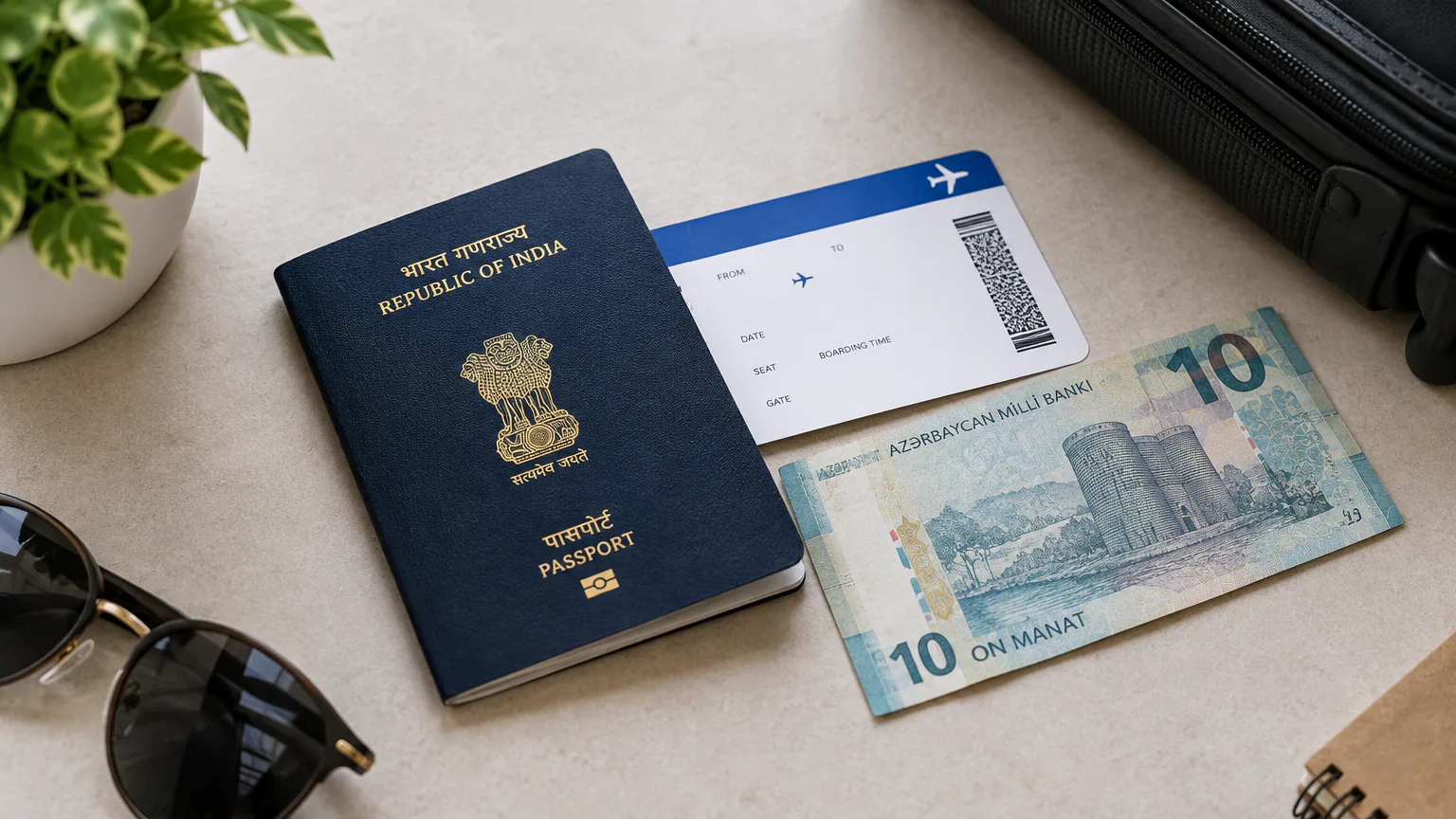 Travel journalAzerbaijan Visa for Indians in 2026: Complete E-Visa Guide
Indian citizens require a visa to enter Azerbaijan. The good news: Azerbaijan offers an electronic visa (e-visa) through the official ASAN Visa portal (evisa.gov.az), which allows Indian passport holders to…
Read the guide- Travel journalAzerbaijan Travel Guide for Indians: How to Reach, Explore and Plan in 2026
Azerbaijan sits at the crossroads of Eastern Europe and Western Asia, offering Indian travellers a rare combination of UNESCO-listed ancient cities, futuristic architecture, natural fire phenomena, and Caspian Sea coastline…
Read the guide
A little inspiration.
A holiday made yours.
Share your dates and departure city — a travel expert replies with ideas within 24 hours.
Plan my holidayLet’s make it personal.
Tell us about your dates, departure city and the moments you’d love to include.
What happens next?
Discuss your preferences, review a tailored proposal and refine the details before you decide.