
Indonesia Beyond Bali Travel Guide for Indians: Discovering the Archipelago's Hidden Gems
Indonesia is an archipelago of over 17,000 islands, and the experiences it offers extend far beyond Bali's well-known shores. For Indian travellers, the islands of Java, Lombok, Flores, Sulawesi, Sumatra, and West Papua present ancient temples, active volcanoes, world-class dive sites, and living indigenous cultures — each island distinct in landscape, cuisine, and tradition. This guide covers the top destinations, best travel months, realistic 2026 costs from India, visa requirements, and practical tips to help you plan a confident, well-informed trip across the Indonesian archipelago.
- No booking feeRequesting a quote is free with no obligation.
- Expert-planned itineraryRoutes and stays shaped around your dates and pace.
- Reply within 24 hoursA travel expert gets back to you with ideas.
- Refine before you decideAdjust the plan until it feels right for you.
What Is Indonesia Beyond Bali?
Indonesia beyond Bali refers to the thousands of islands in the Indonesian archipelago that lie outside Bali's well-trodden tourist circuit. The country spans roughly 5,000 kilometres from west to east, encompassing dramatically different geographies: the densely populated cultural heartland of Java, the volcanic wilderness of Flores, the coral-rich waters of West Papua's Raja Ampat, the highland traditions of Sulawesi's Tana Toraja, and the supervolcanic lake of North Sumatra.
While Bali draws visitors with its beach resorts and Hindu temple culture, the rest of Indonesia offers ancient Buddhist and Hindu monuments, UNESCO-listed national parks, endemic wildlife found nowhere else on Earth, and indigenous communities with living ceremonial traditions. For Indian travellers seeking cultural depth, natural adventure, or underwater exploration, Indonesia beyond Bali delivers experiences that are harder to replicate elsewhere in Southeast Asia.
Why Indian Travellers Choose Indonesia Beyond Bali
Indian visitors are increasingly moving beyond Bali for three core reasons: cultural resonance, natural scale, and relative value. Java's Borobudur and Prambanan temples share architectural and spiritual DNA with India's own ancient heritage, making them immediately meaningful to Indian visitors. The volcanic landscapes of Mount Bromo, the pink beaches of Komodo, and the marine biodiversity of Raja Ampat offer natural spectacles with few global equivalents.
From a practical standpoint, Indonesia's food culture — built around rice, spices, coconut milk, tofu, and tempeh — is broadly familiar to Indian palates, and vegetarian options are widely available in cities and tourist areas. Inter-island domestic flights are affordable, and accommodation ranges from budget guesthouses to international luxury resorts. For Indian travellers who have already visited Bali and want a deeper, less-crowded experience of Southeast Asia, the rest of Indonesia is a logical and rewarding next step.
Top 10 Places to Visit in Indonesia Beyond Bali
The destinations below represent the most compelling reasons to travel beyond Bali, spanning cultural heritage, volcanic adventure, marine biodiversity, and indigenous culture across Java, Flores, Lombok, Sulawesi, Sumatra, and West Papua.
1. Borobudur Temple, Java
Borobudur is the world's largest Buddhist temple and a UNESCO World Heritage Site, built in the 9th century in Central Java. Its nine stacked platforms are decorated with approximately 2,672 relief panels and 504 Buddha statues, narrating Buddhist cosmology and the path to enlightenment. Arriving at dawn, before tour groups, reveals the monument at its most atmospheric — stupas emerging from morning mist against a backdrop of volcanic peaks. Borobudur is located near Magelang, roughly 40 kilometres from Yogyakarta, and is easily combined with a visit to Prambanan.
2. Prambanan Temple, Java
Prambanan is a 9th-century Hindu temple compound and UNESCO World Heritage Site dedicated to the Trimurti — Brahma, Vishnu, and Shiva. Its tallest spire rises 47 metres and the complex contains over 240 individual temples. Located 17 kilometres east of Yogyakarta, Prambanan is the largest Hindu temple site in Southeast Asia and holds particular significance for Indian visitors familiar with Shaivite and Vaishnavite traditions. Evening Ramayana ballet performances staged against the illuminated temples are a highlight between May and October.
3. Mount Bromo, Java
Mount Bromo is an active stratovolcano in East Java, rising from the Tengger caldera — a vast sand sea surrounded by a 10-kilometre-wide crater rim. The classic experience is a pre-dawn jeep ride to Penanjakan viewpoint to watch sunrise over the smoking cone, followed by a walk or horse ride across the sand sea to the crater rim. Bromo is accessible from Surabaya or Malang and is best visited during the dry season (April to October) when visibility is clearest and the access roads are reliable.
4. Komodo National Park, Flores
Komodo National Park is a UNESCO World Heritage Site in the Lesser Sunda Islands, home to the Komodo dragon — the world's largest living lizard, reaching up to 3 metres in length. The park encompasses Komodo, Rinca, and Padar islands, along with surrounding waters that rank among the world's best dive sites, with manta rays, reef sharks, and diverse coral ecosystems. Pink Beach on Komodo Island, coloured by red coral fragments, is one of only a handful of pink-sand beaches in the world. The gateway town is Labuan Bajo in western Flores, served by direct domestic flights from Bali and Jakarta.
5. Gili Islands, Lombok
The three Gili Islands — Gili Trawangan, Gili Meno, and Gili Air — sit off the northwest coast of Lombok and are reached by speedboat from Bali (approximately 90 minutes) or from Lombok's Bangsal harbour. All three islands are car-free and motorbike-free; transport is by horse cart or bicycle. Gili Trawangan is the liveliest, with a strong dive and snorkel scene and beachfront restaurants. Gili Meno is the quietest, popular for honeymooners. Gili Air sits between the two in atmosphere. Sea turtles are commonly encountered while snorkelling directly off the beaches.
6. Raja Ampat, West Papua
Raja Ampat is an archipelago of over 1,500 islands in West Papua, consistently rated among the world's top three dive destinations for marine biodiversity. Its waters contain more than 1,500 fish species and 600 coral species — the highest recorded diversity of any marine environment on Earth. Above water, the karst limestone islands draped in jungle and reflected in turquoise lagoons are equally striking. Raja Ampat requires a domestic flight to Sorong followed by a ferry or speedboat to Waisai. It is a remote, higher-cost destination best suited to dedicated divers and travellers with at least 5–7 days to spend in the region.
7. Tana Toraja, Sulawesi
Tana Toraja in South Sulawesi is one of Indonesia's most culturally distinctive regions, known for its elaborate multi-day funeral ceremonies, cliff-face burial sites, and traditional Tongkonan houses with dramatically curved boat-shaped roofs. The Torajan people's relationship with death and the afterlife is central to their identity; funerals are major social events attended by hundreds of guests and involving buffalo sacrifice. The region is reached by flying to Makassar (Ujung Pandang) and then taking an 8-hour road journey or a short connecting flight to Rantepao, the main town.
8. Lake Toba, Sumatra
Lake Toba in North Sumatra is the world's largest volcanic lake, formed by a supervolcanic eruption approximately 74,000 years ago. The lake is 100 kilometres long and 30 kilometres wide, with Samosir Island — larger than Singapore — sitting at its centre. Samosir is the cultural heartland of the Batak people, whose traditional architecture, weaving, and music traditions remain active. The lake is reached by flying to Medan (Kualanamu International Airport) and then taking a 4-hour road journey to Parapat, followed by a ferry to Samosir.
9. Yogyakarta, Java
Yogyakarta — locally called Jogja — is the cultural capital of Java and the most practical base for exploring both Borobudur and Prambanan. The city is home to the Kraton (Sultan's Palace), the Taman Sari water castle, and a thriving arts scene encompassing batik fabric, silver jewellery, wayang kulit (shadow puppetry), and gamelan music. Malioboro Street is the city's main commercial artery, lined with street food stalls, batik shops, and becak (cycle rickshaw) drivers. Yogyakarta has its own international airport (YIA) with direct connections from Jakarta, Bali, and several other Indonesian cities.
10. Wakatobi National Park, Sulawesi
Wakatobi National Park in Southeast Sulawesi is a marine protected area covering four main islands — Wangi-Wangi, Kaledupa, Tomia, and Binongko — and is named from their initials. The park protects some of the most intact coral reef systems in the Coral Triangle, with visibility regularly exceeding 30 metres. It is a quieter, more remote alternative to Raja Ampat for serious divers, with a small number of dedicated dive resorts operating in the area. Access is via a domestic flight to Wangi-Wangi from Makassar or Kendari.
Best Time to Visit Indonesia Beyond Bali from India
The dry season from May to September is the best time to visit most of Indonesia beyond Bali. During these months, rainfall is minimal across Java, Lombok, Flores, and Sulawesi, skies are clear, and conditions are ideal for trekking, diving, and island-hopping. July and August are peak months — expect higher accommodation prices and more competition for popular tours such as Komodo dragon treks and Bromo sunrise jeeps.
The shoulder months of April and September offer a practical balance: dry-season weather with slightly lower prices and fewer crowds. Sumatra and West Papua follow slightly different patterns — Sumatra's west coast receives rain year-round, while Raja Ampat's best diving window runs from October to April. The table below summarises conditions across the main destinations for each month.
| Month | Weather | Crowd Level | Price Index | Best For |
|---|---|---|---|---|
| January | Wet season; heavy rain across Java and Flores | Low | Low–Moderate | Budget travel; lush green landscapes; Raja Ampat diving |
| February | Wet; fewer tourists than December | Low | Low | Budget travel; Raja Ampat diving |
| March | Transitional; rain easing in Java | Low–Moderate | Low–Moderate | Value travel; improving conditions in Java |
| April | Dry season begins; pleasant across most islands | Moderate | Moderate | Excellent value; good weather; pre-peak season |
| May | Dry, sunny; ideal across Java, Lombok, Flores | Moderate–High | Moderate–High | All activities; Bromo, Komodo, Gili Islands |
| June | Dry, sunny; peak season starts | High | High | All activities; best weather; book ahead |
| July | Dry, sunny; peak season | Very High | High | All activities; best weather; busiest month |
| August | Dry, sunny; peak season | Very High | High | All activities; best weather; book well ahead |
| September | Dry, pleasant; crowds easing | Moderate–High | Moderate–High | Shoulder season; good weather; fewer crowds |
| October | Transitional; occasional showers begin | Moderate | Moderate | Diving; some rain; good value |
| November | Wet season begins; increasing rainfall | Low–Moderate | Low–Moderate | Budget travel; quieter sites |
| December | Wet; holiday season brings some crowds | Moderate | Moderate–High | Holiday travel; lush scenery despite rain |
Indonesia Beyond Bali Trip Cost from India (2026 Estimates)
The figures below are indicative estimates for a 7-day trip per person from a major Indian city (Mumbai, Delhi, Bengaluru, Chennai, or Kolkata), assuming double occupancy and economy-class flights. Actual costs vary based on booking timing, airline choice, specific islands visited, and travel style. Inter-island domestic flights — often necessary for multi-island itineraries — are included within the local transport row and typically cost INR 5,000–15,000 per segment.
Flight costs are the largest single variable. Booking 3–4 months in advance and travelling mid-week generally yields better fares. Budget travellers can reduce land costs significantly by staying in guesthouses, eating at local warungs, and using shared transport. Luxury travellers should note that remote destinations like Raja Ampat and Wakatobi carry premium costs due to limited accommodation supply and the logistics of reaching them.
| Cost Category | Budget (INR) | Mid-Range (INR) | Luxury (INR) |
|---|---|---|---|
| Round-trip flights from India | 35,000–45,000 | 45,000–60,000 | 60,000–90,000+ |
| Accommodation (7 nights, per person) | 7,000–14,000 | 14,000–35,000 | 35,000–70,000+ |
| Local and inter-island transport (7 days) | 3,000–6,000 | 6,000–12,000 | 12,000–25,000+ |
| Food and drink (7 days) | 5,000–10,000 | 10,000–20,000 | 20,000–40,000+ |
| Activities and sightseeing (7 days) | 4,000–8,000 | 8,000–18,000 | 18,000–40,000+ |
| Visa, SIM card, travel insurance, miscellaneous | 2,000–4,000 | 2,000–4,000 | 2,000–4,000 |
| Total estimated cost (7 days, per person) | 56,000–87,000 | 87,000–149,000 | 149,000–269,000+ |
How to Reach Indonesia Beyond Bali from India
There are no direct rail, road, or practical sea connections between India and Indonesia. All travel is by air. The two main international entry points for Indian travellers are Soekarno-Hatta International Airport (CGK) in Jakarta, Java, and Ngurah Rai International Airport (DPS) in Denpasar, Bali. Jakarta is the better gateway for Java, Sumatra, and Sulawesi itineraries; Bali is more convenient for Lombok, Flores, and the Gili Islands.
From these international hubs, Indonesia's domestic aviation network connects to over 30 airports across the archipelago. Key domestic airports for travellers going beyond Bali include Yogyakarta International Airport (YIA), Komodo Airport in Labuan Bajo (LBJ), Lombok International Airport (LOP), Makassar Sultan Hasanuddin Airport (UPG) for Sulawesi, Kualanamu International Airport (KNO) in Medan for Sumatra, and Domine Eduard Osok Airport (SOQ) in Sorong for Raja Ampat.
Airlines Flying from India to Indonesia
Several airlines connect major Indian cities to Jakarta or Denpasar, typically with one stop in Kuala Lumpur, Singapore, or Bangkok. Typical total journey times range from 7 to 12 hours depending on the layover. Common carriers include:
- Garuda Indonesia — Indonesia's national carrier, often with codeshare connections from Indian cities via Singapore or Kuala Lumpur
- Singapore Airlines — via Singapore Changi, with connections from Mumbai, Delhi, Chennai, Bengaluru, Hyderabad, and Kolkata
- Malaysia Airlines — via Kuala Lumpur, with connections from multiple Indian cities
- Thai Airways — via Bangkok Suvarnabhumi
- Batik Air — budget-friendly option via Kuala Lumpur
- IndiGo — connects Indian cities to Kuala Lumpur or Singapore for onward connections
How to Plan Your Indonesia Beyond Bali Itinerary
- Choose your focus islands: Java for culture and volcanoes; Flores for Komodo and diving; Lombok and the Gili Islands for beaches; Sulawesi for indigenous culture; Sumatra for Lake Toba and wildlife; West Papua for world-class diving.
- Book international flights early: fares from India to Jakarta or Denpasar are most competitive when booked 3–4 months ahead, especially for May–August travel.
- Book domestic connections: Lion Air, Batik Air, Citilink, and Garuda Indonesia operate extensive domestic routes. Book these as soon as international flights are confirmed, as popular routes (especially to Labuan Bajo) sell out quickly in peak season.
- Plan inter-island ferry and speedboat legs: ferries connect Bali to Lombok (approximately 4–5 hours), and speedboats connect Lombok's Bangsal harbour to the Gili Islands (approximately 20–30 minutes). Liveaboard boats are the standard way to explore Komodo National Park.
- Arrange ground transport in advance: pre-book airport transfers in unfamiliar cities; use ride-hailing apps (Gojek, Grab) in Jakarta, Yogyakarta, Makassar, and Medan.
- Apply for your visa before departure: the e-Visa (C1 single-entry, up to 60 days) can be applied for online before travel. The e-VOA (30-day stay) is also available online. Apply at least 48 hours before departure.
Visa Requirements for Indian Citizens Visiting Indonesia
Indian citizens require a visa to enter Indonesia. Two main options are available for tourism:
The e-VOA (Electronic Visa on Arrival) permits a stay of 30 days from arrival. The visa itself is valid for 90 days from the date of issue, meaning the stay period and visa validity are different figures. Holders must present a passport valid for more than six months and a return or onward ticket to an immigration officer on arrival.
The C1 Single-Entry Visitor Visa (e-Visa) is applied for online before travel and permits an initial stay of up to 60 days from arrival for tourism purposes. Applications should be submitted at least 48 hours before departure. Applicants need a passport valid for at least six months and a return or onward ticket.
Important: The official sources used here confirm visa types, permitted tourism purposes, stay durations, and document requirements, but do not establish Indian-citizen eligibility for every Indonesian visa route. Always verify your eligibility and current requirements on the official Indonesian immigration portal (evisa.imigrasi.go.id) before booking travel, as policies can change.
Where to Stay in Indonesia Beyond Bali
Accommodation across Indonesia beyond Bali spans budget guesthouses (losmen), mid-range boutique hotels, and international luxury resorts. Quality and availability vary significantly by destination — Yogyakarta and Lombok have well-developed hotel markets, while remote destinations like Raja Ampat and Wakatobi have a limited number of specialist dive resorts. Book in advance for peak-season travel (June–August) and for any remote destination. Indicative nightly rates below are per room for 2026 and are approximate.
Yogyakarta, Java — Where to Stay
Yogyakarta has a wide range of accommodation centred around Malioboro Street and the Prawirotaman arts district, both within easy reach of the Kraton and transport links to Borobudur and Prambanan.
- Budget: Greenhost Boutique Hotel Prawirotaman (approx. INR 2,500–4,000/night, room only) — eco-friendly design hotel in the arts district.
- Mid-range: Phoenix Hotel Yogyakarta – MGallery Collection (approx. INR 6,000–10,000/night, with breakfast) — colonial-era building, central location.
- Luxury: Hyatt Regency Yogyakarta (approx. INR 12,000–20,000/night, with breakfast) — resort-style property with extensive grounds and golf course.
Labuan Bajo, Flores — Where to Stay
Labuan Bajo is the gateway to Komodo National Park and has developed rapidly as a tourism hub. Harbour-view hotels and boutique resorts are the dominant accommodation types.
- Budget: Ciao Hostel (approx. INR 1,000–2,000/night for dorm, room only) — popular with backpackers, social atmosphere.
- Mid-range: AYANA Komodo Resort, Waecicu Beach (approx. INR 15,000–25,000/night, with breakfast) — private beach, full resort facilities.
- Luxury: Plataran Komodo Beach Resort (approx. INR 20,000–35,000/night, with breakfast) — secluded villas with direct beach access.
Gili Trawangan, Lombok — Where to Stay
Gili Trawangan offers the widest range of accommodation across the three Gili Islands, from simple beachside bungalows to boutique resorts. The main strip near the harbour is lively; quieter options are found on the island's west and north sides.
- Budget: Gili Trawangan Bungalows (approx. INR 1,500–3,000/night, room only) — traditional bungalows close to the beach.
- Mid-range: Pearl of Trawangan (approx. INR 7,000–12,000/night, with breakfast) — beachfront resort with multiple pools.
- Luxury: Hotel Vila Ombak (approx. INR 10,000–18,000/night, with breakfast) — one of the island's original luxury resorts with extensive facilities.
Food and Cuisine in Indonesia Beyond Bali
Indonesian cuisine beyond Bali is highly regional. Java's food tends towards sweet and mild flavours — Yogyakarta's gudeg (young jackfruit stew) is a defining example. Sumatra's Padang cuisine is bold, spicy, and rich in coconut milk, with rendang (slow-cooked beef) its most famous export. Sulawesi's coastal cooking centres on fresh seafood, while Flores and Lombok offer simpler grilled fish and rice-based dishes.
For Indian travellers, the cuisine is broadly accessible: rice is the staple, spices are prominent, and tofu and tempeh are everyday protein sources. Vegetarian options are widely available in cities and tourist areas, though it is important to communicate dietary requirements clearly, as shrimp paste (terasi) is a common background ingredient in many sauces and sambals.
Must-Try Indonesian Dishes
- Nasi Goreng — Indonesia's national fried rice dish, served with egg, vegetables, and a choice of protein; vegetarian versions are widely available.
- Mie Goreng — stir-fried noodles with similar accompaniments to nasi goreng; a common street food and warung staple.
- Sate (Satay) — skewered grilled meat (chicken, beef, or lamb) served with peanut sauce; one of Indonesia's most recognisable street foods.
- Gado-Gado — a substantial salad of blanched vegetables, hard-boiled egg, potato, tofu, and tempeh with peanut sauce dressing; naturally vegetarian.
- Rendang — a slow-cooked, deeply spiced beef dish from West Sumatra; considered one of the world's most complex meat dishes. Jackfruit or mushroom versions are sometimes available.
- Gudeg — Yogyakarta's signature sweet young jackfruit stew, often served with rice, egg, and tofu; a good vegetarian option when prepared without meat accompaniments.
- Bakso — a popular Indonesian meatball soup served with noodles and broth; widely available as street food across Java.
Vegetarian and Indian Dietary Guidance
Vegetarian food is manageable across Indonesia beyond Bali, particularly in larger cities and tourist-heavy areas. Tofu (tahu) and tempeh are everyday ingredients, and dishes like gado-gado, nasi goreng (vegetarian version), and gudeg are naturally meat-free or easily adapted. When ordering, use the phrase 'tidak pakai daging' (no meat) or 'saya vegetarian' (I am vegetarian).
The key caution for strict vegetarians is shrimp paste (terasi), which is used as a flavour base in many sambals and sauces and is not always visible in the finished dish. Always confirm with the kitchen, especially in local warungs. Padang-style restaurants (masakan Padang) typically display a wide array of pre-cooked dishes and often have several vegetable-based options. In Yogyakarta, some restaurants around the Prawirotaman arts district offer dedicated vegetarian menus.
Restaurant Examples by Destination
Yogyakarta: Gudeg Yu Djum is the city's most celebrated gudeg restaurant, serving the sweet jackfruit stew that defines Yogyakarta's food identity. ViaVia Jogja offers a mix of Indonesian and international dishes with clearly labelled vegetarian options.
Labuan Bajo: Waterfront restaurants along the harbour serve fresh daily-catch seafood. MadeInItaly and La Cucina offer Italian and Western alternatives for travellers wanting variety.
Gili Trawangan: Scallywags Organic Beach Club is known for fresh seafood barbecue on the beach. The Banyan Tree is a well-regarded option for vegetarian and vegan dishes.
Practical Travel Tips for Indians Visiting Indonesia Beyond Bali
The tips below cover the practical aspects of travelling in Indonesia beyond Bali that most affect Indian visitors: currency, connectivity, safety, and local etiquette. Being prepared on these points will help you move confidently between islands and make the most of your time in each destination.
Currency and Payments
Indonesia's currency is the Indonesian Rupiah (IDR). Major credit cards (Visa and Mastercard) are accepted at larger hotels, restaurants, and shops in cities and established tourist areas. For local markets, street food, smaller guesthouses, and any travel to remote islands, cash is essential. ATMs are widely available in cities and towns but become scarce on smaller islands — carry sufficient cash before departing for the Gili Islands, Tana Toraja, or Raja Ampat.
For the best exchange rates, convert Indian Rupees to US Dollars or Euros before leaving India, then exchange to IDR at authorised money changers in Indonesia (avoid airport counters, which typically offer poor rates). Alternatively, withdraw IDR directly from ATMs using a card with low foreign transaction fees.
SIM Cards and Mobile Connectivity
Local SIM cards are available at airports, convenience stores (Indomaret, Alfamart), and dedicated phone shops. The three main providers are Telkomsel, XL Axiata, and Indosat Ooredoo. Telkomsel has the broadest coverage, including in more remote areas of Java, Flores, and Sulawesi, and is the recommended choice for multi-island itineraries. Ensure your phone is unlocked before purchasing a local SIM.
eSIM options are increasingly available for Indonesia and allow you to activate a data plan before departure on compatible devices, which is convenient for travellers who want connectivity from the moment they land. Check your device's eSIM compatibility and compare plans from international providers before travelling.
Safety Considerations
Indonesia is generally safe for tourists. The most common risks are petty theft (pickpocketing in crowded markets and bus stations) and road traffic — exercise standard caution with valuables and be alert when crossing roads in cities. Ocean swimming carries real risks in some areas due to strong currents; always check local conditions and swim at patrolled beaches where available.
Indonesia sits on the Pacific Ring of Fire and has numerous active volcanoes. Before visiting volcanic areas like Mount Bromo or Mount Rinjani, check current activity levels through the Indonesian Centre for Volcanology and Geological Hazard Mitigation (PVMBG). Follow all park ranger instructions and exclusion zone boundaries.
Travel insurance covering medical evacuation is strongly recommended, particularly for remote destinations like Raja Ampat or Wakatobi where hospital facilities are limited. Consult your doctor about recommended vaccinations (hepatitis A, typhoid, and tetanus are commonly advised) and carry any personal medications in sufficient supply.
Local Etiquette and Cultural Customs
Indonesia is a predominantly Muslim country, though religious practice varies significantly by region — Java and Sumatra are largely Muslim, Bali is Hindu, Tana Toraja is predominantly Christian, and Papua has a mixed Christian population. Across all regions, respectful behaviour at religious and cultural sites is expected.
Dress modestly when visiting mosques, temples, or traditional villages — cover shoulders and knees. Remove shoes before entering homes, mosques, and many traditional buildings. Use your right hand when giving, receiving, or eating, as the left hand is considered unclean in Indonesian and broader Islamic custom. Bargaining is acceptable in markets but should be conducted with good humour and respect — aggressive bargaining is considered poor form. Learning a few Indonesian phrases — 'Selamat pagi' (good morning), 'Terima kasih' (thank you), 'Permisi' (excuse me) — is appreciated and often warmly received.
Indonesia Beyond Bali vs. Thailand: An Honest Comparison for Indian Travellers
Thailand and Indonesia are the two most popular Southeast Asian destinations for Indian travellers, and they serve different travel needs. Thailand — particularly Bangkok, Phuket, Krabi, and Chiang Mai — is more developed for mass tourism, with a well-established infrastructure, straightforward domestic transport, and a food culture that is globally familiar and broadly accessible to Indian palates. The visa process for Indians is typically simpler, and the country's compact geography makes multi-destination itineraries easier to execute.
Indonesia beyond Bali offers a fundamentally different proposition: greater geographical scale, more cultural diversity, and a stronger sense of discovery. The ancient Hindu and Buddhist temples of Java have direct cultural resonance for Indian visitors. The marine biodiversity of Raja Ampat and Komodo is unmatched anywhere in Southeast Asia. The indigenous cultures of Tana Toraja and the Batak people of Lake Toba are living traditions with no equivalent in Thailand. The trade-off is complexity — inter-island travel requires planning, domestic flights add cost, and some destinations are genuinely remote.
For Indian travellers who have already visited Thailand or who are seeking something beyond the standard Southeast Asian circuit, Indonesia beyond Bali consistently delivers more distinctive and memorable experiences. It rewards travellers who plan carefully and are comfortable with a degree of logistical complexity.
Frequently Asked Questions about Indonesia Beyond Bali
Good questions. Clearer plans.
How many days are ideal for exploring Indonesia beyond Bali?
A minimum of 7–10 days is recommended to explore one or two regions meaningfully — for example, Java (Yogyakarta, Borobudur, Prambanan, and Mount Bromo) or Lombok combined with the Gili Islands. For a multi-island itinerary that includes Flores, Sulawesi, or Sumatra, 14 days or more allows for a more relaxed pace and accounts for inter-island flight connections. Remote destinations like Raja Ampat are best visited with at least 5–7 days on-site, in addition to travel days.
What is the approximate budget for a 7-day trip to Indonesia beyond Bali from India?
For a 7-day trip per person from India in 2026, indicative estimates are: budget travel INR 56,000–87,000; mid-range INR 87,000–149,000; luxury INR 149,000–269,000+. These figures include round-trip economy flights, accommodation, local and inter-island transport, food, and activities. Costs vary based on booking timing, specific destinations, and travel style. Remote destinations like Raja Ampat carry higher costs due to limited accommodation and logistics.
What is the best time to visit Indonesia beyond Bali from India?
The dry season from May to September is the best time to visit most of Indonesia beyond Bali, offering minimal rainfall, clear skies, and ideal conditions for trekking, diving, and island-hopping across Java, Lombok, Flores, and Sulawesi. July and August are peak months with the highest prices and crowds. April and September offer a good balance of dry weather and lower prices. Raja Ampat's best diving window runs from October to April, which is the opposite of the general pattern.
What are the main international airports for Indian travellers flying to Indonesia?
The two main international gateways are Soekarno-Hatta International Airport (CGK) in Jakarta, Java, and Ngurah Rai International Airport (DPS) in Denpasar, Bali. Jakarta is the better entry point for Java, Sumatra, and Sulawesi itineraries. Bali is more convenient for Lombok, Flores, and the Gili Islands. From both hubs, domestic flights connect to over 30 airports across the archipelago, including Yogyakarta (YIA), Labuan Bajo (LBJ), Lombok (LOP), Makassar (UPG), Medan (KNO), and Sorong (SOQ) for Raja Ampat.
What are the visa requirements for Indian citizens visiting Indonesia?
Indian citizens require a visa to enter Indonesia. The e-VOA (Electronic Visa on Arrival) permits a 30-day stay; the visa is valid for 90 days from issue, but the permitted stay on arrival is 30 days — these are different figures. The C1 Single-Entry Visitor Visa (e-Visa) permits an initial stay of up to 60 days for tourism and can be applied for online before travel. Both require a passport valid for more than six months and a return or onward ticket. Apply for the e-Visa at least 48 hours before departure. Always verify current eligibility and requirements on the official Indonesian immigration portal (evisa.imigrasi.go.id) before booking, as policies can change.
Is Indonesia beyond Bali safe for solo Indian female travellers?
Indonesia beyond Bali is generally safe for solo female travellers, including Indian women. Standard precautions apply: keep valuables secure, avoid walking alone in isolated areas after dark, and dress modestly — particularly when visiting religious sites or conservative communities. Larger cities like Yogyakarta and Makassar have good transport infrastructure and are well-navigated solo. More remote destinations are best approached with a guide or as part of a small group. Reading recent traveller reviews for specific destinations before departure provides useful current context.
Are vegetarian food options easily available in Indonesia beyond Bali?
Yes, vegetarian food is widely available, especially in cities and tourist areas. Dishes like gado-gado, nasi goreng (vegetarian version), gudeg (Yogyakarta's jackfruit stew), and various tofu and tempeh preparations are common. When ordering, use the phrase 'tidak pakai daging' (no meat) or 'saya vegetarian'. The main caution is shrimp paste (terasi), which is used as a background ingredient in many sauces and sambals — always confirm with the kitchen if you are strictly vegetarian. Padang-style restaurants typically offer a wide selection of vegetable-based dishes.
How do I travel between different islands in Indonesia?
Inter-island travel in Indonesia is primarily by domestic flight. Airlines including Garuda Indonesia, Lion Air, Batik Air, and Citilink operate extensive domestic networks connecting major islands and cities. For shorter distances — particularly between Bali and Lombok (4–5 hours by ferry), or from Lombok's Bangsal harbour to the Gili Islands (20–30 minutes by speedboat) — ferries and speedboats are the standard option. Komodo National Park is typically explored by liveaboard boat from Labuan Bajo. Book domestic flights as early as possible, especially for peak-season travel to popular routes like Labuan Bajo.
What cultural experiences can I expect beyond Bali?
Indonesia beyond Bali offers some of Southeast Asia's most distinctive cultural experiences. In Java, Borobudur (the world's largest Buddhist temple) and Prambanan (the largest Hindu temple complex in Southeast Asia) are profound heritage sites with direct resonance for Indian visitors. Yogyakarta is a living centre of Javanese arts — batik, wayang kulit shadow puppetry, gamelan music, and silver craftsmanship. In Sulawesi, Tana Toraja's elaborate multi-day funeral ceremonies and cliff-face burial sites represent a unique indigenous tradition. Sumatra's Samosir Island is the heartland of Batak culture, with traditional architecture, weaving, and music. Each island presents a distinct cultural identity.
Is Indonesia beyond Bali suitable for adventure tourism?
Yes — Indonesia beyond Bali is one of Asia's premier adventure destinations. Trekking options include Mount Bromo's volcanic caldera in East Java, Mount Rinjani (3,726 metres) on Lombok, and the Kelimutu crater lakes on Flores. Diving and snorkelling are world-class at Raja Ampat, Komodo National Park, and Wakatobi National Park. The Gili Islands offer accessible snorkelling with sea turtles. Sumatra's Gunung Leuser National Park is one of the last places on Earth where orangutans, tigers, rhinos, and elephants coexist in the wild. White-water rafting, surfing, and cycling tours are available across multiple islands.
Keep exploring
A little inspiration for your journey
Practical reads for this destination — timing, places, costs and tips before you plan.
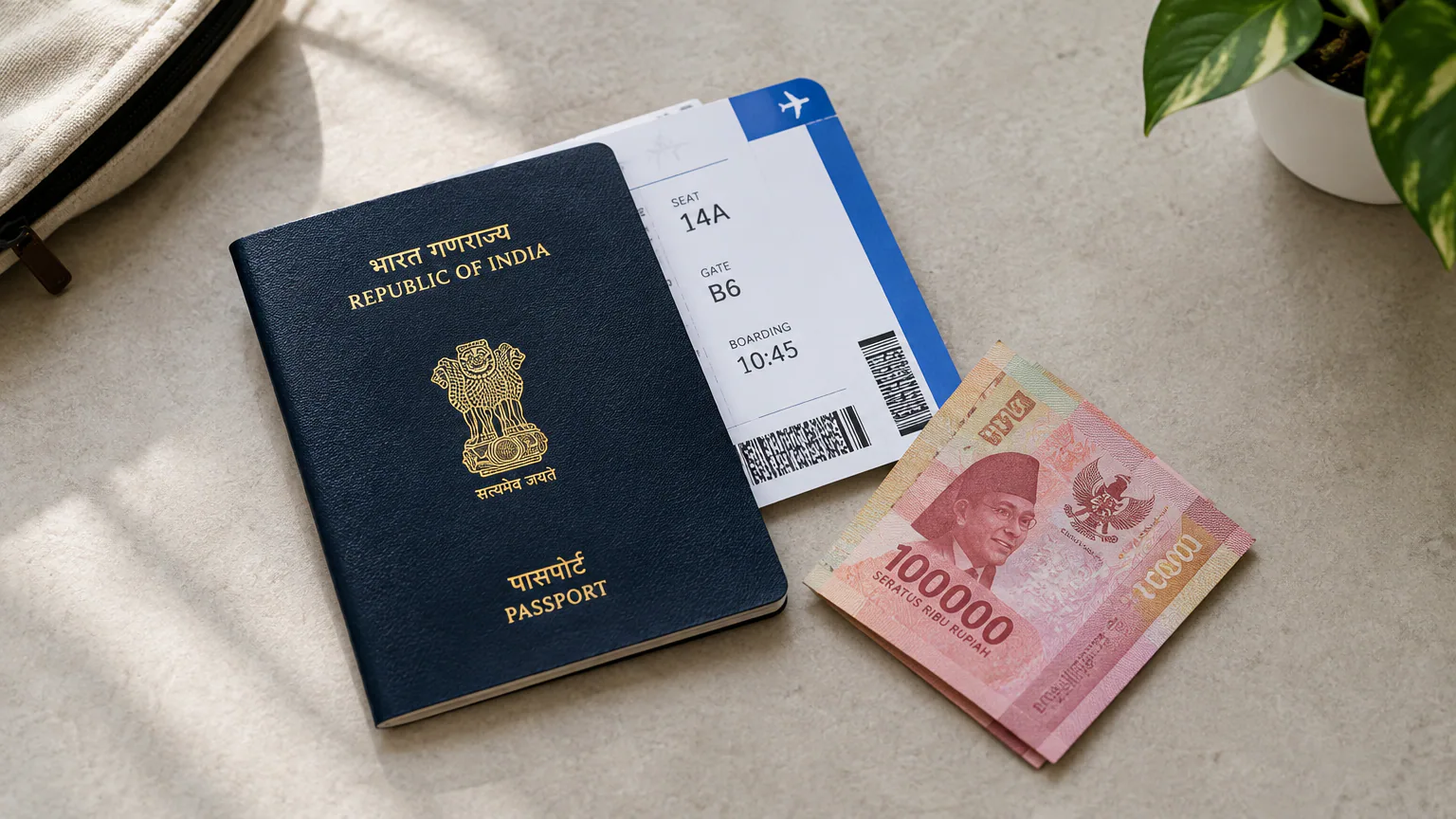 Travel journalIndonesia Visa for Indians in 2026: Complete e-VOA Guide
Indian citizens require a visa to enter Indonesia. For tourism in 2026, the electronic Visa on Arrival (e-VOA) is the standard option: a single-entry permit allowing a 30-day stay, applied…
Read the guide- Travel journalIndonesia Beyond Bali Travel Guide for Indians (2026)
Indonesia beyond Bali is one of Southeast Asia's most rewarding journeys for Indian travellers. The archipelago stretches across more than 17,000 islands, offering ancient Hindu-Buddhist temples in Java, Komodo dragons…
Read the guide
A little inspiration.
A holiday made yours.
Share your dates and departure city — a travel expert replies with ideas within 24 hours.
Plan my holidayLet’s make it personal.
Tell us about your dates, departure city and the moments you’d love to include.
What happens next?
Discuss your preferences, review a tailored proposal and refine the details before you decide.