Skip to content
Plan my trip
Switzerland Tour Packages
International · Switzerland

Switzerland Tour Packages

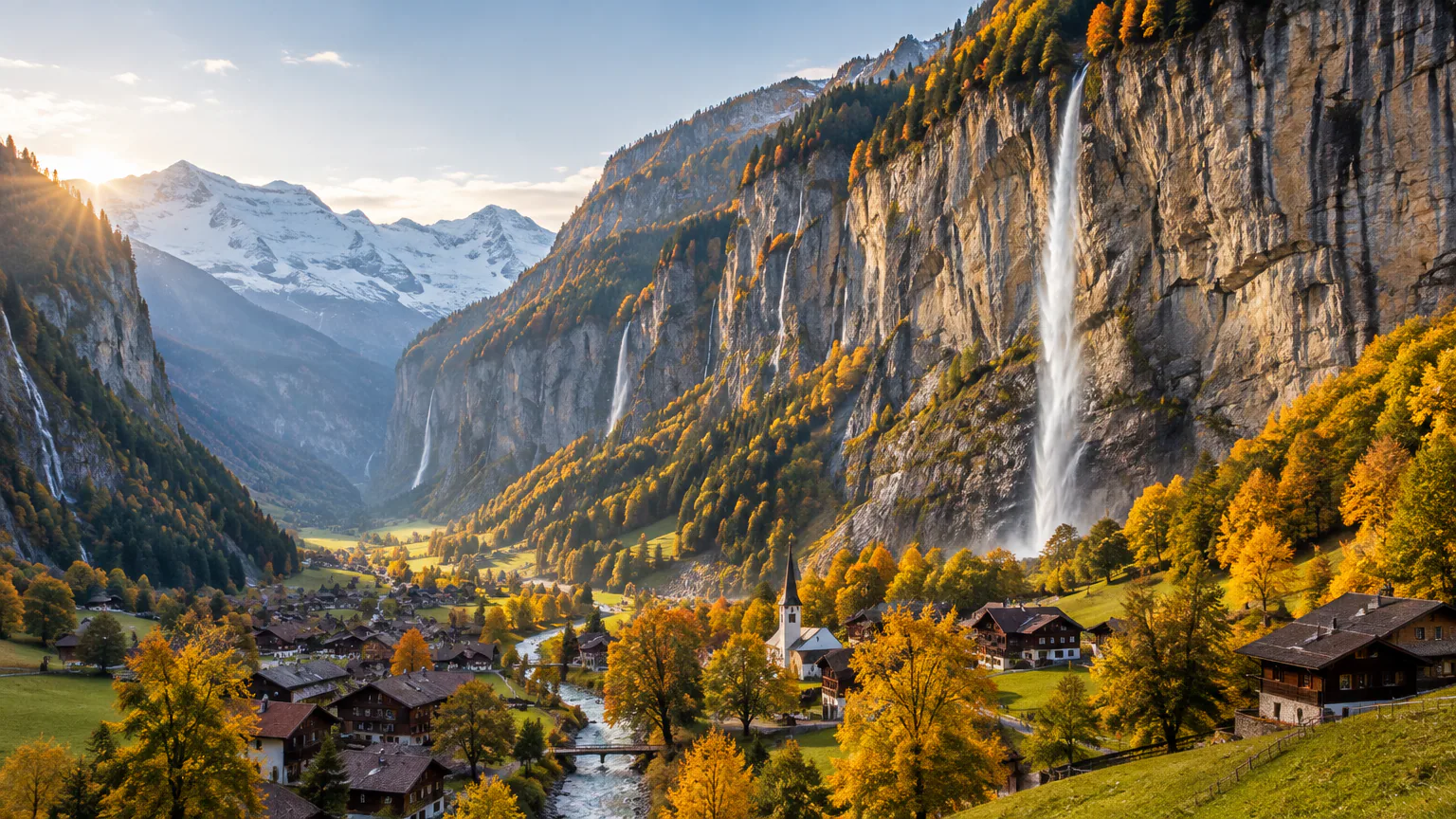
Switzerland tour packages from India cover Zurich, Lucerne, Interlaken and Zermatt with hotels, rail travel and mountain excursions arranged around your dates. June and September offer the best balance of weather and access. Indicative land-only pricing…

A little detail goes a long way

Start with your holiday idea.

Travel month
Travellers
  • No booking feeRequesting a quote is free with no obligation.
  • Expert-planned itineraryRoutes and stays shaped around your dates and pace.
  • Reply within 24 hoursA travel expert gets back to you with ideas.
  • Refine before you decideAdjust the plan until it feels right for you.

Written by the Tripstor travel editorial teamReviewed by Killol Desai, Travel Consultation ExpertUpdated How we research and review

Holiday packages

Switzerland holiday packages

Start with one of these holiday ideas, then personalise the route, stays and pace with a specialist.

Hand-picked Switzerland packages are on their way

Every itinerary and price is reviewed before it appears here. Until then, share your dates and we’ll shape your Switzerland holiday around you.

At a glance

Switzerland, in brief

The essentials of your Switzerland holiday. A specialist confirms the route, stays and inclusions in a personalised quote — never an instant booking.

Switzerland.
Scenic rail as the backbone

International
Best time to go

Jun, Sep

Ideal trip length

7 nights for a first trip

10–14 days adds Zermatt, Bern and western Switzerland at a slower pace
Main gateway

Zurich Airport (ZRH)

Geneva Airport (GVA) suits western Switzerland itineraries
Visa

Schengen type C required for Indian ordinary passport holders

90 days in any 180-day period; decision normally within 15 days
Languages

German, French, Italian and Romansh

English is widely used in hotels, stations and ticket counters
Time zone

UTC+1, UTC+2 during daylight saving

Roughly 4.5 hours behind India in the European summer
Peak demand

July–August and Christmas–New Year

Book mountain excursions and central hotels early for these windows
What you get

What Switzerland Tour Packages Actually Include

Switzerland tour packages are route-and-logistics plans rather than fixed departures: destination, nights and excursions are agreed first, then hotels, rail tickets and transfers are quoted against live availability. Anything not printed in the final quotation — from a Jungfraujoch ticket to a lake cruise — remains a proposal until confirmed in writing.

A Switzerland holiday package from India typically bundles accommodation, daily breakfast, airport transfers, intercity transport or a selected rail pass, sightseeing and some mountain tickets. International airfare, the Schengen visa fee, travel insurance, lunches, dinners and personal expenses are commonly separate unless your quotation states otherwise.

The practical difference between two packages at the same price is often the hotel location and which mountain excursion is included. A Lucerne hotel near the station saves daily tram time; a Zermatt room with Matterhorn views costs more than one facing the village lane. Ask for both specifics before comparing totals.

Route ideas in this guide, including the seven-day circuit in the sample itinerary section, are samples to personalise. Tripstor quotes are prepared per traveller, so nights, cities and excursions can be rebalanced without rebuilding the whole plan. Always ask whether a Swiss Travel Pass or point-to-point tickets are cheaper for your exact route, since the answer changes with itinerary length.

Quick facts

Switzerland Holiday Packages at a Glance

Switzerland suits Indian travellers who want dense, reliable public transport linking lakes, historic cities and high Alpine viewpoints within short distances. June and September give the best balance of weather, access and crowds, and a seven-night trip covers Zurich, Lucerne, Interlaken and one major mountain excursion comfortably.

Best season
May to October for sightseeing and hiking; December to March for snow sportsJune and September balance weather, access and crowds best
Local transport
SBB trains, trams, buses, lake boats, mountain railways and cable carsUrban day passes commonly cost about CHF 8–15; mountain excursions often CHF 50–250 return

Indicative land-only pricing for 2026 sits around INR 145,000 per person on twin sharing for budget travel, INR 215,000 for standard and INR 325,000 for premium itineraries of roughly four to eight nights. Airfare, visa, insurance and most meals are additional, and final quotes move with the exchange rate and hotel availability.

Indian ordinary passport holders need a Schengen type C visa for tourism, capped at 90 days in any 180-day period. Swiss authorities state a general decision is normally taken within 15 days, but appointments and supplementary-document requests can extend that timeline, so apply well ahead of your travel date.

Why go

Why Choose Switzerland for Your 2026 Holiday

Switzerland packs lakes, historic cities and high-altitude Alpine experiences into short rail hops, which is why it works well as a first Europe trip from India. Jungfraujoch sits at 3,454 metres, and the same SBB network that reaches it also links Zurich, Lucerne, Interlaken and Zermatt without a car.

  1. Scenic rail as the backbone

    Swiss Federal Railways (SBB) links Zurich, Lucerne, Interlaken and Zermatt with frequent services, so a multi-city route needs no car. Compare a Swiss Travel Pass against point-to-point tickets for your exact route before booking, since a compact itinerary often costs less on individual tickets.

    Transport
  2. Jungfraujoch, Top of Europe

    The cogwheel railway climbs to 3,454 metres via Kleine Scheidegg. Check the live summit webcam and the morning forecast before committing to the excursion, because cloud at the top removes most of the view and the ticket is not cheap.

    Excursion
  3. Zermatt and the Matterhorn

    Zermatt is car-free, and the Gornergrat railway gives the classic Matterhorn panorama. Base here for two nights if photography matters more than city time, and book accommodation early for July–August and September.

    Mountain
  4. Lucerne for a first base

    Lucerne combines a walkable old town, Chapel Bridge, lake boats and quick access to Mount Pilatus and Mount Rigi, making it efficient for families and first-time visitors with limited walking stamina.

    City
  5. Interlaken for lake and valley days

    Interlaken sits between Lake Thun and Lake Brienz, with boats, the Lauterbrunnen valley and Grindelwald reachable as day trips without changing hotels. It is the natural staging point for the Jungfraujoch excursion.

    Region
  6. Montreux and Lavaux for a western extension

    Western Switzerland adds lakeside promenades along Lake Geneva and terraced Lavaux vineyards, and pairs naturally with a Geneva Airport departure instead of returning to Zurich, saving backtracking on a longer itinerary.

    Extension

The trade-off is cost. Switzerland is among Europe's most expensive destinations, and a mountain excursion booked on a low-visibility day delivers poor value. Building one flexible weather day into the itinerary is the single most useful planning decision for a Swiss trip.

Compared with France, Switzerland is generally costlier for hotels, rail travel and mountain lifts but stronger for compact scenic-rail circuits. Austria often has lower accommodation costs, while Norway offers larger-scale fjord scenery across longer distances and different transport patterns. The sections below on package themes and the honest comparison give more detail on when each alternative makes better sense.

Compare

Switzerland Holiday Packages by Theme

Theme decides the route more than the budget does. Honeymoon trips favour lake and mountain-view stays, family trips favour one or two bases with short transfers, and adventure trips trade city nights for hiking and high-altitude excursions. Prices below are indicative land-only bands per person on twin sharing for 2026 planning.

Honeymoon Switzerland package

Best for7 nights, indicative from INR 215,000 per person on twin sharing

StrengthsLake and mountain-view rooms in Lucerne or Zermatt, a Jungfraujoch or Gornergrat day, and unhurried evenings with scenic rail connections

Trade-offsView rooms and September dates carry a premium; winter snow months need cold-weather packing and early booking

Family Switzerland package

Best for7–8 nights, indicative from INR 215,000 per person on twin sharing

StrengthsTwo bases such as Lucerne and Interlaken keep rail hops short; lake boats, cable cars and village walks engage children without long transfers

Trade-offsMountain excursions add per-person cost, and long summit days tire younger children, so plan one major excursion rather than several

Luxury Switzerland package

Best for6–8 nights, indicative from INR 325,000 to INR 550,000 per person on twin sharing

StrengthsCentral five-star stays, private airport and intercity transfers, panoramic-seat rail reservations and upgraded lake or mountain-view rooms

Trade-offsHighest exposure to peak-season rates and exchange-rate movement; book six months ahead for July–August and Christmas

Adventure Switzerland package

Best for8–10 nights, indicative from INR 215,000 per person on twin sharing

StrengthsHiking bases around Interlaken, Grindelwald and Zermatt with cable-car access to high trails and multiple valley day options

Trade-offsTrail and lift operations are seasonal; poor visibility can cancel a planned summit day, so a flexible-day buffer is essential

Budget Switzerland package

Best for5–6 nights, indicative from INR 145,000 per person on twin sharing

StrengthsThree-star stays near stations, point-to-point tickets instead of a pass, and one paid mountain excursion keep costs manageable

Trade-offsFewer included excursions and less central hotels mean more daily travel time; Switzerland remains expensive even at budget tier

Best of Switzerland package

Best for10–14 nights, indicative from INR 325,000 per person on twin sharing

StrengthsZurich, Lucerne, Interlaken, Zermatt, Bern and Montreux in one loop with a Geneva or Zurich exit covers the country's headline regions

Trade-offsMore hotel changes and higher total transport cost; needs a relaxed pace and careful rail scheduling to stay enjoyable

Catalogue prices retain their verification status until a Tripstor consultant confirms them against live hotel and rail availability. Treat every figure as a planning band, not a confirmed offer, and expect July–August and Christmas–New Year departures to sit at the upper end of each range. Luxury options can reach around INR 550,000 per person for extended private-transfer itineraries with upgraded lake or mountain-view rooms.

Best Time to Visit Switzerland

June and September are the strongest months for a first Switzerland trip, with mild temperatures, clearer Alpine views and fewer crowds than July–August. December to March suits snow sports and Christmas markets, while November is the weakest month for mountain access and general sightseeing value.

June

Best time to go

Excellent for scenic rail, lakes and hiking, 23°C high and 13°C low, about 110 mm rainfall

Crowdsmoderate
Pricesmoderate
Afternoon showers are common; plan summit days for the morning when skies are clearest
  • BestJun, Sep
  • GoodJan, Feb, Mar, May, Jul, Aug, Oct, Dec
  • FairApr
  • AvoidNov

Temperature figures are typical daytime highs and lows, and rainfall figures are monthly averages from the research data, so treat them as planning guidance rather than a forecast. High-altitude weather changes quickly even in good months, which is why one flexible day in the itinerary is worth more than a tightly packed schedule. July and August have the highest demand for hiking, lakes and mountain railways, so book excursion tickets and central hotels early for those windows.

How to Reach Switzerland from India

Zurich Airport (ZRH) is the main gateway for most Indian itineraries, with Geneva Airport (GVA) the better choice for western Switzerland. Mumbai and Delhi have nonstop Zurich service on Swiss International Air Lines, while Bengaluru, Chennai, Hyderabad, Kolkata, Ahmedabad and Pune normally connect through a Gulf or European hub.

By airAbout 9 hours
From

Mumbai

Typical nonstop Mumbai–Zurich schedule on Swiss International Air Lines; confirm operating dates and seasonal timetable before booking

By airAbout 9.5 hours
From

Delhi

Typical nonstop Delhi–Zurich schedule on Swiss International Air Lines; duration varies by winds and routing

By airAbout 12 hours
From

Bengaluru

Frankfurt, Doha, Dubai or Abu Dhabi

Usually one stop on Lufthansa, Qatar Airways, Emirates or Etihad Airways

By airAbout 12.5 hours
From

Chennai

Gulf or European hub

Usually one stop; total journey time depends substantially on connection length. Airlines include Lufthansa, Qatar Airways, Emirates and Etihad Airways

By airAbout 12 hours
From

Hyderabad

Gulf hub, Frankfurt or Munich

Usually one stop on Qatar Airways, Emirates, Etihad Airways or Lufthansa

By airAbout 13.5 hours
From

Kolkata

Gulf or Southeast Asian hub

Usually one stop on Qatar Airways, Emirates, Singapore Airlines or Lufthansa

By airAbout 12.5 hours
From

Ahmedabad

Gulf hub

Usually one stop; compare Zurich and Geneva arrival fares. Airlines include Emirates, Qatar Airways, Etihad Airways and Turkish Airlines

By airAbout 12.5 hours
From

Pune

Mumbai or a one-stop international itinerary

Usually requires a domestic connection to Mumbai first; airlines include Emirates, Qatar Airways, Etihad Airways and Lufthansa

By rail
From

Zurich Airport

Zurich Hauptbahnhof

SBB trains connect the airport station to Zurich city centre and onward to Lucerne, Interlaken and Zermatt

Travelling from your city?

Tell us where you start. A specialist can plan connections around your stay.

Plan my journey

Flight durations in the block below are typical scheduled times and vary with winds, routing and connection length. Fares are not quoted here because they move daily; compare Zurich and Geneva arrival fares from your departure city before fixing the route, as the cheaper airport can change by season.

Indian ordinary passport holders need a Schengen type C visa for tourism, limited to 90 days in any 180-day period. Applications go through the designated Swiss visa application process in India with passport, completed form, photographs, travel medical insurance, accommodation and itinerary evidence, proof of funds, employment or business documents and biometrics. Swiss authorities state a general decision is normally taken within 15 days, but apply well ahead because appointments and supplementary-document requests can extend processing. Visa approval is never guaranteed.

On arrival at Zurich Airport, SBB trains run from the airport station directly to Zurich Hauptbahnhof and onward to Lucerne, Interlaken and Zermatt. Private transfers can be arranged for families with heavy luggage. A Swiss Travel Pass or point-to-point tickets cover onward travel; price both options against your confirmed route before departure.

Sample route

Sample 7-Day Switzerland Itinerary from India

This seven-night route covers Zurich, Lucerne, Interlaken and Zermatt with one high-Alpine excursion, matching the ideal trip length in the at-a-glance section. Each day keeps rail travel under about three hours so arrival and departure days stay realistic. Present this as a sample to personalise with your Tripstor consultant, not a confirmed package.

  1. Day01
    Stop 1 of 8

    Arrive in Zurich and transfer to Lucerne

    Land at Zurich Airport, clear Schengen immigration and take an SBB train to Lucerne, then settle in with a light lakeside evening after the long flight.

    Morning

    Arrive at Zurich Airport (ZRH) and complete Schengen entry formalities; collect luggage and proceed to the airport SBB station

    Afternoon

    SBB train from Zurich Airport station to Lucerne (roughly one hour); hotel check-in near the station or old town

    Evening

    Walk the Chapel Bridge and the Lake Lucerne waterfront; keep the first evening light after the flight

    OvernightLucerne
  2. Day02
    Stop 2 of 8

    Lucerne old town and a Lake Lucerne cruise

    A low-travel day covering Lucerne's Chapel Bridge, Water Tower, Musegg Wall and a Lake Lucerne boat ride to a lakeside village.

    Morning

    Chapel Bridge, Water Tower and the Musegg Wall walk above the old town

    Afternoon

    Lake Lucerne cruise with a stop at one of the lakeside villages; return by boat or train

    Evening

    Lion Monument and a walk along the Reuss river through the old town

    OvernightLucerne
  3. Day03
    Stop 3 of 8

    Mount Pilatus or Mount Rigi day trip

    Use a cable car or cogwheel railway for a first Alpine viewpoint from Lucerne, keeping the day flexible for weather conditions.

    Morning

    Depart early for Mount Pilatus or Mount Rigi; check the summit webcam before leaving Lucerne

    Afternoon

    Return to Lucerne by boat or train, depending on the route chosen for the ascent

    Evening

    Free evening in Lucerne for rest or an early dinner before the Interlaken transfer the next morning

    OvernightLucerne
  4. Day04
    Stop 4 of 8

    Lucerne to Interlaken via the Brünig route

    Transfer to Interlaken by SBB train and use the afternoon for a boat on Lake Thun or Lake Brienz.

    Morning

    SBB train from Lucerne to Interlaken via the Brünig line, with a change at Meiringen if required

    Afternoon

    Hotel check-in in Interlaken, then a boat on Lake Thun or Lake Brienz

    Evening

    Walk the Höheweg promenade between the two lakes as the light fades

    OvernightInterlaken
  5. Day05
    Stop 5 of 8

    Jungfraujoch, Top of Europe

    The headline excursion: cogwheel railway to Jungfraujoch at 3,454 metres via Kleine Scheidegg. Check the summit webcam the evening before and again at dawn.

    Morning

    Early train from Interlaken to Kleine Scheidegg and the Jungfraubahn to Jungfraujoch at 3,454 metres

    Afternoon

    Sphinx observation deck, Ice Palace and the plateau viewpoint, weather permitting; allow the full afternoon for the descent

    Evening

    Return to Interlaken; keep the evening free because the summit day is long and altitude can cause fatigue

    OvernightInterlaken
  6. Day06
    Stop 6 of 8

    Lauterbrunnen valley or Grindelwald

    A valley day with waterfalls and village walks, or a cable-car ascent at Grindelwald, before packing for the Zermatt transfer.

    Morning

    Train to Lauterbrunnen for the valley floor and Staubbach Falls

    Afternoon

    Optional cable car to Grütschalp or Mürren, or continue to Grindelwald for a different valley perspective

    Evening

    Return to Interlaken and pack for the Zermatt transfer the following morning

    OvernightInterlaken
  7. Day07
    Stop 7 of 8

    Interlaken to Zermatt and Gornergrat

    Transfer to car-free Zermatt by SBB train via Spiez and Visp, then ride the Gornergrat railway for the Matterhorn panorama if visibility allows.

    Morning

    SBB train from Interlaken to Zermatt via Spiez and Visp (roughly three hours total)

    Afternoon

    Gornergrat railway for the classic Matterhorn view; check visibility before purchasing the ticket

    Evening

    Walk the Bahnhofstrasse in car-free Zermatt and rest before the departure day

    OvernightZermatt
  8. Day08
    Stop 8 of 8

    Departure via Zurich

    Return by SBB train from Zermatt to Zurich Airport, allowing buffer time for the international connection.

    Morning

    Zermatt to Visp and onward to Zurich Airport by SBB train; allow at least three hours before the flight

    Afternoon

    Check in for the international flight; Zurich Airport has a direct rail link from the main station

    Evening

    Departure from Zurich Airport (ZRH)

    OvernightNot applicable

Day 1 is arrival and Day 8 is departure, giving six full working days. If you want a second major mountain excursion — for example both Jungfraujoch and Gornergrat — extend to nine nights rather than compressing the existing days, since summit days are long and weather buffers matter.

Compare

Switzerland or Nearby Alternatives: An Honest Comparison

Switzerland rewards travellers who value short, reliable rail hops between lakes, cities and high Alpine viewpoints, and it costs more than most of its neighbours for hotels, rail and mountain lifts. Austria and Italy usually stretch a budget further, while Norway trades compact circuits for longer distances and a different landscape type.

Switzerland

Best forFirst Europe trip wanting compact scenic-rail circuits and one major Alpine summit excursion

StrengthsDense SBB network, lakes and cities within short hops, Jungfraujoch at 3,454 metres and Gornergrat access from Zermatt

Trade-offsAmong Europe's most expensive destinations; weather-dependent excursions can deliver poor value on low-visibility days

Austria

Best forTravellers who want Alpine scenery and mountain towns at lower accommodation cost

StrengthsGenerally lower hotel costs than Switzerland with comparable mountain settings and good rail connections

Trade-offsRail circuits between the headline Alpine regions are less compact than a Swiss loop

France

Best forCombining Alpine days with a large-city stay such as Paris or Lyon

StrengthsBroad choice of cities and mountain regions in one country with varied price points

Trade-offsHotels, rail and mountain lifts are generally costlier than Austria and the scenic-rail density is lower than Switzerland

Italy

Best forTravellers prioritising historic cities, food culture and shorter flights within Europe

StrengthsStrong city and cultural depth with varied regional pricing and good value outside peak season

Trade-offsAlpine access requires more specific routing than a Swiss rail loop; Dolomites are less connected by rail

Norway

Best forFjord scenery and a slower, longer-distance trip with coastal transport

StrengthsLarger-scale fjord landscapes and distinct coastal and ferry transport options

Trade-offsLonger distances and different transport patterns than a Swiss circuit; generally higher food and accommodation costs

Choose Switzerland when the itinerary depends on frequent trains and a single high-altitude excursion such as Jungfraujoch at 3,454 metres. Choose Austria when accommodation cost matters more than summit access, Italy when historic cities and food outweigh Alpine rail, and Norway when fjord scale matters more than short transfer times. France sits between Switzerland and Italy in cost, with broader regional variety but less compact scenic-rail density.

Before you travel

Five Switzerland Tips for Indian Travellers

Money, connectivity, etiquette, logistics and entry planning decide how smoothly a Swiss trip runs for Indian travellers. Carry some Swiss francs for small purchases, arrange a data plan before departure, and treat the Schengen visa timeline as the first fixed date in your planning calendar, not an afterthought.

  1. Carry CHF, pay by card in CHF

    The local currency is the Swiss franc (CHF), roughly INR 105–110 per CHF. Pay by card in CHF where possible for better exchange-rate control, and keep a small cash float for mountain huts, kiosks and smaller village shops. Euro acceptance is partial and the conversion rate is usually worse.

    Money
  2. Sort connectivity before departure

    Buy an Indian roaming pack or a Swiss eSIM before flying. SBB station Wi-Fi and hotel Wi-Fi cover most needs, but a mobile data plan helps for live train timetables, summit webcams on excursion mornings and navigation between stations in smaller towns.

    Connectivity
  3. Observe quiet hours and queue discipline

    Swiss trains and residential neighbourhoods observe quiet hours, and escalator etiquette is to stand on the right. Greet shop staff on entry with a brief acknowledgement, and validate any paper tickets at the platform machine before boarding where required to avoid an on-the-spot penalty fare.

    Etiquette
  4. Compare pass versus point-to-point before booking

    A Swiss Travel Pass is not automatically cheaper. Price it against your exact confirmed route, since a compact itinerary with few long journeys often costs less on point-to-point tickets. Many cable cars and mountain railways are only partly covered by the pass, so check each excursion separately.

    Logistics
  5. Plan the Schengen visa timeline first

    Apply for the Schengen type C visa well ahead of travel; Swiss authorities state a general decision is normally taken within 15 days, but VFS appointment availability and supplementary-document requests can extend the process. Keep passport copies, travel insurance details and Swiss emergency numbers saved offline on your phone.

    Entry and safety

Switzerland uses the Swiss franc (CHF), roughly INR 105–110 per CHF at recent rates. Some tourist businesses accept euros, but the conversion is usually unfavourable; card payment in CHF gives better control over the exchange rate, with a small cash float for mountain huts, kiosks and smaller village shops where card acceptance is not guaranteed.

Plan it your way

Switzerland, your way

Browse Switzerland by the kind of holiday, the time you have and where you start.

Holiday styles

Pick the kind of trip that fits you — each style opens holidays planned for that mood.

  • Honeymoon

    Quiet stays and unhurried days for two in Switzerland.

    Coming soon
  • Family holidays

    Space to travel together in Switzerland at everyone’s pace.

    Coming soon
  • Adventure

    Active days outdoors, with stays that fit the route in Switzerland.

    Coming soon
  • Luxury

    Thoughtful stays and slower pacing for a more polished Switzerland trip.

    Coming soon

From your city

How it works

From idea to itinerary, with a real person.

  1. 01Share your plan

    Dates, departure city, travellers and the moments you’d love. It only takes a minute.

  2. 02Shape it with a specialist

    A real person refines the route, stays and pace with you. Change anything.

  3. 03Review your quote

    A clear, personalised quote with confirmed inclusions. No payment to enquire.

Start my Switzerland quote
First-hand advice

From our travel specialists

What our team sees when planning these trips for travellers, beyond what the guidebooks say.

  • Jungfraujoch can disappoint when the summit is cloudy, because the high ticket price does not guarantee views. Travellers recommend checking the webcam first and choosing a clearer alternative such as Mount Rigi, Schilthorn or a lower-altitude village excursion.

  • Money and food are frequent surprises: Switzerland uses Swiss francs, euros may receive poor exchange rates, and station or tourist-area meals are costly. Some mountain huts may not accept cards, so carrying cash is useful; public transport is generally easy, but scenic trains may require separate reservations.

  • Families and couples learn that a fast multi-mountain itinerary is tiring and that weather can disrupt the day’s main attraction, so one major mountain excursion per day is more practical. Families should buy snacks and baby supplies before Sunday closures, while couples benefit from leaving time for quieter villages and scenic train or boat journeys.

  • Travellers often add quieter villages, mountain walks or a Mount Rigi day trip rather than spending all their time in major cities. They also adjust mountain plans according to same-day weather and visibility.

Confirmed by Killol Desai, Travel Consultation Expert · 11 Oct 2026

Questions, answered

Before you go

Straight answers on planning your Switzerland holiday, from timing to what a quote covers.

8 answered below
Still unsure?

Ask a specialist anything about Switzerland — there’s no obligation.

Ask a specialist
01Which Switzerland tour package is best for a first trip from India?

A seven-night standard package covering Zurich, Lucerne, Interlaken and Zermatt with one Jungfraujoch or Gornergrat excursion suits most first trips. It keeps rail hops short, uses one or two bases, and leaves a flexible day for weather. Indicative land-only pricing starts around INR 215,000 per person on twin sharing.

02How many days are enough for a Switzerland holiday?

Seven days covers Zurich, Lucerne, Interlaken and one major mountain excursion at a comfortable pace. Ten to fourteen days allows Zermatt, Bern, Montreux and western Switzerland without rushing. Anything under five nights means long transfers and little buffer for poor mountain visibility on excursion days.

03What is the best time to visit Switzerland from India?

June and September give the best balance of mild weather, clearer Alpine views and fewer crowds than July–August. December to March suits snow sports and Christmas markets. November has limited mountain operations and grey, damp conditions that reduce value for a first sightseeing trip from India.

04How much do Switzerland tour packages cost from India?

Indicative land-only pricing per person on twin sharing is around INR 145,000 for budget, INR 215,000 for standard and INR 325,000 for premium itineraries of four to eight nights, with luxury options reaching about INR 550,000. Airfare, Schengen visa, insurance and most meals are usually additional costs.

05Is Switzerland good for a honeymoon?

Lake and mountain-view stays in Lucerne, Interlaken or Zermatt suit honeymoon itineraries, especially in June, September and the winter snow months. A Jungfraujoch or Gornergrat day plus a Lake Lucerne cruise gives good variety. View rooms and September dates carry a premium, so book accommodation early.

06Is Switzerland suitable for a family holiday with children?

Two bases such as Lucerne and Interlaken work well for families because rail hops stay short and lake boats, cable cars and village walks keep children engaged. Mountain excursions add per-person cost, and long summit days tire younger children, so plan one major excursion rather than several in a week.

07Do Indian travellers need a visa for Switzerland and how long does it take?

Indian ordinary passport holders need a Schengen type C visa for tourism, limited to 90 days in any 180-day period. Applications go through the designated Swiss visa process in India with insurance, itinerary, funds and employment documents plus biometrics. A general decision is normally taken within 15 days, but apply well ahead.

08What is usually included in a Switzerland tour package?

Packages commonly include hotels, breakfast, airport transfers, intercity transport or selected rail passes, sightseeing and some mountain tickets. Flights, the Schengen visa, travel insurance, lunches, dinners and personal expenses are often separate. Confirm whether a Swiss Travel Pass or point-to-point tickets are used before comparing quotes from different operators.

Your free, personalised quote

Make Switzerland yours.

Tell us your dates and who’s travelling. A specialist will shape the route, stays and pace into a quote that fits you.

  • A personalised quote, never an instant booking
  • No payment to enquire
  • A real specialist replies, usually within a day
Made around you

Tell us about your holiday

Your dates, your pace, your wishlist.

  1. 1 · Your trip
  2. 2 · Your details
  3. 3 · Review & send

Your travel plans

Travel month
Travellers

No payment is required to request a quote.

Get a free quote

No payment or booking needed.