
Hong Kong Travel Guide for Indians: Best Time to Visit and 2026 Trip Planner
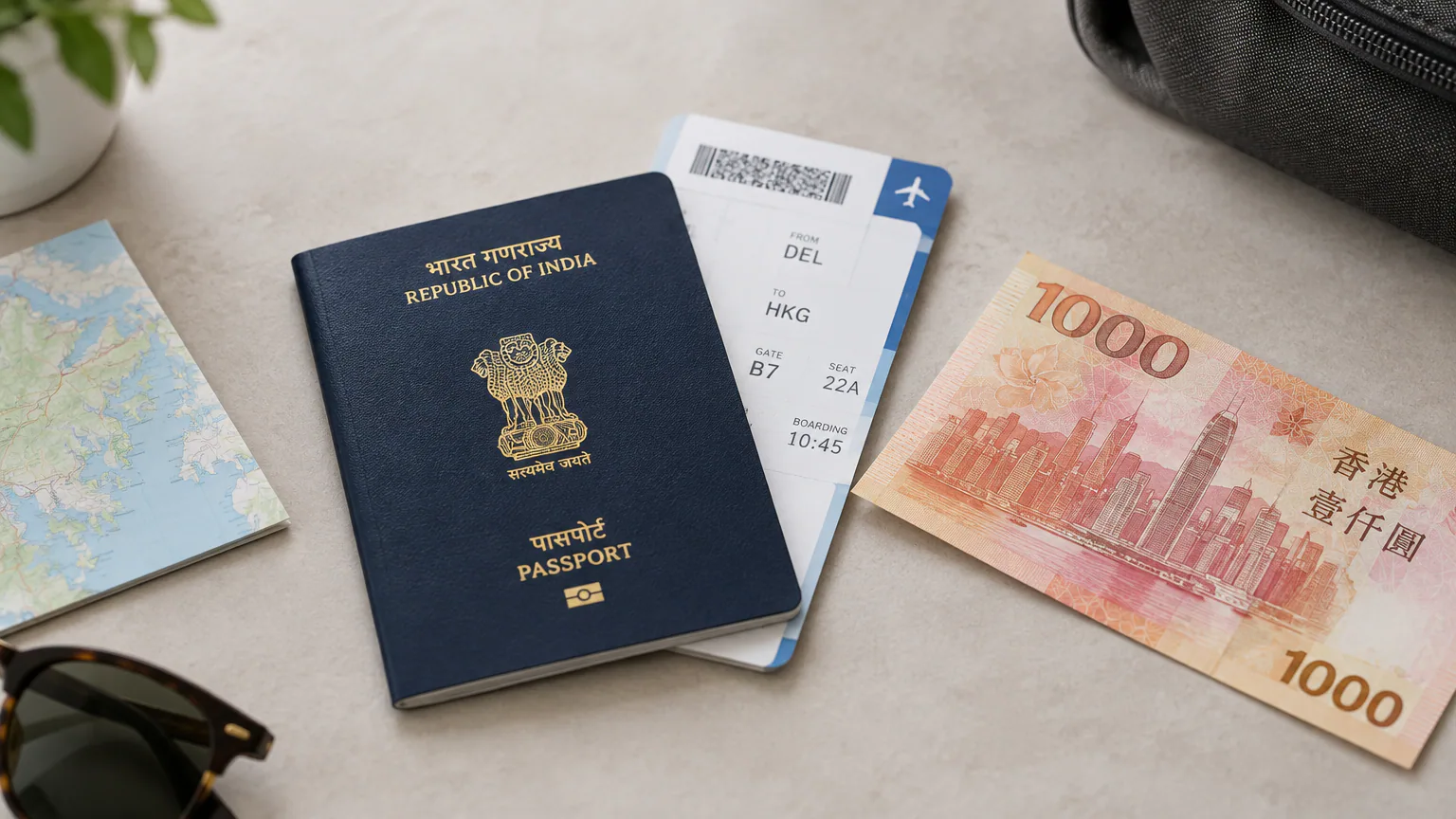
The best time to visit Hong Kong from India is October to February, when the weather is cool, dry and comfortable for sightseeing. Hong Kong is a Special Administrative Region of China offering a compact mix of iconic urban landmarks, outlying islands, beaches and Cantonese food culture — all accessible via one of Asia's most efficient public transport networks. Before travelling, most Indian passport holders must complete a free online Pre-Arrival Registration (PAR) with Hong Kong's Immigration Department, which permits visa-free stays of up to 14 days. Summer brings intense heat, high humidity and typhoon risk from roughly May to November. A 4- to 5-day trip is generally sufficient to cover the major highlights without feeling rushed.
- No booking feeRequesting a quote is free with no obligation.
- Expert-planned itineraryRoutes and stays shaped around your dates and pace.
- Reply within 24 hoursA travel expert gets back to you with ideas.
- Refine before you decideAdjust the plan until it feels right for you.
What is Hong Kong?
Hong Kong is a Special Administrative Region of China situated on the southeastern coast, comprising Hong Kong Island, the Kowloon Peninsula, the New Territories and more than 200 outlying islands. Its dramatic skyline, deep natural harbour and layered cultural identity — shaped by Cantonese heritage and a long period of British administration — make it one of Asia's most distinctive destinations.
The city combines a dense, walkable urban core with mountainous hiking terrain, coastal beaches and traditional fishing villages within short travel distances. Major landmarks include Victoria Peak, Victoria Harbour, the Star Ferry, Hong Kong Disneyland, Ocean Park, and the Tian Tan Buddha on Lantau Island. The MTR rail network, spanning approximately 271 kilometres of route length, connects most visitor areas efficiently.
For Indian travellers, Hong Kong offers easy air connectivity from multiple Indian cities, a well-established Indian dining scene, and a generally safe, tourist-friendly environment. The city's subtropical climate means the experience varies significantly by season, making timing an important planning consideration.
Best Time to Visit Hong Kong from India
October to February is the recommended window for Indian travellers. Temperatures are mild, humidity is low and rainfall is minimal, creating ideal conditions for outdoor sightseeing, harbour walks and day trips to Lantau Island. March and April are transitional — pleasant but increasingly humid. May through September brings the typhoon season: high heat, heavy rain and the possibility of storm disruptions to transport and outdoor activities. December sees higher visitor numbers due to the festive season.
Travellers who must visit in summer should monitor the Hong Kong Observatory's official weather warnings before planning outdoor excursions, as typhoon signals can affect ferry services, cable cars and open-air attractions at short notice.
Month-by-Month Weather and Travel Conditions
| Month | Conditions | Typhoon Risk | Crowd Level | Verdict for Indian Travellers |
|---|---|---|---|---|
| January | Cool, dry, sunny; 14–18 °C | None | Moderate | Excellent — ideal sightseeing weather |
| February | Cool, occasionally cloudy; 15–19 °C | None | Moderate | Good — can feel chilly in evenings |
| March | Mild, humidity rising, occasional fog; 18–22 °C | None | Moderate | Pleasant — start of humid season |
| April | Warm, humid, increasing rain; 22–26 °C | Low | Moderate | Good — pack a light rain layer |
| May | Hot, humid, rainy; 26–29 °C | Low–Moderate | Moderate–High | Warm and wet — check forecasts daily |
| June | Hot, very humid, heavy rain; 28–31 °C | Moderate–High | High | Peak typhoon season — plan flexibly |
| July | Hottest month, heavy rain; 28–32 °C | High | High | Most disruptive month — avoid if possible |
| August | Hot, humid, typhoons likely; 28–31 °C | High | High | Similar to July — monitor warnings closely |
| September | Warm, humidity easing, typhoons still possible; 26–30 °C | Moderate | Moderate | Improving — late month is more reliable |
| October | Pleasant, mild, low humidity; 22–27 °C | Low | Moderate | Excellent — one of the best months |
| November | Cool, dry, sunny; 18–24 °C | None | Moderate | Excellent — perfect for all activities |
| December | Cool, dry, festive; 15–20 °C | None | High | Very good — expect higher prices and crowds |
Hong Kong Visa and Entry Requirements for Indian Citizens
Indian passport holders do not receive automatic visa-free access to Hong Kong. Instead, most must complete a free online Pre-Arrival Registration (PAR) through Hong Kong's Immigration Department before travelling. A successful PAR allows visa-free entry for visits or transit of up to 14 days per trip.
Key conditions for PAR eligibility: your passport must be valid for at least six months from the date of travel, and your purpose must be a visit or transit — not employment, study or other activities. Each approved PAR is valid for six months and permits multiple visits of up to 14 days each within that period.
Indian nationals transiting Hong Kong by air and remaining airside within the airport transit area are exempt from PAR. If you plan to stay longer than 14 days, or travel for any purpose other than a visit or transit, you must apply for the appropriate visa or entry permit directly through Hong Kong's Immigration Department before departure.
Always verify current requirements with the Hong Kong Immigration Department (immd.gov.hk) before booking, as entry policies can change.
PAR Checklist for Indian Travellers
- Complete the online PAR at the Hong Kong Immigration Department website before departure — registration is free
- Ensure your passport is valid for at least six months from your intended travel date
- Confirm your stay will not exceed 14 days per visit
- Confirm your purpose is tourism or transit — not work, study or other activities
- Air transit passengers remaining within the airport transit area do not need PAR
- Stays exceeding 14 days or non-visitor purposes require a separate visa application
How to Reach Hong Kong from India
Air travel is the only practical option for Indian travellers. Hong Kong International Airport (IATA: HKG) on Lantau Island is a major international hub with direct and connecting services from multiple Indian cities. There are no viable rail, road or sea routes from India.
Direct flights are available from Mumbai (BOM) and Delhi (DEL), with typical flight times of approximately 5 hours from Mumbai and 4.5 hours from Delhi. Bengaluru (BLR) has both direct and connecting options. Chennai (MAA) and other Indian cities are generally served by connecting itineraries via Bangkok, Singapore, Kuala Lumpur or other regional hubs. Airlines operating this corridor include Cathay Pacific, Air India and IndiGo, among others.
Note: Airfare varies significantly by season, booking lead time and airline. No verified fare ranges were available from official sources at the time of writing; check current prices directly with airlines or booking platforms.
Getting from Hong Kong Airport to the City Centre
Three main options connect Hong Kong International Airport to the urban areas of Kowloon and Hong Kong Island.
| Option | Journey Time | Key Notes |
|---|---|---|
| Airport Express (MTR) | ~24 min to Hong Kong Station | Fastest option; stops at Tsing Yi, Kowloon and Hong Kong stations; in-town check-in available at Hong Kong and Kowloon stations for select airlines; adult single-journey fares vary by destination |
| Public Bus (Citybus / Long Win) | 45–90 min depending on route | More economical; 'A' prefix routes are express airport services to Hong Kong Island, Kowloon and New Territories |
| Taxi | 30–60 min depending on traffic | Metered fares; colour-coded by zone — red for urban areas (HK Island and Kowloon), green for New Territories, blue for Lantau; surcharges apply for luggage and tunnels |
Top 10 Places to Visit in Hong Kong
Hong Kong's attractions range from world-famous viewpoints and theme parks to traditional street markets and serene island escapes. The ten places below represent the most visited and most recommended experiences for first-time visitors from India.
1. Victoria Peak
Victoria Peak is the highest point on Hong Kong Island at 552 metres and offers the most iconic panoramic views of the city skyline, Victoria Harbour and the surrounding islands. The historic Peak Tram, which has been operating since 1888, provides a steep funicular ascent and is an attraction in itself. The Peak Tower at the summit houses observation decks, restaurants and shops. Visit at dusk to see the city transition from daylight to its illuminated night skyline.
2. Victoria Harbour
Victoria Harbour separates Hong Kong Island from the Kowloon Peninsula and is the geographical and visual centrepiece of the city. The nightly Symphony of Lights show illuminates the skyline with coordinated lights and lasers. The Tsim Sha Tsui waterfront promenade on the Kowloon side offers some of the best vantage points for harbour views and is a popular evening walk.
3. Star Ferry
The Star Ferry has been crossing Victoria Harbour since 1888 and remains one of the most scenic and affordable ways to travel between Central or Wan Chai on Hong Kong Island and Tsim Sha Tsui in Kowloon. The short crossing provides unobstructed views of the skyline and is widely regarded as one of the world's great short ferry rides. It is also a functional part of the public transport network, not merely a tourist attraction.
4. Hong Kong Disneyland
Located on Lantau Island, Hong Kong Disneyland is divided into themed lands including Fantasyland, Tomorrowland, Adventureland and the locally distinctive Mystic Point, home to Mystic Manor — an attraction unique to this park. It is well-suited to families with children and to Disney enthusiasts. The park is accessible by MTR on the Disneyland Resort Line. Ticket prices and operating hours should be confirmed directly with the park before visiting.
5. Ocean Park
Ocean Park occupies the southern hillside of Hong Kong Island and combines marine exhibits, animal encounters, thrill rides and live shows across two connected zones — the Waterfront and the Summit — linked by a cable car. It is one of the world's largest marine-themed parks and offers a full-day experience for families and general visitors. Confirm current ticket prices and seasonal operating schedules directly with the park.
6. Tian Tan Buddha and Ngong Ping 360
The Tian Tan Buddha — a large bronze statue of Buddha Shakyamuni — sits at Ngong Ping on Lantau Island and is one of Hong Kong's most recognisable landmarks. Visitors climb 268 steps to reach the statue's base, which offers views across the island and the South China Sea. The Ngong Ping 360 cable car provides a scenic 25-minute gondola ride from Tung Chung to the plateau, with views of the airport, coastline and mountains. The adjacent Po Lin Monastery is a functioning Buddhist monastery open to visitors. Ngong Ping village has restaurants and shops at the base.
7. Mong Kok
Mong Kok is one of the most densely populated urban districts in the world and one of the most sensory-rich areas for visitors. Its street markets — including the Ladies' Market (Tung Choi Street), the Goldfish Market, the Flower Market and the Sneaker Street — offer an authentic window into everyday Hong Kong commerce and street life. The area is also a strong base for budget accommodation and local street food.
8. Tsim Sha Tsui
Tsim Sha Tsui (TST) is the main tourist and shopping district on the Kowloon side of the harbour. The Avenue of Stars along the waterfront pays tribute to Hong Kong's film industry and offers direct views of the Hong Kong Island skyline. The area is home to major shopping malls, the Hong Kong Museum of History, the Hong Kong Space Museum and a wide range of hotels across all price categories. It is also where many Indian restaurants are concentrated, particularly along and around Nathan Road.
9. Lantau Island
Lantau is the largest island in Hong Kong and contains several distinct experiences within a single day trip. Beyond the Tian Tan Buddha and Disneyland, the island offers Cheung Sha Beach — one of Hong Kong's longest beaches — and Tai O, a traditional stilt-house fishing village that provides a striking contrast to the urban core. Lantau also has hiking trails, including sections of the Lantau Trail, suitable for day walkers.
10. Central District
Central is Hong Kong Island's financial and commercial hub, characterised by its dense cluster of skyscrapers, luxury retail and international dining. Historical counterpoints include Man Mo Temple — a Taoist temple dating to 1847 — and the Central-Mid-Levels Escalator, the world's longest outdoor covered escalator system at approximately 800 metres, which connects the business district to the residential hillside neighbourhoods above. The nearby Sheung Wan and Sai Ying Pun districts offer antique shops, art galleries and local cha chaan teng (Hong Kong-style cafés).
Suggested 4–5 Day Hong Kong Itinerary for First-Time Visitors
A 4- to 5-day trip allows Indian travellers to cover the major urban attractions, make a full-day excursion to Lantau Island, explore neighbourhood food culture and include a beach or hiking half-day without a rushed schedule. The outline below is a practical starting framework; adjust based on your interests and the season.
| Day | Focus | Key Stops |
|---|---|---|
| Day 1 | Arrival and Kowloon orientation | Check in to TST or Mong Kok hotel; Nathan Road walk; Tsim Sha Tsui waterfront and Avenue of Stars; Symphony of Lights from the promenade |
| Day 2 | Hong Kong Island highlights | Victoria Peak via Peak Tram (morning for clearer views); Central and Sheung Wan exploration; Man Mo Temple; Star Ferry crossing to Kowloon at dusk |
| Day 3 | Lantau Island full day | MTR to Tung Chung; Ngong Ping 360 cable car; Tian Tan Buddha and Po Lin Monastery; Tai O fishing village; return via cable car or bus |
| Day 4 | Markets, food and local neighbourhoods | Mong Kok street markets (Ladies' Market, Flower Market, Goldfish Market); dim sum lunch; Causeway Bay shopping; local cha chaan teng dinner |
| Day 5 (optional) | Beach, hiking or theme park | Cheung Sha Beach on Lantau, a New Territories hiking trail, Ocean Park or Hong Kong Disneyland depending on interests; airport departure |
Hong Kong Trip Cost from India: Indicative 2026 Budget
The table below provides indicative per-person cost ranges for a 4-night, 5-day trip from India, based on double occupancy. These figures are estimates only. Actual costs vary significantly depending on travel dates, booking lead time, airline choice, hotel category and the INR/HKD exchange rate at the time of travel. No verified monetary figures were available from official sources; treat these ranges as planning benchmarks rather than guaranteed prices. Shopping is excluded.
Budget travellers staying in guesthouses, using the MTR and eating at local cha chaan teng or dai pai dong stalls will spend considerably less than mid-range travellers staying in three-star hotels and mixing local and international dining. Luxury travellers at five-star harbour-view properties with Michelin-starred meals represent the upper end.
Indicative Trip Budget (INR per person, 4 nights / 5 days)
| Category | Budget Traveller | Mid-Range Traveller | Luxury Traveller |
|---|---|---|---|
| Flights (round trip from India) | ₹25,000 – ₹35,000 | ₹35,000 – ₹50,000 | ₹50,000 – ₹80,000+ |
| Accommodation (4 nights) | ₹10,000 – ₹15,000 | ₹20,000 – ₹35,000 | ₹40,000 – ₹80,000+ |
| Food and drinks | ₹8,000 – ₹12,000 | ₹15,000 – ₹25,000 | ₹30,000 – ₹50,000+ |
| Local transport (MTR, ferry, bus) | ₹2,000 – ₹3,000 | ₹3,000 – ₹5,000 | ₹5,000 – ₹8,000 |
| Activities and sightseeing | ₹5,000 – ₹8,000 | ₹10,000 – ₹18,000 | ₹20,000 – ₹40,000+ |
| Miscellaneous (PAR, SIM, incidentals) | ₹1,000 – ₹2,000 | ₹1,000 – ₹2,000 | ₹1,000 – ₹2,000 |
| Total estimated per person | ₹51,000 – ₹75,000 | ₹84,000 – ₹135,000 | ₹1,46,000 – ₹2,68,000+ |
Getting Around Hong Kong
Hong Kong's public transport system is one of the most efficient in Asia. The MTR (Mass Transit Railway) is the backbone, covering approximately 271 kilometres of route length across heavy-rail lines, the Airport Express, Light Rail and the Hong Kong section of the Guangzhou–Shenzhen–Hong Kong Express Rail Link. For most visitors, the MTR reaches every major attraction on Hong Kong Island and in Kowloon.
An Octopus Card is the most practical payment tool for visitors. It is a reloadable contactless card accepted on the MTR, buses, trams, ferries and at many convenience stores and restaurants. Cards can be purchased and topped up at MTR stations.
| Transport Mode | Best Used For | Key Notes |
|---|---|---|
| MTR (Mass Transit Railway) | Cross-city travel, airport connection, Lantau (Disneyland Resort Line) | Fastest and most reliable; Octopus Card recommended; Airport Express takes ~24 min from airport to Hong Kong Station |
| Tram (Ding Ding) | East–west travel along Hong Kong Island's northern corridor | Double-decker, slow but scenic and very affordable; Octopus Card accepted |
| Star Ferry | Victoria Harbour crossing between Central/Wan Chai and Tsim Sha Tsui | Scenic and affordable; also a functional transport link |
| Public Bus | Areas not served by MTR; airport connections | Extensive network; 'A' routes are airport express services; Octopus Card accepted |
| Taxi | Late-night travel, luggage-heavy journeys, areas with limited public transport | Metered; colour-coded by zone; surcharges for luggage and tunnels; red taxis cover urban areas |
| Ngong Ping 360 Cable Car | Lantau Island — Tung Chung to Ngong Ping | Scenic 25-min ride; separate ticketing; check operating status before visiting |
Where to Stay in Hong Kong
Hong Kong offers accommodation across all price categories, from compact budget guesthouses to internationally recognised luxury hotels. Location matters significantly: staying in Tsim Sha Tsui or Mong Kok in Kowloon gives easy access to markets, Indian restaurants and the Star Ferry, while Central or Causeway Bay on Hong Kong Island suits those prioritising business, luxury shopping or nightlife. All major areas are well-served by the MTR.
The hotel examples below are illustrative of each category and neighbourhood. Room rates vary considerably by season, booking timing and room type. No verified current rates were available from official sources; confirm prices directly with hotels or booking platforms before making decisions.
Accommodation Options by Area and Category
| Category | Area | Example Property | Why It Suits Indian Travellers |
|---|---|---|---|
| Budget | Central, HK Island | Mini Hotel Central | Compact, functional rooms in a prime location; good for solo travellers or couples minimising accommodation spend |
| Budget | Mong Kok, Kowloon | Dorsett Mongkok | Modern amenities, excellent MTR access, close to street markets and local eateries |
| Budget | Yau Ma Tei, Kowloon | The Cityview | Comfortable rooms near MTR; good base for exploring Kowloon's local neighbourhoods |
| Mid-range | Tsim Sha Tsui East | Hotel ICON | Stylish design hotel; harbour views from upper floors; rooftop pool; strong service reputation |
| Mid-range | Western District, HK Island | Hotel Jen Hong Kong by Shangri-La | Rooftop pool with city views; good MTR connectivity; suits those wanting a quieter base |
| Mid-range | Tsim Sha Tsui, Kowloon | Park Hotel Hong Kong | Established property; spacious rooms; central to TST shopping and dining |
| Luxury | Tsim Sha Tsui, Kowloon | The Peninsula Hong Kong | Iconic colonial-era hotel; harbour views; Rolls-Royce fleet; benchmark luxury in Hong Kong |
| Luxury | Central, HK Island | Four Seasons Hotel Hong Kong | Harbour views; Michelin-starred dining; direct access to IFC Mall and Airport Express |
| Luxury | West Kowloon (ICC) | The Ritz-Carlton, Hong Kong | Occupies upper floors of International Commerce Centre; world's highest hotel bar; panoramic views |
Food in Hong Kong: What Indian Travellers Should Know
Hong Kong's food culture is anchored in Cantonese cuisine — one of China's most celebrated regional traditions — but the city's international character means visitors can find Japanese, Thai, Indian, Western and other cuisines within short distances of most hotels. For Indian travellers, the key considerations are understanding what to try, where to find vegetarian options and where to find familiar Indian food when needed.
Cantonese cuisine emphasises fresh ingredients, delicate seasoning and a wide variety of cooking techniques including steaming, roasting and stir-frying. Dim sum — the tradition of small shared dishes served with tea — is the quintessential Hong Kong dining experience and should not be missed.
Must-Try Dishes and Drinks
- Dim sum: Har gow (steamed shrimp dumplings), siu mai (pork and shrimp dumplings), char siu bao (barbecued pork buns, baked or steamed), cheong fun (rice noodle rolls) and lo mai gai (sticky rice in lotus leaf). Many dim sum restaurants also offer vegetable dumplings and tofu-based dishes.
- Wonton noodles: Thin egg noodles in a clear broth with shrimp wontons — a Hong Kong staple available at local noodle shops from breakfast onwards.
- Roast meats (siu mei): Char siu (barbecued pork), siu yuk (crispy roast pork belly) and roast goose are displayed in restaurant windows across the city. Non-vegetarian but a defining element of Cantonese food culture.
- Congee (jook): Savoury rice porridge served plain or with toppings. Vegetarian versions with mushrooms, tofu or preserved vegetables are widely available.
- Egg tarts (dan tat): Flaky pastry with a smooth egg custard filling — a Portuguese-influenced Cantonese bakery staple, available at most local bakeries.
- Hong Kong milk tea: Strong black tea brewed through a cloth filter and mixed with evaporated milk — a defining local drink served at cha chaan teng (Hong Kong-style cafés).
- Pineapple bun (bolo bao): A sweet, crispy-topped bread roll — often served with a thick slab of cold butter — from local bakeries and cha chaan teng.
Vegetarian and Indian Food Options
Traditional Cantonese cuisine is heavily meat and seafood-oriented, but vegetarian options are available and increasingly common. Buddhist vegetarian restaurants (zhai restaurants) offer extensive meat-free menus, including mock-meat dishes made from tofu and gluten. When ordering at standard restaurants, specifying 'no meat, no fish, no chicken, no egg' helps — learning the Cantonese phrases or showing a written card can be useful.
Indian restaurants are well-established in Hong Kong, particularly in Tsim Sha Tsui and the surrounding Kowloon areas. South Indian vegetarian chains and North Indian restaurants cater to travellers seeking familiar food. The restaurant examples below are illustrative; always verify current operating status and locations before visiting.
- Tim Ho Wan (multiple locations): Michelin-recognised dim sum restaurant known for affordable, high-quality offerings including baked char siu buns; some vegetarian dim sum options available.
- Mak's Noodle (Central and Tsim Sha Tsui): A long-established name for traditional wonton noodles — a classic Hong Kong experience.
- Lin Heung Tea House (Central): Historic dim sum restaurant with traditional trolley service; a genuine old-school Hong Kong dining atmosphere.
- Pure Veggie House (Central): Dedicated vegetarian restaurant offering creative plant-based Cantonese and Chinese dishes.
- Saravanaa Bhavan (Tsim Sha Tsui): International South Indian vegetarian chain with a Hong Kong location — familiar comfort food for Indian travellers.
Practical Travel Tips for Indian Visitors
The following tips address the most common practical questions from Indian travellers planning a Hong Kong trip.
Currency and Payments
The local currency is the Hong Kong Dollar (HKD). Indian Rupees are not accepted. Credit and debit cards are widely accepted at hotels, shopping malls and most restaurants, but smaller street stalls, wet markets and some local eateries are cash-only. ATMs are widely available throughout the city. Currency exchange is available at banks, licensed money changers and the airport — compare rates before exchanging large amounts. An Octopus Card handles most transport and many retail payments without needing cash.
SIM Card and Connectivity
Purchasing a local tourist SIM card or activating an eSIM is strongly recommended. Local providers including CSL, SmarTone and 3 Hong Kong offer tourist data plans. eSIMs can be activated before departure, avoiding queues on arrival. Reliable mobile data is essential for Google Maps navigation, the MTR app and translation tools — all of which significantly improve the visitor experience.
Safety and Local Etiquette
Hong Kong has low crime rates and is considered a safe destination for tourists, including solo travellers and families. Standard urban precautions apply: keep valuables secure in crowded markets and on public transport, and be aware of your surroundings.
Local etiquette: queue at MTR platforms and bus stops (marked queuing lanes are standard); avoid eating or drinking on the MTR (it is prohibited and fined); speak quietly in public spaces; tipping is not customary at local eateries but is appreciated at higher-end restaurants and for good service. Littering carries fines.
Hong Kong vs Singapore: Which Should Indian Travellers Choose?
Hong Kong and Singapore are the two most popular short-haul international city destinations for Indian travellers, and they are frequently compared. Both are efficient, safe, English-friendly and well-connected from India. The right choice depends on what kind of experience you are seeking.
Hong Kong offers a more dramatic physical landscape — steep hills, a deep harbour, outlying islands and a denser, more layered urban texture. Its food culture is rooted in Cantonese tradition with strong street-food and dim sum culture. Entry for Indian nationals requires PAR (free, online). The city has a rawer, more energetic character, with traditional markets sitting alongside global finance.
Singapore is flatter, more meticulously planned and widely regarded as one of the world's cleanest and most orderly cities. Its attractions include Gardens by the Bay, Sentosa Island, a world-class zoo and one of Asia's best hawker centre food cultures — spanning Malay, Indian, Chinese and Western cuisines. Indian nationals receive visa-free entry to Singapore for short stays, which simplifies planning.
In summary: choose Hong Kong for dramatic scenery, Cantonese food culture, harbour views and a more layered urban experience. Choose Singapore for a polished, green, family-friendly city with exceptional multicultural food and simpler entry requirements for Indians. Many travellers combine both on a single trip given the short flight between them.
| Factor | Hong Kong | Singapore |
|---|---|---|
| Landscape | Mountainous, harbour, outlying islands | Flat, urban, green parks and gardens |
| Food culture | Cantonese dim sum, roast meats, street food | Multicultural hawker centres — Chinese, Malay, Indian, Western |
| Entry for Indians | Free online Pre-Arrival Registration (PAR) required; up to 14 days visa-free | Visa-free for short stays (no pre-registration required) |
| Theme parks | Disneyland, Ocean Park | Universal Studios, Sentosa attractions |
| Shopping | Street markets, luxury malls, electronics | Orchard Road malls, Marina Bay Sands |
| Atmosphere | Dense, energetic, layered urban texture | Orderly, clean, modern, family-friendly |
| Nature access | Hiking trails, beaches, outlying islands | Botanic Gardens, nature reserves, zoo |
Good questions. Clearer plans.
How many days are enough for a Hong Kong trip from India?
4 to 5 days is the recommended duration for Indian travellers visiting Hong Kong for the first time. This allows enough time to cover Victoria Peak, the Star Ferry and Victoria Harbour, a full-day Lantau Island excursion (Tian Tan Buddha and Ngong Ping), Mong Kok's street markets, and either Hong Kong Disneyland or Ocean Park — without a rushed schedule. Travellers with only 3 days can cover the core urban highlights but will need to prioritise.
What is the best month to visit Hong Kong from India?
October to February is the best period. These months offer cool, dry and sunny weather — ideal for outdoor sightseeing, harbour walks and day trips to Lantau Island. November and December are particularly popular. Avoid June to August if possible: this is the peak typhoon season, with high heat, heavy rain and potential disruption to transport and outdoor attractions.
Do Indian citizens need a visa for Hong Kong?
Indian passport holders are not automatically visa-free for Hong Kong. Most must complete a free online Pre-Arrival Registration (PAR) through Hong Kong's Immigration Department before travelling. A successful PAR permits visa-free visits of up to 14 days per trip. Your passport must be valid for at least six months. Air transit passengers remaining within the airport transit area are exempt from PAR. Stays exceeding 14 days or travel for purposes other than tourism or transit require a separate visa application. Always verify current requirements at immd.gov.hk before booking.
What is the approximate budget for a Hong Kong trip from India?
For a 4-night, 5-day trip per person (double occupancy, excluding shopping), indicative estimates are: budget traveller ₹51,000–₹75,000; mid-range traveller ₹84,000–₹1,35,000; luxury traveller ₹1,46,000–₹2,68,000+. These cover flights, accommodation, food, local transport and activities. Actual costs vary significantly by travel dates, booking timing and the INR/HKD exchange rate — treat these as planning benchmarks only.
What are the main ways to get around Hong Kong?
The MTR (Mass Transit Railway) is the fastest and most reliable option, covering approximately 271 kilometres of route length and connecting all major visitor areas. An Octopus Card is the most convenient payment method, accepted on the MTR, buses, trams, ferries and at many shops. The Star Ferry provides a scenic and affordable harbour crossing between Kowloon and Hong Kong Island. Buses cover areas outside the MTR network. Trams run along Hong Kong Island's northern corridor. Taxis are metered and colour-coded by zone.
Is Hong Kong safe for Indian tourists?
Yes. Hong Kong has low crime rates and is considered a safe destination for tourists, including solo travellers and families. Public transport is reliable and well-monitored. Standard precautions apply — keep valuables secure in crowded markets and on public transport, and be aware of your surroundings. The city is generally easy to navigate, with widespread English signage and a helpful transport network.
What food options are available for Indian vegetarians in Hong Kong?
Vegetarian options are available but require some navigation. Buddhist vegetarian restaurants (zhai restaurants) offer extensive meat-free menus. Many dim sum restaurants have vegetable dumplings, tofu dishes and congee with vegetarian toppings. When ordering at standard Cantonese restaurants, specifying no meat, fish, chicken or egg helps. Indian restaurants — including South Indian vegetarian chains — are well-established in Tsim Sha Tsui and surrounding Kowloon areas, providing familiar options when needed.
What are the must-visit attractions for a first-time visitor to Hong Kong?
For a first visit, the essential experiences are: Victoria Peak for panoramic skyline views (best at dusk); a Star Ferry crossing of Victoria Harbour; the Tian Tan Buddha and Ngong Ping 360 cable car on Lantau Island; Mong Kok's street markets (Ladies' Market, Flower Market, Goldfish Market); and either Hong Kong Disneyland or Ocean Park for families. The Tsim Sha Tsui waterfront promenade is also recommended for evening harbour views and the Symphony of Lights show.
Can I use Indian Rupees in Hong Kong?
No. The local currency is the Hong Kong Dollar (HKD). Indian Rupees are not accepted. Credit and debit cards are widely accepted at hotels, malls and most restaurants, but smaller street stalls and local markets are often cash-only. ATMs are widely available. An Octopus Card handles most transport payments and many retail transactions conveniently.
Is Hong Kong a good destination for families with children?
Yes. Hong Kong is well-suited to family travel. Hong Kong Disneyland and Ocean Park are major draws for children. The Ngong Ping 360 cable car and the Tian Tan Buddha are engaging for older children. The MTR is safe, efficient and easy to navigate with kids. The city's generally low crime rate and widespread English signage make it a comfortable environment for families. Food options for children are plentiful across all price ranges.
Keep exploring
A little inspiration for your journey
Practical reads for this destination — timing, places, costs and tips before you plan.
 Travel journalHong Kong Visa for Indians 2026: Pre-arrival Registration (PAR) Complete Guide
Most Indian ordinary passport holders do not need a traditional visa to visit Hong Kong for short stays — they need a free online Pre-arrival Registration (PAR) completed before departure.…
Read the guide- Travel journalHong Kong Travel Guide for Indians: Complete 2026 Planning Resource
Hong Kong is a Special Administrative Region of China on the country's southern coast, combining a dramatic harbour skyline, traditional temples, and some of Asia's most varied street food within…
Read the guide
A little inspiration.
A holiday made yours.
Share your dates and departure city — a travel expert replies with ideas within 24 hours.
Plan my holidayLet’s make it personal.
Tell us about your dates, departure city and the moments you’d love to include.
What happens next?
Discuss your preferences, review a tailored proposal and refine the details before you decide.