
Dubai Travel Guide for Indians: Complete 2026 Planning Resource
Dubai is one of the most popular international destinations for Indian travellers — and for good reason. The city is roughly 3 to 4 hours by air from most major Indian metros, requires no long-haul journey, and offers a concentrated mix of iconic architecture, desert experiences, luxury shopping, and family-friendly attractions. This guide covers everything you need to plan a Dubai trip from India in 2026: how to get there, visa requirements, the best time to visit, what to see, where to stay, what to eat, and how much to budget. All cost figures are indicative estimates, not Tripstor package prices.
- No booking feeRequesting a quote is free with no obligation.
- Expert-planned itineraryRoutes and stays shaped around your dates and pace.
- Reply within 24 hoursA travel expert gets back to you with ideas.
- Refine before you decideAdjust the plan until it feels right for you.
What Is Dubai?
Dubai is a city and emirate within the United Arab Emirates (UAE), situated on the southeastern coast of the Arabian Peninsula. It is the UAE's most populous city and its commercial hub, known globally for record-breaking architecture, luxury retail, and a rapidly diversified tourism economy.
Key facts at a glance: the Burj Khalifa is the world's tallest building at over 828 metres; The Dubai Mall is one of the world's largest shopping complexes; the Dubai Fountain on Burj Khalifa Lake is the world's largest choreographed fountain system. Beyond the superlatives, Dubai also preserves its heritage in districts like Al Fahidi Historical Neighbourhood and along Dubai Creek, where traditional dhow boats still operate.
For Indian travellers, Dubai sits in a practical sweet spot — close enough for a long weekend, diverse enough for a two-week holiday, and familiar enough (thanks to a large Indian expatriate community) to feel accessible on a first international trip.
Why Dubai Is a Top Choice for Indian Travellers
Several practical and cultural factors make Dubai consistently popular with travellers from India.
Short flight times are the primary draw. Direct flights from Mumbai, Delhi, Bengaluru, Chennai, Hyderabad, Kochi, and Kolkata take approximately 3 to 4 hours, making Dubai one of the closest international destinations for most Indian cities. Airlines including Emirates, IndiGo, Air India, and SpiceJet operate frequent services on these routes.
A large Indian community — estimated at over 3 million residents — means Indian restaurants, vegetarian and Jain food options, Hindi-speaking staff in many hotels and shops, and a general sense of cultural familiarity are easy to find across the city.
Dubai's range of experiences is unusually broad. The same trip can include a desert safari, a visit to a heritage mosque, a day at a waterpark, fine dining, and duty-free shopping — making it suitable for solo travellers, couples, families with children, and multi-generational groups alike.
How to Reach Dubai from India
Air travel is the only practical way to reach Dubai from India. There are no road or rail connections between the two countries. Dubai can be reached by air, land, or sea in general terms, but for travellers departing from India, flying is the standard and overwhelmingly common route.
Dubai International Airport (DXB) is one of the world's busiest airports by international passenger volume and serves as the primary entry point for travellers from India. A secondary airport, Al Maktoum International Airport (DWC), handles some traffic but is approximately 60 kilometres from DXB; passengers who need to transfer between the two airports must clear passport control, collect baggage, and arrange ground transport between them.
Dubai International Airport (DXB): Terminals Explained
Dubai International Airport has three terminals. Understanding which terminal your airline uses helps you plan arrivals, departures, and connections efficiently.
Terminal 1 primarily serves international carriers other than Emirates. Terminal 2 serves regional and some international flights. Terminal 3 is primarily used by Emirates, flydubai, United, and Air Canada — and is the terminal most Indian travellers flying Emirates will use.
If you are transferring at DXB, follow airport transfer signs and use transfer desks, interactive maps, or Guest Experience Ambassadors for assistance. Transfers within the same terminal are straightforward; inter-terminal transfers require additional time.
| Terminal | Primary Airlines | Notes for Indian Travellers |
|---|---|---|
| Terminal 1 | International carriers (non-Emirates) | Used by several Indian carriers on select routes |
| Terminal 2 | Regional and some international flights | Check your airline's terminal before travel |
| Terminal 3 | Emirates, flydubai, United, Air Canada | Largest terminal; most Emirates passengers arrive here |
Getting from DXB to the City Centre
Dubai International Airport is well connected to the city. Downtown Dubai is approximately 15 to 20 minutes by road from the airport under normal traffic conditions.
The Dubai Metro Red Line connects DXB directly to key areas including Union Square, BurJuman, and Dubai Mall / Burj Khalifa station. The Green Line also connects at Union Square. You can pay using a Nol card (a reusable smart card available at Metro stations) or a single-use ticket purchased at station vending machines.
Dubai taxis are operated through the Roads and Transport Authority (RTA) and are available at designated ranks outside arrival halls. Taxis can also be requested through ride-hailing applications such as Careem and Uber. Pre-booked private transfers are available through hotels and licensed operators.
For most Indian travellers arriving at Terminal 3, the Metro is the fastest and most economical option to central areas. Taxis are more convenient if you have heavy luggage or are travelling to areas not directly on the Metro line.
UAE Visa Requirements for Indian Citizens
Indian citizens require a visa to enter the UAE. This is the single most important administrative step to complete before travel.
UAE embassies do not issue tourist visas. According to the official UAE government, tourist visas must be arranged through UAE-based airlines, licensed travel agents, or hotels, subject to each provider's conditions. Applications and entry-permit requests can also be submitted through the official ICP (Federal Authority for Identity, Citizenship, Customs and Port Security) and GDRFA Dubai (General Directorate of Residency and Foreigners Affairs) websites, as well as through specified official applications and typing centres.
Indian travellers should verify their individual visa or visa-on-arrival eligibility before departure, because UAE entry rules and eligible-nationality lists can change. The UAE government states that passports must be valid for at least six months from the date of entry.
Visa fees, permitted stay durations, and required documents vary by visa type and the channel through which you apply. Always check the current requirements on the official UAE government portal (u.ae) or through your airline or licensed travel agent before booking.
| Visa Application Channel | Who It Suits | Where to Apply |
|---|---|---|
| UAE-based airline (e.g. Emirates) | Travellers flying on that airline | Airline website or booking portal |
| Licensed travel agent | Travellers booking a package or needing assistance | Registered UAE travel agents |
| Hotel sponsor | Guests with confirmed hotel bookings | Through the hotel directly |
| ICP / GDRFA Dubai official portal | Independent travellers applying directly | Official ICP or GDRFA Dubai websites |
| Typing centres | In-person applicants needing document support | Authorised UAE typing centres |
Best Time to Visit Dubai from India
The best time to visit Dubai from India is between November and March, when temperatures are mild and outdoor activities are comfortable. This is also peak tourist season, so flights and hotels tend to be more expensive and should be booked in advance.
Summer months — particularly June, July, and August — bring extreme heat and high humidity, with daytime temperatures regularly exceeding 40°C. Outdoor sightseeing becomes uncomfortable, though indoor attractions, malls, and waterparks remain fully operational. Budget travellers who can tolerate the heat may find significantly lower prices during this period.
April, May, September, and October are transitional months: warmer than the peak season but less extreme than midsummer, with moderate crowd levels and mid-range pricing.
| Month | Weather Conditions | Crowd Level | Price Level | Verdict |
|---|---|---|---|---|
| January | Mild and pleasant | High | High | Excellent for sightseeing and beaches |
| February | Mild and pleasant | High | High | Excellent; Dubai Shopping Festival often runs |
| March | Warm and comfortable | Moderate–High | Moderate–High | Good for outdoor activities |
| April | Hot and sunny | Moderate | Moderate | Manageable; good for indoor attractions |
| May | Very hot and humid | Low | Low–Moderate | Budget-friendly; limit outdoor time |
| June | Extremely hot and humid | Low | Low | Avoid if heat-sensitive; indoor focus |
| July | Extremely hot and humid | Low | Low | Avoid if heat-sensitive; indoor focus |
| August | Extremely hot and humid | Low | Low | Avoid if heat-sensitive; indoor focus |
| September | Hot and humid | Low | Low | Indoor activities recommended |
| October | Warm and sunny | Moderate | Moderate | Improving conditions; good value |
| November | Mild and pleasant | High | High | Excellent; start of peak season |
| December | Mild and pleasant | High | High | Excellent; festive atmosphere and events |
How Much Does a Dubai Trip Cost from India? (2026 Estimates)
The table below shows indicative per-person cost estimates for a 5-day, 4-night trip from a major Indian city, assuming double occupancy and round-trip economy-class flights. These are general travel budget estimates, not Tripstor package prices. Actual costs will vary based on booking timing, airline, hotel choice, and personal spending.
Flight costs are the largest variable and fluctuate significantly with season and advance booking. Visa fees are additional and depend on the visa type and application channel. Shopping budgets are highly personal and not included in the totals below.
| Cost Category | Budget (INR per person) | Mid-Range (INR per person) | Luxury (INR per person) |
|---|---|---|---|
| Round-trip flights | 20,000 – 30,000 | 30,000 – 50,000 | 50,000 – 80,000+ |
| Accommodation (4 nights) | 15,000 – 25,000 | 25,000 – 50,000 | 50,000 – 1,00,000+ |
| Food and activities | 10,000 – 15,000 | 15,000 – 30,000 | 30,000 – 60,000+ |
| Local transport | 3,000 – 5,000 | 5,000 – 8,000 | 8,000 – 15,000+ |
| Miscellaneous | 5,000 – 10,000 | 10,000 – 20,000 | 20,000 – 50,000+ |
| Estimated total (per person) | 53,000 – 85,000 | 85,000 – 1,68,000 | 1,68,000 – 3,05,000+ |
Getting Around Dubai
Dubai has a well-developed public transport network alongside widely available taxis and ride-hailing services. Most major attractions are accessible without a private car.
The Dubai Metro is the most efficient option for covering longer distances. The Red Line connects the airport, Downtown Dubai, Dubai Marina, and other key areas. The Green Line serves older parts of the city including Deira and Bur Dubai. Pay with a Nol card (reusable, available at stations) or a single-use ticket.
Dubai taxis are operated through the Roads and Transport Authority (RTA) and are metered, clean, and widely available. They can be hailed at taxi ranks or booked via the Careem or Uber apps. Taxis are practical for areas not directly served by the Metro or when travelling with luggage.
Public buses cover extensive routes across the city and are an economical option, though journey times can be longer. Car rental is available for travellers who prefer self-drive, particularly for day trips outside the city.
| Transport Mode | Best For | Payment | Notes |
|---|---|---|---|
| Dubai Metro (Red & Green Lines) | Airport transfers, major attractions | Nol card or single-use ticket | Fast, air-conditioned, affordable |
| RTA Taxi | Door-to-door, luggage, off-Metro areas | Cash or card | Metered; also bookable via Careem/Uber |
| Careem / Uber | Convenient app-based booking | App payment | Same RTA-licensed drivers in many cases |
| Public Bus | Budget travel across the city | Nol card | Slower but extensive network |
| Car Rental | Day trips, flexibility | Credit card required | International driving permit may be needed |
Top 10 Places to Visit in Dubai
Dubai's attractions span modern engineering marvels, cultural heritage sites, natural desert landscapes, and world-class entertainment. The ten places below represent the most visited and most recommended experiences for first-time and repeat visitors from India.
1. Burj Khalifa
The Burj Khalifa is the world's tallest building, standing at over 828 metres (2,717 feet). Observation decks on the 124th, 125th, and 148th floors offer panoramic views of the city skyline, the Arabian Desert, and the Arabian Gulf. Tickets should be booked in advance, particularly for sunset slots, which sell out quickly. The building is located in Downtown Dubai, adjacent to The Dubai Mall and the Dubai Fountain.
2. The Dubai Mall
Adjacent to the Burj Khalifa, The Dubai Mall is one of the world's largest shopping complexes by total area, with over 1,200 retail stores. Beyond shopping, it houses the Dubai Aquarium and Underwater Zoo, an indoor theme park (Kidzania), an Olympic-sized ice rink, and a wide range of dining options. It is a full-day destination in its own right.
3. The Dubai Fountain
Located on the 30-acre Burj Khalifa Lake, the Dubai Fountain is the world's largest choreographed fountain system. Evening shows run daily, with water jets reaching up to 150 metres (500 feet), synchronised to music ranging from Arabic classics to international hits. The fountain is free to watch from the lakeside promenade; paid boat rides offer a closer view.
4. Palm Jumeirah
Palm Jumeirah is an artificial archipelago shaped like a palm tree, extending into the Arabian Gulf. It is home to luxury hotels, private residences, and beaches. The Atlantis, The Palm resort — recognisable by its distinctive arch — anchors the crescent and includes Aquaventure Waterpark and The Lost Chambers Aquarium. The Palm Monorail connects the trunk to the crescent.
5. Dubai Marina
Dubai Marina is a purpose-built waterfront district lined with high-rise towers, luxury yachts, and a 7-kilometre promenade (the Marina Walk) with cafes, restaurants, and retail. It is one of the most photographed areas of the city and a popular base for visitors who want easy access to Jumeirah Beach Residence (JBR) and The Beach outdoor mall.
6. Jumeirah Mosque
Jumeirah Mosque is one of Dubai's most architecturally significant mosques, built in the medieval Fatimid tradition with twin minarets and a central dome. It is one of the few mosques in Dubai open to non-Muslim visitors, offering guided tours that provide insight into Islamic architecture, culture, and daily practice. Modest dress is required; scarves and abayas are available at the entrance.
7. Al Fahidi Historical Neighbourhood (Al Bastakiya)
Al Fahidi Historical Neighbourhood — also known as Al Bastakiya — is Dubai's best-preserved historic district, dating to the late 19th century. Its narrow lanes, wind-tower architecture, and shaded courtyards house the Dubai Museum, art galleries, boutique cafes, and cultural centres. It sits on the bank of Dubai Creek, where traditional abra (water taxi) rides cross to the Deira souks.
8. Dubai Desert Conservation Reserve
The Dubai Desert Conservation Reserve is a protected area covering approximately 225 square kilometres of natural desert. It is the setting for many licensed desert safari operators offering dune bashing, camel rides, falconry displays, and overnight Bedouin-style camp experiences. It is the most ecologically responsible desert safari option in the emirate, with conservation rules limiting vehicle numbers and protecting native wildlife including Arabian oryx.
9. Dubai Frame
The Dubai Frame is a 150-metre-tall (492-foot), 93-metre-wide (305-foot) architectural landmark in Zabeel Park. Its two vertical towers are connected by a glass-floored sky bridge, offering views of old Dubai (Deira, Bur Dubai) on one side and new Dubai (Downtown, Sheikh Zayed Road) on the other. The design concept — framing the city's past and present — makes it one of Dubai's more thoughtful visitor experiences.
10. Global Village
Global Village is a seasonal outdoor cultural and entertainment park that typically operates from October to April. It features pavilions representing countries from across the world, each offering food, retail, and cultural performances from that region. It is particularly popular with Indian families for its Indian pavilion, affordable food options, and live entertainment. Check the official Global Village website for the current season's opening dates before planning your visit.
Where to Stay in Dubai: Neighbourhoods and Options
Dubai's accommodation ranges from budget guesthouses in historic Deira to ultra-luxury resorts on Palm Jumeirah. Choosing the right area depends on your priorities: proximity to attractions, access to public transport, beach access, or nightlife. The nightly rate ranges below are indicative estimates for 2026 and will vary by season and booking platform.
| Area | Best For | Indicative Nightly Rate (INR) | Transport Access |
|---|---|---|---|
| Deira / Bur Dubai | Budget travellers, heritage sightseeing, souks | 4,000 – 8,000 | Metro Green Line; abra to creek |
| Downtown Dubai | Burj Khalifa, Dubai Mall, Dubai Fountain | 8,000 – 25,000+ | Metro Red Line (Dubai Mall station) |
| Business Bay | Mid-range; central location | 7,000 – 18,000 | Metro Red Line (Business Bay station) |
| Dubai Marina / JBR | Beach access, waterfront dining, nightlife | 8,000 – 20,000+ | Metro Red Line (DMCC station) |
| Palm Jumeirah | Luxury resorts, private beaches, Atlantis | 15,000 – 1,00,000+ | Palm Monorail; taxi recommended |
| Al Barsha | Mall of the Emirates, mid-range value | 6,000 – 14,000 | Metro Red Line (Mall of the Emirates) |
Budget-Friendly Accommodation
Deira and Bur Dubai are the most affordable areas for accommodation and offer excellent Metro and bus connectivity. These neighbourhoods are also close to the Gold Souk, Spice Souk, and Dubai Creek — making them a good base for travellers interested in the older, more traditional side of the city.
Hotels in this category typically offer clean, functional rooms with standard amenities. Examples of well-regarded budget properties in these areas include Rove Downtown (which bridges budget and mid-range), Citymax Hotel Bur Dubai, and Premier Inn Dubai International Airport. Indicative nightly rates: INR 4,000 to INR 8,000.
Mid-Range Accommodation
Business Bay, Downtown Dubai, and Al Barsha offer the best mid-range value, with comfortable hotels, good dining options, and strong transport links. Properties in this tier typically include pools, fitness centres, and on-site restaurants.
Examples include Roda Al Murooj Hotel (opposite The Dubai Mall), Novotel Dubai Al Barsha (near Mall of the Emirates), and Hyatt Place Dubai Jumeirah (close to La Mer Beach). Indicative nightly rates: INR 8,000 to INR 15,000.
Luxury Accommodation
Dubai is internationally recognised for its luxury hotel offering. Palm Jumeirah, Jumeirah Beach, and Downtown Dubai host some of the world's most celebrated properties. Atlantis, The Palm offers direct access to Aquaventure Waterpark and The Lost Chambers Aquarium. Address Downtown overlooks the Burj Khalifa and Dubai Fountain with direct access to The Dubai Mall. Jumeirah Al Qasr, part of the Madinat Jumeirah resort, offers private beaches and an Arabian-inspired setting.
Indicative nightly rates for luxury properties start from INR 15,000 and can exceed INR 1,00,000 for premium suites during peak season.
Food in Dubai: What to Eat and Where
Dubai's food scene reflects its cosmopolitan population. Emirati cuisine, Middle Eastern staples, and a vast range of international restaurants coexist across the city. For Indian travellers, the presence of hundreds of Indian restaurants — from casual Karama eateries to upscale hotel dining rooms — means familiar food is always close at hand. Vegetarian and Jain options are widely available.
Must-Try Dishes in Dubai
- Shawarma: Thinly sliced chicken or lamb wrapped in flatbread with garlic sauce and pickles — the most popular street food in the city.
- Hummus: Creamy chickpea dip with tahini, lemon, and olive oil, served with warm pita bread.
- Manousheh: Lebanese flatbread topped with za'atar, cheese, or minced meat — a common breakfast option.
- Al Harees: A traditional Emirati dish of slow-cooked wheat and meat (chicken or lamb), with a porridge-like texture, typically served at celebrations and during Ramadan.
- Luqaimat: Small fried dough balls drizzled with date syrup and sesame seeds — a classic Emirati sweet.
- Camel milk products: Camel milk chocolate and ice cream are widely available as a local novelty.
Vegetarian and Indian Food in Dubai
Dubai is one of the most vegetarian-friendly international destinations for Indian travellers. The large Indian expatriate community has driven demand for dedicated vegetarian and Jain menus across a wide range of restaurants.
The Karama and Bur Dubai neighbourhoods have the highest concentration of affordable Indian restaurants, serving North Indian, South Indian, Gujarati, and Rajasthani cuisines. Many explicitly offer Jain options. For Jain travellers, it is advisable to communicate dietary requirements clearly when ordering, particularly in non-Indian restaurants.
Notable restaurant options include: Ravi Restaurant in Satwa (a long-established Pakistani restaurant popular for curries and kebabs at low prices); Zaroob on Sheikh Zayed Road (Levantine street food with strong vegetarian options); Bombay Brasserie at Taj Dubai (upscale contemporary Indian cuisine); and Al Fanar Restaurant and Cafe at Dubai Festival City (traditional Emirati dishes in a heritage-style setting). These are general recommendations based on their public reputation; always verify current operating status before visiting.
Essential Travel Tips for Indian Visitors to Dubai
The following practical information covers the most common questions and concerns for Indian travellers visiting Dubai for the first time or returning after a gap.
Currency and Payments
The local currency is the UAE Dirham (AED). Credit and debit cards (Visa, Mastercard, Amex) are accepted almost universally in hotels, restaurants, malls, and taxis. Carrying some cash in AED is useful for smaller purchases, traditional markets (souks), and situations where card machines are unavailable.
Currency exchange is available at Dubai International Airport (rates are typically less favourable than in the city), licensed exchange houses throughout the city, and bank ATMs. ATMs are widely available and dispense AED. Consider a multi-currency travel card for better exchange rates on larger amounts.
SIM Card and Internet Connectivity
Tourist SIM cards are available at Dubai International Airport from UAE telecom providers Etisalat (e&) and Du. Both offer prepaid tourist packages with data, local calls, and some international call minutes. Packages vary; compare options at the airport counters on arrival.
Alternatively, an eSIM compatible with UAE networks can be purchased before departure for immediate connectivity on landing. International roaming plans from Indian providers (Airtel, Jio, Vi) are available but tend to be more expensive than a local SIM for stays of more than a day or two.
Wi-Fi is widely available in hotels, shopping malls, cafes, and many public spaces. Note that some VoIP services (including certain calling features of WhatsApp and Skype) are restricted in the UAE; check current regulations before relying on these for calls.
Safety in Dubai
Dubai consistently ranks among the safest cities in the world for tourists, with low rates of violent crime and petty theft. Standard travel precautions apply: keep valuables secure, be aware of your surroundings in crowded areas, and avoid leaving belongings unattended.
Emergency numbers: 999 (police), 998 (ambulance), 997 (fire and rescue). The Dubai Police app also allows tourists to report non-emergency incidents.
Local Etiquette and Dress Code
Dubai is a cosmopolitan city with a relatively liberal dress code by regional standards, but Islamic traditions and UAE law should be respected.
Dress modestly when visiting mosques, heritage sites, and traditional neighbourhoods — shoulders and knees should be covered. In malls, hotels, and tourist areas, standard Western or Indian casual dress is acceptable. On public beaches, swimwear is appropriate at the beach itself but cover up when leaving the beach area.
Public displays of affection beyond holding hands are generally frowned upon. During Ramadan, eating, drinking, and smoking in public during daylight fasting hours is prohibited by law — this applies to non-Muslims as well. Many restaurants remain open but screen their dining areas. Always ask permission before photographing individuals, particularly Emirati nationals.
Dubai vs. Singapore: Which Should Indian Travellers Choose?
Dubai and Singapore are the two most popular short-haul international destinations for Indian travellers. Both are modern, safe, and well-connected from India, but they offer meaningfully different experiences.
Dubai's strengths are scale and spectacle: record-breaking architecture, vast malls, desert landscapes, and a luxury hospitality sector that is hard to match anywhere. It suits travellers who want a high-impact, visually dramatic trip with strong shopping and adventure options.
Singapore's strengths are diversity and integration: lush green spaces (Gardens by the Bay, Singapore Botanic Gardens), a highly efficient public transport system, and a food culture that blends Chinese, Malay, Indian, and Western influences in a compact, walkable city. It is often perceived as slightly more family-friendly for younger children due to its scale and ease of navigation.
Flight times from India are comparable — roughly 3 to 4 hours to Dubai, 5 to 6 hours to Singapore from most Indian metros. Visa processes differ: Indian citizens require a visa for both destinations, but the application channels and requirements vary. Always verify current requirements for both destinations before booking.
Cost levels are broadly similar for mid-range travellers, though Dubai offers a wider range from budget to ultra-luxury. The choice ultimately comes down to preference: desert glamour and architectural superlatives (Dubai) versus urban greenery, cultural diversity, and compact efficiency (Singapore).
| Factor | Dubai | Singapore |
|---|---|---|
| Flight time from India | ~3–4 hours | ~5–6 hours |
| Visa for Indians | Required; apply via airline, agent, or official portal | Required; apply via VFS or official channels |
| Key experiences | Desert safari, Burj Khalifa, luxury shopping, waterparks | Gardens by the Bay, Sentosa, hawker centres, cultural districts |
| Best for | Luxury, architecture, adventure, large families | Nature, food culture, compact city exploration |
| Weather (Nov–Mar) | Mild and pleasant (ideal) | Warm and humid year-round |
| Shopping focus | Luxury brands, gold, duty-free | Broad retail mix, Orchard Road, local brands |
Step-by-Step: How to Plan Your Dubai Trip from India
Use this checklist to organise your Dubai trip planning in the right sequence.
- Step 1 — Check visa requirements: Verify your current visa eligibility on the official UAE government portal (u.ae) or through your intended airline or travel agent. Confirm passport validity (minimum six months from entry date).
- Step 2 — Choose your travel dates: November to March for the best weather; May to August for lowest prices if heat is not a concern.
- Step 3 — Book flights: Compare fares from your nearest Indian city with direct services to DXB. Book early for peak-season travel (December–January). Note which terminal your airline uses.
- Step 4 — Apply for your visa: Apply through your airline, a licensed travel agent, or the official ICP/GDRFA Dubai portal. Allow sufficient processing time before your departure date.
- Step 5 — Book accommodation: Choose your neighbourhood based on priorities (see Where to Stay section). Book in advance for peak season.
- Step 6 — Plan your itinerary: Prioritise must-see attractions and book tickets in advance for the Burj Khalifa observation deck and popular desert safari operators.
- Step 7 — Arrange currency and connectivity: Order a travel card or plan to exchange currency on arrival. Purchase a tourist SIM at the airport or arrange an eSIM before departure.
- Step 8 — Pack appropriately: Light, breathable clothing for the heat; modest cover-ups for mosques and heritage sites; comfortable walking shoes.
Frequently Asked Questions About Dubai for Indian Travellers
Good questions. Clearer plans.
Do Indian citizens need a visa to visit Dubai?
Yes. Indian citizens require a visa to enter the UAE. UAE embassies do not issue tourist visas. You must apply through a UAE-based airline, a licensed travel agent, a hotel, or directly through the official ICP or GDRFA Dubai portals. Always verify current requirements before booking, as UAE entry rules can change. Your passport must be valid for at least six months from your date of entry.
What is the best time to visit Dubai from India?
November to March is the best period, when temperatures are mild and outdoor sightseeing is comfortable. December and January are peak season — book flights and hotels early. June to August is extremely hot (often above 40°C) but offers the lowest prices for travellers who prefer indoor attractions and can tolerate the heat.
How long should I plan for a Dubai trip from India?
A 5 to 7-day trip allows enough time to cover the major attractions — Burj Khalifa, The Dubai Mall, a desert safari, Dubai Marina, and a heritage district visit — without feeling rushed. A 3-day long weekend is feasible for a focused trip. Families with children or travellers wanting to include theme parks and day trips benefit from 7 days.
How much does a Dubai trip cost from India in 2026?
Indicative per-person estimates for a 5-day, 4-night trip (double occupancy, economy flights) are: budget INR 53,000–85,000; mid-range INR 85,000–1,68,000; luxury INR 1,68,000–3,05,000+. These cover flights, accommodation, food, local transport, and activities. Visa fees and shopping are additional. Costs vary significantly with season and booking timing.
How do I get from Dubai International Airport to the city?
Dubai International Airport (DXB) is approximately 15 to 20 minutes from Downtown Dubai. The Dubai Metro Red Line connects the airport directly to key areas including Downtown Dubai and Dubai Marina — pay with a Nol card or single-use ticket. RTA taxis are available at designated ranks outside arrivals and can also be booked via Careem or Uber. Pre-booked hotel transfers are another option.
Which terminal at Dubai Airport do most Indian travellers use?
It depends on your airline. Terminal 3 is used by Emirates, flydubai, United, and Air Canada — most travellers flying Emirates from India will arrive here. Terminal 1 serves other international carriers. Terminal 2 handles regional and some international flights. Check your airline's terminal before travel, as terminals are not adjacent.
Is Dubai suitable for vegetarian and Jain Indian travellers?
Yes. Dubai has a large Indian expatriate community, which has driven strong demand for vegetarian and Jain food options. Indian restaurants are found throughout the city, particularly in Karama and Bur Dubai, with many offering dedicated Jain menus. Most international hotels also provide vegetarian options. For Jain requirements, communicate your dietary restrictions clearly when ordering.
How do I get around Dubai without a car?
The Dubai Metro (Red and Green lines) covers most major tourist areas efficiently. Pay with a Nol card or single-use ticket. RTA taxis are metered, clean, and widely available — book via Careem or Uber apps. Public buses cover extensive routes. For most visitors, a combination of Metro and taxis is sufficient without renting a car.
Is Dubai a family-friendly destination for Indian travellers?
Yes. Dubai offers a wide range of family-friendly attractions including Aquaventure Waterpark on Palm Jumeirah, IMG Worlds of Adventure (one of the world's largest indoor theme parks), KidZania Dubai, Global Village (seasonal, October to April), and safe public beaches. The city's infrastructure — clean public spaces, reliable transport, and abundant dining options — makes it practical for families with children of all ages.
What should I know about local etiquette in Dubai?
Dress modestly at mosques and heritage sites (shoulders and knees covered). Standard casual dress is fine in malls and tourist areas. During Ramadan, eating, drinking, and smoking in public during daylight hours is prohibited by law for everyone, including tourists. Public displays of affection beyond holding hands are discouraged. Ask permission before photographing individuals, especially Emirati nationals.
Keep exploring
A little inspiration for your journey
Practical reads for this destination — timing, places, costs and tips before you plan.
- Travel journalDubai Travel Guide for Indians: Complete 2026 Planning Resource
Dubai, a city-state within the United Arab Emirates, is one of the most visited international destinations for Indian travellers. Direct flights from major Indian cities take roughly three to four…
Read the guide 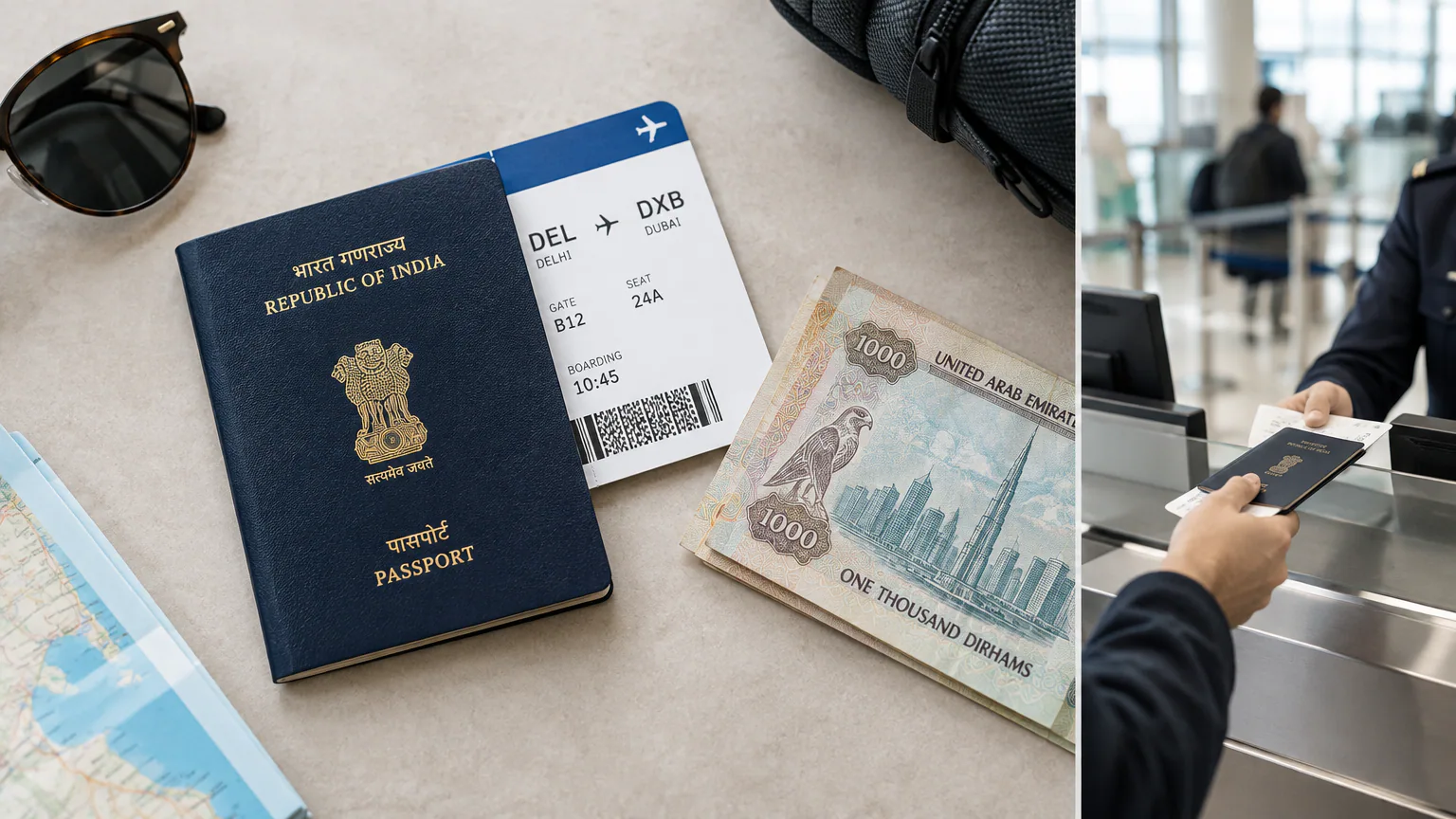 Travel journalDubai / UAE Visa for Indians in 2026: Complete Guide to Types, Fees & Application
Most Indian citizens need a visa to enter Dubai and the UAE. For 2026 travel, the standard route is a tourist visa applied for online before departure — available for…
Read the guide
A little inspiration.
A holiday made yours.
Share your dates and departure city — a travel expert replies with ideas within 24 hours.
Plan my holidayLet’s make it personal.
Tell us about your dates, departure city and the moments you’d love to include.
What happens next?
Discuss your preferences, review a tailored proposal and refine the details before you decide.