Skip to content
Plan my trip
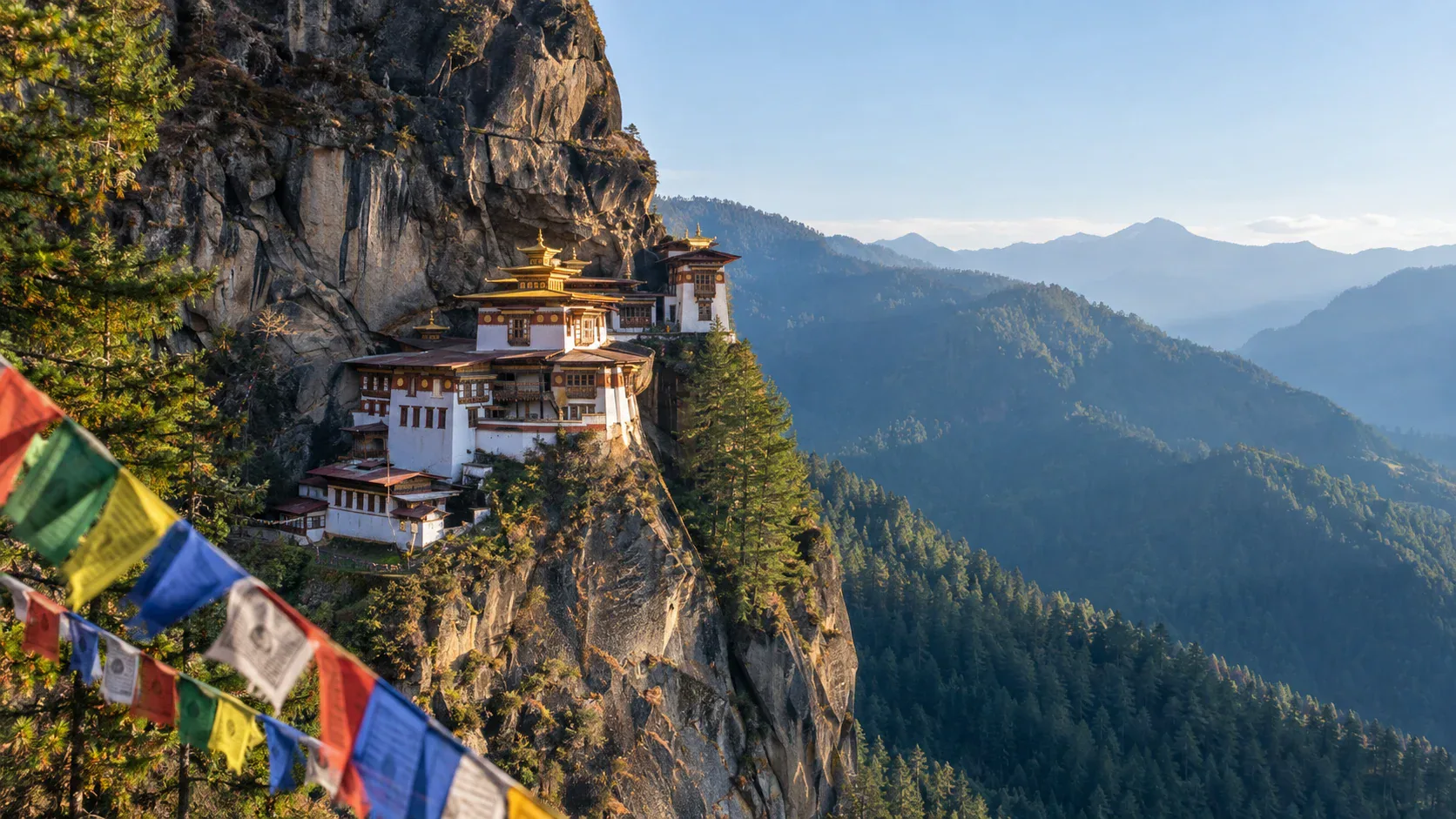
Paro Taktsang monastery on a sheer cliff above pine forest in Bhutan, prayer flags in the foreground, clear morning light
International · Bhutan

Bhutan Tour Packages

Bhutan tour packages from India are customisable route plans covering Paro, Thimphu and Punakha, with permits, private transport and hotels arranged in one quote. Indian nationals need no visa but pay a nightly Sustainable Development Fee…

A little detail goes a long way

Start with your holiday idea.

Travel month
Travellers
  • No booking feeRequesting a quote is free with no obligation.
  • Expert-planned itineraryRoutes and stays shaped around your dates and pace.
  • Reply within 24 hoursA travel expert gets back to you with ideas.
  • Refine before you decideAdjust the plan until it feels right for you.

Written by the Tripstor travel editorial teamReviewed by Killol Desai, Travel Consultation ExpertUpdated How we research and review

Holiday packages

Bhutan holiday packages

Start with one of these holiday ideas, then personalise the route, stays and pace with a specialist.

Hand-picked Bhutan packages are on their way

Every itinerary and price is reviewed before it appears here. Until then, share your dates and we’ll shape your Bhutan holiday around you.

At a glance

Bhutan, in brief

The essentials of your Bhutan holiday. A specialist confirms the route, stays and inclusions in a personalised quote — never an instant booking.

Bhutan.
Paro Taktsang, the cliffside monastery

International
Best time to go

Mar–Apr, Oct–Nov

Ideal trip length

5–7 days

Five days covers Paro, Thimphu and Punakha; seven days is less rushed.
Gateway

Paro International Airport (PBH)

Direct from Delhi and Kolkata; one-stop from other Indian metros.
Entry basics for Indians

No visa; entry permit required

Valid Indian passport or voter ID; passport preferable for air travel and online applications.
Currency

Bhutanese ngultrum (BTN)

Indian rupee widely accepted at approximately 1 INR = 1 BTN.
Language

Dzongkha; English widely used

English is common in tourism, hotels and permit counters.
Altitude reference

About 2,320 m

Typical elevation reference for the western Bhutan circuit.
What you get

What Bhutan Tour Packages Mean for Indian Travellers

Bhutan tour packages are route ideas that bundle permits, private vehicle transport and hotel nights into one plan, priced per person on twin sharing. They are not fixed departures: the itinerary, hotel category and number of SDF nights change with your dates, so only a written quotation confirms what is included.

A package normally covers the entry permit paperwork, a private SUV with driver between Paro, Thimphu and Punakha, hotel nights with breakfast, and the Sustainable Development Fee for each night you stay. Airfare to Paro, lunches, monument entry tickets and tips usually sit outside the quote unless the written quotation states otherwise.

Because Bhutan has limited public transport between tourist towns, most Indian travellers treat the private vehicle as the backbone of the trip rather than an optional add-on. That single choice drives much of the cost difference between a five-night and a seven-night plan, since vehicle days and SDF nights both increase together.

Route permits are required for travel beyond Thimphu and Paro, which means a Punakha or Phobjikha extension must be planned and permitted in advance rather than decided on the road. Confirm the full permit scope in your quotation before you accept it.

  • Customisable route idea: Paro, Thimphu and Punakha sequence, hotel tier and pace adjusted to your dates.
  • Confirmed inclusion: only what appears in the Tripstor quotation you accept, including SDF nights and vehicle scope.
  • Separately quoted: airfare to Paro, travel insurance, personal expenses and any Bumthang or Phobjikha extension.
Quick facts

Bhutan Holiday Packages at a Glance

Bhutan holiday packages work best between March and May or October and November, when mountain views are clearest and temperatures are comfortable. A five to seven day western-Bhutan circuit from Paro covers Paro, Thimphu and Punakha, with indicative land-only pricing from about INR 45,000 per person on twin sharing before airfare.

Best season
March–May and October–NovemberClear views, comfortable temperatures and better trekking conditions.
Time zone
UTC+6Thirty minutes ahead of Indian Standard Time.

Indian nationals enter on a permit rather than a visa, using a passport or voter ID, and pay the nightly SDF on top of land costs. Route permits are needed for travel beyond Thimphu and Paro, which is why Punakha and Phobjikha legs must be planned in advance and included in the quotation.

Paro International Airport is the only international gateway, with direct services from Delhi and Kolkata and one-stop connections from Mumbai, Bengaluru, Chennai, Hyderabad, Pune and Ahmedabad via Drukair and Bhutan Airlines.

Why go

Why Choose Bhutan for a Himalayan Holiday

Bhutan suits Indian travellers who want a managed Himalayan trip rather than an independent trekking holiday. The draw is Buddhist heritage at Paro Taktsang and Punakha Dzong, fortress-monastery architecture, preserved cultural landscapes and a nightly SDF that keeps visitor numbers and hotel inventory deliberately small.

  1. Paro Taktsang, the cliffside monastery

    The uphill walk to Paro Taktsang is the single most demanding half-day on a standard Bhutan itinerary. Start early, allow the full morning and do not schedule it on arrival day.

    Culture
  2. Punakha Dzong at the river confluence

    Punakha Dzong sits where the Pho Chhu and Mo Chhu meet and is reached by a short bridge walk. It is the strongest single argument for adding a Punakha night rather than day-tripping from Thimphu.

    Culture
  3. Thimphu's Buddha Dordenma and Tashichho Dzong

    Thimphu pairs the hilltop Buddha Dordenma statue with Tashichho Dzong, the seat of government, and the weekend market where Bhutanese produce and crafts are sold.

    Culture
  4. Phobjikha Valley for black-necked cranes

    Phobjikha Valley is a glacial valley that hosts migrating black-necked cranes in winter. It suits travellers with a spare night who prefer walking and birdlife over another town.

    Nature
  5. Bumthang for Bhutan's oldest temples

    Bumthang is the country's spiritual heartland and works as a road or domestic-flight extension for seven-night-plus itineraries, adding significant driving time if done overland.

    Culture
  6. Hot-stone baths and quiet lodge stays

    A traditional hot-stone bath and a slower lodge night in Punakha or Phobjikha are the usual wellness add-ons. Confirm the property category in writing before accepting a quote, since festival dates reduce availability.

    Wellness

The country is compact enough to cover Paro, Thimphu and Punakha in a week, yet each valley feels distinct. Paro holds the cliffside Paro Taktsang monastery and the National Museum above Paro Dzong; Thimphu adds the Buddha Dordenma statue, Tashichho Dzong and the weekend market; Punakha brings the Punakha Dzong at the river confluence and the Chimi Lhakhang walk through paddy fields.

Beyond the western circuit, Phobjikha Valley is the winter roosting ground for black-necked cranes and Bumthang holds some of Bhutan's oldest temples, both typically added as extensions for travellers staying seven nights or longer. A traditional hot-stone bath in Punakha or a slower lodge night in Phobjikha are the usual wellness additions; confirm the property category in writing, since Bhutan's room inventory is small and festival dates tighten availability sharply.

Compare

Bhutan Holiday Packages by Theme

Bhutan holiday packages split mainly by pace, hotel tier and how far east you travel. Honeymoon and luxury plans lean on quieter Punakha or Phobjikha nights and better lodges, family plans keep drives short, and adventure plans add trekking days around Paro and Punakha. All indicative prices are land-only, per person, twin sharing, excluding airfare.

Honeymoon Bhutan package

Best forCouples wanting quiet valleys, 5–6 nights, indicative from about INR 75,000 per person twin sharing

StrengthsPunakha riverside nights, hot-stone bath, slower pace with fewer hotel changes

Trade-offsLimited nightlife; evenings are quiet outside Thimphu

Family Bhutan package

Best forFamilies with children, 5–6 nights, indicative from about INR 75,000 per person twin sharing

StrengthsShort drives on the Paro–Thimphu–Punakha circuit, easy sightseeing, under-6 children exempt from SDF

Trade-offsParo Taktsang climb is hard for young children; high passes can be cold

Luxury Bhutan package

Best forTravellers wanting five-star lodges and private guiding, 6–7 nights, indicative from about INR 1,25,000 per person and above

StrengthsBetter lodges, private cultural guide, spa and hot-stone experiences, possible Bumthang extension

Trade-offsPeak October–November and festival dates reduce availability and raise rates

Adventure Bhutan package

Best forFit travellers wanting trekking and long walks, 6–7 nights, indicative from about INR 75,000 per person twin sharing

StrengthsParo Taktsang, Punakha valley walks, possible Phobjikha walking days

Trade-offsMonsoon months bring rain, cloud and landslide risk on mountain roads

Budget Bhutan package

Best forFirst-time visitors watching spend, 5 nights, indicative from about INR 45,000 per person twin sharing

StrengthsSimple 3-star stays, compact western-Bhutan route, lower vehicle days

Trade-offsFewer inclusions; SDF and airfare still apply in full

Best of Bhutan package

Best forTravellers wanting the fullest western circuit, 7 nights, indicative from about INR 1,25,000 per person twin sharing

StrengthsParo, Thimphu, Punakha and Phobjikha or Bumthang in one route

Trade-offsMore road time; Bumthang overland adds long driving days

The nightly SDF of INR/Nu 1,200 per adult applies to every night regardless of theme, so a seven-night plan carries roughly 40 percent more SDF than a five-night plan. Duration is therefore the biggest lever on total cost after hotel category, and extending from five to seven nights changes the SDF component more than most travellers anticipate when comparing quotes.

October–November and March–May combine strong demand with better weather; festival dates can sharply reduce availability and increase package rates across all themes. Reserve Paro flights and festival-period hotels early, particularly for honeymoon and luxury tiers where room inventory is smallest.

Best Time to Visit Bhutan

March to May and October to November give the best balance of clear mountain views, comfortable temperatures and favourable trekking conditions for bhutan tour packages. December to February is cold and dry with excellent visibility, while June to September is wetter due to the southwest monsoon, with July and August the wettest months.

March

Best time to go

Pleasant spring; about 18°C day, 4°C night, 20 mm rain

Crowdsmoderate
Pricesmoderate
Rhododendrons begin blooming and trekking improves.
  • BestMar, Apr, Oct, Nov
  • GoodJan, Feb, May, Dec
  • FairJun, Sep
  • AvoidJul, Aug

Spring brings rhododendron blooms from March and mild days through April, when Paro averages about 21°C by day and 8°C at night with roughly 35 mm of rain. Autumn peaks in October with clear skies, about 22°C by day and 10°C at night, and around 40 mm of rain — the most popular window for best bhutan tour packages.

Monsoon months change the trip rather than cancel it. July and August see about 260 mm and 245 mm of rainfall respectively with humidity near 85 percent, and landslides or delayed road journeys become possible on mountain routes. Late September is noticeably more suitable than early September as the monsoon weakens.

Winter suits culture-focused travellers. January is dry with about 5 mm of rain but nights fall to around -2°C, and high passes or remote routes can be affected by snow. February is slightly warmer at 0°C overnight and remains mostly dry at about 10 mm of rain.

How to Reach Bhutan from India

Bhutan is reached by flying into Paro International Airport or overland through Phuentsholing from West Bengal. Drukair and Bhutan Airlines operate the Paro routes, with direct services from Delhi and Kolkata and one-stop connections from Mumbai, Bengaluru, Chennai, Hyderabad, Pune and Ahmedabad.

By airAbout 1 hour 25 minutes
From

Kolkata

Shortest common Indian air connection to Paro; Drukair and Bhutan Airlines.

By airAbout 2 hours 30 minutes
From

Delhi

Direct Paro services operate subject to seasonal schedules and weather; Drukair and Bhutan Airlines.

By airAbout 7 hours total
From

Mumbai

Delhi or Kolkata

Total journey time depends substantially on the connection; Drukair and Bhutan Airlines.

By airAbout 7 hours total
From

Bengaluru

Delhi or Kolkata

Usually connects via Delhi or Kolkata; Drukair and Bhutan Airlines.

By airAbout 7 hours total
From

Hyderabad

Delhi or Kolkata

Usually connects via Delhi or Kolkata; Drukair and Bhutan Airlines.

By airAbout 7.5 hours total
From

Chennai

Delhi or Kolkata

Usually connects via Delhi or Kolkata; Drukair and Bhutan Airlines.

By airAbout 7.5 hours total
From

Pune

Delhi or Kolkata

Usually connects via Delhi or Kolkata; Drukair and Bhutan Airlines.

By airAbout 8 hours total
From

Ahmedabad

Delhi or Kolkata

Usually connects via Delhi or Kolkata; Drukair and Bhutan Airlines.

By roadVaries by road conditions
From

Phuentsholing (West Bengal border)

Overland entry point; route permits and SDF rules apply as for air arrivals.

By road1 to 1.5 hours
From

Paro Airport to Thimphu

Approximately 50 km; private vehicle is the usual transfer included in most packages.

Travelling from your city?

Tell us where you start. A specialist can plan connections around your stay.

Plan my journey

Kolkata is the shortest common Indian air connection at roughly 1 hour 25 minutes, while Delhi direct services take about 2 hours 30 minutes subject to seasonal schedules and weather. Mumbai, Bengaluru and Hyderabad connections typically total around 7 hours, Pune and Chennai about 7.5 hours, and Ahmedabad about 8 hours, all usually routing via Delhi or Kolkata.

Indian nationals do not need a visa but must obtain an entry permit using a valid Indian passport or Indian voter ID. Apply online through Bhutan Immigration, through an approved tourism provider, or on arrival at designated entry points; advance application is preferable to reduce waiting time. The Sustainable Development Fee is INR/Nu 1,200 per adult per night, INR/Nu 600 for children aged 6 to under 12, and children under 6 are exempt. Visitors staying beyond Thimphu and Paro require route permits, so the Punakha leg must be arranged before departure.

Paro Airport to Thimphu is approximately 50 km and normally takes 1 to 1.5 hours depending on traffic and weather. Most bhutan trip packages from India use a private SUV with driver because public transport between tourist towns is limited; taxis operate in Thimphu and Paro, and shared buses connect major towns but are slower and less convenient for multi-stop itineraries.

Sample route

Sample 7-Day Bhutan Itinerary from India

A seven-day route covering Paro, Thimphu and Punakha fits the ideal trip length without rushing the Paro Taktsang climb. This is a sample route to personalise, not a confirmed package: hotel category, vehicle scope and SDF nights are fixed only in your Tripstor quotation. Route permits for Punakha must be arranged in advance.

  1. Day01
    Stop 1 of 7

    Arrive Paro and transfer to Thimphu

    Land at Paro International Airport, complete entry permit checks and drive to Thimphu.

    Morning

    Fly into Paro from Delhi or Kolkata; complete entry permit formalities on arrival.

    Afternoon

    Drive the approximately 50 km to Thimphu, taking 1 to 1.5 hours depending on traffic and weather.

    Evening

    Short walk around Thimphu's main street and an early night to adjust to the 2,320 m elevation.

    OvernightThimphu
  2. Day02
    Stop 2 of 7

    Thimphu sightseeing

    Cover Thimphu's key monuments and market at an easy pace.

    Morning

    Visit the hilltop Buddha Dordenma statue and Tashichho Dzong, the seat of government.

    Afternoon

    Continue to the National Memorial Chorten and the weekend market if your dates align.

    Evening

    Free time in Thimphu; confirm the route permit for the Punakha leg with your driver or operator.

    OvernightThimphu
  3. Day03
    Stop 3 of 7

    Drive to Punakha via the Dochu La pass

    Cross the Dochu La pass and descend into the warmer Punakha valley.

    Morning

    Leave Thimphu and climb to the Dochu La pass for Himalayan views on a clear day.

    Afternoon

    Continue down to Punakha and check in; rest after the drive.

    Evening

    Walk to Punakha Dzong at the Pho Chhu and Mo Chhu confluence if time allows.

    OvernightPunakha
  4. Day04
    Stop 4 of 7

    Punakha Dzong and Chimi Lhakhang walk

    A gentler day combining Punakha Dzong with the Chimi Lhakhang walk through paddy fields.

    Morning

    Explore Punakha Dzong in full, crossing the bridge over the river confluence.

    Afternoon

    Walk through paddy fields to Chimi Lhakhang, the fertility temple associated with the Divine Madman.

    Evening

    Optional traditional hot-stone bath at your Punakha stay.

    OvernightPunakha
  5. Day05
    Stop 5 of 7

    Return to Paro

    Drive back towards Paro, retracing the Dochu La pass route.

    Morning

    Depart Punakha and drive back over the Dochu La pass.

    Afternoon

    Continue to Paro and check in; visit Paro Dzong and the National Museum above it.

    Evening

    Walk through Paro town and prepare for the Paro Taktsang climb the next morning.

    OvernightParo
  6. Day06
    Stop 6 of 7

    Paro Taktsang hike

    The demanding half-day climb to the cliffside Paro Taktsang monastery.

    Morning

    Start early for the uphill walk to Paro Taktsang; allow the full morning for the ascent and visit.

    Afternoon

    Descend, rest and take a late afternoon break in Paro.

    Evening

    Free evening in Paro; pack for departure.

    OvernightParo
  7. Day07
    Stop 7 of 7

    Departure from Paro

    Transfer to Paro International Airport for the flight home.

    Morning

    Transfer to Paro International Airport for your flight to Delhi or Kolkata.

    Afternoon

    Onward connection to your home city.

    Evening

    Arrive home.

    OvernightNot applicable

The sequence below keeps driving days moderate and places the hardest walking day near the end of the trip rather than on arrival. Meals are excluded from this outline because meal plans vary by hotel category and tier; confirm breakfast, half-board or full-board in writing before accepting a quote.

Travellers extending to Phobjikha Valley or Bumthang should add at least one or two nights respectively and confirm the additional route permits and vehicle days in their quotation. Bumthang overland from Punakha adds significant driving time and is better suited to eight-night-plus plans.

Compare

Bhutan vs Nepal, Sikkim and Ladakh

Bhutan costs more than Nepal or Indian Himalayan alternatives because of the nightly SDF, limited air access to Paro, private transport norms and smaller accommodation inventory. Choose Bhutan for tightly managed Himalayan tourism, fortress-monasteries and preserved cultural landscapes; choose Nepal or Sikkim for lower entry costs and more independent travel flexibility.

Bhutan

Best forTravellers wanting a managed Himalayan cultural trip with dzongs, monasteries and private transport

StrengthsParo Taktsang, Punakha Dzong, Thimphu's monuments, small visitor numbers and preserved heritage

Trade-offsNightly SDF of INR/Nu 1,200 per adult, limited Paro flights and higher land costs

Nepal

Best forIndependent travellers and trekkers wanting lower entry costs and flexible routes

StrengthsBroader trekking infrastructure, more independent-travel flexibility and lower entry costs

Trade-offsBusier trail towns and less controlled cultural presentation than Bhutan

Sikkim

Best forIndian travellers wanting a monastery circuit without international airfare or SDF

StrengthsNo Bhutanese SDF, domestic travel, monastery and mountain scenery around Gangtok and Pelling

Trade-offsDifferent permit rules for protected areas and no Paro Taktsang equivalent

Ladakh

Best forTravellers prioritising high-altitude landscapes over green valleys and Buddhist dzongs

StrengthsDomestic access, dramatic high-altitude desert scenery and monastery towns

Trade-offsAcclimatisation needed and a very different landscape from Bhutan's forested valleys

Nepal generally offers more independent-travel flexibility, broader trekking infrastructure and lower entry costs, which suits travellers who want to build their own route and trek without a fixed vehicle. Bhutan offers a more controlled itinerary, cleaner cultural presentation and distinctive dzong, monastery and national-heritage experiences that Nepal's busier trail towns do not replicate.

Sikkim and Ladakh sit inside India, so there is no SDF, no Bhutanese-style permit for Indian nationals and no international airfare to Paro. Sikkim's monastery circuit around Gangtok and Pelling is the closest Indian equivalent to Bhutan's cultural route, while Ladakh trades green forested valleys for high-altitude desert and requires longer acclimatisation. For Indian travellers whose priority is the dzong-and-monastery experience with minimal crowds, Bhutan remains the clearest choice despite the higher per-night cost.

Before you travel

Five Bhutan Travel Tips for Indian Travellers

Indian travellers should treat the SDF as a nightly charge rather than a one-time fee, carry a passport rather than relying only on a voter ID, and build buffer time around mountain roads. Rupees are widely accepted at approximately 1 INR = 1 BTN, and confirming mobile roaming before departure avoids connectivity gaps in valleys.

  1. Budget the SDF per night, not per trip

    Indian adults pay INR/Nu 1,200 per person per night; children aged 6 to under 12 pay INR/Nu 600 and under-6s are exempt. A seven-night plan carries roughly 40 percent more SDF than a five-night plan, so duration changes the total more than most travellers expect.

    Money
  2. Carry a passport, not only a voter ID

    A valid Indian passport or Indian voter ID is accepted for the entry permit, but a passport is preferable for air travel and online applications. Apply online through Bhutan Immigration or through an approved tourism provider in advance to reduce waiting time at the entry point.

    Entry
  3. Plan connectivity and currency together

    The ngultrum is the local currency and Indian rupees are widely accepted at approximately 1 INR = 1 BTN. Carry some cash for small purchases outside Thimphu and Paro, and confirm your Indian mobile roaming or local SIM arrangement before you fly.

    Logistics
  4. Respect monastery and dzong etiquette

    Dzongs and monasteries are active religious sites. Dress modestly, remove shoes where indicated, do not photograph inside shrine rooms without permission, and keep voices low around monks and worshippers.

    Etiquette
  5. Build buffer time around mountain roads and Paro flights

    Bhutan's roads are slow and weather-affected, and monsoon months bring landslide and delay risk. Avoid connecting an international flight immediately after a domestic Paro arrival, and do not schedule the Paro Taktsang climb on your arrival day.

    Safety

The most common planning errors are counting the SDF as a single visa-style payment, underestimating road times between valleys, scheduling Paro Taktsang on arrival day, and omitting route permits for destinations beyond Thimphu and Paro. Each of these mistakes can disrupt a tight itinerary or add unexpected costs.

Peak demand in October–November and March–May combines better weather with tighter availability, and festival dates can sharply reduce hotel inventory and raise bhutan vacation packages rates. Reserve Paro flights and festival-period hotels early, particularly for honeymoon and luxury tiers where room inventory is smallest. This 2026 guide reflects indicative market conditions; recheck SDF rates and permit rules against Bhutan Immigration before finalising any booking.

Plan it your way

Bhutan, your way

Browse Bhutan by the kind of holiday, the time you have and where you start.

Holiday styles

Pick the kind of trip that fits you — each style opens holidays planned for that mood.

  • Honeymoon

    Quiet stays and unhurried days for two in Bhutan.

    Coming soon
  • Family holidays

    Space to travel together in Bhutan at everyone’s pace.

    Coming soon
  • Adventure

    Active days outdoors, with stays that fit the route in Bhutan.

    Coming soon
  • Luxury

    Thoughtful stays and slower pacing for a more polished Bhutan trip.

    Coming soon

From your city

How it works

From idea to itinerary, with a real person.

  1. 01Share your plan

    Dates, departure city, travellers and the moments you’d love. It only takes a minute.

  2. 02Shape it with a specialist

    A real person refines the route, stays and pace with you. Change anything.

  3. 03Review your quote

    A clear, personalised quote with confirmed inclusions. No payment to enquire.

Start my Bhutan quote
First-hand advice

From our travel specialists

What our team sees when planning these trips for travellers, beyond what the guidebooks say.

  • Families report that Bhutan works well for children because it feels peaceful and safe, but the pace and hikes need to be adapted rather than treated as a standard adult itinerary. Reports also suggest that teenagers may initially be less enthusiastic, yet activities such as biking, rafting, homestays and well-spaced sightseeing can make the trip engaging for the whole family.

  • Local transport and journey times are the practical issue most clearly reflected in the reports: itineraries require long road transfers between valleys, so a driver and guide are often central to keeping the trip comfortable. The available reports do not provide enough first-hand evidence to identify a recurring money, connectivity or food problem.

  • The clearest recurring mistake is compressing too many places into a short trip and underestimating driving time, especially on routes involving Phobjikha or Punakha. Reports instead favour a planned multi-day route linking Paro, Thimphu, Punakha and, when time permits, Phobjikha, with Tiger’s Nest given a separate day.

  • Paro is the most practical first base because the airport is there and it provides access to Tiger’s Nest, while Thimphu is commonly paired with it for city sightseeing. Travellers frequently use Paro and Thimphu as the core of a first itinerary, adding Punakha if they have more time.

Confirmed by Killol Desai, Travel Consultation Expert · 11 Oct 2026

Questions, answered

Before you go

Straight answers on planning your Bhutan holiday, from timing to what a quote covers.

8 answered below
Still unsure?

Ask a specialist anything about Bhutan — there’s no obligation.

Ask a specialist
01Do Indians need a visa to visit Bhutan?

No. Indian nationals do not need a visa, but they must obtain an entry permit using a valid Indian passport or Indian voter ID. The permit can be requested online through Bhutan Immigration, through an approved tourism provider, or on arrival at designated entry points, with advance application preferable to reduce waiting time.

02How much does a Bhutan tour package cost from India?

Indicative land-only twin-sharing bhutan tour packages price ranges from about INR 45,000 per person for budget trips to INR 1,25,000 or more for premium trips, excluding airfare. Actual quotations vary by duration, hotel category, SDF nights, transport scope, permits and season, so treat these as planning bands rather than confirmed offers.

03How many days are enough for a Bhutan trip?

Five days covers Paro, Thimphu and Punakha at a reasonable pace, while seven days is better for a less rushed western-Bhutan itinerary. Adding Phobjikha Valley usually needs seven nights or more, and a Bumthang extension overland adds significant driving time best suited to eight-night-plus plans.

04What is the best time to visit Bhutan?

March to May and October to November are generally best for comfortable weather, clear mountain views and cultural sightseeing. December to February is cold and dry with good visibility, while June to September is wetter, with July and August the wettest months and higher landslide risk on mountain roads.

05Is Bhutan a good honeymoon destination for Indian couples?

Bhutan suits couples who prefer quiet valleys, monastery visits and slower pacing over nightlife. A five to six night plan with a Punakha riverside stay and a traditional hot-stone bath works well, and indicative land-only pricing for honeymoon bhutan holiday packages starts around INR 75,000 per person on twin sharing before airfare.

06Is Bhutan safe for families with children?

Bhutan is generally calm and low-crime, and the short drives on the Paro–Thimphu–Punakha circuit suit families. Children under 6 are exempt from the SDF and those aged 6 to under 12 pay INR/Nu 600 per night, but the Paro Taktsang climb is hard for young children and high passes can be cold.

07How much is the Bhutan Sustainable Development Fee for Indians?

The fee is INR/Nu 1,200 per person per night for adults, while children aged 6 to under 12 pay INR/Nu 600 and children under 6 are exempt. It is a nightly charge, not a one-time visa fee, so the total rises with every additional night stayed.

08What is usually included in a Bhutan tour package?

A typical package covers the entry permit paperwork, a private SUV with driver between Paro, Thimphu and Punakha, hotel nights with breakfast, and the SDF for each night stayed. Airfare to Paro, lunches, monument entry tickets, travel insurance and tips usually sit outside the quote unless the written quotation states otherwise.

Before you go

Bhutan travel guides

Reviewed reads on timing, places and planning — useful before you request your quote.

Your free, personalised quote

Make Bhutan yours.

Tell us your dates and who’s travelling. A specialist will shape the route, stays and pace into a quote that fits you.

  • A personalised quote, never an instant booking
  • No payment to enquire
  • A real specialist replies, usually within a day
Made around you

Tell us about your holiday

Your dates, your pace, your wishlist.

  1. 1 · Your trip
  2. 2 · Your details
  3. 3 · Review & send

Your travel plans

Travel month
Travellers

No payment is required to request a quote.

Get a free quote

No payment or booking needed.