
Italy Travel Guide for Indians: Your Complete 2026 Trip Planner
Italy is one of the most rewarding long-haul destinations for Indian travellers — a country where ancient Roman ruins, Renaissance masterpieces, dramatic coastlines, and world-class cuisine exist within a few hours of each other. This guide covers everything an Indian traveller needs to plan a 2026 trip to Italy: Schengen visa requirements, how to reach Italy from India, the best time to visit, a realistic cost breakdown, top destinations, where to stay, what to eat, and practical on-the-ground tips. All visa and entry facts are sourced from official Italian consular and government sources.
- No booking feeRequesting a quote is free with no obligation.
- Expert-planned itineraryRoutes and stays shaped around your dates and pace.
- Reply within 24 hoursA travel expert gets back to you with ideas.
- Refine before you decideAdjust the plan until it feels right for you.
Italy at a Glance: What Indian Travellers Need to Know
Italy is a Southern European country occupying a boot-shaped peninsula extending into the Mediterranean Sea. It borders France, Switzerland, Austria, and Slovenia, and encompasses the islands of Sicily and Sardinia. The country is home to more UNESCO World Heritage Sites than any other nation, and its capital, Rome, has been continuously inhabited for over 2,700 years.
For Indian travellers, Italy offers a rare combination: deep historical resonance, accessible vegetarian cuisine, a well-developed tourism infrastructure, and a visa pathway through the Schengen system. The country is well suited to first-time European travellers as well as repeat visitors seeking regional depth in Tuscany, the Amalfi Coast, or the Italian Lakes.
Key facts at a glance: currency is the Euro (€); official language is Italian; time zone is CET (UTC+1, UTC+2 in summer); and the country uses Type F and Type L electrical sockets (230V). India's IST is 3.5 hours ahead of CET and 4.5 hours ahead of CEST.
Why Italy Appeals to Indian Travellers
Italy consistently ranks among the top European destinations for Indian passport holders, and for good reason. Three factors drive its popularity.
First, historical and cultural depth: sites like the Roman Colosseum, the Vatican Museums, and Pompeii offer a tangible connection to ancient civilisations that resonates with Indian travellers accustomed to layered historical landscapes. Second, romantic appeal: Venice's canal network, the cliffside villages of the Amalfi Coast, and the rolling hills of Tuscany make Italy a leading honeymoon destination from India. Third, food compatibility: Italian cuisine is built on fresh vegetables, legumes, dairy, and grains. Pasta al pomodoro, risotto, pizza Margherita, and caprese salad are inherently vegetarian, and most restaurants can adapt dishes on request. The absence of strong spice barriers makes Italian food approachable for most Indian palates.
Italy also benefits from a mature tourism infrastructure — high-speed rail between major cities, well-signposted attractions, English-speaking staff in hotels and restaurants, and a dense network of accommodation options at every price point.
Italy Schengen Visa for Indian Citizens: Requirements and Process
Indian citizens require a short-stay Schengen visa to enter Italy for tourism. This visa permits stays of up to 90 days within any 180-day period across the Schengen Area. A long-stay Italian national visa applies only to stays exceeding 90 days.
When applying, Italy must be your sole destination, your main destination by length of stay or purpose of visit, or your country of first entry if no single main destination can be determined.
The Italian consular network in India comprises the Embassy in New Delhi and consulates in Kolkata, Mumbai, and Bengaluru. Jurisdiction is determined by the applicant's place of residence, so you must apply through the consulate or embassy covering your home state. Visa-document collection is handled through designated VFS Global offices within each consulate's jurisdiction.
Italy Tourist Visa: Document Checklist for Indian Applicants
The following requirements are drawn from official Italian consular sources, including the Mumbai Consulate General's published tourist-visa checklist. Always verify the current list with the consulate or VFS office covering your residence before applying, as requirements can be updated.
- **Passport:** Must have been issued within the previous 10 years, remain valid for at least three months beyond your intended departure from the Schengen Area, and contain at least two blank pages.
- **Proof of accommodation:** Hotel booking confirmations or a host's invitation letter covering all travel dates.
- **Return flight details:** Confirmed round-trip flight tickets or an airline reservation printout showing outbound and return journeys.
- **Travel insurance:** Mandatory. Must provide a minimum of €30,000 coverage including emergency medical repatriation, valid for the entire Schengen stay.
- **Financial proof:** Bank statements or other documents demonstrating sufficient funds for the duration of your stay. (Specific thresholds are not published officially; check with your consulate.)
- **Visa application form:** Completed and signed Schengen visa application form.
- **Photographs:** Recent passport-size photographs meeting Schengen photo specifications.
- **Cover letter:** A brief letter stating the purpose, itinerary, and duration of your trip.
Practical Visa Tips for Indian Travellers
Apply well in advance of your travel dates. Processing times vary by consulate and season, and appointment slots at VFS offices can fill up quickly during peak periods (April–June, September–October). Current processing times and fee amounts are not published in a standardised form; check the official website of the Italian Embassy or Consulate covering your state of residence for the most up-to-date information.
If you are visiting multiple Schengen countries, apply through the consulate of the country where you will spend the most nights. If Italy is your primary destination or first point of entry, apply through the Italian consulate.
Keep digital and physical copies of all submitted documents. Carry your travel insurance certificate, accommodation confirmations, and return ticket in your hand luggage when travelling.
How to Reach Italy from India: Flights and Entry Points
Air travel is the primary way to reach Italy from India. Italy has approximately 40 airports providing domestic, international, and intercontinental air connections. The two main international entry hubs are Rome–Fiumicino International Airport (IATA: FCO) and Milan Malpensa Airport (IATA: MXP). These airports handle the majority of long-haul international arrivals and offer the best onward connections to other Italian cities.
Rome Fiumicino (Leonardo da Vinci Airport) is the largest airport in Italy and the most common entry point for travellers beginning their trip in central or southern Italy. Milan Malpensa is the preferred gateway for northern Italy, including the Lake District and Tuscany via high-speed rail.
There are no verified non-stop scheduled flights between Indian cities and Italy as of this writing. Most routes from Delhi (DEL), Mumbai (BOM), Bengaluru (BLR), Chennai (MAA), and Hyderabad (HYD) involve one connection, typically via Gulf hubs (Dubai, Abu Dhabi, Doha) or European hubs (Frankfurt, Amsterdam, Paris, Istanbul). Total journey time including layover is typically 10 to 16 hours depending on the routing. Verify current routes and schedules directly with airlines or a travel agent, as these change seasonally.
Getting from Italian Airports to City Centres
Airport-to-city connections in Italy commonly include taxis, buses, and trains. Each major airport has multiple transfer options.
- **Rome Fiumicino (FCO) to central Rome:** The Leonardo Express train runs non-stop to Roma Termini station in approximately 32 minutes. Regional trains (slower, cheaper) also connect FCO to Termini and other Rome stations. Taxis and pre-booked private transfers are available outside arrivals.
- **Milan Malpensa (MXP) to central Milan:** The Malpensa Express train connects to Milano Centrale and Milano Cadorna stations. Journey time is approximately 50–60 minutes. Airport buses (Malpensa Shuttle, Terravision) serve Milano Centrale. Taxis and private transfers are available.
- **Venice Marco Polo (VCE):** Water taxis and the Alilaguna water bus connect the airport to Venice's historic centre via the lagoon. Land buses connect to Piazzale Roma (the road terminus for vehicles entering Venice).
- **Florence Peretola (FLR):** Shuttle buses connect to Santa Maria Novella station in central Florence. Taxis are available outside arrivals.
- Pre-booking airport transfers, especially for late-night arrivals, is recommended to avoid queues and ensure a fixed price.
Travelling Between Italian Cities
Italy has one of Europe's most developed rail networks. High-speed trains — operated under the Frecciarossa and Frecciargento brands by Trenitalia, and by the private operator Italo — connect Rome, Florence, Venice, Milan, Naples, and Bologna with journey times that make rail faster than flying on many routes when airport time is factored in. Rome to Florence takes approximately 1.5 hours by high-speed train; Rome to Milan approximately 3 hours.
Regional trains serve smaller cities and towns not on the high-speed network. Buses fill gaps in rural areas. For Sicily and Sardinia, domestic flights and ferry services connect the islands to the mainland. Italy also has air connections between its cities and services linking mainland Italy with Sicily, Sardinia, and smaller islands.
Current train fares, timetables, and booking are available through Trenitalia and Italo's official websites. Book high-speed rail tickets in advance for the best fares, especially during peak travel months.
Best Time to Visit Italy from India
The best time to visit Italy from India is spring (April–May) or early autumn (September–October). During these months, temperatures are mild and comfortable for walking and sightseeing, crowds are smaller than in peak summer, and accommodation prices are generally lower than in July and August.
Summer (June–August) is peak season: weather is hot, attractions are crowded, and prices are at their highest. August in particular sees many Italian businesses close as locals take their own holidays. Winter (November–March) offers the lowest prices and fewest tourists, but some coastal and rural attractions have reduced hours or close entirely.
The table below summarises conditions by month to help you choose the right travel window.
| Month | Weather | Crowd Level | Price Level | Verdict for Indian Travellers |
|---|---|---|---|---|
| January | Cold; snow possible in north | Low | Low | Budget travel; winter sports in Alps; fewer tourist queues |
| February | Cold; Venice Carnival mid-month | Low to Moderate | Low to Moderate | Carnival is a highlight; still cold elsewhere |
| March | Cool, warming toward end | Moderate | Moderate | Good shoulder option; spring flowers begin |
| April | Mild and pleasant | Moderate to High | Moderate to High | Excellent weather; Easter week is very busy — book early |
| May | Warm and sunny | High | High | Ideal conditions; advance booking essential |
| June | Hot; beach season opens | High | High | Peak season begins; coastal areas fill up |
| July | Very hot (30–38°C in south) | Very High | Very High | Hottest and most crowded month; not ideal for sightseeing |
| August | Very hot; many locals on holiday | Very High | Very High | Some businesses closed; beaches packed |
| September | Warm; harvest festivals | Moderate to High | Moderate to High | One of the best months; grape harvest season |
| October | Mild; autumn foliage | Moderate | Moderate | Excellent for sightseeing; fewer crowds |
| November | Cool and rainy | Low | Low | Budget-friendly; some coastal sites close |
| December | Cold; Christmas markets | Low to Moderate | Low to Moderate | Festive atmosphere in cities; good for Rome and Florence |
Italy Trip Cost from India: 2026 Budget Breakdown
The table below provides indicative per-person cost ranges for a 7-day, 6-night trip to Italy from India in 2026, assuming double occupancy for accommodation and round-trip flights from a major Indian city. These are approximate estimates only. Actual costs depend on booking timing, travel dates, airline choice, and personal spending habits. Flight costs in particular are highly variable.
Visa and travel insurance costs are included as a separate line because they apply regardless of travel style. The €30,000 minimum travel insurance requirement is mandatory for the Schengen visa.
| Cost Category | Budget (₹ per person) | Mid-Range (₹ per person) | Luxury (₹ per person) |
|---|---|---|---|
| Round-trip flights from India | ₹50,000 – ₹70,000 | ₹70,000 – ₹1,00,000 | ₹1,00,000 – ₹1,50,000+ |
| Accommodation (6 nights, double occupancy) | ₹15,000 – ₹25,000 | ₹25,000 – ₹50,000 | ₹50,000 – ₹1,00,000+ |
| Food and drink (7 days) | ₹10,000 – ₹15,000 | ₹15,000 – ₹25,000 | ₹25,000 – ₹50,000+ |
| Local transport and attraction entry (7 days) | ₹8,000 – ₹12,000 | ₹12,000 – ₹20,000 | ₹20,000 – ₹40,000+ |
| Schengen visa and travel insurance | ₹10,000 – ₹15,000 | ₹10,000 – ₹15,000 | ₹10,000 – ₹15,000 |
| Total estimated cost per person | ₹93,000 – ₹1,37,000 | ₹1,32,000 – ₹2,10,000 | ₹2,05,000 – ₹3,55,000+ |
Top 10 Places to Visit in Italy
Italy rewards travellers who plan their itinerary around a clear geographic logic — moving between cities by high-speed rail rather than doubling back. The ten destinations below represent the country's most visited and most rewarding locations for first-time and returning Indian visitors.
1. Rome — The Eternal City
Rome is the essential starting point for most Italy itineraries. The Colosseum, completed in 80 AD, is the world's largest ancient amphitheatre and the city's defining landmark. The Roman Forum and Palatine Hill, adjacent to the Colosseum, form a single archaeological complex that traces 1,000 years of Roman history. The Pantheon, a remarkably preserved temple dating to 125 AD, remains one of the best-preserved ancient buildings in the world.
Beyond antiquity, Rome offers Baroque fountains (Trevi Fountain, Piazza Navona), Renaissance palaces, and some of Italy's finest restaurants. Allow a minimum of three full days to cover the major sites without rushing. Book timed entry tickets for the Colosseum and Vatican Museums well in advance.
2. Florence — Birthplace of the Renaissance
Florence (Firenze) is the capital of Tuscany and the city most associated with the Italian Renaissance. The Duomo — formally the Cattedrale di Santa Maria del Fiore — dominates the skyline with Brunelleschi's terracotta dome, an engineering achievement that remained the largest in the world for over a century after its completion in 1436. The Uffizi Gallery houses one of the world's greatest collections of Renaissance painting, including Botticelli's Birth of Venus and Primavera.
Florence is compact and walkable. The Ponte Vecchio, a medieval bridge lined with jewellery shops, crosses the Arno River and connects the historic centre to the Oltrarno neighbourhood. Two days is a practical minimum; three days allows for day trips to Siena or the Chianti wine region.
3. Venice — The Floating City
Venice is built across 118 small islands connected by canals and bridges, with no roads for motor vehicles. St. Mark's Square (Piazza San Marco) is the city's ceremonial heart, flanked by St. Mark's Basilica — a Byzantine masterpiece with golden mosaics — and the Doge's Palace, the former seat of Venetian government. A gondola ride through the smaller canals (the sestieri) offers a perspective unavailable anywhere else in the world.
Venice is best experienced early in the morning or in the evening, when day-trippers have left. Staying overnight in Venice itself, rather than on the mainland, transforms the experience. Two days is sufficient for the main sites; three days allows for a trip to the islands of Murano (glass-blowing) and Burano (colourful lace-making village).
4. Amalfi Coast — Dramatic Cliffs and Azure Waters
The Amalfi Coast (Costiera Amalfitana) is a 50-kilometre stretch of coastline in the Campania region, south of Naples, characterised by steep cliffs, terraced lemon groves, and pastel-coloured villages. Positano is the most photographed town, with its stacked houses cascading down to a small beach. Ravello, perched high above the sea, is known for its gardens and music festival. Amalfi town itself has a striking Arab-Norman cathedral.
The coast is best visited in May, June, or September. The coastal road (SS163) is narrow and winding; travelling by ferry between towns is often faster and more scenic than driving. The Amalfi Coast is a UNESCO World Heritage Site.
5. Vatican City — The World's Smallest State
Vatican City is an independent city-state enclosed within Rome, covering approximately 44 hectares. It is the headquarters of the Roman Catholic Church and the residence of the Pope. St. Peter's Basilica, one of the largest churches in the world, is a Renaissance and Baroque masterpiece with a dome designed by Michelangelo. The Vatican Museums contain one of the world's greatest art collections, culminating in the Sistine Chapel, where Michelangelo's ceiling frescoes (1508–1512) remain among the most celebrated works in Western art.
Book Vatican Museums tickets online well in advance — queues without pre-booked tickets can exceed two hours. Entry to St. Peter's Basilica is free, but modest dress (covered shoulders and knees) is required.
6. Cinque Terre — Five Villages on the Italian Riviera
Cinque Terre ('Five Lands') comprises five fishing villages — Monterosso al Mare, Vernazza, Corniglia, Manarola, and Riomaggiore — perched on rugged cliffs along the Ligurian coast. The villages are connected by hiking trails and a regional train line. The area is a UNESCO World Heritage Site and a national park. Vernazza and Manarola are considered the most scenic of the five.
The Cinque Terre is best visited as a day trip or overnight stay from La Spezia or Genoa. A Cinque Terre Card covers train travel between the villages and trail access fees. Avoid visiting in July and August if possible — the trails and villages become extremely crowded.
7. Milan — Fashion, Design, and Gothic Grandeur
Milan (Milano) is Italy's economic capital and the global centre of fashion and design. The Duomo di Milano, a Gothic cathedral begun in 1386 and not completed until 1965, is one of the largest cathedrals in the world and the city's defining landmark. Its rooftop terrace offers panoramic views across the city to the Alps on clear days. Leonardo da Vinci's The Last Supper (1495–1498), housed in the refectory of Santa Maria delle Grazie, is one of the most visited artworks in the world — tickets must be booked months in advance.
Milan is also the gateway to the Italian Lakes (Como, Maggiore, Garda) and is well connected by high-speed rail to Florence (1h 45m) and Rome (3h).
8. Pompeii — A Roman City Frozen in Time
Pompeii was a prosperous Roman city near modern Naples that was buried under volcanic ash and pumice when Mount Vesuvius erupted in 79 AD. The eruption preserved the city in extraordinary detail, providing an unparalleled record of Roman urban life. Excavations have revealed streets, homes, temples, bakeries, and theatres largely intact. Pompeii is a UNESCO World Heritage Site and one of Italy's most visited archaeological sites.
Pompeii is easily reached from Naples by the Circumvesuviana regional train (approximately 35 minutes). Allow at least three to four hours to explore the main areas of the site. Combine with a visit to Herculaneum (a smaller, better-preserved Roman town also buried in 79 AD) for a full day.
9. Lake Como — Alpine Elegance in Lombardy
Lake Como (Lago di Como) is a glacial lake in the Lombardy region, approximately one hour north of Milan by train. It is surrounded by steep wooded hills, elegant 18th- and 19th-century villas, and small lakeside towns. Bellagio, situated at the point where the lake divides into two branches, is the most celebrated of these towns, known for its cobbled lanes, gardens, and panoramic views. Varenna and Menaggio are quieter alternatives with excellent ferry connections.
Lake Como is a popular honeymoon destination for Indian couples. It is best visited in May, June, or September. Ferries connect the main towns; car hire is an option for exploring the lake's perimeter.
10. Sicily — The Mediterranean's Largest Island
Sicily is the largest island in the Mediterranean Sea and one of Italy's most historically layered regions, shaped by Greek, Roman, Arab, Norman, and Spanish influences. Mount Etna, on the island's eastern flank, is one of the world's most active volcanoes and a UNESCO World Heritage Site; guided hikes to the summit craters are available. The Valley of the Temples near Agrigento contains some of the best-preserved ancient Greek temples outside Greece itself.
Palermo, the island's capital, offers a compelling mix of Arab-Norman architecture, vibrant street markets, and some of Italy's most distinctive cuisine. Sicily is reached from mainland Italy by domestic flight or by ferry from Villa San Giovanni (near Reggio Calabria). Allow at least four to five days to do the island justice.
Where to Stay in Italy: Accommodation by City
Italy offers accommodation across every category, from budget hostels and family-run agriturismi to five-star historic palaces. The neighbourhood you choose within a city matters as much as the hotel itself — proximity to major sights reduces transport time and costs. The examples below are illustrative of the market; prices are approximate and subject to change. Always verify current rates and inclusions directly with the property or booking platform.
Rome: Where to Stay
The best neighbourhoods for visitors are Trastevere (authentic Roman atmosphere, lively evenings), the Historic Centre (walking distance to the Pantheon, Piazza Navona, and Campo de' Fiori), and the area around Termini station (excellent transport links, widest range of budget options).
Budget option: The Beehive Hostel (near Termini) offers dormitory beds from approximately €30 per night; breakfast is not included. Mid-range option: Hotel Artemide (near Termini) offers double rooms from approximately €150 per night, including breakfast. Luxury option: Hotel Eden (near the Spanish Steps) offers rooms from approximately €800 per night, including breakfast. These are indicative market-rate examples; verify current availability and pricing before booking.
Florence: Where to Stay
San Lorenzo (central, near the Mercato Centrale and Duomo), Oltrarno (south of the Arno, artisan workshops, local feel), and Santa Croce (near the basilica, good restaurant density) are the most practical neighbourhoods for visitors.
Budget option: Ostello Bello Firenze (near Santa Maria Novella station) offers dormitory beds from approximately €35 per night, including breakfast. Mid-range option: Hotel Pitti Palace al Ponte Vecchio (Oltrarno) offers double rooms from approximately €130 per night, including breakfast. Luxury option: Four Seasons Hotel Firenze offers rooms from approximately €900 per night, including breakfast. Verify current rates directly.
Venice: Where to Stay
San Marco (iconic landmarks, premium prices), Cannaregio (local neighbourhood feel, Jewish Ghetto, good value), and Dorsoduro (art galleries, quieter canals, university area) are the most recommended sestieri for visitors. Staying on the island of Venice itself — rather than on the mainland at Mestre — is strongly recommended for the full experience.
Budget option: Generator Venice (Giudecca Island) offers dormitory beds from approximately €40 per night; breakfast not included. Mid-range option: Hotel Antiche Figure (near Santa Lucia station) offers double rooms from approximately €180 per night, including breakfast. Luxury option: The Gritti Palace (Grand Canal) offers rooms from approximately €1,000 per night, including breakfast. Verify current rates directly.
Italian Food for Indian Travellers: What to Eat and Where
Italian cuisine is one of the most vegetarian-accessible in Europe. The country's culinary tradition is built on seasonal vegetables, legumes, grains, dairy, and olive oil. Regional variation is significant: northern Italy favours risotto, polenta, and butter-based sauces; central Italy (Tuscany, Lazio) is known for bean soups, fresh pasta, and pecorino cheese; southern Italy and Sicily lean toward tomato-based sauces, aubergine, and seafood.
When dining, look for 'vegetariano' on menus, or ask for 'senza carne' (without meat) and 'senza pesce' (without fish). Vegan options are increasingly available in larger cities. Tap water is safe to drink throughout Italy.
Five Must-Try Italian Dishes
- **Pizza Margherita:** The original Neapolitan pizza — San Marzano tomatoes, fior di latte mozzarella, fresh basil, and olive oil on a thin, charred crust. Best eaten in Naples, where it originated, but excellent throughout Italy.
- **Pasta al Pomodoro:** Simple pasta with a fresh tomato sauce, basil, and Parmesan. A staple across the country and reliably vegetarian. Regional variations include spaghetti all'amatriciana (with tomato and pecorino, traditionally contains guanciale — ask for it without) and penne all'arrabbiata (spicy tomato, naturally vegan).
- **Risotto ai Funghi:** Creamy Arborio rice cooked with porcini or mixed mushrooms, white wine, and Parmesan. A hearty vegetarian option particularly common in Lombardy and Veneto.
- **Gelato:** Italian ice cream made with a higher proportion of milk than cream, producing a denser, more intensely flavoured result than standard ice cream. Fruit-based sorbetto varieties are dairy-free. Look for artisan gelaterie (artigianale) rather than tourist-facing shops with towering mounds of brightly coloured gelato.
- **Caprese Salad:** Fresh buffalo mozzarella, ripe tomatoes, basil, and extra-virgin olive oil. A perfect light starter or lunch, especially in summer. Best in Campania, where buffalo mozzarella (mozzarella di bufala) is produced.
Restaurant Suggestions by City
The following are well-regarded restaurants mentioned in the draft. Verify current opening hours, reservation requirements, and menus before visiting, as these can change.
- **Rome — Da Enzo al 29** (Trastevere): Traditional Roman trattoria with seasonal vegetarian options alongside classic Roman dishes.
- **Rome — Pizzeria Da Baffetto** (near Piazza Navona): A long-established Roman pizzeria known for thin-crust pizza.
- **Florence — Trattoria Mario** (San Lorenzo): A no-frills, communal-table Florentine institution. Limited vegetarian options but staff can advise.
- **Florence — Mercato Centrale** (San Lorenzo): A two-floor food hall with a wide range of vendors, including pasta, pizza, and vegetarian options.
- **Venice — Trattoria Alla Madonna** (San Polo): A classic Venetian restaurant with strong pasta and risotto options alongside seafood.
- **Venice — Osteria alle Testiere** (Castello): A small, upscale osteria focused on fresh, seasonal ingredients.
Practical Travel Tips for Indian Visitors to Italy
The following tips address the most common practical questions from Indian travellers planning a first or repeat trip to Italy.
Currency, Cards, and Cash
Italy uses the Euro (€). Credit and debit cards (Visa, Mastercard) are widely accepted in hotels, restaurants, and shops in cities and larger towns. Carry some cash for smaller purchases, local markets, rural areas, and some smaller restaurants that prefer cash. ATMs (Bancomat) are widely available in cities and towns. Inform your Indian bank of your travel dates before departure to prevent your card being blocked for overseas transactions.
Dynamic currency conversion (DCC) — where an ATM or card terminal offers to charge you in Indian Rupees rather than Euros — typically results in a worse exchange rate. Always choose to be charged in the local currency (Euros).
SIM Cards and Mobile Connectivity
Italy has good mobile coverage in cities and along major transport routes. You can purchase a local prepaid SIM card from operators including TIM, Vodafone Italy, and WindTre at airports, phone stores, and some supermarkets. Bring your passport, as ID is required to register an Italian SIM.
An eSIM is a convenient alternative for travellers with compatible devices — you can activate a data plan digitally before departure without needing a physical SIM. Several international eSIM providers offer Italy or EU-wide data plans. Check compatibility with your device before travelling.
Safety, Etiquette, and Local Customs
Italy is generally a safe destination for tourists. The primary concern in tourist areas is petty theft and pickpocketing, particularly in crowded spaces such as the Rome Metro, major piazzas, and busy train stations. Use a money belt or anti-theft bag for passports and large amounts of cash. Keep bags on your lap or in front of you in crowded areas.
Etiquette: Italians appreciate a greeting — 'Buongiorno' (good morning/good day) and 'Buonasera' (good evening) go a long way. When visiting churches, cathedrals, and religious sites, dress modestly: covered shoulders and knees are required and often enforced at the door. Tipping is not mandatory in Italy but is appreciated — rounding up a restaurant bill or leaving a few euros for good service is customary. A 'coperto' (cover charge) on restaurant bills is standard and not a tip.
Photography restrictions apply inside many museums and churches — look for signs or ask staff before photographing artworks.
What to Pack for Italy
- **Comfortable walking shoes:** Italian cities involve significant walking on cobblestone streets. Prioritise comfort over style.
- **Layered clothing:** Spring and autumn temperatures can vary significantly between morning and afternoon. A light jacket or cardigan is essential.
- **Modest attire for religious sites:** A scarf or shawl that can cover shoulders and a pair of trousers or a skirt that covers the knees will allow entry to churches and the Vatican without needing to purchase a cover-up at the door.
- **Universal travel adapter:** Italy uses Type F and Type L sockets (230V). A universal adapter covers both.
- **Sunscreen and sunglasses:** Essential from April through September, particularly on the Amalfi Coast and in Sicily.
- **Small daypack:** Useful for carrying water, snacks, a camera, and a light layer during day trips.
- **Printed copies of key documents:** Visa, travel insurance certificate, accommodation confirmations, and return flight details.
Italy vs. Greece: Which Should Indian Travellers Choose?
Both Italy and Greece are popular European destinations for Indian travellers, and both require a Schengen visa. The right choice depends on your travel priorities.
Italy offers greater diversity within a single trip: ancient Roman history, Renaissance art, Gothic cathedrals, Alpine lakes, dramatic coastlines, and one of the world's most celebrated culinary traditions. Its high-speed rail network makes inter-city travel fast and convenient. Italy is the stronger choice for travellers who want a mix of cities, culture, food, and scenery without relying on ferries or domestic flights.
Greece is the better choice for travellers prioritising island-hopping, beaches, ancient Greek mythology and archaeology, and a more relaxed pace. The Greek islands (Santorini, Mykonos, Crete, Rhodes) offer a distinctly different aesthetic — whitewashed architecture, volcanic landscapes, and Aegean beaches — that Italy does not replicate. Inter-island travel in Greece requires ferries or domestic flights, which adds time and cost.
For a first European trip, Italy's combination of iconic cities, accessible vegetarian food, and efficient rail connections makes it the more practical and rewarding choice for most Indian travellers. Greece works better as a second European trip or as a dedicated beach and island holiday.
Step-by-Step: Planning Your Italy Trip from India
- **Step 1 — Decide your itinerary and duration:** A 7-night trip suits Rome, Florence, and Venice. A 10–12 night trip adds the Amalfi Coast or Tuscany. A 14-night trip allows for Sicily, the Lakes, or Cinque Terre.
- **Step 2 — Book flights early:** International flights from India to Rome (FCO) or Milan (MXP) are the most common entry points. Book several months in advance for better fares, especially for April–May and September–October travel.
- **Step 3 — Apply for your Schengen visa:** Identify the Italian consulate with jurisdiction over your state of residence. Book a VFS Global appointment, prepare your document checklist (including mandatory €30,000 travel insurance), and apply well ahead of your travel date.
- **Step 4 — Book accommodation:** Secure hotels or apartments in each city before your visa appointment, as proof of accommodation is a required visa document.
- **Step 5 — Plan internal travel:** Book high-speed train tickets between cities (Trenitalia or Italo) in advance for the best fares. For Sicily or Sardinia, check domestic flight or ferry options.
- **Step 6 — Pre-book key attractions:** The Vatican Museums, the Colosseum, Leonardo's Last Supper in Milan, and the Uffizi Gallery in Florence all require advance booking. Queues without pre-booked tickets can be very long.
- **Step 7 — Arrange connectivity and currency:** Organise an eSIM or plan to buy a local SIM on arrival. Notify your bank of travel dates. Carry some Euros in cash for arrival.
Good questions. Clearer plans.
What kind of visa do Indian citizens need to visit Italy?
Indian citizens require a short-stay Schengen visa for tourism in Italy. This visa permits stays of up to 90 days within any 180-day period across the Schengen Area. Italy must be your main destination or your first point of entry. Apply through the Italian Embassy in New Delhi or the consulate (Kolkata, Mumbai, or Bengaluru) that has jurisdiction over your state of residence. Applications are submitted via designated VFS Global offices.
What documents are required for an Italy tourist visa from India?
The core documents required include: a passport issued within the last 10 years, valid for at least three months beyond your intended stay, with at least two blank pages; confirmed accommodation bookings covering all travel dates; return flight tickets or a reservation printout; and travel insurance with a minimum of €30,000 coverage including repatriation (mandatory). Financial proof and a completed visa application form are also required. Always verify the current checklist with the Italian consulate covering your state of residence, as requirements can be updated.
What is the best time to visit Italy from India?
Spring (April–May) and early autumn (September–October) are the best times to visit Italy from India. Weather is mild and pleasant for sightseeing, crowds are smaller than in peak summer, and accommodation prices are generally lower. July and August are the hottest and most crowded months, with the highest prices. Winter (November–March) offers the lowest costs and fewest tourists but some attractions have reduced hours.
How much does a trip to Italy from India cost in 2026?
For a 7-day, 6-night trip with double occupancy, indicative per-person costs are: budget ₹93,000–₹1,37,000; mid-range ₹1,32,000–₹2,10,000; luxury ₹2,05,000–₹3,55,000+. These estimates cover round-trip flights from India, accommodation, food, local transport, attraction entry, visa, and travel insurance. Flight costs are the most variable element — booking several months in advance typically yields better fares.
How do I get to Italy from India?
Italy is reached from India by air. The main international entry airports are Rome–Fiumicino (FCO) and Milan Malpensa (MXP). There are no verified non-stop scheduled flights from Indian cities to Italy; most routes involve one connection via Gulf hubs (Dubai, Doha, Abu Dhabi) or European hubs (Frankfurt, Amsterdam, Istanbul). Total journey time including layover is typically 10–16 hours. Verify current routes and schedules with airlines or a travel agent.
How can I travel between cities in Italy?
High-speed trains (Frecciarossa and Frecciargento by Trenitalia, and Italo) are the fastest and most convenient way to travel between Rome, Florence, Venice, Milan, Naples, and Bologna. Rome to Florence takes approximately 1.5 hours; Rome to Milan approximately 3 hours. Regional trains serve smaller cities. For Sicily and Sardinia, domestic flights and ferry services are available. Book high-speed rail tickets in advance for the best fares.
Is vegetarian food easily available in Italy?
Yes. Italian cuisine is naturally vegetarian-friendly. Pasta al pomodoro, pizza Margherita, risotto ai funghi, caprese salad, and many other staple dishes are inherently vegetarian. Look for 'vegetariano' on menus, or ask for 'senza carne' (without meat). Vegan options are increasingly available in larger cities. Most restaurants in tourist areas can adapt dishes on request.
What is the ideal trip duration for Italy from India?
7 to 10 nights is practical for a first trip covering Rome, Florence, and Venice. 10 to 12 nights allows you to add the Amalfi Coast or Tuscany at a relaxed pace. 14 nights or more suits travellers who want to include Sicily, the Italian Lakes, or Cinque Terre. Given the long-haul flight from India, a minimum of 7 nights is recommended to make the journey worthwhile.
What are the main international airports in Italy?
Italy's two main international entry hubs are Rome–Fiumicino International Airport (FCO) and Milan Malpensa Airport (MXP). Italy has approximately 40 airports in total, providing domestic, international, and intercontinental connections. Other airports handling international traffic include Venice Marco Polo (VCE), Florence Peretola (FLR), Naples Capodichino (NAP), and Catania Fontanarossa (CTA) in Sicily.
Is Italy a good destination for families with children?
Yes. Italy is well suited to family travel. Rome's ancient ruins, Florence's interactive museums, Venice's canals, and the beaches of Sicily and the Amalfi Coast offer varied experiences for different ages. Italian cuisine — pizza, pasta, gelato — is broadly appealing to children. Italians are generally welcoming to families. Practical considerations include booking accommodation with family rooms in advance and pre-booking timed entry to major attractions to avoid long queues.
Keep exploring
A little inspiration for your journey
Practical reads for this destination — timing, places, costs and tips before you plan.
- Travel journalItaly Travel Guide for Indians: Your Complete 2026 Trip Planner
Italy is one of Europe's most rewarding destinations for Indian travellers — a country where ancient Roman ruins, Renaissance masterpieces, dramatic coastlines and exceptional food exist within a few hours…
Read the guide - Travel journalItaly Travel Guide for Indians: Top Places to Visit and How to Plan Your 2026 Trip
Italy is one of Europe's most rewarding destinations for Indian travellers — a country where ancient Roman ruins, Renaissance art, dramatic coastlines, and world-class food exist within a few hours…
Read the guide 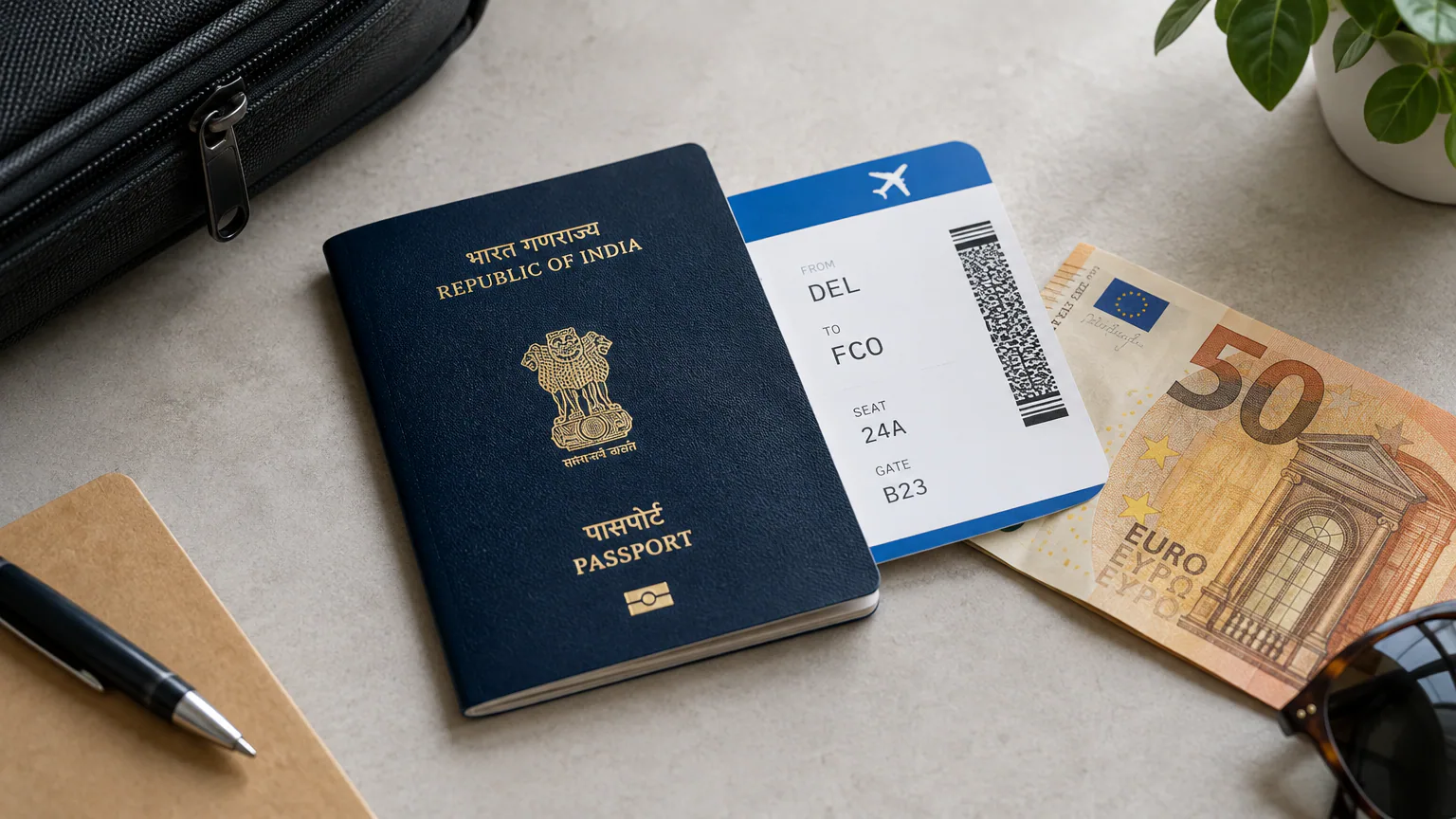 Travel journalItaly Visa for Indians 2026: Requirements, Application Steps, Fees and Tips
Indian citizens need a Schengen visa to visit Italy for tourism, business, or short stays. The Italy Schengen visa (Type C) allows stays of up to 90 days within any…
Read the guide
A little inspiration.
A holiday made yours.
Share your dates and departure city — a travel expert replies with ideas within 24 hours.
Plan my holidayLet’s make it personal.
Tell us about your dates, departure city and the moments you’d love to include.
What happens next?
Discuss your preferences, review a tailored proposal and refine the details before you decide.