Skip to content
Plan my trip
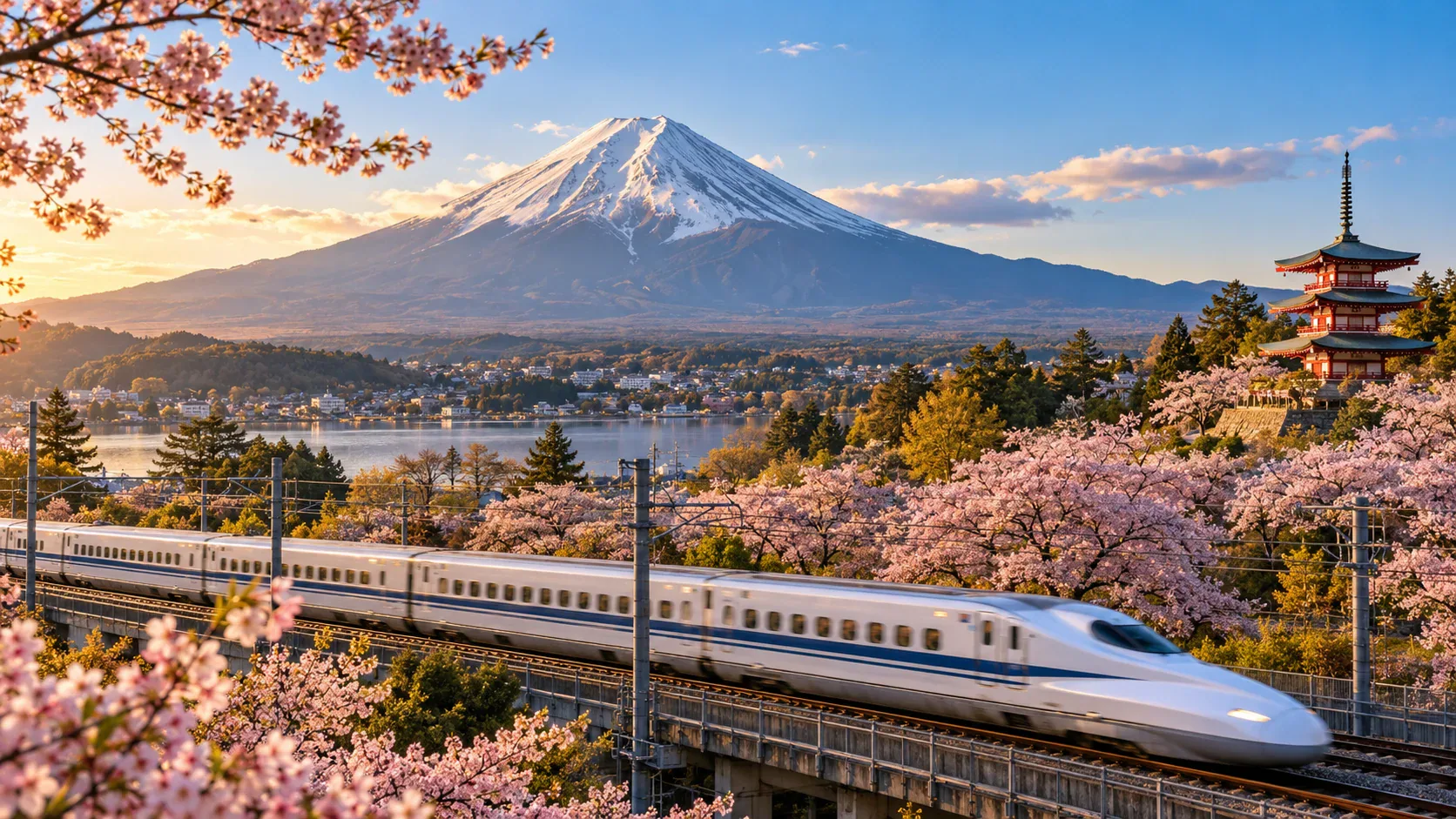
A panoramic view of Mount Fuji, its snow-capped peak framed by cherry blossoms. A Shinkansen bullet train speeds across the foreground, and a traditional pagoda is visible in the distance. The scene is bathed in warm, late afternoon light.
International · Japan

Japan Tour Packages

Japan tour packages from India cover flights, hotels, Shinkansen rail and sightseeing, quoted per person on twin sharing. Indicative land-only costs start at about ₹95,000 at budget level and ₹145,000 at standard, with airfare, visa fees…

A little detail goes a long way

Start with your holiday idea.

Travel month
Travellers
  • No booking feeRequesting a quote is free with no obligation.
  • Expert-planned itineraryRoutes and stays shaped around your dates and pace.
  • Reply within 24 hoursA travel expert gets back to you with ideas.
  • Refine before you decideAdjust the plan until it feels right for you.

Written by the Tripstor travel editorial teamReviewed by Killol Desai, Travel Consultation ExpertUpdated How we research and review

Holiday packages

Japan holiday packages

Start with one of these holiday ideas, then personalise the route, stays and pace with a specialist.

Hand-picked Japan packages are on their way

Every itinerary and price is reviewed before it appears here. Until then, share your dates and we’ll shape your Japan holiday around you.

At a glance

Japan, in brief

The essentials of your Japan holiday. A specialist confirms the route, stays and inclusions in a personalised quote — never an instant booking.

Japan.
Tokyo's contrasting districts on one metro network

International
Best time to go

Apr–May, Nov

Ideal trip length

7 days for a first trip; 10–14 days for multi-region

Seven days covers Tokyo, Mount Fuji or Hakone, Kyoto and Osaka at a fast pace.
Main gateways

Tokyo Haneda (HND) and Narita (NRT)

Direct flights operate from Delhi, Mumbai and Bengaluru; other Indian cities usually connect via a Southeast Asian hub.
Visa for Indian passports

Visa required before travel

No visa on arrival; apply through the Japan Visa Application Centre or designated channel in India.
Currency

Japanese yen (JPY)

Roughly ¥1 = ₹0.58–₹0.62, subject to exchange-rate changes.
Time zone

UTC+9 (JST)

No daylight saving time; Japan is ahead of India by approximately 4.5 hours.
Getting around

IC cards and Shinkansen

Suica, PASMO or ICOCA for city trains and buses; reserve Shinkansen seats during peak periods.
What you get

What Japan Tour Packages Include

Japan tour packages are route proposals that a planner converts into a confirmed quotation — not fixed departures with guaranteed inclusions. The quoted price normally covers hotels, intercity rail sectors, airport transfers and listed sightseeing, while international airfare, visa fees, travel insurance and major attraction tickets typically sit outside the figure.

Confirmed inclusions are named in a quotation and commonly cover hotels with daily breakfast, airport transfers, listed Shinkansen or rail sectors, and sightseeing with an English-speaking guide where specified. Commonly excluded items include international airfare, Japan visa fees, travel insurance, Universal Studios Japan or Tokyo Disney tickets, personal expenses and meals not listed in the plan.

Route ideas remain proposals until hotels and rail seats are held. Peak-season rooms in Kyoto and Hakone sell out first, so the practical value of a Japan package is the planner's ability to sequence hotel availability and rail geography rather than simply listing attractions. A cherry-blossom week in Kyoto and a February city break can differ in total cost by more than the hotel star rating alone suggests.

Customisation is central to how japan holiday packages work. A family may want Osaka's Universal Studios Japan and shorter train hops between cities, while a honeymoon pair may prefer a Fuji-area ryokan with a private bath and slower Kyoto evenings. Both routes use the same Tokyo–Kyoto–Osaka rail spine but different overnight bases, which is why a quotation follows hotel availability rather than a fixed attraction list.

Quick facts

Japan Travel at a Glance for Indian Travellers

Japan rewards advance planning more than most Asian destinations because hotels, rail seats and popular attractions tighten during specific weeks. March to May and October to November give the most comfortable sightseeing weather, seven days covers Tokyo, Hakone, Kyoto and Osaka at a fast pace, and Indian passport holders must obtain a visa before travel.

Best season
March–May and October–NovemberCherry blossoms peak late March–early April; autumn foliage varies by region from October to early December.

Use the key facts below as a planning snapshot for the 2026 edition. All price figures are indicative land-only amounts per person on twin sharing and exclude airfare, visa fees and travel insurance unless a quotation states otherwise.

Why go

Why Choose Japan for Your Next Holiday

Japan combines megacities, temple districts, mountains, skiing and hot springs within one rail network — a breadth of regional variety that few destinations match at this scale. The trade-offs are real: internal distances are long, the cost structure is yen-sensitive, and English is limited outside major tourist areas, so a well-sequenced route matters more than a long wish list.

  1. Tokyo's contrasting districts on one metro network

    Asakusa's Senso-ji temple, Shibuya Crossing and the Meiji Shrine area all sit on the same metro network, so a single Tokyo base covers old and new Japan without a hotel change. Typical metro journeys cost roughly ¥180–¥330 per ride.

    Culture
  2. Kyoto's temple circuit and autumn foliage

    Fushimi Inari's torii paths, Kinkaku-ji and the Arashiyama bamboo area anchor a Kyoto stay. November foliage is the strongest reason to book Kyoto hotels early, as availability tightens faster than in Tokyo.

    Culture
  3. Mount Fuji views and onsen bathing in Hakone

    Hakone pairs Lake Ashi views with volcanic valley scenery and hot-spring bathing. A Fuji-area ryokan with a private bath is the standard honeymoon upgrade; keep a spare half-day because cloud cover can hide the mountain entirely.

    Honeymoon
  4. Osaka's food scene and family attractions

    Dotonbori's street-food lanes and Universal Studios Japan make Osaka the natural family base, with Kyoto and Nara reachable as day trips rather than requiring repeated hotel changes.

    Family
  5. Hiroshima and Miyajima for history and island scenery

    The Peace Memorial Park in Hiroshima and the Itsukushima Shrine torii gate on Miyajima suit travellers with ten nights or more, since Hiroshima adds a long westward Shinkansen leg from Kyoto.

    Culture
  6. Hokkaido for skiing and winter scenery

    Sapporo and the wider Hokkaido region work as a winter add-on via domestic flight from Tokyo, offering ski terrain and snow scenery that the main Honshu cities cannot match.

    Adventure

The six reasons below name the specific places and regions that justify the trip. Each works best in a particular season, so match the reason to your travel month before fixing hotels.

Compare

Japan Holiday Packages by Theme

Theme choice shapes the route more than the budget does. Honeymoon and luxury trips lean on Kyoto and a Fuji-area ryokan, family trips centre on Osaka and Tokyo, and budget trips control cost through business hotels and fewer city changes. Every price below is an indicative land-only figure per person on twin sharing and is not a confirmed offer.

Honeymoon Japan package

Best forCouples, 7–9 days, indicative from about ₹230,000 per person land-only on twin sharing

StrengthsKyoto evenings, a Fuji-area ryokan with a private bath, scenic Shinkansen travel and reserved seating.

Trade-offsRyokan and private-bath rooms are limited in spring and autumn, so travel dates must flex around availability.

Family Japan package

Best forFamilies with children, 7–8 days, indicative from about ₹145,000 per person land-only on twin sharing

StrengthsOsaka base for Universal Studios Japan, Tokyo Disney options, short train hops and reliable public transport throughout.

Trade-offsTheme-park tickets and peak school-holiday weeks raise the total cost and need early booking.

Luxury Japan package

Best forTravellers wanting premium stays, 9–12 days, indicative from about ₹425,000 per person land-only on twin sharing

StrengthsPremium city hotels, kaiseki meals, private onsens, private transfers and an English-speaking guide throughout.

Trade-offsHighest exposure to seasonal hotel pricing and exchange-rate movement between booking and travel.

Adventure and ski Japan package

Best forActive travellers, 8–10 days, indicative from about ₹230,000 per person land-only on twin sharing

StrengthsHokkaido skiing by domestic flight from Tokyo, mountain travel and summer festival weeks.

Trade-offsWinter daylight is short and domestic flight plus ski transfers add cost and planning steps.

Budget Japan package

Best forFirst-time and value-focused travellers, 6–7 days, indicative from about ₹95,000 per person land-only on twin sharing

StrengthsBusiness hotels, convenience-store meals, local restaurants and advance rail bookings keep costs controlled.

Trade-offsFewer included experiences and less central hotel locations; major attraction tickets remain extra.

Best of Japan package

Best forFirst-timers wanting the classic circuit, 10–14 days, indicative from about ₹230,000 per person land-only on twin sharing

StrengthsTokyo, Hakone or Mount Fuji, Kyoto, Osaka and Nara in one route, with Hiroshima or Hokkaido as an extension.

Trade-offsMore hotel changes and longer rail days; not suitable if you dislike frequent packing and moving.

Use the comparison to shortlist a theme, then confirm hotels and rail seats for your specific dates. All figures are planning bands from the operator-market benchmark; treat them as estimates until a live quotation is issued, as japan tour packages price varies with departure city, hotel availability, exchange rates and season.

Best Time to Visit Japan: Month-by-Month Guide

March to May and October to November give the most comfortable sightseeing conditions across Tokyo, Kyoto and Osaka. Cherry blossoms lift demand sharply in late March and early April, November brings peak autumn foliage, and the rainy season from June plus elevated typhoon risk in September make those months harder to plan around without flexibility.

April

Best time to go

Excellent sightseeing conditions; highs near 19°C, lows near 9°C, about 134 mm rainfall

Crowdshigh
Priceshigh
Peak cherry-blossom period varies by region; dates and hotels sell quickly.
  • BestApr, May, Nov
  • GoodJan, Feb, Mar, Oct, Dec
  • FairJun, Jul, Aug, Sep

The monthly table uses Tokyo-area temperature and rainfall normals as a reference point. Regional peak dates differ — Kyoto and Hakone hotels tighten first in spring and autumn — so a single national season label is unreliable when booking accommodation.

How to Reach Japan from India

Tokyo is the main entry point for Indian travellers, served by Haneda (HND) and Narita (NRT). Direct flights operate from Delhi, Mumbai and Bengaluru, while Pune, Chennai, Kolkata, Ahmedabad and Hyderabad connect through a Southeast Asian hub. Indian passport holders need a visa before travel; there is no visa on arrival for Indian tourists.

By airAbout 8 hours
From

Delhi

Direct services to Tokyo and sometimes other Japanese gateways; All Nippon Airways, Japan Airlines and Air India listed. Schedules vary by season.

By airAbout 9 hours
From

Mumbai

Direct services may be seasonal or schedule-dependent; verify operating dates before booking. All Nippon Airways and Japan Airlines listed.

By airAbout 8.5 hours
From

Bengaluru

Direct availability is schedule-dependent; one-stop alternatives route through Singapore, Bangkok, Kuala Lumpur or Colombo. Japan Airlines listed.

By airAbout 9.5 hours
From

Chennai

Usually requires one connection; Singapore Airlines, Thai Airways and Malaysia Airlines listed.

By airAbout 7.5 hours
From

Kolkata

Usually requires one connection; flight time depends heavily on routing. Thai Airways, Singapore Airlines and Malaysia Airlines listed.

By airAbout 10 hours
From

Hyderabad

Usually requires one connection; Singapore Airlines, Thai Airways and Malaysia Airlines listed.

By airAbout 11 hours
From

Pune

Usually requires one connection, commonly via a Southeast Asian hub. Singapore Airlines, Malaysia Airlines and Thai Airways listed.

By airAbout 11 hours
From

Ahmedabad

Usually requires one connection; Singapore Airlines, Emirates and Qatar Airways listed.

Travelling from your city?

Tell us where you start. A specialist can plan connections around your stay.

Plan my journey

Flight durations in the block below are approximate and depend on routing and layover length. Fares are not quoted because they move with season and carrier; confirm live pricing before booking. Once you land, airport transfers by train or bus typically cost about ¥1,000–¥3,500 depending on the airport and mode chosen. IC cards such as Suica, PASMO or ICOCA cover urban trains, subways and buses where accepted, and typical Tokyo metro journeys cost roughly ¥180–¥330 per ride.

For the visa, apply through the Japan Visa Application Centre or the designated application channel in India. The checklist generally includes your passport, completed application form, photograph, confirmed itinerary, accommodation details, financial evidence and employment or business documents. Fees and processing times vary by application centre, so confirm the latest requirements with the Embassy of Japan in India or its authorised centre before payment and travel. Approval is not guaranteed, and the visa must be obtained before departure.

Sample route

Sample 7-Day Japan Itinerary from India

This seven-day route follows the classic Tokyo–Hakone–Kyoto–Osaka spine at a fast pace, matching the ideal first-trip length for japan trip packages from India. Treat it as a sample to personalise, not a confirmed package: hotels, Shinkansen seats and attraction tickets are held only when a quotation is accepted and confirmed.

  1. Day01
    Stop 1 of 7

    Arrive in Tokyo and settle in

    Land at Haneda (HND) or Narita (NRT), clear immigration, collect your IC card for city trains and transfer to a Tokyo hotel.

    Morning

    Depart your Indian city on an overnight or morning flight; direct options exist from Delhi, Mumbai and Bengaluru.

    Afternoon

    Arrive at Haneda or Narita, complete immigration and collect luggage; airport transfers by train or bus cost about ¥1,000–¥3,500 depending on airport and mode.

    Evening

    Short walk near the hotel and an early dinner; keep the first evening light to adjust to UTC+9, which is approximately 4.5 hours ahead of India.

    OvernightTokyo
  2. Day02
    Stop 2 of 7

    Tokyo: Asakusa, Meiji Shrine and Shibuya Crossing

    Cover Tokyo's contrasting districts using the metro rather than taxis; typical journeys cost roughly ¥180–¥330 per ride.

    Morning

    Senso-ji temple and the Asakusa lanes before the crowds build; the five-storey pagoda and Nakamise shopping street are both within walking distance.

    Afternoon

    Meiji Shrine and the surrounding forest, then walk south to Shibuya Crossing for the late-afternoon rush.

    Evening

    Dinner in the Shibuya or Shinjuku area; both districts have dense restaurant options at every price point.

    OvernightTokyo
  3. Day03
    Stop 3 of 7

    Hakone: Lake Ashi, volcanic valley and onsen evening

    Travel to Hakone for lake views, ropeway sections and a hot-spring stay; keep the Fuji viewpoint flexible for cloud.

    Morning

    Train from Tokyo toward Hakone, then local transport to the Lake Ashi area.

    Afternoon

    Lake Ashi views and the surrounding volcanic valley; the ropeway over Owakudani gives elevated perspectives on clear days.

    Evening

    Check into a Fuji-area ryokan; a room with a private bath is the standard honeymoon upgrade and needs early booking in spring and autumn.

    OvernightHakone
  4. Day04
    Stop 4 of 7

    Shinkansen west to Kyoto and an evening in Gion

    Move west by reserved Shinkansen and begin Kyoto with its eastern temple district and Gion lanes.

    Morning

    Reserved Shinkansen from the Hakone area toward Kyoto; reserve seats in advance during peak periods.

    Afternoon

    Check in and walk the Higashiyama temple lanes toward Kiyomizu-dera on the eastern hillside.

    Evening

    Gion district lanes and dinner in central Kyoto; November foliage makes this the busiest and most visually rewarding month.

    OvernightKyoto
  5. Day05
    Stop 5 of 7

    Kyoto: Fushimi Inari, Kinkaku-ji and Arashiyama

    A full Kyoto day covering the city's best-known shrines and the western bamboo area.

    Morning

    Fushimi Inari's torii paths early, before tour groups arrive; the lower paths take about 30 minutes and the full summit loop around two hours.

    Afternoon

    Kinkaku-ji, then travel west to the Arashiyama bamboo area and the Togetsukyo bridge.

    Evening

    Return to central Kyoto for dinner; the Nishiki Market area has covered food lanes worth exploring before they close.

    OvernightKyoto
  6. Day06
    Stop 6 of 7

    Osaka: Dotonbori, Osaka Castle and Universal Studios Japan option

    Shift base to Osaka by short train from Kyoto and choose between street food, history or a theme park.

    Morning

    Short train from Kyoto to Osaka and hotel check-in; the journey takes roughly 15 minutes by Shinkansen or about 30 minutes by express.

    Afternoon

    Universal Studios Japan for families, or Osaka Castle and the Kuromon Ichiba market area for those preferring history and food.

    Evening

    Dotonbori street-food lanes and the canal-side walk; the area is most lively after dark.

    OvernightOsaka
  7. Day07
    Stop 7 of 7

    Departure from Osaka or Tokyo

    Final shopping and transfer to the airport for the flight back to India.

    Morning

    Last-minute shopping near the hotel or a short Nara day-trip add-on if your flight departs late; Nara is about 45 minutes from Osaka by express train.

    Afternoon

    Transfer to Kansai International Airport for Osaka departures, or take the Shinkansen back to Tokyo for a Haneda or Narita departure.

    Evening

    Fly back to your Indian city; confirm baggage allowances and connection times before leaving the hotel.

    OvernightIn transit

Travel times assume Shinkansen and local trains throughout. Keep the Hakone day flexible because cloud cover can hide Mount Fuji entirely, and reserve Shinkansen seats well in advance during cherry-blossom, Golden Week and autumn-foliage periods.

Compare

Japan vs South Korea, Taiwan and Singapore: Honest Comparison

Japan suits travellers who want deep traditional culture, regional food diversity and an extensive high-speed rail network, and who accept higher intercity transport costs than South Korea. South Korea, Taiwan and Singapore each work better for shorter trips, tighter budgets or simpler visa and language conditions. Choose Japan when your trip is at least seven days and you want cherry blossoms, autumn foliage, skiing or onsen stays.

Japan

Best forSeven days or more; culture, rail travel, seasonal events, food diversity and hot springs

StrengthsExtensive Shinkansen network, high public safety, regional variety from Hokkaido snow to Kyoto temples, strong seasonal travel calendar.

Trade-offsLong internal distances, high transport and hotel costs, limited English outside major tourist areas, advance reservations essential.

South Korea

Best forShorter city-focused trips with lower intercity transport costs

StrengthsCompact Seoul and Busan routes, strong food and shopping scene, generally lower hotel costs than Japan.

Trade-offsLess regional variety than Japan and fewer multi-season rail options.

Taiwan

Best forFive-day breaks combining city, coast and mountain scenery

StrengthsShort travel distances, efficient high-speed rail between Taipei and the south, English more widely used.

Trade-offsSmaller scale; fewer multi-region combinations than Japan.

Singapore

Best forFirst international family trip with minimal planning complexity

StrengthsShort flight from India, English widely spoken, easy transport and a wide range of family attractions.

Trade-offsLimited seasonal variation and no comparable rail network or temple circuit.

Japan is typically more expensive than South Korea for intercity transport and premium cultural stays, but offers broader regional variety and a more extensive Shinkansen network. Taiwan compresses temple, mountain and city experiences into shorter distances, which suits a five-day break without long rail legs. Singapore is the easiest first international trip for Indian families — English is widely spoken and transport is straightforward — but it lacks Japan's seasonal range and rail scale. China offers comparable scale and regional variety with different visa and language conditions. Exact comparisons depend on airfare, exchange rates, hotel category and season, so compare live quotations for the same travel dates rather than headline prices alone.

Before you travel

Five Japan Travel Tips for Indian Travellers

Practical planning decides how smoothly a Japan trip runs. Carry yen for small vendors, arrange connectivity before landing, follow local etiquette in temples and on trains, reserve peak-season rail and hotels early, and treat visa and safety planning as separate tasks with their own checklists before departure.

  1. Carry some yen alongside cards

    Cards work widely in cities, but small restaurants, temple stalls and rural buses may prefer cash. Withdraw yen at ATMs rather than carrying large amounts from India; the exchange rate is roughly ¥1 = ₹0.58–₹0.62, subject to change. Check your bank's international ATM fees before departure.

    Money
  2. Arrange connectivity before you fly

    Pick up a pocket Wi-Fi device or data eSIM at the airport or order one in advance, because translation apps and train navigation tools are essential for station wayfinding. Download offline maps for Tokyo, Kyoto and Osaka before landing as a backup.

    Connectivity
  3. Follow temple and train etiquette

    Keep voices low on commuter trains, avoid eating on services other than long-distance Shinkansen, and follow posted photography rules at Fushimi Inari, Senso-ji and other temple sites. Queue in marked lines at station platforms and escalators; standing on the left is the norm in Tokyo.

    Etiquette
  4. Reserve peak-season hotels and rail seats first

    Cherry blossom in late March–early April, Golden Week in late April–early May, Obon in mid-August and autumn foliage in November tighten Kyoto and Hakone availability sharply. Reserve Shinkansen seats and popular ryokan early, and compare a nationwide Japan Rail Pass against individual fares before purchasing, as the pass is not automatically economical for standard Tokyo–Kyoto itineraries.

    Logistics
  5. Plan visa and safety separately from the itinerary

    Apply for the Japan visa through the Japan Visa Application Centre or designated channel in India with itinerary, accommodation details and financial documents; approval is not guaranteed. Arrange travel insurance, save the Embassy of Japan in India contact details and check typhoon advisories if travelling in September, when rainfall can reach about 225 mm in the Tokyo area.

    Entry and safety

The five tips below cover money, connectivity, etiquette, logistics and entry or safety planning with the specific actions that matter on the ground in Japan.

Plan it your way

Japan, your way

Browse Japan by the kind of holiday, the time you have and where you start.

Holiday styles

Pick the kind of trip that fits you — each style opens holidays planned for that mood.

  • Honeymoon

    Quiet stays and unhurried days for two in Japan.

    Coming soon
  • Family holidays

    Space to travel together in Japan at everyone’s pace.

    Coming soon
  • Adventure

    Active days outdoors, with stays that fit the route in Japan.

    Coming soon
  • Luxury

    Thoughtful stays and slower pacing for a more polished Japan trip.

    Coming soon

From your city

How it works

From idea to itinerary, with a real person.

  1. 01Share your plan

    Dates, departure city, travellers and the moments you’d love. It only takes a minute.

  2. 02Shape it with a specialist

    A real person refines the route, stays and pace with you. Change anything.

  3. 03Review your quote

    A clear, personalised quote with confirmed inclusions. No payment to enquire.

Start my Japan quote
First-hand advice

From our travel specialists

What our team sees when planning these trips for travellers, beyond what the guidebooks say.

  • Cash is the most repeatedly reported issue: Japan accepts cards widely but small restaurants, shrines, rural transport and lockers may still require yen and coins. Travellers also mention that Japan can be expensive, particularly hotels, taxis and airport transfers, while an IC card such as Suica or Pasmo makes urban transport easier.

  • Late March and April are often underestimated: cherry blossoms bring Japan’s biggest crowds, higher hotel prices and strong demand for trains and attractions. Autumn foliage in October and November is also busy, while January, February and parts of June are generally less expensive but colder or less scenic.

  • Travellers commonly wish they had prepared for Japan’s etiquette, extensive walking, and the need to carry some yen for small ramen shops, shrines, rural buses and coin lockers. They also advise applying for the visa and booking popular attractions well ahead, especially in cherry-blossom season.

  • Families learn that Tokyo Disney and teamLab each need substantial time and energy, that three or four key stops per day is more realistic with children, and that Ghibli Museum or Disney reservations must be made early. Couples learn that a seven-day plan covering Tokyo, Kyoto, Osaka, Nara and Hiroshima is overly rushed; late May, October, November or February can offer a less pressured alternative to peak sakura travel.

Confirmed by Killol Desai, Travel Consultation Expert · 11 Oct 2026

Questions, answered

Before you go

Straight answers on planning your Japan holiday, from timing to what a quote covers.

8 answered below
Still unsure?

Ask a specialist anything about Japan — there’s no obligation.

Ask a specialist
01Which japan tour packages are best for a first trip from India?

A seven-day Tokyo, Hakone, Kyoto and Osaka route suits most first-timers, with an indicative land-only cost from about ₹145,000 per person on twin sharing at standard level. Add Nara or Hiroshima if you have ten days or more. Confirm hotels and Shinkansen seats before paying, as peak-season availability is limited.

02How many days are enough for a Japan trip from India?

Seven days covers Tokyo, Mount Fuji or Hakone, Kyoto and Osaka at a fast pace. Ten to fourteen days allows a more comfortable multi-region itinerary with Nara, Hiroshima or Hokkaido. Fewer than six days leaves too much time in transit between cities to justify the long-haul flight.

03What is the best time to visit Japan from India?

March to May and October to November give the most comfortable sightseeing weather. Cherry blossoms peak in late March and early April, while November brings autumn foliage to Kyoto and Tokyo. June is rainy and September carries elevated typhoon risk, so build flexibility into itineraries for those months.

04How much does a Japan tour package cost from India?

Indicative land-only prices per person on twin sharing are about ₹95,000 at budget level, ₹145,000 standard, ₹230,000 premium and ₹425,000 luxury. Airfare, visa fees, travel insurance and major attraction tickets are often excluded. Actual japan tour packages price varies by departure city, season and hotel availability.

05Is Japan good for a honeymoon or a family holiday from India?

Both work well. Honeymooners can combine Kyoto, a Fuji-area ryokan with a private bath and scenic Shinkansen travel. Families benefit from reliable transport, Osaka's Universal Studios Japan and Tokyo Disney options. Peak-season ryokan rooms and theme-park tickets need early booking to secure availability.

06Do Indian citizens need a visa for Japan?

Yes. Indian ordinary passport holders need a visa before travel; visa on arrival is not available. Apply through the Japan Visa Application Centre or designated channel in India with passport, itinerary, accommodation details and financial documents. Fees and processing times vary by centre, and approval is not guaranteed.

07Is Japan safe for Indian tourists?

Japan has high public safety, and standard city precautions apply. The main planning risks are natural: typhoon season in September and heavy October rainfall — about 235 mm in the Tokyo area — can disrupt travel. Carry travel insurance, save embassy contacts and check weather advisories before and during your trip.

08What is usually included in best japan tour packages?

Proposed inclusions typically cover hotels, daily breakfast, airport transfers, listed Shinkansen sectors and sightseeing with an English-speaking guide where specified. International airfare, visa fees, travel insurance, Universal Studios Japan or Disney tickets and personal expenses are commonly excluded. Confirm the exact scope in your written quotation before payment.

Before you go

Japan travel guides

Reviewed reads on timing, places and planning — useful before you request your quote.

Your free, personalised quote

Make Japan yours.

Tell us your dates and who’s travelling. A specialist will shape the route, stays and pace into a quote that fits you.

  • A personalised quote, never an instant booking
  • No payment to enquire
  • A real specialist replies, usually within a day
Made around you

Tell us about your holiday

Your dates, your pace, your wishlist.

  1. 1 · Your trip
  2. 2 · Your details
  3. 3 · Review & send

Your travel plans

Travel month
Travellers

No payment is required to request a quote.

Get a free quote

No payment or booking needed.