
France Travel Guide for Indians: Your Complete 2026 Planning Resource
France is one of the most visited countries in the world, and for Indian travellers it offers an exceptional mix of romantic cities, UNESCO-listed heritage, Alpine adventure, and Mediterranean coastline — all reachable on direct flights from Delhi and Mumbai. This guide answers the most common planning questions for Indian travellers heading to France in 2026: when to go, how much to budget, which visa to apply for, how to get around, and which experiences are worth prioritising. All cost figures are indicative estimates; all visa and transport facts are sourced from official French government and SNCF Connect sources.
- No booking feeRequesting a quote is free with no obligation.
- Expert-planned itineraryRoutes and stays shaped around your dates and pace.
- Reply within 24 hoursA travel expert gets back to you with ideas.
- Refine before you decideAdjust the plan until it feels right for you.
Why France Appeals to Indian Travellers
France consistently ranks among the top European destinations chosen by Indian travellers, and the reasons are practical as well as aspirational. Direct flights from Delhi (DEL) and Mumbai (BOM) to Paris Charles de Gaulle (CDG) reduce travel fatigue, and the Schengen visa — while required — follows a well-documented process through VFS Global Centres in India.
Paris resonates strongly with Indian couples and honeymooners. The Seine River, the Eiffel Tower at dusk, and the boutique-lined streets of Le Marais provide a backdrop that is difficult to replicate elsewhere in Europe. Beyond the capital, the French Riviera offers glamorous Mediterranean beaches in Nice and Cannes, the Loire Valley delivers fairy-tale châteaux, and the French Alps around Chamonix-Mont-Blanc provide world-class skiing and summer trekking.
France's cultural density is another draw. The Louvre Museum alone houses more than 35,000 works on display, including Leonardo da Vinci's Mona Lisa. The Palace of Versailles, Mont Saint-Michel, and the historic centres of Bordeaux and Strasbourg are all UNESCO World Heritage Sites. For Indian travellers who value both luxury and history, France delivers both in abundance.
Finally, France's high-speed rail network — operated through SNCF Connect — makes it straightforward to combine two or three regions in a single trip without relying on domestic flights. A TGV INOUI service links Paris to Lyon in under two hours and Paris to Marseille in about three, enabling efficient multi-city itineraries.
Top 10 Places to Visit in France
France rewards travellers who venture beyond Paris. The ten destinations below represent the country's geographic and cultural range — from the Atlantic coast to the Mediterranean, from medieval abbeys to Alpine peaks.
1. Eiffel Tower, Paris
Completed in 1889 as the entrance arch for the World's Fair, the Eiffel Tower stands 330 metres tall and remains one of the most visited paid monuments on earth. The summit observation deck offers panoramic views across Paris. Visiting at sunset or after dark — when the tower's light display runs on the hour — is particularly memorable. Book timed-entry tickets in advance to avoid long queues.
2. Louvre Museum, Paris
The Louvre is the world's largest art museum by floor area and one of the most visited. Housed in a former royal palace, its collections span ancient Egyptian antiquities, Greek and Roman sculpture, and European paintings up to the mid-19th century. The Mona Lisa by Leonardo da Vinci and the Venus de Milo are the most sought-after works. The iconic glass pyramid entrance, designed by I. M. Pei, opened in 1989. Pre-booking timed tickets online is strongly recommended.
3. Palace of Versailles
Located about 20 kilometres south-west of Paris and reachable by RER C train, the Palace of Versailles served as the principal royal residence from 1682 until the French Revolution in 1789. The Hall of Mirrors — a 73-metre gallery lined with 357 mirrors reflecting 17 arched windows — is its most celebrated interior. The formal gardens, the Grand Trianon, and the Petit Trianon extend the visit to a full day. It is a UNESCO World Heritage Site.
4. Notre-Dame Cathedral, Paris
Notre-Dame Cathedral on the Île de la Cité is a masterpiece of French Gothic architecture, begun in 1163. Following the April 2019 fire, the cathedral underwent extensive restoration and reopened to visitors in December 2024. Its twin towers, rose windows, and flying buttresses are among the most photographed elements of medieval architecture in Europe. Notre-Dame has been part of the UNESCO World Heritage listing for the Banks of the Seine since 1991.
5. Mont Saint-Michel, Normandy
Mont Saint-Michel is a tidal island topped by a medieval Benedictine abbey, rising dramatically from the bay between Normandy and Brittany. At high tide the island appears to float on water; at low tide a vast expanse of sand flats surrounds it. The site has been a place of Christian pilgrimage since the 8th century and was designated a UNESCO World Heritage Site in 1979. It is approximately four hours from Paris by TGV and connecting bus.
6. French Riviera (Côte d'Azur)
The French Riviera stretches along France's Mediterranean coastline from Menton near the Italian border to Cassis west of Nice. The Mediterranean coast is suitable for beach holidays from May to October. Nice, Cannes, and Antibes are the main resort cities; Monaco, though a separate principality, is easily reached by train. The region is also known for its Impressionist and modern-art heritage — the Matisse Museum and Chagall Museum are both in Nice.
7. Chamonix-Mont-Blanc, French Alps
Chamonix sits at the foot of Mont Blanc, Western Europe's highest peak at 4,808 metres. The town hosted the first Winter Olympics in 1924. In winter (December to April), it is a world-class ski destination; in summer, it offers hiking, mountaineering, and the Aiguille du Midi cable car, which ascends to 3,842 metres for views across the Mont Blanc massif. Glacier areas can offer winter-sports activities throughout the year.
8. Lavender Fields of Provence
Each summer, the plateaux and hillsides of Provence turn purple with flowering lavender. The Valensole plateau, the area around Sault, and the Luberon regional park are the most photographed locations. Peak bloom is typically from mid-June to mid-July, though exact timing varies by altitude and annual weather conditions. Official France tourism information advises checking current conditions before planning weather-sensitive outdoor activities. The nearest large city is Aix-en-Provence, reachable by TGV from Paris in about three hours.
9. Bordeaux and the Wine Region
Bordeaux is a UNESCO World Heritage city celebrated for its 18th-century neoclassical architecture and its position at the heart of one of the world's most prestigious wine-producing regions. The surrounding appellations — Médoc, Saint-Émilion, Pomerol, and Sauternes among them — produce wines exported globally. Visitors can tour châteaux, attend tastings, and explore the Cité du Vin, a museum dedicated to wine culture. Bordeaux is approximately two hours from Paris by TGV INOUI.
10. Strasbourg, Alsace
Strasbourg sits on the Rhine border with Germany and reflects centuries of French-German cultural exchange. Its historic island centre, Grande Île, is a UNESCO World Heritage Site featuring the Strasbourg Cathedral — whose 142-metre spire was the world's tallest structure for over two centuries — and the half-timbered houses of the Petite France quarter. Strasbourg is also the seat of the European Parliament and the Council of Europe. It is approximately 1 hour 45 minutes from Paris by TGV.
Best Time to Visit France from India
The best time to visit France depends on what you want to do. Spring (April–May) and autumn (September–October) offer mild weather, manageable crowds, and moderate prices — making them the most balanced choice for first-time visitors. Summer (June–August) is ideal for beaches and outdoor festivals but brings peak crowds and higher costs. Winter (December–March) suits skiers and Christmas-market visitors.
Key seasonal facts from official France tourism sources: the Mediterranean coast is suitable for beach holidays from May to October; the Atlantic coast from June to September; city trips are suitable year-round, though spring or autumn is recommended for southern cities such as Toulouse and Marseille; and the winter-sports season runs generally from December to April, with glacier areas offering winter sports throughout the year.
Always check current weather conditions before planning weather-sensitive outdoor activities, as official France tourism information advises.
| Month | Weather | Crowd Level | Price Pressure | Best For |
|---|---|---|---|---|
| January | Cold; snow in mountains | Low | Low | Skiing (Alps), quiet city museums |
| February | Cold; winter sports peak | Low–Moderate | Low–Moderate | Skiing, uncrowded Paris |
| March | Cool, gradually warming | Low–Moderate | Moderate | Spring blossoms, city exploration |
| April | Mild and pleasant | Moderate | Moderate–High | Sightseeing, gardens, fewer crowds than summer |
| May | Warm and sunny | Moderate–High | High | Mediterranean coast opens, festivals begin |
| June | Warm to hot | High | High | Atlantic beaches open, lavender fields start, outdoor festivals |
| July | Hot; peak summer | Very High | Very High | Peak beach season, lavender at full bloom, major festivals |
| August | Hot; holiday month | Very High | Very High | Beaches; note some local businesses close |
| September | Mild and pleasant | Moderate | High | Harvest season, wine regions, Mediterranean coast still warm |
| October | Cool and crisp | Moderate | Moderate | Autumn colours, city breaks; spring or autumn recommended for Toulouse and Marseille |
| November | Cool and rainy | Low–Moderate | Low | Museums, pre-Christmas markets (late Nov) |
| December | Cold; festive | Moderate | Moderate–High | Christmas markets, winter sports begin, festive city atmosphere |
How Much Does a Trip to France from India Cost in 2026?
The table below shows indicative per-person costs in Indian Rupees (INR) for a 7-day trip from India to France in 2026, assuming double occupancy for accommodation and round-trip flights from a major Indian city. These are estimates based on general market knowledge and are not Tripstor package prices or guarantees. Actual costs vary significantly by booking timing, season, airline, city, and personal spending habits.
Flight costs are the largest variable. Booking TGV INOUI train tickets in France well in advance can reduce inter-city transport costs — SNCF Connect indicates that TGV INOUI and certain international train sales may open up to six months ahead, with holiday-period tickets commonly releasing in October (Christmas), November (winter holidays), March (summer holidays), and June (autumn holidays).
A practical first-time approach is to combine Paris city sightseeing with one additional region chosen by season: the Mediterranean coast from May to October, or Atlantic beaches from June to September.
| Cost Category | Budget (INR) | Mid-Range (INR) | Luxury (INR) |
|---|---|---|---|
| Round-trip flights (per person) | 50,000 – 70,000 | 70,000 – 1,00,000 | 1,00,000 – 1,50,000+ |
| Accommodation – 7 nights (per person, double occupancy) | 25,000 – 40,000 | 40,000 – 70,000 | 70,000 – 1,50,000+ |
| Food and drink – 7 days (per person) | 15,000 – 25,000 | 25,000 – 45,000 | 45,000 – 80,000+ |
| Local transport – 7 days (per person) | 5,000 – 8,000 | 8,000 – 15,000 | 15,000 – 25,000+ |
| Activities and sightseeing – 7 days (per person) | 10,000 – 20,000 | 20,000 – 40,000 | 40,000 – 80,000+ |
| Visa, travel insurance, and miscellaneous | 10,000 – 15,000 | 15,000 – 25,000 | 25,000 – 50,000+ |
| Total estimated cost (per person, 7 days) | 1,15,000 – 1,78,000 | 1,88,000 – 2,95,000 | 3,05,000 – 5,35,000+ |
France Visa Requirements for Indian Passport Holders
Indian citizens holding an ordinary passport require a short-stay Schengen visa to visit France for tourism. This visa generally covers tourism and permits a maximum total stay of 90 days in any 180-day period, as stated by France-Visas.
For Indian travellers visiting France as their sole or main destination, the application is submitted through a VFS Global Centre in India after completing the online France-Visas process at france-visas.gouv.fr. Indian diplomatic-passport holders are exempt from the short-stay visa requirement; this exemption does not generally apply to ordinary Indian passports.
Apply well in advance of your travel dates. Specific visa fees, the full document checklist, current processing times, and appointment availability are published on the official France-Visas website and should be verified there before applying, as requirements can change.
How to Reach France from India
Air travel is the only practical way to reach France from India. The primary international gateway is Paris Charles de Gaulle Airport (CDG). Other significant international airports include Paris Orly (ORY), Nice Côte d'Azur (NCE), and Lyon-Saint Exupéry (LYS).
Direct flights operate from Delhi (DEL) and Mumbai (BOM) to Paris CDG, with airlines including Air India and Air France. Connecting services via Middle Eastern hubs (Emirates, Qatar Airways, Etihad Airways) or other European cities (Lufthansa, Turkish Airlines, KLM) are also widely available. Typical direct flight duration from Delhi or Mumbai to Paris is approximately 9–10 hours.
Once in France, the national rail network is the most efficient way to travel between cities. SNCF Connect provides access to train travel between thousands of destinations in France and Europe, supporting planning and managing journeys involving trains, metros, buses, and other local transport services. High-speed TGV INOUI trains connect Paris to Lyon in under 2 hours, Paris to Marseille in approximately 3 hours, and Paris to Bordeaux in approximately 2 hours.
For rural areas and regions not well served by rail — such as parts of Provence or the Dordogne — renting a car offers the most flexibility. An International Driving Permit (IDP) is recommended for Indian licence holders driving in France.
Journey Planning Checklist
- Book round-trip flights as early as possible, particularly for travel during July–August or the December festive period, when fares rise sharply.
- Fly into Paris CDG for the widest choice of onward connections within France and Europe.
- Use SNCF Connect to book inter-city TGV INOUI tickets. Sales for major holiday periods open in October (Christmas), November (winter holidays), March (summer holidays), and June (autumn holidays) — booking at release can secure lower fares.
- For regions not well covered by rail, book a rental car in advance and obtain an International Driving Permit before leaving India.
- Apply for your Schengen visa through VFS Global at least 4–6 weeks before your departure date, following the France-Visas online process.
Where to Stay in France
France offers accommodation across every price point, from budget hostels and family-run chambres d'hôtes to grand palace hotels. The indicative nightly rates below are in Euros (EUR) for 2026 and are estimates only — actual rates vary by season, availability, and booking platform.
In Paris, popular neighbourhoods for tourists include Le Marais (historic, boutique-heavy, central), Saint-Germain-des-Prés (literary heritage, elegant cafés, close to the Louvre), the Latin Quarter (lively, student atmosphere, near Notre-Dame), and Montmartre (artistic history, hilltop views). For the French Riviera, Nice's Old Town (Vieux-Nice) and the Promenade des Anglais are the most convenient bases.
Budget Accommodation (Indicative: EUR 60–120 per night)
Budget options include hostels with private rooms, two-star hotels, and guesthouses, often located slightly outside the immediate city centre but with good metro or bus access.
- Generator Paris: A well-known hostel near Canal Saint-Martin offering private rooms and dormitories, with a rooftop terrace. Indicative rate: EUR 70–100 per night for a private room, room-only basis.
- Hôtel Kyriad Paris 18 – Porte de Clignancourt: Functional rooms with good public transport links. Indicative rate: EUR 80–110 per night, room-only basis.
- Hôtel du Centre, Nice: Simply furnished hotel close to Nice Ville train station and the city centre. Indicative rate: EUR 60–90 per night, room-only basis.
Mid-Range Accommodation (Indicative: EUR 120–250 per night)
Mid-range hotels typically offer en-suite rooms, breakfast options, and central or well-connected locations.
- Hôtel Le Littéraire Le Swann, Paris: Literary-themed hotel in the 8th arrondissement, close to Gare Saint-Lazare. Indicative rate: EUR 150–220 per night, room-only or with breakfast.
- Hotel Le Relais Saint-Germain, Paris: Located in Saint-Germain-des-Prés, offering a classic Parisian atmosphere. Indicative rate: EUR 180–250 per night, room-only or with breakfast.
- Hotel Nice Riviera, Nice: Centrally located with a pool, a short walk from the beach and Old Town. Indicative rate: EUR 130–190 per night, room-only or with breakfast.
Luxury Accommodation (Indicative: EUR 250+ per night)
Luxury and palace hotels in France offer prime locations, Michelin-starred dining, spas, and exceptional service.
- Shangri-La Paris: A former royal residence near the Trocadéro with direct Eiffel Tower views, fine dining, and a spa. Indicative rate: EUR 1,000+ per night, room-only.
- Le Meurice, Paris: An iconic palace hotel facing the Tuileries Garden, with a Michelin-starred restaurant. Indicative rate: EUR 900+ per night, room-only.
- Hôtel Negresco, Nice: A Belle Époque landmark on the Promenade des Anglais, known for its art collection. Indicative rate: EUR 300–600+ per night, room-only.
French Food and Cuisine: What Indian Travellers Should Know
French cuisine is built on regional diversity, seasonal ingredients, and precise technique. For Indian travellers, the most important practical point is that traditional French cooking is often meat- and dairy-heavy, but vegetarian options are increasingly available in larger cities, particularly Paris. Communicating dietary needs clearly helps: 'Je suis végétarien(ne)' (I am vegetarian) and 'Sans viande, s'il vous plaît' (Without meat, please) are useful phrases.
Paris and other major cities also have a growing number of international restaurants, including Indian restaurants, for those who want familiar flavours mid-trip. Local markets (marchés) are excellent for picking up fresh bread, cheese, fruit, and prepared foods at reasonable prices.
Five French Dishes Worth Trying
- Croissant: A flaky, buttery pastry that is a staple of the French breakfast. Available at any boulangerie (bakery); quality varies significantly — seek out an artisan boulangerie for the best version.
- Crêpes and Galettes: Thin pancakes served sweet (with sugar, jam, or Nutella) or savoury as galettes (made with buckwheat flour, filled with cheese, egg, or vegetables). Many galette fillings are vegetarian-friendly.
- Ratatouille: A Provençal vegetable stew of aubergine, courgette, bell peppers, onions, and tomatoes, slow-cooked in olive oil. A reliable vegetarian main course or side dish in southern France.
- French Cheese (Fromage): France produces hundreds of named cheeses, from soft Brie de Meaux and Camembert de Normandie to blue Roquefort and aged Comté. A cheese course is a standard part of a French meal; local markets are the best place to sample regional varieties.
- Tarte Tatin: An upside-down caramelised apple tart originating from the Sologne region. Served warm, often with crème fraîche. A widely available and distinctly French dessert.
Restaurant Suggestions in Paris
The following are well-known Paris restaurants across different price points. These are editorial suggestions based on general reputation; always check current opening hours and reservation requirements before visiting.
- Le Bouillon Chartier (Paris, 9th arrondissement): A historic brasserie serving traditional French dishes at accessible prices in a grand 1896 dining room. No reservations; expect a queue. Budget-friendly.
- L'As du Fallafel (Paris, Le Marais): One of Paris's most popular falafel counters, serving generous vegetarian falafel sandwiches. Budget-friendly; cash preferred.
- Breizh Café (Paris, multiple locations): Authentic Breton crêpes and galettes, with many vegetarian-friendly savoury options. Mid-range.
- Septime (Paris, 11th arrondissement): A Michelin-starred restaurant with a modern, seasonal French tasting menu. Reservations open weeks in advance and fill quickly. Luxury.
Essential Travel Tips for Indians Visiting France
The practical details below cover currency, connectivity, safety, and local etiquette — the areas where advance preparation makes the most difference to day-to-day comfort.
Currency and Payments
France uses the Euro (EUR). Credit and debit cards (Visa, Mastercard) are accepted in the vast majority of hotels, restaurants, and shops. Carrying a small amount of cash is useful for markets, small bakeries, and rural areas where card terminals may not be available. ATMs are widely accessible in cities and towns. Inform your Indian bank of your travel dates before departure to prevent your card being blocked for overseas transactions.
SIM and eSIM for Mobile Connectivity
France has strong 4G and expanding 5G coverage in cities and along major transport corridors. Local SIM cards from operators such as Orange, SFR, Bouygues Telecom, and Free Mobile are available at airports, convenience stores, and dedicated mobile shops. If your smartphone supports eSIM, activating a French or European data plan digitally before departure is a convenient alternative that avoids queuing at the airport.
Safety in France
France is generally safe for tourists. The main risk in popular tourist areas — particularly around the Eiffel Tower, the Louvre, and on Paris Métro lines — is petty theft and pickpocketing. Keep valuables in a front-facing bag or money belt, avoid displaying large amounts of cash, and be alert in crowded spaces. Travel insurance covering medical expenses, trip cancellation, and theft is strongly recommended. The pan-European emergency number is 112 (police, ambulance, fire).
Local Etiquette
A few simple courtesies go a long way in France. Always greet shopkeepers, café staff, and hotel receptionists with 'Bonjour' (Good day) when entering and 'Au revoir' (Goodbye) when leaving. 'Merci' (Thank you) and 'Excusez-moi' (Excuse me) are used frequently. In restaurants, a service charge (service compris) is typically included in the bill; leaving a few extra Euros for attentive service is appreciated but not obligatory. Dress modestly when visiting churches and cathedrals.
France vs. Italy: Choosing Your European Destination
France and Italy are the two most popular European destinations for Indian travellers, and the choice often comes down to the type of experience you prioritise.
France offers a more structured, efficient travel experience. Its high-speed rail network is among Europe's best, connecting major cities reliably and quickly. Paris is the undisputed centre of global fashion and fine dining, and the country's art collections — from the Louvre to the Musée d'Orsay — are unmatched in breadth. The French Riviera provides glamorous Mediterranean beach access from May to October, and the Alps offer world-class winter sports from December to April. The language barrier is real outside tourist zones, though English is widely spoken in hotels and major attractions.
Italy tends to feel more spontaneous and sensory. The density of ancient Roman and Renaissance heritage — the Colosseum, the Vatican, the Uffizi Gallery, Pompeii — is extraordinary. Italian cuisine is generally considered more accessible for vegetarians, with pasta, pizza, and risotto providing reliable meat-free options across the country. The pace of travel is often more relaxed, though Italy's rail network, while extensive, can be less punctual than France's TGV services.
For Indian travellers on a first European trip who want efficient infrastructure, iconic romantic landmarks, and a mix of city culture with coastal or mountain scenery, France is a strong choice. Those drawn to ancient history, a more relaxed pace, and a cuisine that is naturally more vegetarian-friendly may prefer Italy. Both countries are well served by direct or one-stop flights from major Indian cities.
| Factor | France | Italy |
|---|---|---|
| Primary appeal | Romance, fashion, fine dining, Alpine and Mediterranean scenery | Ancient history, Renaissance art, relaxed pace, regional food |
| Rail network | Extensive high-speed TGV INOUI; highly punctual | Extensive but variable punctuality |
| Vegetarian food | Improving in cities; traditional cuisine is meat-heavy | Generally more accessible; pasta, pizza, risotto widely available |
| Beach season | Mediterranean: May–Oct; Atlantic: Jun–Sep | Adriatic and Tyrrhenian coasts: Jun–Sep |
| Winter sports | French Alps (Dec–Apr); glacier areas year-round | Dolomites and other Alpine areas (Dec–Apr) |
| Language | French; English widely spoken in tourist areas | Italian; English spoken in tourist areas |
| Visa | Schengen short-stay visa (same process) | Schengen short-stay visa (same process) |
Good questions. Clearer plans.
Do Indian citizens need a visa to visit France?
Yes. Indian citizens holding an ordinary passport require a short-stay Schengen visa to visit France for tourism. The visa permits a maximum total stay of 90 days in any 180-day period. Applications are submitted through a VFS Global Centre in India after completing the online process at france-visas.gouv.fr. Indian diplomatic-passport holders are exempt from this requirement, but the exemption does not apply to ordinary Indian passports. Apply at least 4–6 weeks before your travel date.
What is the best time to visit France from India?
Spring (April–May) and autumn (September–October) are the most balanced times to visit: weather is mild, crowds are smaller than in summer, and prices are generally lower than peak season. Summer (June–August) is best for beaches — the Mediterranean coast is suitable from May to October and the Atlantic coast from June to September — but expect peak crowds and higher costs. Winter (December–April) is ideal for skiing in the French Alps. City trips are suitable year-round, though spring or autumn is recommended for southern cities such as Toulouse and Marseille.
How much does a 7-day trip to France from India cost in 2026?
Indicative estimates per person for a 7-day trip (double occupancy, round-trip flights from a major Indian city): budget travellers INR 1,15,000–1,78,000; mid-range INR 1,88,000–2,95,000; luxury INR 3,05,000–5,35,000+. These figures cover flights, accommodation, food, local transport, activities, visa, and insurance. Actual costs vary by season, booking timing, and personal spending. These are estimates, not Tripstor package prices.
What is the ideal trip duration for a first visit to France from India?
7 to 10 days is generally recommended for a first trip. This allows 3–4 days in Paris to cover the main landmarks — Eiffel Tower, Louvre, Versailles, Notre-Dame — plus 3–4 days in a second region such as the French Riviera (May–October), Provence (June–July for lavender), Bordeaux, or the French Alps (December–April for skiing). A 10-day trip allows a more relaxed pace or a third destination.
How do I travel between cities in France?
The most efficient way is by train using the SNCF network, bookable through SNCF Connect. High-speed TGV INOUI services connect Paris to Lyon in under 2 hours, Paris to Marseille in about 3 hours, and Paris to Bordeaux in about 2 hours. SNCF Connect also covers metros, regional trains, and buses. Book TGV tickets in advance — sales open up to six months ahead, and holiday-period tickets release in October (Christmas), November (winter holidays), March (summer holidays), and June (autumn holidays). For rural areas, renting a car with an International Driving Permit gives the most flexibility.
Are vegetarian food options available in France?
Vegetarian options are increasingly available, especially in Paris and other large cities. Reliable choices include crêpes and galettes (many savoury fillings are vegetarian), ratatouille (a Provençal vegetable stew), salads, cheese platters, and omelettes. Telling your server 'Je suis végétarien(ne)' (I am vegetarian) or 'Sans viande, s'il vous plaît' (Without meat, please) helps. Traditional French cuisine is often meat-centric, so vegetarians may need to check menus carefully in smaller towns. Paris also has numerous Indian and international restaurants.
What are the must-visit attractions in Paris?
The five highest-priority attractions in Paris for first-time visitors are: the Eiffel Tower (book timed-entry tickets in advance), the Louvre Museum (home to the Mona Lisa; pre-book online), the Palace of Versailles (reachable by RER C train; allow a full day), Notre-Dame Cathedral (reopened December 2024 after restoration), and a Seine River cruise for a different perspective on the city's landmarks. The Musée d'Orsay, Sacré-Cœur in Montmartre, and the Centre Pompidou are strong secondary choices.
What is the currency in France and how should I manage money?
France uses the Euro (EUR). Cards (Visa, Mastercard) are accepted almost everywhere. Carry a small amount of cash for markets, small bakeries, and rural areas. ATMs are widely available in cities and towns. Inform your Indian bank of your travel dates before departure to prevent your card being blocked for overseas use. Dynamic currency conversion at ATMs and card terminals should generally be declined — pay in Euros to get a better exchange rate.
Is France a good destination for a family trip with children?
Yes. Beyond Paris's iconic landmarks, Disneyland Paris (in Marne-la-Vallée, about 35 km from central Paris) and Parc Astérix are dedicated family theme parks. Interactive museums such as the Cité des Sciences et de l'Industrie in Paris cater to children. Coastal areas — particularly the Atlantic beaches of Brittany and Normandy — and the French countryside offer space and outdoor activities. Many hotels offer family rooms or connecting rooms.
What unique experiences can I have in France beyond Paris?
France's regions offer experiences that are entirely distinct from Paris: walking the tidal flats around Mont Saint-Michel in Normandy at low tide; cycling through the lavender fields of Valensole or Sault in Provence during peak bloom (mid-June to mid-July); wine tasting at a château in the Bordeaux appellations; taking the Aiguille du Midi cable car in Chamonix for views of Mont Blanc; exploring the half-timbered streets of Strasbourg's Petite France quarter; or simply sitting at a café on the Promenade des Anglais in Nice watching the Mediterranean.
Keep exploring
A little inspiration for your journey
Practical reads for this destination — timing, places, costs and tips before you plan.
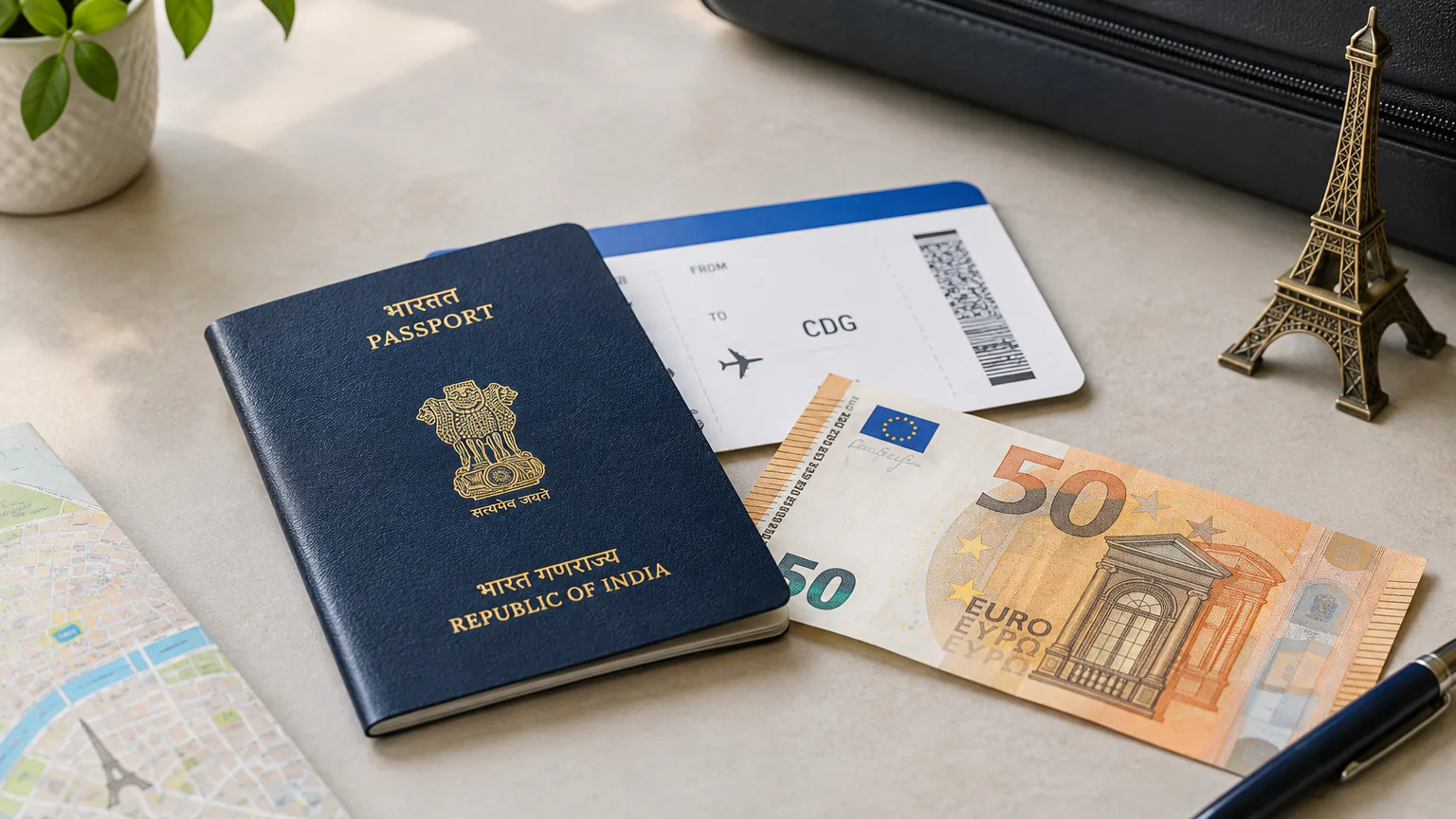 Travel journalFrance Visa for Indians 2026: Complete Requirements & Application Guide
Indian citizens need a short-stay Uniform Schengen visa (Type C) to visit mainland France in 2026 for tourism, business, or family visits. This visa permits stays of up to 90…
Read the guide- Travel journalFrance Travel Guide for Indians: Complete 2026 Planning Resource
France is a Western European country and one of the world's most visited destinations, offering a range of experiences from the art and architecture of Paris to the lavender landscapes…
Read the guide
A little inspiration.
A holiday made yours.
Share your dates and departure city — a travel expert replies with ideas within 24 hours.
Plan my holidayLet’s make it personal.
Tell us about your dates, departure city and the moments you’d love to include.
What happens next?
Discuss your preferences, review a tailored proposal and refine the details before you decide.