Skip to content
Plan my trip
Nepal Tour Packages
International · Nepal

Nepal Tour Packages

Nepal tour packages from India are customisable holiday plans covering Kathmandu, Pokhara, Chitwan and Himalayan viewpoints, with indicative land-only costs of about INR 35,000–110,000 per person on twin sharing for 4–7 nights. Indian nationals need no…

A little detail goes a long way

Start with your holiday idea.

Travel month
Travellers
  • No booking feeRequesting a quote is free with no obligation.
  • Expert-planned itineraryRoutes and stays shaped around your dates and pace.
  • Reply within 24 hoursA travel expert gets back to you with ideas.
  • Refine before you decideAdjust the plan until it feels right for you.

Written by the Tripstor travel editorial teamReviewed by Killol Desai, Travel Consultation ExpertUpdated How we research and review

Holiday packages

Nepal holiday packages

Start with one of these holiday ideas, then personalise the route, stays and pace with a specialist.

Hand-picked Nepal packages are on their way

Every itinerary and price is reviewed before it appears here. Until then, share your dates and we’ll shape your Nepal holiday around you.

At a glance

Nepal, in brief

The essentials of your Nepal holiday. A specialist confirms the route, stays and inclusions in a personalised quote — never an instant booking.

Nepal.
Kathmandu's UNESCO heritage cores

International
Best time to go

Mar–Apr, Oct–Nov

Ideal trip length

5–7 days for Kathmandu and Pokhara; 10–14 days with Chitwan or a trek

Add a buffer day before any international departure after a domestic mountain flight.
Gateway airport

Tribhuvan International Airport (KTM), Kathmandu

Direct flights from Delhi, Mumbai, Kolkata and Bengaluru; other Indian cities usually connect.
Entry for Indians

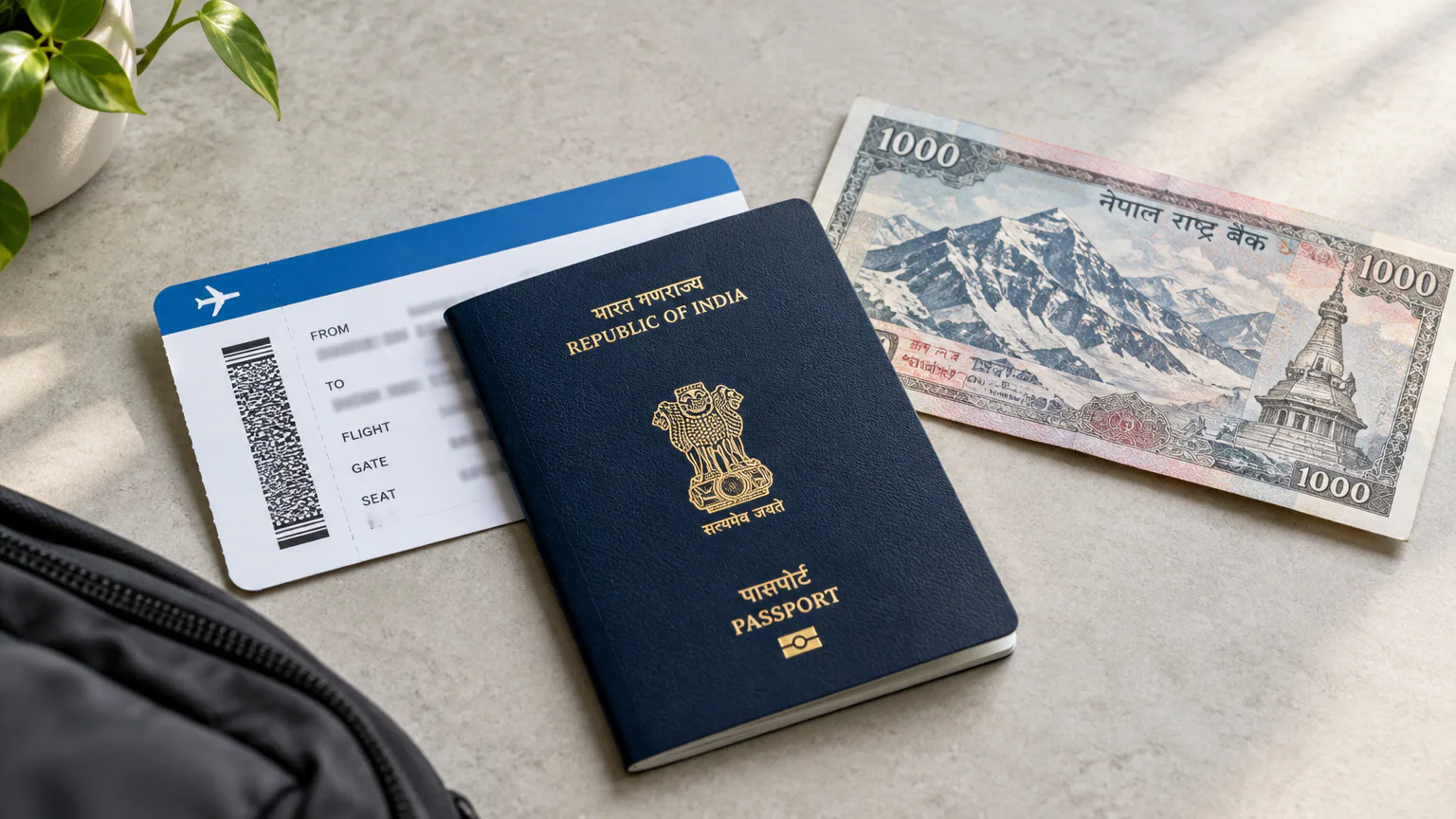
No visa required; carry a valid Indian passport or Election Commission voter ID

Aadhaar is not accepted as a travel document for Nepal.
Airport transfer

Kathmandu airport taxis to central areas typically cost about NPR 700–1,500

App-based rides and metered taxis are also available.
Intercity road time

Tourist buses between Kathmandu, Pokhara and Chitwan commonly take 6–9 hours

Domestic flights are available for Pokhara, Lukla, Bharatpur and Jomsom but face frequent weather delays.
Time zone

UTC+05:45

A 15-minute offset from Indian Standard Time.
What you get

What Nepal Tour Packages Mean for Indian Travellers

Nepal tour packages are structured route plans that bundle accommodation, transfers and sightseeing into a bookable framework, usually starting at Kathmandu's Tribhuvan International Airport. The itinerary, hotel category and pace are adjusted to your group; confirmed inclusions appear only in your final quotation, not in the planning guide you are reading now.

A package is not a fixed bus tour. It is a working structure: arrival in Kathmandu, a road or flight transfer to Pokhara, a Chitwan safari add-on, or a short trek with a licensed guide. What you see on this page is a planning framework, not a confirmed offer.

Two things stay flexible until you confirm: hotel names and the exact inclusion list. Land-only pricing normally covers accommodation, private or tourist-bus transfers and listed sightseeing. International flights from India, trekking permits, meals beyond the stated basis and seasonal supplements are quoted separately and can change totals substantially.

Indian nationals do not need a visa for Nepal, which removes one planning step compared with most international destinations. The entry rule applies whether you arrive by air or land, but the identity document you carry matters: a valid Indian passport or Election Commission voter ID is required, and Aadhaar is explicitly not accepted by Nepal immigration.

Quick facts

Nepal Holiday Packages at a Glance

October–November and March–April give the clearest mountain views and the most reliable trekking weather, while June–September is monsoon. A 5–7 day trip suits Kathmandu, Pokhara and one short excursion; adding Chitwan or a trek usually needs 10–14 days. Indian nationals enter without a visa but must carry an accepted identity document.

Best season
October–November and March–AprilClearest mountain views and generally favourable trekking conditions.

Use this snapshot to shortlist dates and duration before comparing themes. Prices are indicative land-only bands for India-origin travel, not confirmed offers. Nepal sits at UTC+05:45, a 15-minute offset from Indian Standard Time that phones usually adjust automatically.

Why go

Why Choose Nepal for Your Next Holiday

Nepal packs Himalayan trekking, UNESCO heritage, Hindu-Buddhist pilgrimage, jungle safaris and flexible pricing into one short-haul trip from India. Unlike Bhutan's mandatory daily tourism package structure, Nepal allows independent routing and a wider spread of budgets, from tourist-bus circuits to private cars with a driver and boutique heritage hotels.

  1. Kathmandu's UNESCO heritage cores

    Kathmandu Durbar Square, Patan Durbar Square and Swayambhunath anchor the valley's Newar architecture and living temple culture. Boudhanath and Pashupatinath add Buddhist and Hindu pilgrimage depth within a short drive of central Kathmandu, making the valley a full day's sightseeing on its own.

    Culture
  2. Pokhara and Phewa Lake

    Pokhara pairs Phewa Lake with Annapurna views and serves as the base for Sarangkot sunrise, paragliding and the World Peace Pagoda. It is the most practical non-trekking mountain town for families and couples, and the lakeside strip has a wide range of accommodation.

    Nature
  3. Chitwan National Park safaris

    Chitwan offers jeep and canoe safaris in subtropical forest and grassland, with Bharatpur as the usual domestic air gateway. Jungle lodges here work well as a two-night add-on to a Kathmandu–Pokhara circuit, and the park is accessible year-round unlike high-altitude routes.

    Wildlife
  4. Nagarkot and Dhulikhel viewpoints

    Both hill towns sit within easy reach of Kathmandu and deliver sunrise Himalayan panoramas without trekking. They suit couples and older travellers who want mountain scenery with hotel comfort, and either can be added as a final night before a morning departure from Kathmandu.

    Viewpoints
  5. Lumbini for Buddhist pilgrimage

    Lumbini, the birthplace of the Buddha, draws pilgrims to its monastic zone and Maya Devi Temple. It pairs naturally with Chitwan on a longer overland route through the Terai, adding a meaningful cultural stop to a wildlife-focused itinerary.

    Pilgrimage
  6. Trekking and adventure access

    Routes around Lukla, Jomsom and the Annapurna region support trekking, rafting, paragliding, canyoning and mountain flights. Licensed guides and porters are arranged through operators, and acclimatisation days are essential on higher-elevation routes to reduce altitude illness risk.

    Adventure

The country suits travellers who want variety within one itinerary. A single week can combine Kathmandu's temple squares, Pokhara's lake views and a Chitwan safari, with domestic flights cutting the long road legs between cities.

Mountain weather, rougher transport and altitude risk mean Nepal rewards planning more than a resort holiday does. Build buffer days around domestic flights and any trekking start at higher elevations, and consider travel insurance that covers helicopter evacuation for high-altitude routes.

Compare

Nepal Holiday Packages by Theme

Nepal holiday packages divide broadly by pace, hotel category and how much road time you accept. Honeymoon and luxury plans favour Pokhara, Nagarkot and Dhulikhel; family plans keep drives short with domestic flights; adventure plans add trekking or rafting; budget plans use tourist buses and simpler stays across the same core circuit. Comparing nepal tour packages price across themes helps narrow the right fit before requesting a live quote.

Honeymoon

Best forCouples wanting lake views and sunrise Himalayan panoramas; 5–6 nights; indicative INR 65,000–110,000 per person, land only, twin sharing

StrengthsPokhara lakeside stays, Sarangkot sunrise and a Nagarkot or Dhulikhel hill night give privacy and scenery without trekking.

Trade-offsOctober–November and March–April rooms sell out early, and hill-view rooms carry a premium; book well in advance.

Family

Best forParents and children preferring short drives and easy sightseeing; 5–7 nights; indicative INR 35,000–65,000 per person, land only, twin sharing

StrengthsKathmandu heritage, Pokhara boating and a Chitwan safari keep children engaged; domestic flights cut the 6–9 hour road leg.

Trade-offsKathmandu–Pokhara road transfers commonly take 6–9 hours, which is hard on younger children if flights are not used.

Luxury

Best forTravellers wanting boutique heritage stays and private vehicles; 5–7 nights; indicative INR 110,000–200,000 per person, land only, twin sharing

StrengthsPrivate cars with driver, boutique heritage hotels in the Kathmandu valley and premium jungle lodges reduce friction and improve comfort.

Trade-offsPeak-season demand in October–November pushes rates and limits room choice at top-tier properties; early booking is essential.

Adventure

Best forTrekking, rafting, paragliding and mountain flights; 7–14 nights; indicative from INR 65,000 per person, land only, twin sharing

StrengthsAnnapurna-region trekking, Pokhara paragliding, rafting and Lukla or Jomsom mountain flights cover a wide activity range in one trip.

Trade-offsWeather delays on Lukla and Jomsom flights are frequent, and altitude illness requires acclimatisation days on higher-elevation routes.

Budget

Best forIndependent-minded travellers using tourist buses and simpler stays; 4–6 nights; indicative from INR 35,000 per person, land only, twin sharing

StrengthsTourist buses linking Kathmandu, Pokhara and Chitwan keep transport costs down, and guesthouse-style stays are widely available.

Trade-offsLonger road time, fewer buffer days and less flexibility if weather or road conditions disrupt plans.

Best of Nepal

Best forFirst-time visitors wanting Kathmandu, Pokhara and Chitwan in one trip; 7–10 nights; indicative INR 65,000–110,000 per person, land only, twin sharing

StrengthsCombines heritage, lake scenery and wildlife in one circuit, with domestic flights available for Pokhara and Bharatpur legs.

Trade-offsNeeds at least one buffer day and careful sequencing to avoid back-to-back long drives or tight domestic flight connections.

All prices below are indicative land-only bands per person on twin sharing for 4–7 nights, drawn from operator-market benchmarks for 2026 planning rather than confirmed Tripstor offers. Request a live quotation for your specific dates, group size and hotel category, as peak-season demand in October–November and March–April raises rates and limits room availability.

Best Time to Visit Nepal

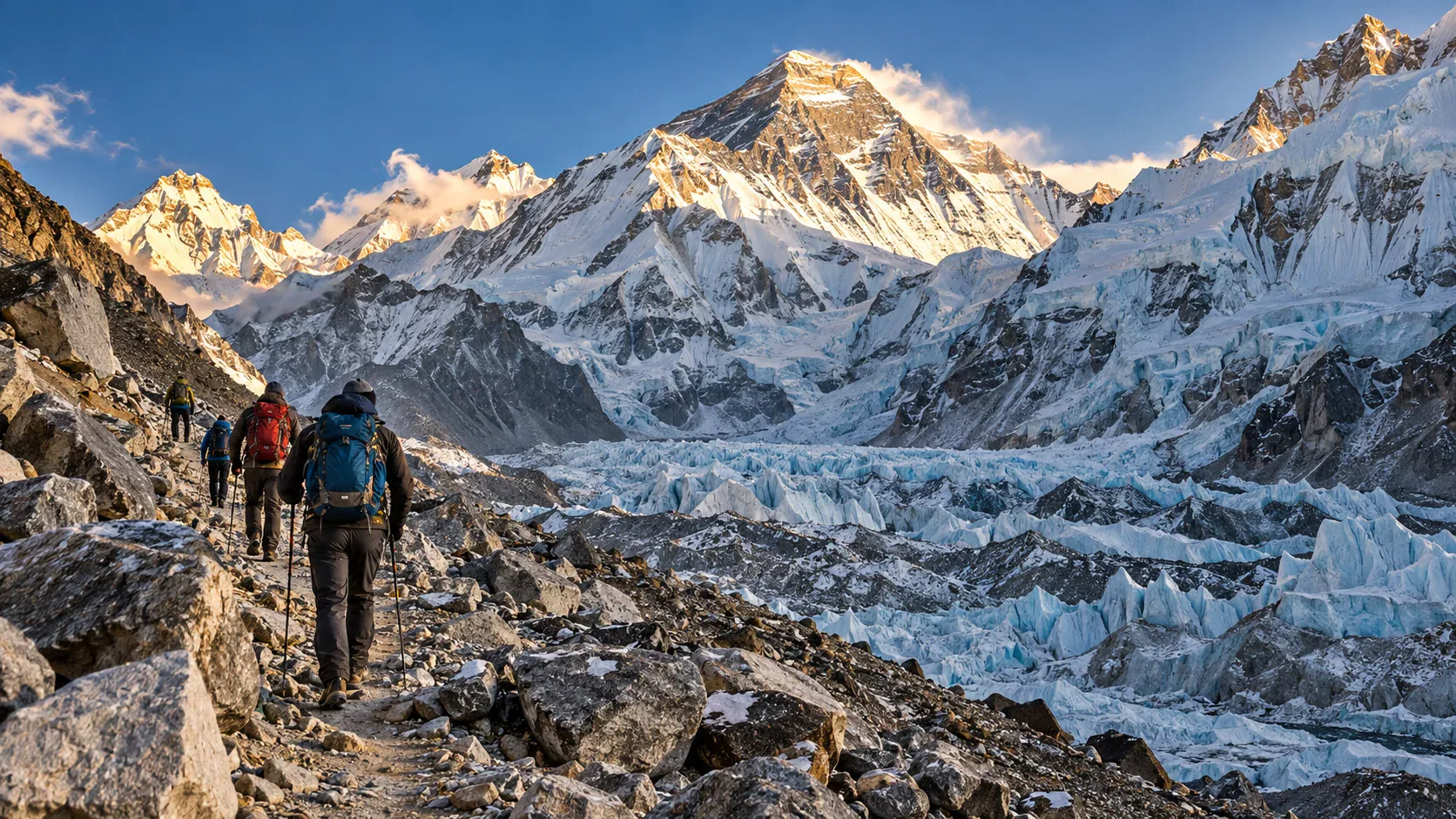
October and November deliver the clearest skies and driest trekking conditions, with March and April a strong second window. Monsoon runs June to September, when July and August see the heaviest rainfall and the highest landslide risk. December to February stays dry but cold at altitude, suiting city sightseeing and lower-elevation walks.

March

Best time to go

Warming days with flowering rhododendrons; 8–25°C, about 35 mm rainfall

Crowdshigh
Priceshigh
Strong trekking month with occasional showers; rhododendrons in bloom on mid-altitude trails.
  • BestMar, Apr, Oct, Nov
  • GoodJan, Feb, Sep, Dec
  • FairMay, Jun
  • AvoidJul, Aug

Temperature and rainfall figures below are Kathmandu-valley reference values; expect colder conditions at higher elevations and warmer, wetter weather in the Terai lowlands. Peak-season demand in October–November and March–April raises hotel rates and guide availability tightens, so book early for those windows.

How to Reach Nepal from India

Tribhuvan International Airport (KTM) in Kathmandu is the main gateway, with direct flights from Delhi, Mumbai, Kolkata and Bengaluru and one-stop options from Pune, Chennai, Ahmedabad and Hyderabad. Indian nationals need no visa; carry a passport or Election Commission voter ID, since Aadhaar is not accepted by Nepal immigration.

By airAbout 1 hour 40 minutes
From

Delhi

Typical fareIndicative; check live fares

Regular direct service with Air India, IndiGo and Nepal Airlines.

By airAbout 1 hour 30 minutes
From

Kolkata

Typical fareIndicative; check live fares

Short regional flight with Air India, IndiGo and Nepal Airlines; schedules vary by season.

By airAbout 3 hours 15 minutes
From

Mumbai

Typical fareIndicative; check live fares

Direct service listed with Air India and Nepal Airlines; some services may run seasonally or via Delhi.

By airAbout 3 hours 15 minutes
From

Bengaluru

Typical fareIndicative; check live fares

Air India listed; direct availability and frequency vary by season — verify operating dates.

By airAbout 3 hours 30 minutes
From

Chennai

Delhi or Kolkata

Typical fareIndicative; check live fares

Usually requires a connection with Air India or IndiGo.

By airAbout 3 hours 30 minutes
From

Hyderabad

Delhi, Mumbai or Kolkata

Typical fareIndicative; check live fares

Usually one-stop with Air India or IndiGo.

By airAbout 4 hours
From

Pune

Delhi or Mumbai

Typical fareIndicative; check live fares

Usually one-stop with Air India or IndiGo.

By airAbout 4 hours
From

Ahmedabad

Delhi or Mumbai

Typical fareIndicative; check live fares

Usually one-stop with Air India or IndiGo.

By road6–9 hours by tourist bus
From

Kathmandu

Prithvi Highway

Typical fareIndicative; varies by service

Tourist buses connect Kathmandu, Pokhara and Chitwan; private cars with driver are faster and more flexible.

By airShort domestic hop
From

Kathmandu

Typical fareIndicative; varies by route

Domestic flights serve Pokhara, Lukla, Bharatpur and Jomsom; weather delays are frequent on mountain routes.

Travelling from your city?

Tell us where you start. A specialist can plan connections around your stay.

Plan my journey

Air India, IndiGo and Nepal Airlines are the commonly listed carriers on India–Nepal routes. Delhi is the shortest hop at roughly 1 hour 40 minutes, while Mumbai and Bengaluru run about 3 hours 15 minutes and Kolkata about 1 hour 30 minutes. One-stop cities such as Chennai, Hyderabad, Pune and Ahmedabad typically take 3.5–4 hours including the connection.

On arrival at Tribhuvan International Airport, taxis to central Kathmandu areas typically cost about NPR 700–1,500, and app-based rides are useful where available. Tourist buses link Kathmandu, Pokhara and Chitwan in 6–9 hours, while domestic flights serve Pokhara, Lukla, Bharatpur and Jomsom. Weather delays on domestic mountain routes are frequent, so keep at least one buffer day before your international departure if your plan includes a Lukla or Jomsom flight. Private cars with a driver are the most practical option for multi-city circuits.

Sample route

Sample 6-Day Nepal Itinerary

A six-night route covering Kathmandu, Pokhara and Nagarkot fits the 5–7 day ideal length without trekking. It uses one domestic flight or a tourist bus between Kathmandu and Pokhara, keeps a hill-view night near the valley for a sunrise panorama, and leaves the final morning free for departure. Treat this as a sample route to personalise, not a confirmed package.

  1. Day01
    Stop 1 of 6

    Arrive in Kathmandu and settle into the valley

    Land at Tribhuvan International Airport, transfer to your Kathmandu hotel and keep the first evening light to adjust to the altitude and the 15-minute time-zone offset from India.

    Morning

    Arrive at Tribhuvan International Airport (KTM) and clear immigration; Indian nationals need a passport or Election Commission voter ID. Collect luggage and meet your transfer.

    Afternoon

    Transfer to your Kathmandu hotel by pre-arranged car or taxi; airport taxis to central areas typically cost about NPR 700–1,500.

    Evening

    Walk the lanes around Thamel for an easy first evening and confirm the next day's sightseeing timings with your guide or hotel.

    OvernightKathmandu
  2. Day02
    Stop 2 of 6

    Kathmandu heritage: Durbar Square, Swayambhunath and Pashupatinath

    Cover the valley's core UNESCO and pilgrimage sites in one day, with short drives between each. Kathmandu Durbar Square, Swayambhunath, Pashupatinath and Boudhanath are all within a 30-minute drive of each other.

    Morning

    Start at Kathmandu Durbar Square for Newar palace architecture and the living goddess Kumari courtyard, then drive to Swayambhunath for valley views and the hilltop stupa.

    Afternoon

    Visit Pashupatinath on the Bagmati river for Hindu pilgrimage atmosphere, then continue to Boudhanath for the stupa circuit and monastery lanes.

    Evening

    Return to your hotel; optionally revisit Boudhanath for the butter-lamp lighting hour around dusk.

    OvernightKathmandu
  3. Day03
    Stop 3 of 6

    Fly or drive to Pokhara and unwind at Phewa Lake

    Move west to Pokhara, then keep the afternoon gentle along the lakeside. A domestic flight saves most of the day compared with the 6–9 hour tourist bus.

    Morning

    Take a short domestic flight to Pokhara (recommended to save time), or board a tourist bus that commonly takes 6–9 hours along the Prithvi Highway.

    Afternoon

    Check in near Phewa Lake and take a wooden boat ride on the lake, with Annapurna range views on clear afternoons.

    Evening

    Walk the Lakeside strip and arrange the next morning's Sarangkot transfer with your driver or hotel.

    OvernightPokhara
  4. Day04
    Stop 4 of 6

    Sarangkot sunrise, World Peace Pagoda and Pokhara sightseeing

    A full Pokhara day combining a pre-dawn drive to Sarangkot for Annapurna sunrise views with caves, falls and the Peace Pagoda in the afternoon.

    Morning

    Drive to Sarangkot before dawn for sunrise over the Annapurna range, then return to Pokhara for breakfast.

    Afternoon

    Visit Davis Falls and Gupteshwor Cave, then cross Phewa Lake by boat to the World Peace Pagoda on the ridge above.

    Evening

    Optional paragliding slots run through the day if not taken earlier; otherwise relax at the lakeside.

    OvernightPokhara
  5. Day05
    Stop 5 of 6

    Return to the Kathmandu valley and overnight in Nagarkot

    Fly or drive back east and climb to Nagarkot for a hill-view night with Himalayan sunset and sunrise panoramas.

    Morning

    Fly back to Kathmandu or take the tourist bus; on the road route, the journey commonly takes 6–9 hours.

    Afternoon

    Drive on from Kathmandu to Nagarkot and check in to a hill-view hotel on the ridge east of the valley.

    Evening

    Watch the sunset over the Himalayan skyline from the Nagarkot ridge before dinner at your hotel.

    OvernightNagarkot
  6. Day06
    Stop 6 of 6

    Nagarkot sunrise, Patan Durbar Square and departure

    Catch the sunrise from Nagarkot, return to the Kathmandu valley and use any remaining time before your flight to India.

    Morning

    Watch sunrise from Nagarkot, then drive down to Kathmandu; the transfer takes roughly two hours in valley traffic.

    Afternoon

    Use any remaining time for a short visit to Patan Durbar Square or last shopping in Thamel if your flight is late afternoon or evening.

    Evening

    Transfer to Tribhuvan International Airport for your flight to India, keeping buffer time for valley traffic.

    OvernightDeparture

Meals are not specified because they depend on your hotel and inclusion basis. Add a buffer day before your international departure if you include any domestic mountain flight, and confirm transfer timings with your operator once hotel locations are fixed.

Compare

Nepal vs Bhutan, Tibet and the Indian Himalayas

Nepal offers more route variety and independent travel options than Bhutan, which is more regulated, quieter and higher-priced through its mandatory daily tourism package structure. Tibet adds permit and routing controls, while Indian Himalayan states are simpler for domestic travel but lack Nepal's trekking depth and heritage density. Choose based on your tolerance for logistics and your budget ceiling.

Nepal

Best forTravellers wanting trekking depth, UNESCO heritage, Hindu-Buddhist pilgrimage and safari variety at flexible price points

StrengthsNo visa for Indians, wide route choice, independent travel options, strong trekking infrastructure and no mandatory daily package fee.

Trade-offsMountain weather, rougher transport, altitude risk and occasional domestic flight cancellations require more logistical tolerance than a resort destination.

Bhutan

Best forTravellers preferring a regulated, quieter and higher-priced experience with controlled visitor numbers

StrengthsWell-preserved heritage, controlled visitor numbers and comfortable road conditions on main circuits.

Trade-offsMandatory daily tourism package structure raises the entry cost and limits independent routing for all international visitors.

Tibet

Best forHigh-plateau landscapes and monastery circuits for permit-ready travellers

StrengthsDistinctive plateau scenery and major monastic sites not accessible elsewhere.

Trade-offsAdditional permits and routing controls, with group-travel requirements on many routes and more complex logistics from India.

Indian Himalayan states

Best forDomestic travellers wanting simpler logistics without cross-border documentation

StrengthsNo passport or currency exchange needed, with familiar payment systems, domestic flights and no visa process.

Trade-offsLess trekking depth and fewer concentrated UNESCO heritage clusters than Nepal; different cultural and pilgrimage character.

Nepal demands more logistical tolerance than a resort destination: mountain weather, rougher transport, altitude risk and occasional domestic flight cancellations all affect plans. Budget for buffer days and travel insurance that covers trekking and helicopter evacuation where relevant. For travellers who want Himalayan scenery with minimal planning friction, Indian Himalayan states remove the cross-border documentation step entirely, though the trekking infrastructure and UNESCO heritage concentration are not equivalent. Travellers researching the best nepal tour packages will find Nepal's combination of no-visa entry for Indians and flexible pricing a practical advantage over both Bhutan and Tibet.

Before you travel

Five Nepal Travel Tips for Indian Travellers

Carry Nepalese rupees for small payments, keep a passport or Election Commission voter ID ready for entry, and plan buffer days around domestic mountain flights. Indian currency is accepted in some tourist areas, but denominations and exchange restrictions apply, so do not rely on it for trekking lodges, rural stops or smaller towns outside the main tourist circuits.

  1. Money: mix NPR cash with cards

    Nepal uses the Nepalese rupee, with INR 100 approximately NPR 160. Indian currency is commonly accepted in some tourist areas, but denominations and exchange restrictions apply. Carry NPR for smaller payments, trekking lodges, rural stops and transport outside Kathmandu and Pokhara. ATMs are available in both cities but less reliable on trekking routes.

    Money
  2. Connectivity: plan for coverage gaps on trails

    English is widely used in tourism across Kathmandu, Pokhara and Chitwan. Mobile data works well in both cities but weakens significantly on trekking routes at higher elevations. Download offline maps before leaving coverage, share your itinerary with a contact in India and carry a local SIM or eSIM for data in urban areas.

    Connectivity
  3. Etiquette: respect temple and stupa customs

    Remove shoes before entering temple compounds, walk clockwise around stupas such as Boudhanath, and ask before photographing worshippers at Pashupatinath. Dress modestly at religious sites across Kathmandu and Lumbini. These are active places of worship, not only tourist attractions.

    Etiquette
  4. Logistics: treat road time as real time

    Kathmandu–Pokhara tourist buses commonly take 6–9 hours, so a domestic flight is worth the cost on a short trip. Keep at least one flexible buffer day before an international departure after any Lukla or Jomsom domestic flight, as weather delays on mountain routes are frequent and can cascade into missed international connections.

    Logistics
  5. Entry and safety: documents and altitude planning

    Indian nationals need no visa, but Aadhaar is not accepted as a travel document; carry a valid passport or Election Commission voter ID, plus birth or school documentation for minors. Plan acclimatisation days on higher-elevation trekking routes to reduce altitude illness risk, and check current road and weather advisories before travel, particularly for monsoon-season or high-pass routes.

    Entry and safety

These five points address the practical gaps that most often disrupt nepal trip packages from India in 2026: money handling, connectivity on trekking routes, temple etiquette, realistic road-time planning and entry document requirements.

Plan it your way

Nepal, your way

Browse Nepal by the kind of holiday, the time you have and where you start.

Holiday styles

Pick the kind of trip that fits you — each style opens holidays planned for that mood.

  • Honeymoon

    Quiet stays and unhurried days for two in Nepal.

    Coming soon
  • Family holidays

    Space to travel together in Nepal at everyone’s pace.

    Coming soon
  • Adventure

    Active days outdoors, with stays that fit the route in Nepal.

    Coming soon
  • Luxury

    Thoughtful stays and slower pacing for a more polished Nepal trip.

    Coming soon

From your city

How it works

From idea to itinerary, with a real person.

  1. 01Share your plan

    Dates, departure city, travellers and the moments you’d love. It only takes a minute.

  2. 02Shape it with a specialist

    A real person refines the route, stays and pace with you. Change anything.

  3. 03Review your quote

    A clear, personalised quote with confirmed inclusions. No payment to enquire.

Start my Nepal quote
First-hand advice

From our travel specialists

What our team sees when planning these trips, beyond what the guidebooks say.

Killol DesaiTravel Consultation Expert5 years of expertise in planning customized itineraries for clients

Confirmed 11 Oct 2026

  1. Money and payments catch Indian visitors out: reports say UPI works in many but not all places, while Indian cash is accepted inconsistently, so travellers should carry suitable Nepalese cash as a backup. Local transport can be chaotic, and strict vegetarians may have difficulty finding suitable food outside tourist areas.

  2. A common mistake is packing Kathmandu, Pokhara and longer treks into too little time, while underestimating road journeys between destinations. Travellers report that major-road travel can be slow, so longer treks such as Annapurna Base Camp require advance planning rather than a last-minute booking.

  3. Travellers commonly add a short hike after seeing the scenery, with Australian Camp near Pokhara mentioned as an easy addition. They also often use local transport and apps such as InDrive or Pathao instead of relying entirely on prearranged transfers.

  4. Kathmandu’s narrow, dusty and polluted streets can disappoint travellers, particularly compared with Nepal’s mountain scenery. Reports favour spending more time in quieter places such as Pokhara, Australian Camp or Manang, depending on the available time and fitness.

Questions, answered

Before you go

Straight answers on planning your Nepal holiday, from timing to what a quote covers.

8 answered below
Still unsure?

Ask a specialist anything about Nepal — there’s no obligation.

Ask a specialist
01Do Indians need a visa for Nepal in 2026?

No. Indian nationals do not need a visa for Nepal. By air, carry a valid Indian passport or Election Commission voter ID. Aadhaar is not accepted as a travel document by Nepal immigration. For minors, carry an eligible identity document plus birth or school documentation as applicable.

02How much do Nepal tour packages cost from India?

Indicative land-only prices for nepal vacation packages run about INR 35,000–110,000 per person on twin sharing for 4–7 nights, covering budget to premium tiers. Luxury packages can reach around INR 200,000 per person. Flights from India, trekking permits, meals beyond the stated basis and peak-season supplements can change totals substantially; request a live quotation for your dates.

03How many days are enough for a Nepal trip?

Five to seven days suits Kathmandu, Pokhara and one short excursion such as Nagarkot or Dhulikhel. Adding Chitwan National Park or a trek usually requires 10–14 days. Keep at least one buffer day before your international departure if your plan includes any domestic mountain flight to Lukla or Jomsom.

04What is the best time to visit Nepal?

October–November and March–April generally offer the clearest mountain views and the most favourable trekking conditions. June–September is monsoon, with July and August the wettest months and the highest landslide risk. December to February stays dry but cold at altitude, suiting Kathmandu and Pokhara sightseeing rather than high-altitude trekking.

05Is Nepal good for a honeymoon?

Yes. Pokhara lakeside stays, Sarangkot sunrise views, Nagarkot and Dhulikhel hill nights and luxury jungle lodges in Chitwan provide scenic and private options. October–November and March–April are the best windows for clear Annapurna views. A five to six night plan combining Pokhara with a Kathmandu valley hill night works well without trekking.

06Is Nepal safe for Indian tourists?

Nepal is broadly suitable for tourism, but plan for road safety, altitude illness on higher-elevation routes, weather disruptions and standard urban precautions. Domestic flights to Lukla and Jomsom face frequent weather delays. Check current travel advisories before departure, carry travel insurance that covers trekking and helicopter evacuation, and build buffer days into your itinerary.

07Can Indians travel to Nepal with an Aadhaar card?

No. Nepal immigration explicitly states that Aadhaar is not accepted as a travel document for travel to Nepal. Carry a valid Indian passport or Election Commission voter ID instead. Keep the same accepted document with you throughout the trip and for the return journey across the border.

08Which places are best to visit in Nepal for first-time visitors?

Kathmandu, Pokhara, Chitwan, Lumbini and Nagarkot are the most practical highlights for a first trip. Kathmandu covers UNESCO heritage and Hindu-Buddhist pilgrimage, Pokhara adds Phewa Lake and Annapurna views, Chitwan offers jeep safaris, Lumbini is the Buddha's birthplace, and Nagarkot delivers sunrise Himalayan panoramas close to the valley.

Before you go

Nepal travel guides

Reviewed reads on timing, places and planning — useful before you request your quote.

Your free, personalised quote

Make Nepal yours.

Tell us your dates and who’s travelling. A specialist will shape the route, stays and pace into a quote that fits you.

  • A personalised quote, never an instant booking
  • No payment to enquire
  • A real specialist replies, usually within a day
Made around you

Tell us about your holiday

Your dates, your pace, your wishlist.

  1. 1 · Your trip
  2. 2 · Your details
  3. 3 · Review & send

Your travel plans

Travel month
Travellers

No payment is required to request a quote.

Get a free quote

No payment or booking needed.