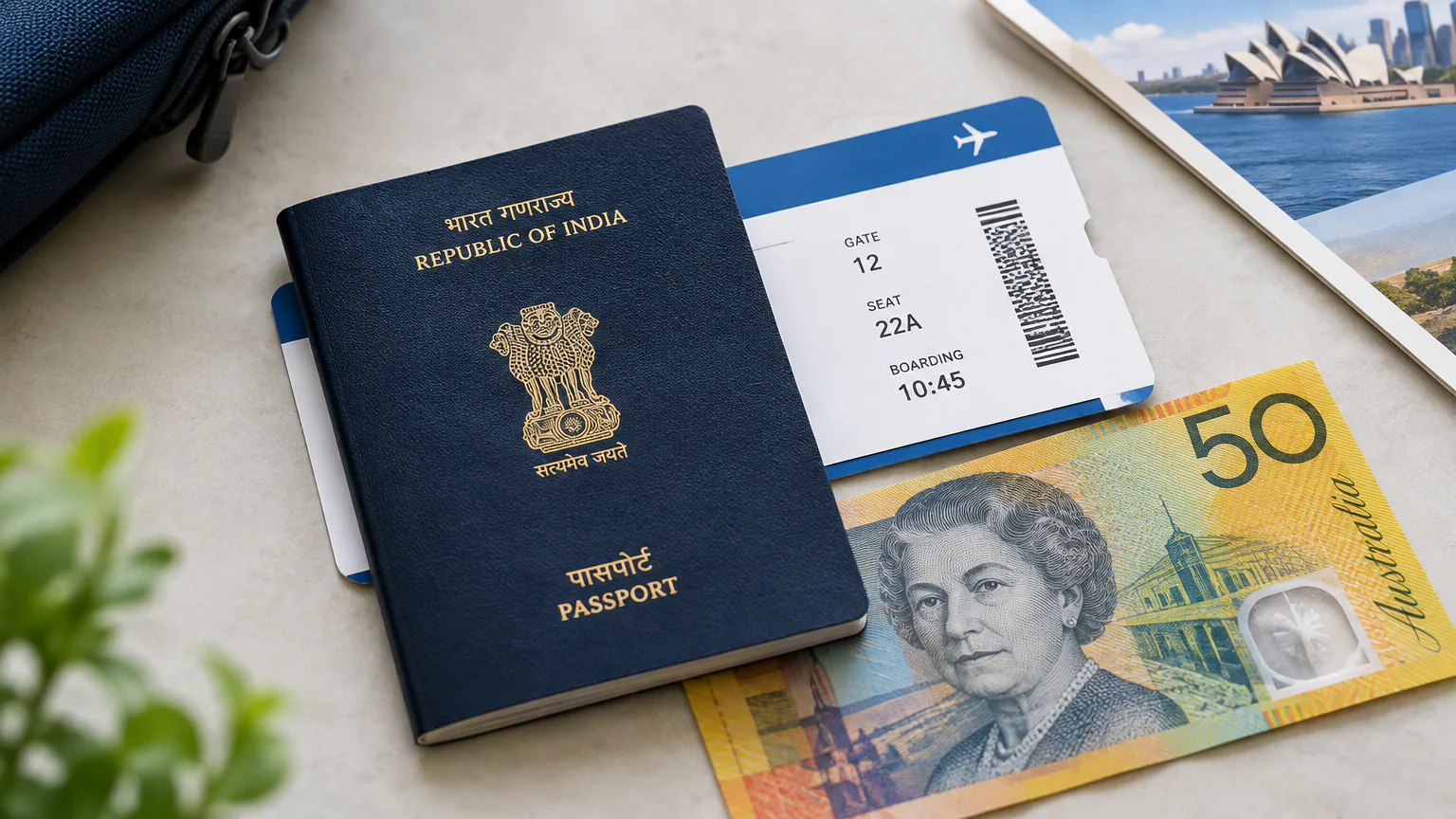
Best Time to Visit Australia: The Short Answer
April to May and September to October are the strongest months for a multi-city Australia trip, with mild 12–25°C temperatures and moderate crowds. May to October is the dry-season window for Cairns, the Great Barrier Reef and the Northern Territory. The tropical north is best avoided from November to April if reliable outdoor days matter.
- Best overall: April–May and September–October for multi-city trips
- Best for reef and north: May–October dry season
- Peak crowd and price: December–January summer holidays
- Wettest tropical window: November–April
Australia Month-by-Month Weather Guide
Australia's month-by-month pattern runs opposite to India's calendar: December to February is hot southern summer, June to August is cool southern winter, and the tropical north alternates between a wet season from roughly November to April and a dry season from May to October. Matching your route to the right month makes a significant practical difference.
January
Shoulder season20–30°C, 90mm rain, 70% humidity; hot and humid in the tropical north
Summer school holidays drive prices up; route to Sydney or Tasmania rather than Cairns.
February
Shoulder season20–29°C, 100mm rain, 70% humidity; wettest tropical month in the data
Cheaper than January but the tropical north is at its wettest; keep to southern cities.
March
Good time to go18–27°C, 80mm rain, 68% humidity; humid in tropical regions
Pleasant in the south; wait for April if Cairns or Darwin is central to your plan.
April
Best time to go15–24°C, 55mm rain, 65% humidity
Strong shoulder month for city touring, the Great Ocean Road and cooler outdoor activities.
May
Best time to go12–21°C, 45mm rain, 62% humidity
Excellent for the Great Barrier Reef and northern Australia as the dry season begins.
June
Best time to go10–18°C, 45mm rain, 60% humidity; dry season in the north
Peak reef season; southern evenings need a warm mid-layer.
July
Best time to go9–18°C, 40mm rain, 58% humidity; coolest southern month
Best wildlife and reef conditions, but school-holiday pricing applies across the country.
August
Best time to go10–20°C, 40mm rain, 58% humidity
Dry, clear and suitable for reef, wildlife and city travel; book ahead for Uluru.
September
Best time to go12–22°C, 45mm rain, 60% humidity
Pleasant spring shoulder season with good sightseeing conditions nationwide.
October
Best time to go15–25°C, 55mm rain, 62% humidity
Good nationwide compromise before the tropical wet season intensifies in the north.
November
Good time to go17–27°C, 65mm rain, 65% humidity; storms more likely in the north
Warm and workable in the south; the tropical north begins turning wet.
December
Shoulder season19–29°C, 80mm rain, 68% humidity
Summer holiday peak; warm but more expensive and crowded across all major cities.
- BestApr, May, Jun, Jul, Aug, Sep, Oct
- GoodMar, Nov
- FairJan, Feb, Dec
Peak Season in Australia
Peak season in Australia centres on two windows: the December–January summer holidays and the June–August southern winter school break, when reef and city demand both peak simultaneously. Hotel rates and domestic flight prices rise across Sydney, Melbourne, Cairns and the Gold Coast during these periods, and popular viewpoints at Uluru and the Great Ocean Road fill early.
Peak season (December–January and June–August)
Best forFamilies tied to Indian school holidays and travellers who want guaranteed reef or ski conditions
StrengthsFull attraction hours, maximum tour departures, reliable dry weather in Cairns from June to August
Trade-offsHighest hotel and domestic flight pricing, crowded Uluru and Great Ocean Road viewpoints, early sell-outs on reef day trips
Shoulder season (April–May and September–October)
Best forCouples, first-time visitors and photographers who want range across cities and landscapes
StrengthsMild 12–25°C temperatures, moderate pricing, good road conditions on the Great Ocean Road, easier reef bookings
Trade-offsSome reef and island operators run reduced schedules in the far north in late October
Off-season and tropical wet season (November–April in the north)
Best forBudget travellers focused on Sydney, Melbourne and Tasmania rather than Cairns or Darwin
StrengthsLower southern hotel rates outside December–January, fewer crowds at city attractions
Trade-offsTropical north rainfall of 80–100mm in January–February, humidity near 70%, possible road and reef trip disruption
Off-Season Australia: What to Expect
Off-season in Australia means different things in different regions. For the tropical north around Cairns and Darwin, the off-season is the wet season from November to April, with rainfall reaching 100mm in February and humidity near 70%. For southern cities like Sydney and Melbourne, the quieter period is February to March, after the summer holiday rush.
- February–March: quieter southern cities, 18–27°C, manageable crowds
- November–April: tropical north wet season, up to 100mm rain in February
- December–February: Tasmania summer, mild and less crowded than mainland
- Off-season southern hotel rates ease after the January peak
When to Avoid Australia
No single month is universally wrong for Australia, but certain combinations of destination and month create avoidable problems. The tropical north from November to April brings the highest rainfall and humidity in the data. December and January bring the highest prices and crowds nationwide. June to August in southern ski areas and reef zones means peak pricing without the warmth.
- Tropical north in January–February: 90–100mm rainfall, 70% humidity, reef trip cancellations and possible Kakadu road closures
How to avoid itShift northern Australia to May–October and route January–February dates to Sydney, Melbourne or Tasmania instead.
- December–January nationwide price peak: highest hotel rates and domestic flight costs across Sydney, Melbourne and Cairns
How to avoid itBook three to five months ahead if dates are fixed, or shift to April–May or September–October for lower rates.
- June–August double peak: reef and ski demand collide, lifting prices in both Cairns and alpine Victoria
How to avoid itTarget May or September for reef access at shoulder pricing; avoid booking Cairns in July without advance accommodation.
- Bushfire-season road closures in parts of southern and eastern Australia, typically in warmer months
How to avoid itCheck state road and national park alerts before self-drive legs such as the Great Ocean Road, and keep a flexible itinerary.
- Cool southern winter evenings in June–August, with lows of 9–10°C in Melbourne and Sydney
How to avoid itPack a warm mid-layer and a windproof jacket for southern city days and Great Ocean Road drives.
At a glance
Australia Travel Guide for Indians: Plan Your 2026 Trip, in brief
The best month to visit Australia shifts significantly depending on what you plan to do. Honeymooners and sightseers do best in April–May or September–October for mild coastal and city weather. Reef and outback adventure travellers need the May–October dry season. Families can align with Indian school breaks in April–May or the October Diwali window.
Australia Travel Guide for Indians: Plan Your 2026 Trip.
Planned around you.
- Honeymoon
- April–May and September–OctoberMild 12–25°C weather suits Sydney harbour, the Great Ocean Road and the Whitsundays without peak pricing.
- Family
- April–May and late September–OctoberAligns with Indian school breaks and avoids the December–January price peak; Gold Coast and Sydney work well.
- Budget travel
- February and NovemberModerate pricing and fewer holiday crowds; keep to southern cities in February as the tropical north is wet.
- Adventure and reef
- May–OctoberDry season for Cairns, the Great Barrier Reef and the Northern Territory, with lower humidity and rainfall of 40–45mm in June–July.
- Sightseeing
- April–May and September–OctoberComfortable walking weather for Melbourne laneways, Sydney and Uluru day tours.
- Photography
- May–August and OctoberClear southern winter light and low rainfall of 40–45mm in June–July; October gives warm light before tropical storms return.
Festivals and Events Worth Timing a Trip Around
Australia's event calendar rewards planning around named festivals rather than generic holiday dates. The Australian Open in Melbourne, Vivid Sydney, the Melbourne Cup, the Sydney to Hobart Yacht Race and the Darwin Festival each anchor a specific month and affect local accommodation availability. Confirm exact dates with official organisers before booking flights.
- Melbourne Park, Melbourne, Victoria
Australian Open
One of the four tennis Grand Slams, usually held in January. It draws large crowds and lifts Melbourne hotel rates for the fortnight of the tournament.
Best forSports fans and couples combining tennis with Melbourne food and laneway touring
Book Melbourne accommodation three to four months ahead if your trip overlaps the tournament.
- Circular Quay and The Rocks, Sydney, New South Wales
Vivid Sydney
A winter light, music and ideas festival that typically runs across late May and June, illuminating the Opera House and Circular Quay precinct with large-scale projections.
Best forFamilies, photographers and first-time Sydney visitors
Evening harbour cruises sell out quickly; book a Circular Quay or The Rocks hotel for walking access to the main installations.
- Flemington Racecourse, Melbourne, Victoria
Melbourne Cup
Australia's best-known horse racing event, traditionally run on the first Tuesday of November and a public holiday in Victoria.
Best forGroups and couples wanting a formal event day in Melbourne
Dress codes apply in members' areas; general admission is more practical for short-stay visitors.
- Sydney Harbour to Hobart, Tasmania
Sydney to Hobart Yacht Race
The blue-water classic starts from Sydney Harbour on Boxing Day, 26 December, and finishes in Hobart. The Sydney Harbour start is a free spectator event.
Best forSailing enthusiasts and travellers combining Sydney with Tasmania
Hobart waterfront fills fast for the finish; book Hobart accommodation well ahead if combining with a Tasmania leg.
- Darwin, Northern Territory
Darwin Festival
A multi-arts festival usually staged in August, during the northern dry season when Darwin weather is most reliable and humidity is at its lowest.
Best forCulture-focused travellers and photographers visiting the Top End
Pair it with Kakadu National Park, which is most accessible in the dry season from May to October.
Booking and Packing by Season
Book Australia flights from India three to five months ahead for December–January and June–August travel, and two to three months ahead for April–May and September–October. A Sydney–Melbourne–Cairns route can span 9°C southern winter mornings and 29°C tropical afternoons, so packing for two climates on one trip is a practical necessity rather than an option.
- Book peak-season flights early
For December–January and June–August departures from Delhi, Mumbai or Bengaluru, start looking three to five months ahead. Many India–Australia itineraries use one stop through Singapore, Kuala Lumpur, Doha or Dubai, so compare total journey time alongside fare.
Flights - Lock Cairns and Uluru accommodation first
Reef and outback beds are the tightest constraint in the May–October dry season. Book Cairns, Port Douglas and Uluru stays before adding flexible city nights in Sydney or Melbourne.
Hotels - Apply for the visitor visa before booking non-refundable fares
Indian passport holders generally need an Australian visitor visa, commonly subclass 600, before travel. Check current requirements and processing times on the Department of Home Affairs website and never treat visa approval as guaranteed.
Visa - Pack for two climates on one trip
A Sydney–Melbourne–Cairns route can span 9°C southern winter mornings and 29°C tropical afternoons. Carry a warm mid-layer, a light rain shell and sun protection in the same bag.
Packing - Wet-season packing for the tropical north
If you travel November–April, pack quick-dry clothing, a compact umbrella and dry bags for electronics. Humidity sits near 70% in January and February, so cotton-heavy clothing stays damp throughout the day.
Packing - Budget for domestic flights separately
Australia's internal distances make domestic flights a real cost line. Indicative land-only packages from about ₹1.25 lakh to ₹5 lakh or more per person on twin sharing exclude international airfare and visa, so confirm exactly what your quote includes before paying a deposit.
Budget
Holiday ideas to start from
Reviewed itineraries for this destination — personalise with a specialist, never an instant booking.
Gold Coast Family Holiday: 6 Nights Australia Package for Indian Families
From₹1,50,000per adult, twin sharing, land only; standard duration bucket; within destination research bandGold Coast Family Holiday Premium 6 Nights: Australia 6N7D Tour Package 2026
From₹2,31,100per adult, twin sharing, land only; premium duration bucket; within destination research bandSydney and Melbourne Premium 7 Nights: 2026 Australia Tour Package Guide
From₹2,61,900per adult, twin sharing, land only; premium interpolated duration; within destination research band
From idea to itinerary, with a real person.
- 01Share your plan
Dates, departure city, travellers and the moments you’d love. It only takes a minute.
- 02Shape it with a specialist
A real person refines the route, stays and pace with you. Change anything.
- 03Review your quote
A clear, personalised quote with confirmed inclusions. No payment to enquire.
From our travel specialists
What our team sees when planning these trips, beyond what the guidebooks say.
Confirmed 11 Oct 2026
- Timing
December to February is easy to underestimate because it is hot, crowded and peak season in Australia. For a mixed Sydney–Melbourne–northern itinerary, travellers commonly recommend the shoulder months of March–April or September–October; June–August is milder in Sydney and Melbourne but favourable for Cairns and the Gold Coast.
Travellers commonly wish they had allowed more time for Australia’s distances, budgeted for higher food and transport costs than in Southeast Asia, and understood that driving involves strict parking and road rules. They also recommend staying near public transport rather than choosing accommodation mainly for the view.
Before you go
Straight answers to help you plan — then personalise the trip with a specialist.
8 answered belowAsk a specialist anything about this trip — there’s no obligation.
Ask a specialist01What is the best time to visit Australia?
April to May and September to October are the strongest all-round months, with 12–25°C temperatures and 45–55mm rainfall in the research data. May to October suits the Great Barrier Reef and northern Australia. December and January are the busiest and most expensive months nationwide.
02What is Australia weather month by month like?
January and February are warm and humid at 20–30°C with 90–100mm rain. April–May cool to 12–24°C with 45–55mm. June–August are the coolest southern months at 9–20°C with 40–45mm. September–October return to 12–25°C, and November–December warm again with rising tropical rainfall.
03When is the best time to go to Australia for the Great Barrier Reef?
May to October is the dry-season window for Cairns and the Great Barrier Reef, with lower humidity and rainfall of 40–45mm in June and July. June to August is peak reef season, so book Cairns or Port Douglas accommodation early. Keep a buffer day as reef trips can still be cancelled by wind.
04What is Australia peak season and when should I avoid it?
Peak season covers December–January summer holidays and the June–August southern winter school break. Avoid the tropical north from November to April if you want reliable outdoor days, since January and February bring 90–100mm rainfall and humidity near 70%. Southern cities remain workable in those months.
05Do Indian citizens need a visa for Australia?
Yes. Indian passport holders generally need an Australian visitor visa before travel, commonly subclass 600. Apply well before your departure date and check current requirements and processing times on the Department of Home Affairs website. Visa approval is decided by the Australian government and cannot be guaranteed by any travel planner.
06How much does an Australia tour package cost from India?
Indicative land-only twin-sharing packages range from about ₹1.25 lakh for budget travel to ₹5 lakh or more for luxury, excluding international airfare and visa. These are planning bands from research data, not Tripstor offers. Your personalised quote depends on travel month, cities, hotel category and trip length.
07How many days are enough for an Australia trip?
Seven days suits a focused Sydney–Melbourne or Cairns itinerary. Ten to fourteen days better supports multiple regions such as Sydney, Cairns and Uluru, and gives buffer for domestic flights. Adding the Great Ocean Road or Gold Coast usually needs at least ten days to avoid rushed transfers between cities.
08Is Australia expensive for Indian tourists?
Accommodation, domestic flights, attractions and restaurant meals cost more than in India, and all prices are in Australian dollars. Shoulder months April–May and September–October help control hotel costs, and booking domestic flights early reduces the internal travel bill significantly compared with last-minute fares.