
Hong Kong + Macau Travel Guide for Indians: Complete 2026 Planning Edition
Hong Kong and Macau together offer one of Asia's most rewarding short-haul trips for Indian travellers: a dramatic harbour skyline, UNESCO-listed Portuguese colonial streets, world-class dim sum, and a ferry ride separating the two. This guide covers everything you need to plan a 2026 trip from India — visa requirements, realistic budgets, the best time to go, top attractions in both cities, where to stay, what to eat, and how to travel between them.
- No booking feeRequesting a quote is free with no obligation.
- Expert-planned itineraryRoutes and stays shaped around your dates and pace.
- Reply within 24 hoursA travel expert gets back to you with ideas.
- Refine before you decideAdjust the plan until it feels right for you.
What Are Hong Kong and Macau?
Hong Kong is a Special Administrative Region of China on the southeastern coast, known for its dense skyline, deep natural harbour, efficient public transport, and Cantonese food culture. Victoria Peak, at 552 metres, gives the most iconic view of the city. The MTR metro system connects most major attractions, and English is widely spoken.
Macau, also a Special Administrative Region of China, sits about 60 kilometres west of Hong Kong across the Pearl River Delta. It was a Portuguese colony until 1999, and that history is visible in its cobblestone squares, baroque church facades, and fusion Macanese cuisine. Today Macau is also one of the world's largest gaming and entertainment hubs, with the Cotai Strip rivalling Las Vegas in scale.
The two destinations are complementary: Hong Kong rewards urban exploration, harbour views, and street food; Macau rewards history, architecture, and resort-scale entertainment. Most Indian travellers combine both in a single trip of five to seven days.
Why Indian Travellers Choose Hong Kong + Macau
Several practical factors make this combination popular with Indian travellers. Hong Kong's Pre-arrival Registration (PAR) scheme allows eligible Indian passport holders to visit visa-free for up to 14 days without paying any fee, removing a significant planning barrier. Direct flights operate from Mumbai, Delhi, Bengaluru, and Chennai, with journey times of roughly five to seven hours.
The attraction mix suits a wide range of travel styles. Families have Hong Kong Disneyland and Ocean Park; culture seekers have Macau's UNESCO Historic Centre; food lovers have Michelin-starred dim sum restaurants and Portuguese egg tart bakeries; shoppers have duty-free electronics in Tsim Sha Tsui and luxury retail on the Cotai Strip.
Indian cuisine is available in both cities, particularly near temple districts and in major hotel complexes, and vegetarian options are increasingly common in mainstream restaurants. The combination of short flight time, no language barrier in most tourist areas, and a high density of things to do within a compact geography makes Hong Kong + Macau one of the most efficient international trips available to Indian travellers.
Visa and Entry Requirements for Indian Citizens
Understanding entry requirements for both destinations before booking is essential. The rules for Hong Kong and Macau are separate and must be checked independently.
Hong Kong: Pre-arrival Registration (PAR)
Indian nationals generally need to complete Hong Kong's online Pre-arrival Registration before visiting or transiting visa-free, except for direct air transit without leaving the airport transit area. A successfully completed PAR allows an eligible Indian passport holder to visit or transit Hong Kong visa-free for up to 14 days per visit.
Key PAR facts: the registration is free and processed entirely online; each successful registration is valid for six months with multiple visits permitted during that period, subject to a maximum stay of 14 days per visit; Indian applicants must hold a passport valid for at least six months at the time of application.
Indian nationals need to apply for an appropriate Hong Kong visa if they intend to stay longer than 14 days or enter for purposes such as employment, study, or residence. Hong Kong's Immigration Department states that visitors should hold a valid travel document with adequate returnability and satisfy normal immigration requirements; individual applications and admissions remain subject to immigration assessment.
Always complete your PAR well before departure and carry the confirmation with you. The PAR does not guarantee admission — final entry is at the discretion of the Immigration Officer at the port of entry.
Macau: Visa Requirements for Indian Passport Holders
Macau requires visitors to hold a visa unless they are nationals of a country or territory covered by Macau's visa or entry-permit exemption arrangements. The official Macau entry-requirements page should be checked for the current rule applicable to an Indian passport before travelling, because visa or entry-permit treatment depends on nationality and current regulations.
As of 2026, Indian citizens typically need to arrange a visa before or upon arrival in Macau. Verify the exact current requirement — including whether on-arrival issuance is available and what documents are needed — directly with the Macau Tourism Office or the nearest Chinese consulate before booking your trip. Do not rely solely on third-party sources for visa status, as rules can change.
Best Time to Visit Hong Kong and Macau from India
October to December is the most recommended window for Indian travellers. Temperatures are comfortable (15–25°C), humidity is low, skies are mostly clear, and typhoon season has ended. November is widely considered the single best month: pleasant weather, manageable crowds, and no major public holidays inflating hotel prices.
January and February are also good for sightseeing, though temperatures can dip to around 12–15°C and Lunar New Year (late January or February) brings large crowds and higher prices. Avoid June through September if possible: this is typhoon season, with heavy rain, high humidity, and the risk of transport disruption.
| Month | Weather | Crowd Level | Price Index | Verdict |
|---|---|---|---|---|
| January | Cool, dry, sunny (12–18°C) | Moderate | Moderate | Good — ideal for sightseeing |
| February | Cool, often cloudy; Lunar New Year | High during LNY | High during LNY | Good, but book early around LNY |
| March | Mild, humidity rising, some fog | Moderate | Moderate | Pleasant, pack a light layer |
| April | Warm, humid, occasional rain | Moderate–High | Moderate–High | Acceptable; prepare for humidity |
| May | Hot, humid, rainy season begins | High | High | Less ideal; typhoon season approaching |
| June | Hot, very humid, heavy rain | High | High | Typhoon risk; favour indoor activities |
| July | Hot, very humid, peak typhoon season | High | High | Not recommended for outdoor plans |
| August | Hot, very humid, typhoon risk continues | High | High | Not recommended; disruptions possible |
| September | Warm, humid; typhoon risk easing | Moderate–High | Moderate–High | Improving; still warm and wet |
| October | Pleasant, sunny, less humid (20–26°C) | Moderate | Moderate | Excellent — top pick |
| November | Cool, dry, sunny (15–22°C) | Moderate | Moderate | Best month overall |
| December | Cool, dry, sunny; festive atmosphere | Moderate–High | Moderate–High | Excellent — festive and comfortable |
How to Reach Hong Kong and Macau from India
Most Indian travellers fly into Hong Kong International Airport (IATA: HKG) and then travel onward to Macau. HKG is a major international hub with strong connectivity to Indian cities and straightforward onward options to Macau.
Macau also has its own international airport (IATA: MFM), but international connections from India are limited. For most itineraries, arriving at HKG and crossing to Macau by ferry or bridge bus is the most practical approach.
Flights from India to Hong Kong
Direct flights to Hong Kong International Airport operate from Mumbai (BOM), Delhi (DEL), Bengaluru (BLR), and Chennai (MAA). Airlines including Cathay Pacific, Air India, and IndiGo serve these routes. Flight duration is approximately five to seven hours depending on origin city.
Connecting itineraries via hubs such as Singapore, Kuala Lumpur, or Bangkok are available from most other Indian cities and can sometimes offer lower fares, though they add travel time. Book well in advance for travel during October–December and around Lunar New Year, when demand is highest.
Note: Airline routes and schedules change. Verify current direct-flight availability and booking options with airlines or a travel agent before finalising your itinerary.
Hong Kong Airport to City Centre
From Hong Kong International Airport, the Airport Express train is the fastest option to the city centre, reaching Kowloon station in approximately 22 minutes and Hong Kong station (Central) in approximately 24 minutes. The train runs frequently and offers in-town check-in for some airlines.
Airport buses (routes A and E series) serve a wider range of destinations at lower fares and are useful if your hotel is not near an Airport Express station. Taxis are available outside the arrivals hall; note that different coloured taxis serve different zones (urban, New Territories, Lantau).
For travellers heading directly to Macau without entering Hong Kong, cross-border coach services and the SkyPier ferry terminal at the airport offer direct connections to Macau, bypassing Hong Kong immigration. Verify current schedules and boarding requirements directly with operators before travel, as services and requirements can change.
Travelling Between Hong Kong and Macau
There are two main ways to travel between Hong Kong and Macau: high-speed ferry and bus via the Hong Kong–Zhuhai–Macau Bridge (HZMB).
- **High-speed ferry (recommended):** Journey time is approximately 60–75 minutes. Operators TurboJET and Cotai Water Jet run frequent services. Hong Kong departure points include the Hong Kong–Macau Ferry Terminal (Sheung Wan, Hong Kong Island) and the China Ferry Terminal (Tsim Sha Tsui, Kowloon). Macau arrival points are the Outer Harbour Ferry Terminal (Macau Peninsula) or the Taipa Ferry Terminal (Cotai Strip). Services run throughout the day and into the late evening; some overnight sailings also operate.
- **HZMB cross-boundary coaches:** The 55-kilometre Hong Kong–Zhuhai–Macau Bridge connects the three regions by road. Cross-boundary coaches depart from the HZMB Hong Kong Port on Lantau Island. Journey time to Macau is approximately 40–45 minutes on the bridge, plus time to reach the Hong Kong Port. This option suits travellers already on Lantau Island (e.g., near the airport or Disneyland).
- **Passport required:** You pass through immigration controls when crossing between Hong Kong and Macau regardless of which transport mode you use. Carry your passport and any required visas or PAR confirmation.
Top 10 Places to Visit in Hong Kong and Macau
Between the two cities, there is enough to fill a week of sightseeing. The ten attractions below represent the most rewarding experiences across both destinations.
1. Victoria Peak, Hong Kong
At 552 metres, Victoria Peak is the highest point on Hong Kong Island and the city's most iconic viewpoint. The panorama takes in the skyscraper-dense Central district, Victoria Harbour, Kowloon, and on clear days the New Territories beyond. The historic Peak Tram funicular, operating since 1888, provides a steep and scenic ascent. The Peak Tower at the summit houses restaurants, shops, and the Madame Tussauds Hong Kong attraction. Go early morning or just after sunset for the clearest views and shorter queues.
2. Hong Kong Disneyland, Lantau Island
Located on Lantau Island and directly accessible by MTR, Hong Kong Disneyland features seven themed lands including Adventureland, Tomorrowland, and the Marvel-themed Avengers Campus. It is the most compact of the Disney parks globally, making it manageable in a single full day. The park is a strong choice for families travelling with children and for Disney fans who want a shorter, less crowded experience than Tokyo or Shanghai Disneyland.
3. Tian Tan Buddha (Big Buddha), Lantau Island
The Tian Tan Buddha is a 34-metre bronze seated Buddha statue at Ngong Ping on Lantau Island. The Ngong Ping 360 gondola cable car provides a 25-minute scenic ride over forested hills and the North Lantau coastline to reach the plateau. The adjacent Po Lin Monastery is an active place of worship and offers vegetarian meals. Combine this with a visit to Disneyland on the same day if you are based on Lantau.
4. Tsim Sha Tsui Waterfront Promenade, Kowloon
The Tsim Sha Tsui promenade runs along the southern tip of Kowloon, facing Hong Kong Island across Victoria Harbour. It is the best ground-level vantage point for the skyline and the location of the Avenue of Stars, which celebrates Hong Kong's film industry. The nightly Symphony of Lights show — a coordinated light and laser display across the harbour-facing skyscrapers — runs at 8 pm and is free to watch from the promenade. The area is also within walking distance of major museums, the Star Ferry pier, and the shopping district.
5. Mong Kok Street Markets, Kowloon
Mong Kok is one of the world's most densely populated urban districts and one of Hong Kong's best areas for street-level exploration. The Ladies' Market on Tung Choi Street sells clothing, accessories, and souvenirs at negotiable prices. Nearby, the Goldfish Market, Flower Market, and Bird Garden each occupy their own dedicated streets. The area is also excellent for inexpensive local food — look for congee shops, noodle stalls, and egg waffle vendors. Mong Kok is best visited in the late afternoon and evening when the markets are fully active.
6. Ruins of St. Paul's, Macau
The Ruins of St. Paul's are the most photographed landmark in Macau: the ornate stone facade of the 17th-century Church of Mater Dei, which was destroyed by fire in 1835. The facade survived intact and is now part of the UNESCO-listed Historic Centre of Macau. The detailed carvings depict Christian iconography alongside East Asian motifs, reflecting the cultural fusion that defines Macau. The site is free to visit and is surrounded by souvenir shops and food stalls selling Macanese snacks.
7. Senado Square and the Historic Centre, Macau
Senado Square is the civic heart of Macau's UNESCO Historic Centre, paved with a distinctive wave-pattern mosaic of black and white Portuguese tiles. The surrounding pastel-coloured neoclassical buildings house government offices, shops, and restaurants. The square connects to a network of pedestrian lanes lined with heritage buildings, churches, and temples — all within easy walking distance. The entire Historic Centre can be explored on foot in a half to full day.
8. Macau Tower
At 338 metres, the Macau Tower is the tallest structure in Macau and offers a 360-degree observation deck with views across the Pearl River Delta to Hong Kong on clear days. For those seeking an adrenaline experience, the tower operates a bungee jump from the outer rim (one of the world's highest commercial bungee jumps) and a Skywalk along the exterior rim. The observation deck is accessible without participating in adventure activities.
9. The Venetian Macao, Cotai Strip
The Venetian Macao is one of the largest casino resort complexes in the world, built on the Cotai Strip — reclaimed land connecting the islands of Taipa and Coloane. Its Grand Canal Shoppes recreate Venetian canals indoors, complete with gondola rides under a painted sky ceiling. Beyond the casino floor, the complex contains a large shopping mall, multiple dining options across price points, and an arena that hosts concerts and sporting events. Entry to the public areas is free; gondola rides and other activities are ticketed.
10. A-Ma Temple, Macau
The A-Ma Temple is believed to be the oldest temple in Macau, with origins dating to 1488 — predating Portuguese settlement. It is dedicated to Mazu, the goddess of seafarers, and is considered the site from which Macau derived its name (A-Ma Gao, meaning Bay of A-Ma). The temple complex climbs a hillside near the southern tip of the Macau Peninsula, with pavilions, prayer halls, and rock carvings set among banyan trees. It remains an active place of worship and is free to enter.
Trip Cost from India: 2026 Budget Estimates
The table below shows estimated per-person costs for a 5-night/6-day trip from a major Indian city, assuming double occupancy and round-trip flights. These are indicative planning ranges only and are not confirmed Tripstor package prices. Actual costs vary with booking timing, travel dates, airline choice, and personal spending habits.
Budget travellers staying in guesthouses, using public transport, and eating at local eateries can keep costs towards the lower end. Luxury travellers staying at five-star harbour-view hotels and dining at Michelin-starred restaurants will exceed the upper estimates.
| Category | Budget (INR) | Mid-range (INR) | Luxury (INR) |
|---|---|---|---|
| Flights (round-trip) | 30,000 – 45,000 | 45,000 – 60,000 | 60,000 – 90,000+ |
| Accommodation (5 nights) | 20,000 – 35,000 | 35,000 – 70,000 | 70,000 – 1,50,000+ |
| Food and drink | 10,000 – 15,000 | 15,000 – 25,000 | 25,000 – 50,000+ |
| Local transport | 3,000 – 5,000 | 5,000 – 8,000 | 8,000 – 15,000+ |
| Activities and sightseeing | 7,000 – 12,000 | 12,000 – 20,000 | 20,000 – 40,000+ |
| Miscellaneous and shopping | 5,000 – 10,000 | 10,000 – 20,000 | 20,000 – 50,000+ |
| Total estimated cost (per person) | 75,000 – 1,22,000 | 1,22,000 – 2,03,000 | 2,03,000 – 3,95,000+ |
Where to Stay in Hong Kong and Macau
Location matters significantly in both cities. In Hong Kong, the right neighbourhood puts you within walking distance of transport links, markets, and harbour views. In Macau, the choice between the historic peninsula and the Cotai Strip shapes the character of your stay.
Hong Kong: Budget and Mid-range Options
Tsim Sha Tsui in Kowloon is the most popular base for first-time visitors: it has excellent MTR access, the Star Ferry, the promenade, and a high density of restaurants and shops. Mong Kok suits travellers who want a more local, market-oriented experience. On Hong Kong Island, Wan Chai and Causeway Bay offer good transport links and proximity to nightlife and shopping.
- **Budget — Mini Hotel Central** (Central, Hong Kong Island): Compact, design-led rooms in a prime location near the MTR. Indicative rate: INR 4,000–7,000 per night, room only.
- **Mid-range — Hotel ICON** (Tsim Sha Tsui East, Kowloon): Contemporary hotel with harbour views, a rooftop pool, and strong service. Indicative rate: INR 12,000–20,000 per night, room only.
- **Mid-range — Dorsett Wanchai** (Wan Chai, Hong Kong Island): Modern hotel with good MTR connectivity and comfortable rooms. Indicative rate: INR 9,000–15,000 per night, room only.
Hong Kong: Luxury Options
Hong Kong's luxury hotels are among the most celebrated in Asia, with several occupying prime harbour-front positions and offering dining experiences that are destinations in their own right.
- **The Peninsula Hong Kong** (Tsim Sha Tsui, Kowloon): One of Asia's most iconic hotels, with classic colonial grandeur, a rooftop helipad, and panoramic harbour views. Indicative rate: INR 35,000–70,000+ per night, room only.
- **Four Seasons Hotel Hong Kong** (Central, Hong Kong Island): Award-winning dining, an infinity pool overlooking the harbour, and direct access to IFC Mall. Indicative rate: INR 40,000–80,000+ per night, room only.
Macau: Budget and Mid-range Options
Staying near Senado Square or the Outer Harbour puts you within walking distance of the UNESCO Historic Centre. The Cotai Strip suits travellers who want integrated resort amenities and easy access to entertainment. Taipa Village offers a quieter, more boutique experience with local restaurants.
- **Mid-range — Hotel Sintra** (Macau Peninsula): Well-located close to Senado Square and the historic sites. Indicative rate: INR 7,000–12,000 per night, room only.
- **Mid-range — Broadway Hotel Macau** (Cotai Strip): Comfortable rooms with direct access to Broadway Food Street and its variety of dining options. Indicative rate: INR 8,000–15,000 per night, room only.
Macau: Luxury Options
Macau's integrated resort hotels on the Cotai Strip are among the largest and most lavish in the world, combining accommodation, casino, entertainment, and dining under one roof.
- **The Venetian Macao** (Cotai Strip): Venetian-themed architecture, gondola rides in the Grand Canal Shoppes, and extensive dining and entertainment. Indicative rate: INR 15,000–30,000+ per night, room only.
- **Galaxy Hotel** (Cotai Strip, Galaxy Macau complex): Luxurious rooms with access to a large wave pool, artificial beach, and multiple dining venues. Indicative rate: INR 18,000–35,000+ per night, room only.
Food and Cuisine: What to Eat in Hong Kong and Macau
Eating well is central to any Hong Kong and Macau trip. Hong Kong is a Cantonese food city with a Michelin-starred restaurant density that rivals Paris; Macau has a unique fusion cuisine born from centuries of Portuguese and Chinese coexistence.
In Hong Kong, dim sum is the essential meal. Tim Ho Wan, which holds a Michelin star and has multiple accessible locations, is a practical starting point. Lung King Heen at the Four Seasons was the world's first Chinese restaurant to receive three Michelin stars. For street food, Mong Kok and Sham Shui Po offer egg waffles, curry fish balls, and roast meat shops. Wonton noodle soup — thin egg noodles, shrimp wontons, and clear broth — is a staple at local cha chaan teng (Hong Kong-style cafes).
In Macau, the signature dishes reflect the Portuguese colonial legacy. African Chicken (galinha à africana) is baked with a sauce of coconut, peanuts, and spices. Minchi is a comfort dish of minced meat fried with soy sauce and potatoes. Bacalhau (salted codfish) appears in multiple preparations. Portuguese egg tarts — creamy custard in a flaky pastry shell, often caramelised on top — are sold at bakeries throughout the city; Lord Stow's Bakery in Coloane Village is the most famous source.
Vegetarian travellers will find dedicated vegetarian restaurants near Buddhist temples in both cities, and major hotel buffets typically include vegetarian sections. Indian restaurants operate in both cities, particularly in areas with established Indian communities and within large hotel complexes. Always communicate dietary requirements clearly when ordering.
- **Dim sum (Hong Kong):** Har gow (shrimp dumplings), siu mai (pork and shrimp), char siu bao (barbecue pork buns) — served in steamer baskets at breakfast and lunch.
- **Wonton noodles (Hong Kong):** Thin egg noodles, shrimp wontons, clear broth. A staple at local noodle shops.
- **Roast goose (Hong Kong):** Crispy-skinned, slow-roasted goose — a Cantonese speciality found at dedicated roast meat restaurants.
- **Portuguese egg tart (Macau):** Creamy custard tart with a flaky crust, often caramelised. Lord Stow's Bakery in Coloane Village is the most cited source.
- **African Chicken (Macau):** Chicken baked with a spiced coconut and peanut sauce — a uniquely Macanese dish found at traditional Macanese restaurants.
- **Minchi (Macau):** Minced meat stir-fried with soy sauce, potatoes, and a fried egg on top — a Macanese home-cooking staple.
Currency, Payments, and Money Tips
Hong Kong uses the Hong Kong Dollar (HKD). Macau uses the Macanese Pataca (MOP). Both currencies are pegged to the US Dollar. HKD is widely accepted in Macau, typically at a 1:1 rate, making it practical to use HKD throughout both destinations. MOP is generally not accepted in Hong Kong, so avoid accumulating excess MOP before crossing back.
Credit cards (Visa, Mastercard) are accepted at hotels, major restaurants, and larger shops in both cities. Smaller street vendors, wet markets, and local eateries often prefer cash. ATMs are widely available. For currency exchange, airport rates are less favourable than rates at licensed money changers in Tsim Sha Tsui or Wan Chai. Multi-currency travel cards can offer competitive rates and reduce the need to carry large amounts of cash.
SIM Cards, eSIMs, and Connectivity
Local SIM cards are available at Hong Kong International Airport arrivals hall and at convenience stores (7-Eleven, Circle K) throughout the city. Providers including CSL, SmarTone, and 3 Hong Kong offer prepaid data plans suited to short visits. eSIM-compatible phones can activate a Hong Kong or regional data plan before departure, which is the most convenient option for travellers who want connectivity from the moment they land.
Free public Wi-Fi is available at MTR stations, shopping malls, major tourist sites, and most hotels. Note that a separate SIM or data plan may be needed for Macau, as Hong Kong SIM roaming rates to Macau vary by provider. Check your plan before crossing.
Safety, Etiquette, and Practical Tips
Both Hong Kong and Macau have low violent crime rates and are considered safe for tourists, including solo travellers and families. Standard urban precautions apply: be aware of your surroundings in crowded areas, keep valuables secure, and avoid displaying expensive items unnecessarily.
Practical etiquette points: queue patiently at MTR platforms and bus stops (marked queuing lanes are enforced); avoid eating or drinking on the MTR (it is prohibited and fined); speak at a moderate volume in public spaces; ask permission before photographing individuals. Tipping is not mandatory in Hong Kong or Macau but is appreciated for good service — 10% is common in restaurants that do not include a service charge. Many restaurants add a 10% service charge automatically; check your bill before adding more.
Always carry a copy of your passport, PAR confirmation, and any Macau visa documentation. Keep emergency contact numbers for your accommodation and the nearest Indian consulate accessible.
Hong Kong + Macau vs. Singapore: Which Should Indian Travellers Choose?
Both Hong Kong + Macau and Singapore are popular short-haul international destinations for Indian travellers, and the choice often comes down to travel style rather than one being objectively better.
Hong Kong + Macau suits travellers who want: dramatic urban density and a world-class harbour skyline; deep Cantonese food culture from street stalls to Michelin-starred restaurants; a UNESCO-listed colonial heritage city (Macau) within a short ferry ride; and a higher-energy, more spontaneous urban experience. The combination of two distinct destinations in one trip adds variety.
Singapore suits travellers who want: a meticulously planned, highly walkable city with excellent English signage; lush green spaces including Gardens by the Bay and the Singapore Botanic Gardens; a strong multicultural identity with significant Indian cultural presence in Little India; and family-focused attractions on Sentosa Island including Universal Studios Singapore.
On cost, both destinations sit in a similar mid-to-high range for international travel from India. Singapore tends to have slightly higher restaurant prices at the mid-range level; Hong Kong offers more affordable street food options. For a first international trip, Singapore's organisation and English-language environment can feel more accessible. For travellers who have already visited Singapore, Hong Kong + Macau offers a meaningfully different experience.
About This Guide
Prepared by Tripstor's travel editorial team. Entry requirements, transport schedules, and prices are subject to change. Always verify visa and entry requirements with official government sources before booking. Budget figures are indicative estimates for planning purposes only and do not represent confirmed Tripstor package prices.
Good questions. Clearer plans.
How many days do I need for Hong Kong and Macau from India?
Five to seven days is the most practical duration. Allocate three to four days for Hong Kong — enough to cover Victoria Peak, Tsim Sha Tsui, Lantau Island (Big Buddha and/or Disneyland), and Mong Kok — and two to three days for Macau to explore the UNESCO Historic Centre, the Cotai Strip, and Macau Tower. Factor in one travel day for the ferry crossing between the two cities.
What is the approximate budget for a Hong Kong and Macau trip from India in 2026?
For a 5-night/6-day trip per person (double occupancy, round-trip flights from a major Indian city): budget travellers should estimate INR 75,000–1,22,000; mid-range travellers INR 1,22,000–2,03,000; luxury travellers INR 2,03,000–3,95,000 or more. These figures cover flights, accommodation, food, local transport, and activities. They are indicative planning estimates, not confirmed package prices.
What is the best time to visit Hong Kong and Macau from India?
October to December is the best window: temperatures are comfortable (15–26°C), humidity is low, skies are mostly clear, and typhoon season has ended. November is the single best month. January and February are also good for sightseeing, though Lunar New Year brings higher prices and crowds. Avoid June through September if possible due to typhoon risk, heavy rain, and high humidity.
Do Indian citizens need a visa for Hong Kong and Macau?
For Hong Kong: Indian nationals generally need to complete the free online Pre-arrival Registration (PAR) before visiting visa-free for up to 14 days. The PAR is valid for six months and allows multiple visits. Your Indian passport must be valid for at least six months. For Macau: Indian nationals generally require a visa. Check the official Macau Tourism entry-requirements page for the current rule before booking, as regulations can change. Do not rely on third-party sources for visa status.
How do I travel between Hong Kong and Macau?
The most popular option is a high-speed ferry, which takes approximately 60–75 minutes. Operators TurboJET and Cotai Water Jet run frequent services from the Hong Kong–Macau Ferry Terminal (Sheung Wan) and China Ferry Terminal (Tsim Sha Tsui) to Macau's Outer Harbour and Taipa Ferry Terminals. Alternatively, cross-boundary coaches via the Hong Kong–Zhuhai–Macau Bridge (HZMB) take approximately 40–45 minutes on the bridge. You pass through immigration controls on both options, so carry your passport.
What are the must-try foods in Hong Kong and Macau?
In Hong Kong: dim sum (har gow, siu mai, char siu bao), wonton noodle soup, roast goose, and egg waffles from street stalls. In Macau: Portuguese egg tarts (Lord Stow's Bakery in Coloane Village is the most famous), African Chicken (spiced coconut and peanut sauce), and Minchi (minced meat with soy sauce and potatoes). Both cities have Indian restaurants and vegetarian options, though it is advisable to confirm ingredients when ordering.
Is Hong Kong and Macau a good destination for families with children?
Yes. Hong Kong Disneyland on Lantau Island and Ocean Park on Hong Kong Island are both well-suited to families. The MTR metro system is safe, efficient, and easy to navigate with children. In Macau, the large integrated resorts on the Cotai Strip have family-friendly facilities, and the UNESCO Historic Centre is an engaging outdoor walking experience. Both cities have low crime rates and good public infrastructure.
What currency should I carry for Hong Kong and Macau?
Hong Kong uses the Hong Kong Dollar (HKD); Macau uses the Macanese Pataca (MOP). HKD is widely accepted in Macau at roughly a 1:1 rate, so carrying HKD works for both destinations. MOP is generally not accepted in Hong Kong, so avoid accumulating excess MOP before returning. Credit cards are accepted at hotels and larger establishments; carry some cash for street food, markets, and smaller local shops.
Which airport should I fly into for Hong Kong and Macau?
Hong Kong International Airport (IATA: HKG) is the primary gateway for most Indian travellers. It has direct flights from Mumbai, Delhi, Bengaluru, and Chennai, and offers straightforward onward connections to Macau by ferry or HZMB bus. Macau also has its own airport (IATA: MFM), but international connections from India are limited. Flying into HKG and crossing to Macau by ferry is the most practical itinerary for most visitors.
Are vegetarian food options available in Hong Kong and Macau?
Yes, though they require some planning. Dedicated vegetarian restaurants operate near Buddhist temples in both cities. Major hotel buffets typically include vegetarian sections. Indian restaurants in both cities offer familiar vegetarian dishes. In mainstream Cantonese and Macanese restaurants, vegetarian options exist but may be limited — always communicate your dietary requirements clearly, as some dishes contain hidden meat-based stocks or sauces.
Keep exploring
A little inspiration for your journey
Practical reads for this destination — timing, places, costs and tips before you plan.
- Travel journalHong Kong + Macau Travel Guide for Indians: Best Time to Visit, Costs and Planning Tips (2026)
October and November are the best months for Indian travellers to visit Hong Kong and Macau. Both destinations officially identify this autumn window as their most comfortable period: Hong Kong's…
Read the guide 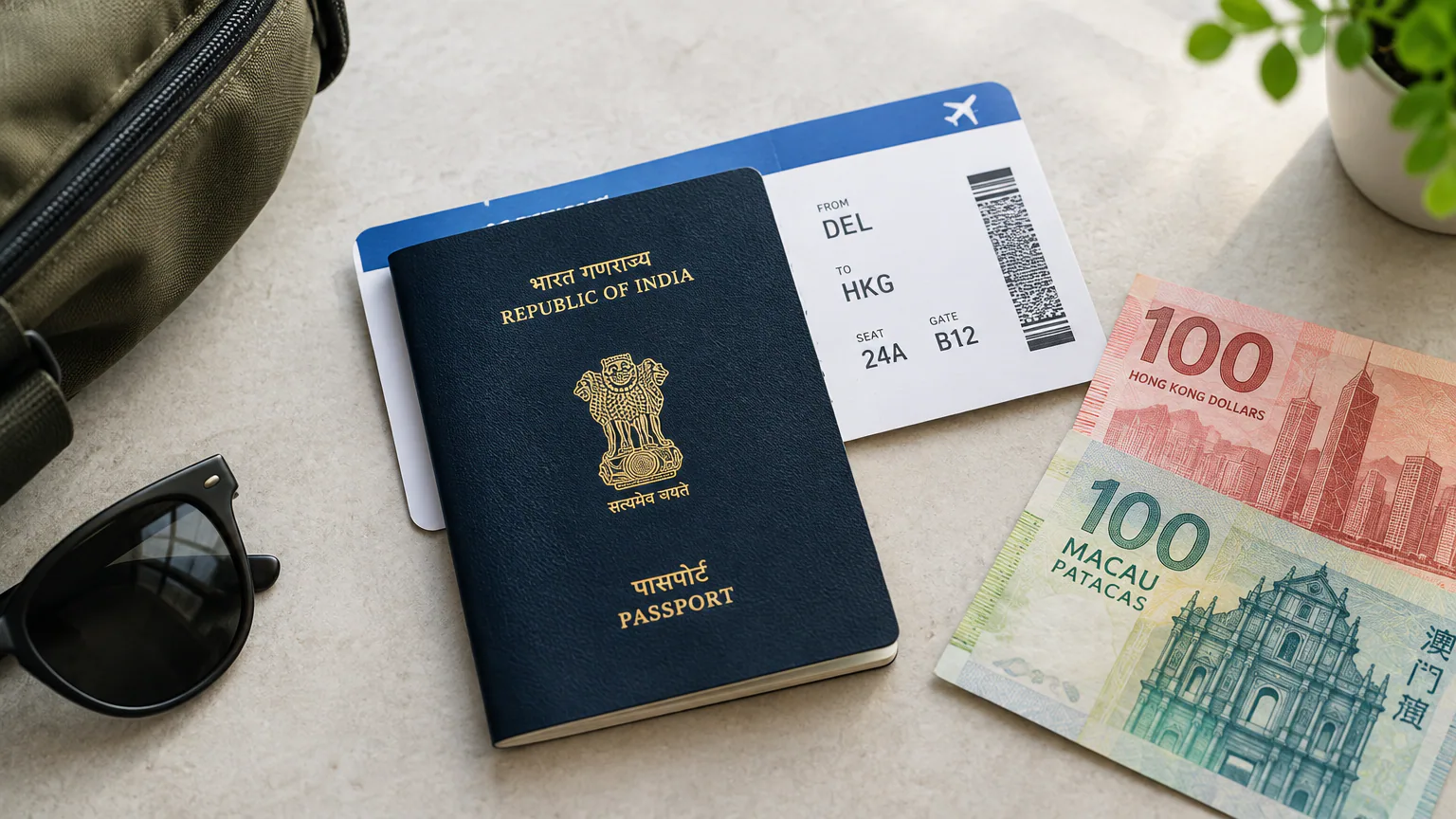 Travel journalHong Kong + Macau Visa for Indians 2026: A Comprehensive Guide
For Indian passport holders planning a trip to Hong Kong and Macau in 2026, understanding the visa and entry requirements is crucial for a smooth journey. While Hong Kong offers…
Read the guide
A little inspiration.
A holiday made yours.
Share your dates and departure city — a travel expert replies with ideas within 24 hours.
Plan my holidayLet’s make it personal.
Tell us about your dates, departure city and the moments you’d love to include.
What happens next?
Discuss your preferences, review a tailored proposal and refine the details before you decide.