
Hong Kong Travel Guide for Indians: Complete 2026 Planning Resource
Hong Kong is a Special Administrative Region of China on the country's southern coast, combining a dramatic harbour skyline, traditional temples, and some of Asia's most varied street food within a compact, highly navigable city. For Indian travellers, it offers direct flights from Mumbai, Delhi, and Bengaluru, a straightforward free Pre-arrival Registration instead of a traditional visa, and an efficient public transport network that makes independent travel easy. This guide covers everything needed to plan a 2026 trip: entry requirements, how to reach Hong Kong, where to stay, what to eat, the best time to visit, and honest cost estimates in INR.
- No booking feeRequesting a quote is free with no obligation.
- Expert-planned itineraryRoutes and stays shaped around your dates and pace.
- Reply within 24 hoursA travel expert gets back to you with ideas.
- Refine before you decideAdjust the plan until it feels right for you.
What is Hong Kong?
Hong Kong is a city of roughly 7.5 million people occupying Hong Kong Island, the Kowloon Peninsula, the New Territories, and more than 200 outlying islands. Victoria Harbour divides the urban core into two halves connected by the MTR, the Star Ferry, and road tunnels. The city operates under a 'one country, two systems' framework, maintaining its own legal system, currency (Hong Kong Dollar), and immigration controls separate from mainland China.
The landscape is more varied than the skyline suggests: over 40 percent of Hong Kong's land area is designated country park, and beaches, hiking trails, and fishing villages sit within an hour of the central business district. This contrast between dense urban life and accessible nature is one of the city's defining characteristics.
The best time to visit is October to December, when temperatures are mild, skies are clear, and typhoon season has passed. The city appeals to urban explorers, food enthusiasts, shoppers, families, and hikers alike.
Why Hong Kong Appeals to Indian Travellers
Hong Kong consistently ranks among the top short-haul international destinations for Indian travellers for several practical and experiential reasons.
Connectivity is strong: direct flights operate from Mumbai, Delhi, and Bengaluru, with journey times of roughly 4.5 to 6 hours. The Pre-arrival Registration (PAR) system replaces the traditional visa process with a free online application, removing a significant planning barrier. Once in the city, the Octopus Card makes navigating the MTR, buses, trams, and ferries seamless.
The culinary landscape is broad enough to accommodate Indian dietary preferences. Dedicated Indian restaurants are concentrated in Tsim Sha Tsui and Central, and Cantonese cuisine offers a wide range of vegetable-based dishes. For families, Hong Kong Disneyland and Ocean Park provide full-day itineraries, while Victoria Peak, the Ngong Ping 360 cable car, and the outlying islands suit travellers of all ages and interests.
Visa and Entry Requirements for Indian Citizens
Indian nationals do not need a traditional visa for short visits to Hong Kong, but they must complete a Pre-arrival Registration (PAR) before travelling. The key facts are sourced from Hong Kong's Immigration Department.
- PAR is completed online through the Hong Kong Immigration Department's official portal and is free of charge.
- A successful PAR is valid for six months and supports multiple visa-free visits of up to 14 days each during that period.
- Your passport must be valid for at least six months at the time of travel.
- Carry your valid Indian passport and the PAR notification slip when you travel — both are required at immigration.
- PAR is not required if you are in direct air transit and do not leave the airport transit area.
- If you intend to stay for more than 14 days, or if you are ineligible for PAR, you must apply for an appropriate entry visa from the Hong Kong Immigration Department before departure.
How to Reach Hong Kong from India
All international flights arrive at Hong Kong International Airport (IATA: HKG), located on Lantau Island. It is one of the busiest airports in Asia and is well connected to the city centre by multiple transport modes.
| Origin City | Airport Code | Approx. Flight Duration | Flight Type |
|---|---|---|---|
| Mumbai | BOM | ~5 hrs 30 min | Direct available |
| Delhi | DEL | ~5 hrs 45 min | Direct available |
| Bengaluru | BLR | ~5 hrs 15 min | Direct available |
| Chennai | MAA | ~5 hrs 30 min | Direct and connecting |
| Kolkata | CCU | ~4 hrs 30 min | Direct and connecting |
| Hyderabad | HYD | ~5 hrs 30 min | Connecting via hub |
| Ahmedabad | AMD | ~6 hrs | Connecting via hub |
Getting from Hong Kong Airport to the City
Hong Kong International Airport is connected to the city by the Airport Express train, public buses, and taxis. The Airport Express is the quickest option, linking the airport directly to Hong Kong's central business district. Public buses serve most parts of the city and are a more economical choice. Taxis offer door-to-door flexibility.
| Mode | Journey Time | Key Stops / Coverage | Notes |
|---|---|---|---|
| Airport Express | ~24 min to Hong Kong Station | Tsing Yi, Kowloon, Hong Kong (Central) | Quickest option; in-town check-in available at Kowloon and Hong Kong stations |
| Public Bus | 45–75 min depending on route | Kowloon, New Territories, Hong Kong Island | Economical; multiple routes cover most districts |
| Taxi | 30–60 min depending on traffic | Any destination | Urban taxis (red) serve Kowloon and Hong Kong Island; Lantau taxis (blue) serve Lantau Island |
| Hotel Shuttle | Varies | Selected hotels | Check with your hotel in advance |
Getting Around Hong Kong
Hong Kong's public transport network is one of the most efficient in Asia. The Octopus Card — a reloadable contactless smart card — works across the MTR, buses, trams, ferries, and even at many convenience stores and vending machines. Purchase one at any MTR station on arrival.
- MTR (Mass Transit Railway): The backbone of the network, covering Hong Kong Island, Kowloon, the New Territories, and the Airport Express line. Fast, air-conditioned, and clearly signposted in English.
- Trams: Double-decker trams run along the northern shore of Hong Kong Island from Kennedy Town to Shau Kei Wan. Slow but scenic and very inexpensive.
- Star Ferry: Operates between Tsim Sha Tsui (Kowloon) and Central or Wan Chai (Hong Kong Island). One of the most iconic and affordable harbour crossings in the world.
- Ferries to Outlying Islands: Regular ferry services from Central Pier connect to Lantau, Cheung Chau, Lamma, and other islands.
- Buses: Extensive double-decker bus network covers areas not served by the MTR, including southern Hong Kong Island.
- Minibuses: Green minibuses follow fixed routes; red minibuses are more flexible. Useful for reaching less central areas.
- Taxis: Plentiful and metered. Urban taxis are red; New Territories taxis are green; Lantau taxis are blue.
Best Time to Visit Hong Kong from India
Hong Kong has four distinct seasons. The most comfortable period for Indian travellers is October to December, when temperatures are mild, humidity is low, and skies are generally clear. January and February are also pleasant but can bring fog. May to September brings high heat, humidity, and the typhoon season, which can disrupt travel plans.
| Month | Avg. Temp (°C) | Weather Character | Crowd Level | Price Index | Verdict |
|---|---|---|---|---|---|
| January | 16–18 | Cool, dry, sunny | Moderate | Moderate | Very good for sightseeing |
| February | 15–18 | Cool, occasional fog | Moderate | Moderate | Good; pack a light jacket |
| March | 18–22 | Mild, humidity rising | Moderate | Moderate | Pleasant but fog possible |
| April | 22–26 | Warm, humid, some rain | Moderate | Moderate | Acceptable; expect humidity |
| May | 26–29 | Hot, humid, rainy | High | High | Avoid if heat-sensitive |
| June | 28–31 | Hot, very humid, typhoon season begins | High | High | High typhoon and rain risk |
| July | 28–32 | Hot, very humid, peak typhoon season | High | High | Not recommended |
| August | 28–31 | Hot, very humid, typhoon risk | High | High | Not recommended |
| September | 27–30 | Warm, humid, typhoon season ending | Moderate | Moderate | Improving; still warm |
| October | 23–27 | Pleasant, sunny, less humid | Moderate | Moderate | Excellent — ideal conditions |
| November | 18–23 | Cool, dry, sunny | Moderate | Moderate | Excellent — best month |
| December | 15–19 | Cool, dry, sunny, festive | High | High | Excellent; book early for Christmas |
Top 10 Places to Visit in Hong Kong
Hong Kong packs an extraordinary range of experiences into a small area. The ten places below represent a cross-section of the city's urban, cultural, natural, and entertainment highlights.
Victoria Peak
At 552 metres, Victoria Peak is the highest point on Hong Kong Island and the city's most visited attraction. The panoramic view of Victoria Harbour, the skyscrapers of Central, and the surrounding islands is best experienced at dusk when the city lights begin to appear. The Peak Tram, a historic funicular railway operating since 1888, provides a steep and scenic ascent. The Peak Tower at the summit houses observation decks, restaurants, and shops. Allow two to three hours including the tram journey.
Star Ferry
The Star Ferry has crossed Victoria Harbour since 1888 and remains one of the most atmospheric ways to experience the city. The seven-minute crossing between Tsim Sha Tsui and Central costs a few Hong Kong dollars and delivers unobstructed views of both skylines. The upper deck is recommended for photography. Evening crossings, when the Symphony of Lights illuminates the harbour buildings, are particularly memorable.
Tsim Sha Tsui Promenade and Avenue of Stars
The Tsim Sha Tsui Promenade runs along the Kowloon waterfront and offers the most accessible views of Hong Kong Island's skyline. The Avenue of Stars, celebrating Hong Kong's film industry, is embedded in the promenade. The Symphony of Lights show — a coordinated light and sound display involving buildings on both sides of the harbour — runs nightly. The Hong Kong Cultural Centre and Hong Kong Museum of Art are also located here.
Ngong Ping 360 and Tian Tan Buddha
The Ngong Ping 360 gondola on Lantau Island carries passengers 5.7 kilometres over mountains and the North Lantau Country Park to Ngong Ping village. The journey takes approximately 25 minutes and offers aerial views of the coastline and the South China Sea. At the top, the Tian Tan Buddha — a 34-metre bronze statue completed in 1993 — sits on a lotus throne atop a hill. Climbing the 268 steps to the base provides views across the island. The adjacent Po Lin Monastery is one of Hong Kong's most significant Buddhist sites.
Wong Tai Sin Temple
Wong Tai Sin Temple in Kowloon is one of Hong Kong's most active places of worship, drawing Taoist, Buddhist, and Confucian devotees. The complex is known for its colourful architecture, incense-filled courtyards, and the practice of kau cim fortune-telling, where worshippers shake a cylinder of numbered sticks to receive a prediction. The temple is directly accessible from Wong Tai Sin MTR station and is free to enter, though donations are welcomed.
Mong Kok Markets
Mong Kok is one of the most densely populated urban areas in the world and home to several specialist street markets. The Ladies' Market on Tung Choi Street sells clothing, accessories, and souvenirs. The Flower Market on Flower Market Road is at its most vibrant in the early morning. The Goldfish Market on Tung Choi Street (northern section) is a unique Hong Kong institution. The Bird Garden nearby houses songbirds and related accessories. All are within walking distance of each other and of Mong Kok MTR station.
Hong Kong Disneyland
Hong Kong Disneyland on Lantau Island is the smallest of the Disney parks globally, which makes it manageable for families with young children. It is divided into themed lands including Fantasyland, Tomorrowland, Adventureland, and the Marvel-themed Avengers Campus. The park is accessible directly by the Disneyland Resort Line MTR from Sunny Bay station. Advance ticket purchase is recommended, particularly during school holidays and Chinese New Year.
Ocean Park
Ocean Park occupies a dramatic site on the southern side of Hong Kong Island, split between a lowland area and a headland summit connected by a cable car. The park combines marine exhibits — including giant pandas, sea lions, and an aquarium — with thrill rides and a waterpark. The coastal views from the summit are among the best in Hong Kong. Ocean Park is accessible by MTR (Ocean Park station on the South Island Line) or by bus from Aberdeen.
Lan Kwai Fong and SoHo
Lan Kwai Fong is a compact grid of streets in Central that forms the heart of Hong Kong's bar and nightlife scene. The adjacent SoHo (South of Hollywood Road) neighbourhood extends up the hillside and is connected by the Mid-Levels Escalator — the world's longest outdoor covered escalator system at 800 metres. SoHo is known for its international restaurants, art galleries, and independent boutiques. Hollywood Road itself is lined with antique shops and galleries.
Cheung Chau Island
Cheung Chau is a small dumbbell-shaped island about 10 kilometres southwest of Hong Kong Island, reachable by ferry from Central Pier in approximately 35 to 55 minutes. The island is car-free, and its narrow lanes are navigated on foot or by bicycle. The waterfront promenade is lined with seafood restaurants, and the island's beaches — particularly Tung Wan Beach — are popular with locals. Cheung Chau is best visited on a weekday to avoid weekend crowds from the city.
Hong Kong Trip Cost from India (2026 Estimates)
The figures below are approximate per-person estimates for a 5-day, 4-night trip from a major Indian city, assuming double occupancy and round-trip economy flights. Actual costs vary based on booking lead time, travel dates, airline choice, and personal spending habits. These are planning estimates only — no specific prices, offers, or inclusions are guaranteed.
| Category | Budget (INR) | Mid-Range (INR) | Luxury (INR) |
|---|---|---|---|
| Round-trip flights | 30,000 – 45,000 | 45,000 – 60,000 | 60,000 – 90,000+ |
| Accommodation (4 nights) | 12,000 – 20,000 | 20,000 – 40,000 | 40,000 – 80,000+ |
| Food and drink | 8,000 – 15,000 | 15,000 – 25,000 | 25,000 – 50,000+ |
| Local transport | 2,000 – 4,000 | 3,000 – 6,000 | 5,000 – 10,000+ |
| Activities and sightseeing | 5,000 – 10,000 | 10,000 – 20,000 | 20,000 – 40,000+ |
| Shopping and miscellaneous | 5,000 – 10,000 | 10,000 – 20,000 | 20,000 – 50,000+ |
| Total per person (estimated) | 62,000 – 1,04,000 | 1,03,000 – 1,71,000 | 1,70,000 – 3,20,000+ |
Where to Stay in Hong Kong
Hong Kong's accommodation ranges from compact guesthouses to internationally recognised luxury hotels. Location matters significantly: staying in Tsim Sha Tsui (Kowloon) or Central and Causeway Bay (Hong Kong Island) places you within walking distance of major attractions and MTR stations. Mong Kok and Sheung Wan offer a more local atmosphere at generally lower price points.
The indicative nightly rates below are for a standard double room and are provided as planning benchmarks only. Rates fluctuate with season, demand, and booking platform.
Budget Accommodation (Approx. INR 2,500 – 6,000 per night)
Budget travellers in Hong Kong typically stay in guesthouses, hostels, or compact hotels. Tsim Sha Tsui is the most concentrated area for budget options, with Chungking Mansions housing dozens of small guesthouses across a wide price range. Rooms are generally small by international standards — this is typical of Hong Kong at all price points. Hostels offering dormitory beds and private rooms are also available in areas such as To Kwa Wan and Central.
- Chungking Mansions, Tsim Sha Tsui: A well-known building with numerous guesthouses. Indicative rate: INR 2,500 – 4,000 per night.
- Hostel-style properties in To Kwa Wan and Sham Shui Po: Dormitory and private rooms. Indicative rate: INR 3,000 – 5,000 per night.
- Compact hotels in Central or Sheung Wan: Small but well-located. Indicative rate: INR 4,000 – 6,000 per night.
Mid-Range Accommodation (Approx. INR 8,000 – 15,000 per night)
Mid-range hotels in Hong Kong offer comfortable rooms, reliable amenities, and good transport links. Many are located in Tsim Sha Tsui East, Wanchai, and Causeway Bay. Design-led hotels in this bracket often include harbour or city views and on-site dining.
- Hotel ICON, Tsim Sha Tsui East: Design hotel with harbour views. Indicative rate: INR 10,000 – 15,000 per night.
- Dorsett Wanchai Hong Kong, Wanchai: Modern hotel with good MTR access. Indicative rate: INR 8,000 – 12,000 per night.
- Hotel Jen Hong Kong by Shangri-La, Shek Tong Tsui: Comfortable rooms with good service. Indicative rate: INR 9,000 – 14,000 per night.
Luxury Accommodation (Approx. INR 25,000 – 50,000+ per night)
Hong Kong's luxury hotel market is among the most competitive in Asia, with several properties consistently ranked among the world's best. Harbour-view rooms command a premium. The properties below are well-established names; rates are indicative and subject to significant variation.
- The Peninsula Hong Kong, Tsim Sha Tsui: A landmark hotel opened in 1928, known for its classic elegance and harbour views. Indicative rate: INR 25,000 – 40,000+ per night.
- Four Seasons Hotel Hong Kong, Central: Harbour-facing luxury with multiple dining options. Indicative rate: INR 30,000 – 50,000+ per night.
- The Ritz-Carlton, Hong Kong, West Kowloon: Occupies the upper floors of the International Commerce Centre; home to one of the world's highest hotel bars. Indicative rate: INR 28,000 – 45,000+ per night.
Food and Cuisine in Hong Kong
Hong Kong's food culture is one of its defining attractions. The city has more restaurants per capita than almost anywhere in the world, and the range spans Michelin-starred Cantonese fine dining to late-night congee stalls. For Indian travellers, the city is accommodating: vegetarian dishes are widely available in Cantonese cuisine, and dedicated Indian restaurants are concentrated in Tsim Sha Tsui and Central.
Must-Try Dishes
- Dim sum: Small portions served in steamer baskets or on small plates, typically eaten at breakfast or lunch. Classics include har gow (shrimp dumplings), siu mai (pork and shrimp dumplings), and char siu bao (barbecued pork buns). Vegetable dumplings and turnip cake (lo bak go) are vegetarian-friendly options.
- Wonton noodles: Thin egg noodles in a clear broth with shrimp wontons. Many shops offer vegetarian broth on request.
- Roast meats (siu mei): Cantonese roast goose, duck, and char siu (barbecued pork) are a non-vegetarian staple. Look for restaurants with hanging roasted meats in the window.
- Egg tarts (dan tat): A flaky or shortcrust pastry shell filled with smooth egg custard. Widely available at bakeries and cha chaan tengs (Hong Kong-style cafes). Generally vegetarian.
- Pineapple bun (bolo bao): A sweet bun with a crispy, crumbly sugar topping — no actual pineapple. Often served warm with a thick slice of butter. A classic cha chaan teng item and generally vegetarian.
- Congee (jook): A rice porridge served plain or with various toppings. Plain congee with preserved egg and ginger is a common vegetarian-friendly option.
- Hong Kong-style milk tea: Strong black tea blended with evaporated milk, served hot or iced. A defining beverage of the cha chaan teng culture.
Restaurant Recommendations
Tim Ho Wan (multiple locations across Hong Kong) is a Michelin-recognised dim sum restaurant known for accessible prices and high-quality dishes, including its signature baked BBQ pork buns. Lung King Heen at the Four Seasons Hotel in Central was the world's first Chinese restaurant to receive three Michelin stars and specialises in refined Cantonese cuisine with harbour views.
For Indian food, Gaylord Indian Restaurant in Tsim Sha Tsui is a long-established option offering a broad menu of vegetarian and non-vegetarian dishes. Bombay Dreams in Central is another popular choice for Indian travellers seeking familiar flavours. Both restaurants can accommodate common dietary requirements.
Cha chaan tengs — Hong Kong-style diners — are found throughout the city and offer an authentic, inexpensive local experience. Look for the laminated menus and communal tables that characterise these establishments.
Practical Travel Tips for Indian Visitors
The following tips address the most common practical questions from Indian travellers planning a first or repeat visit to Hong Kong.
Currency and Payments
The local currency is the Hong Kong Dollar (HKD). Indian rupees are not accepted. Exchange INR to HKD at licensed money changers in the city — rates at airport counters are typically less favourable than those in the city centre. ATMs are widely available and accept international cards. Major credit and debit cards are accepted at hotels, larger restaurants, and retail chains, but smaller street stalls and wet markets operate on cash only. The Octopus Card functions as a stored-value card for transport and many retail purchases and is the most convenient way to manage small daily transactions.
SIM Cards, eSIMs, and Wi-Fi
Local SIM cards are available at Hong Kong International Airport on arrival and from convenience stores (7-Eleven, Circle K) throughout the city. Tourist SIM cards typically offer data-only plans valid for 5 to 8 days. eSIMs from Hong Kong carriers or international travel eSIM providers can be activated before departure, which is convenient for travellers who want connectivity from the moment they land. Free public Wi-Fi is available at MTR stations, public libraries, government buildings, and most hotels and cafes.
Safety and Local Etiquette
Hong Kong has low rates of violent crime and is considered safe for tourists, including solo travellers and families. Standard urban precautions apply: keep valuables secure in crowded areas such as markets and the MTR during peak hours.
A 10 percent service charge is commonly added to restaurant bills; additional tipping is not expected. On the MTR and buses, eating and drinking are prohibited and fines apply. Queuing is observed at MTR platforms and bus stops. Loud conversations in quiet public spaces are considered impolite. English is widely spoken in tourist areas, hotels, and restaurants.
Step-by-Step Trip Planning Checklist
- Book flights: Secure round-trip flights from your nearest Indian city to Hong Kong International Airport (HKG). Booking 6 to 8 weeks in advance typically yields better fares, especially for travel in October to December.
- Complete Pre-arrival Registration (PAR): Submit the free online PAR through the Hong Kong Immigration Department portal before departure. Ensure your passport is valid for at least six months. Save or print the notification slip.
- Arrange accommodation: Book hotels in advance for travel during October to December and the Christmas–New Year period. Tsim Sha Tsui and Central are the most convenient base areas for first-time visitors.
- Plan airport transfer: The Airport Express is the fastest option from HKG to the city centre. Purchase tickets at the airport or use your Octopus Card.
- Get an Octopus Card: Available at MTR stations on arrival. Load it with HKD 200–300 for the first few days to cover transport and small purchases.
- Purchase a local SIM or activate an eSIM: Arrange data connectivity at the airport or in advance via an eSIM provider.
- Download useful apps: The MTR Mobile app provides journey planning and real-time service updates. Google Maps works well for navigation throughout Hong Kong.
Hong Kong vs Singapore: Key Differences for Indian Travellers
Both cities are popular short-haul destinations from India and share some characteristics — strong connectivity, efficient public transport, English-language signage, and a mix of Asian and international culture. The differences are meaningful when choosing between them.
- Entry requirement for Indians
- Hong Kong: Free Pre-arrival Registration (PAR), valid 14 days. Singapore: Visa-free for up to 30 days for Indian passport holders (conditions apply).
- Landscape and geography
- Hong Kong: Mountains, islands, and dense urban core in close proximity. Singapore: Flat island city with extensive green spaces and reclaimed land.
- Street food culture
- Hong Kong: Extensive and varied, from dai pai dongs (open-air food stalls) to cha chaan tengs. Singapore: Hawker centres are a UNESCO-recognised cultural institution with a broader range of Southeast Asian cuisines.
- Public transport
- Hong Kong: MTR covers a larger and more varied geography including islands and the airport. Singapore: MRT is efficient but covers a smaller, flatter area.
- Nightlife and entertainment
- Hong Kong: Lan Kwai Fong, SoHo, and Wan Chai are established nightlife districts. Singapore: Clarke Quay and Dempsey Hill are the main entertainment areas; generally quieter.
- Family attractions
- Hong Kong: Disneyland, Ocean Park, outlying islands. Singapore: Universal Studios, Gardens by the Bay, Sentosa Island.
- General character
- Hong Kong: Energetic, dense, and visually dramatic. Singapore: Orderly, green, and meticulously planned.
Suggested 5-Day Itinerary for First-Time Visitors
This outline is a starting point for planning. Adjust based on your interests, travel pace, and the time of year.
- Day 1 — Kowloon: Arrive, check in to your hotel in Tsim Sha Tsui. Walk the Tsim Sha Tsui Promenade and Avenue of Stars. Take the Star Ferry to Central in the evening. Watch the Symphony of Lights from the Kowloon waterfront.
- Day 2 — Hong Kong Island: Morning dim sum at a local restaurant. Ride the Peak Tram to Victoria Peak. Afternoon in SoHo and Hollywood Road. Evening in Lan Kwai Fong.
- Day 3 — Lantau Island: Morning Ngong Ping 360 cable car and Tian Tan Buddha. Afternoon at Hong Kong Disneyland or return to the city for Ocean Park.
- Day 4 — Mong Kok and local culture: Morning at Wong Tai Sin Temple. Afternoon exploring Mong Kok markets (Ladies' Market, Flower Market, Goldfish Market). Evening street food in the area.
- Day 5 — Outlying island and departure: Morning ferry to Cheung Chau for a relaxed half-day. Return to the city for last-minute shopping in Causeway Bay. Airport Express to HKG for departure.
Good questions. Clearer plans.
Do Indian citizens need a visa for Hong Kong?
Indian citizens do not need a traditional visa for short visits. Instead, they must complete a free online Pre-arrival Registration (PAR) through the Hong Kong Immigration Department before travelling. A successful PAR allows visa-free entry for up to 14 days and is valid for six months, supporting multiple visits. Your passport must be valid for at least six months, and you must carry the PAR notification slip when you travel. If you plan to stay more than 14 days or are ineligible for PAR, a formal entry visa is required.
How many days are enough for a Hong Kong trip from India?
Four to six days is the most practical duration for Indian travellers visiting Hong Kong. Four days covers the main highlights — Victoria Peak, the Star Ferry, Tsim Sha Tsui, Ngong Ping 360, and one or two markets. Five to six days allows for a day trip to an outlying island such as Cheung Chau, a visit to Ocean Park or Disneyland, and more time to explore neighbourhoods and food at a relaxed pace.
What is the approximate budget for a Hong Kong trip from India?
For a 5-day trip in 2026, approximate per-person costs (including round-trip flights, accommodation, food, transport, and activities) are: budget traveller INR 62,000 – 1,04,000; mid-range INR 1,03,000 – 1,71,000; luxury INR 1,70,000 – 3,20,000+. These are planning estimates based on double occupancy and economy-class flights from major Indian cities. Actual costs vary with booking timing, travel dates, and personal choices.
What is the best month to visit Hong Kong from India?
October, November, and December are the best months. Temperatures are mild (15–27°C), humidity is low, and skies are generally clear — ideal for sightseeing and outdoor activities. January and February are also good but can bring fog. Avoid May to September if possible: this period brings high heat, humidity above 80 percent, and the typhoon season, which can disrupt flights and outdoor plans.
What are the main ways to get around Hong Kong?
The MTR (Mass Transit Railway) is the fastest and most convenient option, covering Hong Kong Island, Kowloon, the New Territories, and the airport. The Octopus Card — a reloadable contactless card — works on the MTR, buses, trams, and ferries and is the easiest way to pay for all public transport. The Star Ferry crosses Victoria Harbour between Tsim Sha Tsui and Central. Double-decker trams run along the northern shore of Hong Kong Island. Ferries connect the city to outlying islands including Lantau, Cheung Chau, and Lamma.
Is Hong Kong safe for Indian tourists?
Yes. Hong Kong has low rates of violent crime and is considered one of Asia's safer cities for tourists. Public transport is reliable and well-lit. Standard precautions apply in crowded areas such as markets and the MTR during peak hours — keep valuables secure and be aware of your surroundings. English is widely spoken in tourist areas, which makes navigation and seeking assistance straightforward.
Are vegetarian food options available in Hong Kong?
Yes. Cantonese cuisine includes a wide range of vegetable-based dishes, and many restaurants can modify dishes on request. Dedicated vegetarian and vegan restaurants operate across the city. Indian restaurants in Tsim Sha Tsui and Central offer extensive vegetarian menus. At dim sum restaurants, vegetable dumplings, turnip cake, and egg tarts are common vegetarian-friendly options. Always confirm ingredients with staff if you have strict dietary requirements.
Can I use Indian rupees in Hong Kong?
No. The currency in Hong Kong is the Hong Kong Dollar (HKD). Indian rupees are not accepted. Exchange INR to HKD at licensed money changers in the city (rates are generally better than at the airport) or withdraw HKD from ATMs using your Indian debit or credit card. Major credit cards are accepted at hotels, larger restaurants, and retail chains, but cash is needed for street markets and smaller eateries.
Is Hong Kong suitable for a family trip with children?
Yes. Hong Kong Disneyland on Lantau Island and Ocean Park on Hong Kong Island are both well-suited to families with children of different ages. The Ngong Ping 360 cable car, the Star Ferry, and the Peak Tram are engaging for children. The MTR is safe, air-conditioned, and easy to navigate with young children. Family-friendly dining options are widely available, and the city's compact geography means attractions are rarely far apart.
What should I pack for a trip to Hong Kong?
For October to March (cooler months): light layers, a jacket or sweater for evenings, and comfortable walking shoes. For April to September (warmer months): light breathable clothing, a compact umbrella or rain jacket, and sunscreen. Year-round essentials include a universal travel adapter (Hong Kong uses the UK-style three-pin plug), a power bank, any prescription medications, and a photocopy of your passport and PAR notification slip stored separately from the originals.
Keep exploring
A little inspiration for your journey
Practical reads for this destination — timing, places, costs and tips before you plan.
- Travel journalHong Kong Travel Guide for Indians: Best Time to Visit and 2026 Trip Planner
The best time to visit Hong Kong from India is October to February, when the weather is cool, dry and comfortable for sightseeing. Hong Kong is a Special Administrative Region…
Read the guide 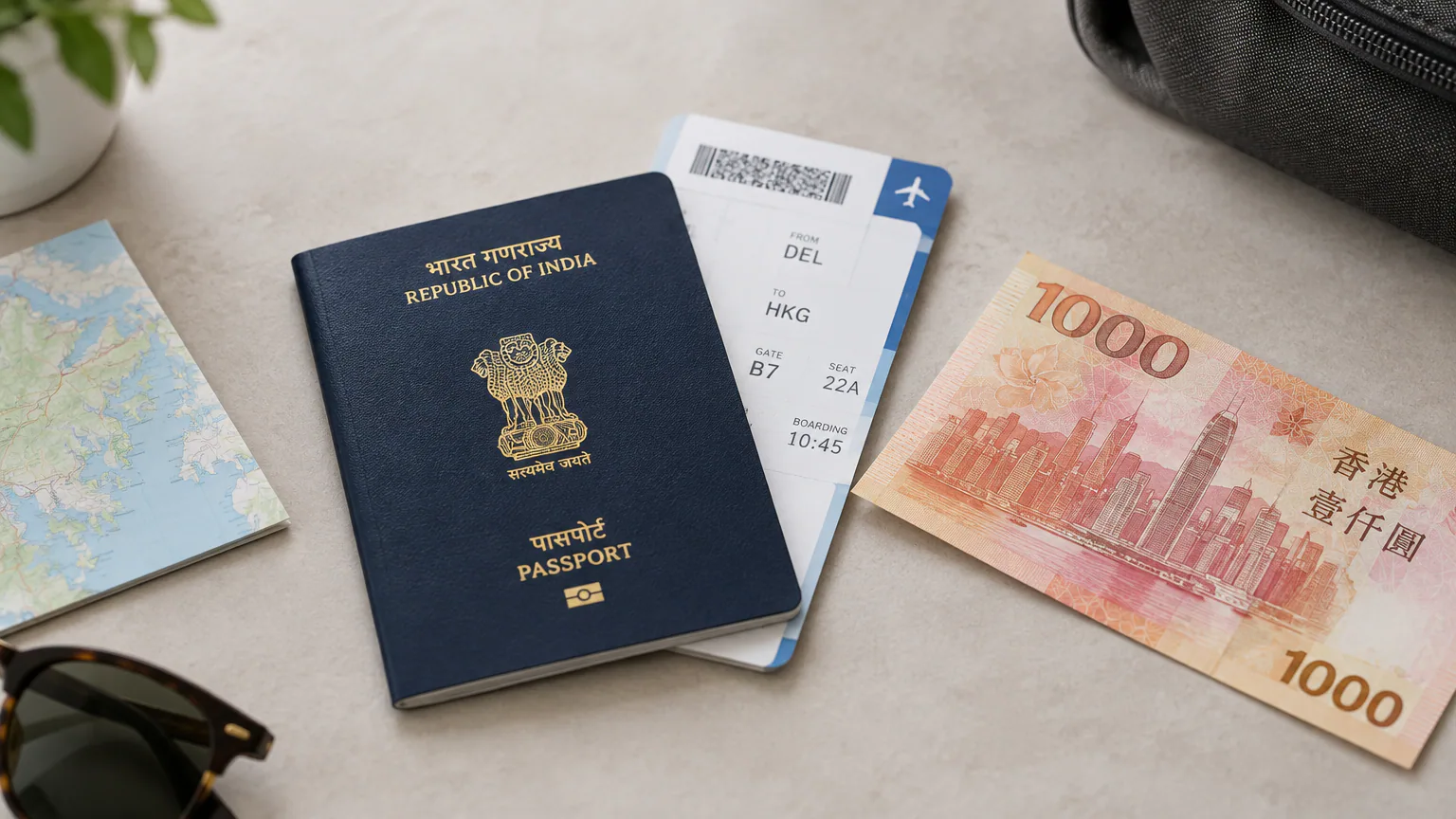 Travel journalHong Kong Visa for Indians 2026: Pre-arrival Registration (PAR) Complete Guide
Most Indian ordinary passport holders do not need a traditional visa to visit Hong Kong for short stays — they need a free online Pre-arrival Registration (PAR) completed before departure.…
Read the guide
A little inspiration.
A holiday made yours.
Share your dates and departure city — a travel expert replies with ideas within 24 hours.
Plan my holidayLet’s make it personal.
Tell us about your dates, departure city and the moments you’d love to include.
What happens next?
Discuss your preferences, review a tailored proposal and refine the details before you decide.