
Dubai Travel Guide for Indians: Complete 2026 Planning Resource
Dubai, a city-state within the United Arab Emirates, is one of the most visited international destinations for Indian travellers. Direct flights from major Indian cities take roughly three to four hours, visa options are clearly defined, and the city offers a wide range of experiences — from the world's tallest building and vast desert landscapes to traditional souks and family theme parks. This guide covers everything an Indian traveller needs to plan a 2026 trip: when to go, how much to budget, how to get around using Dubai's nol-card public transport network, what to eat, and what to expect at the border.
- No booking feeRequesting a quote is free with no obligation.
- Expert-planned itineraryRoutes and stays shaped around your dates and pace.
- Reply within 24 hoursA travel expert gets back to you with ideas.
- Refine before you decideAdjust the plan until it feels right for you.
What Is Dubai?
Dubai is one of the seven emirates that make up the United Arab Emirates (UAE). It is the UAE's most populous city and its commercial and tourism hub. The city is known globally for record-breaking architecture — most notably the 828-metre Burj Khalifa, the world's tallest building — alongside luxury retail, desert landscapes, and a rapidly expanding cultural scene.
Dubai sits on the Arabian Gulf coast and is divided by Dubai Creek, a natural saltwater inlet that historically separated the trading districts of Deira and Bur Dubai. Today the city extends far beyond the creek, encompassing modern districts such as Downtown Dubai, Dubai Marina, Business Bay, and the artificial Palm Jumeirah island.
For Indian travellers, Dubai combines short flight times, a large and welcoming Indian expatriate community, familiar food options, and a well-organised tourism infrastructure — making it one of the most accessible international destinations available.
Why Dubai Is a Top Choice for Indian Travellers
Several practical factors make Dubai particularly appealing from India. Flight duration from Mumbai, Delhi, Bengaluru, Chennai, Hyderabad, and Kochi is typically three to four hours, comparable to a domestic long-haul journey. Airlines including Emirates, Flydubai, Air India, IndiGo, and SpiceJet operate frequent direct services to Dubai International Airport (DXB), keeping fares competitive.
The city's large Indian expatriate population — one of the largest national communities in the UAE — means Indian cuisine, Hindi-language signage, and familiar cultural references are easy to find. Vegetarian menus are widely available, and halal food is the standard across the city.
Dubai also offers a broad spectrum of experiences within a compact geography: world-class shopping, desert safaris, heritage neighbourhoods, waterparks, and fine dining are all reachable within the same trip. The city's low crime rate and well-maintained public infrastructure add to its appeal for families and first-time international travellers alike.
Visa and Entry Requirements for Indian Citizens
Indian citizens do not receive automatic visa-free access to the UAE. However, two pathways exist depending on the travel documents you hold.
Visa on arrival (up to 14 days): Indian citizens holding an ordinary passport valid for at least six months, and who also hold a valid US visit visa or US permanent residence card, or a qualifying UK or EU residence visa valid for at least six months, may be eligible for a UAE visa on arrival. This allows a stay of up to 14 days. Confirm current eligibility on the official UAE government portal (u.ae) before travel, as conditions can change.
Tourist visa in advance: Indian citizens who do not qualify for a visa on arrival must obtain a tourist visa before departure. Tourist visas can be arranged through UAE-based airlines, authorised travel agents, or the UAE's official immigration channels.
Passport validity: The UAE government advises that passports must be valid for at least six months from the date of entry. Always verify the latest requirements on the official UAE government portal before booking.
Best Time to Visit Dubai from India
The most comfortable period to visit Dubai is from November to March, when daytime temperatures are mild and outdoor activities — beach visits, desert safaris, sightseeing on foot — are genuinely enjoyable. This is also peak tourist season, so flights and hotels book up quickly and prices are higher; advance booking is strongly recommended.
April and October are transitional months. Temperatures are warmer than winter but outdoor exploration remains feasible, and crowds and prices are somewhat lower than the November–March peak.
From May to September, temperatures regularly exceed 40°C with high humidity, particularly in July and August. Outdoor activities become impractical during the day. However, indoor attractions — The Dubai Mall, IMG Worlds of Adventure, Dubai Aquarium, and air-conditioned souks — remain fully operational, and hotels often offer lower rates during this period.
Ramadan timing shifts each year. During Ramadan, eating, drinking, and smoking in public during daylight hours are prohibited. Many restaurants open only after sunset. The atmosphere is unique and culturally interesting, but travellers should plan accordingly.
| Month | Typical Conditions | Outdoor Suitability | Crowd & Price Level | Verdict for Indian Travellers |
|---|---|---|---|---|
| January | Cool, 20–25°C | Excellent | High season — book early | Best month overall |
| February | Cool, 20–26°C | Excellent | High season — book early | Ideal; popular with families |
| March | Mild, 23–29°C | Very good | Moderate–high | Good; slightly fewer crowds than Jan–Feb |
| April | Warm, 27–34°C | Good in mornings | Moderate | Pleasant; good value window |
| May | Hot, 33–39°C | Limited | Low | Manageable indoors; budget-friendly |
| June | Very hot, 36–42°C | Poor | Low | Indoor-only; extreme heat |
| July | Very hot, 37–43°C | Poor | Low | Hottest month; indoor focus |
| August | Very hot, 37–43°C | Poor | Low | Hottest and most humid; indoor focus |
| September | Hot, 34–40°C | Poor–limited | Low | Still very warm; improving late month |
| October | Warm, 28–35°C | Good in evenings | Moderate | Transition month; reasonable value |
| November | Mild, 23–30°C | Very good | Rising — book ahead | Excellent; start of peak season |
| December | Cool, 19–26°C | Excellent | High season — book early | Peak season; festive atmosphere |
Top 10 Places to Visit in Dubai
Dubai's major attractions span modern engineering landmarks, heritage districts, natural desert landscapes, and large-scale entertainment venues. The ten places below represent the most visited and most distinctive experiences the city offers.
1. Burj Khalifa
At 828 metres (2,717 feet), the Burj Khalifa is the world's tallest building and Dubai's most recognisable landmark. Observation decks on the 124th, 125th, and 148th floors offer panoramic views across the city, the Arabian Gulf, and the desert beyond. Tickets for the upper observation deck (At the Top SKY, level 148) are priced higher than the lower decks and should be booked in advance, especially during peak season.
2. The Dubai Mall
Adjacent to the Burj Khalifa, The Dubai Mall is one of the world's largest shopping centres by total area, with over 1,200 retail outlets. Beyond shopping, it contains the Dubai Aquarium and Underwater Zoo, an Olympic-sized ice rink, a VR Park, and a dedicated children's entertainment zone. The mall is also the primary viewing point for the Dubai Fountain shows on Burj Khalifa Lake.
3. The Dubai Fountain
The Dubai Fountain on Burj Khalifa Lake is the world's largest choreographed fountain system, shooting water up to 150 metres (500 feet) into the air. Shows are synchronised with music and lights and take place every 30 minutes during evening hours. Viewing from the lakeside promenade is free; paid boardwalk and boat experiences offer closer vantage points.
4. Palm Jumeirah
Palm Jumeirah is an artificial palm-shaped archipelago extending into the Arabian Gulf. It is home to luxury hotels and resorts, including Atlantis, The Palm, which houses the Aquaventure Waterpark and The Lost Chambers Aquarium. The Palm Monorail connects the trunk to the Atlantis hotel and provides scenic views of the island. The Palm also has a public beach accessible to visitors.
5. Dubai Marina
Dubai Marina is a purpose-built waterfront district lined with high-rise towers, luxury yachts, and a 7-kilometre pedestrian promenade. Visitors can take dhow cruises along the marina, dine at waterfront restaurants, or walk to the adjacent Jumeirah Beach Residence (JBR) and The Beach outdoor mall. The area is well connected by the Dubai Metro Red Line and the Dubai Tram.
6. Jumeirah Mosque
Jumeirah Mosque is one of Dubai's most photographed buildings and one of the few mosques in the city open to non-Muslim visitors. Built in the medieval Fatimid architectural tradition, it offers guided tours designed to promote cultural understanding. Modest dress is required; abayas and kanduras are available to borrow at the entrance.
7. Al Fahidi Historical Neighbourhood
Al Fahidi (also known as Al Bastakiya) is one of Dubai's oldest surviving heritage districts, dating to the late 19th century. Its narrow lanes, wind-tower architecture, and traditional courtyard houses offer a sharp contrast to the city's modern skyline. The neighbourhood contains the Dubai Museum — housed in Al Fahidi Fort, the city's oldest building — alongside art galleries, cultural cafes, and the Sheikh Mohammed Centre for Cultural Understanding.
8. Dubai Desert Conservation Reserve
The Dubai Desert Conservation Reserve is the UAE's first national park and covers approximately 225 square kilometres of protected desert. It is the setting for many premium desert safari experiences, including dune bashing, camel rides, falconry displays, and overnight camps. The reserve is home to indigenous wildlife including the Arabian oryx, sand gazelles, and various bird species.
9. Dubai Creek
Dubai Creek is the natural saltwater inlet that historically divided the city into Deira (north) and Bur Dubai (south) and was the foundation of Dubai's pearl diving and trading economy. An abra (traditional wooden boat) ride across the creek costs a few dirhams and remains one of the most authentic and affordable experiences in the city. The Gold Souk and Spice Souk are both within walking distance of the Deira creek bank. The nol card can be used on the Dubai Abra service.
10. Global Village
Global Village is a seasonal multicultural festival park that typically operates from October to April. Country pavilions offer shopping, street food, and cultural performances from dozens of nations. It is a popular family destination and particularly well suited to Indian visitors, given the strong South Asian representation among both vendors and performers. Check the official Global Village website for current season dates and ticket prices before visiting.
How to Reach Dubai from India
All practical travel from India to Dubai is by air. Dubai International Airport (IATA: DXB) is one of the world's busiest airports by international passenger volume and is served by a large number of carriers from Indian cities.
Direct flights operate from Mumbai (BOM), Delhi (DEL), Bengaluru (BLR), Chennai (MAA), Hyderabad (HYD), Kochi (COK), Ahmedabad (AMD), Kolkata (CCU), and several other Indian cities. Flight duration is approximately 3 hours from Mumbai and Kochi, and 3.5 to 4 hours from Delhi, Bengaluru, and Hyderabad.
Airlines operating direct India–Dubai routes include Emirates, Flydubai, Air India, IndiGo, SpiceJet, and Air Arabia. Booking several weeks in advance — and particularly early for the November–March peak season — generally yields better fares. There are no practical rail, road, or sea routes between India and Dubai.
Getting Around Dubai: Public Transport and Taxis
Dubai's public transport network is managed by the Roads and Transport Authority (RTA) and covers the Metro, buses, tram, and marine transport. The nol card is the single payment method across all RTA modes — cash is not accepted on any RTA public transport service. Visitors should obtain a nol card on arrival; they are available at Metro stations and RTA outlets.
The Dubai Metro operates on two lines. The Red Line runs from Rashidiya in the east through the city centre, Downtown Dubai, Dubai Marina, and out to the Expo City area. The Green Line connects Etisalat station in the east through Al Fahidi, the Gold Souk area, and Union station. The two lines intersect at Union and BurJuman stations.
The Dubai Tram network is 10.6 kilometres long with 11 stations, running along Al Sufouh Road through Dubai Marina and JBR. It connects to the Metro Red Line at DAMAC Properties station and to the Palm Monorail at Palm Jumeirah station.
Fares are zone-based. Dubai's transport system is divided into seven fare zones. Using a nol Red Ticket, the standard fare is AED 4 within one zone, AED 6 across two adjacent zones, and AED 8.50 for travel across more than two zones. Gold-class fares are higher. Children aged five and below travel free. The nol card also works on marine transport including the Dubai Ferry, Dubai Water Taxi, and Dubai Abra.
Taxis are metered, widely available, and can be hailed on the street or booked via the RTA app. Ride-hailing apps Uber and Careem both operate in Dubai. For route planning across all public transport modes, the RTA's S'hail app provides journey planning functionality.
| Transport Mode | Key Routes / Coverage | Payment | Notes |
|---|---|---|---|
| Metro (Red Line) | Airport — City Centre — Marina — Expo City | nol card | No cash accepted; Gold class available |
| Metro (Green Line) | Al Fahidi — Gold Souk — Union — Airport Terminal 1 | nol card | Connects to Red Line at Union and BurJuman |
| Dubai Tram | Al Sufouh Road — Dubai Marina — JBR (11 stations, 10.6 km) | nol card | Connects to Metro Red Line and Palm Monorail |
| Bus | Citywide network | nol card | No cash; useful for areas not on Metro |
| Dubai Abra | Dubai Creek crossings (Deira ↔ Bur Dubai) | nol card | Traditional wooden boat; scenic and affordable |
| Dubai Ferry / Water Taxi | Marina, JBR, Dubai Creek, Festival City | nol card | Scenic alternative to road transport |
| Taxi | Citywide, metered | Cash or card | Widely available; RTA app booking available |
| Uber / Careem | Citywide | App payment | Convenient; price shown upfront |
Estimated Trip Cost from India (2026 Planning Guide)
The figures below are indicative planning estimates for a 5-day, 4-night trip from India, based on per-person costs assuming double-occupancy sharing. They are not Tripstor package prices and do not represent guaranteed offers. Actual costs will vary based on departure city, travel dates, booking lead time, and personal spending habits. Visa costs, where applicable, are an additional expense not included in these estimates.
Flight costs are typically the largest single variable. Booking early and travelling outside the November–March peak season can reduce costs significantly across all categories.
| Cost Category | Budget (INR per person) | Mid-Range (INR per person) | Luxury (INR per person) |
|---|---|---|---|
| Return flights from India | 15,000 – 20,000 | 20,000 – 25,000 | 25,000 – 30,000+ |
| Accommodation (4 nights, sharing) | 12,000 – 20,000 | 20,000 – 40,000 | 40,000 – 80,000+ |
| Meals (5 days) | 5,000 – 8,000 | 8,000 – 15,000 | 15,000 – 30,000+ |
| Activities and sightseeing | 7,000 – 12,000 | 12,000 – 25,000 | 25,000 – 50,000+ |
| Local transport | 2,000 – 4,000 | 3,000 – 6,000 | 5,000 – 10,000+ |
| Total estimate (excluding visa) | 41,000 – 64,000 | 63,000 – 111,000 | 1,10,000 – 2,00,000+ |
Where to Stay in Dubai
Dubai offers accommodation across every price point, from budget guesthouses in Deira to ultra-luxury resorts on Palm Jumeirah. Location matters: staying near a Metro station significantly reduces local transport costs and travel time. The indicative nightly rates below are for a standard double room and will vary considerably by season and booking lead time. They are not guaranteed prices.
Budget-Friendly Areas and Hotels
Deira and Bur Dubai offer the most affordable hotel options and are well connected by Metro (Green Line) and bus. These areas are close to the Gold Souk, Spice Souk, Dubai Museum, and Dubai Creek — making them a good base for travellers interested in heritage and traditional markets.
Example properties in this category include Rove Downtown (near The Dubai Mall; indicative rate approximately INR 6,000–9,000 per night), Citymax Hotel Bur Dubai (central Bur Dubai; indicative rate approximately INR 4,500–7,500 per night), and Premier Inn Dubai International Airport (convenient for early departures; indicative rate approximately INR 5,500–8,500 per night). These rates are illustrative only.
Mid-Range Hotels
Business Bay, Al Barsha, and parts of Jumeirah offer a good balance of comfort, amenities, and price. Al Barsha is particularly convenient, being close to the Mall of the Emirates and on the Metro Red Line.
Example properties include Novotel Dubai Al Barsha (near Mall of the Emirates; indicative rate approximately INR 9,000–15,000 per night), Roda Al Murooj Downtown (near The Dubai Mall and Burj Khalifa; indicative rate approximately INR 10,000–18,000 per night), and Hyatt Place Dubai Jumeirah (short drive from Jumeirah Beach; indicative rate approximately INR 8,500–14,000 per night). These rates are illustrative only.
Luxury Hotels and Resorts
Palm Jumeirah, Downtown Dubai, and Jumeirah Beach Residence (JBR) are the primary luxury hotel zones. Staying in these areas places guests close to the city's most iconic experiences.
Example properties include Atlantis, The Palm (Palm Jumeirah; includes access to Aquaventure Waterpark; indicative rate approximately INR 25,000–50,000+ per night), Address Downtown (overlooking the Burj Khalifa and Dubai Fountain; indicative rate approximately INR 20,000–40,000+ per night), and Jumeirah Al Qasr (part of the Madinat Jumeirah complex with private beach access; indicative rate approximately INR 30,000–60,000+ per night). These rates are illustrative only.
Food and Dining in Dubai for Indian Travellers
Dubai's food scene is genuinely diverse, reflecting its multinational population. Emirati cuisine exists alongside Lebanese, Egyptian, Pakistani, Indian, and a full range of international options. Halal food is the standard across the city. Vegetarian options are widely available, particularly in restaurants catering to the large South Asian community.
Indian travellers will find dedicated Indian restaurants — ranging from casual dhabas to fine-dining establishments — in virtually every district. Many international restaurants also clearly label vegetarian dishes on their menus. If in doubt about ingredients or preparation, ask staff directly.
Must-Try Dishes in Dubai
- Shawarma — Thinly sliced marinated chicken or lamb wrapped in flatbread with vegetables and garlic sauce. Widely available from street-level counters and casual restaurants; one of the most popular quick meals in the city.
- Machboos — A fragrant spiced rice dish cooked with chicken, lamb, or fish, similar in concept to biryani. Considered a staple of Emirati home cooking.
- Al Harees — Slow-cooked wheat and meat (typically chicken or lamb) with a porridge-like consistency, seasoned with butter and spices. Traditionally served during Ramadan and celebrations.
- Manakish — A Levantine flatbread topped with za'atar (herb and spice blend), cheese, or minced meat. A common breakfast item available at bakeries throughout the city.
- Luqaimat — Deep-fried sweet dumplings drizzled with date syrup (dibbs) and sesame seeds. A popular Emirati dessert, often served alongside Arabic coffee (qahwa).
- Arabic coffee (Qahwa) — Lightly roasted coffee flavoured with cardamom and saffron, served in small handle-less cups. Offered as a gesture of hospitality in traditional settings and heritage cafes.
Restaurant Recommendations
The following restaurants are well-established and frequently recommended, but menus, hours, and locations should be verified directly before visiting.
- Ravi Restaurant (Satwa) — A long-standing Pakistani-Indian eatery known for affordable curries, kebabs, and bread. Popular with residents and visitors alike for decades.
- Al Fanar Restaurant and Cafe (Dubai Festival City) — Traditional Emirati cuisine in a setting designed to evoke old Dubai. A good introduction to local food culture.
- Gazebo (multiple locations) — A popular North Indian restaurant chain offering biryanis, kebabs, and curries with extensive vegetarian options.
- Operation: Falafel (JBR, The Beach) — Casual Middle Eastern street food including falafel wraps, shawarma, and manakish in an outdoor setting.
- Zuma (DIFC) — Contemporary Japanese cuisine in a high-end setting. Advance reservations are essential.
Practical Travel Tips for Indian Visitors
The following tips address the most common practical questions from Indian travellers planning a first or repeat visit to Dubai.
Currency and Payments
The official currency of the UAE is the UAE Dirham (AED). Indian Rupees are not accepted for transactions in Dubai. Currency exchange is available at Dubai International Airport, banks, licensed exchange bureaux (including those in shopping malls), and ATMs throughout the city. Credit and debit cards (Visa, Mastercard) are accepted almost universally in hotels, restaurants, and shops. Carrying a modest amount of cash in AED is useful for smaller purchases, local markets, and abra rides.
SIM Cards and Mobile Connectivity
Two main mobile operators serve Dubai: du and Etisalat (now branded as e&). Tourist SIM cards with data and call allowances are available at Dubai International Airport arrivals and at operator stores throughout the city; a passport and valid visa are required for purchase. International roaming from Indian networks is available but can be expensive for extended use. eSIM options from international providers offer a convenient alternative for travellers with compatible devices.
Safety and Local Laws
Dubai has a very low crime rate and is widely regarded as one of the safer cities for tourists globally. Standard travel precautions apply — keep valuables secure and be aware of your surroundings in crowded areas.
Local laws are strictly enforced and differ significantly from Indian norms in several areas. Key points for Indian travellers:
Dress modestly in public spaces, particularly in traditional areas, souks, and when visiting mosques. Swimwear is appropriate only at beaches and pools.
Public displays of affection are not acceptable under UAE law.
Alcohol is available only in licensed venues (hotels, certain restaurants, and licensed clubs). Drinking in public or being intoxicated in public is illegal.
During Ramadan, eating, drinking, and smoking in public during daylight fasting hours is prohibited for everyone, including non-Muslims.
Always ask permission before photographing individuals, particularly Emirati nationals.
Certain medications that are freely available in India may be controlled substances in the UAE. Check the UAE Ministry of Health's list of controlled medicines before travelling with prescription drugs.
Step-by-Step Trip Planning Checklist
- Check visa eligibility: Determine whether you qualify for a UAE visa on arrival (requires valid US visa/green card or UK/EU residence permit valid 6+ months) or need to apply for a tourist visa in advance. Verify on the official UAE government portal (u.ae).
- Confirm passport validity: Your passport must be valid for at least six months from your date of entry into the UAE.
- Book flights early: Direct flights from major Indian cities are available year-round. Book well in advance for November–March travel to secure better fares.
- Choose accommodation by location: Proximity to a Metro station reduces transport costs and time. Book early for peak season.
- Arrange currency: Exchange INR to AED before departure or on arrival. Carry some cash for markets and small purchases.
- Get a nol card on arrival: Purchase at any Metro station. Load sufficient credit for your stay. Cash is not accepted on any RTA public transport.
- Download the S'hail app: The RTA's journey planning app covers Metro, bus, tram, and marine routes.
- Consider travel insurance: Comprehensive cover for medical emergencies, trip cancellation, and lost luggage is advisable for international travel.
- Check Ramadan dates: If your trip overlaps with Ramadan, plan dining and outdoor activities around fasting hours.
- Verify attraction tickets: Popular experiences such as the Burj Khalifa observation deck and Aquaventure Waterpark benefit from advance online booking, especially in peak season.
Dubai vs Singapore: Quick Comparison for Indian Travellers
Both Dubai and Singapore are popular short-haul international destinations from India with broadly comparable flight times (3–5 hours from most Indian cities). The table below highlights the key differences to help travellers decide which destination better suits their priorities.
| Factor | Dubai (UAE) | Singapore |
|---|---|---|
| Flight time from India | ~3–4 hours from Mumbai/Kochi; ~3.5–4 hrs from Delhi | ~5–6 hours from most Indian cities |
| Climate | Arid desert; very hot summers, mild winters | Tropical; warm and humid year-round |
| Best season | November to March | February to April (drier months) |
| Landscape | Desert, Arabian Gulf coast, modern skyline | Urban greenery, harbour, tropical parks |
| Key draw | Scale, luxury, desert experiences, architecture | Compactness, efficiency, nature-urban blend |
| Visa for Indians | Visa on arrival (with qualifying documents) or advance tourist visa | Visa on arrival for Indian passport holders (30 days) |
| Currency | UAE Dirham (AED) | Singapore Dollar (SGD) |
| Indian food availability | Extensive; large Indian expat community | Good; significant Indian community in Little India |
| Public transport | Metro, bus, tram, marine (nol card) | MRT, bus, LRT (EZ-Link card) |
Good questions. Clearer plans.
What is the best duration for a Dubai trip from India?
Four to seven days is the most practical duration for Indian travellers. A 4-day trip covers the main landmarks — Burj Khalifa, The Dubai Mall, Dubai Creek, and a desert safari. Five to seven days allows for Palm Jumeirah, Dubai Marina, heritage districts, and a day trip to another emirate such as Abu Dhabi or Sharjah without feeling rushed.
What is the approximate cost of a 5-day Dubai trip from India in 2026?
Based on indicative planning estimates (not guaranteed prices), a 5-day, 4-night trip per person on double-occupancy sharing costs roughly INR 41,000–64,000 on a budget, INR 63,000–1,11,000 mid-range, or INR 1,10,000–2,00,000+ for luxury. These figures cover return flights, accommodation, meals, activities, and local transport, but exclude visa costs. Actual costs vary by departure city, travel dates, and booking lead time.
Which months are best to visit Dubai from India?
November to March is the best period. Temperatures are mild (roughly 19–30°C), outdoor activities are comfortable, and the full range of attractions is accessible. January and February are the most popular months. April and October are good shoulder-season options with lower crowds and prices. June to August is extremely hot (regularly above 40°C) and best suited to indoor attractions only.
Do Indian citizens need a visa to visit Dubai?
Yes. Indian citizens are not automatically visa-free for the UAE. Those holding a valid US visit visa or permanent residence card, or a qualifying UK or EU residence visa (all valid for at least six months), may be eligible for a UAE visa on arrival for up to 14 days. All other Indian passport holders must obtain a tourist visa in advance. Passports must be valid for at least six months from the date of entry. Always verify current requirements on the official UAE government portal (u.ae) before booking.
How do I get around Dubai using public transport?
Dubai's public transport is managed by the RTA and includes the Metro (Red and Green lines), buses, the Dubai Tram, and marine services including the Dubai Abra. All services require a nol card — cash is not accepted on any RTA mode. Fares are zone-based: AED 4 within one zone, AED 6 for two adjacent zones, AED 8.50 for more than two zones (standard Red Ticket rates). Children aged five and below travel free. Taxis and ride-hailing apps (Uber, Careem) are also widely available. Use the RTA's S'hail app for journey planning.
Are there good vegetarian food options in Dubai for Indian travellers?
Yes. Dubai has extensive vegetarian options, driven largely by its large South Asian expatriate community. Dedicated Indian vegetarian restaurants are found across the city, and most international restaurants label vegetarian dishes clearly. Emirati and Middle Eastern cuisines also include many naturally vegetarian dishes such as falafel, hummus, and manakish with za'atar. Halal food is the standard across Dubai.
Is Dubai safe for Indian tourists?
Dubai has a very low crime rate and is generally considered one of the safer cities globally for tourists. Standard travel precautions apply. Importantly, local laws are strictly enforced: dress modestly in public, avoid public displays of affection, consume alcohol only in licensed venues, and observe Ramadan restrictions on eating and drinking in public during daylight hours. Certain medications available in India may be controlled in the UAE — check before travelling with prescription drugs.
Can I use Indian Rupees in Dubai?
No. The official currency is the UAE Dirham (AED). Indian Rupees are not accepted for transactions. Exchange INR to AED at the airport, banks, licensed exchange bureaux, or ATMs in Dubai. Credit and debit cards are widely accepted, but carrying some AED cash is useful for markets, abra rides, and smaller purchases.
What should I pack for a Dubai trip?
For November–March travel, pack light layers — daytime temperatures are mild but indoor air conditioning can be cold. For summer travel, lightweight breathable clothing is essential. Always include modest attire (covered shoulders and knees) for visiting mosques and traditional areas. Sunscreen, sunglasses, and a hat are important year-round. Comfortable walking shoes are recommended for sightseeing. A small day bag is useful for carrying a water bottle, as staying hydrated is important in Dubai's dry climate.
Is Dubai a good destination for families with children?
Yes. Dubai has a wide range of family-friendly attractions. IMG Worlds of Adventure is one of the world's largest indoor theme parks. Aquaventure Waterpark on Palm Jumeirah is popular with children of all ages. The Dubai Aquarium and Underwater Zoo inside The Dubai Mall offers an educational experience. Global Village (October–April) is well suited to families. Many hotels have dedicated children's pools, kids' clubs, and family room configurations. Children aged five and below travel free on all RTA public transport.
Keep exploring
A little inspiration for your journey
Practical reads for this destination — timing, places, costs and tips before you plan.
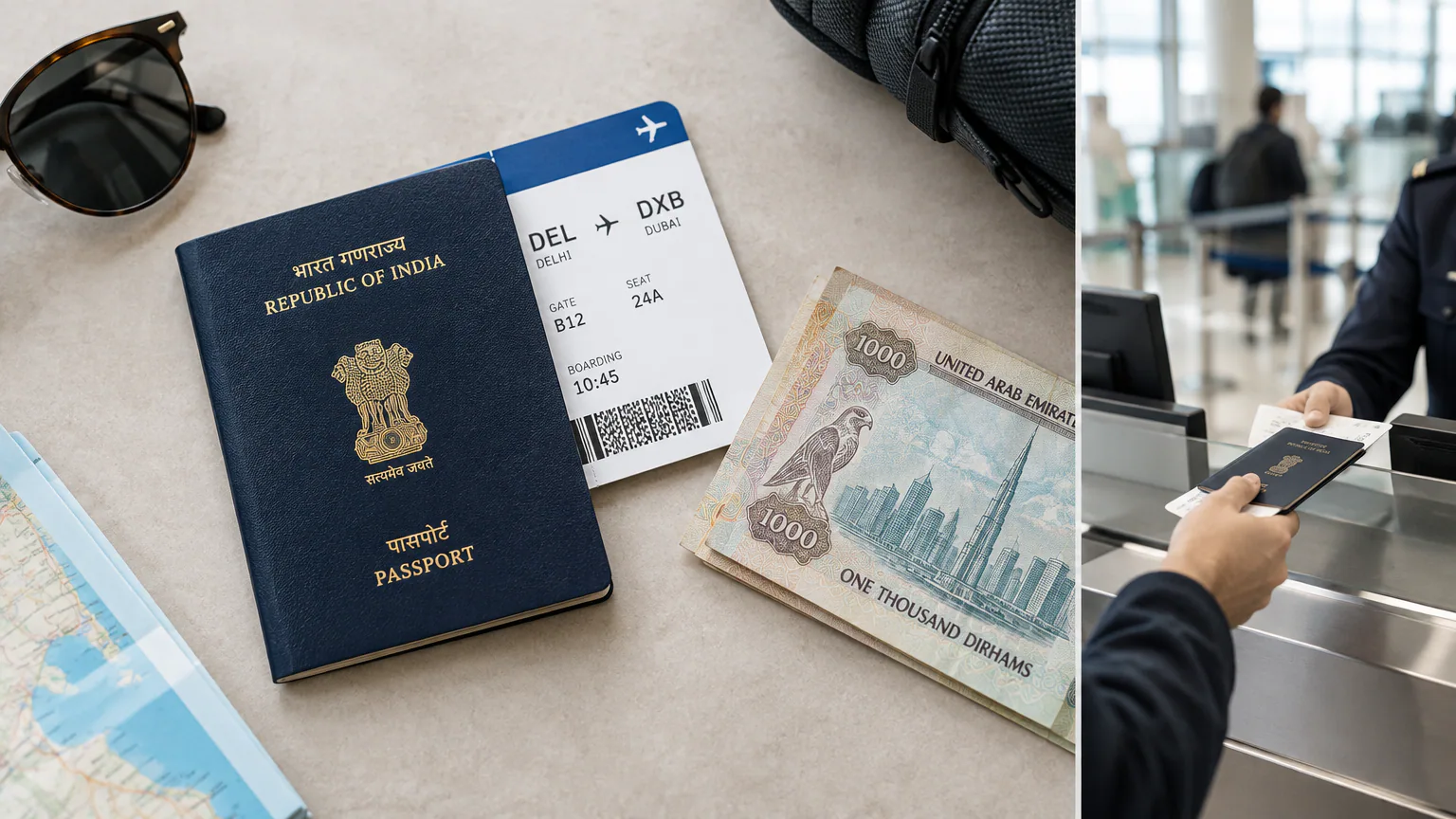 Travel journalDubai / UAE Visa for Indians in 2026: Complete Guide to Types, Fees & Application
Most Indian citizens need a visa to enter Dubai and the UAE. For 2026 travel, the standard route is a tourist visa applied for online before departure — available for…
Read the guide- Travel journalDubai Travel Guide for Indians: Complete 2026 Planning Resource
Dubai is one of the most popular international destinations for Indian travellers — and for good reason. The city is roughly 3 to 4 hours by air from most major…
Read the guide
A little inspiration.
A holiday made yours.
Share your dates and departure city — a travel expert replies with ideas within 24 hours.
Plan my holidayLet’s make it personal.
Tell us about your dates, departure city and the moments you’d love to include.
What happens next?
Discuss your preferences, review a tailored proposal and refine the details before you decide.