
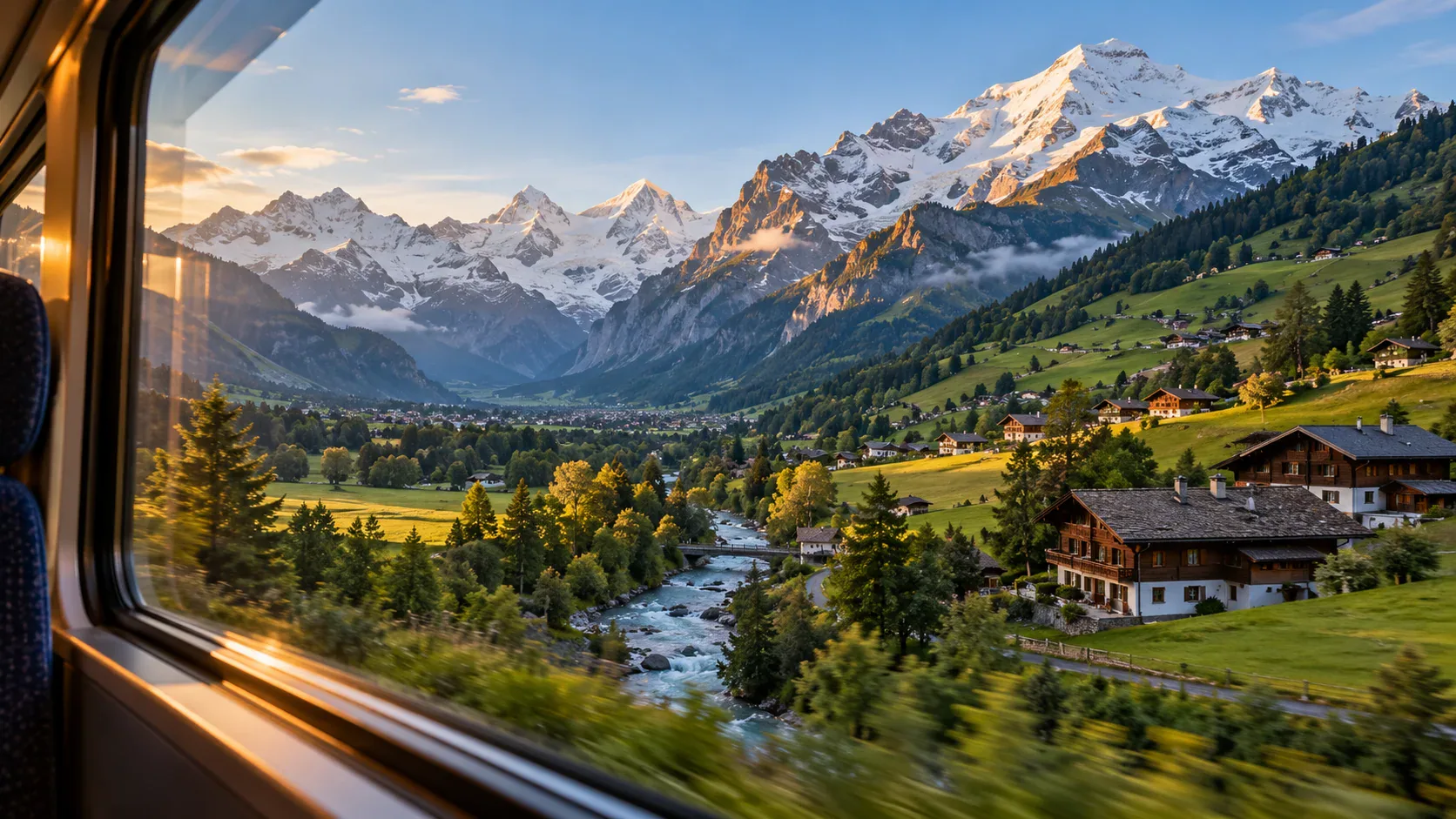
What Europe circuits travel tips india really means
Europe circuits travel tips india means the practical decisions that shape a multi-country trip: how many countries to combine, which rail or flight legs to book, how much cash to carry, and how to handle Schengen paperwork. Get these right and a three-country circuit runs smoothly; get them wrong and transit days eat the holiday.
A Europe circuit is not one destination but a sequence of countries linked by train, flight or coach. The biggest variables are the number of hotel changes, the balance between high-speed rail and short-haul flights, and the season you travel. France, Switzerland and Italy remain a strong first circuit because rail connections are efficient and the mix of cities, Alps and lakes suits Indian families and couples alike. Budget, standard, premium and luxury land-only tiers exist, so the circuit can be shaped around comfort level rather than fixed.
At a glance
Europe circuits, in brief
Essentials for a Europe circuit include a Schengen visa for Indian passport holders, euro or local currency cash, a European eSIM or local SIM, Type C or F plugs, and the 112 emergency number. Time differences range from about 3.5 to 5.5 hours behind India depending on the country and daylight saving.
Europe circuits.
Planned around you.
- Currency
- Euro (EUR) in most Schengen countries; Swiss franc (CHF) in Switzerland; local currencies elsewhereCards widely accepted; carry some cash for small vendors
- Language
- Local languages; English is common in hotels, stations and major attractionsLearn basic greetings for each country
- Plug type
- Type C and Type F, 230VBring a universal adapter and a small power strip
- SIM or eSIM
- European eSIM or local prepaid SIMBuy before departure or at the airport; roaming on Indian SIMs can be expensive
- Time difference
- About 3.5 to 5.5 hours behind India, varying by country and daylight savingExpect mild jet lag on arrival
- Emergency number
- 112 across the EUWorks from any phone, including mobiles without a local SIM
Before You Go to Europe circuits
Before you go, lock in the Schengen visa appointment, buy travel medical insurance, order a European eSIM, and carry a mix of euros and cards. The most common mistake is booking non-refundable flights before the visa is granted, or assuming a single visa covers a multi-country circuit without checking the main-destination rule.
Schengen visa
Apply through the consulate or authorised visa centre of the main destination or longest stay; provide passport, application, photograph, travel medical insurance, accommodation, itinerary, financial evidence, employment documents and biometrics.
Where to get it: Relevant European consulate or authorised visa centreCommon mistake: Booking non-refundable flights before the visa is granted, or applying through the wrong country.
Travel medical insurance
Schengen visa requires insurance covering at least €30,000 for medical emergencies and repatriation.
Where to get it: Indian insurers offering Schengen-compliant policiesCommon mistake: Buying a basic domestic policy that does not meet Schengen minimums.
Forex and cards
Carry a mix of euros and a no-foreign-transaction-fee card; inform your bank of travel dates.
Where to get it: Banks, authorised forex dealers or multi-currency cardsCommon mistake: Relying on a single card that gets blocked for suspected fraud.
European eSIM or local SIM
Order an eSIM before departure or buy a local prepaid SIM at the airport; check data validity across countries.
Where to get it: Telecom providers or eSIM marketplacesCommon mistake: Assuming an Indian roaming pack covers all countries cheaply.
Rail passes and attraction tickets
Book high-speed rail and timed-entry attractions early, especially in July and August.
Where to get it: Rail operator websites or authorised agentsCommon mistake: Leaving popular museums and trains to the last minute in peak season.
Offline maps and translation apps
Download city maps, metro routes and a translation app before you fly.
Where to get it: App storesCommon mistake: Depending on live data in areas with weak signal.
Start with the visa because appointment slots fill quickly in peak months. Apply through the consulate or authorised visa centre of the country where you will spend the most nights, or the first country if stays are equal. Keep photocopies of your passport, visa, insurance and itinerary separate from the originals. Book rail passes or point-to-point tickets early for high-speed routes, and reserve popular attractions such as the Eiffel Tower or Vatican Museums in advance. Load offline maps and translation apps before you fly.
Money and Payments in Europe circuits
Money and payments on a Europe circuit work best with a mix of cards and cash: cards for hotels, rail and large restaurants, and euros or local currency for markets, small cafes and tips. ATMs are widely available, but UPI is not accepted in Europe, so do not rely on Indian payment apps.
- Carry a card-and-cash mix
Cards work for hotels, rail tickets and most restaurants; keep €50–100 in small notes for markets, cafes and tips.
Money - Use bank ATMs, not exchange kiosks
Bank ATMs usually give better rates than airport or station kiosks; decline dynamic currency conversion and choose local currency.
Money - UPI is not accepted in Europe
Indian UPI apps do not work in European shops; rely on cards, cash or a multi-currency card.
Money - Choose a multi-country eSIM
A European eSIM or local prepaid SIM covers most countries; check if Switzerland is included, as it is not in the EU.
Connectivity - Avoid open Wi-Fi for banking
Use hotel or eSIM data for banking and payments; public Wi-Fi in cafes and stations is not secure for financial logins.
Connectivity
Use bank ATMs rather than standalone currency exchange kiosks at stations, which often have poor rates. Notify your bank before travel and carry a backup card. For connectivity, a European eSIM or local prepaid SIM gives data across multiple countries; check whether the plan includes Switzerland, which is not in the EU. Public Wi-Fi is common in hotels and cafes but avoid logging into banking apps on open networks. Keep small notes for toilets, luggage lockers and tips.
Cultural Tips for Europe circuits
Cultural tips for Europe circuits start with dress codes at religious sites, quiet voices on public transport, and tipping that is modest by Indian standards. Cover shoulders and knees at churches and cathedrals, carry a scarf, and keep phone conversations short in trains and museums.
- Dress for religious sites
Cover shoulders and knees at churches, cathedrals and monasteries; carry a light scarf or shawl.
Etiquette - Greet before you ask
Start with bonjour, buongiorno, hola or guten Tag before questions in shops and cafes.
Etiquette - Tip modestly
Tipping is not mandatory; rounding up or leaving 5–10% in restaurants is common.
Etiquette - Keep noise low on transport
Speak softly on trains, metros and in museums; take calls away from quiet carriages.
Etiquette - Stand right on escalators
On escalators, stand on the right and leave the left side for people walking.
Etiquette
In France, Italy and Spain, a polite bonjour, buongiorno or hola before a request goes a long way. Tipping is not mandatory; rounding up or leaving 5–10% in restaurants is common. At religious sites such as St Peter's Basilica or Notre-Dame, dress modestly and remove hats. On escalators, stand right and walk left. In Switzerland, punctuality matters for trains and tours. Photography rules vary inside museums and churches; look for signs or ask staff.
Food tips for Europe circuits
Food tips for Europe circuits focus on balancing local dishes with vegetarian and Indian options. France, Switzerland and Italy offer strong vegetarian choices, and Indian restaurants are common in major cities, but pure-veg travellers should learn a few phrases and check menus for meat stock or lard.
- Switzerland
Swiss fondue and rösti
Cheese fondue and potato rösti are classic Swiss dishes, widely available in Alpine towns and cities.
Best forVegetarian-friendly local dining
Ask for a vegetarian fondue without meat broth if needed.
- Italy
Italian pasta and pizza
Margherita pizza, pasta primavera and risotto are common vegetarian options across Italy.
Best forVegetarian travellers
Confirm no meat stock or lard is used in sauces.
- France
French pastries and crepes
Croissants, crepes and quiches are widely available for breakfast and light meals.
Best forBreakfast and snacks
Ask for vegetarian crepes without ham.
- Paris, Rome, Milan, Zurich
Indian restaurants in major cities
Indian restaurants are common in major European cities, often near main stations or university districts.
Best forFamiliar flavours and vegetarian thalis
Check opening hours; many close between lunch and dinner.
Try regional staples: fondue and rösti in Switzerland, pasta and pizza in Italy, and pastries and crepes in France. Vegetarian travellers can rely on margherita pizza, pasta primavera, cheese plates and salads, but confirm no meat stock is used. Indian restaurants are widely available in Paris, Rome, Milan and Zurich; look for areas near main stations or university districts. Supermarkets are useful for breakfast and train snacks. Tap water is generally safe to drink in most Western European countries, but bottled water is easy to find.
Safety in Europe circuits for Indian Tourists
Safety in Europe circuits for Indian tourists centres on pickpocketing in tourist areas, train and metro scams, and weather-related health risks. Keep bags zipped and in front, avoid unlicensed taxis, and carry a basic medical kit; no destination is risk-free, so stay alert in crowds.
- Pickpocketing in crowded metros and tourist landmarks
How to avoid itUse a zipped crossbody bag, keep it in front, and avoid displaying phones or jewellery in crowds.
- Unlicensed taxis at airports and stations
How to avoid itUse official taxi ranks, ride-hailing apps or pre-booked transfers; agree on the fare or ensure the meter is running.
- Distraction scams on trains
How to avoid itKeep bags on your lap or between your feet, and be wary of strangers creating commotion near your luggage.
- Summer heatwaves
How to avoid itCarry water, plan indoor breaks during midday, and watch for signs of heat exhaustion in older travellers.
- Icy pavements in winter
How to avoid itWear shoes with good grip and take extra care on slopes and steps in Alpine towns.
Pickpockets target crowded metros, stations and landmarks in Paris, Rome and Barcelona. Use a crossbody bag with zips, keep phones in front pockets, and avoid displaying expensive jewellery. Common scams include fake charity petition signers, unlicensed airport taxis and distraction techniques on trains. In summer, heatwaves can affect older travellers; carry water and plan indoor breaks. In winter, icy pavements in Alpine towns increase fall risk. Travel medical insurance should cover hospital care and repatriation.
Packing by season for Europe circuits
Packing by season for Europe circuits depends on whether you travel in spring, summer, autumn or winter. Layers work year-round, but summer needs light breathable clothing and sun protection, while winter requires insulated jackets, thermals and waterproof footwear for Alpine and northern routes.
Spring and autumn layers
Pack a waterproof jacket, light sweaters and comfortable walking shoes for changeable weather.
Where to get it: Any clothing retailerCommon mistake: Packing only summer clothes for April or October trips.
Summer sun protection
Light cotton clothing, hat, sunglasses and sunscreen for hot days in southern Europe.
Where to get it: Any clothing or pharmacyCommon mistake: Underestimating midday heat in Rome or Seville.
Winter thermals and boots
Thermals, down jacket, gloves, scarf and waterproof boots for Alpine and northern routes.
Where to get it: Any clothing retailerCommon mistake: Wearing smooth-soled shoes on icy pavements.
Universal adapter and power strip
Type C and F plugs are standard; a small power strip helps charge multiple devices.
Where to get it: Electronics storeCommon mistake: Bringing only an Indian plug without an adapter.
Prescription medicines and doctor's note
Carry enough for the trip in original packaging with a doctor's note for controlled medicines.
Where to get it: Doctor or pharmacyCommon mistake: Packing medicines in unlabelled containers.
Scarf for religious sites
A light scarf or shawl covers shoulders and knees at churches and cathedrals.
Where to get it: Any clothing retailerCommon mistake: Arriving at St Peter's Basilica in sleeveless tops or shorts.
Spring and autumn are mild but changeable, so pack a waterproof jacket and layers. Summer can be hot in southern Europe, so light cotton, a hat and sunscreen are essential. Winter in Switzerland, Austria and northern Italy calls for thermals, a down jacket, gloves and waterproof boots. Carry a universal adapter, a small power strip, any prescription medicines with a doctor's note, and a scarf for religious sites. Keep valuables in a zipped bag and pack a foldable daypack for sightseeing.
Holiday ideas to start from
Reviewed itineraries for this destination — personalise with a specialist, never an instant booking.
Europe Europe Group Highlights 11 Nights: 2026 Group Tour Package
From₹2,05,000per adult, twin sharing, land only
From idea to itinerary, with a real person.
- Share your plan
Dates, departure city, travellers and the moments you’d love. It only takes a minute.
- Shape it with a specialist
A real person refines the route, stays and pace with you. Change anything.
- Review your quote
A clear, personalised quote with confirmed inclusions. No payment to enquire.
From our travel specialists
What our team sees when planning these trips, beyond what the guidebooks say.
Confirmed 11 Oct 2026
Travellers commonly wish they had planned a slower route rather than trying to cover many countries quickly. Reports involving parents especially recommend concentrating on one country or region so that long transfers do not dominate the holiday.
- Practical
Transport costs and planning can catch people out when they move frequently between countries, while food budgets vary substantially between cities and travel styles. Travellers’ budget discussions stress allocating separately for intercity transport, local transport and meals rather than assuming one low daily figure will work everywhere.
Before you go
Straight answers to help you plan — then personalise the trip with a specialist.
8 answered belowAsk a specialist anything about this trip — there’s no obligation.
Ask a specialistHow much does a Europe tour package cost from India?
Indicative land-only twin-sharing pricing is about INR 110,000 budget, INR 165,000 standard, INR 245,000 premium and INR 425,000 luxury per person, excluding international airfare and visa. These are planning ranges, not confirmed Tripstor offers, and vary by season, route and hotel category.
Which countries are best for a first Europe tour?
France, Switzerland and Italy are a strong first circuit because they combine iconic cities, Alpine scenery, art, food and efficient rail connections. This route suits Indian travellers who want a mix of city, mountain and lake experiences without too many hotel changes.
Do Indians need a visa for a Europe tour?
Yes. Indian passport holders generally require a Schengen visa for short visits to Schengen countries; apply through the country of main destination or longest stay. Provide passport, application, photograph, travel medical insurance, accommodation, itinerary, financial evidence, employment documents and biometrics.
How many days are enough for a Europe tour?
Seven to ten days suit a focused three-country circuit; fourteen days allow a slower route with additional regional depth. Indian travellers often prefer 10–14 days to manage jet lag and include rest days between city changes.
What is the best way to travel between European countries?
Use high-speed rail for connected Western and Central European routes, flights for longer or poorly connected sectors, and coaches when price is the priority. Rail is convenient for France, Switzerland, Italy, Germany and Benelux; flights help for longer hops.
Which month is cheapest to visit Europe?
January, February and November are commonly lower-demand months, except around Christmas, New Year, ski resorts and major festivals. Airfare and hotel rates tend to be lower, but some attractions have shorter hours and Alpine routes may be snow-affected.
Is Europe suitable for a family holiday from India?
Yes, particularly France, Switzerland, Italy and the Netherlands, provided the itinerary limits hotel changes and includes rest days. Rail travel, parks and lake towns work well for children, but long transit days and late dinners can be tiring.
What is included in a Europe tour package?
Packages commonly include hotels, breakfast, selected transfers, sightseeing and some intercity transport; airfare, visa, insurance, city taxes, meals and optional activities may be excluded. Always check the specific Tripstor package inclusions before booking.