
How Many Places Can You Cover?
France has dozens of must-see places, but a first trip typically covers 5–7 destinations across 7–14 days. The top three are Paris, Versailles and the Loire Valley, with the main areas being Île-de-France, the Loire Valley, the French Riviera, Provence, the French Alps and Bordeaux.
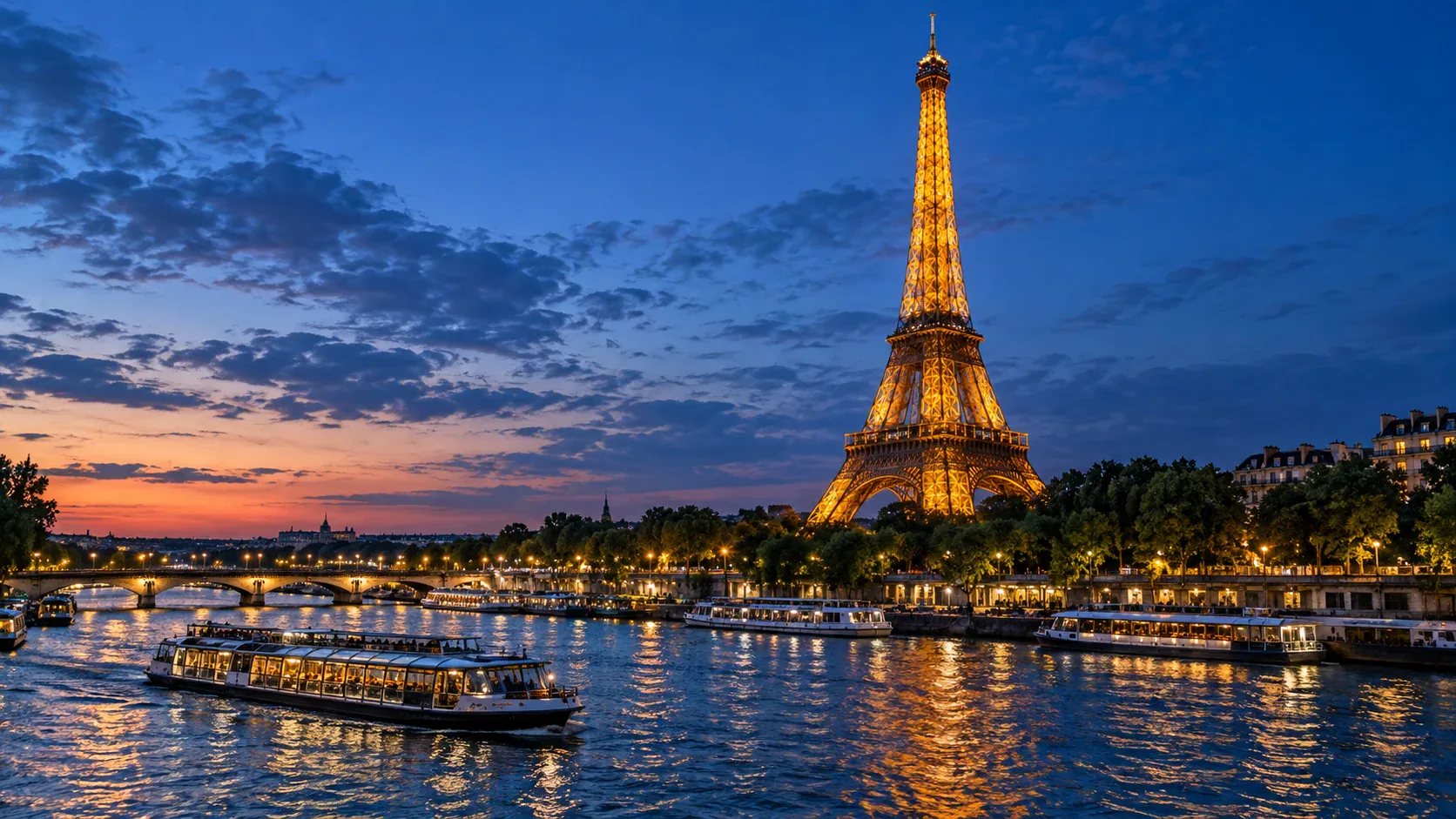
Paris alone needs at least three days for the Eiffel Tower, Louvre and Seine. Versailles is a day trip from Paris. The Loire Valley requires two days for châteaux such as Chambord and Chenonceau. Nice needs two days for the Riviera, and the French Alps two days for alpine scenery. Provence and Bordeaux each need two to three days. Trying to cover all in one week means constant travel; 10–14 days allows a more comfortable pace.
At a glance
France, in brief
A typical France trip for Indian travellers includes Paris, Versailles and one or two regions, lasting 7–14 days. The best base is Paris for the first half, then a regional base such as Nice or the Loire Valley. The best season is April–June or September–October. Entry fees vary by attraction.
France.
7–14 days
- Must-see places
- Paris, Versailles, Loire Valley, Nice, French AlpsAdd Provence or Bordeaux for 10+ day trips
- Ideal days
- 7–14 days7 days for Paris + one region; 14 days for three regions
- Best base
- Paris for first half; Nice or Loire Valley for secondHigh-speed trains connect major cities
- Best season
- April–June and September–OctoberShoulder months balance weather, crowds and prices
- Typical entry fee range
- €10–€30 per attractionIndicative; major museums and palaces charge more
- Visa snapshot
- Schengen visa required for Indian passport holdersApply via France-Visas; allow 15–20 working days
Top Places in France
The top places in France for Indian travellers are Paris, Versailles, the Loire Valley, Nice, the French Alps, Bordeaux and Provence. Each offers a distinct experience, from royal palaces to alpine peaks and Mediterranean coastlines. Plan at least two days per region to avoid rushing.
- Île-de-France
Paris
Capital city with the Eiffel Tower, Louvre Museum and Seine river cruises. The Louvre is the world's largest art museum and a historic monument.
Best forFirst-time visitors, culture, shopping, dining
Book timed entry for the Louvre and Eiffel Tower online; avoid scheduling Versailles and a major museum on the same day.
- Île-de-France
Versailles
Palace of Versailles, a UNESCO World Heritage site, was the principal royal residence of France from 1682 until the French Revolution. The gardens cover over 800 hectares.
Best forHistory, architecture, gardens
Travel early from Paris; book a timed palace entry. Gardens are free on some days but crowded.
- Centre-Val de Loire
Loire Valley
Renaissance châteaux such as Chambord and Chenonceau. Chambord is the largest château in the Loire Valley, with 426 rooms.
Best forHeritage, châteaux, countryside
A private vehicle or small-group tour is more practical than infrequent regional trains. Book château tickets in advance.
- French Riviera
Nice
Mediterranean city with Promenade des Anglais, Old Town markets and easy rail access to Monaco, Antibes and Cannes.
Best forCoast, markets, day trips
Use Nice as a base for Riviera day trips instead of changing hotels. Buy a local transport pass.
- Auvergne-Rhône-Alpes
French Alps (Chamonix)
Alpine town at the foot of Mont Blanc, Western Europe's highest peak at 4,808 metres. Cable cars reach high viewpoints.
Best forAdventure, hiking, skiing, scenery
Weather can close lifts; check operating status the same morning and keep high-altitude activities flexible.
- Auvergne-Rhône-Alpes
Annecy
Alpine lake town with canals and a preserved old town. Lake Annecy is known for clear water and mountain views.
Best forCouples, nature, relaxation
Visit in shoulder season to avoid summer crowds; rent a bike for the lakeside path.
- Nouvelle-Aquitaine
Bordeaux
UNESCO-listed urban heritage and gateway to major wine regions such as Médoc and Saint-Émilion.
Best forWine, food, architecture
Pre-book wine tastings and transport; estates are dispersed and walk-in access is limited.
- Provence-Alpes-Côte d'Azur
Provence (Avignon)
Roman monuments such as the Pont du Gard and hill villages. Lavender fields bloom in summer, timing varies by altitude.
Best forRoman history, markets, lavender
Do not expect peak lavender across all of Provence in a fixed week; check local bloom reports.
- Normandy
Mont Saint-Michel
Tidal island commune with a medieval abbey, a UNESCO World Heritage site. Tides can vary dramatically.
Best forHistory, photography, unique landscapes
Check tide times; the island is crowded midday. Stay overnight for quieter evenings.
- Grand Est
Strasbourg
Capital of Alsace with a UNESCO-listed Grande Île and European institutions. Christmas markets are famous.
Best forCulture, Christmas markets, architecture
Visit the Notre-Dame Cathedral and Petite France district; try local wines.
- Auvergne-Rhône-Alpes
Lyon
UNESCO-listed old town and a gastronomic capital. Traboules are hidden passageways used by silk workers.
Best forFood, history, city breaks
Book a food tour or visit Les Halles Paul Bocuse. Use the metro to navigate.
- Provence-Alpes-Côte d'Azur
Marseille
France's oldest city, founded by Greeks around 600 BC. The Calanques are dramatic limestone coves.
Best forCoast, history, outdoor activities
Take a boat tour to the Calanques; wear sturdy shoes for hiking.
These 12 places cover the best of France for a first or second trip. Each entry includes a key fact, a visiting tip and who it suits best.
Underrated Places in France Most Tourists Miss
Beyond the famous spots, France has lesser-known places such as Colmar, Dijon, Nantes, Rennes, Lille and Menton. These offer rich heritage, local culture and fewer crowds. They suit travellers who have already seen Paris and want a different side of France.
- Grand Est
Colmar
Alsace wine town with half-timbered houses and canals. Often called 'Little Venice' for its canal district.
Best forCouples, photography, wine
Visit in December for Christmas markets or in May for fewer crowds. Try local Riesling.
- Bourgogne-Franche-Comté
Dijon
Historic capital of Burgundy with a UNESCO-listed old town and the Palace of the Dukes of Burgundy.
Best forCulture, food, architecture
Follow the owl's trail (parcours de la chouette) for a self-guided walk. Mustard shops are popular.
- Pays de la Loire
Nantes
City on the Loire with the Machines de l'île, a creative project with giant mechanical animals.
Best forFamilies, art, innovation
Book tickets for Les Machines in advance; the Elephant ride sells out.
- Brittany
Rennes
Brittany's capital with a well-preserved medieval centre and colourful timber-framed houses.
Best forCulture, markets, history
Visit the Marché des Lices on Saturday for local food. Use Rennes as a base for Brittany.
- Hauts-de-France
Lille
Flemish-influenced city near Belgium with a UNESCO-listed belfry and vibrant old town.
Best forCity breaks, food, architecture
Try local cuisine such as carbonnade flamande. The Eurostar connects to London.
- French Riviera
Menton
Coastal town near the Italian border known for lemons and gardens. It has a milder winter than Nice.
Best forCouples, relaxation, gardens
Visit the Jean Cocteau Museum and the lemon festival in February. Quieter than Nice.
These six places are often overlooked by first-time visitors but reward those who explore further.
Places by Type of Experience
Families enjoy Paris and Nantes for interactive attractions, couples prefer Nice and Annecy for romance, adventure travellers head to the French Alps, and culture seekers choose Paris, Versailles and the Loire Valley. Each type has distinct pros and cons.
Families
Best forParis (Disneyland Paris, science museums), Nantes (Machines de l'île), Lyon (aquarium)
StrengthsMany attractions are child-friendly; public transport is easy; parks and gardens offer space.
Trade-offsParis can be crowded and expensive; some museums are tiring for young children.
Couples
Best forNice, Annecy, Menton, Provence (hill villages), Bordeaux (wine estates)
StrengthsRomantic scenery, fine dining, boutique hotels and quiet corners.
Trade-offsRiviera and Provence are expensive in peak season; some villages require a car.
Adventure travellers
Best forFrench Alps (Chamonix, Annecy), Verdon Gorge, Pyrenees, Corsica
StrengthsHiking, skiing, paragliding, via ferrata and cable cars; dramatic landscapes.
Trade-offsWeather can disrupt plans; high-altitude activities need gear and fitness.
Culture travellers
Best forParis, Versailles, Loire Valley, Provence (Roman sites), Strasbourg, Lyon
StrengthsWorld-class museums, UNESCO sites, architecture and history.
Trade-offsMajor sites are crowded; advance booking is essential; some require extensive walking.
Match your travel style to the right places. This comparison covers four traveller types.
Suggested Order for a France Itinerary
A realistic 4-day route starts in Paris, adds a day trip to Versailles, then moves to the Loire Valley or Nice. For a 7-day trip, combine Paris, Versailles and the Loire Valley. For 10–14 days, add Nice and the French Alps. High-speed trains connect major stops.
Day01 Stop 1 of 4Arrive in Paris
Arrive at Charles de Gaulle or Orly, transfer to your hotel, and explore a central neighbourhood.
MorningArrive and check in. If time allows, walk along the Seine near Notre-Dame.
AfternoonVisit the Louvre (book timed entry) or the Eiffel Tower.
EveningSeine river cruise and dinner in Saint-Germain or Le Marais.
Day02 Stop 2 of 4Paris highlights
Cover major sights: Eiffel Tower, Champs-Élysées, Arc de Triomphe and Montmartre.
MorningEiffel Tower (pre-book summit access) and Trocadéro.
AfternoonChamps-Élysées, Arc de Triomphe, then Montmartre and Sacré-Cœur.
EveningDinner in Montmartre or a cabaret show.
Day03 Stop 3 of 4Versailles day trip
Full-day visit to the Palace of Versailles and its gardens.
MorningTake RER C to Versailles; arrive early for palace entry.
AfternoonExplore gardens, Grand Trianon and Marie Antoinette's estate.
EveningReturn to Paris; dinner near your hotel.
Day04 Stop 4 of 4Loire Valley or Nice
Option A: Train to Loire Valley for châteaux. Option B: High-speed train to Nice for Riviera.
MorningOption A: TGV to Tours or Blois, then visit Chambord or Chenonceau. Option B: TGV to Nice, walk Promenade des Anglais.
AfternoonOption A: Second château or garden visit. Option B: Explore Nice Old Town and market.
EveningOption A: Overnight in Tours or Amboise. Option B: Dinner in Nice.
This 4-day itinerary groups nearby places and suggests overnight bases. Adjust based on your total trip length.
Visiting Tips for France
Book major attractions online in advance, use high-speed trains between cities, and carry a mix of cards and cash. Museums often close one day a week. Learn basic French greetings. Validate train tickets before boarding where required.
- Book tickets online
The Eiffel Tower, Louvre and Versailles require timed entry. Book weeks ahead in peak season. Museum passes can save money if you visit many sites.
Tickets - Use high-speed trains
TGV trains connect Paris to Nice, Bordeaux, Lyon and other cities. Book early for lower fares. Validate tickets in yellow machines before boarding where required.
Transport - Check opening days
Many museums close on Mondays or Tuesdays. The Louvre closes Tuesdays; Orsay closes Mondays. Plan around these closures.
Planning - Carry cash and cards
Cards are widely accepted, but small shops and markets may prefer cash. Keep some euros for emergencies.
Money - Learn basic French
Start with 'Bonjour' (hello), 'Merci' (thank you) and 'S'il vous plaît' (please). Attempting French is appreciated.
Etiquette - Validate tickets
In some regions, you must validate train or metro tickets in machines before boarding. Failure can lead to fines.
Transport - Dress modestly for religious sites
Cover shoulders and knees in churches and cathedrals. Some sites require removing hats.
Etiquette - Stay flexible in the Alps
Mountain lifts can close due to weather. Check status the same morning and have a backup plan.
Adventure
These practical tips cover tickets, transport and etiquette for Indian travellers.
Holiday ideas to start from
Reviewed itineraries for this destination — personalise with a specialist, never an instant booking.
Paris City Break Premium 4 Nights: France 4N5D Tour Package 2026
From₹1,36,600per adult, twin sharing, land only
From idea to itinerary, with a real person.
- Share your plan
Dates, departure city, travellers and the moments you’d love. It only takes a minute.
- Shape it with a specialist
A real person refines the route, stays and pace with you. Change anything.
- Review your quote
A clear, personalised quote with confirmed inclusions. No payment to enquire.
From our travel specialists
What our team sees when planning these trips, beyond what the guidebooks say.
Confirmed 11 Oct 2026
The recurring mistake is packing too many regions into a short trip and losing time in transit. Travellers recommend roughly three to four days in Paris, then using one base such as Nice for Riviera day trips, and booking long-distance SNCF trains ahead rather than leaving them until departure.
Travellers commonly wish they had allowed more time instead of trying to combine Paris, the Riviera and other European countries quickly. Indian travellers also report that France’s countryside and smaller towns can be more rewarding than concentrating only on crowded hubs such as Paris and Nice.
Local transport and taxi costs frequently catch travellers out: Indian travellers describe Paris taxis as expensive and recommend the Metro or RER, while a day or multi-day transit pass can make sightseeing easier. For intercity travel, the SNCF Connect app and advance train booking are repeatedly recommended.
Some India-based travellers describe the main tourist hubs, especially Paris and Nice, as unpleasantly crowded or over-commercialised. They often prefer France’s countryside, wine regions, Chamonix, or smaller Riviera towns and villages such as Èze, Antibes and nearby coastal stops.
Before you go
Straight answers to help you plan — then personalise the trip with a specialist.
8 answered belowAsk a specialist anything about this trip — there’s no obligation.
Ask a specialistDo Indians need a visa for France?
Yes. Indian ordinary-passport holders need a Schengen visa before travelling to France for tourism. Apply through France-Visas, submit biometrics and allow at least 15–20 working days. Requirements include passport, photographs, travel insurance, itinerary, accommodation proof and financial evidence.
How much does a France tour package cost from India?
A typical land-only twin-sharing package is roughly ₹95,000 budget, ₹145,000 standard, ₹220,000 premium or ₹400,000 luxury per person, excluding international airfare. These are indicative planning ranges for 2026, not Tripstor offers. Shoulder-season travel and advance booking reduce costs.
What is the best time to visit France?
April to June and September to October usually offer the best balance of weather, crowds and prices. July and August are warm but crowded and expensive, especially in Paris and the Riviera. Winter is cold but good for Christmas markets and ski resorts.
How many days are enough for a France trip?
Seven days suits Paris plus one region; 10–14 days allows Paris, a southern or alpine region and the Loire, Provence or Riviera. Trying to cover too much in one week means constant travel. Two days per region is a comfortable minimum.
What are the best places to visit in France?
Paris, Versailles, the Loire Valley, Nice and the French Alps are strong first-trip choices; Bordeaux and Provence suit food, wine and heritage itineraries. For a shorter trip, focus on Paris and one region. For 14 days, add the Riviera and Alps.
Is France expensive for Indian tourists?
It can be expensive, especially in Paris and the Riviera, but costs can be reduced with shoulder-season travel, public transport and advance reservations. Budget travellers can use hostels or budget hotels, picnic meals and free attractions. Mid-range travellers should plan ₹8,000–₹15,000 per day for meals and activities.
What currency is used in France?
France uses the euro (EUR). Cards are widely accepted, but small cash payments may still be useful for markets and small shops. Notify your bank before travel and carry a mix of payment methods. ATMs are widely available.
How do tourists travel within France?
High-speed TGV trains connect major cities, while regional trains, metros, trams, buses, taxis and rental cars serve local routes. Book TGV tickets early for lower fares. In Paris, the metro is efficient. In rural areas, a car may be necessary.