
Guides for this destination
Practical reads before you plan — timing, places, costs, visas and tips.
Showing 6 of 6 guides
 Best Time to Visit Singapore + MalaysiaRead the guide
- Places to Visit in Singapore + MalaysiaRead the guide
- Singapore + Malaysia Trip Cost from India: Complete 2026 Budget GuideRead the guide
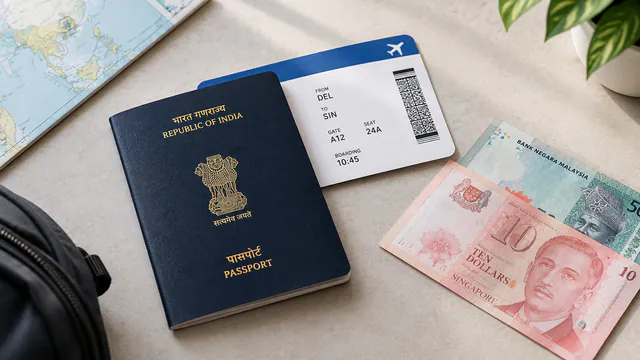 Singapore and Malaysia Visa for Indian Citizens in 2026: Complete GuideRead the guide
- Singapore + Malaysia Itinerary — How Many Days and What to CoverRead the guide
- Singapore + Malaysia Travel Tips for Indian TouristsRead the guide
What This Singapore + Malaysia Travel Guide Covers
Singapore + Malaysia travel guide covers two Southeast Asian countries usually paired in one itinerary. Singapore is a city-state with Marina Bay Sands and Sentosa; Malaysia offers Kuala Lumpur's Petronas Towers and Genting Highlands. Both sit at UTC+8, are hot and humid year-round, and suit first-time international travellers, families, couples and short-break groups from India.
Singapore is a compact city-state at roughly 15 m average elevation, built around Marina Bay, Sentosa and Changi. Malaysia is its larger mainland neighbour, with Kuala Lumpur, Genting Highlands and Johor Bahru forming the usual add-on. The two are linked by a short flight or a causeway crossing at Johor.
Three distinctive experiences define the pairing: Marina Bay Sands and Gardens by the Bay in Singapore, the Petronas Twin Towers and Batu Caves in Kuala Lumpur, and the Genting Highlands cable car and theme parks. Indian travellers typically combine both countries in 6–8 nights.
Traveller types: first-time international flyers, families with children, honeymooners, and groups who want Indian food, shopping and theme parks without long-haul flights.
At a glance
Singapore + Malaysia, in brief
Singapore + Malaysia at a glance: both countries sit in Southeast Asia at UTC+8, use the Singapore dollar and Malaysian ringgit, and stay hot and humid all year. February to April is generally the most comfortable window. Indian passport holders need a Singapore visa; Malaysia's rules should be checked on the official portal before booking.
Singapore + Malaysia.
6–8 nights
- Region
- Southeast AsiaSingapore is a city-state; Malaysia is a mainland and island nation
- Best season
- February to AprilLower rainfall and manageable heat; both countries stay hot and humid year-round
- Ideal trip length
- 6–8 nights3–4 nights Singapore, 3–4 nights Malaysia
- Gateway airports
- Singapore Changi Airport (SIN); Kuala Lumpur International Airport (KUL)Fly into one and out of the other for a one-way routing
- Currency
- Singapore dollar (SGD) and Malaysian ringgit (MYR)Roughly INR 65–67 per SGD and INR 20–21 per MYR, subject to exchange-rate fluctuation
- Languages
- English, Malay, Mandarin and Tamil in Singapore; Malay is Malaysia's official languageEnglish and Tamil are widely usable in both countries
Why Indians Love Singapore + Malaysia
Indians choose Singapore + Malaysia for three practical reasons: short flights from Chennai, Bengaluru, Mumbai and Delhi; strong Indian and Tamil food availability in both countries; and a mix of theme parks, shopping and city sightseeing that suits families and first-time international travellers. Both countries use English widely, which reduces language friction.
- Short flights and easy connections
Singapore Changi Airport (SIN) and Kuala Lumpur International Airport (KUL) are the main gateways. Airlines operating India–Southeast Asia routes include Singapore Airlines, Scoot, Malaysia Airlines, AirAsia, IndiGo and Batik Air Malaysia. A Singapore–Kuala Lumpur flight is short, and the Johor causeway is a road alternative.
Transport - Indian and Tamil food is easy to find
Little India in Singapore and Brickfields in Kuala Lumpur are the go-to areas for Indian meals. Tamil is widely used in Singapore, and both countries have Indian restaurants alongside Malay, Chinese and Peranakan options.
Food - Theme parks, shopping and city sights in one trip
Sentosa's Universal Studios Singapore and Marina Bay Sands anchor the Singapore leg. Kuala Lumpur adds the Petronas Twin Towers, Batu Caves and Genting Highlands. This mix suits families with children, couples and groups who want variety without long-haul flights.
Experience
The pairing works because Singapore delivers a polished city break while Malaysia adds value shopping, hill resorts and a different cultural texture, all within a short flight or causeway crossing.
Top 10 Places to Visit in Singapore + Malaysia
The top places in Singapore + Malaysia span Marina Bay Sands, Gardens by the Bay and Sentosa in Singapore, plus the Petronas Twin Towers, Batu Caves and Genting Highlands in Malaysia. Ten stops cover the standard 6–8 night route. Each has a distinct appeal, from skyline views to theme parks and heritage streets.
- Marina Bay, Singapore
Marina Bay Sands
Integrated resort with the SkyPark observation deck and Infinity Pool, plus The Shoppes mall and ArtScience Museum. The complex defines Singapore's skyline and sits beside Gardens by the Bay.
Best forSkyline views, shopping, first-time visitors
Book SkyPark tickets online for sunset slots; the observation deck is separate from the hotel pool.
- Marina Bay, Singapore
Gardens by the Bay
Waterfront garden with the Supertree Grove, Cloud Forest and Flower Dome conservatories. The Supertrees light up in the evening, and the conservatories are air-conditioned.
Best forFamilies, photography, evening walks
Visit the conservatories in the afternoon heat and stay for the evening Supertree light show.
- Sentosa, Singapore
Sentosa Island
Resort island with Universal Studios Singapore, S.E.A. Aquarium, beaches and cable car access. It is Singapore's main theme-park and beach day out.
Best forFamilies with children, theme-park fans
Buy Universal Studios Singapore tickets in advance and use the Sentosa Express or cable car to enter.
- Serangoon Road, Singapore
Little India
Historic Indian quarter with Sri Veeramakaliamman Temple, Tekka Centre and Mustafa Centre. It is the most convenient area for Indian meals and late-night shopping.
Best forIndian food, budget shopping, temple visits
Visit Tekka Centre for breakfast and Mustafa Centre after dinner; both are on the MRT network.
- Chinatown, Singapore
Chinatown and Buddha Tooth Relic Temple
Heritage district with the Buddha Tooth Relic Temple, Sri Mariamman Temple and Chinatown Street Market. It mixes Chinese, Indian and Malay heritage in a walkable area.
Best forHeritage walks, street food, souvenirs
Combine with a walk to Sri Mariamman Temple on South Bridge Road; both are close to Chinatown MRT.
- KLCC, Kuala Lumpur
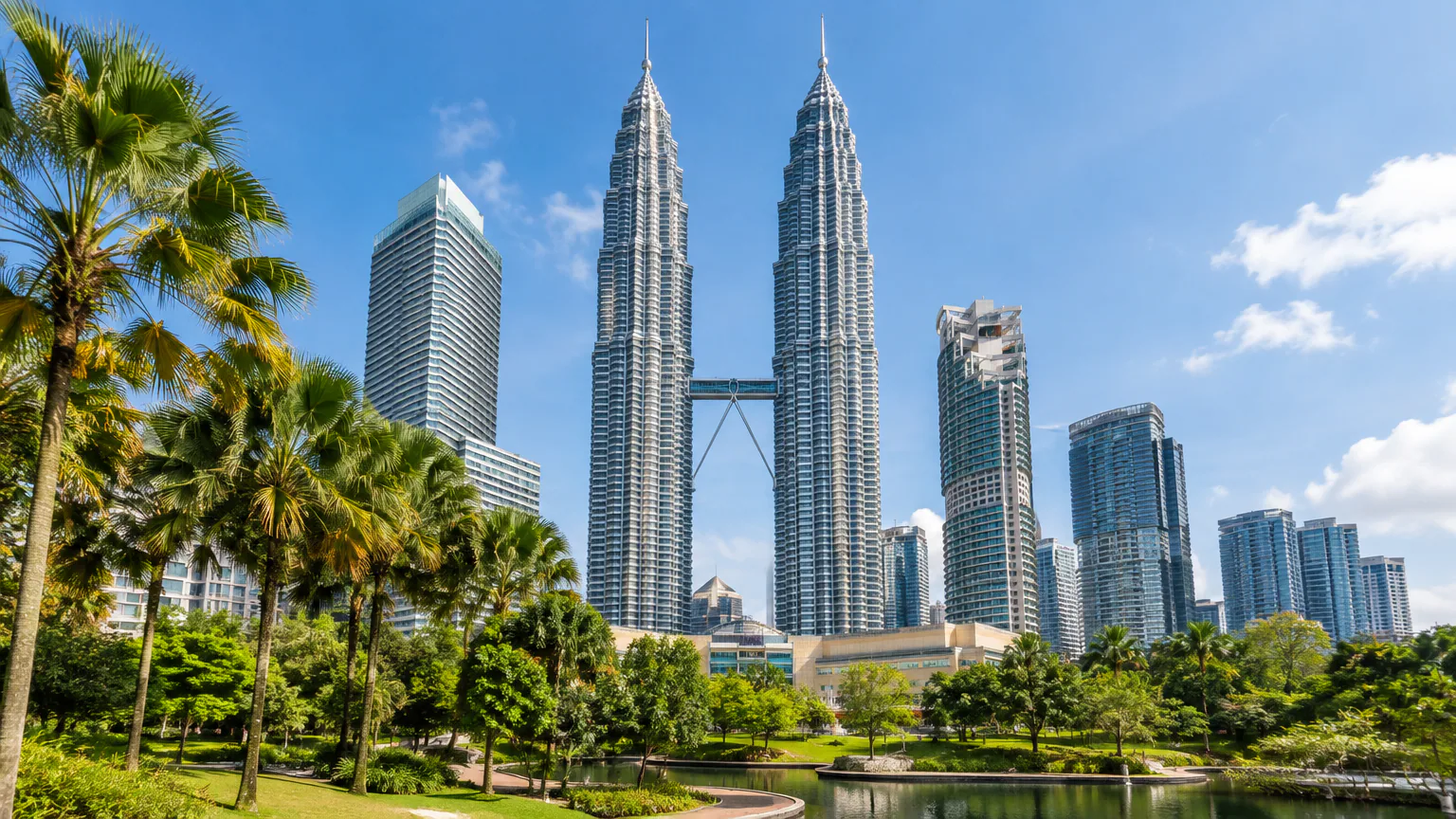
Petronas Twin Towers
88-storey twin towers connected by a Skybridge, with an observation deck and Suria KLCC mall below. They remain Kuala Lumpur's defining landmark.
Best forCity views, shopping, first-time visitors
Book Skybridge and observation deck tickets online; evening slots sell out first.
- Gombak, Selangor
Batu Caves
Limestone hill shrine with a steep staircase leading to the Temple Cave, a Hindu religious site dedicated to Lord Murugan. It is a major pilgrimage and day-trip stop from Kuala Lumpur.
Best forTemple visits, day trips, photography
Go early morning to avoid heat and crowds; dress modestly and watch for monkeys on the steps.
- Pahang, Malaysia
Genting Highlands
Hill resort with theme parks, cable car and casino, reached by road or the Awana SkyWay cable car. It offers cooler air than Kuala Lumpur and works as an overnight add-on.
Best forFamilies, cool-weather break, theme parks
Take the cable car for views and keep a light jacket handy; evenings are cooler than the city.
- Kuala Lumpur
Brickfields (Little India)
Kuala Lumpur's Indian quarter, anchored by the Sri Kandaswamy Kovil and a dense cluster of South Indian restaurants. It is the easiest area for vegetarian meals in the city.
Best forIndian food, temple visits, budget stays
Walk from KL Sentral; Brickfields is one stop away and easy to combine with a KL city day.
- Johor, Malaysia
Johor Bahru
Malaysia's southern gateway city, linked to Singapore by the Johor–Singapore Causeway. It is used as a road crossing point and a short shopping stop.
Best forRoad crossings, shopping, short stopovers
Cross early on weekdays; causeway queues build on weekends and public holidays.
Plan these ten as a loop: start in Singapore, cross to Malaysia, and end in Kuala Lumpur or Genting.
Best Time to Visit Singapore + Malaysia from India
February to April is generally the best time to visit Singapore + Malaysia from India, with lower rainfall and manageable heat. Both countries stay hot and humid year-round. Singapore recorded its wettest-ever March and hottest-ever June and November in 2025, so pack for rain and heat in any month.
January
Good time to goHot and humid with frequent showers; northeast monsoon influence
Good for city sightseeing; carry rain gear
February
Best time to goWarm with lower rainfall than late-year months
One of the most comfortable windows for both countries
March
Good time to goHot; Singapore recorded its wettest-ever March in 2025
Plan indoor backups; still workable for sightseeing
April
Best time to goWarm and humid with intermittent showers
Strong month for families before school-holiday peaks
May
Good time to goHot and humid; afternoon showers common
Fine for theme parks and malls; keep evenings flexible
June
Shoulder seasonHot; Singapore recorded its hottest-ever June in 2025
School-holiday crowds and heat; book early
July
Shoulder seasonHot and humid with rain spells
Peak family season; expect higher hotel rates
August
Good time to goHot and humid; occasional haze risk in Malaysia
Workable; check air-quality updates before outdoor days
September
Good time to goWarm with rising rainfall
Value month for hotels and flights
October
Shoulder seasonWet and humid; frequent showers
Budget-friendly; plan indoor attractions
November
Shoulder seasonWet; Singapore recorded its hottest-ever November in 2025
Rain-heavy; keep buffer days for outdoor plans
December
Shoulder seasonWet and humid with festive crowds
Festive lights and shopping, but peak pricing
- BestFeb, Apr
- GoodJan, Mar, May, Aug, Sep
- FairJun, Jul, Oct, Nov, Dec
Use this month-by-month view to match weather, crowds and price levels. Ratings are indicative, not guarantees.
Singapore + Malaysia Trip Cost from India (2026)
A Singapore + Malaysia trip from India in 2026 costs roughly ₹85,000–₹1,10,000 per person for a budget 6-night trip, ₹1,30,000–₹1,80,000 for mid-range, and ₹2,50,000 and above for luxury, on twin-sharing with return economy flights from an Indian metro. These are travel-budget estimates, not Tripstor offers.
Budget
First-time travellers, students, value-focused groups
- 3-star or budget hotels in Singapore and Kuala Lumpur
- MRT and LRT for city travel
- Paid attractions limited to one or two headline stops
- Indian meals in Little India and Brickfields
Mid-range
Families, couples, first international holiday
- 4-star hotels near Marina Bay or KLCC
- Airport transfers and some day tours
- Universal Studios Singapore and Petronas Twin Towers tickets
- Genting Highlands cable car and Batu Caves day trip
Luxury
Honeymooners, premium family trips, special occasions
- 5-star stays such as Marina Bay Sands in Singapore
- Private transfers and skip-the-line attraction access
- Fine-dining and rooftop experiences
- Flexible routing across Singapore, Kuala Lumpur and Genting
Flights usually take the largest share, followed by hotels. Singapore hotels cost more than Kuala Lumpur or Genting for similar categories. The land portion covers hotels, transfers, some meals and attraction tickets; the flight portion covers return economy airfare from an Indian metro. Actual spend depends on season, airline, hotel category and how many paid attractions you add.
How to Reach Singapore + Malaysia from India
Indians reach Singapore + Malaysia by flying into Singapore Changi Airport (SIN) or Kuala Lumpur International Airport (KUL). Direct flights operate from Chennai, Bengaluru, Mumbai and Delhi on airlines including Singapore Airlines, Scoot, Malaysia Airlines, AirAsia, IndiGo and Batik Air Malaysia. Singapore and Kuala Lumpur are also linked by short flights and the Johor causeway.
Chennai (MAA)
Direct to Singapore Changi Airport (SIN)
Singapore Airlines, Scoot, IndiGo and AirAsia operate on this corridor; schedules vary by season
Bengaluru (BLR)
Direct to Singapore Changi Airport (SIN)
Singapore Airlines, Scoot and IndiGo serve this route; check baggage rules before booking
Mumbai (BOM)
Direct to Singapore Changi Airport (SIN)
Singapore Airlines, Scoot and Air India operate; overnight departures are common
Delhi (DEL)
Direct to Singapore Changi Airport (SIN)
Singapore Airlines, Scoot and Air India serve this route; onward Kuala Lumpur flights are short
Chennai (MAA)
Direct to Kuala Lumpur International Airport (KUL)
Malaysia Airlines, Batik Air Malaysia and AirAsia operate; useful for a Malaysia-first itinerary
Bengaluru (BLR)
Direct to Kuala Lumpur International Airport (KUL)
Malaysia Airlines, Batik Air Malaysia and AirAsia serve this route
Mumbai (BOM)
Direct to Kuala Lumpur International Airport (KUL)
Malaysia Airlines, Batik Air Malaysia and AirAsia operate; compare fares with Singapore routings
Delhi (DEL)
Direct to Kuala Lumpur International Airport (KUL)
Malaysia Airlines, Batik Air Malaysia and AirAsia serve this route
Singapore
Singapore Changi Airport (SIN) to Kuala Lumpur International Airport (KUL)
Frequent daily services on Malaysia Airlines, AirAsia, Scoot and Batik Air Malaysia
Singapore
Johor–Singapore Causeway to Johor Bahru
Cross early on weekdays; queues build on weekends and public holidays
Kuala Lumpur
Road to Genting Highlands
Awana SkyWay cable car is an alternative for the final ascent
Travelling from your city?
Tell us where you start. A specialist can plan connections around your stay.
Plan my journeyMost itineraries fly into one gateway and out of the other to avoid backtracking. Rail and road work within Malaysia; sea crossings are limited and not the standard route from India.
Where to Stay in Singapore + Malaysia
Where to stay in Singapore + Malaysia depends on your budget and route. In Singapore, Marina Bay suits first-timers, Little India suits budget and Indian-food access, and Sentosa suits families. In Malaysia, KLCC and Bukit Bintang suit city stays, Brickfields suits budget travellers, and Genting Highlands suits a cool-weather break.
Budget
Value-focused travellers and students
- Singapore: budget hotels and hostels around Little India and Jalan Besar, close to MRT
- Kuala Lumpur: budget stays in Brickfields and around KL Sentral
- Genting Highlands: basic resort rooms for a one-night stop
- Expect smaller rooms in Singapore at this tier
Mid-range
Families and couples wanting comfort and location
- Singapore: 4-star hotels near Marina Bay, Bugis or Clarke Quay
- Kuala Lumpur: 4-star hotels in KLCC and Bukit Bintang
- Genting Highlands: resort hotels with theme-park access
- Breakfast and airport transfers are often included in packages
Luxury
Honeymooners and premium family trips
- Marina Bay Sands in Singapore for the SkyPark and Infinity Pool
- 5-star Kuala Lumpur hotels near KLCC with skyline views
- Private transfers and concierge-led attraction bookings
- Higher rates during June–July and December peak periods
Indicative nightly rates below are per room, twin sharing, and vary by season and booking window. They are not Tripstor contracted rates. Where the research names a property, it is listed; otherwise the stay type is described without a name.
Local Food and Cuisine in Singapore + Malaysia
Singapore + Malaysia food covers Hainanese chicken rice, laksa, nasi lemak, roti canai and banana-leaf meals. Indian travellers find vegetarian and Jain-friendly options in Little India, Singapore, and Brickfields, Kuala Lumpur. Hawker centres keep costs low, while restaurant dining costs more in Singapore than in Malaysia.
- Singapore hawker centres, including Maxwell Food Centre and Tekka Centre
Hainanese chicken rice
Poached chicken with fragrant rice, chilli and ginger sauces. It is Singapore's most common hawker dish and widely available across the city.
Best forFirst-time visitors, budget meals
Ask for the chicken without skin and confirm the rice is cooked in chicken stock if you prefer a lighter version.
- Singapore and Kuala Lumpur hawker centres
Laksa
Spicy coconut or sour fish-based noodle soup with tofu puffs and prawns. Variants differ between Singapore and Penang-style versions in Malaysia.
Best forSpice-tolerant travellers, noodle lovers
Ask for less chilli on the first try; the broth can be very spicy for Indian palates used to milder curries.
- Kuala Lumpur, including Brickfields and KLCC food courts
Nasi lemak
Coconut rice with sambal, anchovies, peanuts, cucumber and egg, often with fried chicken. It is Malaysia's everyday breakfast and all-day dish.
Best forBreakfast, budget meals, Malaysian local food
Vegetarian versions exist with egg and sambal; confirm no anchovies or shrimp paste if you avoid them.
- Kuala Lumpur and Johor Bahru mamak stalls
Roti canai
Flaky flatbread served with dal or curry, common at mamak stalls across Malaysia. It is inexpensive and available from morning to late night.
Best forVegetarians, late-night meals, budget eating
Mamak stalls are the easiest stop for vegetarian roti canai with dal; ask for no ghee if you prefer.
- Little India, Singapore, and Brickfields, Kuala Lumpur
Banana-leaf meal
South Indian rice meal served on a banana leaf with vegetables, curries, rasam and papad. It is the most familiar option for Indian travellers in both countries.
Best forIndian travellers, vegetarians, families
Lunch is the standard serving time; ask for a vegetarian set and confirm Jain preparation in advance.
Five dishes to try, with the area to find them. Restaurant names are listed only where the research names them; otherwise the area is given.
Singapore + Malaysia Travel Tips for Indians
Singapore + Malaysia travel tips for Indians start with documents: Indian passport holders need a Singapore visa, and Malaysia's entry rules should be checked on the official portal before booking. Carry SGD and MYR or use cards widely accepted in both countries. Buy a local SIM or eSIM, and keep digital and printed copies of bookings.
- Singapore visa for Indian passport holders
Indian passport holders need a visa for Singapore. Apply through authorised channels and check the Immigration & Checkpoints Authority (ICA) and Singapore High Commission pages for current requirements. Approval is not guaranteed and processing times vary.
Visa - Malaysia entry rules
Check Malaysia's official immigration and visa requirement pages before booking. Rules can change, and the Malaysian High Commission in India publishes current guidance. Do not rely on older blog posts for entry eligibility.
Visa - Currency and payments
Singapore uses the Singapore dollar (SGD) and Malaysia uses the Malaysian ringgit (MYR). Indicative rates are roughly INR 65–67 per SGD and INR 20–21 per MYR, subject to exchange-rate fluctuation. Cards are widely accepted; keep some cash for hawker centres and small stalls.
Money - SIM cards and eSIMs
Buy a local SIM at Singapore Changi Airport or Kuala Lumpur International Airport, or activate an India-purchased eSIM before departure. Both countries have good urban coverage; rural areas and hill routes can be patchier.
Connectivity - Safety and etiquette
Both countries are generally safe for tourists, but standard precautions apply: keep valuables secure, use licensed taxis or ride-hailing apps, and respect local dress codes at temples such as Batu Caves and Sri Veeramakaliamman Temple. No destination is universally safe.
Safety - Weather planning
Both countries are hot and humid year-round. Singapore recorded its wettest-ever March and hottest-ever June and November in 2025. Carry a compact umbrella, light clothing and refillable water bottles, and plan indoor backups.
Weather
These tips cover entry, money, connectivity, safety and etiquette for a two-country trip.
Singapore + Malaysia vs Other Options for Indians
Singapore + Malaysia suits Indians who want a short-haul international trip with theme parks, shopping and Indian food access. Thailand offers beaches and nightlife at lower cost, while Dubai offers desert and shopping with similar flight times. Singapore + Malaysia is stronger for families and first-time international travellers who prefer structured cities.
Singapore + Malaysia
Best forFamilies, first-time international travellers, city-and-theme-park trips
StrengthsTwo countries in one trip; strong Indian food access; English widely used; short flights from Chennai, Bengaluru, Mumbai and Delhi; Marina Bay Sands, Sentosa, Petronas Twin Towers and Genting Highlands in one route
Trade-offsSingapore hotels are expensive; both countries are hot and humid year-round; Singapore visa required for Indian passport holders
Thailand
Best forBeach holidays, nightlife, budget travellers
StrengthsLower daily costs; beach destinations such as Phuket and Krabi; short flights from Indian metros
Trade-offsFewer structured theme-park and city-skyline experiences; visa rules for Indians have changed in recent years and need checking
Dubai
Best forShopping, desert experiences, short-haul luxury
StrengthsShort flights from Indian metros; strong Indian food and retail; desert safaris and Burj Khalifa
Trade-offsExtreme summer heat; fewer green landscapes; different cultural mix compared with Southeast Asia
Compare the pairing against two common alternatives before you commit. Each option has trade-offs in cost, weather and travel style.
From idea to itinerary, with a real person.
- Share your plan
Dates, departure city, travellers and the moments you’d love. It only takes a minute.
- Shape it with a specialist
A real person refines the route, stays and pace with you. Change anything.
- Review your quote
A clear, personalised quote with confirmed inclusions. No payment to enquire.
From our travel specialists
What our team sees when planning these trips, beyond what the guidebooks say.
Confirmed 11 Oct 2026
- Practical
Local transport is the most consistently reported practical issue: travellers rely on a mix of Grab, trains, walking, buses, ferries and budget flights, so poorly timed connections can make an itinerary tiring. Food is generally treated as a highlight, especially Singapore hawker centres, Kuala Lumpur street food and Penang’s food scene; the reports also warn that Kuala Lumpur prices may approach Singapore levels.
- Places
The reports do not show a consistent disappointment with a specific Singapore or Malaysia attraction. Instead, Penang is repeatedly described as a pleasant surprise and preferred by some travellers over Kuala Lumpur, while others highlight Penang Hill, street art, food and culture rather than focusing only on headline landmarks.
- Itinerary
The clearest reported mistake is trying to cover too many Malaysian stops in a short trip, with bus, ferry, train and flight transfers between Langkawi, Penang and Kuala Lumpur. Travellers with only five days sometimes recommend simplifying the plan to Singapore plus Penang rather than adding several rushed stops.
- Places
For Singapore, a central base near Chinatown, Little India, Kampong Glam, Marina Bay or Orchard is practical because it keeps major sights and food areas accessible. In Malaysia, Kuala Lumpur is the conventional first base for Petronas Towers, Batu Caves, shopping and transport links, while Penang is a strong alternative or addition for food, culture and walkable street exploration.
Before you go
Straight answers to help you plan — then personalise the trip with a specialist.
8 answered belowAsk a specialist anything about this trip — there’s no obligation.
Ask a specialistDo Indian citizens need a visa for Singapore and Malaysia?
Indian passport holders need a visa for Singapore. For Malaysia, check the official immigration and visa requirement pages before booking, as rules can change. Apply through authorised channels, allow processing time, and remember that visa approval is never guaranteed.
What is the best time to visit Singapore and Malaysia from India?
February to April generally offers the most comfortable balance of lower rainfall and manageable heat. Both countries stay hot and humid year-round. Singapore recorded its wettest-ever March and hottest-ever June and November in 2025, so pack for rain and heat in any month.
How many days are enough for Singapore and Malaysia?
Six to eight nights works well: three to four nights in Singapore and three to four nights in Malaysia. This covers Marina Bay Sands, Gardens by the Bay, Sentosa, the Petronas Twin Towers, Batu Caves and Genting Highlands without rushing. Shorter trips mean dropping one city.
What is the trip cost from India for Singapore and Malaysia?
Indicative travel-budget estimates for 2026 are roughly ₹85,000–₹1,10,000 per person for a budget 6-night trip, ₹1,30,000–₹1,80,000 for mid-range, and ₹2,50,000 and above for luxury, on twin sharing with return economy flights from an Indian metro. These are not Tripstor offers.
Which airlines fly from India to Singapore and Malaysia?
Airlines on these routes include Singapore Airlines, Scoot, Malaysia Airlines, AirAsia, IndiGo and Batik Air Malaysia. Direct flights operate from Chennai, Bengaluru, Mumbai and Delhi to Singapore Changi Airport (SIN) and Kuala Lumpur International Airport (KUL). Schedules and fares vary by season.
Is Indian food available in Singapore and Malaysia?
Yes. Little India in Singapore and Brickfields in Kuala Lumpur are the main areas for Indian meals, including banana-leaf rice, roti canai and vegetarian thalis. Tamil is widely used in Singapore. Hawker centres and mamak stalls also offer budget options across both countries.
What should I pack for Singapore and Malaysia?
Pack light cotton clothing, a compact umbrella, comfortable walking shoes and a refillable water bottle. Both countries are hot and humid year-round. Carry a light jacket for Genting Highlands, modest clothing for temple visits such as Batu Caves, and printed copies of your visa and bookings.
Can I combine Singapore and Malaysia in one trip?
Yes. Fly into Singapore Changi Airport (SIN) and out of Kuala Lumpur International Airport (KUL), or the reverse. Singapore and Kuala Lumpur are linked by short flights, and the Johor–Singapore Causeway is a road alternative. Most travellers spend three to four nights in each country.