
What Actually Changes a Japan Trip
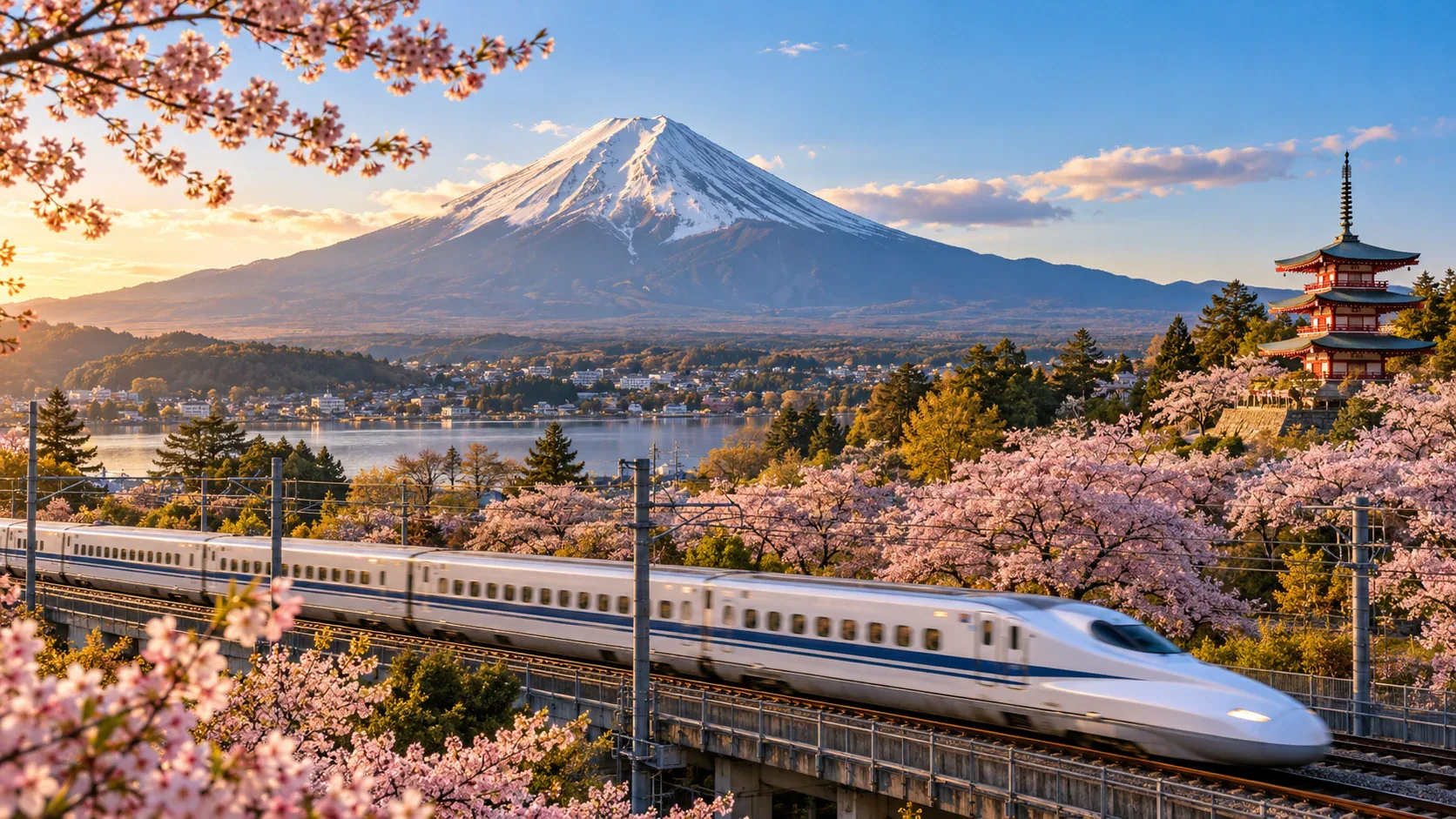
Five things change a Japan trip more than any itinerary choice: securing the visa before booking non-refundable flights, carrying a physical IC card alongside your phone, keeping yen cash for smaller restaurants, timing travel around cherry blossom, Golden Week, Obon and autumn foliage crowds, and comparing individual train fares against a Japan Rail Pass.
Japan rewards preparation more than improvisation. Indian ordinary passport holders generally need a visa before travel, so the visa timeline drives when you can safely lock flights and hotels. On the ground, an IC card such as Suica, PASMO or ICOCA covers urban trains, subways and buses where accepted, while the Shinkansen handles intercity legs; reserve seats during peak periods. Tokyo metro journeys typically cost roughly ¥180–¥330, and airport transfers about ¥1,000–¥3,500 depending on airport and mode. Nationwide Japan Rail Passes are no longer automatically economical for a standard Tokyo–Kyoto itinerary, so compare the current pass price with individual tickets before buying.
At a glance
Japan, in brief
Japan uses the yen, Japanese is the everyday language with limited English outside tourist hubs, plugs are Type A and Type B at 100V, and the country runs roughly 3.5 hours ahead of India. Indian ordinary passport holders need a visa issued before travel; visa on arrival is not generally available.
Japan.
Planned around you.
- Currency
- Japanese yen (¥)Carry some cash; smaller restaurants and rural shops may not accept cards.
- Language
- JapaneseEnglish signage is common on major rail networks and in tourist areas.
- Plugs
- Type A and Type B, 100VIndian Type D plugs need an adapter; check dual-voltage chargers.
- SIM or eSIM
- Tourist data SIM or eSIMArrange before departure or at major airports; pocket Wi-Fi is another option.
- Time difference
- About 3.5 hours ahead of IndiaJapan does not observe daylight saving.
- Emergency numbers
- 110 police, 119 fire and ambulanceSave these before you land.
Before You Go to Japan
Before you go to Japan, sequence the visa first, then flights, then hotels. Indian ordinary passport holders generally need a visa before travel, submitted through the Japan Visa Application Centre or designated channel with passport, form, photograph, itinerary, accommodation details, financial evidence and employment documents. Confirm the current checklist and fees with the Embassy of Japan in India or its authorised centre.
Passport valid well beyond travel dates
Check blank pages and validity before applying; a short-validity passport can stall the application.
Where to get it: Your passport officeCommon mistake: Applying with a passport that expires soon after the planned return date.
Japan visa application
Submit passport, application form, photograph, itinerary, accommodation details, financial evidence and employment or business documents as per the current checklist.
Where to get it: Japan Visa Application Centre or the designated application channel in IndiaCommon mistake: Assuming visa on arrival is available for Indian tourists.
Flight bookings
Delhi and Mumbai have direct services with All Nippon Airways, Japan Airlines and Air India; Bengaluru direct availability is schedule-dependent. One-stop routes commonly connect via Singapore, Bangkok, Kuala Lumpur or Colombo.
Where to get it: Airline websites and authorised agentsCommon mistake: Booking non-refundable fares before the visa is issued.
Accommodation bookings
Reserve early for cherry blossom, Golden Week, Obon and autumn foliage, and for popular ryokan.
Where to get it: Hotel and ryokan booking platformsCommon mistake: Leaving peak-season stays to the last weeks.
Forex and cards
Carry yen cash for small vendors plus an international card; notify your bank of Japan travel dates.
Where to get it: Banks and authorised forex dealers in IndiaCommon mistake: Relying entirely on cards in smaller restaurants and rural areas.
Travel insurance
Choose a policy covering medical care, trip disruption and baggage; read exclusions carefully.
Where to get it: Indian insurers offering Japan coverCommon mistake: Buying the cheapest policy without checking medical limits.
Useful apps
Install a rail navigation app, an offline translation app and an offline map before departure.
Where to get it: App storesCommon mistake: Depending on live translation without downloading offline language packs.
Peak-period reservations
Book Shinkansen seats, Universal Studios or Disney entry products and sought-after restaurants in advance.
Where to get it: Rail, attraction and restaurant booking channelsCommon mistake: Arriving in Golden Week or Obon without reserved seats.
Work in this order: visa, flights, stays, then reservations for peak-season trains and attractions. The common mistake is booking non-refundable flights before the visa is issued, or assuming a Japan Rail Pass is always cheaper than point-to-point tickets.
Money and Payments in Japan
Money and payments in Japan still lean on cash more than most Indian travellers expect. Cards work at hotels, chain stores and larger restaurants, but smaller eateries, temples and rural shops may be cash-only. UPI is not a standard payment method in Japan, so plan around yen cash, an international card and a data SIM or eSIM.
- Carry yen cash daily
Keep enough for small meals, temple entries and local buses; not every counter takes cards.
Money - Use major-bank and convenience-store ATMs
These are the most reliable for foreign cards; avoid withdrawing small amounts repeatedly to limit fees.
Money - Do not expect UPI in Japan
UPI is an India-focused system; use cards or cash instead and keep a backup card.
Money - Choose a data SIM or eSIM
Tourist SIMs and eSIMs are widely available; pocket Wi-Fi is useful for families sharing devices.
Connectivity - Set up offline tools
Download offline maps and translation packs before you fly; they help in areas with weak signal.
Connectivity - Compare roaming versus local data
Indian roaming packs work but can be expensive for heavy use; a local SIM or eSIM is often cheaper for longer trips.
Connectivity
Withdraw yen from ATMs at major banks, convenience stores and post offices, and keep a few thousand yen on you daily. For connectivity, a tourist data SIM or eSIM is the simplest option; pocket Wi-Fi suits families sharing multiple devices. Indian roaming packs work but can be costly for heavy data use.
Cultural Tips for Japan
Cultural tips for Japan start with quiet public behaviour, correct queueing and shoe removal in homes, some ryokan and certain temple buildings. Dress modestly at religious sites, avoid eating while walking on busy commuter streets, and do not tip in restaurants; good service is standard and a tip can cause confusion.
- Keep public spaces quiet
Avoid phone calls on trains and keep volume low in restaurants and stations.
Etiquette - Remove shoes where indicated
Homes, some ryokan and certain temple buildings require shoe removal; look for the step or sign.
Etiquette - Dress modestly at religious sites
Cover shoulders and knees at shrines and temples, and follow any posted photography restrictions.
Culture - Do not tip in restaurants
Tipping is not customary; service charges are not expected and cash tips can confuse staff.
Etiquette - Queue properly
Stand in marked lines for trains, escalators and buses; let passengers exit before boarding.
Etiquette - Carry a small bag for rubbish
Public bins are limited; keep waste with you until you find a convenience store or hotel bin.
Culture
On trains, keep calls short and phones on silent. At shrines and temples, follow posted photography rules and purification instructions. Tipping is not customary; if you want to thank staff, a small gift from India is a warmer gesture than cash.
Food Tips for Indian Travellers in Japan
Food tips for Indian travellers in Japan: convenience-store meals, local restaurants and business hotels control costs, while vegetarian and Indian food options exist in major cities but need planning. Dishes to try include sushi, ramen, tempura, soba, udon, okonomiyaki and curry rice. Confirm ingredients where dashi or meat stock may be used.
Sushi
Vinegared rice with seafood or vegetables; conveyor-belt and standing counters offer cheaper options than high-end restaurants.
Best forFirst-timers wanting a classic Japanese meal
Ask for vegetarian rolls where available; wasabi is usually optional.
Ramen
Noodle soup in pork, chicken, miso or soy-based broth; portions are filling and prices are moderate.
Best forBudget lunches and cold-weather days
Broth often contains meat or fish stock, so vegetarians should confirm before ordering.
Tempura
Battered and fried seafood and vegetables; specialist shops serve it piece by piece.
Best forTrying fried dishes without heavy spice
Vegetable-only tempura is widely available.
Soba and udon
Buckwheat and wheat noodles served hot or cold; common in station restaurants and local shops.
Best forQuick meals between sightseeing stops
Check the dipping sauce for fish stock if you are strictly vegetarian.
Okonomiyaki
Savory pancake cooked on a griddle, strongly associated with Osaka and Hiroshima styles.
Best forGroup meals and casual dinners
Ask for a vegetable-only version and confirm whether the batter contains egg.
Curry rice
Japanese-style curry served over rice; a mild, familiar option for Indian palates.
Best forTravellers wanting familiar flavours
Convenience stores and chain restaurants sell affordable versions.
Convenience-store meals
Rice balls, sandwiches, salads and hot snacks at chains across cities and towns.
Best forControlling food costs
Useful for early train departures and late arrivals.
Indian restaurants in major cities
Tokyo, Kyoto and Osaka have Indian restaurants and vegetarian-friendly counters; smaller towns have fewer options.
Best forTravellers needing Indian food regularly
Check opening hours and whether the kitchen uses separate vegetarian preparation.
In Tokyo, Kyoto and Osaka, Indian restaurants and vegetarian-friendly counters are easier to find than in smaller towns. Convenience stores stock rice balls, sandwiches and salads for quick meals. If you keep a Jain or strict vegetarian diet, carry a translated dietary card and check whether broth contains fish stock.
Safety in Japan for Indian Tourists
Safety in Japan for Indian tourists is generally high, but common issues include getting lost in complex stations, overpaying for taxis, and underestimating summer heat and winter cold. Keep your IC card charged, use trains over taxis for routine journeys, and check weather forecasts before outdoor days. No destination is risk-free, so stay alert in crowded areas.
- Getting lost in large train stations
How to avoid itUse a rail navigation app, follow exit signs by number, and allow extra time for transfers.
- Taxi fares adding up quickly
How to avoid itUse trains, subways and buses for routine journeys; reserve taxis for late nights or heavy luggage.
- Summer heat and humidity
How to avoid itCarry water, use a hat and sunscreen, and plan indoor breaks during the hottest hours.
- Winter cold and snow in northern regions
How to avoid itPack thermal layers, waterproof shoes and gloves; check transport updates before travel days.
- Language barriers in emergencies
How to avoid itSave 110 and 119, carry your hotel address in Japanese, and use a translation app.
- Crowd congestion at peak periods
How to avoid itReserve Shinkansen seats and attraction tickets in advance during cherry blossom, Golden Week, Obon and autumn foliage.
Japan is not a zero-risk destination. Station layouts can be confusing, taxi fares add up quickly, and summer humidity plus winter cold affect energy levels. Carry your hotel address in Japanese, keep emergency numbers 110 and 119 saved, and check forecasts before long walks or mountain days.
Packing by Season
Packing by season for Japan means layers for spring and autumn, breathable clothing and sun protection for summer, and thermal layers plus waterproof footwear for winter. Add a universal adapter for Type A and Type B plugs, a small day bag, and a translated dietary card if you follow a vegetarian or Jain diet.
Spring layers
Light jacket, long-sleeve tops and a compact umbrella for March–May.
Common mistake: Packing only summer clothes for early spring.
Summer breathables
Quick-dry shirts, shorts, hat, sunscreen and a refillable water bottle for June–August.
Common mistake: Underestimating humidity and packing heavy denim.
Autumn layers
Medium jacket, scarf and comfortable walking shoes for October–November.
Common mistake: Forgetting that evenings cool down quickly.
Winter thermals
Thermal base layers, warm coat, gloves, beanie and waterproof shoes for December–February.
Common mistake: Wearing smooth-soled shoes on icy paths.
Plug adapter
Type A and Type B adapter for Indian Type D plugs; check charger voltage.
Common mistake: Assuming Indian plugs fit Japanese sockets.
Day bag
Small backpack for water, IC card, cash and a rubbish bag.
Common mistake: Carrying a large suitcase on crowded trains.
Dietary card
Translated card explaining vegetarian or Jain requirements.
Common mistake: Assuming every restaurant understands 'vegetarian'.
Medicines
Prescription medicines with a doctor's note and basic first-aid items.
Common mistake: Carrying restricted medicines without documentation.
Spring and autumn are the most comfortable for walking, so pack light layers and a compact umbrella. Summer needs quick-dry fabrics and a refillable bottle. Winter calls for a warm coat, gloves and shoes with grip for icy paths.
Holiday ideas to start from
Reviewed itineraries for this destination — personalise with a specialist, never an instant booking.
Tokyo Kyoto Osaka Premium 7 Nights: 2026 Luxury Japan Itinerary
From₹2,51,100per adult, twin sharing, land only
From idea to itinerary, with a real person.
- Share your plan
Dates, departure city, travellers and the moments you’d love. It only takes a minute.
- Shape it with a specialist
A real person refines the route, stays and pace with you. Change anything.
- Review your quote
A clear, personalised quote with confirmed inclusions. No payment to enquire.
From our travel specialists
What our team sees when planning these trips, beyond what the guidebooks say.
Confirmed 11 Oct 2026
Cash is the most repeatedly reported issue: Japan accepts cards widely but small restaurants, shrines, rural transport and lockers may still require yen and coins. Travellers also mention that Japan can be expensive, particularly hotels, taxis and airport transfers, while an IC card such as Suica or Pasmo makes urban transport easier.
Travellers commonly wish they had prepared for Japan’s etiquette, extensive walking, and the need to carry some yen for small ramen shops, shrines, rural buses and coin lockers. They also advise applying for the visa and booking popular attractions well ahead, especially in cherry-blossom season.
For a first visit, travellers commonly use Tokyo as the initial base for three or four days and Kyoto as the cultural base for two or three days, with Osaka workable as a day trip from Kyoto or as the final stop near Kansai International Airport. This route avoids unnecessary backtracking and combines major transport links with Tokyo’s modern sights and Kyoto’s temples and traditional districts.
Families learn that Tokyo Disney and teamLab each need substantial time and energy, that three or four key stops per day is more realistic with children, and that Ghibli Museum or Disney reservations must be made early. Couples learn that a seven-day plan covering Tokyo, Kyoto, Osaka, Nara and Hiroshima is overly rushed; late May, October, November or February can offer a less pressured alternative to peak sakura travel.
Before you go
Straight answers to help you plan — then personalise the trip with a specialist.
8 answered belowAsk a specialist anything about this trip — there’s no obligation.
Ask a specialistDo Indians need a visa to visit Japan?
Yes. Indian ordinary passport holders generally need to obtain a Japanese visa before travel; visa on arrival is not generally available. Apply through the Japan Visa Application Centre or the designated application channel in India with passport, form, photograph, itinerary, accommodation details, financial evidence and employment documents.
What is the best time to visit Japan?
March–May and October–November are the most broadly favourable periods, while late March–early April is popular for cherry blossoms and November for autumn foliage. These windows also coincide with higher hotel demand, so reserve stays and Shinkansen seats early.
How many days are enough for Japan?
Seven days covers Tokyo, Mount Fuji or Hakone, Kyoto and Osaka at a fast pace; ten to fourteen days allows a more comfortable multi-region itinerary. Adding Hiroshima or Hokkaido needs more time because intercity transfers consume half-days.
How much does a Japan tour package cost from India?
A typical land-only twin-sharing package is approximately ₹95,000 per person at budget level, ₹145,000 standard, ₹230,000 premium and ₹425,000 luxury, excluding or varying by airfare and inclusions. Treat these as indicative planning bands, not confirmed Tripstor offers.
Is Japan expensive for Indian tourists?
Japan can be expensive for transport, attractions and centrally located hotels, but convenience-store meals, local restaurants, business hotels and advance bookings can control costs. Comparing individual train fares against a Japan Rail Pass also affects the total.
Which cities should first-time visitors include in Japan?
Tokyo, Kyoto, Osaka and either Mount Fuji or Hakone or Nara are the most practical first-trip combination. Hiroshima or Hokkaido can be added with more time, but each addition lengthens intercity travel.
How do tourists travel within Japan?
Use trains and subways in cities, Shinkansen between major regions, buses in areas without rail coverage, and domestic flights for long-distance routes such as Tokyo–Hokkaido. IC cards such as Suica, PASMO or ICOCA simplify urban journeys.
Can Indian tourists use a Japan Rail Pass?
Yes, eligible foreign visitors can purchase applicable rail passes, but the nationwide pass may not offer value on every itinerary. Compare its current price with individual tickets before buying, especially for a standard Tokyo–Kyoto route.