What Is the Best Time to Visit Singapore + Malaysia?
February to April is the best window for a Singapore + Malaysia trip, with warm days, manageable rain and comfortable touring conditions. May to September works as a shoulder period with short showers. November to January is the wettest stretch, so travellers who dislike rain should avoid late November and December.
Singapore and Malaysia sit close to the equator, so temperatures stay between roughly 25°C and 32°C all year. The difference between seasons is rainfall, not cold. February, March and April usually bring less persistent rain than the northeast monsoon months, making them reliable for outdoor plans such as Sentosa, Gardens by the Bay and Batu Caves.
May to September is a practical shoulder season. June is relatively drier in Singapore, while July and August remain warm with short showers. August can be comparatively favourable on Malaysia's east coast. October to December turns wetter, and December is the wettest month in Singapore in the supplied data, with 287 mm of rain.
If your priority is festive atmosphere, December works despite the rain because Orchard Road and Kuala Lumpur's malls are lit for the year-end season. If your priority is value, May and September often bring moderate crowds and softer hotel pricing than the February-April peak.
Singapore + Malaysia Month-by-Month Weather Guide
Singapore + Malaysia weather month by month shows little temperature variation but clear rainfall patterns. February to April and June to September are generally the most usable months for touring. November to January brings the heaviest rain, while May and October sit in transition with frequent short storms.
January
Good time to go31°C / 25°C; 222 mm rain; northeast monsoon
Warm and humid; wetter in Singapore but fine for city sightseeing.
February
Best time to go32°C / 25°C; 165 mm rain; one of the drier months
One of the better months for touring, though showers remain possible.
March
Good time to go32°C / 26°C; 210 mm rain; hot and humid
Hot and humid with occasional heavy thunderstorms.
April
Good time to go32°C / 26°C; 190 mm rain; warm with intermittent storms
Good shoulder-season option with warm weather and intermittent storms.
May
Shoulder season32°C / 27°C; 171 mm rain; storm-prone
Hot, humid and increasingly storm-prone; workable for urban itineraries.
June
Good time to go32°C / 27°C; 175 mm rain; relatively drier in Singapore
Relatively drier in Singapore; good for attractions, though midday heat is strong.
July
Good time to go31°C / 27°C; 171 mm rain; short showers
Warm and humid with short showers; suitable for most routes.
August
Good time to go31°C / 27°C; 176 mm rain; thunderstorms
Hot with thunderstorms; east-coast Malaysia can be comparatively favourable.
September
Good time to go31°C / 26°C; 169 mm rain; haze or thunderstorms possible
Generally usable shoulder season, with haze or thunderstorms possible.
October
Shoulder season32°C / 26°C; 191 mm rain; inter-monsoon storms
Inter-monsoon conditions bring frequent thunderstorms, usually brief but intense.
November
Shoulder season31°C / 26°C; 252 mm rain; wetter period begins
Wetter period begins; west-coast city touring remains feasible with flexible scheduling.
December
Shoulder season31°C / 25°C; 287 mm rain; wettest month in Singapore
Wettest-season conditions in Singapore; festive demand and prices can rise.
- BestFeb
- GoodJan, Mar, Apr, Jun, Jul, Aug, Sep
- FairMay, Oct, Nov, Dec
Use this twelve-month overview to match your travel dates with rainfall, crowd levels and indicative pricing. Temperature ranges and rainfall figures are from supplied weather data for Singapore; Malaysia's west-coast cities such as Kuala Lumpur and Malacca follow similar patterns, while east-coast Malaysia can differ.
Peak Season in Singapore + Malaysia
Peak season in Singapore + Malaysia runs from December to February, driven by year-end holidays and Chinese New Year travel. Expect high hotel rates and busy attractions. Shoulder months May to September offer a balance of moderate crowds and workable weather. The off-season wet months are November to January, when rain is heaviest.
Peak season (December to February)
Best forFestive atmosphere, year-end holidays and Chinese New Year celebrations
StrengthsCooler evenings, festive lights on Orchard Road and in Kuala Lumpur, full attraction schedules
Trade-offsHighest hotel rates, crowded attractions, December is the wettest month in Singapore with 287 mm rain
Shoulder season (May to September)
Best forBudget-conscious travellers, flexible sightseers and families avoiding peak prices
StrengthsModerate crowds, softer hotel pricing, June is relatively drier in Singapore, August can favour Malaysia's east coast
Trade-offsShort intense showers, midday heat, haze possible in September
Wet season (November to January)
Best forTravellers who accept rain, want lower demand and plan indoor-heavy itineraries
StrengthsFewer crowds outside the December festive peak, lower rates in November, city attractions remain open
Trade-offsHeaviest rainfall, 252 mm in November and 287 mm in December, outdoor plans need backup
The table below compares peak, shoulder and wet-season travel so you can match your dates with your priorities. Peak season suits festive travellers and school-holiday families. Shoulder season suits budget-conscious visitors and flexible sightseers. The wet season suits travellers who accept afternoon storms in exchange for lower demand.
At a glance
Best Time by Travel Type
Honeymooners should target February to April for drier evenings and comfortable resort stays. Families with school-age children often prefer May to June or December for holiday breaks. Budget travellers get the best value in May and September. Adventure and photography travellers should plan around February to April or June to September for clearer skies.
Singapore + Malaysia Best Time to Visit.
Planned around you.
- Honeymoon
- February to AprilDrier evenings and comfortable conditions for Sentosa, Langkawi and Penang resort stays.
- Family
- May to June or DecemberSchool holidays align with these months; December is festive but wet, so pack rain gear.
- Budget
- May and SeptemberModerate crowds and softer hotel pricing outside the February-April and December peaks.
- Adventure
- February to April or June to SeptemberBetter conditions for Batu Caves, Genting Highlands and outdoor Malaysia routes.
- Sightseeing and photography
- February to AprilLower rainfall improves visibility for Marina Bay, Gardens by the Bay and Kuala Lumpur skyline shots.
Festivals and Events in Singapore + Malaysia
Singapore + Malaysia's festival calendar gives travellers a reason to time a trip around Chinese New Year, Hari Raya, Deepavali or the year-end lights. Chinese New Year usually falls in January or February and fills both countries with celebrations. Deepavali in Singapore's Little India and Thaipusam at Batu Caves are major draws for Indian travellers.
- Singapore and Kuala Lumpur
Chinese New Year celebrations
Usually in January or February, this is the biggest festive period in both countries, with Chinatown light-ups, parades and family reunions.
Best forFestive atmosphere and cultural sightseeing
Book hotels three to four months ahead; many restaurants close for a day or two during the holiday.
- Selangor, Malaysia
Thaipusam at Batu Caves
Usually in January or February, this Hindu festival draws large crowds to the Batu Caves steps near Kuala Lumpur.
Best forIndian travellers seeking a cultural and religious experience
Arrive early morning to avoid heat and crowds; dress modestly and follow local guidelines.
- Singapore
Deepavali in Little India
Usually in October or November, Little India's Serangoon Road is decorated with lights and markets in the weeks before Deepavali.
Best forIndian travellers and photographers
Visit in the evening for the light displays; the area is busy on weekends.
- Singapore and Malaysia
Hari Raya Aidilfitri
Marks the end of Ramadan, usually in March or April, with open houses and festive bazaars in Kuala Lumpur and Singapore.
Best forFood and cultural travellers
Geylang Serai in Singapore and Kampung Baru in Kuala Lumpur host popular bazaars.
- Singapore
Year-end lights on Orchard Road
From November to early January, Orchard Road and Marina Bay are lit for the festive season, drawing crowds despite the rain.
Best forFamilies and festive shoppers
Combine with indoor malls if showers interrupt; December is the wettest month in Singapore.
Festival dates follow lunar and religious calendars, so confirm exact dates before booking. The places below are the main festival venues and experiences worth planning around.
Weather Risks in Singapore + Malaysia
Singapore + Malaysia's main weather risks are monsoon rain, thunderstorms, haze and heat. The northeast monsoon brings heavy rain to Singapore's east coast and Malaysia's east coast between November and January. Inter-monsoon months bring brief but intense thunderstorms. Haze can occur in September and October. Heat and humidity are constant, so plan indoor breaks.
- Northeast monsoon rain from November to January, with December the wettest month in Singapore at 287 mm
How to avoid itBuild indoor backups such as malls, museums and aquariums; keep one outdoor day flexible and carry a compact umbrella.
- Frequent thunderstorms during inter-monsoon months in October and April
How to avoid itSchedule outdoor attractions in the morning; afternoons often bring short intense storms that clear within an hour or two.
- Haze possible in September and October, affecting visibility and air quality
How to avoid itCheck air-quality readings before outdoor plans; switch to indoor attractions such as Gardens by the Bay's conservatories if haze is heavy.
- Constant heat and humidity, with temperatures around 31°C to 32°C and humidity above 80%
How to avoid itCarry water, use sunscreen and plan a midday break; Singapore's MRT and malls provide air-conditioned relief.
- East-coast Malaysia flooding during the northeast monsoon
How to avoid itAvoid east-coast beach plans in November and December; choose west-coast destinations such as Langkawi or Penang instead.
The table below lists the risks that matter most for Indian travellers and the practical fix for each. Check official weather and air-quality updates close to departure, especially if you have respiratory conditions.
Booking and Packing by Season
Book flights from India three to four months ahead for the February-April peak and December festive season. Hotels in Singapore and Kuala Lumpur fill quickly during Chinese New Year. Pack light cotton clothes, a rain jacket and comfortable walking shoes year-round. Add a warmer layer for Genting Highlands and Cameron Highlands.
- Book flights early for February to April
This is the most balanced weather window, so seats from Delhi, Mumbai, Chennai and Bengaluru fill faster. Aim to book three to four months ahead for better fares.
Booking - Reserve hotels before Chinese New Year
Chinese New Year usually falls in January or February and is the busiest hotel period in Singapore and Kuala Lumpur. Book three to four months ahead, especially in Chinatown and Bukit Bintang.
Booking - Pack for rain in November to January
December is the wettest month in Singapore with 287 mm of rain. Carry a compact umbrella, a light rain jacket and quick-dry footwear.
Packing - Pack light cotton for May to September
Temperatures stay around 31°C to 32°C with humidity above 80%. Choose breathable fabrics, sunscreen and a refillable water bottle.
Packing - Add a warm layer for highland stops
Genting Highlands and Cameron Highlands are cooler than Kuala Lumpur and Singapore. A light fleece or jacket helps for evening walks and outdoor activities.
Packing - Keep documents ready for both borders
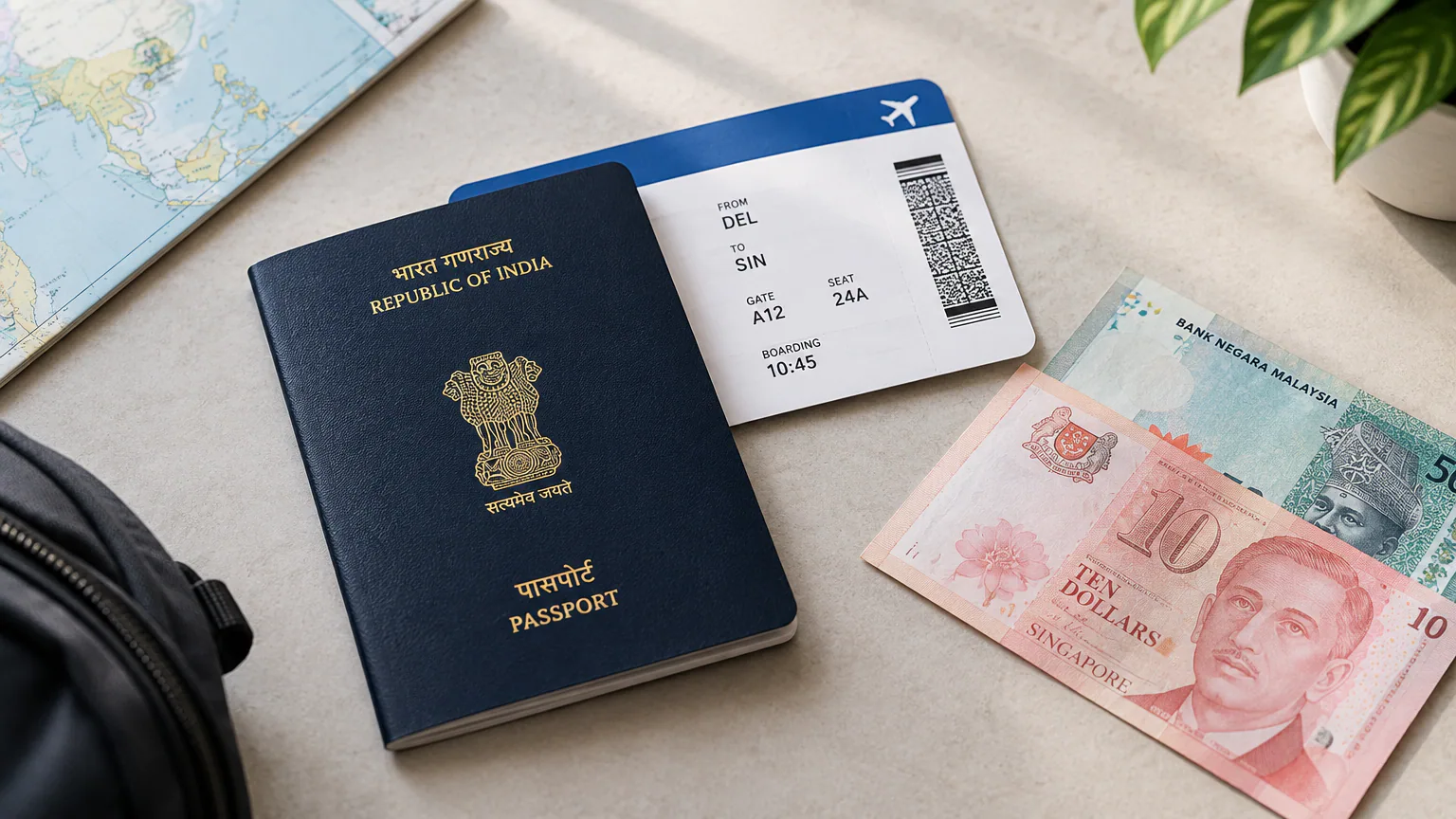
Indian passport holders need a Singapore visa before travel. Malaysia permits visa-free entry for up to 30 days until 31 December 2026, subject to conditions and MDAC completion. Carry a passport valid at least six months.
Documents
Use these tips to time your bookings and pack correctly for each season. Prices are indicative planning ranges, not Tripstor offers.
From idea to itinerary, with a real person.
- 01Share your plan
Dates, departure city, travellers and the moments you’d love. It only takes a minute.
- 02Shape it with a specialist
A real person refines the route, stays and pace with you. Change anything.
- 03Review your quote
A clear, personalised quote with confirmed inclusions. No payment to enquire.
From our travel specialists
What our team sees when planning these trips, beyond what the guidebooks say.
Confirmed 11 Oct 2026
Travellers commonly wish they had planned for long, physically demanding sightseeing days: reports mention 16,000–17,000 steps daily in Malaysia, with Singapore’s attractions also requiring substantial walking. They also learn that Kuala Lumpur can feel nearly as expensive as Singapore, while Penang is often a more rewarding and underrated stop.
Before you go
Straight answers to help you plan — then personalise the trip with a specialist.
8 answered belowAsk a specialist anything about this trip — there’s no obligation.
Ask a specialist01What is the best month to visit Singapore + Malaysia?
February to April is generally the best month to visit Singapore + Malaysia, with warm days around 32°C and lower rainfall than the November-to-January monsoon. February has 165 mm of rain, one of the drier months. June to September also works as a shoulder period with short showers.
02What is Singapore + Malaysia weather month by month?
Temperatures stay between 25°C and 32°C all year. Rainfall peaks in December at 287 mm and November at 252 mm. February is drier at 165 mm. June is relatively drier in Singapore. October and April bring inter-monsoon thunderstorms. Humidity stays above 80% throughout.
03When to go to Singapore + Malaysia for a honeymoon?
February to April suits honeymooners best, with drier evenings and comfortable conditions for Sentosa, Langkawi and Penang resort stays. Avoid December if you want outdoor dinners and beach time, because it is the wettest month in Singapore with 287 mm of rain.
04What is Singapore + Malaysia peak season?
Peak season in Singapore + Malaysia runs from December to February, driven by year-end holidays and Chinese New Year. Hotel rates and attraction crowds are highest then. December is also the wettest month in Singapore, so expect rain alongside festive lights.
05Do Indian citizens need a visa for a Singapore and Malaysia tour?
Yes for Singapore: ordinary Indian passport holders need a visa before travel. Malaysia permits Indian citizens visa-free entry for up to 30 days until 31 December 2026, subject to conditions and MDAC completion. Always confirm current rules with official sources before booking.
06How many days are enough for a Singapore and Malaysia trip?
Five to seven days suits Singapore plus Kuala Lumpur. Seven to ten days allows Malacca, Genting Highlands, Penang or Langkawi. Add one buffer day if you plan to cross the border by coach, because immigration and weekend congestion can extend the journey.
07Can I travel from Singapore to Kuala Lumpur by bus?
Yes. Express coaches commonly take about five to six hours, but immigration and weekend border congestion can extend the journey. Book an early departure, carry your passport and MDAC confirmation, and avoid Friday evenings when cross-border traffic peaks.
08Is Singapore expensive compared with Malaysia?
Yes. Singapore usually has higher hotel, dining, attraction and transport costs, while Malaysia generally offers lower accommodation and meal prices. Indicative land-only twin-sharing packages from India start around INR 55,000 budget and INR 85,000 standard per person, excluding international airfare.