At a glance
Maldives at a Glance
The best places to visit in Maldives range from the compact capital Malé to the UNESCO-listed Baa Atoll, with local islands like Maafushi offering affordable guesthouses and Ari Atoll providing reef diving. Indian travellers receive a free tourist visa on arrival for up to 30 days, and the dry season from December to April is the most reliable window for clear skies.
Maldives Places to Visit.
4–7 days
- Must-see places
- Malé, Maafushi, Baa Atoll, Ari Atoll, Hulhumalé
- Ideal trip length
- 4–7 days5 nights covers a local island and a resort stay
- Best base by budget
- Hulhumalé for arrivals; Maafushi for guesthouses; resort island for luxury
- Best season
- December to AprilDry and sunny; February is often the driest month
- Entry for Indians
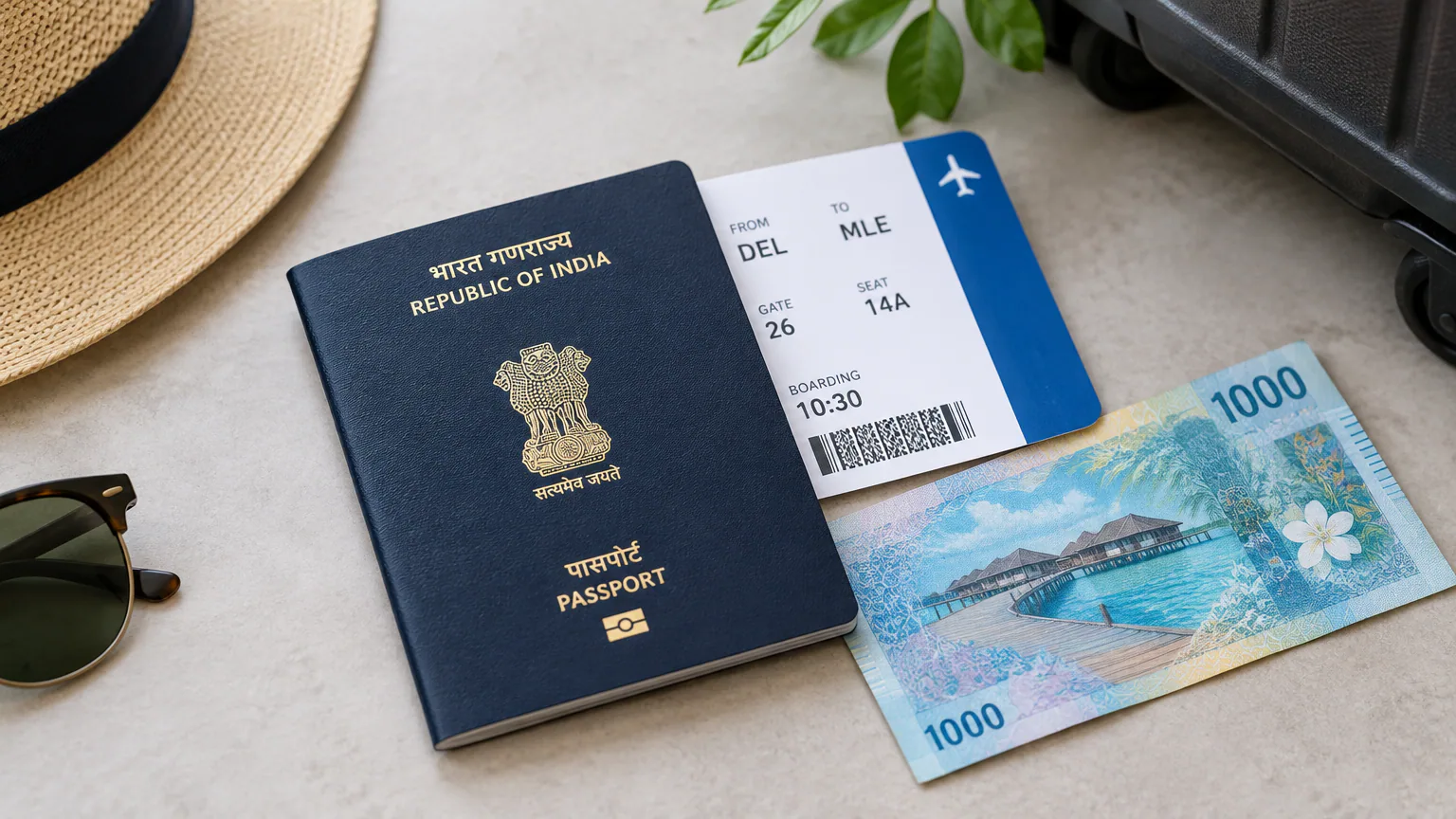
- Free tourist visa on arrival, up to 30 daysSubject to immigration requirements; passport valid at least one month beyond stay
- Indicative land cost
- ₹65,000 to ₹3,00,000+ per personLand-only, excluding international flights; varies by comfort level
Top Places to Visit in Maldives
The top places in Maldives cover capital culture, local-island beaches, and wildlife-rich atolls. Malé holds the fish market and the coral-stone Friday Mosque; Maafushi provides affordable guesthouses and sandbank excursions; and Baa Atoll, a UNESCO Biosphere Reserve, is the regulated home of Hanifaru Bay's seasonal manta-ray gatherings. Ari Atoll and Hulhumalé round out a first-time itinerary.
- Kaafu Atoll
Malé
The compact capital is home to the fish market, the Friday Mosque (Hukuru Miskiy) with its coral-stone architecture, and local cafés. Most visitors spend one day here before transferring to a resort or local island.
Best forCulture, local life and transit
Visit the fish market in the morning for the best atmosphere; dress modestly near mosque areas and note that non-Muslims may not enter during prayer times.
- Kaafu Atoll
Hulhumalé
An urban beach base near Velana International Airport with guesthouses, restaurants, and a sunset promenade. It is the most convenient overnight stop on arrival or departure.
Best forConvenience and short stays
Useful for a transit night; not a substitute for a private-island resort experience.
- Kaafu Atoll
Maafushi
A well-established local island with affordable guesthouses, a designated bikini beach for swimwear, snorkelling excursions, and sandbank trips. Popular with budget travellers from India.
Best forBudget travel and water activities
Reserve a buffer day before your international departure as excursions are weather-dependent.
- Baa Atoll
Baa Atoll
A UNESCO Biosphere Reserve known for manta rays, Hanifaru Bay, and reef biodiversity. Access to Hanifaru Bay is regulated and seasonal; check local rules before booking snorkelling trips.
Best forMarine wildlife, diving and manta rays
Do not assume unrestricted snorkelling at Hanifaru Bay; confirm access rules with your operator.
- Alif Alif and Alif Dhaal Atolls
Ari Atoll
One of the most convenient areas for reef diving, whale-shark excursions, and resort stays. The atoll is large, so confirm whether your property is in North or South Ari before estimating transfer time from Malé.
Best forDiving, whale sharks and resort holidays
Confirm north or south location before booking; transfer times differ significantly.
- Hulhumalé
Hulhumalé Beach
An artificial beach popular for sunset walks and casual dining, and one of the few public beaches near the airport. Swim in designated areas and respect local dress norms away from the beach.
Best forSunset and relaxation
Cover up when leaving the beach area; modest dress is expected on the main streets.
- Malé
Friday Mosque (Hukuru Miskiy)
A historic mosque featuring coral-stone architecture, one of the oldest in the Maldives and a key cultural landmark in the capital.
Best forCultural and historical interest
Non-Muslims may not enter during prayer times; dress modestly with covered shoulders and knees.
- Malé
Malé Fish Market
A lively market where local fishermen sell the day's catch, offering a direct view of Maldivian daily life and the tuna-fishing economy.
Best forLocal culture and photography
Go in the morning for the best atmosphere; expect wet floors and bring a camera.
- Maafushi
Maafushi Bikini Beach
A designated beach on Maafushi where tourists can wear swimwear, unlike other public beaches on the island. It is a hub for water sports and snorkelling excursions.
Best forSwimming, sunbathing and water sports
Use this beach for sunbathing; cover up elsewhere on the island to respect local customs.
- Addu Atoll
Addu City
A southern atoll combining cycling routes along causeways, WWII-era history, local culture, and diving. It requires a domestic flight from Malé and suits longer itineraries.
Best forHeritage, cycling and offbeat travel
Better suited to a longer trip than a short first-time resort package due to flight logistics.
Each place below serves a distinct purpose in an itinerary. Malé and Hulhumalé are arrival hubs; Maafushi is the budget traveller's base; Baa Atoll and Ari Atoll are the wildlife and diving centres. Addu City in the far south suits longer trips with heritage interest and requires a domestic flight from Malé. When planning, group nearby atolls to keep individual transfers under two hours where possible.
How Many Places Can You Cover?
Most Maldives itineraries cover three to five distinct areas, depending on trip length and transfer style. A 5-night trip can realistically combine Malé or Hulhumalé, one local island such as Maafushi, and one resort island, keeping each transfer under two hours. Longer trips of seven nights allow a second atoll or a local-island combination.
The Maldives has 26 atolls, but tourist itineraries concentrate on a handful of accessible hubs. Malé and Hulhumalé serve as arrival gateways; Maafushi and Dhigurah offer local-island stays; Ari Atoll and Baa Atoll are the resort and wildlife centres. Adding Addu City in the south requires a domestic flight and suits trips of eight nights or more.
Transfer time is the main constraint. Speedboats connect Malé to nearby local islands in 30–90 minutes; seaplanes reach more distant resort islands in 20–45 minutes but only operate in daylight. Grouping nearby atolls reduces dead travel time and leaves more days for maldives tourist attractions such as reef snorkelling, sandbank picnics, and diving.
Places by Type of Experience
The best places in Maldives depend on what you want from the trip. Families do well in Hulhumalé and resort islands with shallow lagoons; couples find privacy in Ari Atoll and Baa Atoll resorts; adventure travellers target Dhigurah and Fuvahmulah for whale sharks and tiger sharks; culture-focused visitors gain most from Malé and Addu City.
Families
Best forHulhumalé, Maafushi, resort islands with kids' clubs
StrengthsShallow lagoons, easy airport transfers, child-friendly facilities on resort islands
Trade-offsWater villas may be unsafe for young children; limited cultural activities on private resort islands
Couples and honeymooners
Best forAri Atoll, Baa Atoll, private resort islands
StrengthsPrivacy, beach or water villas, sunset cruises, and couples' dining
Trade-offsHigher cost than local-island stays; limited local interaction if confined to a resort island
Adventure travellers
Best forDhigurah, Fuvahmulah, Ari Atoll dive sites
StrengthsWhale-shark and manta-ray excursions, tiger-shark diving at Fuvahmulah, reef diving in Ari Atoll
Trade-offsWildlife sightings are not guaranteed; strong currents at some dive sites
Culture and heritage travellers
Best forMalé, Addu City, Thoddoo
StrengthsFish market, Friday Mosque, WWII history in Addu, agricultural island life in Thoddoo
Trade-offsFewer beaches; conservative dress required outside resort areas; Addu City needs a domestic flight
Matching your travel style to the right island or atoll avoids wasted transfers and mismatched expectations. Resort islands in Ari Atoll and Baa Atoll offer the most privacy but come at a higher cost and limit local interaction. Local islands like Maafushi and Thoddoo give a closer view of Maldivian daily life but require modest dress outside designated beach areas. Addu City's causeways make it the only atoll where cycling between islands is practical.
Underrated Places in Maldives Most Tourists Miss
Several places to visit in Maldives receive far fewer visitors than Maafushi or Ari Atoll yet offer distinct experiences. Fuvahmulah in Gnaviyani Atoll is known for tiger-shark diving and a freshwater lake; Vaadhoo in Raa Atoll draws photographers for its bioluminescent plankton; and Thoddoo in Alif Alif Atoll offers watermelon farms and quiet beaches with no resort crowds.
- Gnaviyani Atoll
Fuvahmulah
A single-island atoll with a freshwater lake and a reputation for tiger-shark diving. Less visited due to its southern location, it suits experienced divers seeking unusual encounters.
Best forAdventure diving and tiger sharks
Dive only with experienced operators; tiger-shark encounters require caution and proper briefing.
- Raa Atoll
Vaadhoo
Known for the 'sea of stars' phenomenon caused by bioluminescent plankton, best seen on dark, moonless nights from the beach. A local island with limited accommodation.
Best forNight-time photography and bioluminescence
Check the moon phase before booking; avoid using flashlights on the beach to preserve visibility.
- Alif Alif Atoll
Thoddoo
An agricultural island with watermelon and papaya farms, quiet beaches, and a relaxed pace. It offers a rural local-island experience with no resort infrastructure.
Best forLocal culture, farms and relaxation
Respect local customs; there is no bikini beach, so swim in modest attire.
- Baa Atoll
Fulhadhoo
A quiet local island with long white-sand beaches and limited guesthouses, positioned near Baa Atoll's UNESCO Biosphere Reserve. Suits travellers seeking seclusion without a resort price tag.
Best forSeclusion and beaches
Bring sufficient cash as ATMs are limited; arrange excursions through your guesthouse in advance.
- Kaafu Atoll
Gulhi
A local island near Maafushi with a shipwreck dive site and a quieter atmosphere. Accessible by public ferry from Malé, making it a practical add-on to a Maafushi stay.
Best forBudget travel, diving and local life
Check public ferry schedules carefully; services are limited on Fridays.
- Alif Dhaal Atoll
Dhigurah
A long local-island beach with strong whale-shark and manta-ray excursion access. Suits wildlife-focused travellers who prefer a local-island base over a resort.
Best forWhale sharks, mantas and local-island stays
Choose operators with responsible wildlife protocols; sightings are not guaranteed on any given day.
These destinations suit travellers who have already done a standard resort trip or who want to combine a local-island stay with something less photographed. Fulhadhoo in Baa Atoll sits close to the biosphere reserve and has long white-sand beaches with limited guesthouses. Gulhi, accessible by public ferry from Malé, has a shipwreck dive site and a quieter atmosphere than Maafushi. All of these require more planning than a standard package but reward the effort with lower costs and more direct local contact.
Best Time to Visit the Top Places in Maldives
December to April is the driest and sunniest period across the Maldives, making it the best window for visiting top tourist places in Maldives such as Hanifaru Bay, Ari Atoll dive sites, and Maafushi sandbanks. February is often the driest month. May to October brings the southwest monsoon, with lower resort rates but less predictable conditions for excursions.
January
Best time to goDry, sunny, calm seas
Excellent conditions across all atolls; book early
February
Best time to goOften the driest month; very low rainfall
Peak diving and snorkelling visibility
March
Best time to goDry and warm; occasional cloud
Strong conditions for Ari Atoll and Baa Atoll
April
Good time to goTransitional; some afternoon showers
Late dry season; shoulder rates begin
May
Shoulder seasonSouthwest monsoon begins; rain increases
Lower rates; excursions less reliable
June
Shoulder seasonWet season; rougher seas
Budget option; some resorts close for maintenance
July
Shoulder seasonWet; strong swells on west-facing beaches
Diving still possible on sheltered east-facing reefs
August
Shoulder seasonWet season continues
Low rates; check excursion availability
September
Shoulder seasonWet; transitional toward dry season
Manta rays active in Baa Atoll; fewer crowds
October
Shoulder seasonTransitional; rain easing
Improving conditions; good value
November
Good time to goMostly dry; occasional showers
Shoulder season with good weather and moderate prices
December
Best time to goDry season begins; calm seas
Christmas and New Year peak; book months ahead
- BestJan, Feb, Mar, Dec
- GoodApr, Nov
- FairMay, Jun, Jul, Aug, Sep, Oct
Peak season from December to April coincides with the highest resort and transfer prices, so book accommodation and speedboat or seaplane transfers well in advance. The shoulder months of November and late April offer a balance of reasonable weather and lower rates. Baa Atoll's Hanifaru Bay manta-ray aggregations are seasonal and subject to regulated access; confirm the current season with your operator before booking. Addu City and Fuvahmulah in the south can be visited year-round for diving, though sea conditions vary.
Suggested Order for Visiting Maldives
A practical 4-day route starts at Velana International Airport, moves to Hulhumalé for the arrival night, then to Malé for a morning of culture before a ferry to Maafushi for two nights of local-island life and snorkelling. The final day transfers to a resort island in Ari Atoll or Baa Atoll. This sequence minimises backtracking and balances things to do in Maldives across culture, budget, and relaxation.
Day01 Stop 1 of 4Arrival at Velana International Airport and transfer to Hulhumalé
Clear immigration at Velana International Airport and take a short taxi or bus to Hulhumalé. Check in to a guesthouse, walk along Hulhumalé Beach at sunset, and have dinner at a local restaurant.
MorningArrive and clear immigration; transfer to Hulhumalé by taxi or airport bus.
AfternoonCheck in to a guesthouse; explore Hulhumalé Beach and the promenade.
EveningSunset walk along the beach; dinner at a local café or restaurant.
Day02 Stop 2 of 4Malé city tour and ferry to Maafushi
Spend the morning in Malé visiting the fish market and the Friday Mosque area, then take a public ferry or speedboat to Maafushi in the afternoon. Settle in and relax on Maafushi Bikini Beach.
MorningTake a short ferry to Malé; visit the fish market early and walk to the Friday Mosque area.
AfternoonReturn to Hulhumalé or Malé jetty; board public ferry or speedboat to Maafushi.
EveningCheck in to a guesthouse; relax on Maafushi Bikini Beach.
Day03 Stop 3 of 4Maafushi snorkelling and sandbank excursion
Full-day excursion to a nearby reef for snorkelling, followed by a picnic on a sandbank. Return to Maafushi for the evening; optional night fishing trip available through most guesthouses.
MorningSnorkelling excursion to a nearby reef with a licensed local operator.
AfternoonPicnic on a sandbank; return to Maafushi by late afternoon.
EveningFree time on the island; optional night fishing trip.
Day04 Stop 4 of 4Transfer to a resort island in Ari Atoll or Baa Atoll
Check out of the Maafushi guesthouse and transfer by speedboat or domestic flight to a resort island in Ari Atoll or Baa Atoll. Spend the afternoon at leisure on the resort beach or lagoon, and enjoy a sunset dinner.
MorningCheck out; transfer to resort island by speedboat or domestic flight.
AfternoonCheck in to the resort; swim, snorkel or relax on the beach.
EveningSunset dinner at the resort restaurant.
Keeping transfers logical is the key to a smooth itinerary. Hulhumalé is a five-minute taxi or bus ride from the airport, making it the natural first night. Malé is a short ferry from Hulhumalé and worth a morning visit before continuing south to Maafushi. From Maafushi, speedboats or domestic flights connect to Ari Atoll and Baa Atoll resort islands. Travellers with seven nights can extend the Maafushi stay to three nights or add Dhigurah for whale-shark excursions before the resort leg.
Practical Tips for Visiting Places in Maldives
Advance planning makes a significant difference when visiting the top tourist places in Maldives. Speedboat and seaplane transfers sell out in peak season from December to April; public ferries are cheap but do not run on Fridays; and local islands require modest dress outside designated bikini beaches. Carrying US dollars or Maldivian rufiyaa is essential on local islands where ATMs are scarce.
- Book transfers and accommodation early
Speedboat and seaplane transfers to resort islands can sell out weeks ahead in peak season (December to April). Confirm schedules and booking policies with your accommodation before finalising flights.
Planning - Use public ferries for budget island-hopping
Public ferries connect Malé to local islands including Maafushi and Gulhi at low cost. Services are limited on Fridays, so plan your travel day accordingly and check the current timetable.
Transport - Dress modestly on local islands
Outside resort islands, wear clothing that covers shoulders and knees in public areas. Swimwear is only permitted on designated bikini beaches such as the one on Maafushi.
Etiquette - Carry cash for local islands
ATMs are limited or absent on many local islands. Bring sufficient US dollars or Maldivian rufiyaa for guesthouses, excursions, and meals before leaving Malé or Hulhumalé.
Money - Choose responsible wildlife operators
Do not touch, chase, or ride manta rays, whale sharks, or turtles. Select operators who follow responsible wildlife guidelines, particularly for Hanifaru Bay and Dhigurah excursions.
Environment - Keep a buffer day before departure
Boat excursions can be cancelled due to weather with little notice. Build at least one free day before your international flight to avoid missing a connection.
Planning - Use reef-safe sunscreen
Standard sunscreens containing oxybenzone and octinoxate damage coral reefs. Bring reef-safe alternatives, especially for snorkelling in Baa Atoll and Ari Atoll.
Environment - Confirm Hanifaru Bay access rules
Access to Hanifaru Bay in Baa Atoll is regulated and seasonal. Do not assume unrestricted snorkelling; check current rules with a licensed operator before booking.
Planning
Indian travellers should also confirm visa requirements with official sources before departure, as rules can change. The free tourist visa on arrival covers up to 30 days, but immigration officers require confirmed accommodation and a return ticket. For a 2026 trip, check the latest entry conditions on the Maldives immigration authority's website. Reef-safe sunscreen is recommended at all dive and snorkel sites to protect coral.
From idea to itinerary, with a real person.
- 01Share your plan
Dates, departure city, travellers and the moments you’d love. It only takes a minute.
- 02Shape it with a specialist
A real person refines the route, stays and pace with you. Change anything.
- 03Review your quote
A clear, personalised quote with confirmed inclusions. No payment to enquire.
From our travel specialists
What our team sees when planning these trips, beyond what the guidebooks say.
Confirmed 11 Oct 2026
The southwest monsoon, roughly mid-May to November, is commonly underestimated by travellers expecting uninterrupted beach weather. Rain may be brief, but overcast periods, rough seas and delayed seaplane or speedboat transfers can disrupt excursions; travellers seeking reliably calm conditions generally prefer January to March or the wider December–April dry season.[6][11][13][15]
Maafushi can disappoint visitors expecting an uncrowded, postcard-like island because it is heavily built up and its designated bikini beach is small and busy. Travellers seeking quieter surroundings often prefer Dhigurah, Thulusdhoo or Fulidhoo, or choose a private resort for privacy.[10]
Travellers commonly wish they had checked transfer logistics and package inclusions more carefully. Seaplane and domestic-air transfers can be expensive, may not operate after dark, and “all-inclusive” packages may exclude premium dining, alcohol or motorised activities.[3][6][8]
A frequent mistake is booking a distant seaplane resort without matching its transfer schedule to the international flight, especially when arriving in Malé after dark. Travellers also report disappointment when they book only a resort but expected local culture or a lower-cost experience; a short Maafushi or another local-island stay followed by a resort is a commonly suggested split.[3][4][9]
Before you go
Straight answers to help you plan — then personalise the trip with a specialist.
10 answered belowAsk a specialist anything about this trip — there’s no obligation.
Ask a specialist01Do Indians need a visa for the Maldives?
Indian passport holders generally receive a free tourist visa on arrival for up to 30 days, subject to immigration requirements. Carry a passport valid for at least one month beyond your stay, along with confirmed accommodation details and a return ticket. Verify current entry rules with official sources before your 2026 trip.
02What are the best places to visit in Maldives for first-timers?
First-timers do well combining Malé or Hulhumalé for the arrival night, Maafushi for two nights of local-island life and snorkelling, and a resort island in Ari Atoll or Baa Atoll for the final leg. This covers culture, budget travel, and marine wildlife without excessive transfers.
03What is the best time to visit the Maldives?
December to April is the driest and sunniest period, with February often recording the lowest rainfall. Resorts and transfers are in peak demand during this window, so book early. May to October brings the southwest monsoon with lower rates but less reliable conditions for excursions and snorkelling.
04How much does a Maldives trip cost from India?
A land-only package ranges from around ₹65,000 per person for a budget local-island stay to more than ₹3,00,000 per person for a luxury resort, excluding international flights. Costs vary by island, resort category, meal plan, and transfer type. Always confirm inclusions with your travel planner before booking.
05How many days are enough for a Maldives trip?
Four to five nights suit a first resort stay; seven nights allow a slower pace or a combination of a local island and a resort. A 5-night trip can cover Malé or Hulhumalé, Maafushi, and one resort island. Add extra days if you plan to visit multiple atolls such as Baa Atoll and Ari Atoll.
06Is the Maldives good for a honeymoon?
Private villas, sunset cruises, sandbank dinners, spa treatments, and couples' dining make the Maldives a strong honeymoon destination. Resorts in Ari Atoll and Baa Atoll offer romantic settings with beach and water villas. Book a beach or water villa with a private pool for added privacy and direct lagoon access.
07Which is better in the Maldives, a beach villa or a water villa?
Beach villas offer easier shore access and generally better value; water villas provide direct lagoon access and more privacy but cost more and can be less suitable for young children. Your choice should reflect your budget and whether you prioritise overwater views or convenient access to the sand.
08How do you travel between islands in the Maldives?
Options include resort speedboats, seaplanes, domestic flights, public ferries, and local speedboats, depending on the island and your accommodation. Public ferries are the cheapest option but are slow, limited in frequency, and do not operate on Fridays. Speedboats and seaplanes are faster but cost significantly more.
09Is the Maldives expensive for Indian travellers?
Resort transfers, accommodation, meals, and activities are often priced separately at premium rates, making a resort-only trip expensive. Budget travel using local islands like Maafushi and public ferries is possible, with indicative land costs from around ₹65,000 per person. Plan your inclusions carefully to avoid unexpected costs.
10What are the top things to do in Maldives?
Top things to do in Maldives include snorkelling at Maafushi, diving in Ari Atoll, visiting Hanifaru Bay in Baa Atoll for manta rays, exploring the fish market and Friday Mosque in Malé, cycling the causeways of Addu City, and watching bioluminescent plankton at Vaadhoo on a dark night.