
Thailand Travel Tips India: What Changes a Trip Most
Four things change most Thailand trips for Indian travellers: entry rules, which airport and city you base in, how you pay, and how you move between places. Thailand's visa exemption, flight times from Indian cities and baht-based cash habits shape the budget and planning more than any single attraction.
Bangkok is the usual first base. The BTS Skytrain, MRT, metered taxis, Grab and river boats cover most central trips, so choose a hotel near a rail line rather than paying for a long airport transfer on every outing.
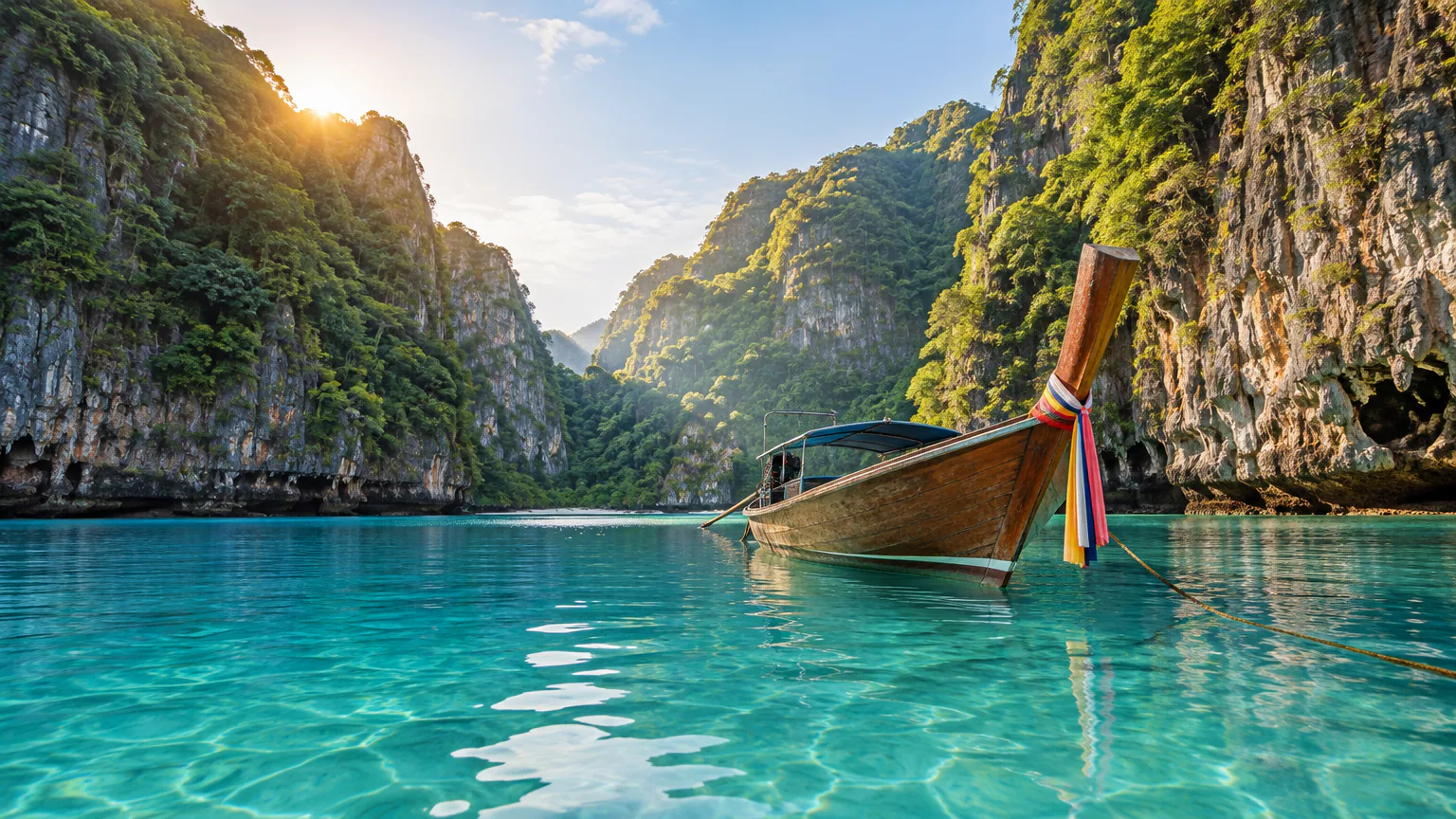
Beach trips usually mean Phuket or Krabi. Phuket has the broadest hotel, nightlife and excursion choices, while Krabi is generally better for limestone scenery and a quieter base. Five to seven days suits Bangkok plus one beach region; ten to fourteen days allows Bangkok, Chiang Mai in the north, and one or two beach areas.
Season shapes the itinerary more than most first-time planners expect. November to February is generally best for Bangkok, northern Thailand and the Andaman coast. Gulf islands such as Koh Samui follow different rainfall patterns, so check conditions for your exact dates.
At a glance
Thailand, in brief
Thailand's essentials for Indian travellers come down to the Thai baht, a 30-day tourism visa exemption for ordinary passport holders effective 15 September 2026, and a passport valid for at least six months. Confirm the time difference and emergency numbers before departure.
Thailand.
Planned around you.
- Currency
- Thai baht (THB)Exchange rates move; check before you travel.
- Language
- Thai; English is commonly used in Bangkok and tourist areasSignage and menus outside cities vary.
- Plug type
- Flat-pin sockets; carry a universal adaptorCheck your device's voltage before charging.
- SIM or eSIM
- Prepaid SIM or eSIM available on arrival or before departureCarry your passport for registration.
- Time difference
- Thailand is ahead of IndiaThe exact gap is not stated in the research used for this guide; confirm on arrival.
- Emergency number
- Not stated in the research used for this guideCheck the official Thailand government tourism information page before travel.
Before You Go to Thailand
Before you go to Thailand, confirm your passport validity, entry proof and flight routing, then arrange insurance and payment cards. Most avoidable problems come from assuming old visa rules still apply or from booking flights without checking direct options from your city.
Passport
Valid for at least six months from your entry date.
Where to get it: Passport issuing office; Thai Embassy New Delhi visa pageCommon mistake: Travelling on a passport close to expiry.
Onward or return ticket
Show proof of onward or return travel at entry.
Where to get it: Airline booking confirmationCommon mistake: Relying on an unconfirmed flight hold.
Accommodation details
Keep hotel or host address and booking reference ready on your phone and in print.
Where to get it: Hotel booking confirmationCommon mistake: Leaving the first night unbooked.
Proof of funds
Carry bank statements or cards showing you can cover the trip.
Where to get it: Your bankCommon mistake: Carrying only one card that may be blocked abroad.
Digital Arrival Card
Check current requirements on the official Thai government information page before departure.
Where to get it: Thailand government tourism information pageCommon mistake: Assuming the visa exemption removes every entry form.
Flight routing
Delhi and Kolkata have nonstop options; Pune and Ahmedabad usually connect.
Where to get it: Airline and route search sitesCommon mistake: Booking a connection with too little time to change terminals.
Travel insurance
Choose a policy that covers medical care and trip interruption.
Where to get it: InsurerCommon mistake: Buying cover without checking exclusions for scooters or water activities.
Useful apps
Grab for rides, a maps app, your airline app and your bank app.
Where to get it: App storesCommon mistake: Installing apps only after arrival, when data may be slow.
Things to know before visiting Thailand start with paperwork, because the visa exemption depends on proof of onward travel, accommodation and funds. Keep printed and phone copies of each item, and use this Thailand travel guide India page alongside the Thailand travel guides for destination detail.
Flight routing from India varies by city. Delhi has frequent nonstop services to Bangkok at about 4.5 hours, and Kolkata is the shortest major-city route at about 2.5 hours. Pune and Ahmedabad usually connect through Mumbai or Delhi, at about 5.5 hours. Compare total journey time, not only the fare, when choosing between a nonstop and a connection.
Money and Payments in Thailand
Carry baht for street food, markets and small transfers, and pay by card where shops display card logos. UPI acceptance is not confirmed for this guide, so check with your bank and card provider before you travel to Thailand.
- Carry baht for small spending
Use cash at street food stalls, markets and small transport operators. Keep small notes so you can pay exact fares.
Money - Use cards at larger outlets
Larger hotels, malls and restaurants usually accept cards. Confirm before paying by card at small shops.
Money - Choose ATMs carefully
Use ATMs inside bank branches or major malls where possible. Decline the on-screen offer to convert to rupees and let your bank set the exchange rate.
Money - Check UPI before you leave
Ask your bank whether international UPI-linked payments are enabled and what foreign-transaction charges apply to card spending abroad.
Payments - Transport fares
Rail trips range from THB 15 to 60, short Grab or taxi trips from THB 40 to 150, and common island ferry transfers from THB 600 to 1,500, depending on route and operator.
Transport - Indicative package budget
Dated 2026 planning range for land-only Thailand packages, per person, excluding airfare: about ₹45,000 for budget travel up to ₹2,00,000 or more for luxury. This is not a Tripstor offer.
Budget - Data and roaming
Buy a prepaid SIM or eSIM for daily data instead of relying on roaming charges.
Connectivity
Cash and cards both have a place. Ask whether a small shop or market stall takes cards before ordering, and keep enough baht for ferries, tuk-tuks and night markets where card payment may not be offered.
For connectivity, buy a prepaid SIM or eSIM rather than relying on roaming for maps and ride-hailing. The Grab app handles most urban rides in Bangkok, so set up your account before you land.
Cultural Tips for Thailand
Thailand's etiquette rules centre on the royal family, Buddhist temples and modest dress. Cover shoulders and knees at temples, remove shoes before entering, and avoid criticism of the monarchy, which can carry legal risk. Those habits form the core of a short Thailand dos and donts list for Indian visitors.
- Temple dress
Cover shoulders and knees at temples such as Wat Arun in Bangkok. Remove shoes before entering halls and carry a shawl for quick cover-ups.
Religious sites - Royal family
Speak respectfully about the royal family and avoid jokes or comments about it. Criticism of the monarchy can have legal consequences in Thailand.
Respect - Head and feet
Do not touch people's heads, and avoid pointing your feet at people, Buddha images or altars.
Customs - Public affection
Keep displays of affection low-key in public, especially near temples and monks.
Customs - Tipping
Tipping is appreciated rather than required. Round up or leave small change for good service in restaurants and for drivers.
Money
Wat Arun in Bangkok is a practical place to apply these rules. Arrive in long trousers or a long skirt, carry a shawl or sarong for shoulders, and expect to take off shoes at the entrance to halls.
For daily life, avoid touching people's heads, do not point your feet at people or religious objects, and keep public displays of affection low-key. Tipping is appreciated rather than required, so rounding up the bill is enough in most restaurants.
Food Tips
Pad Thai, Tom Yum and Khao Soi are the dishes most Indian first-timers will recognise on Thai menus, and street stalls in Bangkok and Chiang Mai serve them daily. Vegetarian travellers should ask for vegetable-based versions and look for signage marked jay, a term for vegetarian and vegan food.
- Bangkok and across Thailand
Pad Thai
Stir-fried rice noodles with egg, tofu or shrimp, sold at many street stalls.
Best forFirst meal in Thailand
For vegetarian food, ask for tofu and no shrimp or fish sauce.
- Bangkok
Tom Yum
Hot and sour soup flavoured with lemongrass and lime leaves.
Best forSpice lovers
Ask whether the stock is vegetable-based if you are vegetarian.
- Chiang Mai
Khao Soi
Curried coconut noodle soup typical of northern Thailand.
Best forRegional dishes
Choose a busy stall for freshly cooked noodles.
- Bangkok and northeast Thailand
Som Tam
Green papaya salad with chilli, lime and peanuts.
Best forLighter, spicy meals
Many versions include dried shrimp; ask for it without.
- Bangkok and Chiang Mai
Mango sticky rice
Sweet sticky rice served with ripe mango and coconut cream, usually as a dessert.
Best forDessert
Share one portion between two if you are tasting several dishes.
- Central Bangkok
Indian restaurants in central Bangkok
Indian restaurants operate in central Bangkok, where staff can explain spice levels and vegetarian dishes.
Best forFamiliar Indian flavours
Ask staff about spice levels before ordering.
- Bangkok and Chiang Mai
Jay (vegetarian) food stalls
Stalls marked with the jay sign serve vegetable-based dishes.
Best forVegetarian travellers
Look for the jay sign on stall signage and confirm ingredients.
Start with busy street stalls for the dishes below, then compare with restaurant versions. Heat levels vary widely, so ask for milder chilli if you prefer it.
Indian vegetarian options exist in central Bangkok, and Thai vegetarian food is marked with the jay sign. Confirm fish sauce and shrimp paste in any dish you order, because both are common in Thai cooking.
Safety in Thailand for Indian Tourists
Thailand is generally manageable for Indian travellers who plan transport, keep papers ready and avoid common tourist traps, but no destination is risk-free. Frequent issues include taxi and tuk-tuk overcharging, missed ferry costs, entry paperwork gaps and scooter accidents.
- Tuk-tuk or taxi overcharging
How to avoid itAgree on a metered fare or insist on the meter. Use Grab for fares shown in the app, and decline drivers who offer very cheap rides in exchange for shop visits.
- Shop-visit detours
How to avoid itDecline tours that stop at tailoring or souvenir shops unless you chose that stop in advance.
- Entry refused or delayed for incomplete papers
How to avoid itCarry a passport valid for at least six months, onward or return ticket, accommodation details and proof of funds, and check the Digital Arrival Card before departure.
- Scooter rental without a valid licence
How to avoid itHold a valid licence, check insurance terms, photograph the bike before riding and wear a helmet.
- Island transfer costs underestimated
How to avoid itBudget THB 600 to 1,500 for common island ferry transfers and confirm the route and operator before booking.
- Heat, sun and stomach upset
How to avoid itDrink bottled or filtered water, use sunscreen and choose busy food stalls. Buy travel insurance that covers medical care, and check current advice because safety varies by area and season.
Everyday problems for visitors usually involve transport, paperwork and weather. Keep copies of entry documents, use metered transport or booked rides, and plan around the wet months on some coasts.
No safety guarantee applies to any destination. Check current travel advice from your government before departure and review the official Thai government information page for updates.
Packing by Season
Pack light cotton clothing, a rain layer and temple-appropriate outfits for any month. November to February is generally best for Bangkok, northern Thailand and the Andaman coast, so warm layers matter more for evening trips to Chiang Mai in that window.
Light cotton clothing
Breathable clothes suit Bangkok and island heat. Pack several changes for humid days.
Common mistake: Packing only heavy fabrics for a coastal trip.
Rain layer
A packable rain jacket or poncho and quick-dry shoes for wet-season showers.
Common mistake: Relying on an umbrella for island transfers.
Temple-appropriate outfit
Long trousers or a long skirt, sleeves that cover the shoulders, and a shawl or sarong to carry.
Warm layer for northern evenings
A fleece or light jacket for Chiang Mai evenings during the November to February period.
Swimwear and water shoes
For beaches in Phuket, Krabi and Koh Samui, plus ferry transfers.
Sun protection
Hat, sunglasses and sunscreen, reapplied after swimming.
Common mistake: Buying sunscreen only after a burn.
Power and documents
A universal adaptor, a power bank and a phone folder with copies of your entry documents.
Beach trips add swimwear, water shoes and a dry bag for ferry rides. Temple visits need covered shoulders and knees in every season, so keep one outfit that meets that rule in your daypack.
The wet months bring showers that can disrupt island ferries, so keep a flexible plan and a light rain jacket close at hand.
Plan Your Thailand Trip With Tripstor
Tripstor can prepare a personalised quote for your Thailand trip from your departure city, travel dates, budget and interests such as Bangkok, Phuket, Krabi or Chiang Mai. Share your dates and departure city to start. Quotes are not instant bookings, and this page does not take payment.
Include your departure city such as Delhi, Mumbai or Kolkata, preferred travel dates, trip length, number of travellers and whether you want a land-only package or flights as well. Tripstor's Thailand tour packages catalogue is the starting point for the quote, and the dated planning ranges in this guide are background only, not Tripstor offers.
Holiday ideas to start from
Reviewed itineraries for this destination — personalise with a specialist, never an instant booking.
Chiang Mai Culture Trail 4 Nights: Thailand Culture Package 2026
From₹50,000per adult, twin sharing, land onlyKoh Samui Resort Stay Premium 5 Nights: 2026 Thailand Luxury Package
From₹1,71,400per adult, twin sharing, land only
From idea to itinerary, with a real person.
- Share your plan
Dates, departure city, travellers and the moments you’d love. It only takes a minute.
- Shape it with a specialist
A real person refines the route, stays and pace with you. Change anything.
- Review your quote
A clear, personalised quote with confirmed inclusions. No payment to enquire.
From our travel specialists
What our team sees when planning these trips, beyond what the guidebooks say.
Confirmed 11 Oct 2026
Travellers report that Indian food in Thailand can be mediocre and unexpectedly expensive, so do not assume it will match food at home. They also wish they had prepared for temple dress rules, intense heat, scams and the need to carry some Thai baht in small notes.
- Practical
Money and local transport are frequent friction points: travellers need small Thai-baht notes for stalls and transport, and should be alert to tuk-tuk overcharging or claims that temples are closed. In Bangkok, BTS and MRT are generally more practical than taxis in heavy traffic; Indian food is also often reported as overpriced or disappointing.
Before you go
Straight answers to help you plan — then personalise the trip with a specialist.
8 answered belowAsk a specialist anything about this trip — there’s no obligation.
Ask a specialistIs Thailand visa-free for Indian citizens?
Ordinary Indian passport holders get a 30-day tourism visa exemption, effective 15 September 2026 until further notice. Entry still depends on a passport valid for at least six months, proof of onward or return travel, accommodation details and sufficient funds. Check the Thai Embassy visa page before you book, because entry conditions change.
What are the most useful Thailand tips for Indian tourists?
Carry baht for street food and small shops, and use metered taxis or Grab rather than negotiated tuk-tuk fares. Cover shoulders and knees at temples, and avoid criticising the royal family. Keep your entry papers ready, and build a first trip around Bangkok plus one beach region, which suits a trip of five to seven days.
How long is the flight from India to Thailand?
Typical nonstop flight times are about 2.5 hours from Kolkata, 3.5 from Chennai, 4 from Mumbai, Bengaluru and Hyderabad, and 4.5 from Delhi. Pune and Ahmedabad usually need a connection, around 5.5 hours, commonly through Mumbai or Delhi. Check schedules for your exact travel date before booking.
Can I pay with UPI in Thailand?
UPI acceptance in Thailand is not confirmed for this guide, so do not plan on it. Ask your bank whether international UPI payments are enabled and what foreign-transaction charges apply. For daily spending, carry Thai baht for street food, markets and small transfers, and keep a card with international use enabled.
How much does a Thailand tour package cost from India?
As a planning range for this 2026 guide, a land-only Thailand package is about ₹45,000 per person for budget travel and ₹2,00,000 or more for luxury travel. Figures are per person, exclude airfare and depend on dates, hotels and sharing. These are indicative estimates, not Tripstor offers; a personalised quote confirms the final price.
Is Phuket or Krabi better for a first trip to Thailand?
Phuket has broader hotel, nightlife and excursion choices, which suits travellers who want more options. Krabi is generally better for limestone scenery and a quieter base. Pick Phuket for variety and Krabi for calmer days, and check ferry or transfer costs if you plan island hops.
Is Thailand safe for Indian women travelling alone?
No destination can be guaranteed safe, so plan around known risks. Use metered taxis or Grab at night, share your itinerary with someone at home, keep valuables out of sight, and avoid unlicensed scooter rental. Check your government's current travel advice and confirm your insurance covers medical care before you travel.
Is Thailand suitable for a family holiday?
Yes. Bangkok, Phuket, Krabi and Chiang Mai offer family hotels and manageable sightseeing for different age groups. Keep days shorter in Bangkok heat, choose one beach base to cut transfers, and budget for island ferries, where common transfers range from THB 600 to 1,500 depending on route and operator.