
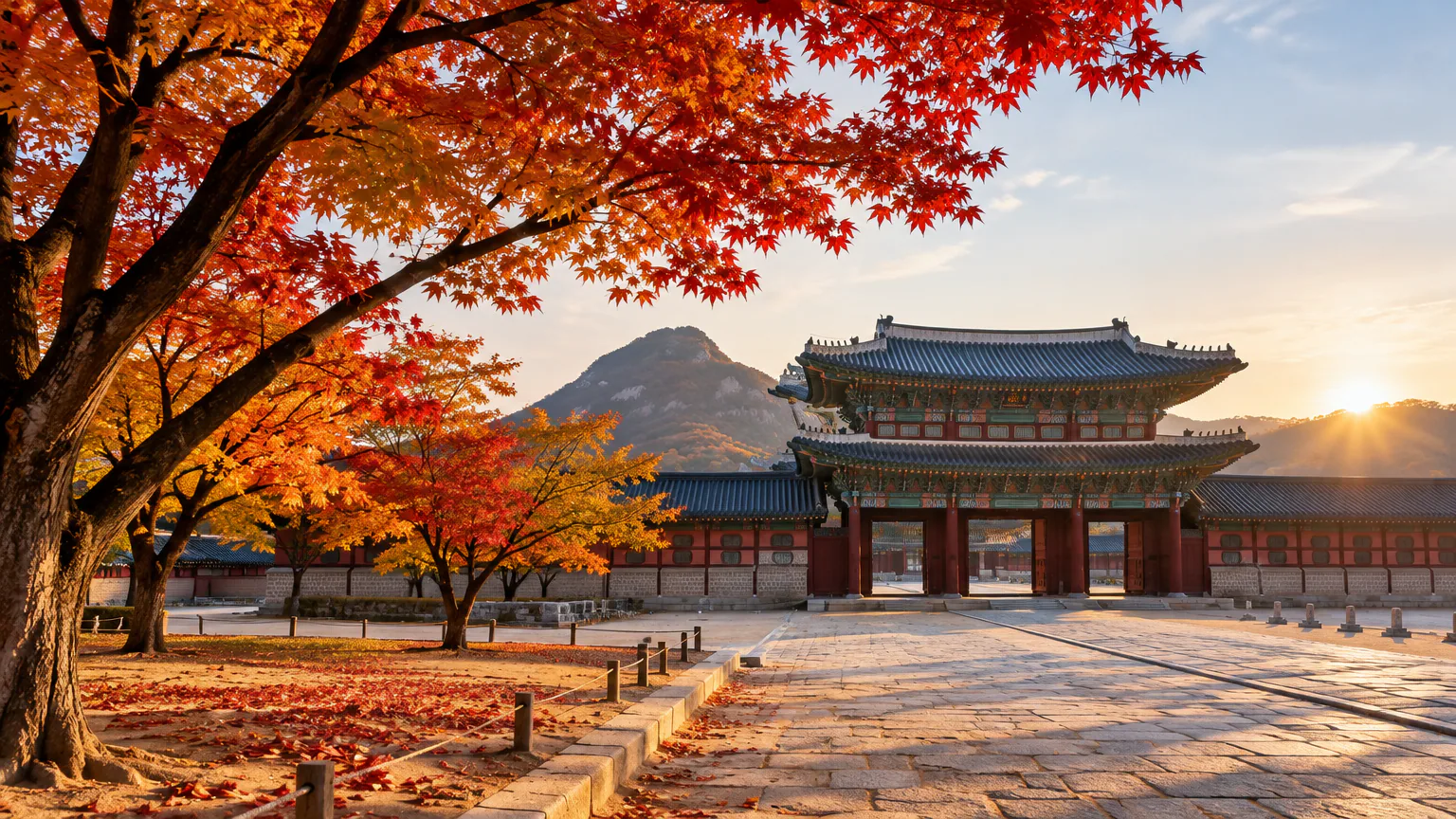
How Many Days Do You Need in South Korea?
Five to seven days is the practical minimum for a first South Korea itinerary that covers Seoul and one other region. Three days limits you to Seoul. Ten to fourteen days allows Seoul, Busan, Gyeongju and Jeju without rushing every transfer.
Sample South Korea Itineraries by Duration
Duration decides whether you see one city or four regions. Three days covers Seoul only, five days adds one excursion, seven days reaches Busan and Gyeongju or Jeju, and ten days fits Seoul, Gyeongju, Busan and Jeju with realistic transfer days.
3-Day South Korea Itinerary
Best forShort breaks, stopovers and travellers who want Seoul only
StrengthsLowest cost, no internal flights, easy metro-based sightseeing
Trade-offsNo Busan, Jeju or Gyeongju; tight against arrival and departure days
5-Day South Korea Itinerary
Best forFirst-timers with one week of leave who want Seoul plus one excursion
StrengthsCovers palaces, modern districts, Nami Island or DMZ, food and shopping
Trade-offsJeju is impractical unless domestic flight timings are favourable
7-Day South Korea Itinerary
Best forTravellers who want Seoul, Busan and Gyeongju or Jeju
StrengthsIncludes a KTX experience and a coastal city; good balance of heritage and modern Korea
Trade-offsOne region must be dropped; Jeju needs a domestic flight
10-Day South Korea Itinerary
Best forTravellers who want Seoul, Gyeongju, Busan and Jeju
StrengthsCovers four core regions with two nights in Jeju and realistic pacing
Trade-offsHigher cost and more hotel changes; needs advance KTX and flight bookings
South Korea Itinerary Options: 3, 5 and 7 Days
Three ready routes cover the most common leave windows: a 3-day Seoul break, a 5-day Seoul-plus-excursion trip, and a 7-day Seoul, Busan and Gyeongju circuit. Each day lists morning, afternoon and evening plans with a fixed overnight base.
3-Day South Korea Itinerary: Seoul Essentials
A 3-day South Korea itinerary stays entirely in Seoul and covers one royal palace, one traditional neighbourhood, one modern district and one food market. It suits a stopover or a short break, but leaves no room for Busan, Jeju or Gyeongju.
Day01 Stop 1 of 3Arrival, Myeongdong and N Seoul Tower
MorningArrive at Incheon International Airport, clear immigration and transfer to central Seoul by Airport Railroad or airport bus.
AfternoonCheck in, rest and walk Myeongdong for street food and cosmetics shops.
EveningTake the Namsan cable car or bus to N Seoul Tower for city views, then return to Myeongdong for dinner.
Day02 Stop 2 of 3Gyeongbokgung, Bukchon, Insadong and Ikseondong
MorningVisit Gyeongbokgung Palace and watch the changing of the guard; walk to Bukchon Hanok Village.
AfternoonLunch in Insadong, then explore Ikseondong's narrow alleys and cafés.
EveningDinner in Insadong or Jongno, then return to the hotel.
Day03 Stop 3 of 3Hongdae or Gangnam, shopping and departure
MorningChoose Hongdae for indie shops and cafés or Gangnam for department stores and K-pop-related stops.
AfternoonLast shopping and a convenience-store or market snack, then transfer to Incheon for your flight.
EveningDepart from Incheon International Airport.
5-Day South Korea Itinerary: Seoul Plus One Excursion
A 5-day South Korea itinerary adds one full-day excursion to the Seoul essentials. Nami Island and Chuncheon suit nature and seasonal foliage, while the DMZ suits history-focused travellers. Both need an early start and a full day.
Day01 Stop 1 of 5Arrival and central Seoul
MorningArrive at Incheon and transfer to central Seoul.
AfternoonCheck in and walk Myeongdong or Insadong.
EveningDinner near the hotel and early rest.
Day02 Stop 2 of 5Palace, Bukchon and Insadong
MorningGyeongbokgung Palace and the guard-changing ceremony.
AfternoonBukchon Hanok Village, then lunch and browsing in Insadong.
EveningIkseondong cafés and dinner in Jongno.
Day03 Stop 3 of 5Nami Island or DMZ day trip
MorningDepart early for Nami Island and Chuncheon, or join a DMZ tour.
AfternoonContinue the excursion; combine Nami Island with Garden of Morning Calm only if you have a private vehicle.
EveningReturn to Seoul and dine near the hotel.
Day04 Stop 4 of 5Hongdae, Gangnam and shopping
MorningHongdae for cafés, shops and street performances.
AfternoonGangnam for department stores or a K-pop-related stop.
EveningDinner in Gangnam or return to Myeongdong.
Day05 Stop 5 of 5Market visit and departure
MorningVisit a traditional market such as Gwangjang for breakfast and last shopping.
AfternoonTransfer to Incheon International Airport.
EveningDepart from Incheon.
7-Day South Korea Itinerary: Seoul, Busan and Gyeongju
A 7-day South Korea itinerary is the ideal first-trip length. It covers Seoul's palaces and modern districts, a KTX ride to Busan, a Gyeongju heritage day and a return or departure. Jeju is possible only if you swap Gyeongju for a domestic flight.
Day01 Stop 1 of 7Arrival in Seoul
MorningArrive at Incheon and transfer to central Seoul.
AfternoonCheck in and walk Myeongdong.
EveningN Seoul Tower or a neighbourhood dinner.
Day02 Stop 2 of 7Palace and traditional neighbourhoods
MorningGyeongbokgung Palace and Bukchon Hanok Village.
AfternoonInsadong lunch and Ikseondong cafés.
EveningDinner in Jongno.
Day03 Stop 3 of 7Seoul modern districts or excursion
MorningHongdae or Gangnam.
AfternoonShopping or a Nami Island day trip.
EveningReturn to Seoul for dinner.
Day04 Stop 4 of 7KTX to Busan
MorningTake the KTX from Seoul to Busan; the journey takes about 2 hours 15 minutes to 2 hours 45 minutes.
AfternoonCheck in near Seomyeon or Haeundae and visit Haeundae Beach.
EveningSeafood dinner near Jagalchi Market.
Day05 Stop 5 of 7Busan coastal and market circuit
MorningGamcheon Culture Village.
AfternoonJagalchi Market and Gukje Market.
EveningReturn to Haeundae for dinner.
Day06 Stop 6 of 7Gyeongju heritage day trip
MorningTravel to Gyeongju and visit Bulguksa Temple.
AfternoonSeokguram Grotto and the royal tombs.
EveningSee Wolji Pond illuminated, then return to Busan.
Day07 Stop 7 of 7Return or departure
MorningKTX back to Seoul or fly out from Busan if your ticket allows.
AfternoonTransfer to the airport.
EveningDepart.
Where to Base Yourself in South Korea
Seoul works as the main base for palace and K-culture days, Busan for the coast and markets, Gyeongju for Silla heritage, and Jeju for volcanic landscapes. Each base suits a different part of the trip, and changing hotels too often wastes sightseeing time.
- Myeongdong, Insadong or Hongdae
Seoul
Combines royal palaces, K-pop districts, high-speed retail, cafés and neighbourhood food markets in one compact base.
Best forFirst-timers, families, shoppers and K-culture travellers
Cluster palace, Bukchon and Insadong on one day; avoid adding the DMZ to the same day because transfers and security procedures consume substantial time.
- Seomyeon or Haeundae
Busan
Offers a contrasting coastal Korea experience with Haeundae, Gamcheon, Jagalchi and seafood markets.
Best forCoastal scenery, markets and seafood
Stay near Seomyeon or Haeundae and use KTX rather than a long road transfer from Seoul.
- Historic core
Gyeongju
Ancient Silla capital with Bulguksa, Seokguram, royal tombs and illuminated Wolji Pond.
Best forHeritage-focused travellers and photographers
Use an overnight stay rather than a rushed day trip; the historic core is spread across multiple sites.
- Jeju City, Seogwipo or east coast
Jeju Island
Volcanic landscapes, Hallasan, lava formations, waterfalls and coastal drives provide Korea's strongest nature-focused circuit.
Best forNature, hiking and slower-paced travel
A rental car or private vehicle is much more efficient than relying solely on buses, particularly for east-west island routes.
- East coast, Gangwon
Sokcho and Seoraksan
Adds mountain scenery, cable-car views, hiking trails and a seafood-oriented east-coast stop.
Best forHikers and travellers who want a mountain stop
Weather can close or delay cable-car and hiking plans; keep a flexible alternative in the itinerary.
Planning Tips for Your South Korea Travel Plan
Book KTX seats and domestic flights before you leave India, keep arrival and departure days light, and avoid packing too many cities into short trips. Indian ordinary passport holders generally need a visa before tourism travel, so apply early.
- Apply for the visa early
Indian ordinary passport holders generally need to obtain a South Korean visa before tourism travel; visa-free and K-ETA exemption arrangements for selected nationalities do not generally cover Indians. Apply well before your travel dates.
Documents - Book KTX and domestic flights in advance
Seoul to Busan by KTX takes about 2 hours 15 minutes to 2 hours 45 minutes. Reserve seats and any Seoul–Jeju domestic flight early, especially during April–May and September–October.
Transport - Keep arrival and departure days light
Incheon transfers and immigration consume time. Plan only a neighbourhood walk and dinner on Day 1, and keep the final morning close to your hotel before the airport transfer.
Pacing - Choose one excursion, not two
Nami Island and Chuncheon suit nature and foliage; the DMZ suits history. Combining Nami Island with Garden of Morning Calm is tight on public transport and works better with a private vehicle.
Sightseeing - Allow weather flexibility on Jeju and Seoraksan
Cable cars and hiking trails can close or be delayed by weather. Keep a flexible alternative day in the itinerary rather than booking every hour.
Weather - Carry a mix of card and cash
The South Korean won is used. International cards are widely accepted in hotels, department stores and many restaurants, but cash or a local payment option is useful for markets and small vendors.
Money - Combine with nearby destinations only with spare days
A 10–14 day trip can add Jeju or Seoraksan. Adding Japan or another country to a 7-day South Korea itinerary leaves too little time in Korea itself.
Routing
Holiday ideas to start from
Reviewed itineraries for this destination — personalise with a specialist, never an instant booking.
Seoul Family Theme Park Stay 5 Nights: South Korea Family Package 2026
From₹1,07,500per adult, twin sharing, land only
From idea to itinerary, with a real person.
- Share your plan
Dates, departure city, travellers and the moments you’d love. It only takes a minute.
- Shape it with a specialist
A real person refines the route, stays and pace with you. Change anything.
- Review your quote
A clear, personalised quote with confirmed inclusions. No payment to enquire.
Before you go
Straight answers to help you plan — then personalise the trip with a specialist.
8 answered belowAsk a specialist anything about this trip — there’s no obligation.
Ask a specialistDo Indians need a visa for South Korea?
Yes. Indian ordinary passport holders generally need to obtain a South Korean visa before tourism travel; visa-free and K-ETA exemption arrangements for selected nationalities do not generally cover Indians. Apply through the official application process well before your travel dates and do not assume visa-free entry.
What is the best time to visit South Korea?
April–May and September–October are the strongest overall periods for comfortable temperatures, sightseeing and seasonal scenery. Summer is humid and wetter, while winter is cold and dry. Cherry blossom and autumn foliage weeks are the busiest, so book Seoul hotels and KTX seats early.
How much does a South Korea tour package cost from India?
Indicative land-only twin-sharing prices are about ₹85,000 per person for budget, ₹1,25,000 for standard, ₹1,90,000 for premium and ₹3,25,000 or more for luxury, excluding international airfare and visa. These are planning ranges, not Tripstor package offers, and peak-season flights can raise the total.
How many days are enough for South Korea?
Five days covers Seoul and one short excursion; seven days allows Seoul, Busan and Gyeongju or Jeju; ten to fourteen days suits a broader Seoul–Busan–Gyeongju–Jeju circuit. Three days is tight and limits you to Seoul only, with no room for regional transfers.
Which places should I visit in South Korea?
The most practical first-trip combination is Seoul, Busan, Gyeongju and either Jeju Island or Seoraksan, depending on available days and season. Seoul covers palaces and K-culture, Busan adds coast and markets, Gyeongju brings Silla heritage, and Jeju or Seoraksan adds nature.
Is South Korea expensive for Indian travellers?
It can be moderate to expensive, especially for accommodation in Seoul and peak-season flights, but metro travel, local restaurants and convenience-store meals can keep daily costs manageable. Indicative land-only twin-sharing prices start around ₹85,000 per person for a budget trip, excluding airfare and visa.
What currency is used in South Korea and can Indians use cards?
The South Korean won is used. International cards are widely accepted in hotels, department stores and many restaurants, but cash or a local payment option is useful for markets and small vendors. Carry some won for street food, traditional markets and small shops.
How do I travel between Seoul and Busan?
The KTX high-speed train is usually the most convenient option, taking approximately 2 hours 15 minutes to 2 hours 45 minutes depending on service. Book seats in advance for peak seasons. Flying is possible but adds airport transfers at both ends, so KTX is simpler for most itineraries.