
How Many Places Can You Cover?
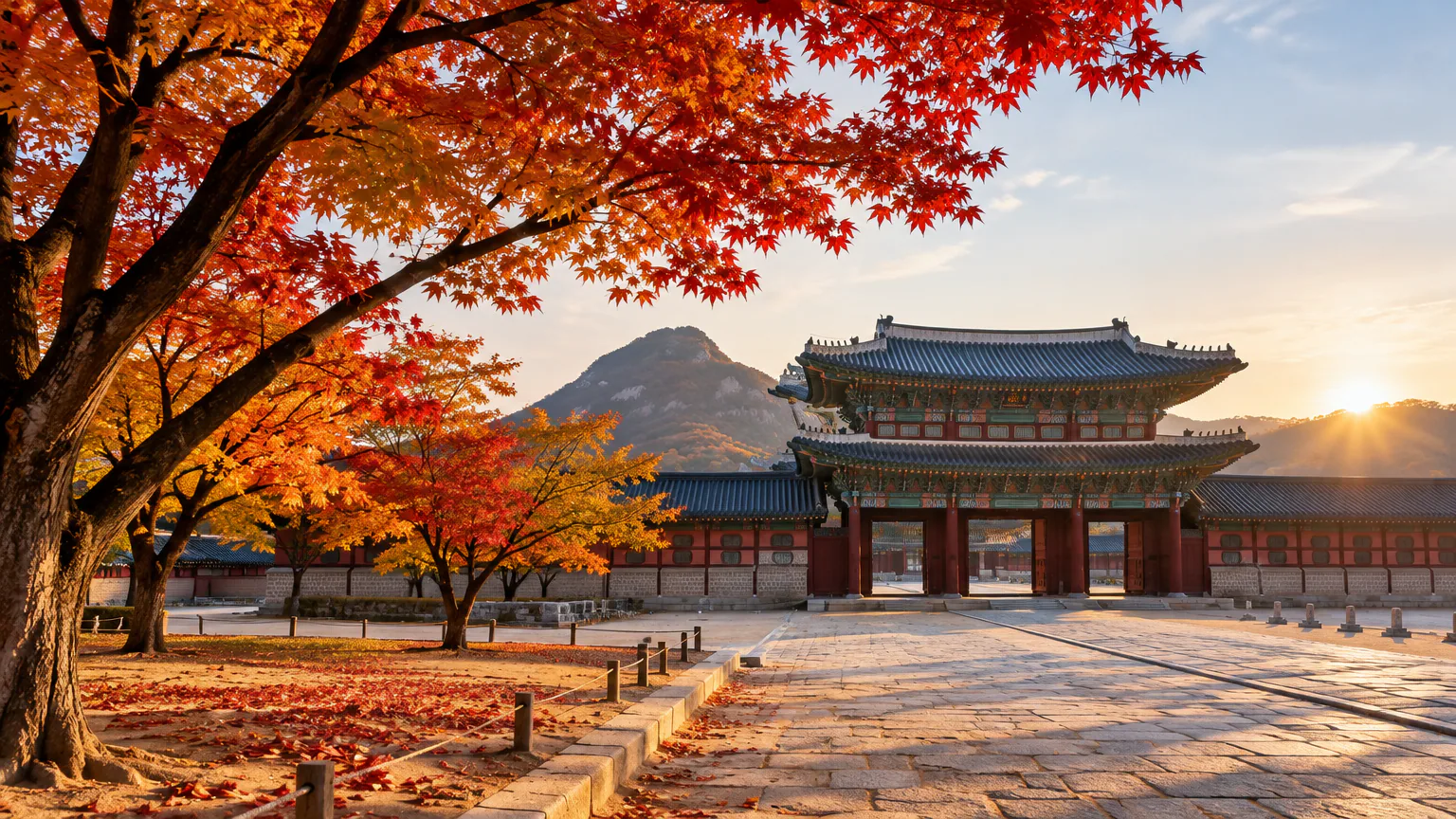
South Korea has over a dozen must-see places, but a first trip usually focuses on three main areas: the Seoul metropolitan region, the southeastern Gyeongju-Busan corridor, and Jeju Island. These three zones cover the country's core heritage, coastal, and volcanic highlights within a realistic 7 to 10-day itinerary.
The country's must-see places cluster into three geographic zones. The Seoul region includes royal palaces, Bukchon Hanok Village, and day trips to Nami Island. The southeast corridor links Gyeongju's Silla-era tombs and temples with Busan's Haeundae Beach and Jagalchi Market. Jeju Island, south of the mainland, adds Hallasan and lava-tube caves. A 7-day trip can cover Seoul and one other zone; 10 to 14 days allows all three.
At a glance
South Korea, in brief
South Korea's must-see places span Seoul, Busan, Gyeongju, and Jeju Island. An ideal first trip runs 7 to 10 days, using Seoul as the primary base with KTX trains to Busan and Gyeongju. The best seasons are April-May and September-October. Entry fees for major attractions typically range from free to about 5,000 won.
South Korea.
7-10 days
- Must-see places
- Seoul, Busan, Gyeongju, Jeju IslandSeoul for palaces and K-pop; Busan for coast and markets; Gyeongju for Silla heritage; Jeju for volcanic nature.
- Ideal days
- 7-10 days5 days covers Seoul and one excursion; 7 days adds Busan or Gyeongju; 10-14 days includes Jeju.
- Best base
- SeoulSeoul has the most flight connections from India and is the hub for KTX trains to other regions.
- Best season
- April-May and September-OctoberComfortable temperatures and seasonal scenery; cherry blossoms in spring, autumn foliage in fall.
- Typical entry fee range
- Free to 5,000 wonMany temples and palaces charge a small admission; some sites like Bukchon Hanok Village are free to walk.
Top Places in South Korea
The top places in South Korea include Gyeongbokgung Palace in Seoul, Haeundae Beach in Busan, Bulguksa Temple in Gyeongju, and Hallasan on Jeju Island. These sites represent the country's royal history, coastal culture, Buddhist heritage, and volcanic geography. Most are accessible by public transport or short taxi rides from city centers.
- Seoul
Gyeongbokgung Palace
The main royal palace of the Joseon dynasty, originally built in 1395. It houses the National Palace Museum and offers a changing of the guard ceremony.
Best forHistory and culture
Closed on Tuesdays. Wear comfortable shoes as the grounds are extensive. The guard ceremony is at 10:00 and 14:00.
- Seoul
Bukchon Hanok Village
A preserved neighborhood of traditional Korean hanok houses between Gyeongbokgung and Changdeokgung palaces. It remains a residential area.
Best forPhotography and architecture
Visit on weekdays to avoid crowds. Keep noise low as people live here. Free to walk.
- Seoul
N Seoul Tower
A communication and observation tower on Namsan Mountain, offering panoramic views of the city. The tower is 236 meters tall.
Best forViews and couples
Take the cable car or a bus; the walk uphill is steep. Go near sunset for day and night views.
- Busan
Haeundae Beach
South Korea's most famous beach, about 1.5 kilometers long. It hosts the Busan International Film Festival and is busy in summer.
Best forBeach and nightlife
Swim in designated areas only. The beach is crowded in July-August; visit in the morning for space.
- Busan
Gamcheon Culture Village
A hillside neighborhood with colorful houses, murals, and art installations. It was redeveloped as a cultural village in 2009.
Best forArt and photography
Wear sturdy shoes for the steep alleys. Buy a map at the entrance to find key photo spots.
- Busan
Jagalchi Market
Korea's largest seafood market, where vendors sell fresh catch and visitors can eat raw fish on the spot. It has operated for decades.
Best forFood and local culture
Go in the morning for the freshest selection. Agree on prices before ordering.
- Gyeongju
Bulguksa Temple
A UNESCO World Heritage Site and head temple of the Jogye Order of Korean Buddhism. It dates to the 8th century Silla period.
Best forHeritage and spirituality
Modest dress is recommended. The temple is about 40 minutes by bus from Gyeongju station.
- Gyeongju
Seokguram Grotto
A UNESCO World Heritage Site featuring a granite Buddha statue in an artificial grotto, built in the 8th century. It sits on Mount Toham.
Best forHeritage and views
Combine with Bulguksa; buses run between them. The grotto is a short walk from the bus stop.
- Gyeongju
Donggung Palace and Wolji Pond
A Silla-era palace site with a reconstructed pond and pavilions. It is illuminated at night, reflecting on the water.
Best forNight views and history
Visit after dark for the illumination. Entry fee applies; check closing time seasonally.
- Jeju Island
Hallasan
South Korea's highest mountain at 1,947 meters, a dormant volcano and UNESCO Biosphere Reserve. Several trails lead to the crater lake.
Best forHiking and nature
Trails may close in winter due to snow. Start early; the full hike takes 8-9 hours.
- Jeju Island
Manjanggul Cave
A UNESCO-listed lava tube, one of the longest in the world. Visitors can walk about 1 kilometer inside.
Best forGeology and adventure
Wear non-slip shoes; the floor is uneven and wet. Bring a light jacket as it is cool inside.
- Jeju Island
Seongsan Ilchulbong
A tuff cone formed by volcanic eruptions, rising 182 meters above sea level. It is a UNESCO Natural Monument.
Best forSunrise and hiking
Climb for sunrise views; the ascent takes about 30 minutes. Check opening hours seasonally.
- Gapyeong, near Seoul
Nami Island
A half-moon shaped island in the Han River, known for tree-lined paths and the drama 'Winter Sonata'. It is a 1-hour train plus ferry ride from Seoul.
Best forDay trips and couples
Buy a combined train and ferry ticket. Weekdays are less crowded than weekends.
- Gapyeong, near Seoul
Garden of Morning Calm
A botanical garden with themed sections and seasonal flower displays. It is about 30 minutes by taxi from Nami Island.
Best forGardens and photography
Best in spring for blossoms and autumn for foliage. Check lighting festival dates in winter.
- Sokcho
Seoraksan National Park
A mountain park with granite peaks, hiking trails, and a cable car to Gwongeumseong Fortress. It is a UNESCO Biosphere Reserve.
Best forHiking and nature
Weather can change quickly; carry a rain jacket. The cable car may have long queues on weekends.
Underrated Places in South Korea Most Tourists Miss
Underrated places in South Korea include Jeonju Hanok Village, Andong Hahoe Folk Village, Boseong Green Tea Fields, and Ulleungdo Island. These destinations offer traditional culture, tea plantations, and remote island scenery without the crowds of Seoul or Busan. They suit travelers with extra days and an interest in deeper cultural immersion.
- Jeonju
Jeonju Hanok Village
A large cluster of traditional hanok houses, over 700, in the city of Jeonju. It is known for bibimbap and craft workshops.
Best forCulture and food
Try the local bibimbap. Rent a hanbok for photos; many shops offer rentals.
- Andong
Andong Hahoe Folk Village
A UNESCO World Heritage Site preserving Joseon-era architecture and clan traditions. It is home to the Hahoe Mask Dance.
Best forHeritage and traditions
Check mask dance performance times. The village is about 40 minutes by bus from Andong station.
- Boseong
Boseong Green Tea Fields
Rolling hills of green tea bushes, Korea's largest tea plantation. The fields are open for walking and have a tea museum.
Best forNature and photography
Visit in May for the greenest leaves. Wear comfortable shoes for the hillside paths.
- East Sea
Ulleungdo Island
A volcanic island with rugged cliffs and hiking trails. It is about 3 hours by ferry from Mukho or Pohang.
Best forAdventure and remote scenery
Ferries can be cancelled in rough weather; keep a buffer day. Book ferry tickets in advance.
Places by Type of Experience
Families enjoy Seoul's theme parks and Jeju's beaches, couples prefer Nami Island and N Seoul Tower, adventure travelers head to Seoraksan and Hallasan, and culture seekers focus on Gyeongju and Jeonju. Each traveler type has distinct places that match their interests, with trade-offs in travel time and seasonality.
Families
Best forSeoul (Lotte World, N Seoul Tower), Jeju (beaches, Manjanggul Cave)
StrengthsSeoul has excellent public transport and many indoor attractions; Jeju has gentle beaches and family-friendly resorts.
Trade-offsLong walking distances in palaces and markets can be tiring for young children; Jeju requires a rental car or tours.
Couples
Best forNami Island, N Seoul Tower, Jeju's coastal drives
StrengthsRomantic settings like Nami Island's tree paths and N Seoul Tower's night views; Jeju has scenic drives and quiet cafes.
Trade-offsNami Island can be crowded on weekends; Jeju's weather may disrupt outdoor plans.
Adventure travelers
Best forSeoraksan, Hallasan, Ulleungdo Island
StrengthsChallenging hikes with rewarding views; Ulleungdo offers remote trails and ferry adventure.
Trade-offsWeather can close trails or cancel ferries; these places require more time and planning.
Culture travelers
Best forGyeongju, Jeonju, Andong Hahoe Folk Village
StrengthsDeep immersion in Silla and Joseon history; UNESCO sites and traditional villages.
Trade-offsSome sites are spread out and require buses or taxis; English signage may be limited.
Suggested Order
A realistic 7-day route starts in Seoul for 3 days, takes the KTX to Gyeongju for 1 night, continues to Busan for 2 nights, and returns to Seoul. This order groups nearby places and uses efficient rail links. An optional extension to Jeju Island adds 3 days by flight.
Day01 Stop 1 of 7Arrive in Seoul
Arrive at Incheon International Airport, transfer to hotel, and explore a nearby neighborhood like Myeongdong.
MorningArrival and immigration; take the Airport Railroad Express (AREX) to Seoul Station.
AfternoonCheck in and rest; walk around Myeongdong for street food and shopping.
EveningDinner at a local restaurant; optional N Seoul Tower for night views.
Day02 Stop 2 of 7Seoul Palaces and Culture
Visit Gyeongbokgung Palace, Bukchon Hanok Village, and Insadong.
MorningGyeongbokgung Palace; watch the changing of the guard at 10:00.
AfternoonWalk to Bukchon Hanok Village, then Insadong for crafts and tea.
EveningDinner in Insadong; try traditional Korean cuisine.
Day03 Stop 3 of 7Seoul Modern and Markets
Explore Gangnam, COEX Mall, and Dongdaemun Design Plaza.
MorningGangnam area; visit Bongeunsa Temple.
AfternoonCOEX Mall and Starfield Library; then Dongdaemun Design Plaza.
EveningDongdaemun night market for shopping and food.
Day04 Stop 4 of 7Seoul to Gyeongju
Take KTX to Gyeongju; visit Bulguksa Temple and Seokguram Grotto.
MorningKTX from Seoul to Gyeongju (about 2 hours).
AfternoonBus to Bulguksa Temple and Seokguram Grotto.
EveningDonggung Palace and Wolji Pond illumination.
Day05 Stop 5 of 7Gyeongju to Busan
Morning in Gyeongju, then train to Busan; visit Haeundae Beach.
MorningVisit Daereungwon Tomb Complex and Cheomseongdae Observatory.
AfternoonTrain to Busan (about 30 minutes); check in near Haeundae.
EveningHaeundae Beach and dinner at a seafood restaurant.
Day06 Stop 6 of 7Busan Highlights
Explore Gamcheon Culture Village, Jagalchi Market, and Gwangalli Beach.
MorningGamcheon Culture Village; arrive early to avoid crowds.
AfternoonJagalchi Market for seafood lunch; then Gwangalli Beach.
EveningGwangalli Beach for night views of Gwangan Bridge.
Day07 Stop 7 of 7Busan to Seoul
Return to Seoul by KTX; optional shopping or departure.
MorningKTX from Busan to Seoul (about 2.5 hours).
AfternoonLast-minute shopping in Hongdae or Myeongdong.
EveningDeparture from Incheon International Airport.
Visiting Tips
Buy a T-money card for metro and bus travel in Seoul and Busan. Major palaces close on certain weekdays, so check schedules. KTX trains require seat reservations for popular routes. Dress modestly at temples and remove shoes in hanok houses. Learn basic Korean phrases for markets and small restaurants.
- Transport cards
Purchase a T-money card at convenience stores or metro stations. It works on Seoul and Busan metros, buses, and some taxis. Reload at kiosks.
Transport - Palace opening days
Gyeongbokgung Palace is closed on Tuesdays. Other palaces like Changdeokgung have different closure days. Check official websites before visiting.
Sightseeing - KTX reservations
Book KTX tickets in advance for Seoul-Busan routes, especially on weekends and holidays. Use the Korail website or app.
Transport - Temple etiquette
Dress modestly at temples; avoid shorts and sleeveless tops. Speak quietly and do not disturb worshippers. Some temples require shoe removal.
Etiquette - Cash and cards
Cards are widely accepted in hotels and department stores, but carry some cash for markets and small vendors. ATMs may not accept foreign cards.
Money - Language
Learn basic Korean phrases like 'annyeonghaseyo' (hello) and 'gamsahamnida' (thank you). English signage is common in Seoul but less so in rural areas.
Communication
Holiday ideas to start from
Reviewed itineraries for this destination — personalise with a specialist, never an instant booking.
Seoul Family Theme Park Stay 5 Nights: South Korea Family Package 2026
From₹1,07,500per adult, twin sharing, land only
From idea to itinerary, with a real person.
- Share your plan
Dates, departure city, travellers and the moments you’d love. It only takes a minute.
- Shape it with a specialist
A real person refines the route, stays and pace with you. Change anything.
- Review your quote
A clear, personalised quote with confirmed inclusions. No payment to enquire.
From our travel specialists
What our team sees when planning these trips, beyond what the guidebooks say.
Confirmed 11 Oct 2026
The clearest reported mistake is over-scheduling: trying to combine Seoul, Busan and Jeju too quickly. Travellers specifically advise allowing at least four nights for Jeju and building in more relaxed time rather than booking every day tightly.[1]
Myeongdong is the clearest traveller recommendation for a first visit because it is central, convenient for sightseeing, shopping and food, and makes a practical base for Seoul’s main attractions.[1]
Local transport is the most consistently reported practical issue: visitors should buy and load a T-money card for Seoul and Busan subways and buses. Indian travellers are also advised to arrange a SIM or pocket Wi-Fi at the airport and seek vegetarian-friendly restaurants, particularly in Seoul and Busan.[2][3]
The available traveller report does not say that a particular attraction disappoints many people, but it does prefer Gwangalli over Haeundae in Busan, especially for the beach and bridge views.[1]
Before you go
Straight answers to help you plan — then personalise the trip with a specialist.
8 answered belowAsk a specialist anything about this trip — there’s no obligation.
Ask a specialistDo Indians need a visa for South Korea?
Yes. Indian ordinary passport holders generally need to obtain a South Korean visa before tourism travel. Visa-free and K-ETA exemption arrangements for selected nationalities do not generally cover Indians. Apply at the Korean embassy or consulate well before your trip.
What is the best time to visit South Korea?
April-May and September-October are the strongest overall periods for comfortable temperatures, sightseeing, and seasonal scenery. Spring brings cherry blossoms, while autumn offers colorful foliage. Summer can be hot and rainy, and winter is cold, especially in Seoul.
How much does a South Korea tour package cost from India?
Indicative land-only twin-sharing prices are about ₹85,000 per person for budget, ₹1,25,000 for standard, ₹1,90,000 for premium, and ₹3,25,000 or more for luxury, excluding international airfare and visa. These are planning ranges, not Tripstor offers.
How many days are enough for South Korea?
Five days covers Seoul and one short excursion; seven days allows Seoul, Busan, and Gyeongju or Jeju; ten to fourteen days suits a broader Seoul-Busan-Gyeongju-Jeju circuit. Most first-time visitors find 7 to 10 days ideal.
Which places should I visit in South Korea?
The most practical first-trip combination is Seoul, Busan, Gyeongju, and either Jeju Island or Seoraksan, depending on available days and season. Seoul offers palaces and K-pop, Busan has beaches and markets, Gyeongju is rich in Silla heritage, and Jeju provides volcanic landscapes.
Is South Korea expensive for Indian travellers?
It can be moderate to expensive, especially for accommodation in Seoul and peak-season flights, but metro travel, local restaurants, and convenience-store meals can keep daily costs manageable. Budget around ₹5,000-8,000 per day for meals and transport, excluding hotels.
What currency is used in South Korea and can Indians use cards?
The South Korean won is used. International cards are widely accepted in hotels, department stores, and many restaurants, but cash or a local payment option is useful for markets and small vendors. ATMs in convenience stores often accept foreign cards.
How do I travel between Seoul and Busan?
The KTX high-speed train is usually the most convenient option, taking approximately 2 hours 15 minutes to 2 hours 45 minutes depending on service. Trains depart from Seoul Station and arrive at Busan Station. Book seats in advance for weekends.