
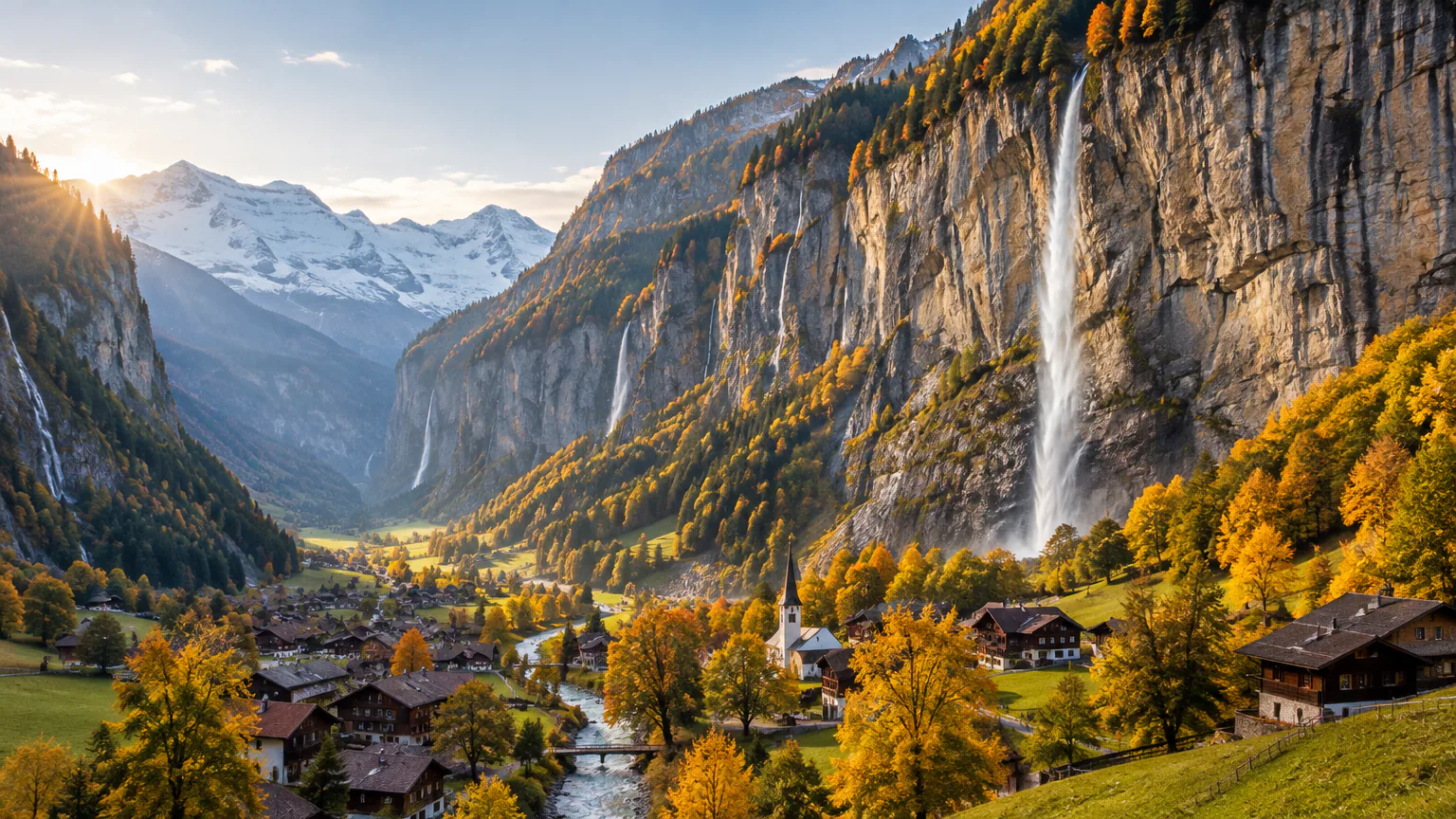
What Most Changes a Switzerland Trip for Indians
The biggest trip-changers for Indian visitors are the Schengen visa timeline, the Swiss franc budget, and whether you buy a Swiss Travel Pass or point-to-point tickets. Getting these three right before booking flights shapes cost, route and pace more than any single attraction.
Switzerland is compact but expensive, and its rail network rewards planning. A Schengen type C visa is mandatory for Indian ordinary passport holders, and the Swiss authorities state a general decision is normally taken within 15 days, though appointments and document requests can extend that.
Budget-wise, a typical land-only twin-sharing package is approximately INR 145,000 for budget, INR 215,000 for standard and INR 325,000 for premium travel, excluding or varying by airfare and inclusions. Local transport costs add up: urban day passes commonly cost roughly CHF 8-15, while mountain excursions are often CHF 50-250 return depending on destination and discounts.
Decide early whether a Swiss Travel Pass or point-to-point tickets suit your route, because this single choice affects both daily spend and flexibility.
At a glance
Switzerland, in brief
Switzerland uses the Swiss franc (CHF), not the euro, and Indian travellers need a Schengen type C visa for stays up to 90 days in any 180-day period. Plug type J, local SIM or eSIM options, and a 3.5-hour time difference from India are the other essentials to sort before departure.
Switzerland.
Planned around you.
- Currency
- Swiss franc (CHF)Some tourist businesses accept euros, but paying in CHF or by card usually gives better exchange-rate control.
- Languages
- German, French, Italian, RomanshEnglish is widely understood in tourist areas.
- Plug type
- Type JIndian travellers need a universal adapter.
- SIM / eSIM
- Local Swiss SIM or eSIMBuying before departure avoids roaming charges.
- Time difference
- India is typically 3.5 hours aheadConfirm exact difference when daylight saving changes.
- Emergency number
- 112Works across Switzerland.
Before You Go to Switzerland
Apply for the Schengen visa well ahead of travel, because appointments and supplementary-document requests can extend processing beyond the stated 15-day general decision. Book flights, rail passes and mountain excursions early, arrange forex and cards, buy travel medical insurance, and download the SBB Mobile app for train planning.
Schengen type C visa application
Submit passport, completed form, photographs, travel medical insurance, accommodation and itinerary evidence, proof of funds, employment or business documents and biometrics through the designated Swiss visa application process in India.
Where to get it: Designated Swiss visa application process in IndiaCommon mistake: Booking non-refundable flights before the visa is granted.
Travel medical insurance
Buy insurance that meets Schengen requirements and covers the full trip duration.
Where to get it: Insurance provider or visa checklistCommon mistake: Buying a policy that does not meet Schengen minimum coverage.
Flights and accommodation
Book early for June, September and early October, which are strong choices for sightseeing and scenic rail.
Where to get it: Airlines and hotelsCommon mistake: Leaving bookings until peak season when prices and availability tighten.
Rail pass decision
Compare a Swiss Travel Pass against point-to-point tickets for your route before buying.
Where to get it: SBB or Swiss Travel Pass providersCommon mistake: Buying a pass for a compact itinerary where point-to-point tickets are cheaper.
Forex and cards
Arrange CHF cash or a card that handles CHF without excessive conversion fees.
Where to get it: Bank or authorised forex dealerCommon mistake: Relying only on euros and losing money on exchange rates.
SBB Mobile app
Download for timetables, platform information and ticket purchases.
Where to get it: App storeCommon mistake: Not checking platform changes on the day of travel.
The visa application needs passport, completed form, photographs, travel medical insurance, accommodation and itinerary evidence, proof of funds, employment or business documents and biometrics. The Swiss authorities state a general decision is normally taken within 15 days, but apply well ahead because appointments and supplementary-document requests can extend processing.
Book flights and accommodation early, especially for June, September and early October, which are strong choices for sightseeing and scenic rail. Compare a Swiss Travel Pass against point-to-point tickets for your route.
Arrange CHF forex or a card that handles CHF, and buy travel medical insurance that meets Schengen requirements. Download the SBB Mobile app for timetables and ticket purchases. The common mistake is treating the visa as a formality and booking non-refundable flights before the visa is granted.
Money and Payments in Switzerland
Switzerland runs on the Swiss franc (CHF), and cards are widely accepted, but carrying some CHF cash helps for small purchases and mountain huts. UPI is not accepted locally, so Indian travellers should rely on cards, CHF cash or a travel card rather than expecting Indian payment apps.
- Carry some CHF cash
Cards are widely accepted, but small mountain huts, some kiosks and rural buses may prefer cash. Withdraw CHF from bank-affiliated ATMs and decline dynamic currency conversion.
Money - UPI is not accepted
Indian payment apps do not work in Switzerland. Rely on cards, CHF cash or a travel card loaded with CHF.
Money - Avoid euro-only reliance
Some tourist businesses accept euros, but paying in CHF or by card usually gives better exchange-rate control.
Money - Buy a local SIM or eSIM
A Swiss SIM or eSIM bought before departure avoids roaming charges. Indian roaming packs can be expensive for data-heavy use.
Connectivity - Budget for mountain excursions separately
Urban day passes commonly cost roughly CHF 8-15, while mountain excursions are often CHF 50-250 return depending on destination and discounts.
Budget
The local currency is the Swiss franc (CHF), although some tourist businesses accept euros; payment in CHF or by card usually gives better control over the exchange rate. Cards are widely accepted in cities and larger establishments, but small mountain huts, some kiosks and rural buses may prefer cash.
ATMs are common in cities and larger towns; use bank-affiliated machines and decline dynamic currency conversion to avoid poor rates. UPI is not accepted in Switzerland, so Indian travellers should not expect to pay by UPI.
For connectivity, a local Swiss SIM or an eSIM bought before departure avoids roaming charges; Indian roaming packs can be expensive. Urban day passes commonly cost roughly CHF 8-15, while mountain excursions are often CHF 50-250 return depending on destination and discounts, so budget for these separately from city transport.
Cultural Tips for Switzerland
Swiss etiquette values punctuality, quiet public behaviour and respect at religious sites. Dress modestly when visiting churches and monasteries, keep voices low on trains, and tip only for good service since a service charge is usually already included in restaurant bills.
- Be punctual
Trains, tours and restaurant reservations run on time. Arriving late can mean missing a connection or losing a table.
Etiquette - Keep public spaces quiet
On trains and in quiet zones, keep phone calls brief and voices low. This is expected behaviour, not just polite.
Etiquette - Dress modestly at religious sites
Cover shoulders and knees, and remove hats inside churches. This applies in cities and mountain villages alike.
Culture - Tip only for good service
A service charge is usually included in restaurant bills. Rounding up or leaving small change for good service is common.
Tipping - Stay on marked trails
In mountain villages, respect private property and stay on marked trails. This is both a safety and courtesy rule.
Culture
Switzerland has four official languages, and English is widely understood in tourist areas, but a greeting in the local language is appreciated. Punctuality matters for trains, tours and restaurant reservations.
On trains and in quiet zones, keep phone calls brief and voices low. For religious sites, dress modestly: cover shoulders and knees, and remove hats inside churches.
Tipping is not obligatory because a service charge is usually included; rounding up or leaving small change for good service is common. When visiting mountain villages, respect private property and stay on marked trails. In restaurants, asking for tap water is uncommon; bottled water is the norm. If you are invited to a home, a small gift such as sweets or flowers is polite.
Food Tips for Indian Travellers in Switzerland
Swiss cuisine centres on cheese, potatoes and bread, so vegetarians and travellers seeking Indian flavours should plan ahead. Look for rösti, fondue and raclette, and in cities such as Zurich, Geneva and Lucerne you will find Indian restaurants and vegetarian options, though they cost more than in India.
- Nationwide
Rösti
A fried potato dish often served with cheese, eggs or vegetables. It is one of the most common Swiss staples and appears on most restaurant menus.
Best forVegetarian-friendly Swiss staple
Ask for a vegetarian version without bacon or meat toppings.
- Nationwide
Fondue
Melted cheese served with bread for dipping. It is a shared dish and usually contains wine, so ask if you prefer an alcohol-free version.
Best forGroup dining and winter meals
Check whether the cheese uses animal rennet if that matters to you.
- Nationwide
Raclette
Melted cheese poured over potatoes, often served with pickles and onions. It is a hearty dish common in mountain regions.
Best forMountain-region dining
Ask for it without meat sides if you want a vegetarian plate.
- Zurich
Indian restaurants in Zurich
Zurich has South Asian restaurants serving curries, biryani and vegetarian thalis. They are useful for travellers who want familiar flavours.
Best forFamiliar Indian meals
Prices are higher than in India; budget accordingly.
- Geneva
Indian restaurants in Geneva
Geneva has Indian restaurants, including vegetarian-friendly options, often near the main station and city centre.
Best forIndian food in western Switzerland
Reserve ahead for dinner in peak season.
- Nationwide
Coop and Migros supermarkets
Supermarkets sell bread, cheese, fruit, yoghurt and ready-to-eat vegetarian items for budget meals.
Best forBudget and vegetarian meals
Buy lunch here before boarding scenic trains to save on dining car prices.
Swiss dishes to try include rösti (fried potato), fondue (melted cheese), raclette (melted cheese over potatoes), and alpine pastries. Vegetarians can find cheese-based dishes, but check whether fondue and raclette use animal rennet if that matters to you.
Indian restaurants operate in Zurich, Geneva, Lucerne and other larger cities, and many hotels offer vegetarian breakfast options. Supermarkets such as Coop and Migros sell ready-to-eat vegetarian items, bread, cheese and fruit for budget meals.
Tap water is generally safe to drink, but restaurants usually serve bottled water. If you are carrying Indian snacks, declare food items at customs where required. For a familiar meal, look for South Asian restaurants near main train stations, which are convenient for rail travellers.
Safety in Switzerland for Indian Tourists
Switzerland is generally safe, but Indian travellers should watch for pickpocketing in crowded stations, altitude effects at Jungfraujoch, and weather changes in the Alps. Keep documents secure, buy travel insurance, and check mountain forecasts before excursions.
- Pickpocketing at major train stations and tourist viewpoints
How to avoid itKeep bags zipped and in front of you, avoid leaving phones on cafe tables, and stay alert in crowded trams and stations.
- Altitude effects at Jungfraujoch
How to avoid itAscend gradually, hydrate, and avoid strenuous activity if you feel breathless or light-headed. Descend if symptoms persist.
- Rapid Alpine weather changes
How to avoid itCarry a waterproof layer and check forecasts before mountain excursions, even in summer.
- Unattended luggage at stations
How to avoid itNever leave bags unattended. Keep them with you or use station lockers where available.
- Medical costs without insurance
How to avoid itBuy travel medical insurance that meets Schengen requirements before departure.
Pickpocketing can occur at major train stations, tourist viewpoints and crowded trams, especially in Zurich and Geneva. Keep bags zipped and in front of you, and avoid leaving phones on cafe tables.
Jungfraujoch is a high-altitude destination, and some visitors feel breathless or light-headed; ascend gradually, hydrate and avoid strenuous activity if you feel unwell. Alpine weather can change quickly even in summer, so carry a waterproof layer and check forecasts before mountain excursions.
Tap water is generally safe to drink. Pharmacies are common in cities and towns; for emergencies, dial 112. Travel medical insurance that meets Schengen requirements is mandatory for the visa and useful for any treatment. Never leave luggage unattended at stations.
Packing by Season for Switzerland
Packing for Switzerland depends on season: summer needs layers and rain protection, winter needs insulated waterproof gear, and spring or autumn calls for a mix of warm and cool-weather clothing. Comfortable walking shoes and a universal adapter are year-round essentials.
Summer layers
Light layers, waterproof jacket, sunscreen and comfortable walking shoes for warm cities and cool mountains.
Where to get it: Your wardrobeCommon mistake: Packing only summer clothes and being cold on mountain excursions.
Winter gear
Insulated waterproof jacket, thermal layers, gloves, hat, waterproof boots and sunglasses for snow glare.
Where to get it: Your wardrobe or rental shopCommon mistake: Wearing ordinary shoes that get wet and cold in snow.
Spring and autumn mix
Warm and cool-weather clothing, compact umbrella and a fleece for variable temperatures.
Where to get it: Your wardrobeCommon mistake: Assuming spring and autumn are uniformly mild.
Universal adapter
Switzerland uses type J plugs, so Indian travellers need an adapter.
Where to get it: Electronics shopCommon mistake: Bringing only Indian or European adapters that do not fit type J.
Prescription medicines
Carry medicines with a doctor's note and enough supply for the trip.
Where to get it: Doctor or pharmacyCommon mistake: Packing medicines in checked luggage that may be delayed.
Document copies
Keep a copy of your passport and visa separate from the originals.
Where to get it: Your documentsCommon mistake: Carrying only originals and having no backup if they are lost.
Summer (June to August) is warm in cities but cool on mountains, so pack light layers, a waterproof jacket, sunscreen and comfortable walking shoes. Winter (December to March) is best for snow sports and needs insulated waterproof jackets, thermal layers, gloves, hats, waterproof boots and sunglasses for glare.
Spring (April to May) and autumn (September to October) bring variable temperatures, so pack a mix of warm and cool-weather clothing, a compact umbrella and a fleece.
Year-round, bring a universal adapter for type J plugs, a reusable water bottle, any prescription medicines with a doctor's note, and a copy of your passport and visa. If you plan mountain excursions, add a small daypack and trekking poles if you use them.
Holiday ideas to start from
Reviewed itineraries for this destination — personalise with a specialist, never an instant booking.
Lucerne and Interlaken 5 Nights: Switzerland Family Package 2026
From₹1,62,500per adult, twin sharing, land onlySwiss Family Mountain Week 7 Nights: Switzerland Family Package 2026
From₹2,16,700per adult, twin sharing, land only
From idea to itinerary, with a real person.
- Share your plan
Dates, departure city, travellers and the moments you’d love. It only takes a minute.
- Shape it with a specialist
A real person refines the route, stays and pace with you. Change anything.
- Review your quote
A clear, personalised quote with confirmed inclusions. No payment to enquire.
From our travel specialists
What our team sees when planning these trips, beyond what the guidebooks say.
Confirmed 11 Oct 2026
Families and couples learn that a fast multi-mountain itinerary is tiring and that weather can disrupt the day’s main attraction, so one major mountain excursion per day is more practical. Families should buy snacks and baby supplies before Sunday closures, while couples benefit from leaving time for quieter villages and scenic train or boat journeys.
Lucerne is repeatedly recommended as an efficient first base because it has easy connections from Zurich and allows day trips to Bern, Mount Rigi and other lake-and-mountain attractions. Many itineraries then use Lauterbrunnen or Interlaken for Jungfrau-region excursions rather than changing hotels every night.
Late April and early May can be underestimated: travellers from India reported changing conditions and mountain excursions that depend heavily on visibility, although Jungfraujoch and Schilthorn were still visited. Cloudy weather can make expensive high-mountain trips disappointing, so check webcams before travelling up.
Jungfraujoch can disappoint when the summit is cloudy, because the high ticket price does not guarantee views. Travellers recommend checking the webcam first and choosing a clearer alternative such as Mount Rigi, Schilthorn or a lower-altitude village excursion.
Before you go
Straight answers to help you plan — then personalise the trip with a specialist.
8 answered belowAsk a specialist anything about this trip — there’s no obligation.
Ask a specialistDo Indians need a visa for Switzerland?
Yes. Indian ordinary passport holders need a Schengen type C visa for tourism stays of up to 90 days in any 180-day period. Apply through the designated Swiss visa application process in India with passport, form, photos, insurance, accommodation and itinerary evidence, proof of funds, employment or business documents and biometrics.
What is the best time to visit Switzerland?
June, September and early October are strong choices for sightseeing and scenic rail; December to March is best for snow sports. Summer offers long daylight hours and open mountain trails, while winter suits skiing and snow activities. Spring and autumn bring fewer crowds but variable weather.
How much does a Switzerland tour package cost from India?
A typical land-only twin-sharing package is approximately INR 145,000 for budget, INR 215,000 for standard and INR 325,000 for premium travel, excluding or varying by airfare and inclusions. These are indicative planning ranges, not Tripstor offers, and final costs depend on season, route and inclusions.
How many days are enough for Switzerland?
Seven days covers Zurich, Lucerne, Interlaken and one major mountain excursion; 10-14 days allows Zermatt, western Switzerland and a slower pace. If you want scenic rail journeys and multiple mountain trips, plan at least 10 days to avoid rushing between cities.
Which places should I visit in Switzerland?
Common first-trip stops are Zurich, Lucerne, Interlaken, Jungfraujoch, Zermatt, Bern and Montreux. These cover cities, lakes, mountain excursions and scenic rail. Choose based on whether you prefer urban sightseeing, alpine views or both, and allow travel time between regions.
Is Switzerland expensive for Indian tourists?
Yes. Accommodation, rail, mountain excursions and restaurant meals are expensive relative to India, so advance reservations and pass comparisons are important. Urban day passes commonly cost roughly CHF 8-15, while mountain excursions are often CHF 50-250 return depending on destination and discounts. Budget meals from supermarkets can reduce daily costs.
What is the currency of Switzerland?
The local currency is the Swiss franc (CHF), although some tourist businesses accept euros; payment in CHF or by card usually gives better control over the exchange rate. UPI is not accepted, so carry CHF cash or cards. ATMs are common in cities and larger towns.
Can I travel around Switzerland by train?
Yes. The rail network is extensive and connects major cities, lakeside towns and many mountain gateways; SBB is the principal operator. A Swiss Travel Pass can be useful for multi-city sightseeing, while point-to-point tickets may be cheaper for a compact itinerary. Use the SBB Mobile app for timetables.