
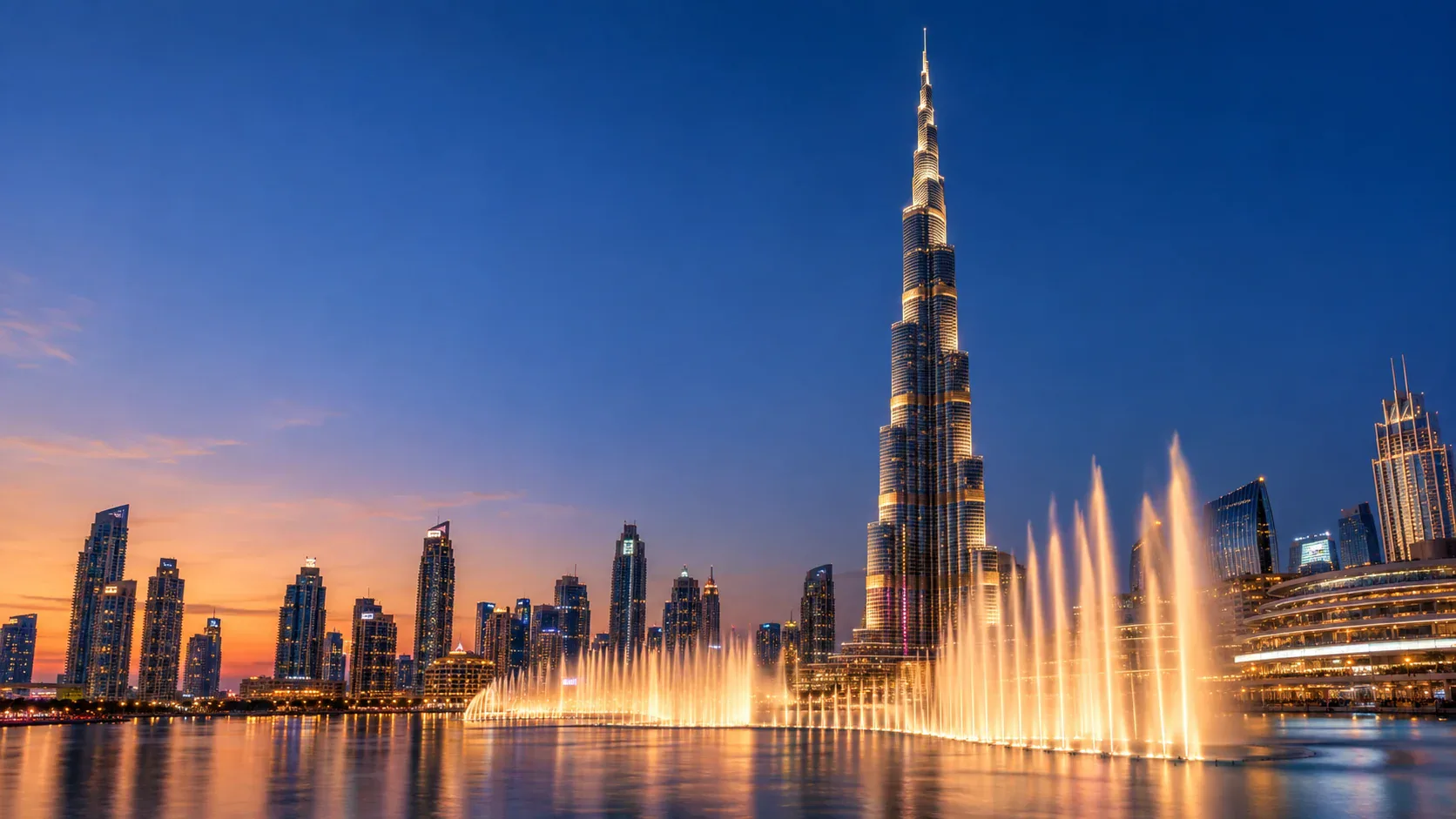
Dubai / UAE Travel Tips India: What Changes a Trip
Six points change most Dubai trips for Indian travellers: visa status, summer heat, card-first payments, transport choices between the Dubai Metro and taxis, crowd levels at Burj Khalifa and Dubai Mall, and the road distance to Abu Dhabi. November to March is the most comfortable window for outdoor sightseeing and desert plans.
- Visa: confirm your category early, since most ordinary-passport holders need a UAE visit visa. - Heat: plan outdoor sightseeing for early morning or evening during the summer months. - Payments: cards come first, with a small AED reserve for tips and markets. - Transport: the Dubai Metro with a Nol card covers main corridors, while taxis suit desert and beach trips. - Crowds: Dubai's 2025 visitor total was about 19.6 million, so Burj Khalifa, Dubai Mall and Palm Jumeirah fill up at peak times. - Distance: Abu Dhabi is roughly 90 minutes to two hours each way by road, traffic permitting.
For Indian travellers the practical order is paperwork first, flights second and hotel area third. Downtown suits a first visit centred on Burj Khalifa and Dubai Mall, Dubai Marina suits waterfront evenings, and Palm Jumeirah suits resort stays.
At a glance
Dubai / UAE, in brief
The currency is the UAE dirham (AED), Arabic is the official language, and English is widely used in hotels, malls and Metro stations. Ordinary-passport holders need a UAE visit visa or an eligible visa on arrival, and emergency calls go to 999.
Dubai / UAE.
Planned around you.
- Currency
- UAE dirham (AED)Check the current exchange rate before you convert rupees.
- Language
- Arabic (official); English widely usedHotels, malls and Metro stations commonly work in English.
- Plug type
- Type G, three-pinIndian plugs usually need an adaptor, so pack one.
- SIM or eSIM
- Local SIM at arrival or eSIM before departureConfirm your Indian carrier's international roaming plan before switching on data.
- Time difference
- Dubai runs behind IndiaThe UAE does not shift clocks for daylight saving, so set your phone to local time on landing.
- Emergency number
- 999 (police), 998 (ambulance), 997 (fire)Save these numbers in your phone before you travel.
Before You Go to Dubai / UAE
Start with a passport valid for at least six months and a UAE visit visa or an eligible visa on arrival, then book flights and a hotel near your planned attractions. Scheduled flight times are about 3 hours from Mumbai or Pune, 4 from Delhi or Bengaluru and 5 from Kolkata, where nonstop services run.
Passport with six months' validity
Ordinary passports need at least six months of validity for UAE entry under current rules, so renew early if yours expires soon.
Where to get it: Indian Passport Seva portal or your regional passport officeCommon mistake: Travelling on a passport that expires within six months.
UAE visit visa or visa-on-arrival check
A visit visa is needed for most ordinary passports. The 14-day visa on arrival applies only to eligible holders who meet current conditions.
Where to get it: UAE visa information on the Emirates or flydubai websites, or an authorised visa channelCommon mistake: Assuming visa on arrival applies to every Indian passport.
Flight booking
Compare nonstop options from Mumbai, Delhi, Bengaluru, Hyderabad and other gateways, and check arrival times against your hotel check-in.
Where to get it: Airline sites such as Emirates, Air India, IndiGo, flydubai, SpiceJet or Air India ExpressCommon mistake: Booking a late-night arrival without a pre-arranged transfer.
Hotel near your main plan
Stay near a Metro line such as Downtown or Dubai Marina if you plan to use public transport. Palm Jumeirah suits resort stays, though you will rely on taxis or the monorail.
Where to get it: Booking platforms, or a Tripstor quote for named propertiesCommon mistake: Booking a hotel far from the attractions you planned to see.
Travel insurance
Choose cover that includes medical treatment and trip cancellation, and check whether activities such as desert safaris are excluded.
Where to get it: Insurers or your card's travel benefitsCommon mistake: Assuming a basic card benefit covers all medical costs.
Forex and cards
Carry an international debit or credit card that works for contactless payments, plus a backup card stored separately. Compare exchange rates before buying AED.
Where to get it: Your bank or card issuerCommon mistake: Exchanging all your rupees at airport counters.
Nol card for transport
Buy a Nol card for the Dubai Metro, tram, bus and some other public transport, and keep a small balance for short rides.
Where to get it: Metro station ticket machinesCommon mistake: Tapping in with an empty card at the gate.
Useful apps
Save the Indian government's travel advisory page, a map app, a ride-hailing app, your airline app and your insurer's helpline.
Where to get it: App stores and official government sitesCommon mistake: Relying on social media for entry or safety news.
Order matters: apply for the visa before paying for flights, because a delayed or refused visa leaves you holding a ticket you may not use. Official travel guidance for Dubai also changes, so recheck it in the week before departure.
Keep digital and printed copies of your passport, visa approval, hotel address and insurance policy in separate places.
Money and Payments in Dubai / UAE
Cards work at most hotels, malls and restaurants, so carry one as your main payment method plus a little AED for small tips. Dubai Metro fares generally range from AED 3 to AED 7.5 depending on zones, and metered airport taxis typically start around AED 25 plus distance.
- Cash versus cards
Use a card for hotels, malls and most restaurants, and keep a modest AED amount for smaller shops, markets and small tips.
Payments - ATMs
Withdraw from bank ATMs inside major malls such as Dubai Mall rather than standalone machines. Decline the rupee conversion option if the machine offers it.
Payments - UPI acceptance
Do not plan on UPI for everyday spending in Dubai. Use cards, and check with your bank whether an international UPI option is supported before you rely on it.
Payments - Metro, bus and taxis
Load a Nol card for the Metro and buses. For taxis, confirm the meter starts before the car moves and ask for a receipt at the end of the ride.
Transport - Data and roaming
Set up an eSIM before departure or buy a local SIM at arrival. If you use your Indian SIM, confirm its international roaming pack before you switch data on.
Connectivity
Keep small AED notes for Old Dubai markets and tipping, and use cards for larger bills in Downtown and Dubai Marina. Some Indian cards add foreign transaction charges, so check your card terms before you leave.
Ask your bank to enable international transactions before departure, because a blocked card is far easier to fix from India than from a hotel lobby in Dubai Marina.
Getting Around Dubai / UAE: Metro, Taxis and Day Trips
The Dubai Metro with a Nol card suits Downtown, Dubai Marina, Deira and other main corridors, while taxis and private transfers suit desert safaris, beaches and Palm Jumeirah. Abu Dhabi works as a separate day trip, roughly 90 minutes to two hours each way by road, traffic permitting.
Dubai Metro with a Nol card
Best forDowntown, Dubai Marina, Deira and main corridors
StrengthsFares generally range from AED 3 to AED 7.5 by zone, and the same card works on the tram, bus and some other transport.
Trade-offsDoes not reach every beach, desert pickup point or spread-out attraction.
Metered taxi
Best forAirport transfers, late returns and short hops between areas
StrengthsDoor-to-door travel, with airport trips typically starting around AED 25 plus distance.
Trade-offsCost builds with distance, so confirm the meter starts and ask for a receipt.
Private transfer or booked tour
Best forDesert safaris, group travel and late-night arrivals
StrengthsA fixed pickup time and a named operator with a contact number.
Trade-offsLess flexible than a taxi, so check written inclusions before you pay.
Taxi or monorail on Palm Jumeirah
Best forResort stays and beach days
StrengthsKeeps you close to the beach cafes and resort dining.
Trade-offsA Palm Jumeirah base means relying on taxis or the monorail for other areas.
Road trip to Abu Dhabi
Best forA full-day side trip from Dubai
StrengthsRoughly 90 minutes to two hours each way, traffic permitting.
Trade-offsNeeds a full day, return transport booked in advance and your passport.
Choose your hotel area first, because it decides which option you use most. A Downtown base keeps Burj Khalifa and Dubai Mall close together, while a Dubai Marina base puts the waterfront promenade next to your hotel.
Load the Nol card at a Metro station ticket machine before your first ride. For timed visits in Abu Dhabi, leave earlier than you think you need to.
Cultural Tips for Dubai / UAE
Dress modestly outside beaches and pools, ask before photographing people, and drink alcohol only in licensed venues such as hotel bars and restaurants. The UAE applies federal laws, so public conduct matters even in a cosmopolitan city like Dubai. Those habits also help when you visit religious sites in Old Dubai.
- Dress code
Cover shoulders and knees in Old Dubai and at religious sites. Keep swimwear to beaches, pools and hotel areas.
Dress - Religious sites
Remove shoes where requested, dress modestly, and check each site's visiting rules and opening times before you go.
Religious sites - Public conduct
Keep displays of affection modest, and avoid public drunkenness, which is an offence.
Conduct - Photography
Ask before photographing people, and avoid photographing government buildings, police or military sites.
Photography - Ramadan
If you visit during Ramadan, avoid eating, drinking or smoking in public during daylight hours.
Calendar - Tipping
Check whether a service charge already appears on the bill before adding a tip, then add a small amount for good service.
Tipping - Rules and medicines
Check current UAE rules on alcohol and medicines before departure. Carry prescriptions for any regular medicines in original packaging.
Rules
Dubai travel advice for Indian visitors is mostly about public norms rather than a dress code for every setting. Hotels, beaches and pools allow swimwear, while Old Dubai and religious sites call for covered shoulders and knees.
The Dubai / UAE dos and donts below also flag the alcohol and medicine rules you should check before departure.
Food Tips for Indian Visitors in Dubai
Indian vegetarian food is easy to find in Dubai, and the city also serves Emirati dishes such as machboos and luqaimat, plus shawarma. Check each menu for vegetarian options, because many traditional dishes use meat or meat stock. Old Dubai, Dubai Mall and Dubai Marina are practical areas to compare menus side by side.
- Historic districts
Old Dubai
Budget lunches with Emirati dishes and shawarma from small counters, where you can compare prices across several stalls.
Best forBudget travellers and food walks
Ask about vegetarian options before ordering, because stocks and sauces may contain meat.
- Downtown
Dubai Mall
A wide mix of restaurant styles and food court options, easy to reach after a visit to Burj Khalifa.
Best forFamilies and mixed groups
Plan a meal here during the hottest part of the day, when indoor cooling makes walking easier.
- Dubai Marina
Dubai Marina
Waterfront restaurants and cafes suit an evening meal after sunset, when the promenade is cooler.
Best forEvening dinners
Reserve a table on weekend evenings, when waterfront restaurants fill quickly.
- Palm Jumeirah
Palm Jumeirah
Resort dining and beach cafes, usually pricier than Old Dubai counters.
Best forSpecial-occasion meals
Check the menu prices and the service charge on the bill before you sit down.
Ask at the counter about ingredients before buying sweets or snacks, since recipes vary between shops. Ordering a mix of simple dishes at a budget counter costs far less than a resort meal on Palm Jumeirah.
If you eat strictly vegetarian, say so when ordering and ask whether dishes are cooked with meat stock, especially for rice dishes and soups.
Safety in Dubai / UAE for Indian Tourists
Check the Indian government's travel advisory before booking, because it reflects conditions on the day you look, not the day this guide was written. Everyday risks in Dubai are summer heat, unlicensed tours, taxi overcharging and fake tickets, and the fixes appear in the list below. Save emergency numbers before you land.
- Heat stress in summer
How to avoid itSchedule outdoor sightseeing for early morning or after sunset, carry water, and move indoors to places such as Dubai Mall during the hottest hours.
- Unlicensed desert safari or dune operators
How to avoid itBook with operators that give a business name, written inclusions, a pickup time and a contact number. Avoid anyone who approaches you on the street.
- Taxi overcharging
How to avoid itUse metered taxis, confirm the meter starts, and expect airport trips to begin at around AED 25 plus distance.
- Fake tickets or unofficial offers
How to avoid itBuy attraction tickets from official websites or the venue's own counter. Do not pay cash to strangers offering shortcuts.
- Alcohol and medicine rules
How to avoid itDrink only in licensed venues and carry ID. Do not carry controlled medicines without the required paperwork.
- Visa overstay or misreading visa-on-arrival conditions
How to avoid itCheck visa validity and eligibility before booking, and plan to leave before the permitted stay ends.
- Medical costs without cover
How to avoid itCarry travel insurance that covers hospital treatment. Save 999 for police, 998 for ambulance and 997 for fire in your phone.
These Dubai / UAE tips for Indian tourists focus on heat, transport and paperwork, which cause most problems for first-time visitors. Set your daily plan around the midday heat, with the Dubai Marina promenade for early morning or after sunset and Dubai Mall for the hottest hours.
If you travel during a period of regional tension, treat the advisory and your airline's notices as the deciding sources, and keep tickets refundable where you can.
Planning Dubai Trip: Steps for First-Time Visitors
A workable Dubai plan starts with a base area, then groups attractions by neighbourhood, puts outdoor stops in the cooler hours and keeps Abu Dhabi for its own day. Settle visa, flights and hotel before you pay for tours or attraction tickets.
- Fix your dates around the heat
November to March is the most comfortable window for outdoor sightseeing and desert plans. In the summer months, keep outdoor stops for early morning or evening and use indoor places such as Dubai Mall at midday.
- Choose a base area
Downtown suits a first visit centred on Burj Khalifa, Dubai Marina suits waterfront evenings, and Palm Jumeirah suits a resort-focused stay. Stay near a Metro line if you plan to use public transport.
- Group attractions by area
Pair Burj Khalifa with Dubai Mall in Downtown, give Dubai Marina an evening, and treat Palm Jumeirah as its own outing because it is spread out and taxi-led.
- Book timed attractions early
Reserve Burj Khalifa and similar timed entries for early or late slots, because Dubai received about 19.6 million visitors in 2025 and peak hours fill up.
- Pick a named desert safari operator
Ask for the business name, written inclusions, a pickup time and a contact number, and pack a warm layer for winter evenings.
- Give Abu Dhabi its own day
Allow a full day, book return transport before you leave Dubai, and carry your passport.
- Recheck before you fly
In the week before departure, reread the Indian government's advisory, your airline's notices and your visa approval, and confirm your airport transfer.
Things to know before visiting Dubai / UAE come down to sequence: fixed items first, meaning visa, flights and hotel, then flexible items such as dinners and beach time.
If your plan changes, shift whole days rather than single stops, so each day stays in one area and one transport mode.
Packing for Dubai by Season
Pack loose cotton and linen for the summer months, add a light layer for air-conditioned malls and Metro cars, and bring warmer clothes from November to March, when outdoor sightseeing is most comfortable. Modest outfits and a scarf cover religious visits in any season.
Summer clothing
Breathable cotton or linen shirts, knee-length shorts or trousers, and quick-dry fabrics for summer days.
Common mistake: Wearing dark synthetic fabrics outdoors all day.
Sun protection
Sunscreen, sunglasses, a wide-brim hat and a refillable water bottle for the summer months.
Where to get it: Pack from India or buy at pharmacies and supermarkets in DubaiCommon mistake: Assuming shade will cover you on long walks along Dubai Marina.
Light layer for indoors
A thin cardigan or shawl for air-conditioned malls, Metro cars and restaurants, year round.
Common mistake: Forgetting indoor cooling until you feel chilled after a long sightseeing day.
Winter layers (November to March)
A warm fleece or light jacket for desert evenings, boat rides and early mornings.
Common mistake: Assuming desert nights stay warm after sunset.
Modest clothing
Long trousers or a long skirt, tops that cover shoulders, and a scarf for mosques and older districts such as Old Dubai.
Common mistake: Wearing beachwear in Old Dubai.
Beach and pool kit
Swimwear, a towel and flip-flops for Palm Jumeirah beaches and hotel pools, kept in a dry bag.
Common mistake: Packing wet swimwear loose beside clean clothes.
Power and plug
A Type G adaptor and a power bank for day trips, since Indian plugs usually need an adaptor.
Common mistake: Relying on a cheap adaptor that does not fit Type G sockets.
Walking shoes
Comfortable closed shoes for long walks around Downtown and Dubai Mall, with sandals for hotel and beach days.
Common mistake: Wearing new shoes on your first major sightseeing day.
Keep one carry-on set of documents, medicines, a charger and a change of clothes, since checked bags can be delayed on any route. Pack for the season you travel in, not for the one you read about online.
Plan Your Dubai / UAE Trip with Tripstor
Tell Tripstor your departure city, travel month, number of nights and group size, and our planners will prepare a personalised quote for Dubai and any Abu Dhabi day trip. Quotes are not instant bookings, and this page takes no payment, so you can compare options before any commitment.
Mention whether you need vegetarian meals, a desert safari or a family-friendly hotel near a Metro line, because these choices change the daily route. Compare Tripstor's Dubai / UAE tour packages from Mumbai, Delhi or Bengaluru, or ask for a custom plan that follows the visa and heat advice on this page.
Holiday ideas to start from
Reviewed itineraries for this destination — personalise with a specialist, never an instant booking.
Dubai and Abu Dhabi Premium 5 Nights: 2026 Family Tour Package
From₹1,23,200per adult, twin sharing, land onlyDubai Family Highlights Premium 5 Nights: 2026 Luxury Family Tour Package
From₹1,23,200per adult, twin sharing, land onlyUAE Three Emirate Circuit Premium 7 Nights: Dubai / UAE Sightseeing Package 2026
From₹1,61,500per adult, twin sharing, land only

From idea to itinerary, with a real person.
- Share your plan
Dates, departure city, travellers and the moments you’d love. It only takes a minute.
- Shape it with a specialist
A real person refines the route, stays and pace with you. Change anything.
- Review your quote
A clear, personalised quote with confirmed inclusions. No payment to enquire.
From our travel specialists
What our team sees when planning these trips, beyond what the guidebooks say.
Confirmed 11 Oct 2026
Travellers commonly wish they had understood Dubai’s scale and heat before planning: attractions are spread across Downtown, Old Dubai, Marina and Palm, and walking between them is often impractical. They also report wishing they had checked desert-safari inclusions, dress expectations for mosques and older districts, and hotel location rather than choosing mainly by price.
Families learn that short-looking journeys can become tiring in the heat, so a base near Metro or tram access and a zone-by-zone schedule matter more than simply maximising attractions. Couples often prefer Marina/JBR for walkable waterfront evenings, while families may value Bur Dubai, Karama or Al Barsha for food options, practical transport and easier day planning.
April through October is frequently underestimated because daytime heat makes beaches, desert excursions, Marina walks and outdoor sightseeing uncomfortable. Travellers advise scheduling outdoor activities early or after sunset and using malls and indoor attractions during the hottest hours.
The most common mistake is trying to combine distant areas—such as Marina, Downtown, Deira and Palm—in one day, while also booking a hotel without checking its transport location. Travellers also caution against choosing the cheapest desert safari without confirming group size, activities, camp style and what is included.
Before you go
Straight answers to help you plan — then personalise the trip with a specialist.
11 answered belowAsk a specialist anything about this trip — there’s no obligation.
Ask a specialistDo Indians need a visa for Dubai?
Most Indian ordinary-passport holders need a UAE visit visa before travel. Eligible holders meeting current conditions, including a qualifying US visa or green card, may get a 14-day visa on arrival. Your passport needs at least six months validity, and you should confirm details with an airline or authorised visa channel.
Is it safe to travel to Dubai right now?
Most visits to Dubai are trouble-free, but no destination is risk-free, and conditions can change quickly. Check the Indian government's travel advisory and your airline's notices in the week before departure. Day-to-day risks include summer heat, unlicensed tours and taxi overcharging, and each has a practical fix covered in this guide.
Is it safe to travel to Dubai during the Israel war?
This guide cannot confirm the status of any regional conflict on the day you travel, so check the Indian government's advisory and your airline's notices before booking. If an advisory warns against travel to the UAE or your airline changes routes, consider rebooking. Keep refundable tickets where you can, and buy insurance that covers cancellation.
What is the travel advisory for Dubai?
A travel advisory is an official government notice that rates risk for a destination and sometimes advises travellers to avoid certain areas or postpone trips. For Dubai, the Indian government's current advisory is the reference point, and it changes with conditions, so read it in the days before departure. Your insurer and airline may also issue notices.
Is a Dubai pass worth buying for a city break?
This guide has no verified price or inclusion list for a Dubai pass, so treat any city pass as a product to compare rather than a default. Add up the prices of the attractions you plan to book, such as Burj Khalifa or a desert safari, then check whether the pass covers them.
Is Dubai expensive for Indian tourists?
Dubai can be expensive, especially for central hotels, premium attractions, taxis, alcohol and luxury dining, though Metro travel and local restaurants cut costs. Indicative 2026 planning ranges for land-only twin-sharing packages run from about ₹45,000 per person at budget level to ₹2,20,000 or more for luxury, with airfare, visa and taxes excluded or varying by package.
Is public transport convenient in Dubai?
The Dubai Metro is convenient for Downtown, Dubai Marina, Deira and main corridors, with fares generally ranging from AED 3 to AED 7.5 by zone. Taxis or private transfers are more practical for desert safaris, beaches and spread-out attractions such as Palm Jumeirah. A Nol card works on the metro, tram, bus and some other transport.
Can I visit Abu Dhabi from Dubai on a day trip?
Yes, Abu Dhabi is generally reachable by road in roughly 90 minutes to two hours each way, traffic permitting. Plan a full day, book your return transport in advance, and leave earlier if you have a timed visit. Abu Dhabi is a separate emirate, so carry your passport for the trip.
What are the Dubai / UAE dos and donts for Indian tourists?
Do dress modestly in Old Dubai and at religious sites, keep swimwear to beaches and pools, drink only in licensed venues and carry travel insurance. Don't drink alcohol in public, photograph government or military buildings, or carry controlled medicines without paperwork. Ramadan adds a rule: no eating, drinking or smoking in public during daylight.
Can I use UPI in Dubai?
Do not plan on UPI for everyday spending in Dubai. Cards are the main payment method at hotels, malls and most restaurants, so carry an international debit or credit card plus a backup stored separately. Check with your bank whether an international UPI option is supported before you rely on it.
What should Indian travellers wear in Dubai?
Wear breathable cotton or linen in summer, with a light layer for air-conditioned malls and Metro cars. Cover shoulders and knees in Old Dubai and at religious sites, and keep swimwear to beaches, pools and hotel areas. From November to March, add a warm fleece or light jacket for desert evenings.