
How Many Places Can You Cover?
Malaysia rewards a focused route rather than a long checklist. Ten to fifteen places are worth prioritising across peninsular Malaysia and Borneo, but a seven to ten day trip realistically covers three to four bases well. The top three for first-timers are Kuala Lumpur, George Town and Langkawi.
The main visitor areas divide into five broad zones: the Klang Valley around Kuala Lumpur, the northern heritage belt of Penang and Kedah, the southern historic corridor through Malacca, the highland retreat of Cameron Highlands in Pahang, and the Borneo states of Sabah and Sarawak. East-coast islands such as the Perhentians sit on a separate seasonal rhythm and need their own planning window.
Trying to combine all zones in one week means spending more time in transit than at the places themselves. A workable first trip pairs Kuala Lumpur with either Langkawi, Penang or Malacca, then adds a second extension base if you have ten days or more. Adding Borneo or the Perhentians usually needs at least three extra nights because of flight and boat transfer times.
For a ten to fourteen day trip, a common structure is two nights in Kuala Lumpur, two nights in Malacca or Cameron Highlands, three nights in Penang, and three to four nights in Langkawi or Kota Kinabalu. Adjust based on whether your priority is heritage, beaches or nature.
At a glance
Malaysia, in brief
A first Malaysia trip needs seven to ten days, with Kuala Lumpur as the arrival base and either Langkawi, Penang or Malacca as the second stop. The best season depends on region: December to February suits the west coast and cities, while March to October is generally better for east-coast islands such as the Perhentians.
Malaysia.
7–10 days for peninsula highlights; 10–14 days to add Borneo
- Must-see places
- Kuala Lumpur, George Town, Langkawi, Malacca, Cameron Highlands, Kota KinabaluPick three to four for a 7–10 day trip
- Ideal trip length
- 7–10 days for peninsula highlights; 10–14 days to add BorneoFive days is the practical minimum for two bases
- Best arrival base
- Kuala Lumpur for first-timersGood onward transport links to Penang, Langkawi and Malacca
- Best season — west coast and cities
- December to FebruaryGenerally favourable for Kuala Lumpur, Penang and Langkawi
- Best season — east-coast islands
- March to OctoberPerhentian Islands boat services and many resorts are mainly seasonal
- Visa snapshot for Indian nationals
- Visa-free entry for eligible visits up to 30 days until 31 December 2026Subject to valid passport, MDAC completion and immigration requirements
Top Places to Visit in Malaysia
The strongest first-trip places to visit in Malaysia are Kuala Lumpur for urban sightseeing and food, George Town for UNESCO-listed streets and hawker culture, Langkawi for island-hopping and duty-free shopping, Malacca for compact heritage, and Cameron Highlands for tea estates and cooler air. Each works as a two to three night base.
- KLCC, Kuala Lumpur
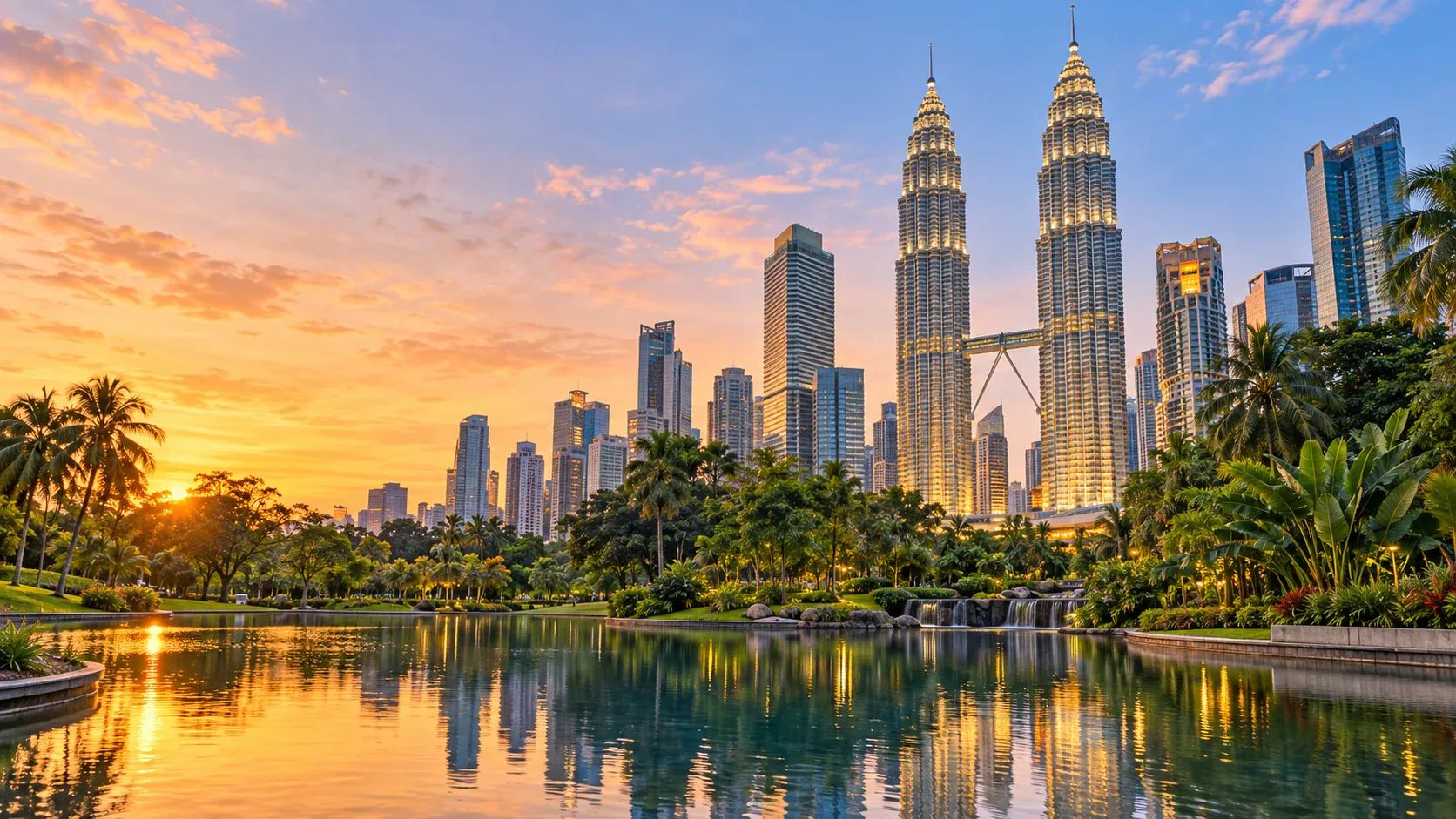
Petronas Twin Towers area
The twin towers anchor the KLCC district, with a shopping mall, park and fountain shows at their base. They are best seen as part of a wider KLCC visit rather than a standalone day out.
Best forFirst-time visitors, photography, city sightseeing
Combine with KLCC park, Kampung Baru and Bukit Bintang after dark rather than allocating a full day to the towers alone.
- Selangor, near Kuala Lumpur
Batu Caves
A limestone hill complex with a long staircase leading to a temple cave, Batu Caves is one of the most visited Hindu shrines outside India and a common half-day trip from Kuala Lumpur.
Best forCulture, day trips, families
Go early morning to avoid heat and crowds; dress modestly for temple areas and watch for monkeys around the steps.
- Penang
George Town heritage zone
George Town's UNESCO-listed streets pair Peranakan shophouses with one of Southeast Asia's strongest hawker-food scenes, all walkable within the core heritage zone.
Best forHeritage, food, photography
Stay inside or near the heritage zone and explore early morning before heat, traffic and tour groups build up.
- Penang
Penang Hill
A hill station above George Town reached by funicular railway, offering cooler air and views over the island and mainland. A standard half-day add-on to a Penang stay.
Best forViews, families, half-day trips
Check the funicular schedule and weather before going; clear-afternoon visibility is not guaranteed.
- Langkawi, Kedah
Langkawi island-hopping
Langkawi combines duty-free shopping, island-hopping boat trips, mangroves and beaches in a compact island that packages well with Kuala Lumpur.
Best forBeaches, couples, families
A rental car is more useful than relying on taxis because beaches and attractions are spread across the island.
- Langkawi, Kedah
Langkawi cable car and sky bridge
The cable car and curved sky bridge are among Langkawi's best-known viewpoints, reached from the Oriental Village side of the island. Weather can affect operations.
Best forViews, photography, families
Go early for clearer views and shorter queues; check operating status on the day if weather looks uncertain.
- Malacca
Malacca heritage core
Historic trading-port architecture and riverside streets make Malacca Malaysia's most accessible short heritage extension from Kuala Lumpur. Jonker Walk is liveliest Friday to Sunday.
Best forHeritage, weekend trips, food
Visit on a weekday; accommodation and traffic are more difficult on Friday to Sunday evenings.
- Pahang
Cameron Highlands tea estates
Tea estates, cooler temperatures and strawberry farms provide a climate contrast to Malaysia's cities, with the main towns connected by winding hill roads.
Best forCooler weather, families, scenery
Road congestion can make the transfer longer than expected; avoid treating it as a quick half-day excursion from Kuala Lumpur.
- Sabah, Borneo
Kota Kinabalu waterfront and islands
Kota Kinabalu provides access to Sabah's marine parks, rainforest experiences and the Mount Kinabalu region, with island boat trips leaving from the city waterfront.
Best forIslands, wildlife, adventure
Keep a buffer before international departure because island boats and weather can disrupt same-day connections.
- Terengganu
Perhentian Islands
Clear water, coral reefs and affordable snorkelling make the Perhentians Malaysia's strongest backpacker-to-midscale island option on the east coast. Plan mainly from March to October.
Best forSnorkelling, backpackers, beach stays
Northeast-monsoon closures affect boat services and many resorts; confirm seasonal opening before booking.
- Kuala Lumpur
Kampung Baru
A traditional Malay village enclave surrounded by modern Kuala Lumpur, known for evening food stalls and a slower pace within walking distance of KLCC.
Best forLocal food, culture, evening walks
Visit in the evening for street food; combine with a KLCC walk rather than making a separate trip.
- Kuala Lumpur
Bukit Bintang
Kuala Lumpur's main shopping and entertainment district, with malls, street food and nightlife concentrated along a walkable stretch served by MRT and monorail.
Best forShopping, nightlife, city stays
Go after dark when the area is liveliest; use the MRT or monorail to avoid evening traffic.
The places below cover the malaysia tourist attractions most commonly built into packages from India. Distances and transfer times vary with traffic and weather, so treat day plans as flexible. For a broader set of options that combine several of these bases, see the linked Malaysia tour packages planning page.
Underrated Places in Malaysia Most Tourists Miss
Beyond the headline stops, Malaysia has quieter places that reward travellers with extra days — heritage streets outside the main Penang core, hill and island spots with fewer crowds, and Borneo bases that most short itineraries skip. These suit repeat visitors or anyone willing to trade convenience for lower crowd levels.
- George Town, Penang
Penang Peranakan Mansion area
A quieter cluster of Peranakan shophouses and museums sits just outside the busiest heritage lanes, showing the same architecture with fewer tour groups.
Best forHeritage, architecture, slow travel
Visit on a weekday morning; some houses are private residences, so respect signage and opening hours.
- Malacca
Malacca riverside back lanes
The lanes behind the main Jonker Walk stretch hold smaller temples, cafes and mural walls that most day-trippers from Kuala Lumpur never reach.
Best forPhotography, cafes, heritage
Walk them in the late afternoon when heat drops; carry cash for small cafes.
- Pahang
Cameron Highlands strawberry farms
Working strawberry farms and vegetable plots sit along the highland road network, offering a quieter counterpoint to the main tea estate viewpoints.
Best forFamilies, cool-weather walks
Check opening days directly; some farms close on short notice and are best reached with your own transport.
- Sabah, Borneo
Kota Kinabalu Tunku Abdul Rahman marine park
A marine park reachable by short boat rides from Kota Kinabalu, with beaches and snorkelling that see fewer overnight visitors than the main island day-trip circuit.
Best forSnorkelling, day trips, nature
Book boats through your hotel or a licensed operator; weather can cancel crossings at short notice.
- Terengganu
Perhentian Islands smaller beaches
The Perhentians have quieter stretches away from the main jetty areas, with basic chalets and reef access that suit longer, slower stays. ATMs are limited on the islands.
Best forBackpackers, snorkelling, extended beach stays
Plan mainly from March to October and carry enough cash; ATM access is limited once you leave the mainland.
These places work best when you already have a nearby base. Transport to some is infrequent, so check schedules locally before committing a full day. None require advance booking in the same way as the main malaysia tourist attractions, but seasonal closures apply to the east-coast options.
Places by Type of Experience
The best places in Malaysia depend on who is travelling. Families do well with Kuala Lumpur, Langkawi and Cameron Highlands; couples often prefer Langkawi or Sabah resorts; adventure travellers head to Borneo or the Perhentians; and culture-focused visitors should prioritise George Town and Malacca.
Families
Best forKuala Lumpur, Langkawi, Cameron Highlands
StrengthsUrban attractions, easy beach resorts and cooler highland stops suit mixed-age groups; transport between bases is straightforward and well-established.
Trade-offsTheme parks and island boat trips can be weather-dependent, and long transfer days tire younger children.
Couples and honeymooners
Best forLangkawi, Kota Kinabalu, quieter Penang stays
StrengthsBeach resorts, private island trips and heritage boutique stays allow a mix of relaxation and sightseeing across different landscapes.
Trade-offsPeak-season rates rise sharply, and some island resorts have limited dining and nightlife options.
Adventure travellers
Best forKota Kinabalu and Mount Kinabalu region, Perhentian Islands, Cameron Highlands
StrengthsRainforest treks, diving, snorkelling and hill walks are available, with Borneo offering the widest range of things to do in malaysia for active visitors.
Trade-offsWeather can disrupt boat and trek schedules, and some activities need advance booking or permits.
Culture travellers
Best forGeorge Town, Malacca, Kuala Lumpur
StrengthsUNESCO-listed streets, temples, museums and food culture are concentrated and walkable in the heritage cores of George Town and Malacca.
Trade-offsHeat and tour-group crowds build through the day, so early starts matter; some sites charge separate entry fees.
Use the comparison below to match places to your travel group. Each option lists honest pros and cons rather than a single recommendation. Overlapping interests — for example, a family that also wants heritage — can combine Kuala Lumpur with George Town and add Langkawi for the beach component.
Best Time to Visit Malaysia by Region
Malaysia has no single best travel season because the peninsula's west coast, east coast and Borneo follow different rainfall patterns. December to February is generally favourable for Kuala Lumpur, Penang and Langkawi, while March to October suits east-coast islands such as the Perhentians. Borneo has its own distinct wet and dry periods.
January
Best time to goDry on west coast and Langkawi; northeast monsoon affects east coast
Best for Kuala Lumpur, Penang and Langkawi; avoid Perhentians
February
Best time to goDry and warm on west coast; east coast still affected by monsoon tail
Good for west-coast and city itineraries; Chinese New Year period raises prices
March
Good time to goTransition month; east-coast seas begin to calm
East-coast islands start to open; west coast remains accessible
April
Good time to goWarm and mostly dry across peninsula; east coast improving
Good value month for most destinations; Perhentians accessible from mid-April
May
Good time to goOccasional showers on west coast; east coast generally calm
Perhentians and east coast at their best; west coast still manageable
June
Good time to goDrier on east coast; southwest monsoon brings rain to west coast
School-holiday crowds begin; east coast and Borneo favourable
July
Good time to goPeak season for east-coast islands; west coast sees afternoon showers
Perhentians and Kota Kinabalu popular; book ahead
August
Good time to goSimilar to July; east coast clear, west coast afternoon rain possible
High season continues; Merdeka Day holiday adds domestic crowds
September
Shoulder seasonEast coast still good; west coast rain increases
East coast winding down; west coast less reliable
October
Shoulder seasonNortheast monsoon approaches; east coast seas begin to roughen
Last reliable month for Perhentians; west coast manageable
November
Not recommendedNortheast monsoon; east coast rough seas and resort closures
Avoid east-coast islands; Kuala Lumpur and Penang still workable
December
Best time to goNortheast monsoon peak on east coast; west coast and cities dry and busy
Best for Kuala Lumpur, Langkawi and Penang; avoid Perhentians entirely
- BestJan, Feb, Dec
- GoodMar, Apr, May, Jun, Jul, Aug
- FairSep, Oct
- AvoidNov
The month table below covers the main planning scenarios. Borneo's Sabah and Sarawak have their own rainfall calendar that does not align neatly with the peninsula, so check conditions for Kota Kinabalu separately when planning a combined itinerary.
Suggested Order for a Malaysia Trip
A realistic four-day route starts in Kuala Lumpur, adds a heritage or island base, and keeps transfers to one long leg per day. Kuala Lumpur works as the arrival and departure hub, with George Town, Langkawi or Malacca as the second overnight base depending on your interests and available days.
Day01 Stop 1 of 4Arrive Kuala Lumpur — KLCC and Bukit Bintang
Land at Kuala Lumpur International Airport, transfer to a city hotel, and spend the afternoon and evening around KLCC and Bukit Bintang.
MorningArrive and clear immigration; complete the MDAC before travel if required. Transfer to your hotel in the city.
AfternoonWalk KLCC park and the Petronas Twin Towers area; the park fountain show runs in the evening.
EveningDinner in Kampung Baru or Bukit Bintang; use the MRT or monorail to avoid traffic.
Day02 Stop 2 of 4Batu Caves and Kuala Lumpur city sightseeing
A half-day Batu Caves trip followed by city sightseeing, local food and a mall break during the hottest afternoon hours.
MorningBatu Caves early to avoid heat and crowds; dress modestly for temple areas and watch for monkeys.
AfternoonReturn to the city for museums, markets or a mall break; Bukit Bintang is walkable from the monorail.
EveningHawker-style dinner; keep cash for smaller stalls in Kampung Baru or Jalan Alor.
Day03 Stop 3 of 4Transfer to George Town or Malacca
Fly or drive to your second base and spend the afternoon in the heritage core before an early dinner at a hawker centre.
MorningTransfer by flight to Penang or by road to Malacca, depending on your chosen route.
AfternoonWalk the heritage zone, visit a Peranakan house or museum, and stop for local food.
EveningEarly dinner at a hawker centre; explore the streets before they quiet down.
Day04 Stop 4 of 4Heritage morning and onward or return
A final heritage morning before returning to Kuala Lumpur for departure, or continuing to Langkawi or Borneo if you have more days.
MorningVisit Penang Hill by funicular or the Malacca riverside back lanes, depending on your base.
AfternoonTransfer back to Kuala Lumpur or onward to the airport for your next destination.
EveningDepart, or add a Langkawi or Borneo extension if you have additional nights available.
The itinerary below is a planning framework, not a fixed package. Adjust nights based on flight times and how much time you want at each base. A ten-day version adds three nights in Langkawi after Penang, reached by a short domestic flight from Penang airport.
Getting to Malaysia from India
Several airlines operate or have operated direct routes between Indian cities and Kuala Lumpur, making Malaysia one of the more accessible Southeast Asian destinations from India. AirAsia, Malaysia Airlines, Air India, IndiGo and Batik Air Malaysia are among the carriers that have served India–Malaysia sectors, though schedules vary by city and date.
Delhi (DEL)
Direct or via hub
Check live schedules; multiple carriers have served this route. Confirm current direct options before booking.
Mumbai (BOM)
Direct or via hub
Direct services have operated on this sector; confirm availability for your travel dates.
Chennai (MAA)
Direct or via hub
Chennai has historically had strong connectivity to Kuala Lumpur; check current schedules.
Bengaluru (BLR)
Direct or via hub
Direct and connecting options available; compare fares across carriers before booking.
Kuala Lumpur (KUL) to Penang
Domestic
Short domestic hop; also reachable by road or bus for travellers with more time.
Kuala Lumpur (KUL) to Langkawi
Domestic
Domestic flight is the standard option; ferry from Penang is an alternative for those already in the north.
Kuala Lumpur (KUL) to Kota Kinabalu
Domestic
Borneo requires a separate domestic flight; factor in at least three extra nights for a Sabah extension.
Travelling from your city?
Tell us where you start. A specialist can plan connections around your stay.
Plan my journeyFares vary significantly by booking window, season and carrier. Use aggregator tools to compare live prices from your departure city. For onward domestic travel within Malaysia, Kuala Lumpur's two terminals — KLIA and KLIA2 — serve different carriers, so confirm your terminal before planning transfers.
Visiting Tips for Malaysia
Practical planning matters more than a long list of sights. Book popular attractions ahead where possible, carry cash for hawker centres and markets, use trains and ride-hailing in cities, and dress modestly at temples and rural areas. Weather can change day plans, so keep one flexible day per base.
- Book key attractions ahead
Cable cars at Langkawi and Penang Hill, island boat trips and popular museums can sell out in peak periods. Reserve where possible and keep a printed or offline copy of confirmations.
Tickets - Carry cash for food and markets
Cards are widely accepted in cities and resorts, but cash is useful at hawker centres, small shops, markets and rural transport. Malaysian ringgit is the only accepted currency at most local stalls.
Money - Use trains and ride-hailing in Kuala Lumpur
The MRT, monorail and LRT are efficient for KLCC, Bukit Bintang and Kampung Baru. Ride-hailing apps work well outside rail coverage and are generally cheaper than metered taxis.
Transport - Dress modestly at religious sites
Cover shoulders and knees at temples and mosques. Batu Caves and similar sites may require modest dress and removal of shoes in some areas; carry a scarf or sarong as a backup.
Etiquette - Plan around regional seasons
December to February is generally favourable for Kuala Lumpur, Penang and Langkawi. March to October is generally better for east-coast islands such as the Perhentians. Borneo follows a separate calendar.
Timing - Keep a buffer before international departure
Island boats and weather can disrupt same-day connections. Allow extra time before international flights when departing from Kota Kinabalu or after a Perhentians stay.
Planning - Confirm entry requirements before booking
Indian nationals can enter visa-free for eligible visits of up to 30 days until 31 December 2026, subject to passport validity, MDAC completion and immigration requirements. Rules can change; check official Malaysian immigration sources before travel.
Documents - Know your Kuala Lumpur terminal
KLIA serves Malaysia Airlines and full-service carriers; KLIA2 serves AirAsia and some budget carriers. The two terminals are connected by train but the journey takes time, so confirm your terminal when booking domestic onward flights.
Transport
The tips below cover tickets, transport, etiquette and timing. Entry rules and fees can change, so confirm current requirements before you travel. For a structured package that handles transfers and accommodation across multiple bases, explore the Malaysia tour packages linked below.
Holiday ideas to start from
Reviewed itineraries for this destination — personalise with a specialist, never an instant booking.
Langkawi Luxury Resort 5 Nights: Malaysia 5N6D Tour Package 2026
From₹1,26,800per adult, twin sharing, land only
From idea to itinerary, with a real person.
- Share your plan
Dates, departure city, travellers and the moments you’d love. It only takes a minute.
- Shape it with a specialist
A real person refines the route, stays and pace with you. Change anything.
- Review your quote
A clear, personalised quote with confirmed inclusions. No payment to enquire.
From our travel specialists
What our team sees when planning these trips, beyond what the guidebooks say.
Confirmed 11 Oct 2026
Travellers often end up arranging their own Grab or other point-to-point transfers when package operators are unclear or delayed, sometimes buying attraction tickets again themselves. Indian itineraries also commonly expand beyond Kuala Lumpur to include Penang or Langkawi when time allows.
A recurring mistake is buying a packaged itinerary without checking exactly what transfers, attraction tickets and vouchers include; travellers report delayed support, unusable Genting tickets and confusion at KL Sentral. Independent travellers also warn against assuming every airport bus is the best value or forgetting to arrange the appropriate public-transport card.
Travellers commonly wish they had understood Malaysia’s transport and transfer arrangements better, especially around KL Sentral, airport buses and included package pickups. Indian visitors also report that entry paperwork such as the Malaysia Digital Arrival Card, accommodation proof and onward-ticket details should be prepared before flying.
Local transport and airport transfers are the clearest practical trap: KLIA buses take substantially longer than the airport train, and some buses or city services may not accept ordinary contactless cards. Travellers also report confusion at KL Sentral and advise carrying or arranging a Touch ’n Go card for services where bank cards are not accepted.
Before you go
Straight answers to help you plan — then personalise the trip with a specialist.
10 answered belowAsk a specialist anything about this trip — there’s no obligation.
Ask a specialistIs Malaysia visa-free for Indians in 2026?
Yes. Indian nationals can enter Malaysia visa-free for eligible visits of up to 30 days until 31 December 2026, subject to passport validity, a completed Malaysia Digital Arrival Card and immigration requirements on arrival. Rules can change, so confirm current entry conditions with official Malaysian immigration sources before booking flights.
What documents are required for Indians travelling to Malaysia?
Carry a passport valid for at least six months, a completed Malaysia Digital Arrival Card, a return or onward ticket, accommodation proof and evidence of sufficient funds. Keep printed and digital copies, as immigration officers may ask to see them on arrival at Kuala Lumpur or other entry points.
What is the best time to visit Malaysia?
December to February is generally favourable for Kuala Lumpur, Penang and Langkawi. March to October suits east-coast islands such as the Perhentians. Avoid assuming one nationwide season, because the peninsula and Borneo have different rainfall patterns that affect which places to visit in Malaysia at any given time.
How many days are enough for a Malaysia tour?
Five to seven days suits Kuala Lumpur with either Langkawi, Penang or Malacca. Ten to fourteen days allows a broader peninsula and Borneo itinerary. Adding Borneo or the Perhentians usually needs at least three extra nights because of flight and boat transfer times between bases.
How much does a Malaysia tour package cost from India?
Indicative land-only twin-sharing packages are about ₹35,000 at budget level, ₹55,000 standard and ₹85,000 premium per person, excluding international airfare. These are planning estimates, not confirmed offers, and final pricing depends on travel dates, hotel category and specific inclusions.
Which places are best to visit in Malaysia?
Kuala Lumpur, George Town, Langkawi, Malacca, Cameron Highlands and either Kota Kinabalu or the Perhentian Islands are the principal choices. First-time visitors usually pick three to four of these for a seven to ten day trip, starting with Kuala Lumpur as the arrival base.
Is Malaysia cheaper than Thailand for Indian travellers?
Comparable packages can be similar in cost. Malaysia may offer better value for city and heritage travel, while Thailand can suit concentrated island and nightlife itineraries. Compare specific hotels, transfer times and inclusions rather than headline prices alone, as the best places in Malaysia and Thailand serve different travel styles.
Which airlines fly directly from India to Malaysia?
AirAsia, Malaysia Airlines, Air India, IndiGo and Batik Air Malaysia operate or have operated direct routes on selected India–Malaysia sectors. Schedules vary by departure city and date, so check live options from Delhi, Mumbai, Chennai or Bengaluru before planning your transfers.
Is Malaysia suitable for families and honeymooners?
Families benefit from Kuala Lumpur's urban attractions, Langkawi's beach resorts and Cameron Highlands' cooler climate. Honeymooners can combine Langkawi or Kota Kinabalu resorts with a Kuala Lumpur city stay. Both groups find the best places in Malaysia easy to combine in a single itinerary of ten days or more.
What currency is used in Malaysia and can Indian cards be used?
Malaysia uses the Malaysian ringgit. Cards are widely accepted in cities and resorts, but cash is useful for hawker centres, small shops, markets and rural transport. Carry some ringgit for Kampung Baru food stalls, Jonker Walk in Malacca and island transfers where card machines are unavailable.