
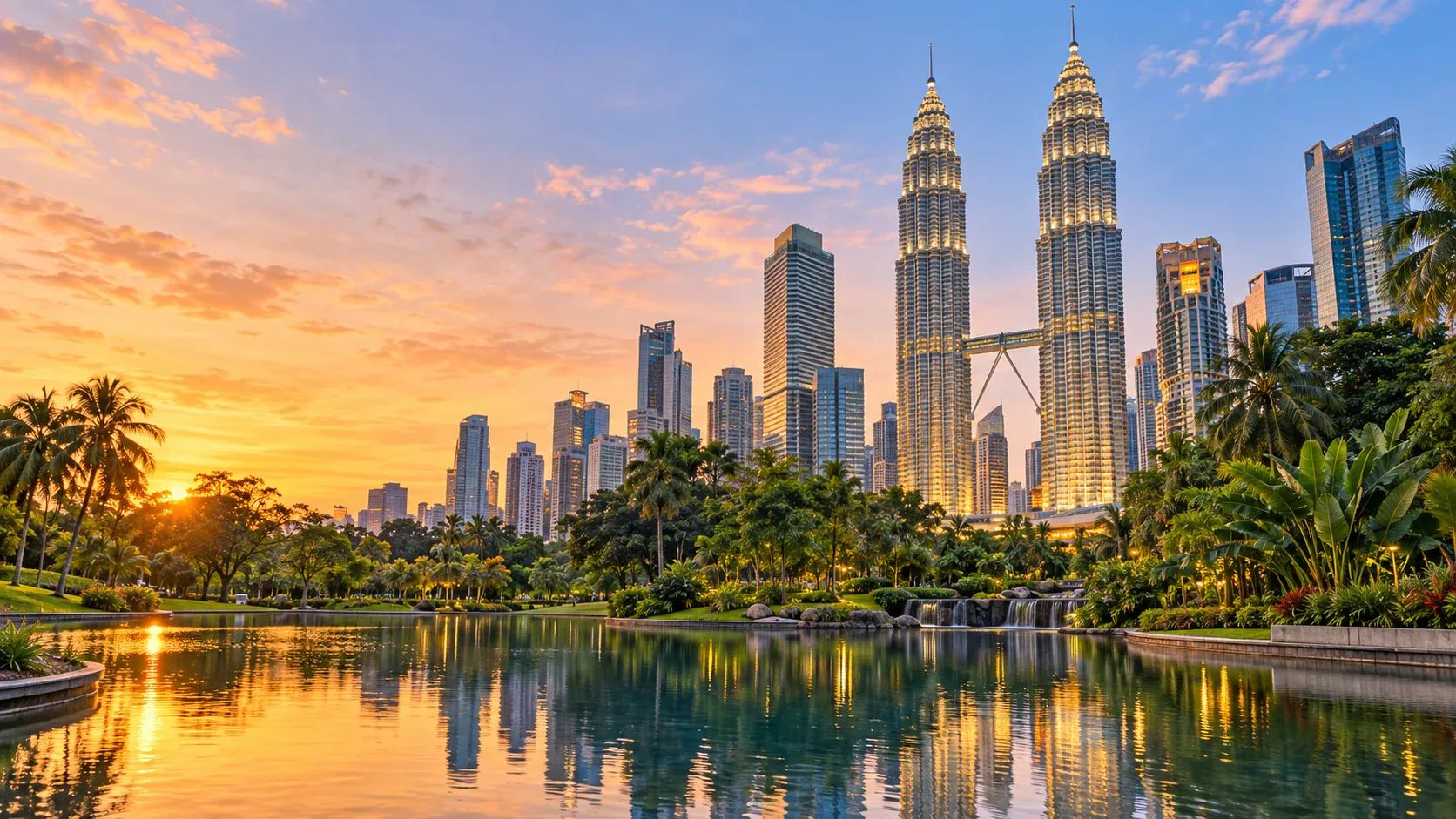
What Actually Changes a Malaysia Trip
Five things change a Malaysia trip most: the time-limited visa-free window, the mandatory digital arrival card, a cash-and-card money mix, halal food that suits most Indian diets, and Grab-based city transport. Get these right and the rest of the itinerary usually runs smoothly.
Malaysia rewards Indian travellers who treat it as several destinations, not one. Kuala Lumpur delivers city sightseeing and shopping, Penang and Malacca deliver heritage and street food, Langkawi delivers beach resort time, and Sabah or Sarawak add Borneo nature. Each has different weather, transport and costs.
The single biggest planning variable is the entry rule. Visa-free entry for Indian nationals runs until 31 December 2026 for eligible visits of up to 30 days, and the Malaysia Digital Arrival Card must be completed within three days before arrival. Both are time-limited or date-bound, so recheck them close to departure.
At a glance
Malaysia, in brief
Malaysia uses the Malaysian ringgit, Malay is the national language with English widely spoken, power is 240V with Type G plugs, and the emergency number is 999. Indian passports get visa-free entry for eligible visits of up to 30 days until 31 December 2026, with the MDAC filed online beforehand.
Malaysia.
Planned around you.
- Currency
- Malaysian ringgit (RM)Cards accepted in cities and resorts; cash useful at hawker centres and markets
- Language
- Malay (Bahasa Malaysia); English widely understoodTamil and Mandarin also common in Penang and Kuala Lumpur
- Plug type
- Type G (three rectangular pins), 240VCarry a universal adapter; Indian Type D pins do not fit
- SIM or eSIM
- Local prepaid SIMs and eSIMs availableBuy at KLIA or activate an India-purchased eSIM before departure
- Time difference
- MYT is IST + 2 hours 30 minutesNo jet lag from India; same-day arrival sightseeing is realistic
- Emergency number
- 999Police, ambulance and fire
Before You Go to Malaysia
Before flying to Malaysia, Indian travellers should file the MDAC, confirm passport validity of six months, book return travel and accommodation, arrange forex or a travel card, and buy insurance. The most common mistake is treating the visa-free rule as permanent when it currently runs only until 31 December 2026.
Passport with six months validity
Check the expiry date before booking; Malaysian Immigration requires at least six months validity for entry.
Where to get it: Malaysian Immigration DepartmentCommon mistake: Booking flights with a passport that expires within six months
Malaysia Digital Arrival Card (MDAC)
Free online submission within three days before arrival; keep the confirmation accessible offline.
Where to get it: Malaysian Immigration MDAC portalCommon mistake: Filing it too early, outside the three-day window
Return or onward ticket
Confirmed travel out of Malaysia is a standard entry requirement for visa-free visitors.
Where to get it: Airline and immigration guidanceCommon mistake: Booking a one-way ticket to save money
Accommodation proof
Hotel or homestay confirmation covering the first nights, printed or saved on the phone.
Where to get it: Your booking platformCommon mistake: Relying on a friend's address without any written confirmation
Forex and cards
Carry some ringgit for arrival and a card with international usage enabled.
Where to get it: Bank or authorised forex dealerCommon mistake: Arriving with zero ringgit and no working card
Travel insurance
Cover medical care, delays and baggage; check that Malaysia is included.
Where to get it: Insurer or travel agentCommon mistake: Assuming a basic credit-card cover is enough
Useful apps
Grab for rides, Google Maps for transit, a currency converter and your airline app.
Where to get it: App storesCommon mistake: Installing Grab only after landing, when data may not be active
Medicines and prescriptions
Carry regular medicines in original packaging with a doctor's note if needed.
Where to get it: Your doctor or pharmacyCommon mistake: Packing medicines in checked baggage that may be delayed
Book flights early for the December to February window, when Kuala Lumpur, Penang and Langkawi are generally at their most comfortable. Direct services operate from Delhi, Chennai, Kolkata, Bengaluru and Hyderabad, while Mumbai, Pune and Ahmedabad usually connect through one stop.
Keep digital and printed copies of every document. Malaysian immigration can ask for the MDAC, return ticket, hotel booking and proof of funds at the same counter, and phone batteries die on long flights.
Money and Payments in Malaysia
Malaysia runs on the ringgit, and Indian cards work at most hotels, malls and restaurants, but hawker centres, small shops and rural transport still prefer cash. Withdraw from bank ATMs, keep some ringgit on hand, and buy a local SIM or eSIM for data rather than relying on Indian roaming.
- Carry a ringgit float
Keep RM200 to RM300 in small notes for hawker centres, markets, small shops and rural transport, where cards are often not accepted.
Money - Use bank ATMs, not standalone kiosks
Withdraw from ATMs attached to established banks in malls or branches; avoid isolated machines in quiet areas.
Money - Tell your bank you are travelling
Enable international usage on your debit and credit cards before departure to avoid declined transactions at hotels.
Money - Do not rely on UPI
UPI is not a standard payment method in Malaysia; plan for cards and cash instead of Indian QR payments.
Money - Buy a local SIM or eSIM
A Malaysian prepaid SIM or an eSIM bought in India is usually cheaper than international roaming and gives you Grab access on arrival.
Connectivity - Download offline maps
Save Kuala Lumpur, Penang and Langkawi maps offline in case data is slow in transit or on islands.
Connectivity
UPI is not a standard payment method in Malaysia, so do not expect to scan Indian QR codes. Visa, Mastercard and sometimes RuPay work at larger establishments, but a small cash float of RM200 to RM300 covers markets, taxis and entry tickets comfortably.
For connectivity, a Malaysian prepaid SIM or an India-purchased eSIM is usually cheaper than Indian international roaming. Coverage is strong in Kuala Lumpur, Penang and Langkawi, and reasonable in most towns; remote Borneo areas can be patchy.
Cultural Tips for Malaysia
Malaysia is a Muslim-majority country with large Chinese and Indian communities, so modest dress at mosques and temples, right-hand greetings and quiet behaviour in places of worship go a long way. Tipping is not mandatory, and service charges often appear on restaurant bills already.
- Dress for religious sites
Cover shoulders and knees, and women should carry a scarf for mosques. Many sites lend robes, but arriving prepared saves time.
Etiquette - Remove shoes indoors
Take off footwear before entering homes, temples and some shops; look for the shoe rack at the entrance.
Etiquette - Use the right hand
Pass items, eat and greet with the right hand; the left hand is traditionally considered impolite for these actions.
Etiquette - Tipping is optional
Service charges often appear on restaurant bills; small tips for hotel staff and drivers are appreciated but not expected.
Tipping - Respect Ramadan timings
During Ramadan, some restaurants close in daylight hours and eating or drinking in public can be sensitive in conservative areas.
Customs - Ask before photographing people
A quick gesture is usually enough; avoid photographing worshippers at prayer or security areas.
Customs
At mosques such as those in Kuala Lumpur and Putrajaya, women are usually asked to cover their hair and both men and women to cover shoulders and knees. Many sites lend robes at the entrance, but carrying a light scarf and long trousers avoids delays.
Remove shoes before entering homes and many temples, and avoid pointing with the index finger. When eating with hands at Indian or Malay restaurants, use the right hand. Alcohol is available in non-Muslim establishments but is restricted in some states and during certain periods.
Food Tips for Indian Travellers in Malaysia
Malaysia suits Indian palates well: nasi lemak, roti canai, char kway teow, laksa and banana-leaf rice are widely available, and halal certification makes meat dishes straightforward for many travellers. Vegetarians and strict vegans should look for Indian restaurants and specify no shrimp paste, no fish sauce and no egg.
- Bukit Bintang, Kuala Lumpur
Jalan Alor
A well-known street-food stretch with grilled seafood, noodles, satay and fruit stalls, busy from evening onwards.
Best forStreet food and evening atmosphere
Go after 6pm, carry cash and pick stalls with the longest local queues.
- Kuala Lumpur
Brickfields
Kuala Lumpur's Little India, with South Indian vegetarian restaurants, banana-leaf meals and Indian groceries.
Best forIndian vegetarian food
Useful for travellers who want familiar vegetarian food and Indian-style breakfasts.
- Penang
Gurney Drive hawker centre
A Penang institution for char kway teow, asam laksa, oyster omelette and cendol.
Best forPenang street food
Order from several stalls and share; portions are small and prices low.
- Malacca
Jonker Street area
Evening market and nearby Peranakan restaurants serving chicken rice balls, laksa and Nyonya dishes.
Best forPeranakan and Nyonya food
Weekend nights are busiest; arrive before 7pm for easier seating.
- Nationwide
Nasi lemak
Rice cooked in coconut milk with sambal, anchovies, peanuts and egg; often eaten for breakfast.
Best forBreakfast and quick meals
Ask for less sambal if you are not used to chilli heat.
- Nationwide
Roti canai
Flaky flatbread served with dhal or curry, common at Indian-Muslim eateries.
Best forBudget breakfast
A cheap breakfast option; pair with teh tarik.
Kuala Lumpur's Jalan Alor and Brickfields, Penang's Gurney Drive and George Town hawker centres, and Malacca's Jonker Street area are the usual starting points for street food. Hawker centres are inexpensive, but hygiene varies, so choose stalls with high turnover.
Halal certification is common in Malay-owned restaurants and many chains, which reassures travellers who avoid pork and alcohol. Indian vegetarian food is easy to find in Brickfields and Little India areas, while Jain or strict satvik food needs more planning.
Safety in Malaysia for Indian Tourists
Malaysia is generally a manageable destination for Indian tourists, but common issues include unlicensed taxis, bag snatching in busy areas, heat and humidity, and mosquito-borne illness in some regions. Use Grab or metered taxis, keep bags zipped in crowds, drink bottled water and use repellent in the evenings.
- Unlicensed taxis quoting inflated fares
How to avoid itUse Grab or insist on the meter; agree the fare before boarding if you must take a street taxi.
- Bag snatching in busy shopping and nightlife areas
How to avoid itCarry bags across the body, keep zips closed and avoid using phones while walking in crowded streets.
- Heat, humidity and dehydration
How to avoid itDrink bottled or filtered water through the day, use sunscreen and plan indoor breaks during the hottest hours.
- Dengue and mosquito bites
How to avoid itUse repellent in the evenings, wear long sleeves where practical and choose accommodation with air-conditioning or screens.
- Stomach upsets from street food
How to avoid itChoose busy stalls with freshly cooked food, avoid room-temperature items and carry oral rehydration salts.
- Strong currents and seasonal swimming risks at beaches
How to avoid itSwim only where lifeguards or hotel staff indicate it is safe, and follow local warnings on Langkawi and east-coast islands.
- Passport loss or theft
How to avoid itKeep a digital and printed copy, store the original in a hotel safe and report loss to police and the Indian High Commission promptly.
Petty theft is the most frequent risk reported by visitors, especially around Kuala Lumpur's Bukit Bintang, Pudu and some night markets. Keep phones and wallets out of back pockets, avoid displaying expensive jewellery, and use hotel safes for passports and spare cash.
Heat and humidity affect many Indian travellers less than expected, but dehydration, sunburn and stomach upsets still occur. Drink bottled or filtered water, eat freshly cooked food, and carry oral rehydration salts. Dengue is present in Malaysia, so repellent matters in the evenings, particularly in urban and coastal areas.
Packing for Malaysia by Season
Malaysia is hot and humid year-round, so light cotton clothing, comfortable walking shoes, a rain jacket and sun protection form the base. Add modest clothing for mosques and temples, and adjust for the December to February peninsula window or the March to October east-coast islands.
Light cotton clothing
Shorts, t-shirts and breathable fabrics for hot, humid days in Kuala Lumpur, Penang and Langkawi.
Common mistake: Packing heavy denim and thick fabrics that stay damp
Modest outfit for religious sites
Long trousers or skirt and a scarf for women; covered shoulders for everyone at mosques and temples.
Common mistake: Arriving at a mosque in shorts and a sleeveless top
Rain jacket or compact umbrella
Short heavy showers are common year-round, especially in the afternoons.
Common mistake: Relying only on a hotel umbrella that is unavailable on day trips
Comfortable walking shoes
Useful for George Town heritage streets, Batu Caves steps and market areas.
Common mistake: Bringing only sandals for long walking days
Sun protection
Sunscreen, hat and sunglasses for beach and city days.
Common mistake: Underestimating equatorial sun on cloudy days
Mosquito repellent
Use in the evenings, especially in coastal and rainforest areas.
Common mistake: Leaving repellent at the hotel on evening outings
Universal power adapter
Malaysia uses Type G plugs at 240V, which Indian Type D pins do not fit.
Common mistake: Assuming Indian plugs work without an adapter
Light fleece for highlands and Borneo
Cameron Highlands and parts of Sabah and Sarawak can be cooler, especially at night.
Common mistake: Packing only beachwear for a highland or Borneo add-on
Reusable water bottle
Refill with filtered water where available to cut plastic use and cost.
Common mistake: Drinking untreated tap water
Basic medicines
Paracetamol, ORS, antacid and any prescription medicines in original packaging.
Common mistake: Packing medicines only in checked baggage
December to February suits Kuala Lumpur, Penang and Langkawi, with generally drier and more comfortable conditions. March to October is better for the east-coast islands and can bring heavier rain to parts of the west coast, so pack accordingly.
Borneo, including Sabah and Sarawak, can be cooler in the highlands and wetter in the rainforest, so a light fleece and quick-dry layers help. Mosquito repellent, a universal adapter and a small day bag are useful in every season.
Holiday ideas to start from
Reviewed itineraries for this destination — personalise with a specialist, never an instant booking.
Langkawi Luxury Resort 5 Nights: Malaysia 5N6D Tour Package 2026
From₹1,26,800per adult, twin sharing, land only
From idea to itinerary, with a real person.
- Share your plan
Dates, departure city, travellers and the moments you’d love. It only takes a minute.
- Shape it with a specialist
A real person refines the route, stays and pace with you. Change anything.
- Review your quote
A clear, personalised quote with confirmed inclusions. No payment to enquire.
From our travel specialists
What our team sees when planning these trips, beyond what the guidebooks say.
Confirmed 11 Oct 2026
Travellers commonly wish they had understood Malaysia’s transport and transfer arrangements better, especially around KL Sentral, airport buses and included package pickups. Indian visitors also report that entry paperwork such as the Malaysia Digital Arrival Card, accommodation proof and onward-ticket details should be prepared before flying.
Travellers often end up arranging their own Grab or other point-to-point transfers when package operators are unclear or delayed, sometimes buying attraction tickets again themselves. Indian itineraries also commonly expand beyond Kuala Lumpur to include Penang or Langkawi when time allows.
Local transport and airport transfers are the clearest practical trap: KLIA buses take substantially longer than the airport train, and some buses or city services may not accept ordinary contactless cards. Travellers also report confusion at KL Sentral and advise carrying or arranging a Touch ’n Go card for services where bank cards are not accepted.
A recurring mistake is buying a packaged itinerary without checking exactly what transfers, attraction tickets and vouchers include; travellers report delayed support, unusable Genting tickets and confusion at KL Sentral. Independent travellers also warn against assuming every airport bus is the best value or forgetting to arrange the appropriate public-transport card.
Before you go
Straight answers to help you plan — then personalise the trip with a specialist.
8 answered belowAsk a specialist anything about this trip — there’s no obligation.
Ask a specialistIs Malaysia visa-free for Indians in 2026?
Yes. Indian nationals can enter visa-free for eligible visits of up to 30 days until 31 December 2026, subject to passport, arrival-card and immigration requirements. The policy is time-limited, so recheck the Malaysian Immigration website before booking flights.
What documents are required for Indians travelling to Malaysia?
Carry a passport valid for at least six months, a completed Malaysia Digital Arrival Card, a return or onward ticket, accommodation proof and evidence of sufficient funds. Keep printed and digital copies, because immigration officers can ask for any of these at arrival.
What is the best time to visit Malaysia?
December to February is generally favourable for Kuala Lumpur, Penang and Langkawi, while March to October is generally better for east-coast islands. Borneo can be visited year-round, but expect heavier rain in the wetter months and plan indoor alternatives.
How many days are enough for a Malaysia tour?
Five to seven days suits Kuala Lumpur with either Langkawi, Penang or Malacca. Ten to 14 days allows a broader peninsula and Borneo itinerary, including flights between Kuala Lumpur and Kota Kinabalu or Kuching.
How much does a Malaysia tour package cost from India?
Indicative land-only twin-sharing packages are about ₹35,000 budget, ₹55,000 standard and ₹85,000 premium per person, excluding international airfare. These are planning ranges, not confirmed Tripstor offers, and vary with season, city and hotel category.
Which places are best to visit in Malaysia?
Kuala Lumpur, George Town, Langkawi, Malacca, Cameron Highlands and either Sabah or the Perhentian Islands are the principal package choices. First-timers often combine Kuala Lumpur with Penang or Langkawi, while repeat visitors add Borneo.
Is Malaysia cheaper than Thailand for Indian travellers?
Comparable packages can be similar. Malaysia may cost less for city and heritage travel, while Thailand can offer better value for concentrated island and nightlife itineraries. Compare flight fares, hotel categories and the number of internal transfers before deciding.
Which airlines fly directly from India to Malaysia?
AirAsia, Malaysia Airlines, Air India, IndiGo and Batik Air Malaysia operate or have operated direct routes on selected India–Malaysia sectors. Schedules vary by city and date, so check current options from Delhi, Chennai, Kolkata, Bengaluru and Hyderabad.