
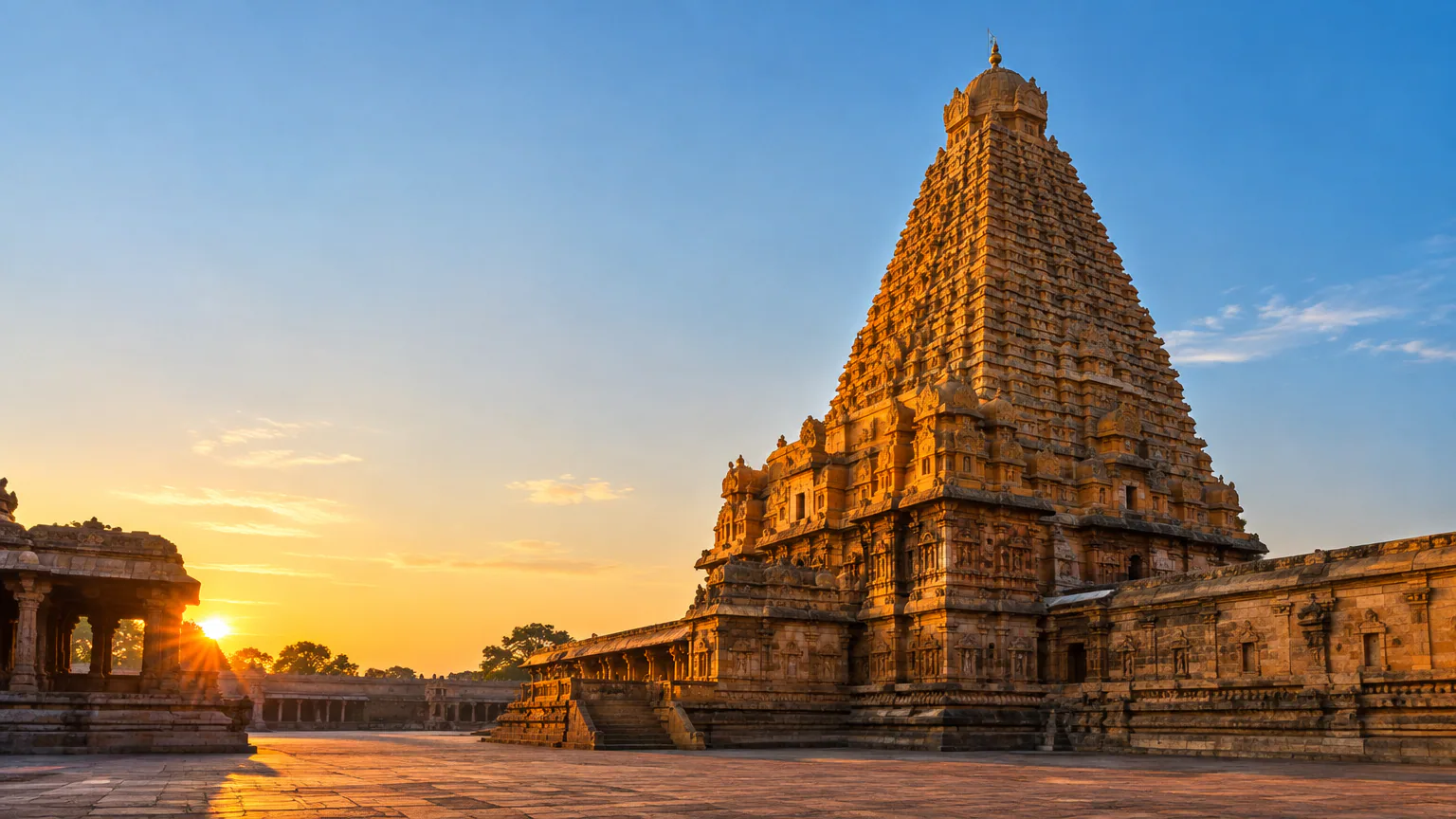
What Tamil Nadu Travel Tips India Really Means
Tamil Nadu travel tips india come down to a handful of decisions that change a trip most: when you travel, how you move between cities, how you pay, and how you dress at temples. Get these four right and the rest of the state is straightforward.
Tamil Nadu is a large state with distinct zones. Chennai and the northeast coast, the Kaveri delta temple belt around Thanjavur and Kumbakonam, the southern pilgrimage circuit through Madurai and Rameswaram, and the Nilgiri and Palani hill stations all behave differently by season and by transport.
Timing matters more than itinerary length. November to February suits plains, temples and heritage. April and May are hot across the interior. October and November bring wetter conditions on the northeast coast. A hill station such as Ooty or Kodaikanal can be pleasant in months when Madurai is uncomfortable.
Transport shapes the trip. Trains link Chennai, Thanjavur, Madurai and Rameswaram well, but popular sleeper and chair car classes sell out early. A private car with driver suits multi-stop temple circuits where you want to control timing.
Payment habits differ by location. Cards and UPI work widely in Chennai and larger hotels, but small temples, roadside eateries and some hill-town shops still prefer cash. Carry a mix rather than relying on one method.
At a glance
Tamil Nadu, in brief
Tamil Nadu needs no visa, permit or inner-line pass for Indian nationals. Carry a government photo ID for trains, flights and hotel check-in, use Indian rupees, and expect Tamil and English to cover most tourist interactions. Plug points are Indian standard.
Tamil Nadu.
Planned around you.
- Permits for Indian nationals
- None requiredNo visa, RAP or ILP for Tamil Nadu; carry a government photo ID.
- Foreign nationals
- Indian visa or eligible e-visaVerify nationality-specific conditions before booking.
- Currency
- Indian rupee (INR)Cards and UPI work in cities; cash helps in smaller towns.
- Languages
- Tamil and EnglishEnglish is common in hotels, transport hubs and larger restaurants.
- Plug type
- Indian standard three-pin and two-pinBring a universal adapter if your devices use other plugs.
- Emergency number
- 112Covers police, fire and ambulance.
Before You Go to Tamil Nadu
Book trains and hill-station stays before you finalise dates, because Chennai-Madurai and Nilgiri routes fill quickly in peak months. Keep a government photo ID, a backup payment method and offline maps ready. The common mistake is treating Tamil Nadu as a single-city trip.
Government photo ID
Aadhaar, driving licence, voter ID or passport for flights, trains and hotel check-in.
Where to get it: Carry originals or DigiLocker copies.Common mistake: Relying on a photocopy alone at hotel check-in.
Intercity train tickets
Book Chennai, Thanjavur, Madurai and Rameswaram sectors early on IRCTC.
Where to get it: IRCTC website or app.Common mistake: Waiting until arrival, when sleeper and chair car classes are sold out.
Private car with driver
Indicative INR 3,000-5,500 per day depending on vehicle and route for multi-stop circuits.
Where to get it: Tripstor or a local operator.Common mistake: Assuming app cabs cover intercity temple circuits.
Hill-station stay
Reserve Ooty or Kodaikanal accommodation before peak weekends and school holidays.
Where to get it: Hotel direct or Tripstor.Common mistake: Arriving without a booking in April-May or December.
Cash and cards
Carry a mix; small temples, roadside eateries and some hill-town shops prefer cash.
Where to get it: ATM or bank before travel.Common mistake: Depending entirely on UPI in remote areas.
Offline maps
Download maps for Nilgiri and forest stretches where data weakens.
Where to get it: Your preferred map app.Common mistake: Assuming continuous 4G on hill roads.
Power bank
Useful on long train and road legs between cities.
Where to get it: Buy before travel.Common mistake: Running out of charge on an overnight train.
Travel insurance
Optional for domestic trips; useful for trekking or self-driving in the Nilgiris.
Where to get it: Insurer or aggregator.Common mistake: Assuming standard health cover includes adventure activities.
Tamil Nadu rewards planning because distances between the coast, the Kaveri delta and the southern temple towns are real. A Chennai-Madurai train or a Thanjavur-Kumbakonam road leg each takes a meaningful part of a day, so build travel time into the itinerary rather than stacking one-night stops.
Book intercity trains on IRCTC as soon as your dates are fixed. For multi-city circuits, a private car with driver at about INR 3,000-5,500 per day depending on vehicle and route gives flexibility that trains alone cannot. Hill-station stays in Ooty and Kodaikanal are limited in peak season, so reserve early.
Carry a government photo ID, a debit or credit card, some cash, and a power bank. Download offline maps for hill and forest stretches where mobile data weakens. Travel insurance is optional for domestic trips but useful if you are trekking or driving in the Nilgiris.
Money and Payments in Tamil Nadu
Cards and UPI work in Chennai hotels, malls and larger restaurants, but cash still matters at small temples, roadside eateries and some hill-town shops. Withdraw from bank ATMs rather than standalone kiosks, and keep a second payment method for connectivity gaps.
- Carry a cash buffer
Keep enough cash for temple offerings, small eateries and hill-town shops where UPI may not work.
Money - Use bank ATMs
Withdraw from bank-operated ATMs in cities and larger towns rather than isolated kiosks.
Money - Keep two payment methods
A card plus UPI plus some cash covers most situations, including connectivity gaps.
Money - Buy an Indian SIM or eSIM
Major operators cover cities well; expect weaker data on Nilgiri hill roads and inside forest stretches.
Connectivity - Download offline maps
Save hill and forest routes before driving, since mobile data can drop between towns.
Connectivity - Budget local transport separately
Indicative autos INR 30-80 for short urban rides, app cabs INR 200-700 within a city, car with driver INR 3,000-5,500 per day.
Money
Tamil Nadu's payment mix is uneven by location. Chennai, Coimbatore and Madurai accept UPI and cards widely. Smaller temple towns, hill-village stalls and some family-run lodges prefer cash. Withdraw from bank-operated ATMs in cities and larger towns, and avoid isolated kiosks where possible.
For connectivity, an Indian SIM or eSIM from a major operator covers most of the state. Data is strong in Chennai, Coimbatore and Madurai, weaker on Nilgiri hill roads and inside some forest stretches. Download offline maps and save key addresses before hill drives.
Indicative local transport costs help budgeting: autos about INR 30-80 for short urban rides, app cabs about INR 200-700 within a city, and a car with driver about INR 3,000-5,500 per day depending on vehicle and route. These are planning ranges, not Tripstor package offers.
Cultural Tips for Tamil Nadu
Temple etiquette is the single most important cultural rule in Tamil Nadu. Dress modestly, remove footwear before entering, and ask before photographing deities or rituals. Tipping is optional but appreciated for drivers, guides and hotel staff, and a small note goes a long way.
- Dress for temples
Cover shoulders and knees; men may need to remove shirts or vests in some inner areas. Footwear comes off before entering.
Etiquette - Ask before photographing
Photography rules vary by temple and shrine; ask locally rather than assuming.
Etiquette - Attend a performance
Bharatanatyam and Carnatic music are living traditions in Chennai and Thanjavur; arrive on time and dress neatly.
Culture - Plan around festivals
Temple festivals bring heavy crowds and some route closures; check dates before finalising travel days.
Culture - Tip discretionarily
A discretionary amount for drivers and guides at the end of a multi-day circuit is common; hotel and restaurant staff appreciate small notes.
Etiquette - Bargain in markets only
Bargaining is normal in markets but not in fixed-price shops or temples.
Etiquette
Tamil Nadu's temple culture is active, not museum-like. At major temples such as those in Madurai, Thanjavur and Kumbakonam, men are generally expected to remove shirts or vests in some inner areas, and women should cover shoulders and knees. Footwear comes off before entering temple premises. Photography rules vary by temple and by shrine, so ask locally rather than assuming.
Bharatanatyam and Carnatic music are living traditions in Chennai and Thanjavur. Attending a performance or a temple festival is a genuine way to understand the state, but arrive on time and dress neatly. During festivals, crowds are heavy and some routes close; plan around them rather than through them.
Tipping is not mandatory. For drivers and guides, a discretionary amount at the end of a multi-day circuit is common. Hotel and restaurant staff appreciate small notes. Bargaining is normal in markets but not in fixed-price shops or temples.
Tamil Nadu Food Tips for Vegetarians and Everyone Else
Tamil Nadu is one of the easiest Indian states for vegetarians, with filter coffee, idli, dosa, sambar and full meals widely available. Non-vegetarian options concentrate in Chennai and larger towns. Eat where locals eat, and drink packaged or filtered water.
- Statewide
Filter coffee
Strong decoction with milk, served in a steel tumbler and dabara; a Tamil Nadu morning ritual.
Best forCoffee lovers
Order it at a local coffee bar rather than a chain for the traditional serve.
- Statewide
Idli, dosa and pongal
Breakfast staples with coconut chutney and sambar; widely available and usually vegetarian.
Best forVegetarian breakfast
Eat at busy local eateries where turnover is high.
- Thanjavur and Kumbakonam
Full meals plate
Rice with sambar, rasam, poriyal and curd, often served on a banana leaf in the Kaveri delta belt.
Best forTraditional vegetarian lunch
Lunch is the main meals service; arrive before 1pm for the full spread.
- Chennai and larger towns
Chettinad-style preparations
Peppery, aromatic non-vegetarian and vegetarian dishes associated with the Chettinad region.
Best forNon-vegetarian diners
Ask for spice level if you are not used to heavy pepper.
- Madurai
Madurai temple-precinct food
Local food culture around the temple area, with snacks and meals suited to a sightseeing day.
Best forSightseeing days
Combine a meal with a temple visit to avoid extra travel.
- Ooty and Kodaikanal
Hill-station tea and simple fare
Tea-estate influence shows in local tea and simpler meals in cooler weather.
Best forCool-weather meals
Carry a light jacket for outdoor seating in the evening.
Tamil Nadu's everyday food is vegetarian by default in many areas. A standard meals plate includes rice, sambar, rasam, poriyal and curd. Breakfast staples are idli, dosa, pongal and vada with coconut chutney. Filter coffee is a state ritual, served in a steel tumbler and dabara.
Chennai has the widest non-vegetarian range, including Chettinad-style preparations. Thanjavur and Kumbakonam are strong for traditional vegetarian meals. Madurai is known for its own food culture around the temple precinct. Hill towns such as Ooty and Kodaikanal serve simpler fare with tea-estate influence.
For Indian travellers, Jain and pure-vegetarian options are common but not universal; ask before ordering. Street food is best eaten fresh and hot. Drink packaged or filtered water, and carry basic medication for stomach upsets if you are trying many new dishes.
Safety in Tamil Nadu
Main tourist circuits in Tamil Nadu are commonly visited, but normal precautions apply around traffic, heat, valuables and crowded temples. Monsoon disruption can affect coastal and hill routes. No destination is risk-free, so plan around weather and keep documents secure.
- Busy traffic in Chennai and Madurai
How to avoid itUse app cabs or prepaid taxis from airports, metered or app-based autos for short trips, and avoid unlicensed drivers at stations.
- Sharp bends on Nilgiri hill roads
How to avoid itPrefer daytime driving, avoid rushing between Ooty and Kodaikanal in one day, and use a driver familiar with the route.
- Heat from April to May
How to avoid itCarry water, plan temple visits for early morning or late afternoon, and avoid long outdoor stretches at midday.
- Monsoon disruption in October and November
How to avoid itBuild buffer days into coastal and hill routes, and check rail and road status before departure.
- Pickpocket risk at crowded temples and festivals
How to avoid itKeep valuables in a zipped bag, use hotel lockers where available, and keep a digital copy of your ID.
- Stomach upsets from unfamiliar food
How to avoid itDrink packaged or filtered water, eat freshly cooked food, and carry basic medication.
Traffic is the most consistent risk. Chennai and Madurai roads are busy, and hill roads in the Nilgiris have sharp bends. Use app cabs or prepaid taxis from airports, metered or app-based autos for short trips, and avoid unlicensed drivers at stations.
Heat is a real factor from April to May across the interior. Carry water, plan temple visits for early morning or late afternoon, and avoid long outdoor stretches at midday. October and November bring wetter conditions on the northeast coast, which can disrupt road and rail schedules.
Crowded temples and festivals create pickpocket risk. Keep valuables in a zipped bag, use hotel lockers where available, and keep a digital copy of your ID. Emergency number 112 covers police, fire and ambulance. For health, drink packaged or filtered water and carry basic medication for stomach upsets.
Packing by Season for Tamil Nadu
Packing for Tamil Nadu depends on whether you are on the plains or in the hills. November to February needs light layers and temple-appropriate clothing. April and May demand breathable cotton and sun protection. October and November call for rain gear on the northeast coast.
Light layers for November to February
Mornings and hill evenings can be cool even when days are pleasant on the plains.
Where to get it: Pack before travel.Common mistake: Carrying only summer clothing for a Nilgiri leg.
Breathable cotton for April and May
The interior is hot; loose cotton and a hat help during temple and heritage visits.
Where to get it: Pack before travel.Common mistake: Wearing heavy synthetic fabrics at midday.
Rain gear for October and November
The northeast coast is wetter; a compact umbrella and a dry bag protect electronics.
Where to get it: Pack before travel.Common mistake: Assuming the whole state is dry when only the coast is wet.
Temple-appropriate clothing
Cover shoulders and knees; easy-to-remove footwear helps at temple entrances.
Where to get it: Pack before travel.Common mistake: Wearing shorts and sleeveless tops to major temples.
Light jacket for hill stations
Ooty and Kodaikanal can be cool in the evening even when the plains are hot.
Where to get it: Pack before travel.Common mistake: Underestimating hill-station night temperatures.
Sun protection
Sunscreen, hat and sunglasses matter from March to May across the interior.
Where to get it: Pack before travel.Common mistake: Skipping sun protection on cloudy coastal days.
Power bank and reusable bottle
Useful on long train and road legs between cities.
Where to get it: Pack before travel.Common mistake: Running out of charge or water on an overnight train.
Basic medical kit
Include stomach-upset medication, rehydration salts and any personal prescriptions.
Where to get it: Pharmacy before travel.Common mistake: Assuming pharmacies are open late in small towns.
Tamil Nadu's climate splits between the hot interior, the humid coast and the cooler hill stations. A single packing list rarely covers a Chennai-Madurai-Ooty circuit, so pack in layers and plan for laundry rather than carrying everything.
For temple visits, bring clothing that covers shoulders and knees, and footwear that is easy to remove. A light scarf or shawl helps in air-conditioned trains and in temple inner areas. Hill stations such as Ooty and Kodaikanal can be cool in the evening even when the plains are hot, so a light jacket is useful year-round.
Sun protection matters from March to May. Rain gear matters on the northeast coast in October and November. A power bank, a reusable water bottle and a basic medical kit cover most practical needs.
Holiday ideas to start from
Reviewed itineraries for this destination — personalise with a specialist, never an instant booking.
Ooty Hill Break 3 Nights: Tamil Nadu Honeymoon Tour Package 2026
From₹18,000per adult, twin sharing, land only
From idea to itinerary, with a real person.
- Share your plan
Dates, departure city, travellers and the moments you’d love. It only takes a minute.
- Shape it with a specialist
A real person refines the route, stays and pace with you. Change anything.
- Review your quote
A clear, personalised quote with confirmed inclusions. No payment to enquire.
From our travel specialists
What our team sees when planning these trips, beyond what the guidebooks say.
Confirmed 11 Oct 2026
- Practical
Local transport is the most consistently reported practical issue: distances are substantial, and travellers often find that a reliable driver or prearranged car is more convenient than piecing together transfers. At pilgrimage sites, walking may be faster than waiting for a rope car in some situations, while accessibility varies for elderly travellers and people with disabilities.
Travellers commonly wish they had allowed more time between Tamil Nadu’s widely spread destinations and checked hotel quality carefully, especially in Ooty and lower-priced properties. Temple visits can also involve queues, crowds and limited cleanliness or queue management, so modest clothing and extra time are practical preparations.
Before you go
Straight answers to help you plan — then personalise the trip with a specialist.
8 answered belowAsk a specialist anything about this trip — there’s no obligation.
Ask a specialistWhat is the best time to visit Tamil Nadu?
November to February is generally best for plains, temples and heritage. April and May are hot across the interior, and October and November are wetter on the northeast coast. Hill stations such as Ooty and Kodaikanal can be pleasant in months when Madurai is uncomfortable.
How many days are enough for a Tamil Nadu tour?
Five to seven days covers Chennai, Mahabalipuram, Thanjavur and Madurai. Ten to fourteen days allows hills, Rameswaram and southern extensions. Avoid excessive one-night transfers, because distances between the coast, the Kaveri delta and the southern temple towns are real.
What is the average cost of a Tamil Nadu tour package?
A typical land-only twin-sharing package is roughly INR 18,000-32,000 per person for budget to standard travel, and more for premium hotels or private touring. These are indicative planning ranges, not confirmed Tripstor offers, and exclude flights unless stated.
Which are the best places to visit in Tamil Nadu?
Chennai, Mahabalipuram, Thanjavur, Madurai, Ooty, Kodaikanal, Rameswaram and Puducherry are core choices. Chennai and Mahabalipuram suit a short coastal start, Thanjavur and Madurai cover temple heritage, and Ooty or Kodaikanal add a hill-station break.
Is Tamil Nadu suitable for a family holiday?
Yes, especially with a slower route combining Chennai, Mahabalipuram, a hill station and Madurai. Avoid excessive one-night transfers, keep travel days short, and plan temple visits for early morning or late afternoon when the heat is lower and crowds are thinner.
What is Tamil Nadu famous for?
It is known for Dravidian temples, Chola and Pallava monuments, Bharatanatyam and Carnatic culture, pilgrimage towns, hill stations and coastal landscapes. Chennai, Thanjavur, Madurai, Rameswaram, Ooty and Kodaikanal each represent a different part of that mix.
How can I travel around Tamil Nadu?
Use trains between major cities, private cars for multi-stop circuits, and app cabs or metro within Chennai. A car with driver costs an indicative INR 3,000-5,500 per day depending on vehicle and route, while autos run about INR 30-80 for short urban rides.
Is Tamil Nadu safe for tourists?
Main tourist circuits are commonly visited safely, but use normal precautions involving traffic, heat, valuables, crowded temples and monsoon disruption. No destination is risk-free. Emergency number 112 covers police, fire and ambulance, and app cabs or prepaid taxis reduce transport risk.