
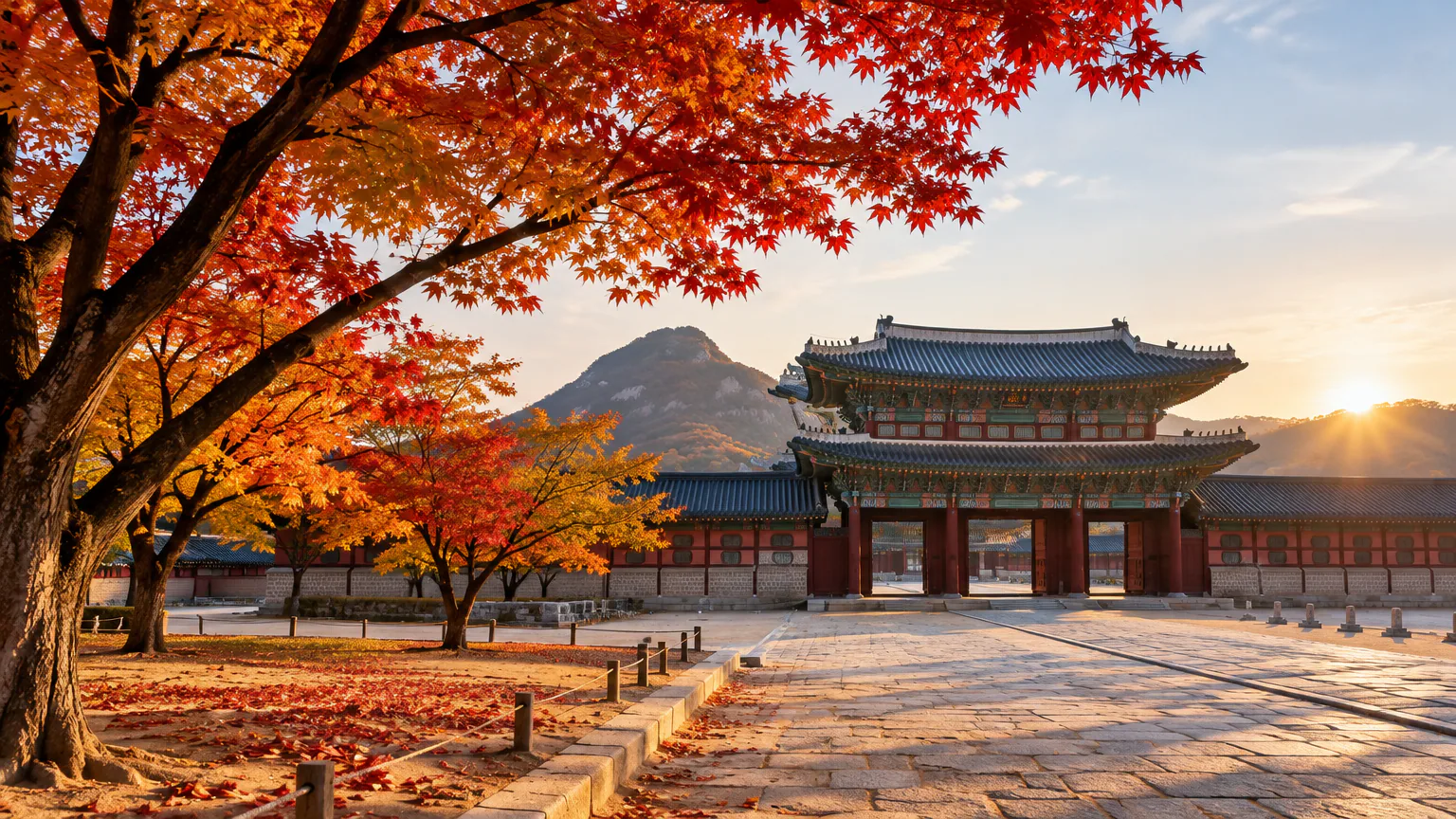
What Actually Changes a South Korea Trip
Four practical things change a South Korea trip for Indian travellers: a visa obtained before departure, a T-money card for metro and bus fares, a rough won-to-rupee budget, and a route that does not cram Seoul, Busan, Gyeongju and Jeju into five days.
Indian passport holders generally need a South Korean visa before travel, and the 2026 K-ETA temporary exemption does not generally apply to Indian nationals, so visa paperwork sets your booking timeline.
On the ground, Seoul and Busan metro systems are the backbone of city travel, with fares around KRW 1,500-2,000 per ride paid by T-money or Cashbee card.
Between cities, KTX high-speed trains link Seoul and Busan in roughly 2 hours 15 minutes to 2 hours 45 minutes.
Budget-wise, ordinary meals run about KRW 8,000-20,000, and indicative land-only twin-sharing packages start near ₹85,000 per person for budget trips, excluding airfare and visa.
At a glance
South Korea, in brief
South Korea uses the won, Korean is the main language with English signage in Seoul and Busan transit, plugs are Type C and F at 220V, and Indian passport holders generally need a visa arranged before departure through the Korean Embassy or designated application channel in India.
South Korea.
Planned around you.
- Currency
- South Korean won (KRW)Cards widely accepted in hotels and department stores; cash useful at markets and small vendors
- Language
- KoreanEnglish signage common on Seoul and Busan metro systems
- Plug type
- Type C and F, 220VCarry a universal adapter for Indian devices
- SIM or eSIM
- Local SIM or eSIM available at Incheon Airport and in SeoulCompare data-only tourist plans against roaming packs
- Time difference
- 3 hours 30 minutes ahead of ISTNo daylight saving change to plan around
- Emergency numbers
- 112 police, 119 fire and ambulanceSave these before arrival
Before You Go to South Korea
Before booking flights, Indian travellers should confirm the current South Korean visa category, gather financial and employment documents, arrange travel insurance, and set up a forex card or international card for won spending, because visa-free and K-ETA exemption arrangements do not generally cover Indian nationals.
Passport with sufficient validity
Check validity covers your planned stay and any buffer the mission requests.
Where to get it: Passport office / Korean Embassy guidanceCommon mistake: Booking flights before confirming passport validity meets the visa requirement.
South Korean visa application
Apply through the Korean Embassy or designated visa application channel in India with passport, form, photograph, itinerary, accommodation and financial evidence.
Where to get it: Korean Embassy or designated visa application channel in IndiaCommon mistake: Assuming Indian passport holders qualify for visa-free entry or the 2026 K-ETA temporary exemption.
Travel insurance
Choose a policy that covers medical treatment, trip disruption and any activities you plan.
Where to get it: Indian insurers offering international travel coverCommon mistake: Buying the cheapest policy without checking medical sub-limits.
Forex card or international card
Load won or a widely accepted currency and keep a backup card.
Where to get it: Banks and authorised forex dealers in IndiaCommon mistake: Relying on a single card and no cash for markets.
Flight and accommodation bookings
Keep confirmations for the visa file and for immigration on arrival.
Where to get it: Airline and hotel confirmationsCommon mistake: Booking refundable-only fares that raise the trip cost without checking visa timelines.
Useful apps
Install a translation app, Kakao T for taxis where available, and a metro map app for Seoul and Busan.
Where to get it: App storesCommon mistake: Waiting until arrival to download apps without data.
Visa processing timelines and document lists can change, so confirm with the Korean Embassy or designated visa application channel in India before locking non-refundable flights.
Carry printed copies of your itinerary, hotel bookings and financial evidence to the visa appointment.
Money and Payments in South Korea
South Korea runs mostly on cards and mobile payments, but Indian travellers should still carry some won cash for markets and small vendors, use bank ATMs rather than standalone machines, and buy a local tourist SIM or eSIM for data instead of depending on Indian roaming.
- Carry a mix of card and cash
Cards cover hotels, department stores and many restaurants, but keep won cash for markets and small vendors where card terminals may not be available.
Money - Use bank ATMs where possible
Withdraw from bank-operated ATMs during business hours and check your bank's foreign transaction fee before relying on ATM cash.
Money - Do not assume UPI works
UPI is not a standard payment method in South Korea; plan around cards, won cash or a T-money card instead.
Money - Buy a tourist SIM or eSIM
Local data plans are available at Incheon Airport and in Seoul; compare them against your Indian roaming pack before departure.
Connectivity - Top up T-money at convenience stores
T-money and Cashbee cards work on Seoul and Busan metro and buses, and top-ups are simple at convenience stores and station machines.
Transport
International cards work in hotels, department stores and many restaurants, while cash helps at traditional markets and smaller shops.
UPI is not a standard payment method in South Korea, so do not plan around it.
Metro fares of roughly KRW 1,500-2,000 per ride and airport rail fares of about KRW 4,750-11,000 depending on service are easiest with a T-money or Cashbee card, which you top up at convenience stores and station machines.
Cultural Tips for South Korea
South Korean etiquette rewards small gestures: remove shoes in homes and some traditional restaurants, use two hands when giving or receiving items, keep voices low on metro trains, and dress modestly at temples and palaces.
- Skip the tip
Tipping is not expected in restaurants, taxis or hotels in South Korea; service charges are usually already included where applicable.
Etiquette - Dress modestly at temples and palaces
Cover shoulders and knees at religious sites, and carry a light layer for air-conditioned interiors.
Etiquette - Use two hands for giving and receiving
Passing items, cards or gifts with two hands or a supported right hand is a common courtesy.
Etiquette - Keep metro noise low
Phone calls and loud conversation on Seoul and Busan metro trains draw attention; use headphones for media.
Etiquette - Remove shoes where indicated
Some traditional restaurants and guesthouses ask guests to remove shoes at the entrance; watch for a step or sign.
Etiquette
Tipping is not expected in restaurants, taxis or hotels, and leaving a tip can occasionally cause confusion.
At religious sites, avoid loud conversation and check whether photography is restricted inside halls.
In Seoul, palace and market districts involve long walks, so comfortable shoes matter as much as modest clothing.
Food Tips for Indian Travellers in South Korea
South Korean food ranges from grilled meats and rice bowls to temple-style vegetarian dishes, and Indian travellers can manage dietary needs by learning a few Korean phrases, checking whether broths contain meat or seafood, and using convenience-store meals when restaurant options are limited.
- Nationwide, including Seoul and Busan
Convenience-store meals
Pre-packed rice bowls, sandwiches and noodles provide a quick, low-cost option when restaurant menus are hard to read.
Best forBudget meals and late arrivals
Check labels for meat or seafood ingredients if you are vegetarian.
- Seoul and Busan
Local restaurants near metro stations
Ordinary meals at local restaurants typically cost about KRW 8,000-20,000, with rice, noodle and grilled options widely available.
Best forEveryday meals
Carry a translation app to confirm ingredients and spice levels.
- Seoul and other cities
Traditional markets
Markets offer small portions and snacks, making it easier to try several dishes without committing to a full meal.
Best forSnacking and trying local dishes
Carry won cash because small vendors may not accept international cards.
Ordinary meals typically cost about KRW 8,000-20,000, so convenience-store meals and local restaurants keep daily food costs manageable.
Vegetarian travellers should confirm whether kimchi and side dishes contain fish sauce or shrimp, and Jain travellers should ask about garlic and onion in marinades.
In Seoul, neighbourhoods around university areas and major markets tend to have the widest range of affordable options.
Safety in South Korea for Indian Tourists
South Korea is generally orderly for travellers, but Indian visitors should watch for taxi fare disputes, seasonal weather risks and long walking distances, and should keep emergency numbers 112 and 119 saved before arrival.
- Taxi fare disputes or unmetered rides
How to avoid itUse metered taxis or Kakao T where available, and confirm the meter is running before departure.
- Summer heat and humidity
How to avoid itPlan indoor attractions during the hottest hours, carry water and use air-conditioned metro and museum stops.
- Winter cold in Seoul and northern areas
How to avoid itPack thermal layers, gloves and a windproof outer layer, and check heating in your accommodation.
- Jeju weather changes
How to avoid itKeep at least one flexible day on Jeju rather than scheduling every activity, since ferry and flight conditions can shift.
- Long walking distances in palace and market districts
How to avoid itWear broken-in shoes, carry a refillable bottle and plan metro stops between major sights.
Use metered taxis or Kakao T where available, and confirm the meter is running before the trip starts.
Summer heat and humidity can be draining, while winter cold in Seoul requires proper layers.
Jeju weather can change quickly, so build flexibility into any island plans rather than locking every hour.
Packing by Season for South Korea
Packing for South Korea depends on season: spring and autumn need light layers and a compact umbrella, summer needs breathable clothing and sun protection, and winter requires thermal layers, gloves and a windproof coat for Seoul and northern areas.
Spring layers and umbrella
Pack light layers, a compact umbrella and comfortable walking shoes for April-May sightseeing.
Where to get it: Seasonal weather guidanceCommon mistake: Packing only summer clothing for spring evenings that turn cool.
Summer breathable clothing
Choose quick-dry fabrics, sun protection and a refillable water bottle for humid summer days.
Where to get it: Seasonal weather guidanceCommon mistake: Underestimating humidity and planning long outdoor walks at midday.
Autumn layers
September-October suits light layers, a light jacket and an umbrella for occasional rain.
Where to get it: Seasonal weather guidanceCommon mistake: Leaving the umbrella behind because mornings look clear.
Winter thermal gear
Pack thermal base layers, gloves, a hat and a windproof coat for Seoul and northern areas.
Where to get it: Seasonal weather guidanceCommon mistake: Relying on a single jacket without wind protection.
Universal adapter
South Korea uses Type C and F plugs at 220V, so carry an adapter for Indian devices.
Where to get it: Electrical plug guidanceCommon mistake: Assuming Indian plugs fit without an adapter.
Medicines and prescriptions
Carry regular medicines in original packaging with a prescription copy.
Where to get it: Doctor and pharmacyCommon mistake: Packing medicines in unlabelled containers.
April-May and September-October are the strongest overall periods for comfortable temperatures and sightseeing, so those months suit light layers plus a foldable umbrella.
Summer humidity makes quick-dry fabrics useful, while winter travel to Seoul and Seoraksan needs serious cold-weather gear.
A universal adapter for Type C and F plugs belongs in every season's bag.
Holiday ideas to start from
Reviewed itineraries for this destination — personalise with a specialist, never an instant booking.
Seoul Family Theme Park Stay 5 Nights: South Korea Family Package 2026
From₹1,07,500per adult, twin sharing, land only
From idea to itinerary, with a real person.
- Share your plan
Dates, departure city, travellers and the moments you’d love. It only takes a minute.
- Shape it with a specialist
A real person refines the route, stays and pace with you. Change anything.
- Review your quote
A clear, personalised quote with confirmed inclusions. No payment to enquire.
From our travel specialists
What our team sees when planning these trips, beyond what the guidebooks say.
Confirmed 11 Oct 2026
The available firsthand material does not provide enough family- or couple-specific reporting to support a reliable answer.
Myeongdong is the clearest traveller recommendation for a first visit because it is central, convenient for sightseeing, shopping and food, and makes a practical base for Seoul’s main attractions.[1]
The available traveller report does not say that a particular attraction disappoints many people, but it does prefer Gwangalli over Haeundae in Busan, especially for the beach and bridge views.[1]
Local transport is the most consistently reported practical issue: visitors should buy and load a T-money card for Seoul and Busan subways and buses. Indian travellers are also advised to arrange a SIM or pocket Wi-Fi at the airport and seek vegetarian-friendly restaurants, particularly in Seoul and Busan.[2][3]
Before you go
Straight answers to help you plan — then personalise the trip with a specialist.
8 answered belowAsk a specialist anything about this trip — there’s no obligation.
Ask a specialistDo Indians need a visa for South Korea?
Yes. Indian ordinary passport holders generally need to obtain a South Korean visa before tourism travel; visa-free and K-ETA exemption arrangements for selected nationalities do not generally cover Indians. Apply through the Korean Embassy or designated visa application channel in India and confirm current requirements before booking flights.
What is the best time to visit South Korea?
April-May and September-October are the strongest overall periods for comfortable temperatures, sightseeing and seasonal scenery. Summer brings heat and humidity, while winter in Seoul and northern areas is cold enough to need thermal layers and a windproof coat.
How much does a South Korea tour package cost from India?
Indicative land-only twin-sharing prices are about ₹85,000 per person for budget, ₹1,25,000 for standard, ₹1,90,000 for premium and ₹3,25,000 or more for luxury, excluding international airfare and visa. Treat these as planning ranges, not confirmed Tripstor offers.
How many days are enough for South Korea?
Five days covers Seoul and one short excursion; seven days allows Seoul, Busan and Gyeongju or Jeju; ten to fourteen days suits a broader Seoul-Busan-Gyeongju-Jeju circuit. Fewer days work best if you stay within one region rather than crossing the country.
Which places should I visit in South Korea?
The most practical first-trip combination is Seoul, Busan, Gyeongju and either Jeju Island or Seoraksan, depending on available days and season. Seoul and Busan have extensive metro systems, while KTX trains connect the two cities in roughly 2 hours 15 minutes to 2 hours 45 minutes.
Is South Korea expensive for Indian travellers?
It can be moderate to expensive, especially for accommodation in Seoul and peak-season flights, but metro travel, local restaurants and convenience-store meals can keep daily costs manageable. Ordinary meals typically cost about KRW 8,000-20,000, and metro rides about KRW 1,500-2,000.
What currency is used in South Korea and can Indians use cards?
The South Korean won is used. International cards are widely accepted in hotels, department stores and many restaurants, but cash or a local payment option is useful for markets and small vendors. UPI is not a standard payment method, so plan around cards and won cash.
How do I travel between Seoul and Busan?
The KTX high-speed train is usually the most convenient option, taking approximately 2 hours 15 minutes to 2 hours 45 minutes depending on service. Economy fares are around KRW 59,800 one way. Book seats in advance during weekends and holiday periods.