
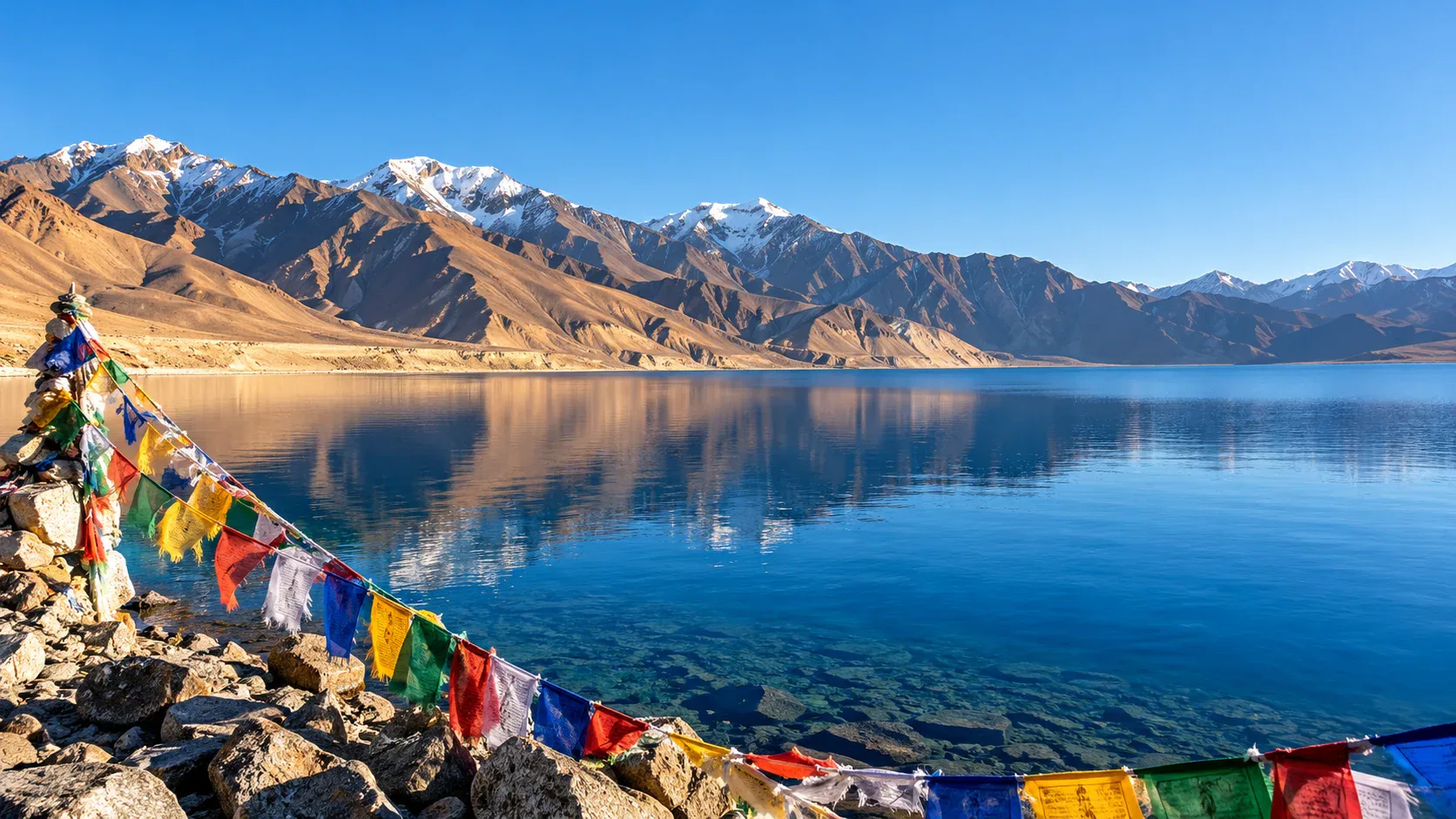
What Ladakh Travel Tips India Really Means
The handful of things that most change a Ladakh trip are acclimatisation, permits, season and cash. Leh sits at high altitude, so the first 24–48 hours should be slow. Restricted circuits need registration. May to September offers the broadest access, and ATMs can be unreliable outside Leh.
Ladakh is not a destination where you land and start sightseeing. The body needs time to adjust to Leh's altitude, and itineraries that rush to Nubra or Pangong on day two often end with headaches, nausea or worse. A conservative first day, plenty of water and no alcohol for the first 48 hours make the rest of the trip far more enjoyable.
Permits are the second variable. Indian nationals do not need a visa for Leh, but an Environment/green fee and destination-specific online registration or permit may apply for Nubra, Pangong Tso, Tso Moriri, Hanle, Turtuk and Batalik. Rules change, so verify with the Leh district administration before travel.
Season decides which roads are open. May to September is best for most travellers; June to September offers the broadest road access, while September is quieter. Winter travel is possible but limited and much colder.
Cash matters more than you expect. Carry enough Indian rupees for the first few days because ATMs outside Leh can be empty or offline, and card acceptance is limited in remote villages.
At a glance
Ladakh, in brief
Ladakh uses the Indian rupee, Hindi and English are widely understood in Leh, and the plug type is the standard Indian three-pin. Mobile coverage is strongest in Leh and fades on remote circuits. Indian nationals need no visa, but restricted-area registration may apply.
Ladakh.
Planned around you.
- Currency
- Indian Rupee (INR)Cards accepted in Leh; cash essential for remote circuits.
- Languages
- Ladakhi, Hindi, EnglishEnglish is widely understood in Leh's tourism sector.
- Plug type
- Indian three-pin (Type D)Carry a universal adapter if your devices use other plugs.
- SIM / eSIM
- Indian SIMs work in Leh; coverage is patchy on remote routesPrepaid SIMs from other circles may need verification in Leh.
- Time difference
- IST (UTC+5:30)No change from the rest of India.
- Emergency numbers
- 112 (all-India), 108 (ambulance)Save these before you leave Leh.
Before You Go to Ladakh
Before you go to Ladakh, book flights and stays early for June to September, arrange travel insurance that covers high-altitude trekking, and carry a government photo ID. The common mistake is treating Leh like a normal city arrival and scheduling a full day of sightseeing on landing day.
Government photo ID
Carry your Aadhaar, passport or driving licence for hotel check-in and permit checks.
Where to get it: Original document; keep a photocopy and a phone photo.Common mistake: Carrying only a soft copy; some checkpoints want the original.
Travel insurance
Choose a policy that covers high-altitude activities, medical evacuation and trip cancellation.
Where to get it: Insurer or aggregator; read the altitude exclusion clause.Common mistake: Assuming a standard domestic policy covers 3,500 m+ activities.
Restricted-area registration
Apply online or through your operator for Nubra, Pangong Tso, Tso Moriri, Hanle, Turtuk and Batalik.
Where to get it: Leh district administration or a registered local operator.Common mistake: Leaving it to the last minute; processing can take a day.
Flights to Leh (IXL)
Book early for June to September; Delhi has the most frequent service, with direct flights taking about 1 hour 25 minutes.
Where to get it: Airline websites or a travel agent.Common mistake: Booking a late arrival and then trying to drive onward the same day.
Accommodation in Leh
Book the first two nights in Leh before arrival so you have a base for acclimatisation.
Where to get it: Hotel or operator; confirm heating and hot water.Common mistake: Arriving without a booking in peak season.
Cash and cards
Carry enough INR for the first three days; ATMs in Leh are more reliable than those on remote routes.
Where to get it: Bank ATM in Leh or your home city.Common mistake: Relying on a single card or a single ATM.
Medicines
Pack a basic kit: paracetamol, ORS, diamox if prescribed, sunscreen, lip balm and any personal medication.
Where to get it: Pharmacy; consult your doctor about altitude medication.Common mistake: Buying altitude medicine only after symptoms start.
Offline maps and apps
Download offline maps, your airline app, and a weather app; network is patchy outside Leh.
Where to get it: App store; test offline mode before you leave.Common mistake: Assuming 4G works on the Nubra or Pangong route.
Use this checklist to prepare documents, bookings, money and apps. Each item includes where to get it and the mistake to avoid.
Money and Payments in Ladakh
Cash is king outside Leh. Carry INR 5,000–10,000 per person for a week of remote travel, use ATMs in Leh before heading to Nubra or Pangong, and treat UPI as a Leh-and-main-town convenience rather than a guarantee. Mobile data is strongest in Leh and fades on remote circuits.
- Carry more cash than you think you need
ATMs outside Leh can be empty or offline. Withdraw INR 5,000–10,000 per person in Leh before heading to Nubra, Pangong or Tso Moriri. Small denominations help for chai stops and monastery donations.
Money - Use cards in Leh, cash elsewhere
Larger Leh hotels and restaurants accept cards, but guesthouses, homestays and remote dhabas usually do not. Keep a backup card separate from your main wallet.
Money - UPI works in Leh, not everywhere
UPI is widely accepted in Leh's main market and by many operators. Do not assume it works in Hunder, Turtuk or remote Pangong-side camps; carry cash for those stretches.
Money - Buy a local SIM or check roaming
Indian SIMs work in Leh, but coverage is patchy on remote routes. If your home-circle SIM does not register, visit a Leh service centre with your ID. Prepaid SIMs from other circles may need verification.
Connectivity - Download offline maps and entertainment
Download offline maps for the Leh–Nubra–Pangong circuit and save music, podcasts or books. Network gaps can last hours on the road.
Connectivity
Plan money and connectivity together because both thin out as you move away from Leh. The tips below cover cash, cards, UPI and data.
Cultural Tips for Ladakh
Ladakh is a Buddhist-majority region with a strong monastic tradition. Dress modestly at monasteries, walk clockwise around stupas and mani walls, ask before photographing people or rituals, and remove shoes before entering prayer halls. Tipping is appreciated but not mandatory.
- Dress for monasteries
Cover shoulders and knees at monasteries such as Thiksey, Hemis and Diskit. Carry a light scarf or shawl that doubles as sun protection.
Etiquette - Walk clockwise
At stupas, mani walls and prayer-wheel lines, walk clockwise. Spin prayer wheels clockwise too. This is a simple sign of respect that locals notice.
Etiquette - Ask before photographing people
Ask before photographing monks, locals or rituals. Some monasteries prohibit photography inside prayer halls; look for signs or ask at the entrance.
Etiquette - Remove shoes indoors
Remove shoes before entering prayer halls and some homestay rooms. Carry socks for cold monastery floors.
Etiquette - Tipping
Tipping is not mandatory but is appreciated for drivers, guides and homestay hosts. INR 200–500 per day for a driver on a multi-day circuit is a common range; adjust for group size and service.
Etiquette - Alcohol and tobacco
Alcohol is available in Leh but not everywhere. Avoid public drinking and smoking near monasteries. Some homestays and monasteries are alcohol-free.
Etiquette
These cultural tips help you travel respectfully and avoid awkward moments. They apply across Leh, Sham Valley, Nubra and Pangong.
Food Tips for Ladakh
Ladakhi food is warming and simple: thukpa, momos, skyu and butter tea. Vegetarian food is widely available in Leh, and Indian staples like dal, rice and roti appear on most menus. Eat cooked food, drink sealed water, and go easy on heavy meals during your first two days at altitude.
- Leh and across Ladakh
Thukpa
A noodle soup with vegetables or meat, served hot. It is a good first meal in Leh because it is light and hydrating.
Best forLight lunch or dinner
Ask for less chilli if you are not used to spicy food.
- Leh market and local eateries
Momos
Steamed dumplings with vegetable, cheese or meat fillings. Widely available and usually safe for vegetarians.
Best forSnack or quick meal
Choose steamed over fried for easier digestion at altitude.
- Ladakhi homes and local restaurants
Skyu
A hearty pasta-like dish with root vegetables, sometimes cooked with meat. Filling and warming on cold days.
Best forCold-weather lunch
Portions are large; share if you are not very hungry.
- Monasteries and homestays
Butter tea
Salty tea made with butter and tea leaves. It is a traditional Ladakhi drink offered to guests.
Best forCultural experience
Accept a small cup even if you only sip; it is a gesture of hospitality.
- Leh restaurants
Vegetarian Indian meals
Dal, rice, roti, paneer and mixed vegetables are widely available in Leh. Most kitchens can prepare vegetarian versions of local dishes.
Best forVegetarian travellers
Confirm no meat stock is used if that matters to you.
Use this list of dishes and food habits to plan meals. Names are generic unless a specific place is listed in the data.
Safety in Ladakh
Altitude sickness is the main health risk in Ladakh, followed by road accidents on mountain passes and weather-related delays. Acclimatise in Leh for 24–48 hours, avoid alcohol on day one, carry prescribed medication, and check road conditions before Nubra or Pangong. No destination is risk-free.
- Altitude sickness (headache, nausea, breathlessness)
How to avoid itRest in Leh for 24–48 hours, drink water, avoid alcohol, and descend if symptoms worsen. Consult a doctor about diamox before travel. Do not push on to Nubra or Pangong if you feel unwell.
- Road accidents on mountain passes
How to avoid itUse experienced local drivers, avoid night driving, and allow extra time for landslides or snow. Seat belts on, and avoid self-driving immediately after arrival.
- Weather-related road closures
How to avoid itCheck current road status with the Leh district administration or your operator. Keep a buffer day in your itinerary for Pangong or Nubra.
- Scams or overcharging by unlicensed operators
How to avoid itBook through registered operators and confirm union tariffs for taxis. Ask for a written itinerary and payment receipt.
- Medical facilities are limited outside Leh
How to avoid itCarry a basic medical kit and know that the nearest hospital is usually in Leh. Travel insurance with evacuation cover is strongly recommended.
- Dehydration and sunburn
How to avoid itDrink water regularly, use SPF 50 sunscreen, lip balm and sunglasses. Dry air and strong sun dehydrate you faster than you expect.
These warnings cover the most common issues and how to reduce them. They are planning guidance, not medical advice.
Packing by Season
Pack layers for Ladakh because temperatures swing from warm afternoons to cold nights even in summer. May to September needs a fleece, windproof jacket, sun hat and sunscreen. Winter travel from November to March requires heavy insulation, thermals and snow-ready footwear. Carry a reusable water bottle and a scarf for dusty roads.
Summer (May–June)
Light fleece, windproof jacket, t-shirts, trekking pants, sun hat, sunglasses, SPF 50 sunscreen, lip balm, water bottle.
Where to get it: Outdoor gear shop or online.Common mistake: Packing only t-shirts; evenings in Leh are still cold.
Monsoon (July–August)
Add a rain jacket or poncho, dry bag for electronics, quick-dry trousers, and extra socks. Roads can be muddy.
Where to get it: Outdoor gear shop or online.Common mistake: Assuming Ladakh is as wet as the plains; it is dry, but approach roads can be affected by landslides.
Autumn (September–October)
Warm fleece, down jacket, thermals, gloves, beanie, sturdy shoes. September is quieter and pleasant.
Where to get it: Outdoor gear shop or online.Common mistake: Underestimating night temperatures as early as late September.
Winter (November–March)
Heavy down jacket, thermal base layers, insulated gloves, beanie, snow boots, hand warmers, moisturiser.
Where to get it: Outdoor gear shop or online.Common mistake: Bringing only city winter wear; Ladakh winter is much colder.
Medicines and first aid
Paracetamol, ORS, diamox if prescribed, band-aids, antiseptic, any personal medication, and a small oxygen can if advised.
Where to get it: Pharmacy; consult your doctor.Common mistake: Forgetting prescription medicine in your checked bag.
Documents and electronics
Photo ID, permit copies, insurance, power bank, universal adapter, charging cables, offline maps.
Where to get it: Home and app store.Common mistake: Relying on a single charging point in shared accommodation.
Use this seasonal checklist to pack for the months you are travelling. Adjust quantities for trip length and whether you are staying in hotels or homestays.
Holiday ideas to start from
Reviewed itineraries for this destination — personalise with a specialist, never an instant booking.
Ladakh Monastery Trail Premium 5 Nights: 2026 Luxury Culture Tour Package
From₹62,500per adult, twin sharing, land only
From idea to itinerary, with a real person.
- Share your plan
Dates, departure city, travellers and the moments you’d love. It only takes a minute.
- Shape it with a specialist
A real person refines the route, stays and pace with you. Change anything.
- Review your quote
A clear, personalised quote with confirmed inclusions. No payment to enquire.
From our travel specialists
What our team sees when planning these trips, beyond what the guidebooks say.
Confirmed 11 Oct 2026
Leh is the most practical first base because travellers use it for arrival, acclimatisation, local sightseeing and onward trips to Nubra and Pangong. Reports mention Leh City, Shanti Stupa, Leh Market and nearby Sham Valley as manageable early stops before longer high-altitude drives.
Travellers commonly adjust the plan by adding extra time in Nubra or changing transport arrangements after seeing the road conditions. One recent report chose a Himalayan motorcycle for local sightseeing and started the Nubra–Pangong drive early to make the Shyok section easier.
Travellers commonly wish they had planned more acclimatisation time in Leh before going to Nubra or Pangong, rather than treating the trip as an ordinary road holiday. Reports also stress that Ladakh’s long, rough drives and high-altitude conditions make a slower itinerary more comfortable, especially for families and older travellers.
Families and couples report that comfort depends less on covering every famous stop than on balancing scenic drives with rest, dependable accommodation and enough unhurried time together. Family-oriented reports particularly value comfortable hotels, good food and kid-friendly pacing, while couples favour slower evenings in Nubra and lake-view stays at Pangong.
Before you go
Straight answers to help you plan — then personalise the trip with a specialist.
8 answered belowAsk a specialist anything about this trip — there’s no obligation.
Ask a specialistWhat is the best time to visit Ladakh?
May to September is best for most travellers; June to September offers the broadest road access, while September is quieter. Winter travel is possible but limited and much colder. Check current road and weather conditions before planning a winter trip.
How many days are enough for a Ladakh trip?
Seven days suits a first circuit covering Leh, Nubra and Pangong; 10 days allows Tso Moriri or slower travel. Add a buffer day for weather delays. Rushing the first two days at altitude often ruins the rest of the trip.
What is the cost of a Ladakh tour package?
Typical land-only twin-sharing packages range from about INR 25,000 budget to INR 75,000 premium per person, excluding airfare. These are indicative planning ranges, not Tripstor offers. Confirm inclusions, vehicle type and hotel category before booking.
Is Ladakh safe for family travel?
It can be suitable for healthy families with gradual acclimatisation, conservative routing and medical advice for young children or anyone with altitude-related conditions. Avoid rushing to high passes on day two. Consult a doctor before travelling with infants or elderly family members.
Do Indians need a permit for Ladakh?
No visa is required, but environmental fees and registrations or permits may apply for restricted destinations such as Pangong, Nubra and Tso Moriri. Verify current rules with the Leh district administration before travel. Carry a government photo ID.
How do I reach Ladakh from Delhi?
Direct flights to Leh take about 1 hour 25 minutes; road travel via Manali or Srinagar takes substantially longer and depends on seasonal opening. Delhi has the most frequent air service. Book early for June to September.
What should I pack for a Ladakh trip?
Pack layered warm clothing, sun protection, sunglasses, moisturiser, water bottle, basic medicines and a reusable mask or scarf for dusty roads. Add thermals and a down jacket for September onward. Carry original ID and permit copies.
Can I rent a bike in Ladakh?
Yes, motorcycles are available in Leh, but riders should acclimatise first, carry valid documents and use a reputable rental operator with breakdown support. Avoid riding to high passes on arrival day. Check insurance and helmet quality before renting.