
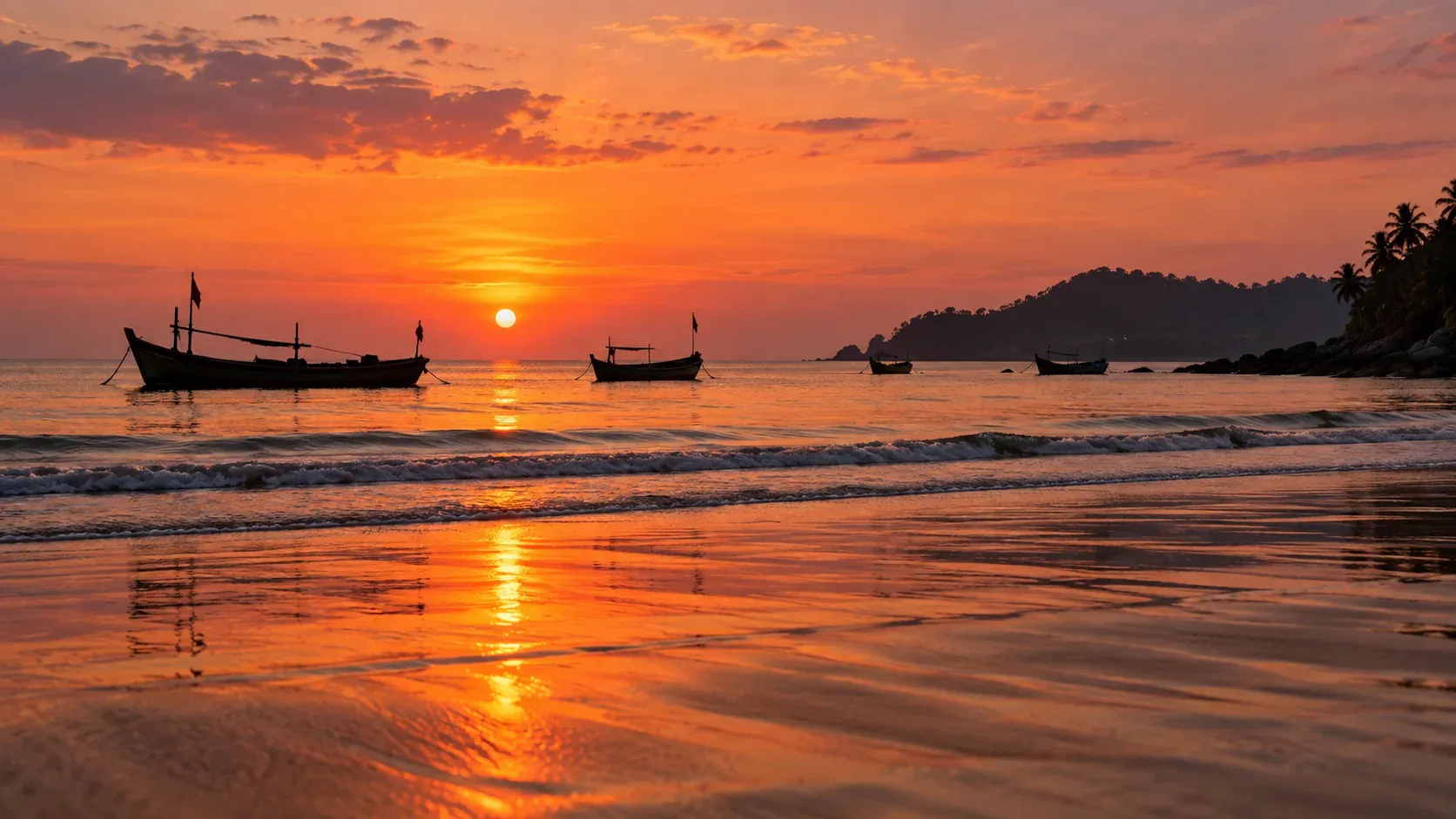
How Many Places Can You Cover?
A typical Goa itinerary covers 8 to 12 must-see places, with the top three being Old Goa, Baga Beach and Palolem Beach. North Goa clusters its beaches within a short drive, making it easy to cover several in a day, while South Goa spreads out and rewards a slower pace.
North Goa clusters Baga, Calangute, Anjuna and Vagator within a short drive, making it easy to cover several beaches in a single day. South Goa spreads out, with Palolem and Colva as key anchors separated by longer road stretches. The heritage circuit of Panaji, Fontainhas and Old Goa sits between the two zones and works well as a single-day loop.
Three days covers either North or South Goa adequately. Five days suits a balanced first trip across both regions. Seven days allows a slower beach, heritage and hinterland itinerary that includes offbeat spots such as Divar Island and Dudhsagar Falls.
At a glance
Goa, in brief
Goa's must-see places span beaches, heritage and wildlife, needing at least five days to cover both North and South Goa comfortably. Entry to most beaches and churches is free; Dudhsagar Falls requires a jeep fee through authorised operators. November to February is the best season for beach activities.
Goa.
5 days for a balanced trip; 3 days for North or South Goa only; 7 days for hinterland too
- Must-see places
- Old Goa, Baga Beach, Palolem Beach, Fontainhas, Dudhsagar Falls
- Ideal trip length
- 5 days for a balanced trip; 3 days for North or South Goa only; 7 days for hinterland too
- Best base (North Goa)
- Baga or Calangute for beach access and nightlife
- Best base (South Goa)
- Palolem for calm waters and a quieter atmosphere
- Best season
- November to February for dry weather and beach activities
- Entry fees
- Free for most beaches and churches; Dudhsagar jeep fees apply via authorised operators
Top Places to Visit in Goa
The top tourist places in Goa include the UNESCO-listed Basilica of Bom Jesus in Old Goa, the lively beach strip at Baga and Calangute, the cliffside views of Vagator, and the calm crescent of Palolem in the south. Each offers a distinct experience, from heritage walks and water sports to sunset viewpoints and dolphin trips.
- Old Goa
Basilica of Bom Jesus
A UNESCO World Heritage Site housing the relics of St. Francis Xavier, built in 1605. One of the finest examples of baroque architecture in Asia.
Best forHeritage and architecture enthusiasts
Visit early morning to avoid crowds and heat; dress modestly as it is an active place of worship.
- Old Goa
Sé Cathedral
One of the largest churches in Asia, known for its Portuguese-Manueline architecture and the Golden Bell tower.
Best forHistory and architecture
Combine with the Basilica of Bom Jesus; both are within walking distance of each other.
- North Goa
Baga Beach
A popular beach for water sports, beach shacks and nightlife, with parasailing and jet-skiing available through licensed operators.
Best forFamilies, groups and water sports
Avoid peak evening traffic; book water sports through licensed operators only.
- North Goa
Calangute Beach
One of the largest and busiest beaches in North Goa, with a wide range of dining, shopping and activity options along the shore.
Best forFirst-time visitors
Swim only in designated areas where lifeguards are present; rip currents can be strong.
- North Goa
Anjuna Beach
Known for its rocky outcrops, flea market and trance music scene, with a more alternative atmosphere than Baga or Calangute.
Best forShoppers and those seeking a livelier night scene
The flea market operates on specific days; confirm locally before planning your visit around it.
- North Goa
Vagator Beach
Offers dramatic red-cliff views and a quieter atmosphere than the main North Goa strip, with Chapora Fort nearby for panoramic views.
Best forCouples and photographers
Visit Chapora Fort for panoramic views of the coastline; wear sturdy footwear on the rocky path.
- Panaji
Fontainhas
A Latin Quarter with Portuguese-style painted houses and narrow lanes, recognised as a heritage precinct and ideal for a morning walk.
Best forCulture, photography and heritage walks
Keep noise low as it is a residential area; avoid blocking lanes when photographing the facades.
- Central Goa
Panaji
The state capital, offering Mandovi River views, heritage buildings and a relaxed riverside promenade.
Best forUrban explorers and evening walks
Explore the riverfront promenade in the evening for cool breezes and views of the Mandovi.
- South Goa
Palolem Beach
A crescent-shaped beach with calm, shallow waters, popular for kayaking, dolphin-spotting trips and a quieter overnight stay.
Best forCouples, relaxation and water activities
Book accommodation well in advance during peak season (December to January); it fills up quickly.
- South Goa
Colva Beach
A long stretch of sand with resort infrastructure and a relaxed atmosphere, suited to families wanting a quieter South Goa base.
Best forFamilies and longer stays
Check lifeguard flags before swimming; tides along Colva can be strong at certain times of day.
- Bhagwan Mahavir Wildlife Sanctuary
Dudhsagar Falls
A four-tiered waterfall on the Mandovi River, accessible via authorised jeep safaris through the wildlife sanctuary.
Best forAdventure and nature lovers
Access is regulated and weather-dependent; book only through authorised operators and never attempt entry during heavy rain.
- South Goa
Cavelossim Beach
A quieter beach with white sand and a calm sea, flanked by resort properties and the Sal River estuary.
Best forLuxury travellers and couples
Combine with a visit to the nearby Cabo de Rama Fort for coastal views on the same day.
These places to visit in Goa are spread across North and South Goa, so plan your route to minimise travel time. North Goa beaches are close together and suit a single base at Baga or Calangute. South Goa requires longer drives between spots, making a dedicated overnight at Palolem worthwhile.
The Basilica of Bom Jesus, built in 1605, is a UNESCO World Heritage Site and one of the most visited goa tourist attractions in the state. Old Goa's churches are free to enter and best visited in the morning before the midday heat sets in.
Underrated Places in Goa Most Tourists Miss
Beyond the popular beaches, Goa has lesser-known spots like Divar Island, Arvalem Caves and the Netravali Bubble Lake that offer a quieter, more local experience. These are ideal for repeat visitors or anyone wanting to move beyond the standard beach circuit.
- Near Panaji
Divar Island
A peaceful island with Portuguese-era churches and paddy fields, accessible by free government ferry from Ribandar. Largely untouched by commercial tourism.
Best forSlow travellers and those seeking a local atmosphere
Explore by bicycle for the best experience; the ferry crossing takes only a few minutes.
- Bicholim
Arvalem Caves
Ancient rock-cut caves dating back to the 6th century, located near a seasonal waterfall and a small temple complex.
Best forHistory enthusiasts and nature walkers
Visit during or just after monsoon for the waterfall; carry water and snacks as facilities are limited.
- Sanguem
Netravali Bubble Lake
A unique lake where bubbles rise naturally from the bottom, surrounded by forest inside the Netravali Wildlife Sanctuary.
Best forOffbeat explorers and wildlife enthusiasts
Hire a local guide; the path can be difficult to follow during and after the rains.
- South Goa
Cabo de Rama Fort
A cliff-top fort with panoramic views of the Arabian Sea, steeped in local legend and largely free of tourist crowds.
Best forPhotographers and history buffs
Go for late afternoon light; the drive up is steep but the coastal views are worth it.
- Mandovi River
Chorao Island
Home to the Dr. Salim Ali Bird Sanctuary, a mangrove haven for birdwatching accessible by ferry from Ribandar.
Best forBirdwatchers and nature lovers
Arrive early morning and carry binoculars and insect repellent; the sanctuary is most active at dawn.
These spots are less crowded and often free to visit, but require your own transport or a hired car. They are best explored during daylight hours, and some — particularly Dudhsagar and Netravali — are more accessible between October and May when roads through the wildlife sanctuary are open.
Divar Island is reached by a free government ferry from Ribandar, making it one of the most accessible offbeat day trips. Chorao Island, also ferry-accessible, is home to the Dr. Salim Ali Bird Sanctuary, a mangrove habitat best visited early morning with binoculars.
Places by Type of Experience
Families enjoy Baga and Calangute for water sports and easy access to dining and activities, while couples prefer Palolem and Vagator for quieter settings and scenic sunsets. Adventure travellers head to Dudhsagar and Netravali, and culture seekers explore Old Goa and Fontainhas.
Families
Best forBaga Beach, Calangute Beach, Colva Beach
StrengthsShallow waters with lifeguards, wide range of dining, water sports and activity options close together.
Trade-offsCrowded during peak season (December to January); licensed water sports can be expensive.
Couples
Best forPalolem Beach, Vagator Beach, Cavelossim Beach
StrengthsQuieter settings, scenic cliff and beach sunsets, romantic shack dining and dolphin-spotting trips.
Trade-offsLimited nightlife in South Goa; transport needed to reach variety of spots.
Adventure travellers
Best forDudhsagar Falls, Netravali Bubble Lake, Arvalem Caves
StrengthsTrekking, wildlife encounters and unique natural phenomena away from the beach crowds.
Trade-offsSeasonal access; some routes require physical fitness, a guide and advance booking.
Culture travellers
Best forOld Goa, Fontainhas, Panaji, Divar Island
StrengthsRich Portuguese-era heritage, baroque architecture, heritage walks and local market culture.
Trade-offsHot midday sun at open-air sites; some churches close during services and for lunch.
Each traveller type has distinct trade-offs: North Goa is lively but crowded during December and January, South Goa is calm but spread out and requires more driving, and heritage areas are best explored early in the morning to avoid midday heat. Splitting a five-day trip between North and South Goa gives most travellers the best of both.
Suggested 4-Day Route
A realistic 4-day route starts in North Goa, moves to the heritage belt on day three, then heads south to Palolem and Patnem. Base yourself in Baga for the first two nights, then shift to Palolem for the final two. This structure minimises travel time and covers the key places to visit in Goa without rushing.
Day01 Stop 1 of 4North Goa Beaches
Arrive and settle in at Baga; spend the afternoon on Baga Beach trying water sports, then walk to Calangute for sunset and dinner at a beachfront shack.
MorningArrive at Goa airport or Thivim station; transfer to Baga and check in.
AfternoonTry parasailing or jet-skiing at Baga through a licensed operator; lunch at a beach shack.
EveningWalk to Calangute for sunset; dinner at a beachfront restaurant.
Day02 Stop 2 of 4Anjuna and Vagator
Drive to Anjuna to explore the flea market if it is open, then head to Vagator for cliff views and a visit to Chapora Fort before a cliffside dinner.
MorningDrive to Anjuna; explore the flea market (confirm operating day locally before planning).
AfternoonHead to Vagator; climb to Chapora Fort for panoramic coastal views.
EveningSunset at Vagator Beach; dinner at a cliffside café.
Day03 Stop 3 of 4Heritage Goa
Morning at Old Goa's UNESCO churches, afternoon walking Fontainhas, evening along the Mandovi River promenade in Panaji.
MorningVisit Basilica of Bom Jesus and Sé Cathedral in Old Goa; both are free to enter.
AfternoonExplore Fontainhas on foot; lunch at a local café in Panaji.
EveningWalk along the Mandovi River promenade; dinner at a Panaji restaurant.
Day04 Stop 4 of 4South Goa: Palolem and Patnem
Transfer to Palolem, check in, relax on the crescent beach and join an afternoon kayaking or dolphin-spotting trip before a beachside dinner. Patnem Beach, a short walk south, offers a quieter alternative for the evening.
MorningDrive south to Palolem; check in and relax on the beach.
AfternoonKayaking session or dolphin-spotting boat trip from Palolem.
EveningBeachside dinner at Palolem; optional evening walk to Patnem Beach.
Flights into Goa land at Dabolim (Goa International Airport) or the newer Mopa airport in North Goa. Travellers arriving from Chennai, Mumbai, Delhi or Kolkata can reach Goa by flight or by overnight train to Madgaon (Margao) or Thivim stations. From the airport or station, a pre-booked taxi or app-based cab to Baga takes roughly 45 minutes from Dabolim.
Adjust the pace based on your group: families may want an extra half-day at Baga, while couples can extend the Palolem stay to three nights and add a day trip to Cavelossim or Cabo de Rama Fort.
Best Time to Visit Goa's Top Places
November to February is the best period for visiting the top tourist places in Goa, with dry weather, comfortable temperatures and calm seas. December is the busiest and most expensive month. January and February offer reliable dry conditions with slightly less peak-season pressure.
January
Best time to goDry, cool evenings, daytime temperatures comfortable for beach and heritage visits
Peak season with reliable weather; book accommodation early
February
Best time to goDry and warm, sea conditions calm, good for water sports
Excellent conditions with slightly lower crowds than December–January
March
Good time to goWarm and dry, temperatures rising through the month
Good for beaches and heritage; heat builds toward month end
April
Shoulder seasonHot and humid, pre-monsoon conditions
Budget-friendly but hot; fewer shacks and activities available
May
Shoulder seasonVery hot and humid, pre-monsoon showers begin
Avoid beach-heavy itineraries; hinterland and heritage still accessible
June
Not recommendedMonsoon onset, heavy rain, rough seas
Most beach shacks closed; Dudhsagar dramatic but access restricted
July
Not recommendedHeavy monsoon rain, lush greenery
Not suitable for beach trips; Arvalem waterfall at its best
August
Not recommendedContinued heavy rain, occasional breaks
Offbeat nature spots accessible with a guide; beaches unsafe
September
Shoulder seasonMonsoon tapering, seas still rough
Late monsoon; some shacks begin reopening toward month end
October
Good time to goPost-monsoon, warm and partly cloudy, shacks reopening
Shoulder season with good value and growing activity options
November
Best time to goDry season begins, comfortable temperatures, calm seas
Excellent all-round conditions; less crowded than December
December
Best time to goDry, cool and festive; Christmas and New Year events
Most popular month; book flights and hotels months in advance
- BestJan, Feb, Nov, Dec
- GoodMar, Oct
- FairApr, May, Sep
- AvoidJun, Jul, Aug
The monsoon runs from June to September, when many beach shacks close and Dudhsagar Falls is at its most dramatic but access is restricted. October marks the shoulder season as shacks reopen and crowds are still thin. March and April are warm and dry but increasingly busy as domestic travel picks up ahead of summer.
Visiting Tips for Goa's Top Attractions
Book Dudhsagar jeep access through authorised operators, as entry is regulated and weather-dependent. Most beaches and churches are free. A car with driver is the most practical option for multi-area sightseeing; scooters are popular for North Goa but require a valid driving licence. Dress modestly at all religious sites.
- Book Dudhsagar in advance
Access to Dudhsagar Falls is regulated by the forest department and weather-dependent. Use only authorised jeep operators; entry is not guaranteed during heavy rain or when the sanctuary road is closed.
Tickets and access - Check church opening times
The Basilica of Bom Jesus and Sé Cathedral open in the morning and close for a midday break before reopening in the afternoon. Plan visits before 11:00 or after 15:00 to avoid closures.
Timing - Choose transport by zone
Scooters work well for North Goa's closely spaced beaches; a car with driver is more practical for South Goa or multi-area days. Taxis, local buses and app-based services are all available.
Transport - Respect religious and residential sites
Dress modestly at Old Goa churches; cover shoulders and knees. In Fontainhas, keep noise low and avoid blocking narrow lanes for photographs, as it is an active residential neighbourhood.
Etiquette - Swim safely
Swim only in designated areas where lifeguards are present. Obey beach safety flags: green means safe, yellow means caution, red means no swimming. Rip currents are a risk at several North Goa beaches.
Safety - Carry photo ID
A government-issued photo ID — Aadhaar card, driving licence or voter ID — is required for hotel check-in across Goa. No special permit is needed for Indian citizens travelling within the state.
Documents
Opening times: churches like the Basilica of Bom Jesus typically open from morning to evening but may close during services and for a midday break. Beaches are accessible at all hours, but swimming should only be done during daylight when lifeguards are present and safety flags are green or yellow.
For things to do in Goa beyond beaches, the Fontainhas heritage walk, Mandovi River cruise and the Old Goa church circuit are all free or low-cost and take half a day each. Connectivity in Goa is generally good; major networks cover Panaji, North Goa beaches and South Goa resort areas, though signal can be patchy in the Bhagwan Mahavir Wildlife Sanctuary near Dudhsagar.
Common Mistakes to Avoid in Goa
Several avoidable mistakes can disrupt a Goa trip: booking Dudhsagar without checking seasonal access, swimming at unguarded beaches, or underestimating the driving time between North and South Goa. Knowing these in advance saves time and keeps the trip on track.
- Attempting Dudhsagar without advance booking
How to avoid itBook only through authorised jeep operators; access is regulated by the forest department and can be closed at short notice due to rain or sanctuary rules.
- Swimming at unguarded or red-flag beaches
How to avoid itCheck lifeguard flags before entering the water. Red flags mean no swimming. Rip currents are present at several North Goa beaches, including parts of Calangute and Baga.
- Underestimating North–South Goa travel time
How to avoid itAllow well over 90 minutes each way between Baga and Palolem in peak season. Plan a split stay rather than a single-base day trip to cover both regions.
- Visiting Old Goa churches at midday
How to avoid itChurches close for a midday break. Visit before 11:00 or after 15:00 to avoid finding them shut. Dress modestly — covered shoulders and knees required.
- Booking unlicensed water sports operators
How to avoid itUse only operators with visible licences displayed at their stall. Licensed operators at Baga and Calangute are required to provide safety equipment and briefings.
- Assuming Anjuna flea market runs daily
How to avoid itThe Anjuna flea market operates on specific days of the week; confirm the current schedule locally before planning your itinerary around it.
The drive between Baga in North Goa and Palolem in South Goa covers a significant distance by road and can take well over 90 minutes in peak-season traffic. Travellers who base themselves in one area and try to cover the other in a single day often find it rushed. A split stay — two nights in the north, two in the south — is more practical for a five-day trip.
Holiday ideas to start from
Reviewed itineraries for this destination — personalise with a specialist, never an instant booking.
South Goa Relaxed Stay 3 Nights: Couples Tour Package 2026
From₹20,000per adult, twin sharing, land only
From idea to itinerary, with a real person.
- Share your plan
Dates, departure city, travellers and the moments you’d love. It only takes a minute.
- Shape it with a specialist
A real person refines the route, stays and pace with you. Change anything.
- Review your quote
A clear, personalised quote with confirmed inclusions. No payment to enquire.
From our travel specialists
What our team sees when planning these trips, beyond what the guidebooks say.
Confirmed 11 Oct 2026
Travellers commonly wish they had understood that Goa is spread out and that beaches and towns are not easy to cover without arranging a scooter, car, or taxi. They also report that the experience varies sharply by season: monsoon Goa is green and quiet, but swimming, water sports, shacks, and some attractions may be unavailable.
For a first visit focused on nightlife, restaurants, and easy access to North Goa beaches, travellers commonly base themselves around Anjuna, Assagao, Vagator, or nearby areas. South Goa, especially around Palolem, is better for couples, families, and visitors seeking quieter beaches and a slower resort-style stay; the best base therefore depends on whether nightlife or relaxation is the priority.
June to September is often underestimated by travellers expecting a conventional beach holiday: rain, rough seas, suspended swimming and water sports, and seasonal closures can limit plans. Travellers who want greenery, quiet beaches, scenic drives, or waterfalls often prefer the monsoon, while November to February is more reliable for beaches and nightlife.
Travellers often add scenic drives, waterfalls, heritage visits, food experiences, spa time, or indoor activities when monsoon weather restricts beach plans. Some also shift toward quieter beaches and less party-oriented areas after finding the busiest hubs too crowded or noisy.
Before you go
Straight answers to help you plan — then personalise the trip with a specialist.
8 answered belowAsk a specialist anything about this trip — there’s no obligation.
Ask a specialistWhat is the best time to visit Goa?
November to February is the best period for dry weather, comfortable temperatures, beach activities and the festive season. December is the busiest and most expensive month. January and February offer equally reliable dry conditions with slightly less peak-season pressure, and November is a good early-season option.
How many days are enough for a Goa trip?
Three days covers either North or South Goa; five days suits a balanced first trip across both regions; seven days allows a slower itinerary including heritage, beaches and hinterland spots like Dudhsagar. A 4-day route can cover North Goa beaches, Old Goa heritage and a South Goa stay if planned with a split base.
Which is better for a Goa trip, North Goa or South Goa?
North Goa suits nightlife, water sports and busy beach hubs like Baga and Calangute. South Goa suits quieter beaches, resort stays and a slower pace at Palolem or Cavelossim. Choose North for action, South for relaxation, or split your stay across both for a complete trip.
What are the best places to visit in Goa?
The top places to visit in Goa include the UNESCO-listed Basilica of Bom Jesus in Old Goa, Baga and Calangute beaches in the north, Vagator for cliff views, Fontainhas for heritage walks, Palolem for calm waters, and Dudhsagar Falls for an adventure day trip into the wildlife sanctuary.
Do Indian citizens need a visa or permit to visit Goa?
No. Goa is an Indian state, so Indian citizens need no visa, restricted area permit or inner line permit. A valid government-issued photo ID — Aadhaar, driving licence or voter ID — is sufficient for domestic travel and hotel check-in across the state.
How do you travel around Goa?
Scooters, taxis, rental cars with drivers, local buses and app-based cab services are the main options. Scooters work well for North Goa's closely spaced beaches; a car with driver is more practical for South Goa or multi-area days. A valid driving licence is required to rent a scooter or self-drive car.
Is Goa safe for families and couples?
Goa is widely visited by families and couples. Use licensed transport, follow beach safety flags, protect valuables in crowded areas and avoid isolated stretches after dark. Swim only in designated areas where lifeguards are present. North Goa beaches have lifeguard cover during daylight hours at main spots like Baga and Calangute.
What are the best offbeat places to visit in Goa?
Divar Island (reached by free ferry from Ribandar), Arvalem Caves in Bicholim, the Netravali Bubble Lake in Sanguem, Cabo de Rama Fort in South Goa, and the Dr. Salim Ali Bird Sanctuary on Chorao Island are among the least-crowded and most rewarding alternatives to the main beach circuit.