
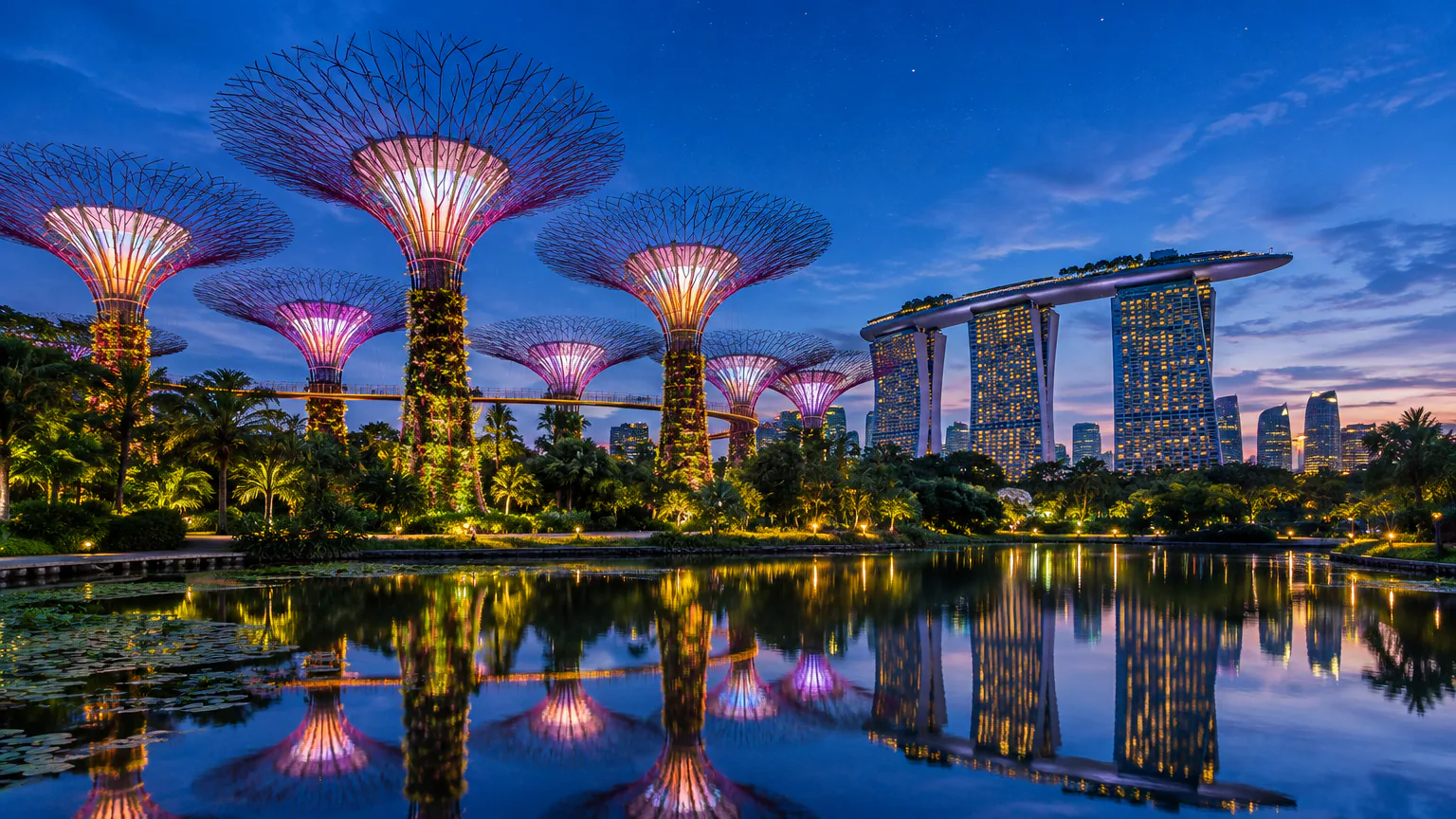
What Singapore Travel Tips India Really Come Down To
A Singapore trip for Indian travellers is shaped by five practical things: getting the visa before departure, using the MRT instead of taxis, carrying a card plus some Singapore dollars, packing for year-round heat and rain, and booking major attractions ahead.
Singapore is compact and efficient, so the trip rewards preparation more than improvisation. Ordinary Indian passport holders require an entry visa before travel, and applications are generally submitted electronically through authorised visa agents or the Singapore mission process within 30 days before arrival. The passport should be valid for at least six months, and travellers must submit the SG Arrival Card within three days before arrival.
Once there, the MRT and public buses handle most sightseeing, with fares commonly about SGD 1-3 per ride. Contactless bank cards and stored-value transit cards are accepted. Taxis and ride-hailing are practical for airport transfers and late-night travel; Changi Airport to central areas usually takes about 20-30 minutes by taxi, depending on traffic.
Singapore can be visited year-round because temperatures remain consistently warm. February to April is often preferred for relatively lower rainfall. Four to five days cover the principal city, Sentosa and one Mandai wildlife day; six to seven days allow a slower pace and more attractions.
At a glance
Singapore, in brief
Singapore uses the Singapore dollar, English is widely spoken, the plug type is Type G, and ordinary Indian passport holders need a visa before travel. The time difference from India is about 2.5 hours ahead, and the emergency number is 999.
Singapore.
Planned around you.
- Currency
- Singapore dollar (SGD)Card payments are widespread; carry some cash for hawker centres and small shops.
- Language
- English, Malay, Mandarin and Tamil are officialEnglish is widely spoken across transport, hotels and attractions.
- Plug type
- Type G (three-pin rectangular)Indian travellers usually need a universal adapter.
- SIM or eSIM
- Local SIM or eSIM availableBuy at Changi Airport or activate an eSIM before departure.
- Time difference
- About 2.5 hours ahead of IndiaSingapore is UTC+8; India is UTC+5:30.
- Emergency number
- 999For police, fire and ambulance.
Before You Go to Singapore
Before flying to Singapore, Indian travellers should secure the visa, submit the SG Arrival Card within three days of arrival, arrange forex and cards, buy travel insurance, and download transport and attraction apps. The most common mistake is booking flights before the visa is confirmed.
Passport with at least six months validity
Check the expiry date before applying for the visa; Singapore requires at least six months of passport validity.
Where to get it: Passport Seva or your existing passportCommon mistake: Discovering less than six months validity after booking flights.
Singapore entry visa
Ordinary Indian passport holders require a visa before travel. Apply electronically through authorised visa agents or the Singapore mission process, generally within 30 days before arrival.
Where to get it: Authorised visa agents or the Singapore mission processCommon mistake: Assuming visa-free entry or visa on arrival.
SG Arrival Card
Submit the SG Arrival Card within three days before arrival. It is separate from the visa.
Where to get it: Singapore immigration online portalCommon mistake: Submitting too early or forgetting it entirely.
Forex and cards
Carry a mix of Singapore dollars and an international card. Card payments are widespread, but hawker centres and small shops may prefer cash.
Where to get it: Banks, authorised forex dealers or airport exchange countersCommon mistake: Relying only on UPI; selected merchants may accept cross-border UPI, but it is not universal.
Travel insurance
Cover medical expenses, trip delays and baggage. Singapore healthcare is high quality but expensive for visitors.
Where to get it: Indian insurers or international travel insurance providersCommon mistake: Buying the cheapest policy without checking hospital and evacuation cover.
Attraction bookings
Book Universal Studios, Gardens by the Bay and Mandai wildlife parks ahead, especially for weekends and school holidays.
Where to get it: Official attraction websites or TripstorCommon mistake: Arriving without tickets on peak dates and losing hours in queues.
Transport apps
Download an MRT map app and a ride-hailing app. Contactless bank cards work on MRT and buses.
Where to get it: App storesCommon mistake: Buying single-trip tickets when a stored-value transit card or contactless card is faster.
Weather-ready clothing
Pack light breathable clothes, a compact umbrella and comfortable walking shoes. Singapore is warm year-round with frequent rain.
Where to get it: Your own packingCommon mistake: Packing only heavy jeans and no rain protection.
The checklist below covers documents, bookings, forex, insurance and apps. Where a source is listed, that is where to get or confirm the item. The mistake column flags the error that most often derails an Indian traveller's plan.
Money and Payments in Singapore
Singapore runs mostly on cards and contactless payments, with the Singapore dollar as the only currency. Carry some cash for hawker centres and small shops, use bank ATMs for withdrawals, and treat UPI as a bonus rather than a guarantee.
- Use contactless cards on the MRT
Contactless bank cards and stored-value transit cards are accepted on MRT trains and public buses. Fares are commonly about SGD 1-3 per ride, making public transport the most economical way to move around.
Transport - Carry some Singapore dollars
Card payments are widespread, but hawker centres and small shops may prefer cash. Withdraw from bank ATMs rather than relying on currency exchange counters.
Cash - Treat UPI as a bonus
Selected merchants may accept cross-border UPI arrangements, but coverage is not universal. Carry a card and some cash as your primary payment method.
Payments - Buy a local SIM or eSIM
A local SIM or eSIM gives reliable data for maps, ride-hailing and attraction bookings. Buy at Changi Airport or activate an eSIM before departure.
Connectivity - Check your bank's foreign transaction fee
Indian cards often add a foreign transaction markup. Know the fee before you rely on a single card for the whole trip.
Money
Card payments are widespread across hotels, restaurants, attractions and transport. Contactless bank cards and stored-value transit cards are accepted on the MRT and buses, with fares commonly about SGD 1-3 per ride. Taxis and ride-hailing are practical for airport transfers and late-night travel.
For cash, use bank ATMs rather than independent currency exchange counters, and check your bank's foreign transaction fee before withdrawing. Selected merchants may accept cross-border UPI arrangements, but travellers should carry a card and some cash. For data, a local SIM or eSIM is the simplest option; buy at Changi Airport or activate an eSIM before departure. Roaming on an Indian number works but can be expensive for a week-long trip.
Cultural Tips for Singapore
Singapore is a multicultural city with clear public rules. Dress modestly at religious sites, remove shoes where required, avoid littering and jaywalking, and keep tipping minimal because service charges are usually included.
- Dress modestly at religious sites
Cover shoulders and knees when visiting temples and mosques in Chinatown, Little India and Kampong Gelam. Remove shoes before entering.
Etiquette - Follow public rules
Littering, jaywalking, eating on the MRT and smoking in prohibited areas attract fines. These rules are enforced.
Etiquette - Keep tipping minimal
Many restaurants add a service charge, so tipping is not expected. Rounding up a taxi fare is enough.
Tipping - Return your tray at hawker centres
Tray-return racks are standard at hawker centres. Clearing your table is part of the local routine.
Customs - Respect queue culture
Queues form for MRT escalators, buses and popular food stalls. Standing aside to let others off first is normal.
Customs
Singapore's Chinese, Malay, Indian and Eurasian communities each have their own customs. In Chinatown, Little India and Kampong Gelam, you will find temples, mosques and shops side by side. Dress modestly when visiting religious sites, cover shoulders and knees, and remove shoes before entering temples and mosques.
Public behaviour is regulated. Littering, jaywalking, eating on the MRT and smoking in prohibited areas attract fines. Tipping is not expected because many restaurants add a service charge; rounding up a taxi fare is enough. When eating at hawker centres, return your tray to the tray-return rack. These habits are practical rather than restrictive, and they keep the city comfortable for everyone.
Food Tips for Indian Travellers in Singapore
Singapore's hawker centres are the best value for Indian travellers, with vegetarian, halal and Indian options across Chinatown, Little India and Kampong Gelam. Try Hainanese chicken rice, laksa, chilli crab and roti prata, and check spice levels before ordering.
- Chinatown
Maxwell Food Centre
A well-known hawker centre with Hainanese chicken rice, congee and local favourites. Good for a first hawker meal.
Best forFirst-time hawker food
Go before noon or after 2pm to avoid the longest queues.
- Chinatown
Chinatown Complex
A large hawker centre with many stalls, including vegetarian and halal options. Useful for groups with mixed diets.
Best forVariety and budget meals
Check the green vegetarian symbol and ask about meat or fish stock.
- Little India
Little India
The main area for South Indian and North Indian food, with vegetarian restaurants and sweet shops.
Best forIndian food and vegetarian meals
Confirm Jain requirements for no onion or garlic before ordering.
- Kampong Gelam
Kampong Gelam
Malay and Middle Eastern food around Arab Street, with halal options and cafes.
Best forHalal and Malay food
Pair a meal with a walk past Sultan Mosque.
- Marina Bay
Lau Pa Sat
A historic hawker centre in the CBD, convenient after a Marina Bay walk. Satay stalls appear in the evening.
Best forEvening hawker food near Marina Bay
Visit after 7pm for the outdoor satay street.
Hawker centres keep meals affordable and let you sample several cuisines in one sitting. Little India is the obvious base for Indian food, but vegetarian and halal stalls appear across the city. Chinatown Complex and Maxwell Food Centre are well-known for local dishes, while Kampong Gelam has Malay and Middle Eastern options.
If you are vegetarian, look for stalls displaying the green vegetarian symbol, and ask whether stocks use meat or fish. Jain travellers should confirm no onion or garlic is used. For Indian food, Little India has both South Indian and North Indian restaurants. Hainanese chicken rice, laksa, chilli crab and roti prata are the dishes most visitors try first. Check spice levels before ordering, because some local dishes are hotter than they appear.
Safety in Singapore for Indian Tourists
Singapore is generally safe for Indian tourists, but common risks include heat exhaustion, heavy rain, petty theft in crowded areas and fines for public-rule breaches. Carry water, use a compact umbrella, watch your bag in crowds and follow local rules.
- Heat exhaustion from walking between attractions
How to avoid itCarry water, plan indoor breaks during the hottest hours and use the MRT instead of long walks.
- Afternoon thunderstorms
How to avoid itPack a compact umbrella and keep an indoor backup such as a mall, museum or hawker centre.
- Petty theft in crowded areas
How to avoid itKeep bags zipped and phones secure on Orchard Road, at Marina Bay and in hawker centres.
- Fines for public-rule breaches
How to avoid itDo not litter, jaywalk, eat on the MRT or smoke in prohibited areas. Rules are enforced.
- High medical costs for visitors
How to avoid itBuy travel insurance that covers hospital treatment and carry prescription medicines with a doctor's note.
Singapore's low crime rate does not remove everyday risks. Heat and humidity can cause exhaustion if you walk between attractions without water. Afternoon thunderstorms are common, so a compact umbrella and indoor backup plan help. In crowded areas such as Orchard Road, Marina Bay and hawker centres, keep bags zipped and phones secure.
Public-rule fines are real: littering, jaywalking, eating on the MRT and smoking in prohibited areas attract penalties. For health, drink bottled or boiled water, use sun protection and carry any prescription medicines with a doctor's note. Travel insurance covering medical expenses is sensible because Singapore healthcare is high quality but expensive for visitors.
Packing by Season for Singapore
Singapore is warm and humid year-round, so pack light breathable clothes, a compact umbrella and comfortable walking shoes. Add a light layer for air-conditioned malls and a modest outfit for religious sites. February to April is often preferred for relatively lower rainfall.
Light breathable clothing
Cotton and quick-dry fabrics work best for Singapore's warm, humid weather year-round.
Common mistake: Packing only heavy jeans and thick shirts.
Compact umbrella
Afternoon thunderstorms are common, especially outside the February to April window.
Common mistake: Leaving rain protection behind because the forecast looked clear.
Comfortable walking shoes
You will walk through hawker centres, gardens and neighbourhoods. Breathable shoes with grip handle wet pavements.
Common mistake: Bringing only formal shoes or new sandals that cause blisters.
Light layer for air-conditioning
Malls, MRT trains and attractions are heavily air-conditioned. A light cardigan or scarf helps.
Common mistake: Having no layer for long indoor stretches.
Modest outfit for religious sites
Cover shoulders and knees for temples and mosques in Chinatown, Little India and Kampong Gelam.
Common mistake: Arriving in shorts and sleeveless tops and being turned away.
Sun protection
Sunscreen, a hat and sunglasses help during outdoor sightseeing at Gardens by the Bay and Sentosa.
Common mistake: Underestimating the sun on cloudy days.
Universal adapter
Singapore uses Type G three-pin plugs, so Indian travellers usually need an adapter.
Common mistake: Assuming Indian plugs fit without an adapter.
Reusable water bottle
Refill where safe and carry water during long walking days to avoid heat exhaustion.
Common mistake: Buying bottled water at every stop instead of carrying a bottle.
The checklist below covers what to pack each season. Singapore does not have a cold season, but rain patterns shift. February to April is often preferred for relatively lower rainfall, while the rest of the year can bring heavier showers. Air-conditioned malls, MRT trains and attractions can feel cold after a hot walk, so a light layer helps.
Holiday ideas to start from
Reviewed itineraries for this destination — personalise with a specialist, never an instant booking.
Singapore City and Two Night Cruise 5 Nights: 2026 Tour Package
From₹1,20,000per adult, twin sharing, land only
From idea to itinerary, with a real person.
- Share your plan
Dates, departure city, travellers and the moments you’d love. It only takes a minute.
- Shape it with a specialist
A real person refines the route, stays and pace with you. Change anything.
- Review your quote
A clear, personalised quote with confirmed inclusions. No payment to enquire.
From our travel specialists
What our team sees when planning these trips, beyond what the guidebooks say.
Confirmed 11 Oct 2026
Travellers commonly add or switch to hawker-centre food, MRT-based sightseeing and less-publicised neighbourhood stops after discovering how convenient and affordable they are. Reports also mention adding kid-friendly or couple-friendly locations beyond the standard highlights.
Little India, particularly around Farrer Park, is a practical first-visit base because hotels there offer direct MRT access to Marina Bay, Orchard Road, Chinatown, the CBD and Changi Airport. Travellers also value the area’s Indian food, cultural atmosphere and proximity to Tekka Centre.
Families learn that a successful schedule needs realistic pacing: Sentosa, Gardens by the Bay and Universal Studios should not be treated as quick stops, and MRT shortcuts plus hawker centres can reduce both cost and effort. Couples and families also benefit from deliberately mixing headline attractions with quieter, neighbourhood-based experiences.
Travellers often underestimate the heat, humidity and sudden rain rather than a particular month; reports describe Singapore as hot and humid year-round, with frequent short showers even outside the monsoon season. Walking tours in exposed areas such as Little India can become uncomfortable without water, shade and breaks.
Before you go
Straight answers to help you plan — then personalise the trip with a specialist.
8 answered belowAsk a specialist anything about this trip — there’s no obligation.
Ask a specialistIs Singapore visa-free for Indian citizens?
No. Ordinary Indian passport holders generally need a Singapore entry visa before travel; official and diplomatic passport exemptions may differ. Applications are submitted electronically through authorised visa agents or the Singapore mission process, generally within 30 days before arrival. The passport should be valid for at least six months, and travellers must submit the SG Arrival Card within three days before arrival.
How much does a Singapore tour package cost from India?
Indicative land-only twin-sharing prices are about INR 65,000 budget, INR 95,000 standard, INR 145,000 premium and INR 260,000 luxury per person, excluding flights and visa. These are planning ranges, not Tripstor offers. A realistic five-day standard plan is commonly benchmarked around INR 95,000 per person before international airfare and personal spending.
What is the best time to visit Singapore?
February to April is often preferred for relatively lower rainfall, but Singapore can be visited year-round because temperatures remain consistently warm. Afternoon thunderstorms are possible in other months, so pack a compact umbrella and keep indoor backup plans. Crowds and prices rise during major events and school holidays, so book attractions ahead.
How many days are enough for Singapore?
Four to five days cover the principal city, Sentosa and one Mandai wildlife day; six to seven days allow a slower pace and more attractions. A five-day plan typically includes Marina Bay, Gardens by the Bay, Chinatown, Little India, Kampong Gelam and Sentosa. Add a day if you want Universal Studios without rushing.
Is Singapore good for a family holiday?
Yes. Universal Studios, Gardens by the Bay, Mandai wildlife parks, Sentosa and efficient public transport make it particularly suitable for families. The MRT is stroller-friendly at most stations, and hawker centres offer affordable meals for children. Book family attractions ahead during school holidays to avoid queues.
What are the must-visit places in Singapore?
Marina Bay, Gardens by the Bay, Sentosa, Mandai Wildlife Reserve, Chinatown, Little India and Kampong Gelam are core inclusions. Maxwell Food Centre and Lau Pa Sat are useful hawker stops. Four to five days cover the main sights; six to seven days let you add neighbourhood walks and a slower Sentosa day.
Is public transport easy to use in Singapore?
Yes. MRT trains and buses are extensive, reliable and usually the most economical way to move around; contactless cards are widely accepted. Fares are commonly about SGD 1-3 per ride. Taxis and ride-hailing are practical for airport transfers and late-night travel, with Changi Airport to central areas usually taking about 20-30 minutes by taxi.
What currency is used in Singapore and can Indians use UPI?
Singapore uses the Singapore dollar. Card payments are widespread; selected merchants may accept cross-border UPI arrangements, but travellers should carry a card and some cash. Hawker centres and small shops may prefer cash. Withdraw from bank ATMs and check your bank's foreign transaction fee before relying on a single card.