
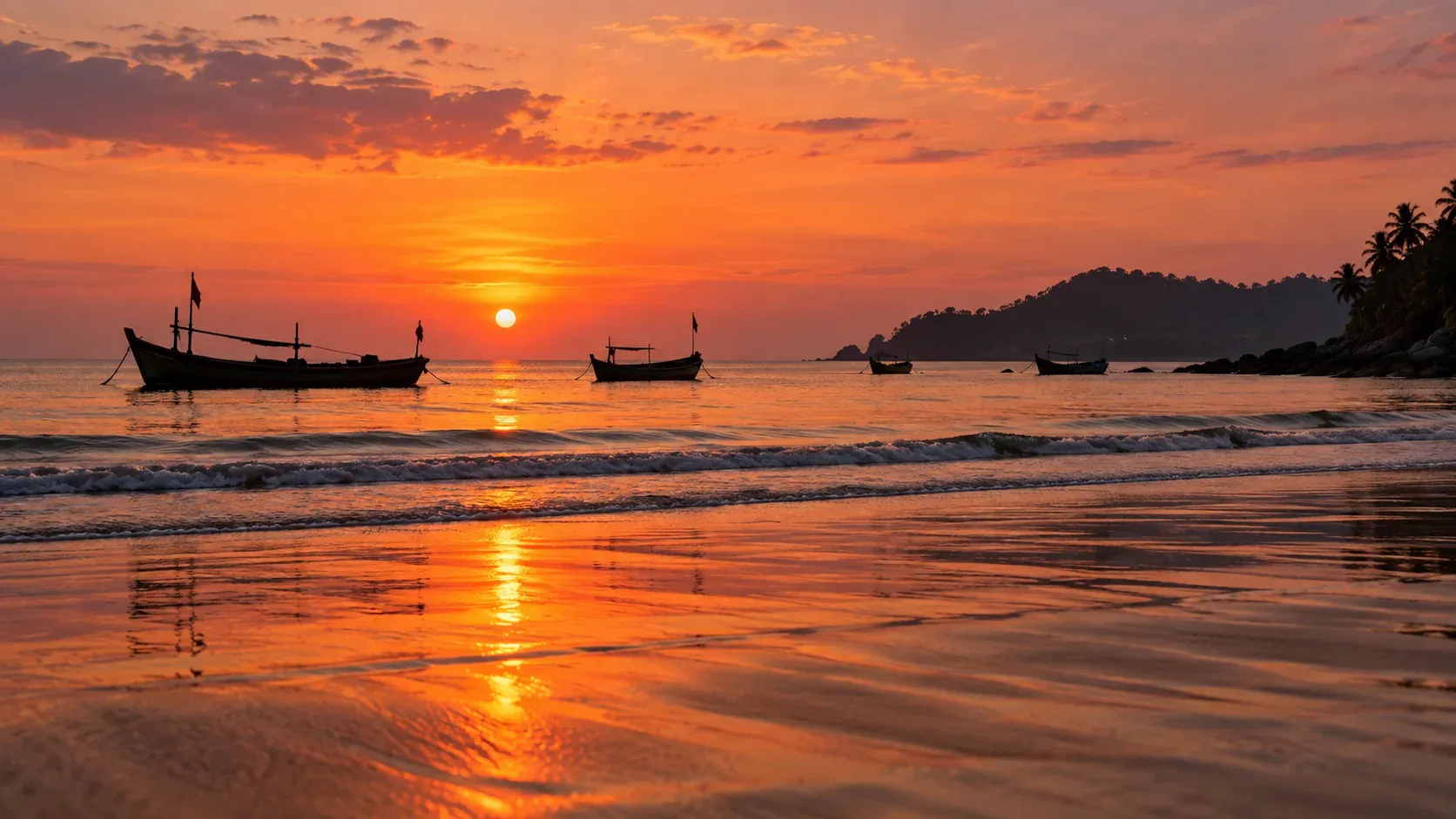
What Goa Travel Tips India Really Means for Your Trip
Goa travel tips india comes down to five decisions: when to go, which coast to base in, how you will move around, how you will pay, and how you will handle beach and nightlife risks. Getting these right matters more than any packing list.
Goa is a single state with two distinct holiday shapes. North Goa concentrates nightlife, water sports and busy beach hubs such as Baga, Calangute, Anjuna and Vagator. South Goa moves slower, with Palolem and Colva among the better-known stretches and more resort-style stays.
Season changes the trip more than any other factor. November to February is the reliable dry window for beach activities and nightlife. December is especially busy and expensive. The monsoon shifts the experience towards lower rates, green hinterland drives and indoor plans.
Transport is the third decision. Goa has two airports, and your arrival point affects transfer time. A car with driver is usually easier for multi-area sightseeing, while scooters suit short local hops if you are comfortable riding and have a valid licence.
Finally, payment habits and safety awareness shape daily comfort. Carry some cash for small vendors, keep digital payment options ready, and follow beach safety flags rather than swimming after dark or beyond marked zones.
At a glance
Goa, in brief
Goa uses the Indian rupee, and Indian citizens need no visa, RAP or ILP. Carry valid government photo identification for flights and hotel check-in. Konkani is the state language, English and Hindi work widely, and mobile coverage is generally usable across beach belts and towns.
Goa.
Planned around you.
- Currency
- Indian rupee (INR)Cards and UPI widely accepted in hotels and larger restaurants; cash useful at shacks and for local transport.
- Language
- Konkani, English, Hindi, MarathiEnglish and Hindi are widely understood in tourism areas.
- Plug type
- Indian standard plugsDomestic chargers work without adapters.
- SIM or eSIM
- Local Indian SIM or eSIMUseful for app-based taxis, restaurant bookings and maps.
- Time difference
- IST (UTC+5:30)No time change for domestic travellers.
- Emergency number
- 112Works across India for police, fire and medical emergencies.
Before You Go to Goa
Before You Go to Goa, lock in three things: valid photo ID for every traveller, confirmed stays and transport for peak December dates, and a payment backup beyond a single card. Peak-season beachfront hotels and airport transfers fill early, so book those before flights if your dates are fixed.
Valid government photo identification
Required for flights and hotel check-in for all travellers.
Where to get it: Government-issued ID such as Aadhaar, passport, driving licence or voter ID.Common mistake: Carrying only a photocopy or an expired document.
Confirmed stay and transport for peak dates
December and New Year fill early, especially beachfront hotels and airport transfers.
Where to get it: Hotel or Tripstor booking confirmation.Common mistake: Arriving in peak season without a confirmed transfer.
Payment backup
Carry some cash and at least one card or UPI-enabled phone.
Where to get it: Bank or UPI app.Common mistake: Relying on a single card that may not work at small vendors.
Domestic travel insurance
Optional but useful for medical emergencies and trip interruptions.
Where to get it: Insurer or travel booking platform.Common mistake: Assuming existing health cover handles all travel-related costs.
Useful apps
Maps, airline app, taxi or ride-hailing app, and a weather app.
Where to get it: App store.Common mistake: Not downloading offline maps before hinterland drives.
Foreign nationals: visa or e-visa
Check current Indian immigration rules and passport validity.
Where to get it: Indian immigration or embassy website.Common mistake: Assuming visa-on-arrival applies universally.
Documents first. Indian citizens need no visa, RAP or ILP for Goa, but every traveller should carry valid government photo identification for flights and hotel check-in. Foreign nationals need an appropriate Indian visa or e-visa and passport validity under current Indian immigration rules.
Bookings next. December and New Year are the most expensive and busiest window, so beachfront hotels and airport transfers should be confirmed early. For the rest of the season, a few weeks ahead is usually enough, but major music events can tighten supply.
Forex and cards are simple for domestic travellers: carry Indian rupees, keep a debit or credit card for hotels and larger restaurants, and set up UPI on your phone. International travellers should check card acceptance and carry some cash for shacks and local transport.
Insurance and apps complete the list. A domestic travel insurance policy covering medical emergencies and trip interruptions is optional but useful. Install a maps app, your airline app, and a taxi or ride-hailing app where available. The common mistake is relying on a single payment method or arriving without confirmed peak-season transport.
Money and Payments in Goa
Money and Payments in Goa work best with a mix: UPI and cards for hotels, larger restaurants and shops, and cash for beach shacks, local buses and some scooter rentals. ATMs are available in towns and beach belts, but carry enough cash for a day out to avoid detours.
- Carry a cash buffer
Beach shacks, local buses and some scooter rentals prefer cash. Keep a few hundred rupees for a day out.
Money - Use UPI where accepted
UPI works in many hotels, restaurants and larger shops. It is the fastest option for domestic travellers.
Money - Withdraw during the day
Use ATMs in busy areas during daylight. Not every machine accepts every card.
Money - Get a local SIM or eSIM
An Indian number helps with app-based taxis, restaurant bookings and maps. Signal can drop in hinterland areas.
Connectivity - Confirm transport fares
Indicative scooter rental is about INR 300-600 per day and car with driver about INR 2,500-4,500 per day. Confirm current fares and use licensed operators.
Transport
Goa runs on the Indian rupee. UPI is widely accepted in hotels, restaurants and larger shops, and cards work in most established businesses. Small vendors, beach shacks and local buses often prefer cash, so keep a few hundred rupees handy.
ATMs are available in towns and beach belts, but not every machine accepts every card. Withdraw during the day in busy areas rather than late at night. For domestic travellers, UPI is the fastest option; for international travellers, check whether your card works with Indian payment networks.
Connectivity is generally usable across beach belts and towns. A local SIM or eSIM with an Indian number helps with app-based taxis, restaurant bookings and maps. Domestic roaming is not a concern, but signal can drop in hinterland areas and some beach stretches.
Indicative local transport costs: scooter rental about INR 300-600 per day, car rental with driver about INR 2,500-4,500 per day, and airport transfers about INR 800-2,500 depending on distance and vehicle. Confirm current fares and use licensed operators.
Cultural Tips for Goa
Cultural Tips for Goa start with dressing for the place, not just the beach. Cover shoulders and knees at churches and temples, remove footwear where required, and ask before photographing people or religious ceremonies. Tipping is appreciated but not mandatory in most restaurants.
- Dress for religious sites
Cover shoulders and knees at churches and temples. Remove footwear where required.
Etiquette - Keep beachwear on the beach
Beachwear is fine on the sand but not in towns, restaurants or religious sites.
Etiquette - Tipping is optional
Many restaurants add a service charge. If not, rounding up or 5-10% is common for good service.
Etiquette - Agree transport fares first
Taxi and scooter rental prices are often negotiated. Confirm the fare before starting.
Etiquette - Ask before photographing people
Respect privacy in villages and at religious ceremonies. Avoid loud behaviour in residential areas late at night.
Etiquette - Drink in licensed venues
Public drinking outside licensed venues can attract fines. Keep celebrations inside licensed premises or your hotel.
Etiquette
Goa blends Konkani, Portuguese and Indian influences, and its religious sites reflect that mix. At churches such as those in Old Goa and at temples across the state, dress modestly: cover shoulders and knees, and remove footwear where required. Beachwear belongs on the beach, not in town or at religious sites.
Tipping is not mandatory but is appreciated. Many restaurants add a service charge; if they do not, rounding up or leaving 5-10% is common for good service. Taxi and scooter rental prices are usually fixed by negotiation, so agree the fare before starting.
Local customs matter in smaller villages. Ask before photographing people, avoid loud behaviour in residential areas late at night, and respect quiet hours near places of worship. In Panaji and Fontainhas, the heritage streets are lived-in neighbourhoods, not theme parks.
Alcohol is widely available, but drinking in public outside licensed venues can attract fines. Keep celebrations inside licensed premises or your hotel.
Goa Food Tips: What to Eat and Where
Goa food tips begin with the local staples: fish curry rice, prawn balchão, xacuti, vindaloo and bebinca. Vegetarian travellers will find plenty of options in Panaji and beach-belt restaurants, and Indian food is widely available. Beach shacks are best for fresh seafood, while Panaji suits sit-down meals.
- Statewide
Fish curry rice
The everyday Goan staple, usually served with rice and often with fried fish on the side.
Best forSeafood lovers
Ask for the day's catch and confirm the price before ordering.
- Statewide
Prawn balchão
A spicy, tangy prawn dish with vinegar and chilli, common on restaurant menus.
Best forSpice-forward diners
Pairs well with plain rice or pav.
- Statewide
Xacuti
A coconut and roasted-spice curry, often made with chicken or mutton.
Best forCurry fans
Ask whether it is mild or hot; recipes vary by kitchen.
- Statewide
Vindaloo
A tangy, spicy curry with Portuguese roots, usually pork or chicken.
Best forTrying a Goan classic
Not always as hot as its reputation; ask the kitchen.
- Statewide
Bebinca
A layered coconut-milk dessert, often served after lunch or dinner.
Best forDessert
Best fresh; avoid pre-cut slices that have dried out.
- North and South Goa
Beach shacks in Baga, Calangute, Anjuna and Palolem
Casual beachfront dining with seafood, Indian and continental menus.
Best forFresh seafood by the beach
Look for steady local custom and ask about the day's catch.
- Panaji
Panaji restaurants
More sit-down options for a proper Goan meal, including vegetarian and Indian menus.
Best forSit-down meals and variety
Book ahead on weekends in peak season.
Goan cuisine is distinct from the rest of India, shaped by Konkani and Portuguese influences. Fish curry rice is the everyday staple. Prawn balchão, xacuti and vindaloo are common on restaurant menus, and bebinca is the classic dessert.
For seafood, beach shacks along Baga, Calangute, Anjuna and Palolem are the obvious choice, but quality varies. Look for places with steady local custom and ask about the day's catch. Panaji has more sit-down restaurants and is a good base for a proper Goan meal.
Vegetarian travellers are well served. Most restaurants offer vegetarian thalis, paneer dishes and South Indian staples. Indian food is widely available across the state, so you are not limited to Goan specialities.
Food safety basics apply: drink packaged or filtered water, be cautious with raw salads at small stalls, and eat freshly cooked food where possible. If you have allergies, state them clearly; cross-contamination is possible in busy kitchens.
Safety in Goa
Safety in Goa for Indian Tourists is mostly about beach awareness, transport choices and valuables. Follow beach safety flags, avoid swimming after dark or beyond marked zones, use licensed transport, and keep valuables secure. Goa is widely visited by families and couples, but no destination is risk-free.
- Strong currents and unmarked swimming zones
How to avoid itFollow lifeguard flags and local advice. Avoid swimming after dark or beyond marked zones.
- Unlicensed taxis and scooter rentals
How to avoid itUse prepaid taxis, app-based services where available, or licensed operators. Agree the fare before starting.
- Theft at beaches and crowded areas
How to avoid itKeep phones, cash and documents secure. Avoid carrying large amounts of cash or valuables to the beach.
- Isolated areas late at night
How to avoid itUse a licensed taxi rather than walking on unlit roads. Stay in well-lit, busy areas.
- Heat, dehydration and stomach upsets
How to avoid itDrink packaged or filtered water, use sun protection, and carry basic medicines.
- Public drinking fines
How to avoid itDrink inside licensed venues or your hotel. Public drinking outside licensed premises can attract fines.
Beach safety is the first concern. Follow lifeguard flags and local advice; currents can be strong, especially during the monsoon and post-monsoon months. Avoid swimming after dark or beyond marked zones, and do not assume calm water is safe.
Transport scams are the second common issue. Use prepaid taxis, app-based services where available, or licensed operators. Agree the fare before starting, and avoid unlicensed scooter rentals that may not provide valid papers or helmets.
Valuables and nightlife require basic caution. Keep phones, cash and documents secure at the beach, and avoid isolated areas late at night. If you are out late, use a licensed taxi rather than walking on unlit roads.
Health risks are mostly routine: heat, dehydration and stomach upsets. Drink packaged or filtered water, use sun protection, and carry basic medicines. Emergency number 112 works across India. If you have a medical condition, carry prescriptions and know the nearest hospital to your stay.
Packing by Season: What to Carry for Goa
Packing by season for Goa depends on whether you are travelling in the dry months, the monsoon or the shoulder weeks. November to February needs light cottons, sun protection and a light layer for evenings. Monsoon adds rain protection and quick-dry clothing. Shoulder months sit in between.
Light cottons and swimwear
Best for the dry season from November to February.
Where to get it: Your wardrobe.Common mistake: Packing heavy fabrics that stay damp.
Sun protection
Sunscreen, hat and sunglasses for beach days.
Where to get it: Pharmacy or supermarket.Common mistake: Underestimating midday sun on the beach.
Light layer for evenings
Useful near the coast or for late dinners.
Where to get it: Your wardrobe.Common mistake: Assuming evenings are always warm.
Rain protection for monsoon
Compact umbrella or rain jacket, plus dry bags for electronics.
Where to get it: Travel store.Common mistake: Carrying only a heavy umbrella that is awkward on scooters.
Quick-dry clothing
Helps in monsoon and shoulder months.
Where to get it: Travel store.Common mistake: Packing denim that takes long to dry.
Footwear with grip
Useful for slippery roads and beach areas in the monsoon.
Where to get it: Your wardrobe.Common mistake: Wearing only flip-flops on wet surfaces.
Valid photo ID and driving licence
Required for flights, hotel check-in and scooter rental.
Where to get it: Government-issued documents.Common mistake: Carrying only a photocopy.
Basic medical kit and insect repellent
For minor cuts, stomach upsets and mosquitoes.
Where to get it: Pharmacy.Common mistake: Relying on finding a pharmacy late at night.
Power bank
Useful for long beach days and hinterland drives.
Where to get it: Electronics store.Common mistake: Running out of phone battery while using maps.
For the dry season from November to February, pack light cottons, swimwear, sunscreen, a hat and sunglasses. Evenings can be pleasant rather than cold, but a light layer helps if you are near the coast or out late. Comfortable sandals and one pair of closed shoes cover most situations.
For the monsoon, prioritise quick-dry clothing, a compact umbrella or rain jacket, and dry bags for electronics. Roads and beach areas can be slippery, so footwear with grip matters. Expect lower rates but plan indoor options.
For shoulder months around October and March, pack for both sun and occasional rain. A mix of light cottons, a light rain layer and sun protection works well.
Across all seasons, carry valid photo ID, a basic medical kit, insect repellent, and a power bank. If you plan to ride a scooter, bring your driving licence and a helmet is essential.
Holiday ideas to start from
Reviewed itineraries for this destination — personalise with a specialist, never an instant booking.
South Goa Relaxed Stay 3 Nights: Couples Tour Package 2026
From₹20,000per adult, twin sharing, land only
From idea to itinerary, with a real person.
- Share your plan
Dates, departure city, travellers and the moments you’d love. It only takes a minute.
- Shape it with a specialist
A real person refines the route, stays and pace with you. Change anything.
- Review your quote
A clear, personalised quote with confirmed inclusions. No payment to enquire.
From our travel specialists
What our team sees when planning these trips, beyond what the guidebooks say.
Confirmed 11 Oct 2026
Travellers often add scenic drives, waterfalls, heritage visits, food experiences, spa time, or indoor activities when monsoon weather restricts beach plans. Some also shift toward quieter beaches and less party-oriented areas after finding the busiest hubs too crowded or noisy.
Local transport is the clearest recurring problem: travellers report limited public transport, few autos, and no Uber or Rapido, so they commonly need a rented scooter, GoaMiles, or a hired car. Distances between beaches make relying on spontaneous rides particularly inconvenient.
For a first visit focused on nightlife, restaurants, and easy access to North Goa beaches, travellers commonly base themselves around Anjuna, Assagao, Vagator, or nearby areas. South Goa, especially around Palolem, is better for couples, families, and visitors seeking quieter beaches and a slower resort-style stay; the best base therefore depends on whether nightlife or relaxation is the priority.
June to September is often underestimated by travellers expecting a conventional beach holiday: rain, rough seas, suspended swimming and water sports, and seasonal closures can limit plans. Travellers who want greenery, quiet beaches, scenic drives, or waterfalls often prefer the monsoon, while November to February is more reliable for beaches and nightlife.
Before you go
Straight answers to help you plan — then personalise the trip with a specialist.
8 answered belowAsk a specialist anything about this trip — there’s no obligation.
Ask a specialistWhat is the best time to visit Goa?
November to February is best for dry weather, comfortable temperatures, beach activities and nightlife. December is especially busy and expensive. January and February offer the most reliable dry beach weather, while November and early March are good alternatives with somewhat less peak-season pressure.
How many days are enough for a Goa trip?
Three days covers either North or South Goa. Five days suits a balanced first trip. Seven days allows a slower beach, heritage and hinterland itinerary. If you want both coasts plus Old Goa and Panaji, plan at least five days to avoid rushing between areas.
How much does a Goa tour package cost?
Indicative land-only twin-sharing packages cost about INR 18,000 per person for budget, INR 30,000 standard, INR 50,000 premium and INR 85,000 luxury trips, excluding airfare. These are planning ranges, not Tripstor offers. Confirm current inclusions and dates before booking.
Which is better for a Goa trip, North Goa or South Goa?
North Goa suits nightlife, water sports and busy beach hubs such as Baga, Calangute, Anjuna and Vagator. South Goa suits quieter beaches, resort stays and a slower honeymoon or family holiday, with Palolem and Colva among the better-known stretches. Choose based on your daily pace.
What are the best places to visit in Goa?
Popular inclusions are Baga, Calangute, Anjuna, Vagator, Panaji, Fontainhas, Old Goa, Palolem, Colva and Dudhsagar, selected according to trip length. For a first trip, combine one coast with Old Goa and Panaji rather than trying to cover everything.
Is Goa safe for families and couples?
Goa is widely visited by families and couples, but travellers should use licensed transport, follow beach safety flags, protect valuables and avoid isolated areas late at night. No destination is risk-free, so basic precautions apply. Emergency number 112 works across India.
Do Indian citizens need a visa to visit Goa?
No. Goa is an Indian state, so Indian citizens need no visa, RAP or ILP. Valid government photo identification is sufficient for domestic travel and hotel check-in. Foreign nationals need an appropriate Indian visa or e-visa and passport validity under current Indian immigration rules.
How do you travel around Goa?
Scooters, taxis, rental cars with drivers, local buses and selected app-based services are the main options. A car with driver is usually easier for multi-area sightseeing. Indicative scooter rental is about INR 300-600 per day and car with driver about INR 2,500-4,500 per day.