
Guides for this destination
Practical reads before you plan — timing, places, costs, visas and tips.
At a glance
Sikkim, in brief
Sikkim is a landlocked Himalayan state in northeastern India, sharing borders with Tibet, Bhutan and Nepal. Khangchendzonga, at 8,586 m, is India's highest mountain and the state's defining landmark. Best seasons are October to mid-December and March to May, when roads are reliable and skies are clear.
Sikkim.
5–7 days for Gangtok, Tsomgo Lake, Nathula and one North or West Sikkim extension
- Region
- Eastern Himalaya, northeastern India
- Best season
- October to mid-December and March to May
- Ideal trip length
- 5–7 days for Gangtok, Tsomgo Lake, Nathula and one North or West Sikkim extension
- Principal gateway
- Bagdogra Airport (IXB); Pakyong Airport (PYG) is about 30 km from Gangtok when flights operate
- Currency and language
- Indian rupee (INR); Nepali, Sikkimese, Hindi and English widely used
- Entry basics
- No visa for Indian citizens; protected-area permits required for Tsomgo Lake, Nathula Pass and North Sikkim
Plan Your Sikkim Trip
Planning a Sikkim trip means sequencing permits, transport and accommodation before you arrive. Most itineraries run five to seven days, starting and ending in Gangtok. Permits for Tsomgo Lake, Nathula Pass and North Sikkim must be arranged through a registered operator, so factor in at least one day for paperwork on arrival.
- Choose your travel window
October to mid-December and March to May give the clearest skies and most reliable roads. December is the busiest month; April peaks for North Sikkim rhododendrons. Avoid July and August for North Sikkim drives.
- Book flights to Bagdogra (IXB) or Pakyong (PYG)
Bagdogra is the principal practical gateway, served by IndiGo, Air India and SpiceJet from Delhi, Mumbai, Kolkata and Chennai. Pakyong (PYG) is about 30 km from Gangtok but has limited services; confirm schedules before booking.
- Arrange permits on arrival in Gangtok
Indian nationals need valid photo ID and protected-area permits for Tsomgo Lake, Nathula Pass and North Sikkim. Registered operators in Gangtok handle applications; apply at least a day before your excursion. Army clearance can affect Nathula Pass access.
- Plan your base by itinerary zone
Gangtok covers East Sikkim. Pelling suits West Sikkim monasteries. Lachung is the overnight stop for Yumthang Valley. Ravangla and Namchi suit shorter or family trips.
- Build in buffer days
Weather and road conditions change quickly. One buffer day for North Sikkim or Nathula Pass is strongly recommended. Download offline maps before leaving Gangtok.
- Carry INR cash
ATMs exist in Gangtok and Pelling, but remote areas such as Lachung may not have reliable cash access. Carry enough for meals, tips and emergencies.
Sikkim Tour Packages
Sikkim tour packages typically bundle transport, accommodation, permits and guided excursions into a single booking, removing the logistical burden of arranging each element separately. Packages range from budget five-night options covering Gangtok and Tsomgo Lake to premium itineraries that include North Sikkim, Pelling and private vehicles throughout.
Budget
Solo travellers and students
- Gangtok and Pelling base
- Shared jeep transfers
- Basic permits included
- Breakfast typically included
Mid-range
Families and couples
- Private Tsomgo Lake and Nathula day trip
- Rumtek and Pelling extension
- Breakfast and dinner included
- Permit handling by operator
Luxury
Honeymooners and comfort-focused travellers
- Premium Gangtok and Pelling stays
- Flexible itinerary with buffer days
- All permits and transfers arranged
- North Sikkim extension available
Top 10 Places to Visit in Sikkim
Sikkim's top places combine capital-city convenience, high-altitude lakes, a historic border pass and monastery heritage across four districts. Gangtok anchors most trips, while Tsomgo Lake, Nathula Pass, Rumtek and Pelling add variety. North Sikkim's Lachung and Yumthang Valley reward travellers with extra days and permits.
- East Sikkim
Gangtok
State capital and main hub for permits, hotels and transport. MG Marg is the pedestrianised centre for walks and local cafes. Most itineraries begin and end here.
Best forFirst-time visitors, families, permit base
Complete permit paperwork on arrival day so later day trips are not delayed.
- East Sikkim
Tsomgo Lake
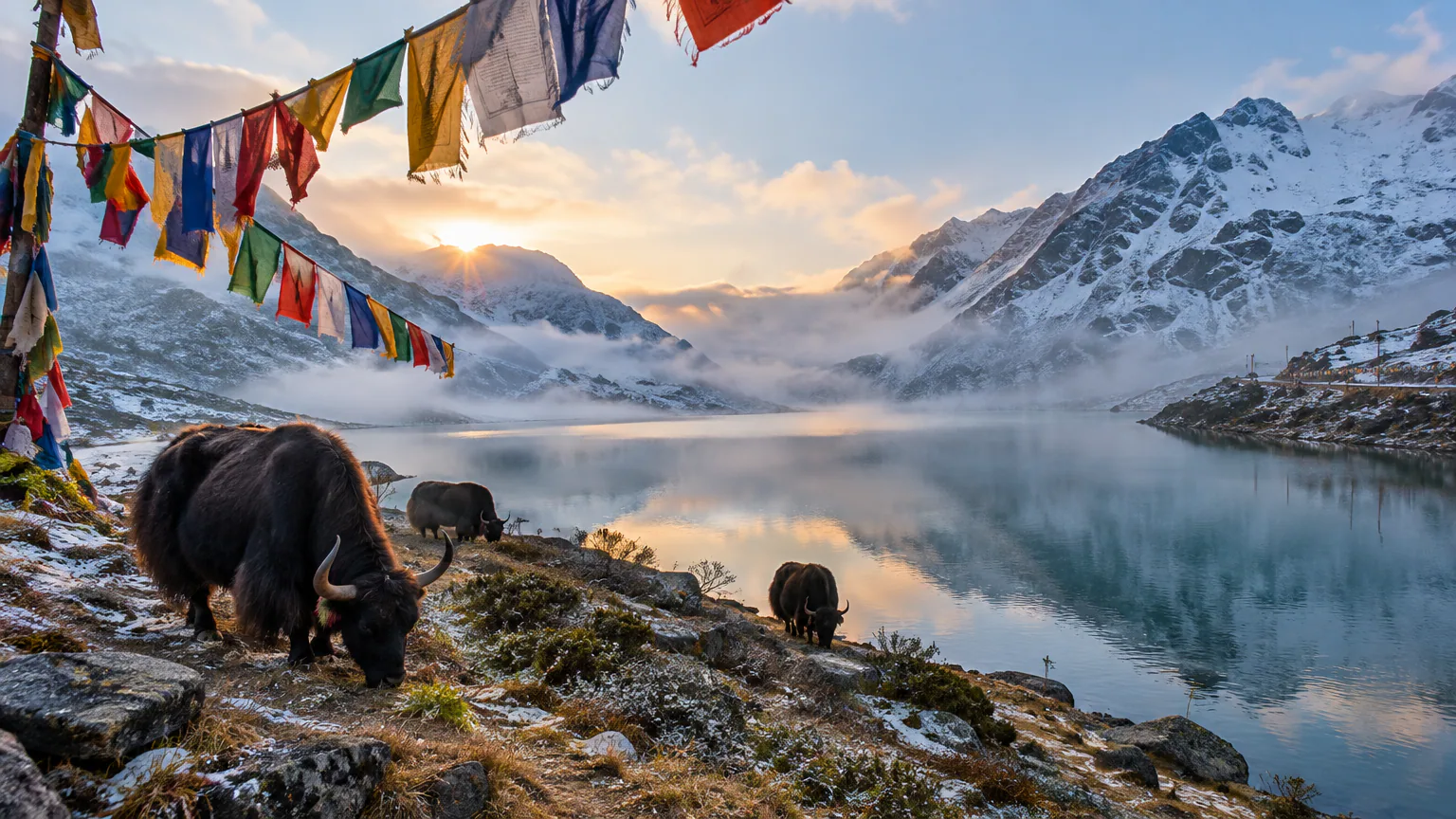
High-altitude glacial lake about 40 km from Gangtok, reached by a mountain road. A protected-area permit is required for Indian nationals.
Best forDay trips, lake views, photography
Start early from Gangtok to avoid afternoon weather changes and return before dark.
- East Sikkim
Nathula Pass
Indo-China border pass on the old Silk Route, accessible only with a protected-area permit and subject to army clearance. Much colder than Gangtok.
Best forBorder history, high-altitude drive
Carry valid photo ID and dress in layers; the pass is significantly colder than Gangtok.
- East Sikkim, near Gangtok
Rumtek Monastery
Major Tibetan Buddhist monastery and seat of the Karmapa, about 24 km from Gangtok. Known for its architecture and prayer halls.
Best forCulture, architecture, quiet visits
Visit in the morning when prayer sessions may be underway; photography rules apply inside.
- West Sikkim
Pelling
Town with clear Khangchendzonga views and access to Pemayangtse Monastery and Rabdentse ruins. Best enjoyed over two nights.
Best forMountain views, monastery circuit
Stay two nights to allow for weather; clear views are not guaranteed daily.
- West Sikkim, near Pelling
Pemayangtse Monastery
One of Sikkim's oldest monasteries, founded in the 17th century, with intricate wooden sculptures and a commanding hilltop position.
Best forHeritage, Buddhist art
Combine with Rabdentse ruins on the same day to reduce travel time.
- North Sikkim
Yumthang Valley
Valley known for rhododendron blooms in spring and hot springs nearby. Requires a North Sikkim permit and travel with a registered operator.
Best forSpring flowers, valley drives
Check road conditions before committing; winter snow can block access.
- North Sikkim
Lachung
Village base for Yumthang Valley and Zero Point excursions, with basic guesthouses and mountain scenery. Overnight stay required for North Sikkim itineraries.
Best forNorth Sikkim overnight stays
Book accommodation in advance for April and May, when demand is high.
- South Sikkim
Namchi
Town with the Siddheshwar Dham complex and views of the Rangit Valley; easier to reach than North Sikkim and suitable for shorter trips.
Best forShort trips, family sightseeing
Good option if permits for North Sikkim are unavailable or roads are closed.
- South Sikkim
Ravangla
Small town near Buddha Park and Maenam Hill, with a cooler climate and pine forests. A quieter base between Gangtok and Pelling.
Best forRelaxed stays, short walks
Use as a quieter overnight stop between Gangtok and Pelling to break the drive.
Best Time to Visit Sikkim
The best time to visit Sikkim is October to mid-December and March to May, when mountain views are clearest and roads are most reliable. June to September brings monsoon rain and higher landslide risk on North Sikkim roads. December 2025 recorded the highest monthly tourist arrivals, so expect peak crowds and higher prices then.
January
Good time to goCold and clear in Gangtok; snow at higher altitudes including Tsomgo Lake
Good for clear views if you pack heavy woollens; fewer crowds than December.
February
Good time to goCold, gradually warming; clear mountain views on most days
Good for sightseeing before the spring rush; roads generally reliable.
March
Best time to goMild days, cold nights; rhododendrons begin in lower valleys
Best for balanced weather and early blooms; book transport and hotels early.
April
Best time to goPleasant days; Yumthang Valley rhododendrons peak; some pre-monsoon showers possible
Best for North Sikkim flowers; highest demand month alongside December — book early.
May
Good time to goWarm days; pre-monsoon showers increase toward month end
Good but expect some rain and crowds; confirm North Sikkim road status.
June
Shoulder seasonMonsoon onset; frequent rain and cloudy views
Fair for Gangtok stays; road disruptions likely in North Sikkim.
July
Not recommendedHeavy monsoon rain; landslide risk on mountain roads
Avoid for North Sikkim and remote drives; Gangtok accessible but views limited.
August
Not recommendedContinued monsoon; wet and misty across the state
Avoid unless staying in Gangtok and nearby towns only.
September
Shoulder seasonRain easing; lush green landscapes; some road repairs underway
Fair; check road conditions before travel; views improving toward month end.
October
Best time to goClear skies return; pleasant days and cool nights
Best for mountain views and autumn festivals; peak season begins.
November
Best time to goClear and cold; excellent visibility for Khangchendzonga views
Best for photography and high-altitude day trips; less crowded than December.
December
Best time to goCold; snow at higher altitudes; highest monthly arrivals recorded in 2025
Best for festive atmosphere; book everything at least six weeks ahead.
- BestMar, Apr, Oct, Nov, Dec
- GoodJan, Feb, May
- FairJun, Sep
- AvoidJul, Aug
Sikkim Trip Cost 2026
A 2026 Sikkim trip costs roughly an indicative price on request per person for a budget five-night trip, an indicative price on request for mid-range and an indicative price on request or more for luxury, all on a twin-sharing basis. These are indicative travel-budget estimates, not confirmed Tripstor package prices. Flights and permit fees are separate variables.
| Item | Amount | Notes |
|---|---|---|
| Flights (return, per person, economy) | Variable by route and seasonDelhi, Mumbai, Chennai or Kolkata to Bagdogra (IXB) | Peak December and April fares are higher; Pakyong (PYG) services are limited |
| Road transfer: Bagdogra to Gangtok | Shared or private cabPer vehicle or per seat | Approx. 4–5 hours; private cab costs more but allows stops |
| Budget accommodation | on request per room per nightTwin sharing, guesthouse or 2-star | Gangtok MG Marg area and Pelling basic lodges |
| Mid-range accommodation | on request per room per nightTwin sharing, 3-star or 4-star | Gangtok and Pelling view hotels |
| Luxury accommodation | ₹8,000–₹15,000+ per room per nightTwin sharing, premium property | Confirm current rates directly; rates vary by season |
| Protected-area permits | Modest fee per personPer permit type | Exact fee amounts not confirmed in data; arrange through registered operator |
| Meals (local restaurants) | Affordable in Gangtok and PellingPer meal | Remote areas have limited options; carry snacks for long drives |
| Indicative 5-night budget total | on request per personTwin sharing, excluding flights | Indicative estimate only |
| Indicative 5-night mid-range total | on request per personTwin sharing, excluding flights | Indicative estimate only |
| Indicative 5-night luxury total | on request+ per personTwin sharing, excluding flights | Indicative estimate only |
How to Reach Sikkim
Reach Sikkim by flying to Bagdogra Airport (IXB) or Pakyong Airport (PYG), then driving to Gangtok. Bagdogra is the principal practical gateway when Pakyong services are unavailable. The drive from Bagdogra to Gangtok takes about 4–5 hours. New Jalpaiguri (NJP) is the nearest major railhead for travellers coming by train.
Delhi
Bagdogra (IXB)
IndiGo, Air India and SpiceJet serve Bagdogra; schedules change seasonally.
Mumbai
Bagdogra (IXB)
Connecting flights may be required; check current schedules.
Kolkata
Bagdogra (IXB) or Pakyong (PYG)
Pakyong services are limited; confirm before booking.
Chennai
Bagdogra (IXB)
Direct flights are limited; plan a connection via Kolkata or Delhi.
New Jalpaiguri (NJP)
Siliguri
NJP is the nearest major railhead; shared jeeps and private cabs available onward.
Travelling from your city?
Tell us where you start. A specialist can plan connections around your stay.
Plan my journeyWhere to Stay in Sikkim
Gangtok is the best base for first trips, with MG Marg hotels and easy permit access. Pelling suits travellers prioritising Khangchendzonga views and West Sikkim monasteries. Lachung and Ravangla offer quieter overnight options for North and South Sikkim extensions respectively.
Budget
Backpackers and short stays
- Gangtok MG Marg area guesthouses
- Pelling basic lodges
- Lachung village guesthouses
Mid-range
Families and couples
- Gangtok 4-star hotels near MG Marg
- Pelling view hotels with mountain aspect
- Ravangla pine-view resorts
Luxury
Honeymooners and comfort seekers
- Premium Gangtok properties
- Pelling luxury stays with Khangchendzonga views
- Private transfers included by some properties
Local Food and Cuisine in Sikkim
Sikkimese food draws on Nepali and Tibetan traditions, centring on fermented vegetables, noodles and dumplings. Momos, thukpa, gundruk, phagshapa and sel roti are the dishes most travellers encounter. Vegetarian options are widely available across Gangtok, though confirm no meat stock is used if that matters to you.
- Gangtok MG Marg and Lal Bazaar
Momos
Steamed dumplings with vegetable or meat fillings, served with spicy chutney. A staple snack across Sikkim and available at most eateries.
Best forSnacks, quick meals
Ask for steamed rather than fried for a lighter option.
- Gangtok and Pelling
Thukpa
Noodle soup with vegetables or meat, warming for cold mountain evenings. Widely available at local restaurants and hotel kitchens.
Best forDinner, cold weather
Request less chilli if you prefer mild food.
- Across Sikkim
Gundruk
Fermented leafy greens, often served as a side dish or in soup. A traditional Sikkimese preparation with a tangy flavour.
Best forVegetarian travellers
Try it with rice for a balanced local meal.
- Gangtok and local eateries
Phagshapa
Strips of pork cooked with radish and dried chillies; a Nepali-influenced Sikkimese dish not typically available in vegetarian form.
Best forNon-vegetarian food
Vegetarian versions are not standard; ask before ordering.
- Gangtok markets and local stalls
Sel Roti
Ring-shaped rice bread, mildly sweet, often eaten during festivals or as a morning snack. Best fresh from the stall.
Best forBreakfast, snacks
Avoid packaged versions; fresh sel roti from a stall is noticeably better.
Sikkim Travel Tips
Sikkim travel tips start with permits: Indian nationals need valid photo ID and protected-area permits for Tsomgo Lake, Nathula Pass and North Sikkim. Carry INR cash, expect patchy mobile connectivity outside Gangtok, and plan buffer days for weather disruptions. Book peak-season transport and hotels at least four to six weeks ahead.
- Arrange permits at least a day early
Protected-area permits for Tsomgo Lake, Nathula Pass and North Sikkim are mandatory for Indian nationals and are arranged through registered operators in Gangtok. Apply at least a day before travel; army clearance can affect Nathula Pass access on short notice.
Permits - Carry INR cash for remote areas
ATMs exist in Gangtok and Pelling, but remote areas such as Lachung may not have reliable cash access. Carry enough for meals, tips and emergencies throughout your trip.
Money - Download offline maps before leaving Gangtok
Mobile connectivity is patchy outside Gangtok and unreliable in North Sikkim. Save offline maps on Google Maps or Maps.me and share your itinerary with someone before long drives.
Connectivity - Build in one buffer day for North Sikkim
Weather and road conditions can change quickly, especially in monsoon and winter. A buffer day for North Sikkim or Nathula Pass prevents a wasted permit and missed sights.
Planning - Respect monastery etiquette
Remove shoes before entering prayer halls at Rumtek Monastery and Pemayangtse Monastery, dress modestly and ask before photographing monks or ceremonies.
Etiquette - Book December and April trips six weeks ahead
December 2025 recorded the highest monthly tourist arrivals in Sikkim. April is peak for North Sikkim rhododendrons. Both months see high demand for permits, vehicles and hotels.
Booking
Sikkim vs Other Himalayan Destinations
Sikkim competes with Ladakh, Bhutan and Meghalaya for Himalayan holidays. Sikkim offers easier access via Bagdogra from Kolkata, monastery culture and compact itineraries without a passport. Ladakh suits high-altitude adventure, Bhutan requires a passport and a daily sustainable development fee, and Meghalaya focuses on living root bridges and caves.
Sikkim
Best forFirst Himalayan trip, monastery culture, short itineraries
StrengthsNo passport needed for Indian citizens; Bagdogra and Pakyong access; compact state; permits handled locally
Trade-offsPermits required for key sights; monsoon road risk; limited luxury inventory outside Gangtok
Ladakh
Best forHigh-altitude adventure, road trips, stark landscapes
StrengthsIconic passes and lakes; strong biking and road-trip culture; longer daylight in summer
Trade-offsLonger acclimatisation required; flights to Leh can be expensive; shorter season
Bhutan
Best forMonastery culture, Himalayan views, organised tours
StrengthsWell-preserved heritage; comfortable infrastructure; low-volume tourism model
Trade-offsPassport and visa required for Indian citizens; daily sustainable development fee; higher overall cost
Meghalaya
Best forLiving root bridges, caves, green landscapes
StrengthsNo permits required; accessible from Guwahati; unique landscape
Trade-offsVery different character from Himalayan destinations; limited mountain views
Holiday ideas to start from
Reviewed itineraries for this destination — personalise with a specialist, never an instant booking.
Pelling Romantic Stay Premium 4 Nights: Sikkim Honeymoon Package 2026
From₹36,700per adult, twin sharing, land only
From idea to itinerary, with a real person.
- Share your plan
Dates, departure city, travellers and the moments you’d love. It only takes a minute.
- Shape it with a specialist
A real person refines the route, stays and pace with you. Change anything.
- Review your quote
A clear, personalised quote with confirmed inclusions. No payment to enquire.
From our travel specialists
What our team sees when planning these trips, beyond what the guidebooks say.
Confirmed 11 Oct 2026
Travellers commonly wish they had understood how long mountain-road journeys take, especially Gangtok–Lachung and Gangtok–Pelling, and that weather can change plans. They also advise checking permits for Nathu La and North Sikkim in advance and carrying ID copies and passport photos for every traveller, including children.[6][8]
- Families & couples
Families learn that comfort depends less on the number of attractions than on limiting consecutive long drives and choosing accommodation carefully; children and older relatives also need the same permit documents as adults. Couples commonly find that a slower six-to-eight-day plan centred on Gangtok and Pelling is more enjoyable than changing hotels daily, while altitude, cold and road conditions can limit ambitious sightseeing.[5][8]
- Places
Gangtok is the most practical first base because it supports local sightseeing and is the usual starting point for permits and day trips to Tsomgo Lake and Nathu La. Travellers commonly pair it with Pelling for quieter mountain views rather than changing hotels every day.[5][6]
- Itinerary
Travellers often change the order or shorten North Sikkim plans after checking road conditions and permits, then add extra time in Gangtok or Pelling. A frequently discussed practical pattern is about two nights in Gangtok, one or two in Pelling and one or two in North Sikkim if access remains possible.[6]
Before you go
Straight answers to help you plan — then personalise the trip with a specialist.
8 answered belowAsk a specialist anything about this trip — there’s no obligation.
Ask a specialistWhat is the best time to visit Sikkim?
October to mid-December and March to May are the best months, when skies are clearest and roads most reliable. December 2025 recorded the highest monthly tourist arrivals, so expect peak crowds then. Avoid July and August for North Sikkim drives, as monsoon rain significantly increases landslide risk on mountain roads.
Do Indian citizens need a permit to visit Tsomgo Lake and Nathula Pass?
Yes. Indian citizens need a protected-area permit for Tsomgo Lake and Nathula Pass. Permits are arranged through registered tour operators in Gangtok and require valid photo ID. Apply at least a day before travel. Army clearance can affect Nathula Pass access on short notice, so build in flexibility.
How do I reach Sikkim?
Fly to Bagdogra Airport (IXB) from Delhi, Mumbai, Kolkata or Chennai, then drive about 4–5 hours to Gangtok. Pakyong Airport (PYG) is about 30 km from Gangtok but has limited flights; confirm schedules before booking. New Jalpaiguri (NJP) is the nearest major railhead, with onward shared or private cab transfers.
What is the cost of a Sikkim trip in 2026?
A 5-night Sikkim trip costs roughly an indicative price on request per person for budget, an indicative price on request for mid-range and an indicative price on request or more for luxury, on a twin-sharing basis. These are indicative planning estimates, not confirmed package prices. Flights to Bagdogra and permit fees are additional variables.
Is Sikkim safe for solo and family travellers?
Sikkim is generally safe, with low crime and a welcoming local culture. The main risks are weather, road conditions and altitude at high-altitude sites such as Tsomgo Lake and Nathula Pass. Travel with a registered operator for North Sikkim, share your itinerary before long drives and avoid isolated roads after dark.
What should I pack for a Sikkim trip?
Pack layers, a windproof jacket, comfortable walking shoes and a warm cap for high-altitude sites like Tsomgo Lake and Nathula Pass. Carry sunscreen, lip balm and any personal medication. For monsoon travel, add a raincoat and dry bags for electronics. Download offline maps before leaving Gangtok, where connectivity is reliable.
Can I visit North Sikkim without a tour operator?
No. North Sikkim requires a protected-area permit and travel with a registered operator for most areas. Independent travel is restricted. Permits are arranged through licensed agencies in Gangtok, and shared or private vehicles are used for Lachung and Yumthang Valley. Book your operator before arriving in Gangtok during peak months.
What is mobile and internet connectivity like in Sikkim?
Mobile connectivity is reliable in Gangtok and larger towns but patchy in North Sikkim, Lachung and remote areas. Download offline maps and save important numbers before leaving Gangtok. Some hotels offer Wi-Fi, but speeds vary. Do not rely on continuous coverage for navigation or work during North Sikkim drives.