
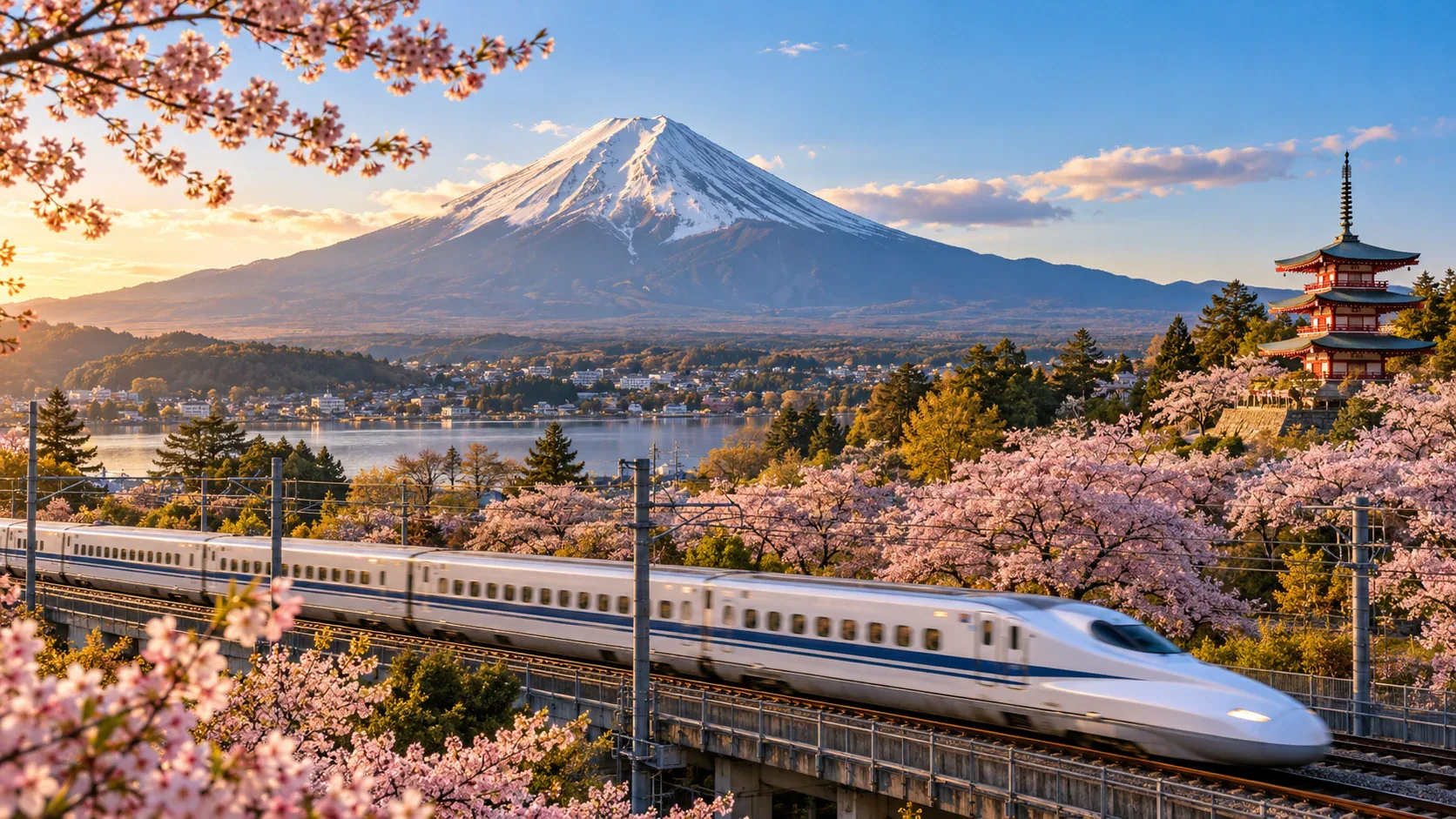
Why Japan for Seasonal Travel
Japan suits seasonal travel because its scenery, festivals and food change markedly through the year, from cherry blossoms in spring to autumn foliage and winter illumination. A seasonal Japan trip fits travellers who want a specific natural or cultural event to anchor the itinerary rather than a generic city break.
Japan's travel demand and scenery are strongly shaped by cherry blossoms, autumn foliage, snow, summer festivals and regional seasonal foods. That makes timing the single biggest decision in planning a Japan seasonal holiday.
Spring (March to May) brings cherry blossoms and mild temperatures; autumn (October to November) brings foliage and comfortable conditions. Winter offers snow and illumination, while summer brings festivals and Hokkaido lavender. Each season changes what you see, what you pay and how far in advance you must book.
At a glance
Japan, in brief
A seasonal Japan trip works best across 7 to 14 days, with spring and autumn as the strongest windows. Most Indian travellers fly into Tokyo or Osaka, and indicative land-only budgets start from around ₹95,000 per person on twin sharing at budget level.
Japan.
7 to 14 days
- Ideal trip length
- 7 to 14 days7 days covers Tokyo, Mount Fuji or Hakone, Kyoto and Osaka at a fast pace; 10 to 14 days allows a more comfortable multi-region itinerary.
- Best season for this theme
- March to May and October to NovemberLate March to early April is popular for cherry blossoms; November for autumn foliage.
- Main gateways
- Tokyo and OsakaMost Indian travellers arrive at Tokyo Narita or Haneda, or Osaka Kansai.
- Indicative budget basis
- From ₹95,000 per personLand-only, twin sharing, budget level; airfare, visa fees, travel insurance and major attraction tickets may be excluded.
- Who it suits
- Travellers chasing a specific seasonal eventCherry blossoms, autumn foliage, winter illumination or summer festivals.
- Visa snapshot
- Visa required before travel for Indian ordinary passport holdersVisa on arrival is not generally available; apply in advance.
Signature Seasonal Experiences and Places
Japan's seasonal highlights cluster around a handful of named places: cherry blossoms in Tokyo and Kyoto, autumn foliage in Kyoto and Nara, winter illumination in Hokkaido, and summer festivals across the country. Each works best in a specific month, so match the place to your travel window.
- Tokyo
Cherry blossoms in Tokyo
Tokyo's parks and riverbanks are among the most accessible places to see cherry blossoms, typically in late March to early April. Ueno Park and the Sumida River area are common viewing spots.
Best forFirst-time visitors who want blossoms without leaving the capital
Book hotels in Tokyo several months ahead for late March and early April, when demand is highest.
- Kyoto
Cherry blossoms in Kyoto
Kyoto's temple gardens and riverside walks combine blossoms with traditional architecture. The Philosopher's Path and Maruyama Park are well-known viewing areas.
Best forTravellers who want blossoms with cultural sightseeing
Visit early morning to avoid the densest crowds at popular temples.
- Kyoto
Autumn foliage in Kyoto
Kyoto's temples and gardens are a major autumn foliage destination, typically peaking in November. Areas such as Higashiyama and Arashiyama draw large crowds.
Best forPhotographers and travellers who prefer cooler weather
Reserve ryokan and central hotels early for November, as this is one of the busiest periods.
- Nara
Autumn foliage in Nara
Nara's parkland and temple grounds offer autumn colour with a slower pace than Kyoto. The deer park area is a common starting point.
Best forTravellers who want foliage without Kyoto's peak crowds
Combine Nara as a day trip from Kyoto or Osaka to reduce hotel changes.
- Hokkaido
Winter illumination in Hokkaido
Hokkaido's winter season brings snow and illumination events, with Sapporo as the main gateway. Domestic flights connect Tokyo to Hokkaido for long-distance routes.
Best forTravellers who want snow and winter scenery
Pack proper winter layers; Hokkaido is significantly colder than Tokyo in the same month.
- Across Japan
Summer festivals
Summer brings festivals and regional seasonal foods across the country. Obon is a peak travel period, so transport and hotels fill quickly.
Best forTravellers interested in local culture and food
Avoid travelling during Obon if you prefer lower crowds, or book everything well in advance.
- Hokkaido
Hokkaido lavender season
Hokkaido's lavender season is a summer highlight, typically in July. The region is reached by domestic flight from Tokyo or by rail.
Best forTravellers who want a specific summer flower season
Combine lavender viewing with other Hokkaido stops to justify the domestic flight.
- Hakone / Fuji area
Mount Fuji and Hakone
The Fuji-Hakone area is a common add-on to Tokyo itineraries and works across seasons, with ryokan stays and scenic rail travel available.
Best forTravellers who want a scenic break between Tokyo and Kyoto
Build in a flexible day for Fuji views, as cloud cover can hide the mountain.
These are the experiences that make a seasonal Japan trip worth timing carefully. Each entry names the area, one specific detail and a practical tip.
Routes and Durations Compared
Seasonal Japan itineraries usually run 7, 10 or 14 days, with the longer versions adding Hokkaido or Hiroshima. The right length depends on whether you want one region in depth or a multi-region trip timed to a specific season.
7-day seasonal highlights
Best forFirst-time visitors with limited leave who want Tokyo, Mount Fuji or Hakone, Kyoto and Osaka
StrengthsCovers the classic first-trip combination at a fast pace; easier to fit around a specific blossom or foliage window.
Trade-offsPace is quick and leaves little room for rest or spontaneous stops.
10-day seasonal trip
Best forTravellers who want the classic route plus Nara or extra Kyoto time
StrengthsMore comfortable pacing and room for seasonal events without cutting major sights.
Trade-offsHigher cost than 7 days and still not enough time for Hokkaido or Hiroshima.
14-day multi-region seasonal holiday
Best forTravellers adding Hokkaido or Hiroshima to the classic route
StrengthsAllows a domestic flight to Hokkaido for lavender or snow, or a westward extension to Hiroshima.
Trade-offsHighest cost and the most complex planning; needs earlier bookings in peak seasons.
Compare these common durations before choosing a departure. Each assumes arrival at Tokyo or Osaka and uses trains and Shinkansen between major regions.
Indicative Budgets and Hotels
Indicative land-only Japan package prices start from around ₹95,000 per person on twin sharing at budget level, rising to about ₹145,000 standard, ₹230,000 premium and ₹425,000 luxury. These are market benchmarks, not Tripstor offers, and exclude or vary by airfare and inclusions.
Budget
Travellers using business hotels, convenience-store meals and advance bookings to control costs
- Business hotels and simpler city stays
- Local restaurants and convenience-store meals
- Advance bookings to manage peak-season rates
Standard
Travellers who want centrally located hotels and a mix of included experiences
- Central city hotels
- Some included transfers or guided elements
- Classic Tokyo, Kyoto and Osaka route
Premium
Travellers adding ryokan stays, kaiseki meals or private onsens
- Ryokan stays and kaiseki meals
- Private onsens where available
- Private transfers and English-speaking guides
Luxury
Travellers wanting the highest hotel categories and private arrangements
- Top hotel categories
- Private transfers and guides
- Premium seasonal dining and experiences
Use these bands to set expectations before requesting a quote. Airfare, visa fees, travel insurance, major attraction tickets and personal expenses may be excluded, and actual quotations vary by departure city, hotel availability, exchange rates and itinerary complexity.
What's Included in Our Seasonal Packages
A well-structured seasonal Japan package typically includes accommodation, some meals, airport transfers and intercity transport, while international airfare, visa fees and many attraction tickets are usually excluded. Treat every inclusion as proposed scope until your Tripstor quote confirms it.
What’s included
5 itemsProposedaccommodation on twin sharing at the selected category
Proposedsome meals as specified in the itinerary
Proposedairport transfers on arrival and departure
Proposedintercity transport such as Shinkansen or domestic flights where the itinerary requires them
ProposedEnglish-speaking assistance or guides on selected days
Not included
5 itemsProposed exclusioninternational airfare from India
Proposed exclusionJapan visa fees and processing
Proposed exclusiontravel insurance
Proposed exclusionmajor attraction tickets such as Universal Studios Japan or Disney
Proposed exclusionpersonal expenses, optional activities and meals not specified
The list below is a proposed scope for a seasonal Japan trip, not a confirmed offer. Confirm each item against your final quotation, because inclusions vary by itinerary, season and hotel category.
Best Time for Seasonal Japan Travel
March to May and October to November are the most broadly favourable periods for a seasonal Japan trip, with late March to early April best for cherry blossoms and November for autumn foliage. Peak periods raise prices and require earlier bookings.
January
Good time to goCold, with snow in northern regions such as Hokkaido
Suits travellers who want winter snow and illumination, especially in Hokkaido.
February
Good time to goCold, with snow continuing in northern regions
A quieter winter window for snow and illumination before spring demand begins.
March
Best time to goMild, with cherry blossoms beginning in late March
Late March starts the cherry blossom season, one of the strongest windows for this theme.
April
Best time to goMild, with cherry blossoms continuing into early April
Early April remains a peak blossom window; book hotels and transport well ahead.
May
Best time to goMild and pleasant
A strong shoulder month with mild weather, though Golden Week raises domestic demand.
June
Shoulder seasonWarmer, with the rainy season affecting many regions
Lower crowds and prices, but rain can affect outdoor seasonal sightseeing.
July
Good time to goHot and humid, with Hokkaido lavender in season
Best for Hokkaido lavender and summer festivals, but heat affects city sightseeing.
August
Shoulder seasonHot and humid, with summer festivals and Obon
Festival season, but Obon makes transport and hotels busy and expensive.
September
Shoulder seasonWarm, with typhoon risk in some regions
A transition month; check weather forecasts if travelling in typhoon season.
October
Best time to goMild and comfortable
A strong autumn window with comfortable temperatures before foliage peaks.
November
Best time to goCool, with autumn foliage peaking
Peak autumn foliage; reserve ryokan and central hotels early.
December
Good time to goCold, with winter illumination events
Suits travellers who want illumination and winter atmosphere over foliage.
- BestMar, Apr, May, Oct, Nov
- GoodJan, Feb, Jul, Dec
- FairJun, Aug, Sep
Use this month-by-month view to match your travel window to weather, crowds and price. Ratings reflect suitability for a seasonal Japan holiday, not overall destination quality.
Traveller Tips for Seasonal Japan Trips
Book peak-season hotels and popular ryokan months ahead, compare rail pass value against individual tickets, and pack for the specific season you choose. These five tips address the most common planning mistakes Indian travellers make on a seasonal Japan holiday.
- Reserve peak-season hotels early
Cherry blossom, Golden Week, Obon and autumn foliage periods fill hotels quickly. Book popular ryokan, Shinkansen seats for peak travel, Universal Studios or Disney entry products, and sought-after restaurants in advance.
Booking - Compare rail pass value
Eligible foreign visitors can purchase applicable rail passes, but the nationwide pass may not offer value on every itinerary. Compare its current price with individual tickets before buying.
Transport - Match your route to the season
Hokkaido lavender is a summer highlight, while Hokkaido snow and illumination suit winter. Tokyo, Kyoto and Osaka work across spring and autumn. Choose the region that matches your travel month.
Planning - Use trains and subways in cities
Use trains and subways in cities, Shinkansen between major regions, buses in areas without rail coverage, and domestic flights for long-distance routes such as Tokyo to Hokkaido.
Transport - Apply for the visa before booking non-refundable items
Indian ordinary passport holders generally need to obtain a Japanese visa before travel, and visa on arrival is not generally available. Apply in advance and avoid non-refundable bookings until the visa is confirmed.
Documents
Apply these tips when planning a seasonal Japan trip from India. They focus on booking timing, transport and packing rather than general advice.
From idea to itinerary, with a real person.
- Share your plan
Dates, departure city, travellers and the moments you’d love. It only takes a minute.
- Shape it with a specialist
A real person refines the route, stays and pace with you. Change anything.
- Review your quote
A clear, personalised quote with confirmed inclusions. No payment to enquire.
Before you go
Straight answers to help you plan — then personalise the trip with a specialist.
8 answered belowAsk a specialist anything about this trip — there’s no obligation.
Ask a specialistWhat are Japan seasonal packages?
Japan seasonal packages are trips timed around a specific seasonal event, such as cherry blossoms in late March to early April, autumn foliage in November, winter illumination, or summer festivals and Hokkaido lavender. They differ from year-round city packages because the itinerary and departure dates are built around that season.
What is the best time to visit Japan for seasonal travel?
March to May and October to November are the most broadly favourable periods. Late March to early April is popular for cherry blossoms, and November for autumn foliage. These windows also have the highest demand, so hotels and transport should be booked well in advance.
How much does a Japan seasonal trip cost from India?
Indicative land-only prices start from around ₹95,000 per person on twin sharing at budget level, rising to about ₹145,000 standard, ₹230,000 premium and ₹425,000 luxury. These are market benchmarks, not confirmed offers, and exclude or vary by airfare, visa fees and inclusions.
How many days are enough for a seasonal Japan holiday?
Seven days covers Tokyo, Mount Fuji or Hakone, Kyoto and Osaka at a fast pace. Ten to fourteen days allows a more comfortable multi-region itinerary, including options such as Nara, Hiroshima or Hokkaido depending on the season you choose.
Do Indian tourists need a visa for Japan?
Yes. Indian ordinary passport holders generally need to obtain a Japanese visa before travel, and visa on arrival is not generally available. Apply in advance and avoid non-refundable bookings until your visa is confirmed, as approval is not guaranteed.
Which cities should first-time visitors include in a seasonal Japan trip?
Tokyo, Kyoto, Osaka and either Mount Fuji or Hakone are the most practical first-trip combination. Hiroshima or Hokkaido can be added with more time. Match the city to the season: Hokkaido for lavender or snow, Kyoto and Nara for autumn foliage.
Can Indian tourists use a Japan Rail Pass?
Eligible foreign visitors can purchase applicable rail passes, but the nationwide pass may not offer value on every itinerary. Compare its current price with individual tickets for your specific route before buying, especially on shorter trips.
Is Japan good for families and honeymooners on a seasonal trip?
Yes. Families benefit from reliable transport and attractions, while honeymooners can combine Kyoto, Hakone or the Fuji area with ryokan stays, scenic rail travel and luxury dining. Seasonal timing affects both, so book peak periods early.