
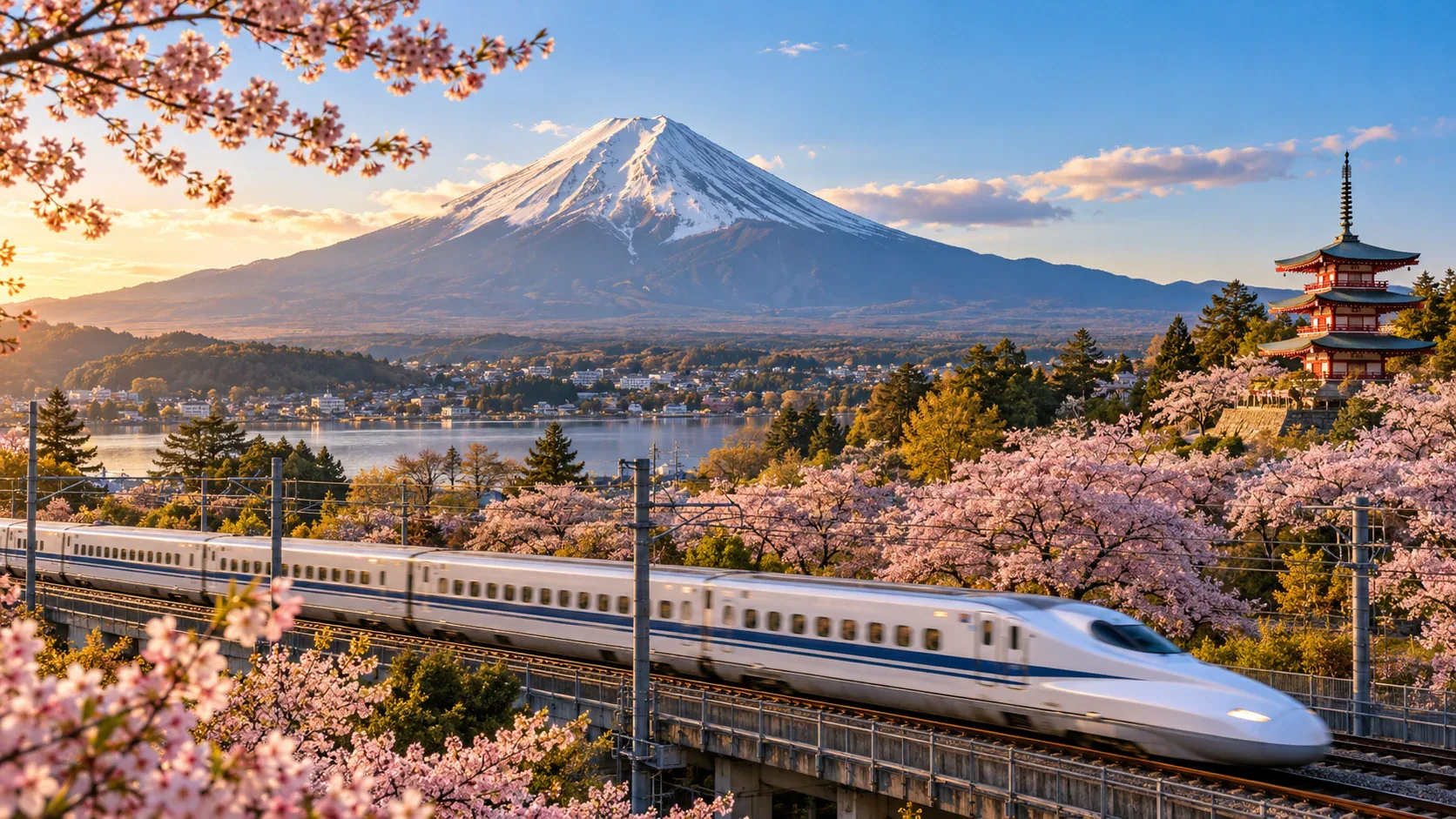
Is 7 Days Enough for Japan?
Seven days is enough for Japan's classic first-trip route, but only if you accept a fast pace and limit yourself to Tokyo, the Fuji or Hakone area, Kyoto, Nara and Osaka. It suits first-time visitors who want the headline sights rather than depth in any single region.
The supplied duration analysis rates seven days as ideal for the Tokyo–Fuji/Hakone–Kyoto–Osaka–Nara combination, and lists Hokkaido, Okinawa and too many rural regions as what to skip. That matches the practical reality: each city-to-city move on this route costs you part of a day even on the Shinkansen.
This page is built for a Japan 7 days trip with six nights on the ground. Day 1 is arrival and the final day is departure, so you effectively have five full sightseeing days. If you want Hiroshima, Kanazawa or a ryokan stay of two nights, a longer trip serves you better.
- Covers: Tokyo, Mount Fuji or Hakone, Kyoto, Nara and Osaka
- Skips: Hokkaido, Okinawa and multiple rural regions
- Pace: fast, with one long-distance transfer roughly every second day
- Best for: first-time visitors from India on a one-week window
At a glance
Japan, in brief
A 7-day Japan trip runs six nights across Tokyo, the Fuji or Hakone area, Kyoto and Osaka, using the Shinkansen for the long legs. March to May and October to November are the most broadly favourable seasons, and indicative land-only pricing starts near ₹95,000 per person on twin sharing.
Japan.
Planned around you.
- Duration
- 7 days / 6 nightsDay 1 arrival, Day 7 departure
- Best season
- March–May and October–NovemberLate March–early April for cherry blossoms; November for autumn foliage
- Gateway
- Tokyo (arrival and departure)Osaka also works as the exit point on this route
- Pace
- FastFive full sightseeing days plus two travel days
- Route
- Tokyo – Fuji/Hakone – Kyoto – Nara – Osaka
- Visa
- Visa required before travel for Indian ordinary passport holdersVisa on arrival is not generally available
Sample 7-Day Japan Itinerary
This 7-day Japan itinerary follows the Golden Route in order: Tokyo for three nights, the Fuji or Hakone area, then Kyoto with a Nara day trip, finishing in Osaka for departure. Each day lists morning, afternoon and evening plans with the overnight base, and travel times assume Shinkansen or limited express services.
Day01 Stop 1 of 7Arrive in Tokyo
Land at Tokyo's airport, clear immigration and transfer to your city hotel. Keep the evening light to manage jet lag.
MorningDepart your Indian city on an overnight or morning flight to Tokyo.
AfternoonArrive, complete immigration and customs, then transfer to your hotel by airport train or pre-booked transfer.
EveningShort walk near the hotel, convenience-store or local restaurant dinner, early night.
Day02 Stop 2 of 7Tokyo west side: Shibuya, Harajuku and Shinjuku
A full day on Tokyo's west side covering the city's best-known districts and evening skyline views.
MorningShibuya Crossing and the surrounding streets, then walk or take the train to Harajuku.
AfternoonOmotesando and Meiji Shrine, continuing to Shinjuku by train.
EveningShinjuku viewpoints and dinner in the Omoide Yokocho or Kabukicho area.
Day03 Stop 3 of 7Tokyo east side: Asakusa, Ueno and Akihabara
The historic and electronics side of Tokyo, with the option of a Disney or Universal-style theme day if travelling with children.
MorningSenso-ji temple and Nakamise shopping street in Asakusa.
AfternoonUeno Park and its museums, then Akihabara for electronics and anime stores.
EveningDinner in Asakusa or Ueno, return to the hotel to pack for the Fuji leg.
Day04 Stop 4 of 7Mount Fuji or Hakone
Leave Tokyo for the Fuji or Hakone area, with lake views, cable cars and onsen options depending on the season.
MorningTrain or coach from Tokyo to the Fuji Five Lakes or Hakone.
AfternoonLake Ashi cruise, Hakone Ropeway or Fuji viewpoints, subject to weather.
EveningCheck into a ryokan or hotel; onsen soak and dinner if staying in Hakone.
Day05 Stop 5 of 7Travel to Kyoto and explore the east
Shinkansen to Kyoto, then the classic eastern temples and Gion in the evening.
MorningShinkansen from Odawara or Mishima to Kyoto; drop bags at the hotel.
AfternoonKiyomizu-dera and the Higashiyama lanes.
EveningWalk through Gion and along the Kamo River; dinner in Pontocho.
Day06 Stop 6 of 7Kyoto west and Nara day trip
Golden Pavilion and Arashiyama in the morning, then a half-day trip to Nara if time allows.
MorningKinkaku-ji and the Arashiyama bamboo grove.
AfternoonTrain to Nara for Todai-ji and the deer park, or stay in Kyoto for Fushimi Inari.
EveningReturn to Kyoto; Nishiki Market or a department-store food hall for dinner.
Day07 Stop 7 of 7Osaka and departure
Short train to Osaka, a quick look at Dotonbori or Osaka Castle, then transfer to the airport.
MorningTrain from Kyoto to Osaka; store luggage at the station or hotel.
AfternoonOsaka Castle or Dotonbori, depending on your flight time.
EveningTransfer to Kansai International Airport for your flight back to India.
The route is deliberately linear so you never backtrack. Book Shinkansen seats and any popular ryokan or theme-park tickets in advance, especially during cherry-blossom, Golden Week, Obon and autumn-foliage periods.
7 Days Against Shorter and Longer Japan Trips
Seven days sits between a rushed city-only break and a comfortable multi-region trip. Five to six days limits you to Tokyo and Kyoto or Tokyo and Osaka, while ten to fourteen days adds Hiroshima, Kanazawa or Hokkaido and slows the pace considerably.
5–6 days in Japan
Best forTravellers with a hard one-week leave limit who want two cities only
StrengthsLower cost, less packing and unpacking, more time in Tokyo or Kyoto
Trade-offsMisses Nara and Osaka; the Fuji or Hakone leg becomes tight or impossible
7 days in Japan (this plan)
Best forFirst-time visitors from India who want the classic Golden Route
StrengthsCovers Tokyo, Fuji or Hakone, Kyoto, Nara and Osaka in one linear route
Trade-offsFast pace, one long transfer roughly every second day, limited depth in each city
10–14 days in Japan
Best forTravellers who want a slower pace and a second region
StrengthsAdds Hiroshima, Kanazawa, Hokkaido or a two-night ryokan stay; more rest days
Trade-offsHigher cost and more leave required; needs more advance planning for rail seats
The comparison below is honest about what each length gives and costs you. If your dates are fixed by leave approval or school holidays, the seven-day version is the most practical compromise for a first visit.
Pace, Arrival and What to Skip
The main constraint on a 7-day Japan trip is arrival and departure timing, not distance. An evening arrival in Tokyo and a morning departure from Osaka effectively remove two half-days, so protect the middle five days and skip anything that needs a separate region.
- Protect the middle five days
Treat Day 1 and Day 7 as transfer days. If your flight lands after mid-afternoon, drop the Day 2 evening plan and move it to Day 3.
Pace - Skip Hokkaido and Okinawa
Both need domestic flights and at least three extra days. The supplied duration analysis lists them as what to skip on a seven-day trip.
Route - Choose Fuji or Hakone, not both
One overnight in the Fuji Five Lakes or Hakone area is enough on this schedule. Two nights there means cutting Nara or Osaka.
Route - Book Shinkansen seats in peak season
Reserve seats during cherry-blossom, Golden Week, Obon and autumn-foliage periods, when popular services fill up.
Booking - Add a day if you want Universal Studios or Disney
A theme-park day consumes a full day. On a seven-day trip it replaces Nara or the Fuji leg, not both.
Add-ons - Compare the rail pass before buying
Eligible foreign visitors can buy applicable rail passes, but the nationwide pass may not offer value on every itinerary. Compare its current price with individual tickets for your exact route.
Transport
Use the tips below to adjust the plan if your flights, season or travel group change. Each one is a practical instruction rather than a general suggestion.
Indicative Budget for 7 Days Japan Tour Packages
Indicative land-only pricing for a 7-day Japan trip runs from about ₹95,000 per person at budget level to ₹425,000 at luxury level on twin sharing. These are planning bands from operator-market benchmarks, not Tripstor package offers, and airfare, visa fees and insurance are usually excluded.
Budget
Cost-conscious travellers comfortable with business hotels and public transport
- Business hotels or hostels near stations
- Convenience-store and local restaurant meals
- Point-to-point train tickets instead of a rail pass
- Self-guided city sightseeing
Standard
First-time visitors who want a balanced mix of comfort and cost
- 3- to 4-star hotels in central locations
- Shinkansen between Tokyo, Hakone and Kyoto
- Some included meals and airport transfers
- English-speaking assistance on arrival
Premium
Travellers who want a ryokan night and private transfers
- 4- to 5-star hotels plus one ryokan stay
- Kaiseki dinner and private onsen option
- Private airport and station transfers
- Reserved Shinkansen seats and guided city days
Luxury
Honeymooners and travellers prioritising service and privacy
- Luxury city hotels and high-end ryokan
- Private guides and chartered transfers
- Fine-dining reservations and premium rail seats
- Flexible daily pacing with concierge support
The tiers below show what each band typically buys in terms of hotels, transport and inclusions. Actual quotations vary by departure city, hotel availability, exchange rates and itinerary complexity, so validate against live supplier quotations before booking.
From idea to itinerary, with a real person.
- Share your plan
Dates, departure city, travellers and the moments you’d love. It only takes a minute.
- Shape it with a specialist
A real person refines the route, stays and pace with you. Change anything.
- Review your quote
A clear, personalised quote with confirmed inclusions. No payment to enquire.
Before you go
Straight answers to help you plan — then personalise the trip with a specialist.
8 answered belowAsk a specialist anything about this trip — there’s no obligation.
Ask a specialistDo Indians need a visa to visit Japan?
Yes. Indian ordinary passport holders generally need to obtain a Japanese visa before travel, and visa on arrival is not generally available. Apply through the designated visa application centre with your itinerary, hotel bookings and financial documents well before departure. Approval is decided by the embassy or consulate, not by any travel agency.
What is the best time to visit Japan?
March to May and October to November are the most broadly favourable periods. Late March to early April is popular for cherry blossoms and November for autumn foliage, but both windows carry higher hotel demand. Summer is hot and humid, and winter is cold in Tokyo and Kyoto though suitable for snow sports in other regions.
How many days are enough for Japan?
Seven days covers Tokyo, Mount Fuji or Hakone, Kyoto and Osaka at a fast pace. Ten to fourteen days allows a more comfortable multi-region itinerary with Hiroshima, Kanazawa or Hokkaido. If you only have one week of leave, the seven-day Golden Route is the most practical first visit.
How much does a Japan tour package cost from India?
Indicative land-only, twin-sharing pricing is about ₹95,000 per person at budget level, ₹145,000 standard, ₹230,000 premium and ₹425,000 luxury. Airfare, visa fees, travel insurance and major attraction tickets may be excluded. These are market benchmarks, not Tripstor offers, and live quotations vary by departure city and season.
Is Japan expensive for Indian tourists?
Japan can be expensive for transport, attractions and centrally located hotels, but convenience-store meals, local restaurants, business hotels and advance bookings control costs. A budget traveller can manage on the lower indicative band, while premium ryokan stays and private guides push spending toward the upper bands. Exchange-rate movement affects the final rupee cost.
Which cities should first-time visitors include in Japan?
Tokyo, Kyoto, Osaka and either Mount Fuji or Hakone or Nara are the most practical first-trip combination. That set fits a seven-day trip without domestic flights. Hiroshima or Hokkaido can be added with more time, but they need extra days and, for Hokkaido, a domestic flight.
How do tourists travel within Japan?
Use trains and subways within cities, Shinkansen between major regions, buses in areas without rail coverage, and domestic flights for long-distance routes such as Tokyo to Hokkaido. On this seven-day route, the Shinkansen covers Tokyo to Kyoto and Kyoto to Osaka, with local trains for Nara and Hakone.
Can Indian tourists use a Japan Rail Pass?
Eligible foreign visitors can purchase applicable rail passes, but the nationwide pass may not offer value on every itinerary. Compare its current price with individual tickets for your exact route before buying. On a Tokyo–Hakone–Kyoto–Osaka trip, point-to-point tickets are sometimes cheaper than a nationwide pass.